One Week in Istanbul: The Definitive 7-Day Itinerary
Seven days is enough time to move beyond the obvious monuments and get a genuine feel for Istanbul — its neighborhoods, its ferries, its food, and its contradictions. This day-by-day itinerary balances the essential sights with practical logistics, clear budget guidance, and the kind of context that makes the difference between ticking boxes and actually understanding this city.
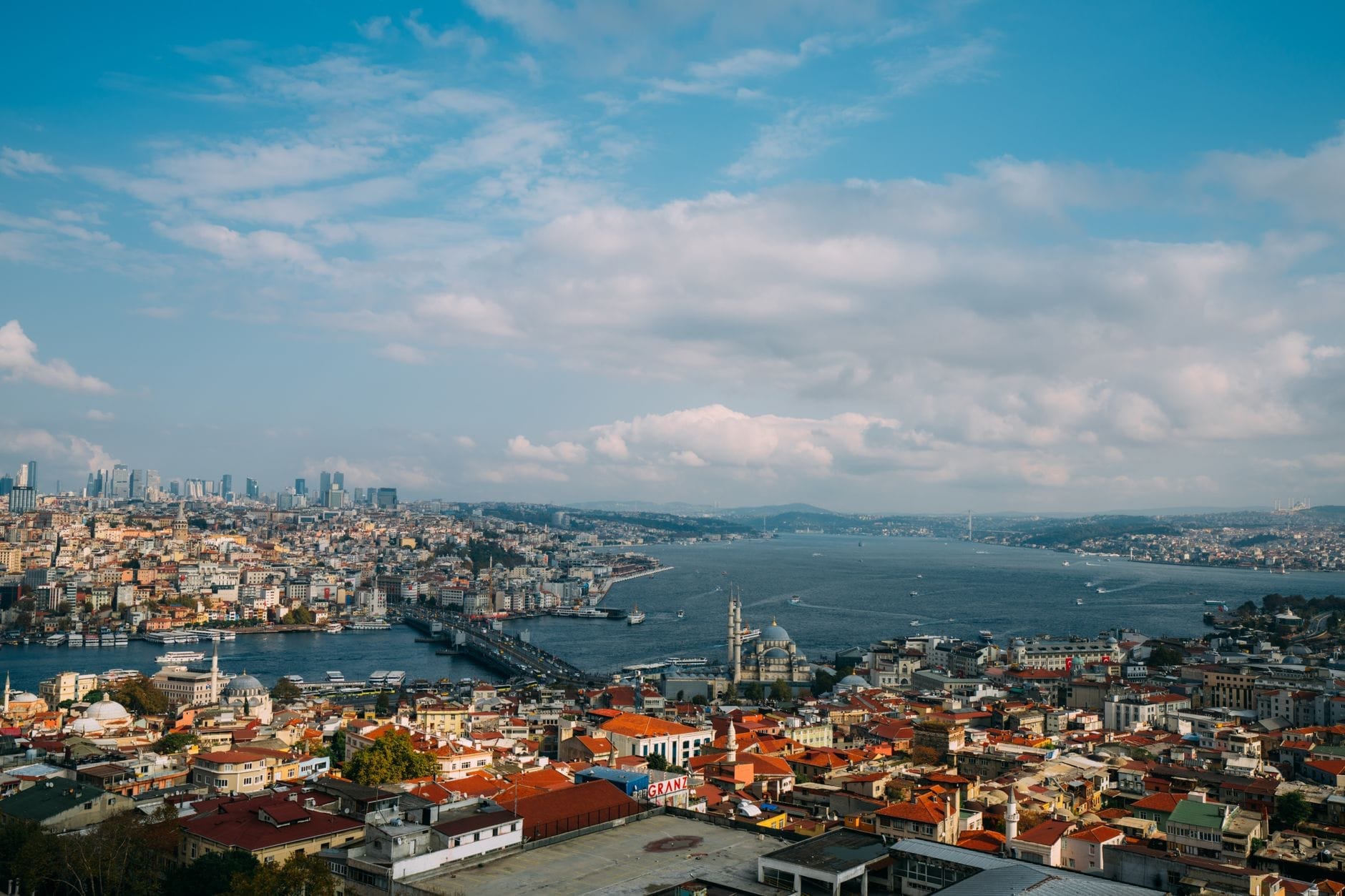
Plan and book this trip
Tools from our partner Travelpayouts help you compare flights and hotels. If you book through them, we may earn a commission at no extra cost to you.
Flights
Hotels map
TL;DR
- Seven days covers Sultanahmet, Beyoğlu, the Asian side, a Bosphorus cruise, and a day trip — without feeling rushed.
- Get an Istanbulkart immediately on arrival — it works on trams, metros, buses, and ferries, and saves significant money over per-ride fares. See our guide to getting around Istanbul for full transport details.
- Topkapı Palace is closed on Tuesdays and the Grand Bazaar on Sundays — build your week around these closures.
- A comfortable mid-range budget runs roughly €80–120 per person per day including accommodation, food, transport, and entry fees.
- April–June and September–October are the best months to visit for manageable crowds and mild temperatures. Check the best time to visit Istanbul guide for seasonal breakdowns.
Before You Arrive: Logistics That Shape Your Week
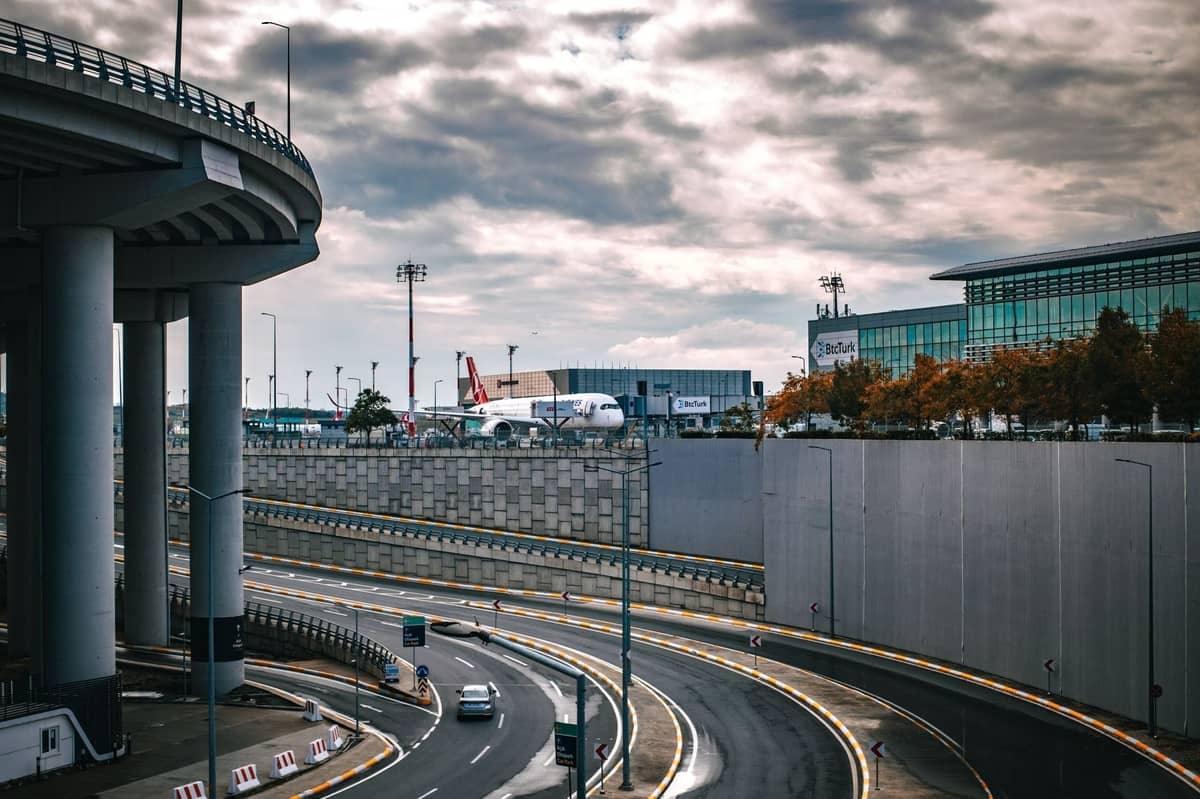
Istanbul has two international airports. Istanbul Airport (IST) sits on the European side, roughly 35–40 km northwest of Sultanahmet and Taksim. Sabiha Gökçen (SAW) is on the Asian side, around 45 km from the historic center depending on traffic. From IST, the M11 metro line connects directly to the city metro network at Gayrettepe. Public airport buses (Havaist/İETT) also run to Taksim and Sultanahmet. From SAW, the M4 metro links to Kadıköy on the Asian side, and bus services run to Taksim. Always exchange currency at licensed exchange offices in the city rather than at airport counters — rates are meaningfully better. The Turkish lira fluctuates, so check rates on arrival.
Pick up an Istanbulkart at any yellow vending machine in metro stations or at major ferry piers. This reloadable contactless card covers trams, metro lines, buses, funiculars, and most ferries — making it indispensable for a week-long stay. For a full breakdown of where to stay in each neighborhood, the Istanbul accommodation guide covers every price range and district. First-time visitors generally do best basing themselves in Sultanahmet or Karaköy for the first few nights — both are walking distance from the main historic sites.
⚠️ What to skip
Topkapı Palace Museum is closed every Tuesday. The Grand Bazaar is closed on Sundays. Plan days 1–3 around these closures — putting Topkapı on a Wednesday, Thursday, or weekend day, and leaving Sundays for neighborhoods, the Asian side, or a Bosphorus cruise.
Days 1–2: Sultanahmet and the Historic Peninsula
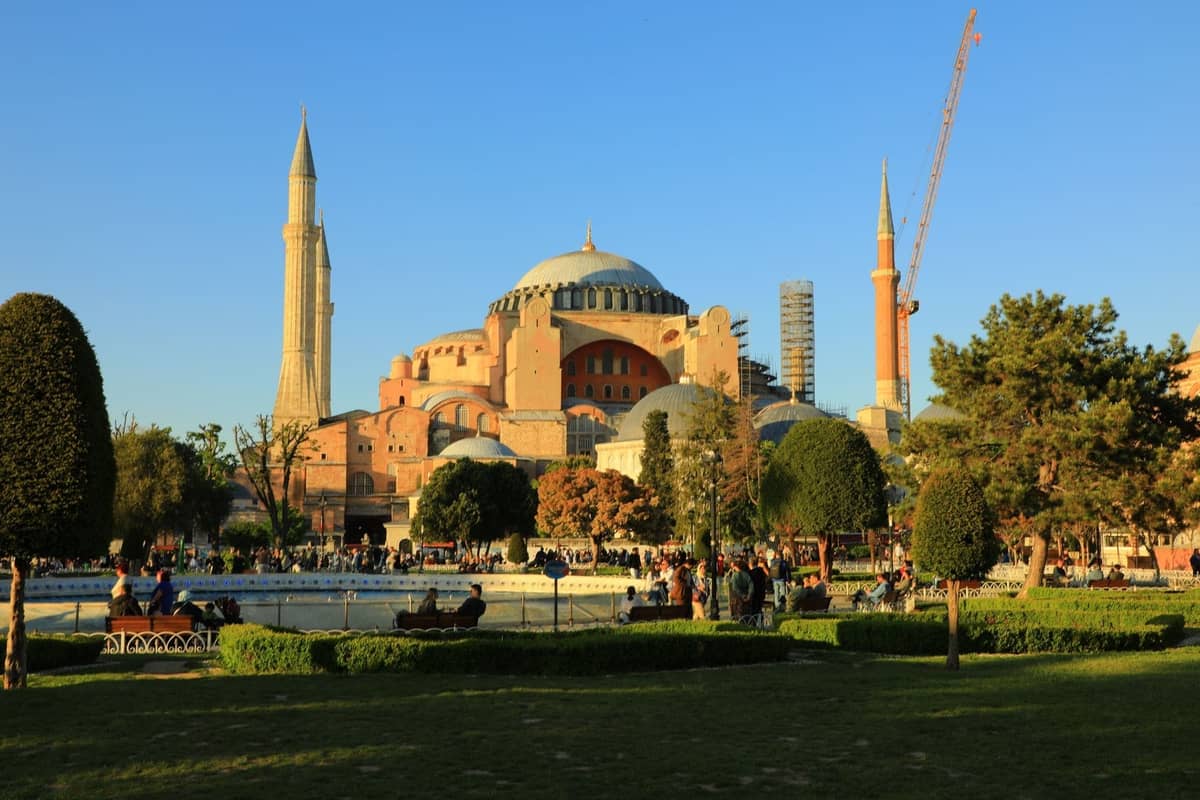
The historic peninsula is where most first-time visitors spend the majority of their time, and for good reason: the concentration of world-class monuments here is unmatched. Start with Hagia Sophia early in the morning — by 9am the crowds inside are still manageable. Hagia Sophia now functions as a working mosque, which means entry is free for worshippers, but the upper gallery museum section requires a paid ticket sold by the Ministry of Culture and Tourism. Bring a scarf if you plan to enter during prayer times.
Directly across from Hagia Sophia stands the Blue Mosque (Sultan Ahmed Mosque), which is free to enter but closes to tourists during the five daily prayer times — plan around this. Spend the afternoon at Topkapı Palace, the administrative and residential heart of the Ottoman Empire for nearly four centuries. Budget 3–4 hours here including the Harem section, which requires a separate ticket but is worth it. The combined palace and Harem ticket runs around 1,800 TRY — verify current pricing before you go, as ticket costs change with currency fluctuations.
On day two, dive into the Basilica Cistern (Yerebatan Sarnıcı) — the restored sixth-century underground reservoir is one of Istanbul's most atmospheric spaces, with its Medusa-head columns and dramatic lighting. Book timed entry tickets in advance online or buy on site. Follow this with the Hippodrome of Constantinople and the Museum of Turkish and Islamic Arts on the same square. End the afternoon in the Grand Bazaar — it has over 4,000 shops, and most tourists spend 1–2 hours here. It is not just a souvenir market: jewelry, hand-knotted carpets, textiles, and everyday goods for locals fill many of its lanes. The Bazaar is closed on Sundays.
💡 Local tip
The Istanbul Museum Pass covers Topkapı Palace, the Archaeology Museums, and several other major sites at a bundled price. If you plan to visit 3 or more paid museums, it usually saves money. Check the current pass lineup before buying — the included attractions change periodically.
Day 3: Eminönü, Karaköy, and the Spice Bazaar
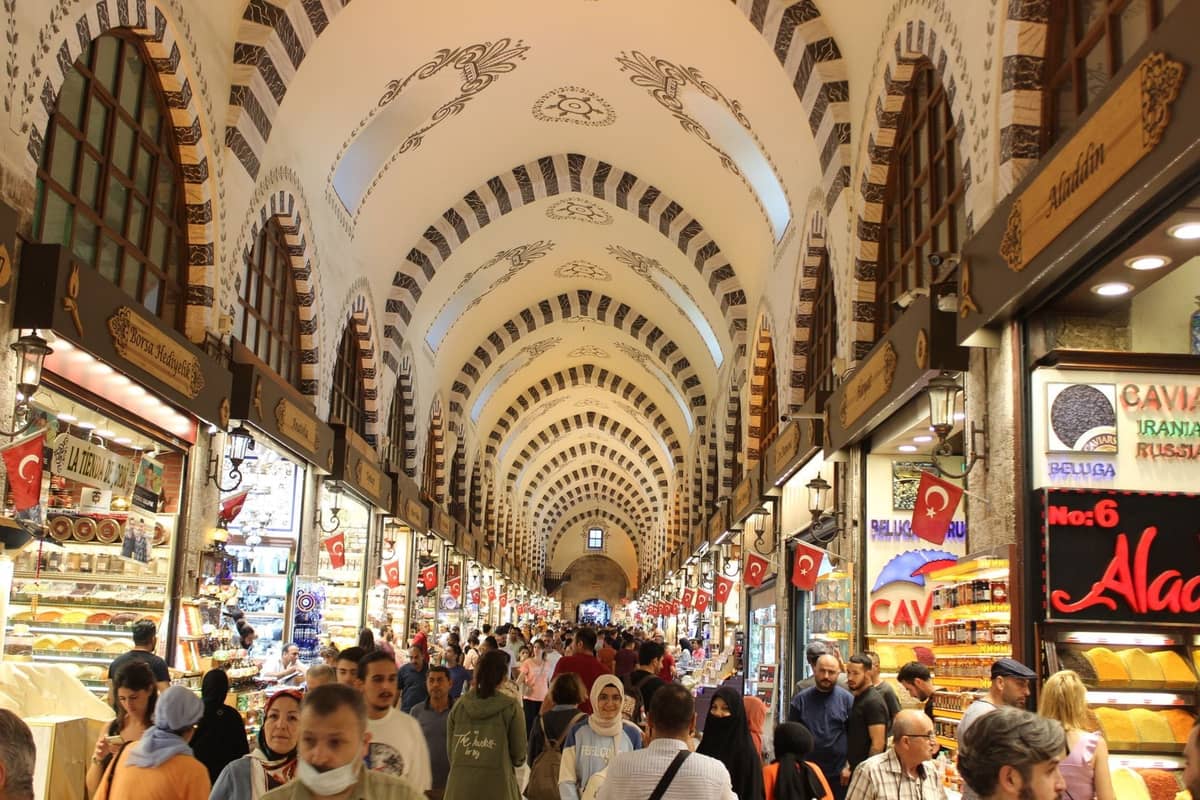
The area around Eminönü and the Golden Horn rewards an early start. The Spice Bazaar (Mısır Çarşısı) opens around 8am and the first hour, before tour groups arrive, is the best time to browse its stalls of dried fruits, spices, lokum, and tea. Step outside and walk across Galata Bridge — the lower level is lined with fish-sandwich vendors and tea stalls, and crossing on foot takes about 10 minutes.
On the north bank, the Karaköy neighborhood has evolved into one of the city's best areas for coffee shops, pastry counters, and design stores. Climb the Tünel funicular or walk uphill to reach the Galata Tower — the views over the Golden Horn and Bosphorus are genuine and worth the entrance fee, especially in the morning light before clouds roll in from the Black Sea. From here you are a short walk from İstiklal Avenue and Beyoğlu.
Day 4: Beyoğlu, Taksim, and Istanbul's Cultural Institutions
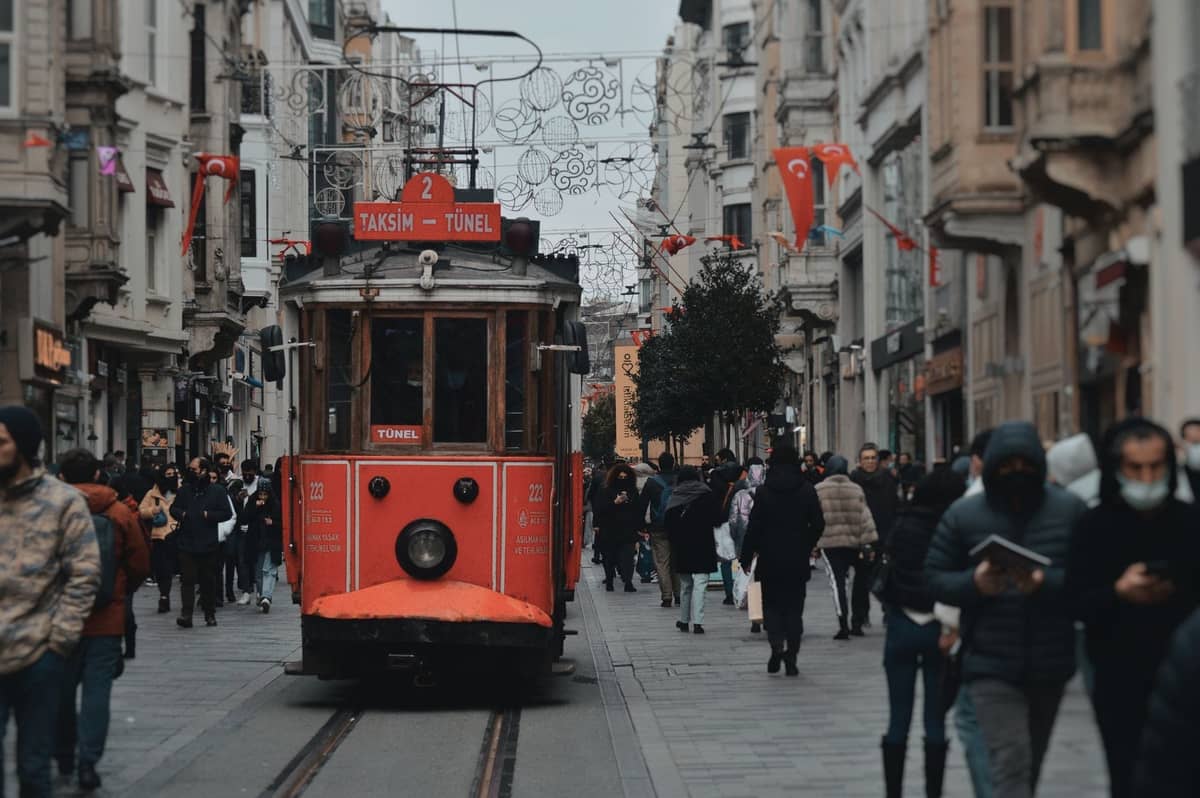
Devote day four to the Beyoğlu district north of the Golden Horn. İstiklal Avenue is a 1.4-kilometer pedestrian street lined with 19th-century apartment buildings, consulates, churches, and a steady stream of cafes and chain shops. Walk it, but don't linger too long on the main strip — the real interest is in the side streets. Çukurcuma, just off the main drag, is Istanbul's antiques quarter: narrow lanes packed with curiosity shops, vintage furniture dealers, and the Museum of Innocence, Orhan Pamuk's extraordinary literary museum housed in a 19th-century townhouse.
For art, the Pera Museum on Meşrutiyet Caddesi holds strong temporary exhibitions alongside its permanent Anatolian weights and measures collection. If contemporary art is your focus, Istanbul Modern at Galataport is the country's foremost modern art institution, newly housed in a striking building on the Bosphorus waterfront. In the evening, Beyoğlu's meyhanes (traditional taverns) come into their own — the kind of places where raki and meze stretch over several hours.
- Pera Museum Strong temporary shows and the Orientalist painting collection. Central location near İstiklal.
- Istanbul Modern at Galataport The flagship for Turkish contemporary art. The building's Bosphorus setting is as impressive as the collection.
- SALT Galata Free to enter, housed in an Ottoman-era bank building. Good architecture archive and rotating exhibitions.
- Galata Mevlevi Museum A former dervish lodge with a beautiful courtyard. Whirling dervish ceremonies take place here on selected dates.
Day 5: The Asian Side and the Bosphorus
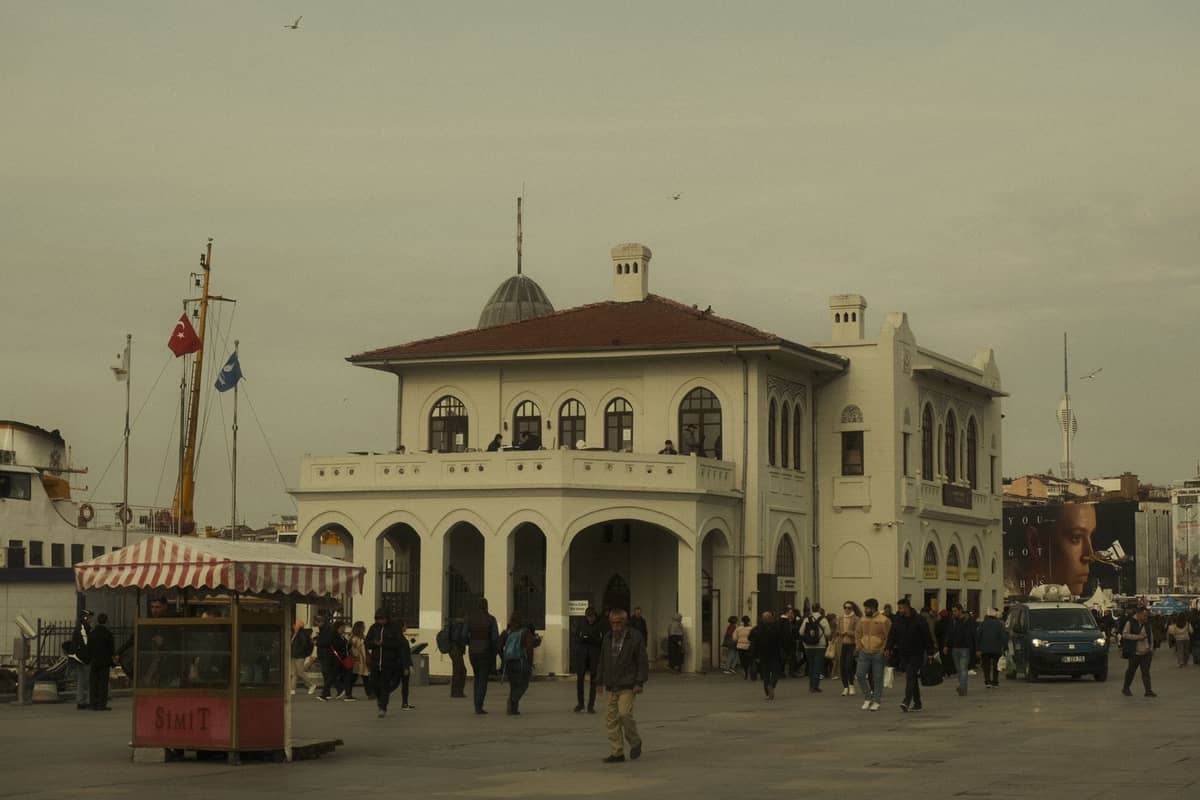
Istanbul's Asian side gets far less tourist traffic than the European historic core, which makes it one of the week's best days. Take the Şehir Hatları ferry from Eminönü or Karaköy to Kadıköy — the crossing takes about 25 minutes and costs a single Istanbulkart fare. Kadıköy's market streets (particularly Moda Caddesi and the surrounding lanes) are where Istanbul residents actually shop and eat. The produce market, fish stalls, and bakeries here are the antidote to tourist pricing.
From Kadıköy, take another ferry north to Üsküdar, the historic Asian shore opposite the old city. The Maiden's Tower sits on a small islet just offshore and is best seen from the Üsküdar waterfront. Walk up to Çamlıca Hill for the highest panoramic view over the city and Bosphorus — it takes about 20 minutes by taxi from the waterfront. If you want a longer Bosphorus experience, public Bosphorus cruise operated by Şehir Hatları depart from Eminönü on a set schedule. The long tour sails all the way to Anadolu Kavağı near the Black Sea and returns the same afternoon — a genuinely useful way to see the Bosphorus villages without paying tour operator prices.
✨ Pro tip
Skip the heavily marketed private Bosphorus 'dinner cruises' — they are overpriced and the food quality rarely justifies the cost. The public City Lines ferry to Anadolu Kavağı gives you the same scenery at a fraction of the price, with the option to eat fresh grilled fish at the village restaurants at the northern end.
Day 6: Fener, Balat, Eyüp, and the Golden Horn
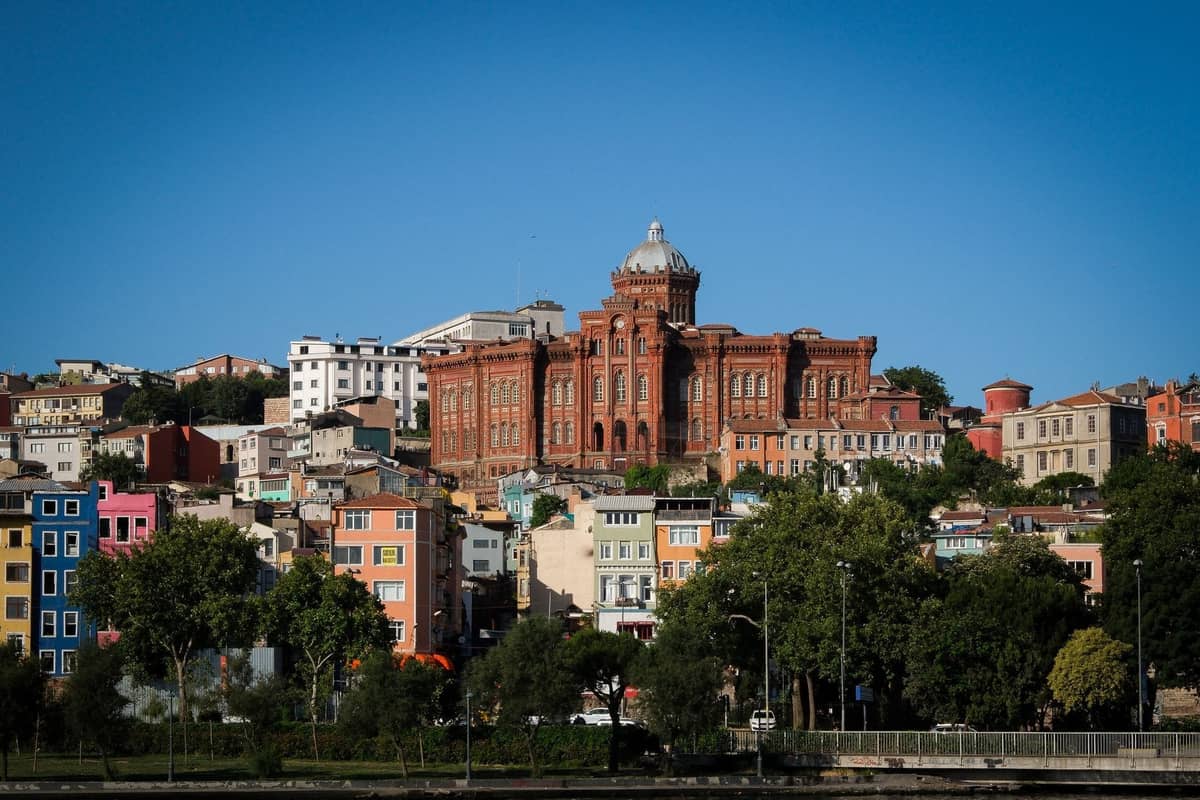
The western neighborhoods along the Golden Horn are among Istanbul's most atmospheric and least-visited by international tourists. Fener and Balat are adjacent quarters with distinct histories — Fener was the center of the Greek Orthodox community, while Balat was historically the heart of Istanbul's Jewish population. Both have been partially restored in recent years, and the streetscapes of painted wooden houses, ornate facades, and steep cobbled lanes reward slow exploration on foot.
The Ecumenical Patriarchate of Constantinople is in Fener and open to respectful visitors. From Balat, walk or take a short taxi ride to Eyüp Sultan Mosque, one of the holiest sites in Turkey and a place of genuine pilgrimage. Take the cable car or walk up through the hilltop cemetery to the Pierre Loti Café for a tea with a view over the Golden Horn. This is not a tourist trap — locals have been making the same pilgrimage for centuries. End the day in the Süleymaniye Mosque complex, the largest mosque in Istanbul, designed by the imperial architect Sinan and set on a hill overlooking the Golden Horn.
Day 7: Day Trip or Final Explorations
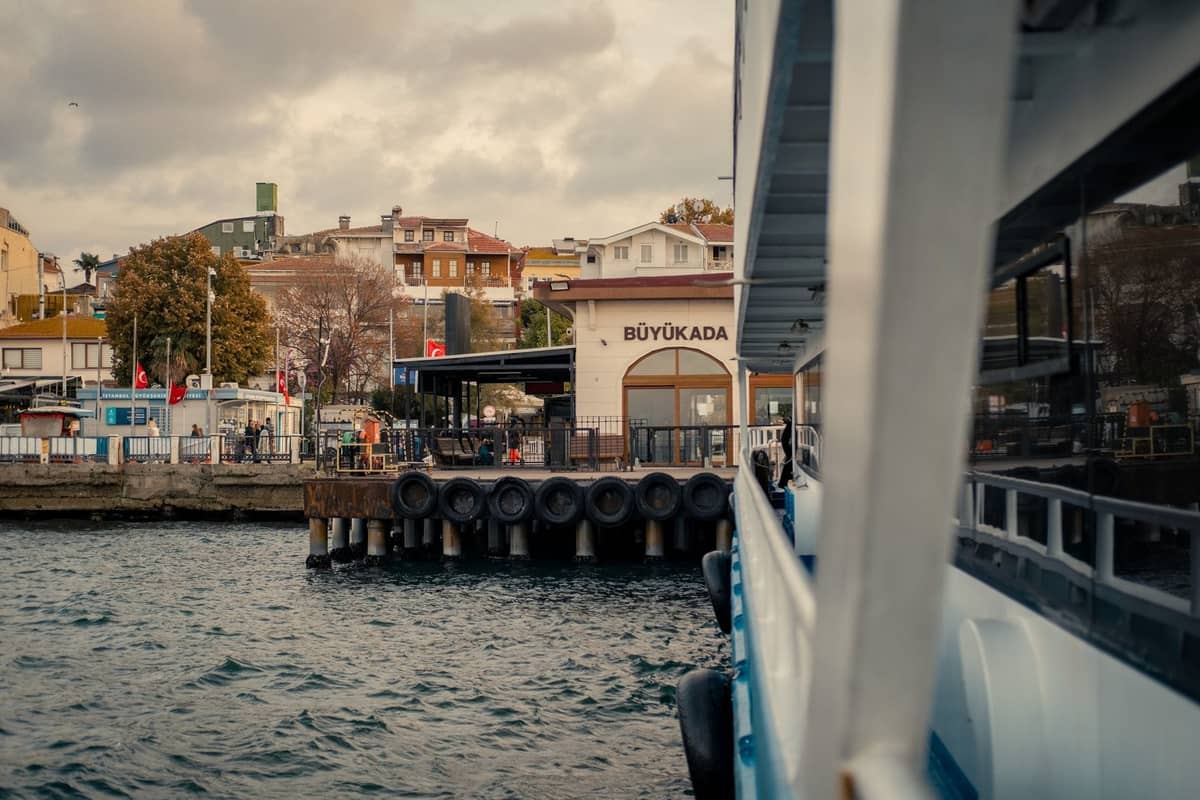
If you have energy for a day trip, Büyükada — the largest of the Princes' Islands — is the most popular option. Ferries run from Kabataş and Eminönü, and the crossing takes around 90 minutes. Cars are prohibited for visitors on the island, and public transport now uses electric vehicles and minibuses rather than the former horse-drawn carriages. The island rewards a half-day: walk the waterfront, climb to the hilltop monastery, eat fish by the harbor. Return ferries run throughout the afternoon. For a different kind of day trip, day trips from Istanbul include Polonezköy forest, the Black Sea beaches at Şile and Kilyos, and the historic town of Bursa across the Marmara.
Alternatively, use day seven to revisit the parts of the city that felt rushed earlier in the week. The Chora Church (Kariye Mosque) in the Edirnekapı quarter has some of the finest surviving Byzantine mosaics in the world and is easily missed by visitors who stick to Sultanahmet. The Istanbul Archaeology Museums complex, just inside the first courtyard of Topkapı Palace, contains the Alexander Sarcophagus and is consistently underestimated. Evening options for a final night include the meyhanes around Asmalımescit in Beyoğlu or a rooftop bar in Karaköy for a last view over the Bosphorus.
- Carry cash for small vendors, bazaar stalls, and neighborhood cafes — card readers are not universal outside tourist areas.
- Dress modestly when visiting mosques: shoulders and knees covered, shoes removed at the entrance. Women should carry a scarf.
- Tap water in Istanbul is treated but many visitors prefer bottled or filtered water for drinking.
- The Turkish emergency number is 112, which covers ambulance, fire, and police.
- Uber operates in Istanbul in partnership with licensed taxis. Local apps BiTaksi and iTaksi are also reliable for metered rides.
- Exchange currency at licensed exchange offices (döviz bürosu) in the city for generally better rates than at the airport, and never with street touts.
- Istanbul runs on Turkey Time (TRT), UTC+3 year-round with no daylight saving adjustment.
ℹ️ Good to know
Visitors planning to add Cappadocia to their trip often combine it with an Istanbul week. Autumn (September to November) is the most comfortable season for both destinations: cooler temperatures, smaller crowds than July and August, and reliably good weather for outdoor sightseeing. Flights from Istanbul to Kayseri or Nevşehir take about 90 minutes.
FAQ
Is one week enough time for Istanbul?
Seven days is a solid amount of time to cover the major historic sites, explore several distinct neighborhoods, make a day trip, and eat well without feeling pressured. You will not see everything — Istanbul is enormous at over 5,300 km² — but a well-structured week leaves you with a real understanding of the city rather than just a highlights reel.
What is the best time of year to visit Istanbul for a week?
April to June and September to October offer the most comfortable conditions: mild temperatures (roughly 15–25°C), fewer extreme crowds than peak summer, and manageable rainfall. July and August are hot, crowded, and more expensive. Winter (December to February) is quiet and atmospheric but comes with overcast skies and occasional rain.
How much does a week in Istanbul cost?
A comfortable mid-range budget runs roughly €80–120 per person per day, covering a mid-range hotel, restaurant meals, public transport, and attraction entry fees. Budget travelers staying in hostels and eating at lokantalar (local canteens) can get by on significantly less. Luxury options push the ceiling considerably higher. The Turkish lira fluctuates, so actual costs in local currency vary — always check current rates.
Do I need a visa to visit Istanbul?
Turkey's visa requirements depend on your nationality. Many nationalities can enter visa-free or obtain an e-Visa before travel through the official Turkish e-Visa portal (evisa.gov.tr). The old visa-on-arrival system has largely been replaced by the e-Visa process. Check the current requirements via the Republic of Türkiye Ministry of Foreign Affairs website before booking, as rules change.
What is the best way to get around Istanbul during a week-long stay?
Get an Istanbulkart on arrival — it covers trams, metro, buses, funiculars, and most ferries with a single reloadable card. The T1 tram runs directly through Sultanahmet to Eminönü and Karaköy, covering the most tourist-heavy route. Ferries are essential for crossing to the Asian side and are one of the city's genuine pleasures. Taxis and ride-hailing apps (BiTaksi, iTaksi, Uber) fill the gaps, but agree on the metered fare before getting in a taxi.