Chora Church (Kariye Mosque): Istanbul's Greatest Byzantine Mosaics
The Chora Church, now Kariye Mosque, preserves the most complete cycle of late Byzantine mosaics and frescoes anywhere in the world. Tucked inside the Fatih district near the ancient Theodosian Walls, it rewards visitors who make the effort to reach it — but requires some planning around prayer times and dress codes.
Quick Facts
- Location
- Edirnekapı, Fatih district — near the Theodosian land walls, western Istanbul
- Getting There
- Taxi, bus, or T4 tram to Edirnekapı; plan for roughly a 15–20 min ride from Sultanahmet or Taksim depending on transfers and traffic
- Time Needed
- 45 minutes to 1.5 hours, including the walk around the exterior
- Cost
- Tourist admission ticketed (20€ for foreign visitors; verify locally). Museum Pass Istanbul not accepted. Free entry for worshippers.
- Best for
- Byzantine history lovers, art historians, slow-travel visitors, photographers
- Official website
- muze.gen.tr/muze-detay/kariye
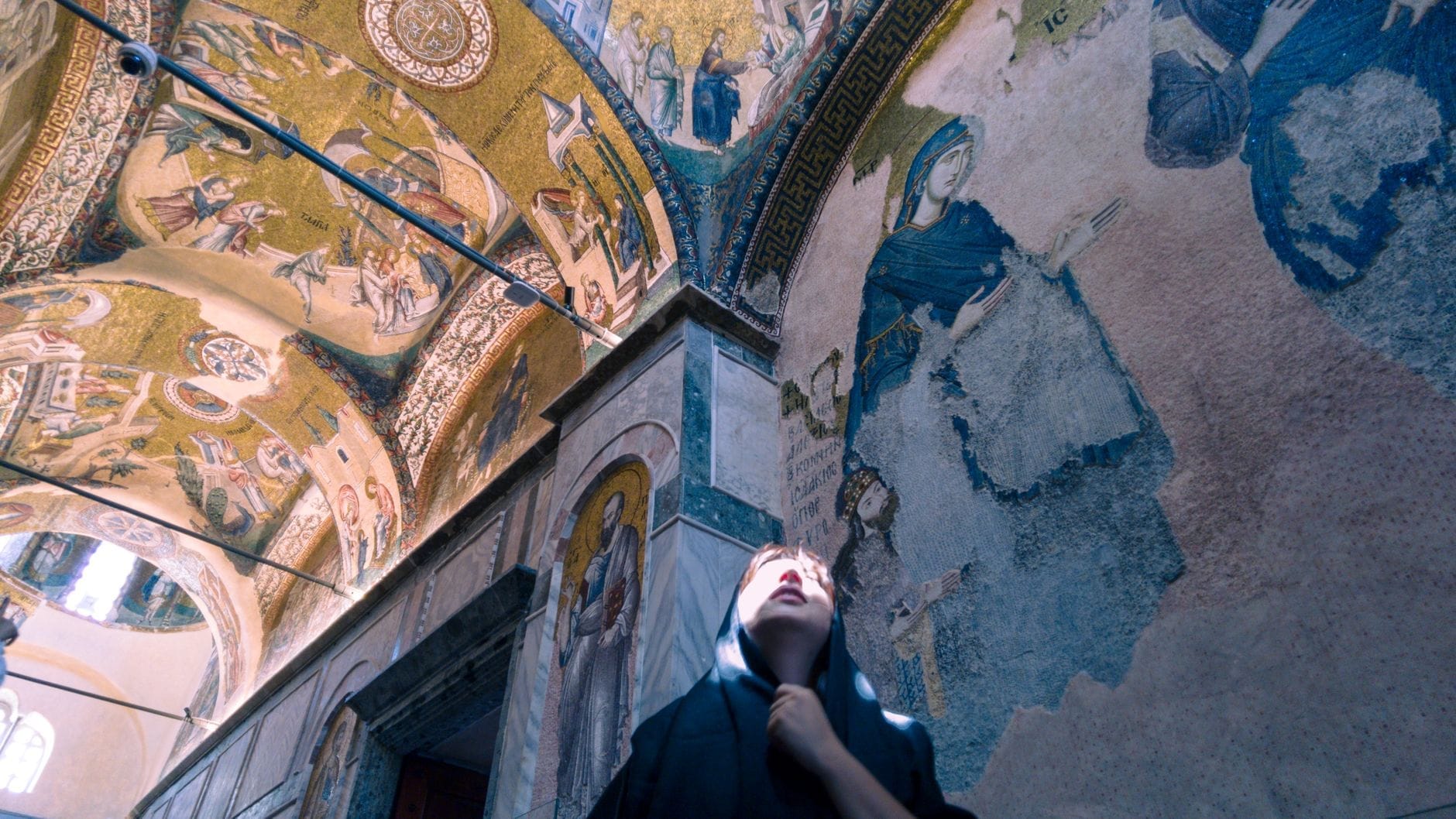
What the Chora Church Actually Is
The Chora Church — officially Kariye Camii (Kariye Mosque) in Turkish — is a late Byzantine building in Istanbul's Fatih district that holds what many art historians consider the finest surviving cycle of Byzantine mosaics and frescoes in existence. While Hagia Sophia dominates the headlines, Chora delivers something different: intimate, narrative art covering almost every surface of its interior narthexes, telling Gospel stories and the life of the Virgin with a precision and warmth that feel almost Renaissance before the Renaissance.
The name 'Chora' comes from the Greek word for 'country' or 'outside the city' — the monastery was originally built outside Constantinople's earlier walls before the Theodosian Walls extended the city boundary in the 5th century. The name stuck even after the city grew around it. The building you visit today took its current form during a major renovation funded by the Byzantine statesman Theodore Metochites around 1315–1321, who is depicted in one of the mosaics presenting the church to Christ.
The site has cycled through identities: monastery church, mosque (from the 16th century), secular museum (from the late 1940s), and mosque again by presidential decree in 2020. It reopened to visitors and worshippers in May 2024 following a four-year restoration. That restoration means the mosaics are in better condition now than they have been in decades — which is precisely why visiting in the near term is worth prioritizing.
The Mosaics and Frescoes: What You Are Looking At
The decorative program covers three distinct spaces inside the 742.5 m² building. The outer narthex (exonarthex) and inner narthex together hold the mosaic cycles — the life of the Virgin, the life of Christ, and a series of ancestor portraits filling the vaults overhead. The parecclesion, a side chapel to the south, is covered in frescoes rather than mosaics, with a stunning Anastasis scene in the apse showing Christ pulling Adam and Eve from their tombs. This single image is among the most powerful examples of late Byzantine painting anywhere.
The gold grounds catch light differently depending on the hour. On clear mornings, sunlight entering from the south side of the building makes the tesserae on the narthex vaults almost vibrate. By midday the light flattens somewhat. If you arrive right after opening around 09:00 on a weekday, you will have the narthexes largely to yourself, and the silence amplifies the effect of the images considerably.
💡 Local tip
Bring a small flashlight or use your phone torch. Some fresco details in the parecclesion are in low-light corners, and the overhead mosaic registers in the narthexes are easier to read with supplemental light.
Look for the dedicatory mosaic of Theodore Metochites above the door leading from the inner narthex into the naos. He is shown wearing an elaborate hat and kneeling, offering a model of the church to a seated Christ. It is one of the few surviving portraits from this period where a donor's identity is certain — and his expression, even at a distance, reads as distinctly human rather than symbolic.
Tickets & tours
Hand-picked options from our booking partner. Prices are indicative; availability and final rates are confirmed when you complete your booking.
Chora Museum Skip-the-Ticket-Line Entry with Audio Guide
From 35 €Instant confirmationFree cancellationBosphorus sunset cruise on luxury yacht with guide
From 55 €Free cancellationIstanbul and Bosphorus cruise on private boat - half day afternoon tour
From 40 €Instant confirmationFree cancellationWhirling Dervishes live show and exhibition
From 29 €Instant confirmation
Historical Context: From Monastery to Mosque and Back
The site's origins reach back to the early 4th century, making it one of Istanbul's oldest continuously occupied religious sites. The building accumulated its current layout over multiple construction phases. The Palaiologan-era renovation of the early 14th century — the one that produced the mosaics and frescoes — was effectively a cultural statement by a Byzantine elite that knew the empire was shrinking and chose to invest in art rather than fortifications.
After the Ottoman conquest of Constantinople in 1453, the church functioned for another half-century as a Christian site before Grand Vizier Hadım Ali Pasha converted it into a mosque in the early 16th century. The mosaics were plastered over or screened — a practice that inadvertently preserved them through the following centuries. The building operated as a mosque until 1945, when the Turkish government began the process of converting it into the Kariye Museum, which opened to the public between 1945 and 1948. The restoration work was led in part by the Byzantine Institute of America. For context on how this fits into Istanbul's larger Byzantine heritage, see our guide to Istanbul's Byzantine history.
A presidential decree reconverted Kariye to a mosque on 21 August 2020 — the same year Hagia Sophia was reconverted — drawing international attention from heritage organizations concerned about access to the art. After the four-year restoration and the 2024 reopening, tourists can still visit and view the mosaics as a fee-paying attraction; the main difference is that the naos (central prayer hall) now operates under mosque rules, meaning shoes come off, dress codes apply, and the space closes to visitors during the five daily prayers.
Practical Walkthrough: What to Expect on Arrival
Visitor entry is from Kariye Türbesi Sokak on the north side of the building. You will pass through a security check and then circle around to the south-side entrance for the mosque-museum section. The ticket booth is at the entrance; head coverings and body coverings are available for hire there if you have arrived underprepared.
⚠️ What to skip
Tourist admission pauses during each of the five daily prayer times and for a longer interval around Friday noon prayers. Check Istanbul prayer times before you visit — arriving close to prayer time can mean a 20–30 minute wait outside or a missed session entirely.
Opening hours are currently 09:00 to 18:00 daily for tourists, but seasonal adjustments may occur and restoration access can affect specific areas. Confirm current hours on the official Muze Istanbul page before your visit. The Museum Pass Istanbul is not accepted here — you pay admission separately, and the current price for foreign visitors is 20€ (verify this locally, as it is subject to revision).
Dress code is standard mosque etiquette: no shorts for anyone, and women are required to cover their hair with a scarf. The entrance area provides scarves and wraps for a small fee. Remove shoes before entering the naos. The narthexes, which hold the mosaics, are treated more like museum corridors and may have somewhat different access rules from the prayer hall — staff will direct you clearly on the day.
Getting There: Chora Is Not on the Tram Line
This is one of the few things about Chora that tests patience. The church sits in Edirnekapı, a neighborhood deep inside the Fatih district, far from both Sultanahmet's tram stops and Taksim's metro lines. There is no metro stop within comfortable walking distance. Most visitors arrive by taxi or bus from central areas — the journey from Sultanahmet takes roughly 15–20 minutes by taxi depending on traffic, which can thicken considerably on weekday mornings. Budget drivers sometimes suggest routing through the Theodosian Walls, which run directly adjacent to the church — combining both in a single half-day outing is genuinely practical.
Bus lines such as 31E, 32, 36A, and 37E from Eminönü, as well as services from Aksaray, serve Edirnekapı and drop passengers within a short walk of the site. If you are using Istanbul's Istanbulkart smart card for public transport, buses are the most economical option. A taxi from Sultanahmet will typically cost around €10–15 at current metered rates, though this should be verified, as fares change frequently.
ℹ️ Good to know
Combining Chora with a walk along the Theodosian Walls and a visit to nearby Eyüp Sultan Mosque makes for a full-day itinerary in the western Fatih district. None of these three sites appear on the standard Sultanahmet tourist circuit, which means they are significantly quieter.
Photography at Chora
Photography of the mosaics and frescoes is generally permitted, but tripods are not allowed, and flash photography is restricted in the prayer hall areas. The narthex mosaics, being overhead and set against gold grounds, require either a steady hand at high ISO or a phone with a reliable night mode. The parecclesion frescoes are darker and benefit from the torch tip mentioned earlier — frame the Anastasis fresco from the center of the chapel doorway to capture the full composition.
The exterior is also worth photographing: the building's brick banding, the multiple domes at varying heights, and the minaret added during the Ottoman period all read well in morning light from the small garden to the south. Arrive at opening time for the best exterior shots before the street fills with local foot traffic.
Is It Worth the Effort?
For anyone with a genuine interest in Byzantine art, medieval Christian iconography, or the architectural history of Istanbul, Chora is not optional — it is essential. The mosaics here are more legible, more complete, and in many respects more emotionally affecting than what survives in Hagia Sophia. If you have already been to Hagia Sophia and the Istanbul Archaeology Museums, Chora is the logical next step deeper into the city's pre-Ottoman history.
Visitors who are primarily interested in Ottoman architecture, Istanbul's modern food scene, or maximizing the number of sites per day may find the effort-to-reward ratio less compelling. The location is inconvenient, the building is small, and if Byzantine art is not your focus, the mosaics can feel like a lot of gold and not much narrative.
That said, the surrounding Fatih neighborhood is one of Istanbul's most atmospheric, with traditional teahouses, Ottoman-era residential streets, and the dramatic backdrop of the ancient land walls. Pairing Chora with a broader exploration of the Fatih district turns what could be a rushed single-attraction visit into a full half-day of unhurried discovery.
Insider Tips
- Arrive at 09:00–09:30 on a Tuesday or Wednesday morning. These are consistently the quietest windows — weekend mornings attract more visitors, and Monday can see after-weekend queuing from tour groups.
- Check Istanbul's prayer time schedule before leaving your accommodation. The midday prayer (Dhuhr) typically falls early afternoon and can cause a 20–30 minute visitor pause right in the middle of the peak visiting period.
- The parecclesion frescoes are in a separate side chapel that some visitors skip entirely by following the crowd flow through the narthexes. Do not leave without finding the Anastasis (Resurrection) fresco in the apse — it is widely considered one of the great paintings of the medieval world.
- If you plan to walk the Theodosian Walls after visiting, exit via the south garden and turn left. You will reach the walls in under five minutes on foot, and the Edirnekapı gate section is one of the most intact stretches of this approximately 6-km fortification.
- The Museum Pass Istanbul does not cover entry here. Budget this as a separate expense — 20€ for foreign visitors at the time of writing — and verify the current price at the ticket booth before assuming it has not changed.
Who Is Chora Church (Kariye Mosque) For?
- Byzantine and early Christian art enthusiasts who want to see mosaics in better condition than almost anywhere else in the world
- Slow travelers with two or more days in Istanbul who have already covered the Sultanahmet highlights
- Photographers specializing in religious architecture and medieval art
- History-focused visitors tracing Istanbul's pre-Ottoman identity
- Anyone building a full-day western Fatih itinerary combining the land walls, Eyüp Sultan Mosque, and the Fener-Balat neighborhoods
Nearby Attractions
Other things to see while in Fatih:
- Fatih Mosque
Commissioned by Sultan Mehmed II a decade after the Ottoman conquest of Constantinople, Fatih Mosque stands as one of Istanbul's most historically charged religious sites. Unlike the tourist-heavy mosques of Sultanahmet, this one belongs primarily to the local neighborhood — and that contrast is exactly what makes it worth visiting.
- Panorama 1453 History Museum
The Panorama 1453 History Museum in Istanbul's Fatih district puts visitors at the center of one of history's most decisive moments: the Ottoman conquest of Constantinople on May 29, 1453. Housed in Topkapı Culture Park beside the ancient Theodosian Walls, the museum wraps a 38-meter-high, 238-meter-long cylindrical painting around a raised viewing platform, blending painted canvas with three-dimensional foreground figures to create an effect that is disorienting in the best possible way.
- Süleymaniye Mosque
Rising above the Golden Horn on Istanbul's Third Hill, Süleymaniye Mosque is widely regarded as the finest work of Ottoman imperial architecture. Built between 1550 and 1557 under the direction of master architect Mimar Sinan for Sultan Suleiman the Magnificent, it remains a functioning mosque with free admission and considerably fewer visitors than the Blue Mosque in Sultanahmet.
- Theodosian Walls
Built in the 5th century CE and stretching roughly 5.7 kilometers from the Golden Horn to the Sea of Marmara, the Theodosian Walls stood for over a thousand years as the most formidable defensive barrier in the medieval world. Today they form one of Istanbul's most atmospheric and undervisited monuments: free, open-air, and bracingly honest about the passage of time.