Istanbul Archaeology Museums: Three Buildings, One Million Stories
The Istanbul Archaeology Museums form one of the world's great archaeological collections, housing around one million artifacts across three distinct buildings in the heart of Sultanahmet. From the Alexander Sarcophagus to ancient Anatolian tablets, this is where Ottoman imperial collecting meets serious scholarship.
Quick Facts
- Location
- Osman Hamdi Bey Yokuşu, Gülhane, Sultanahmet, Fatih district, Istanbul
- Getting There
- T1 tram to Gülhane stop, then a 2-minute walk uphill into the complex
- Time Needed
- 2 to 4 hours depending on depth of interest; the full complex rewards a half-day
- Cost
- Admission fees change frequently — verify current prices locally or via the official museum portal before visiting. Museum Pass Istanbul accepted. Free for visitors with disabilities.
- Best for
- History lovers, archaeology enthusiasts, families with older children, and anyone who wants to understand what Istanbul sat on top of for three thousand years
- Official website
- muze.gen.tr/muze-detay/arkeoloji
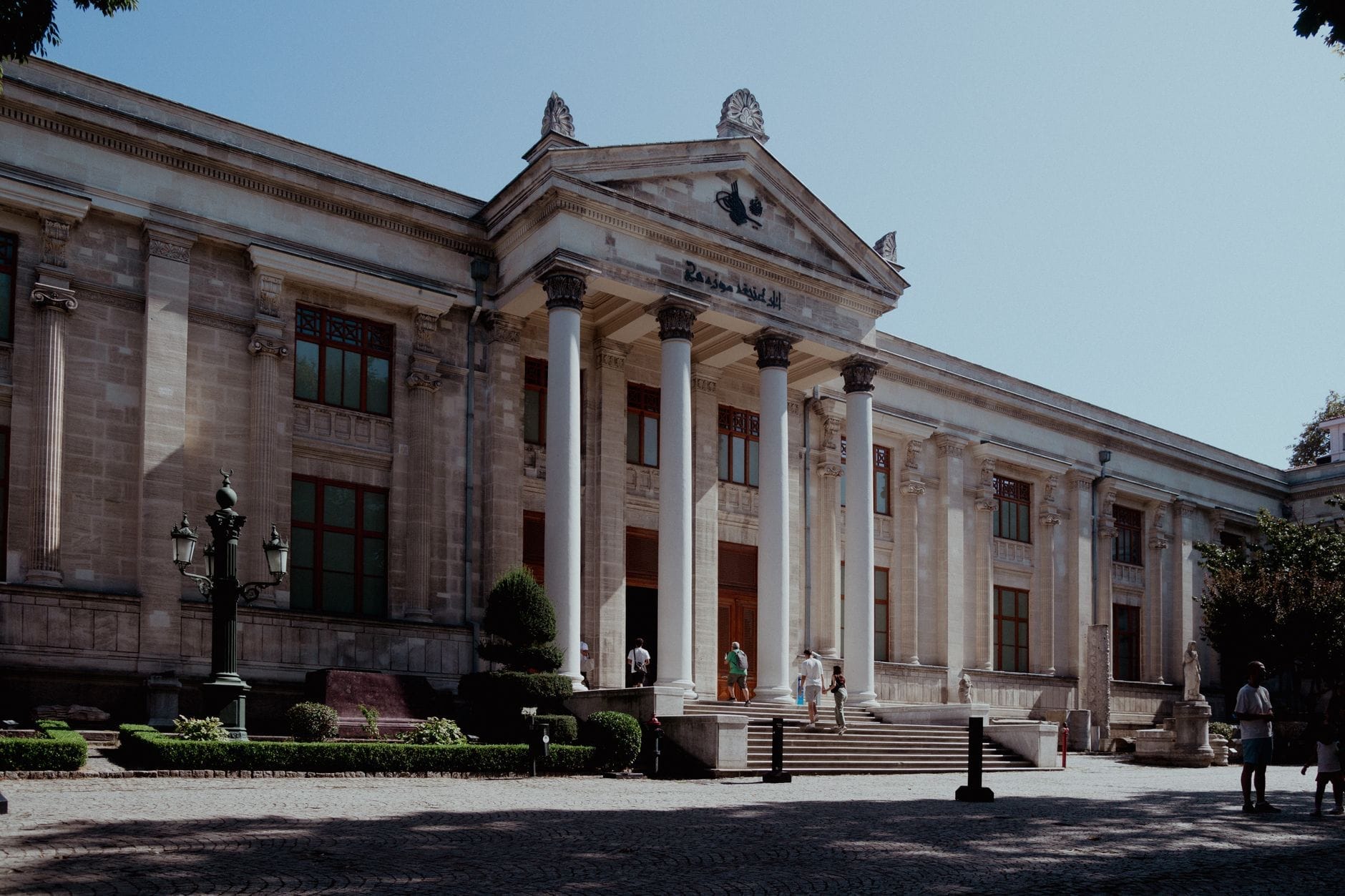
What the Istanbul Archaeology Museums Actually Are
Most visitors to Sultanahmet walk right past the entrance without realizing it. The Istanbul Archaeology Museums complex sits at the end of a sloping lane connecting Gülhane Park to the outer walls of Topkapi Palace, and the signage is easy to miss in the shadow of those bigger names. That is a significant mistake to make.
The complex is not one museum but three: the main Archaeology Museum (the large neo-classical building), the Museum of the Ancient Orient, and the Tiled Kiosk Museum. Combined, they hold approximately one million artifacts drawn from the vast geographic reach of the Ottoman Empire, covering civilizations from Mesopotamia, Egypt, Anatolia, the Levant, the Balkans, and the Arabian Peninsula. In terms of raw archaeological depth, few institutions outside Cairo, Athens, or the British Museum come close.
The complex is part of the broader Topkapi Palace grounds historically, which explains the setting: you are walking into what was once the first court of the imperial palace. That context matters when you're trying to understand why such a world-class collection ended up concentrated in one relatively compact campus in Sultanahmet.
💡 Local tip
Plan your visit for a Tuesday or Wednesday morning when the complex is at its quietest. Weekends and afternoons after cruise ships dock can fill the main hall with tour groups. The first hour after opening at 09:00 consistently offers the best conditions for photographs and unhurried viewing, with regular closing at 18:30.
The History Behind the Institution
Turkey's museum tradition began here. In 1869, the Ottoman state established "Müze-i Hümayun" (the Imperial Museum) inside Hagia Irene, using the Byzantine church as a depot for antiquities rather than a proper exhibition space. The collection outgrew its home within two decades.
The turning point was the appointment of Osman Hamdi Bey as director in 1881. A painter trained in Paris, Hamdi Bey proved to be an extraordinary administrator and archaeologist. He personally led the excavation at Sidon in 1887 that unearthed the royal necropolis of ancient Phoenicia, including the sarcophagus that would become the collection's greatest trophy. He also lobbied successfully for the 1884 Antiquities Law, which effectively stopped the export of major finds from Ottoman territory.
The current main building, designed by French-trained architect Alexander Vallaury in neo-classical style, opened in 1891. The friezes running along its facade echo the decorative motifs of the very sarcophagi inside, a deliberate and elegant gesture. The building itself is a statement about how the late Ottoman state wanted to position itself within the world of European scholarship and cultural prestige. The road leading to the entrance now bears Hamdi Bey's name.
Tickets & tours
Hand-picked options from our booking partner. Prices are indicative; availability and final rates are confirmed when you complete your booking.
Istanbul Archaeological Museums Entry Ticket and Audio Guide
From 29 €Instant confirmationFree cancellation2- and 3-Day Istanbul Museum Pass with Skip-the-Line and Audio Guides
From 250 €Instant confirmationFree cancellationIstanbul Turkish and Islamic Arts Museum with Audioguide
From 29 €Instant confirmationFree cancellationIstanbul and Bosphorus cruise on private boat - half day afternoon tour
From 40 €Instant confirmationFree cancellation
The Three Buildings: What to Expect in Each
The Main Archaeology Museum
The central building is where most visitors spend the majority of their time, and with good reason. The ground floor is dominated by sarcophagi, and the quality of the collection here is exceptional. The Alexander Sarcophagus, discovered at Sidon and dating to the late 4th century BCE, is the headline piece: a carved marble coffin depicting battle scenes featuring Alexander the Great rendered with such precision that traces of the original paint remain visible in the carved folds of the figures' clothing. It did not belong to Alexander himself, most likely to King Abdalonymus of Sidon, but the craftsmanship makes the naming question feel secondary.
The Mourning Women Sarcophagus, displayed in the same hall, offers a different kind of impact: 18 female figures in various attitudes of grief occupy individual columned niches, each carved distinctly enough that they read as portraits rather than types. The hall is large, the ceilings high, and natural light enters through tall windows. It smells faintly of cool stone and old wood, the particular atmosphere of serious European museum buildings from the late 19th century.
Upper floors cover Anatolian civilizations chronologically, with significant Hittite, Phrygian, Lydian, and Hellenistic collections. The material becomes denser and requires more active engagement, but rewards visitors who slow down. Labels are in Turkish and English throughout.
Museum of the Ancient Orient
The smaller building to the left of the main entrance courtyard houses one of the most underappreciated collections in Istanbul: Mesopotamian, Egyptian, and pre-Islamic Arabian artifacts gathered during the Ottoman period when the empire still controlled those territories. The centerpiece for many visitors is a series of glazed brick panels from the Processional Way of ancient Babylon, depicting the mythological Mushhushshu dragon in vivid blue and yellow. These panels date to the reign of Nebuchadnezzar II, roughly 600 BCE.
Also here: cuneiform tablets, including some of the oldest treaty texts in recorded history, and Egyptian mummification artifacts. The Ancient Orient building often feels less crowded than the main hall, partly because fewer people know what it contains. Allow at least 45 minutes here.
Tiled Kiosk Museum
The oldest structure in the complex is the Tiled Kiosk, built in 1472 under Sultan Mehmed II, making it one of the oldest surviving Ottoman civil structures in Istanbul. It now houses a collection of Seljuk and Ottoman ceramics and tiles, including Iznik tilework in the deep cobalt and turquoise tones that define Ottoman decorative art. The building itself, with its arched portico and tiled facade, is as interesting as the collection inside. If you're visiting in summer, the courtyard in front offers shade and a good view of the main building's facade.
ℹ️ Good to know
The Tiled Kiosk is occasionally closed for restoration work independently of the rest of the complex. Check the official website before your visit if it's a priority.
How the Visit Feels at Different Times of Day
At 09:00, when the gates open, the courtyard between the buildings is cool and nearly empty. The light in the main sarcophagus hall is soft and even at that hour, ideal for photography without flash. By 11:00, organized tour groups begin arriving and the hall fills with the overlapping commentary of different guides in different languages. The audio environment becomes noticeably more complex.
Midday through early afternoon is the busiest period, particularly in summer when temperatures outside push people indoors toward air-conditioned spaces. The museum benefits from this instinct: the galleries are cool and the crowds, while present, move at a slower pace than the streets outside. Late afternoon, particularly in the hour before closing, sees a second quieter window. The light through the west-facing windows of the main building takes on a warmer tone, and the marble sarcophagi reflect it noticeably.
In winter (November 1 through March 31), the museum closes at 18:30 rather than 19:00. The shorter days and reduced tourist volume mean that a winter morning visit can feel almost private, which for this kind of institution is genuinely exceptional.
Getting There and Practical Logistics
The most straightforward route is the T1 tram, which connects the historic peninsula from Bağcılar to Kabataş. Alight at Gülhane station, walk through the park entrance, and follow the uphill path to the museum gates, a journey of about two minutes on foot. The T1 also stops at Sultanahmet, one stop further, but Gülhane is marginally closer. For a broader sense of how public transit works across the city, the guide to getting around Istanbul covers tram, metro, and ferry connections in detail.
From the Asian side, take a ferry from Kadikoy or Uskudar to Eminonu, then either walk north along the waterfront and up through Gulhane Park (about 15 minutes on foot) or connect to the T1 tram for one stop. The walk through Gulhane Park is pleasant and worth doing at least once.
The complex sits on a slope between Gülhane Park and the Topkapi Palace outer walls, which means some uphill walking and internal staircases in the older buildings. Comfortable, flat-soled shoes are the right choice. The grounds are partially paved but uneven in places, and the Tiled Kiosk entrance involves a step up. Visitors with mobility considerations should note that access varies between buildings; the main archaeology building is the most straightforward to navigate.
If you hold a Museum Pass Istanbul, it covers admission to this complex as it does for other state-managed museums across the city. The Istanbul Museum Pass guide explains what the pass covers and how to calculate whether it's worth buying for your itinerary.
⚠️ What to skip
Admission prices in Turkish museums have been adjusted multiple times in recent years to reflect currency changes. The 75 TRY figure reported in 2022 is no longer accurate. Verify current prices at the official museum portal or at the ticket window before budgeting.
Photography, Audio Guides, and What to Bring
Photography without flash is generally permitted throughout the complex. The main sarcophagus hall offers the best natural light conditions in the morning. The Alexander Sarcophagus is displayed in a large open case that allows viewing from all four sides, and a wide-angle lens or phone camera in panorama mode captures the full length best. The Babylonian panels in the Ancient Orient building are mounted at eye level and well-lit artificially, producing good results at any time of day.
Audio guides are available at the ticket window (prices subject to change). They cover the main highlights of the archaeology building and are available in multiple languages. The guides add significant context, particularly for the sarcophagus hall where the visual quality of the objects can overshadow the historical narrative. For self-directed visitors, the English-language labeling throughout the main building is thorough enough to navigate without a guide.
Bring water. There is a cafe in the complex courtyard but it operates seasonally and can be slow during peak hours. The gift shop near the exit carries well-curated prints, books, and replicas at reasonable prices compared to similar museum shops in other cities.
Making the Most of It
For travelers with a genuine interest in ancient history, this is not merely worth visiting: it is one of the top three or four reasons to spend time in Istanbul's historic peninsula. The Alexander Sarcophagus alone would justify a detour in most major European cities. The fact that it sits in a relatively uncelebrated museum ten minutes from Hagia Sophia, competing for attention against louder attractions, is partly why the experience remains so consistently rewarding.
For travelers on a tight schedule who have already allocated full days to Hagia Sophia, Topkapi Palace, and the Grand Bazaar, this complex may not survive the cutting. But it fits naturally into any itinerary that includes Gulhane Park or Topkapi, since the entrance is on the same path. The natural pairing is a morning here followed by an afternoon in Topkapi.
Who should consider skipping: visitors with very young children may find the largely unlabeled statuary and sarcophagus-heavy displays difficult to make engaging. The museum lacks the interactive elements of purpose-built family attractions. Similarly, travelers interested primarily in Ottoman history and Islamic art will find more directly relevant material at the Museum of Turkish and Islamic Arts or the Topkapi Palace collections.
Insider Tips
- The courtyard between the three buildings is a natural regrouping point. If you visit with others who have different interests, split up and reconvene there rather than trying to move as a group through all three buildings at the same pace.
- The upper floors of the main archaeology building are far less visited than the ground-floor sarcophagus hall. The Hellenistic and Roman-period collections there, including portrait busts and architectural fragments, often have entire rooms to themselves even on busy days.
- The Tiled Kiosk's outer portico offers the best view of the main building's neo-classical facade, which is decorated with carved friezes mimicking ancient reliefs. It's worth stopping there before you go inside either building.
- If you're combining this visit with Gulhane Park (immediately adjacent and free to enter), visit the park first in the morning when it's at its most pleasant, then enter the museum as it warms up outside. The park has decent benches and a tea garden near the Bosphorus-facing edge.
- The Ancient Orient building's Babylonian panels are among the few major examples of Nebuchadnezzar-era glazed brick outside of Berlin's Pergamon Museum. Most visitors don't realize the comparative rarity of what they're looking at.
Who Is Istanbul Archaeology Museums For?
- Archaeology and ancient history enthusiasts who want to see material from Mesopotamia, Phoenicia, Egypt, and Anatolia in one place
- Visitors already planning a Topkapi Palace visit who want to extend their morning in the area
- Photographers with an interest in classical sculpture and architectural detail in good natural light
- Travelers following Istanbul's Byzantine history trail, for whom the institutional history of the building itself adds another layer
- Anyone who wants a serious, air-conditioned alternative to the busiest Sultanahmet sites during peak summer hours
Nearby Attractions
Other things to see while in Sultanahmet:
- Basilica Cistern
Built by Emperor Justinian I in 532 AD, the Basilica Cistern is one of Istanbul's most extraordinary ancient structures. Descend beneath Sultanahmet's streets into a vast, column-filled underground reservoir that once supplied water to the Byzantine imperial palace. Few places in the world feel quite like it.
- Blue Mosque (Sultan Ahmed Mosque)
The Sultan Ahmed Mosque, known universally as the Blue Mosque, is one of Istanbul's most recognizable landmarks. Built between 1609 and 1616, it remains an active place of worship that welcomes non-Muslim visitors outside prayer times. This guide covers everything you need to plan a smooth, respectful visit.
- Gülhane Park
Gülhane Park sits directly beside Topkapı Palace in Sultanahmet, occupying land that served as the Ottoman court's private outer garden for centuries. Open daily, free to enter, and containing one of Istanbul's oldest surviving monuments, it rewards visitors who take more than a passing glance.
- Hagia Irene
Hagia Irene (Aya İrini Müzesi) is the oldest surviving church structure in Istanbul, predating even Hagia Sophia. Sitting quietly inside the first courtyard of Topkapı Palace, it offers a rare encounter with raw Byzantine architecture — unrestored, unadorned, and old.