Grand Bazaar (Kapalıçarşı): What to Know Before You Go
Founded in the 1460s under Sultan Mehmed II, the Grand Bazaar is one of the oldest and largest covered markets in the world. With 61 streets, over 4,000 shops, and about 30,700 square metres of covered space, it is an architectural and commercial landmark at the heart of Istanbul's historic peninsula.
Quick Facts
- Location
- Beyazıt, Fatih, Istanbul (Historic Peninsula)
- Getting There
- T1 tram to Beyazıt/Kapalıçarşı or Çemberlitaş; or metro to Vezneciler
- Time Needed
- 1.5 to 3 hours
- Cost
- Free entry; no ticket required
- Best for
- History lovers, textile shoppers, architecture enthusiasts, first-time Istanbul visitors
- Official website
- www.kapalicarsi.com.tr
What the Grand Bazaar Actually Is
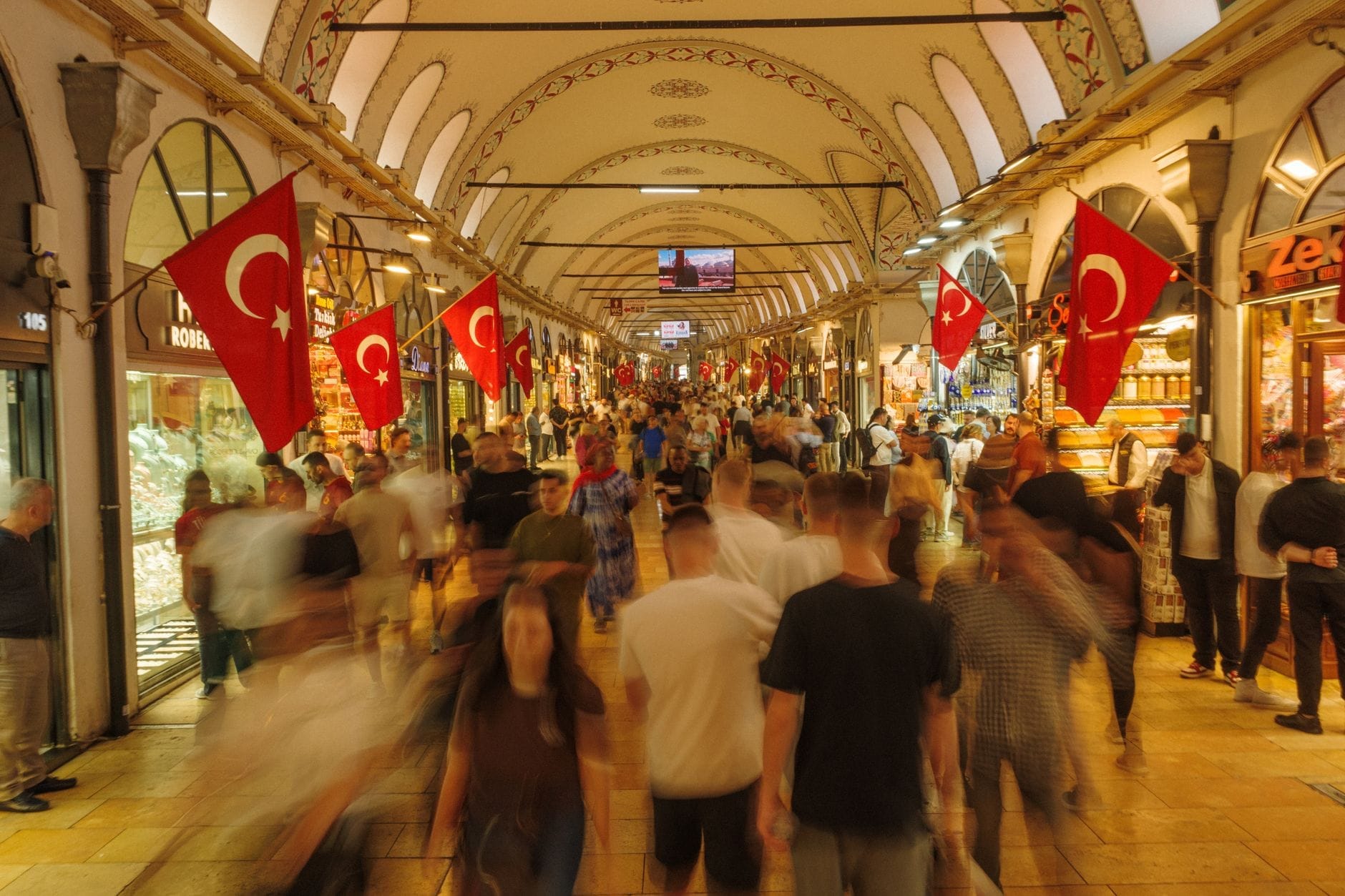
The Grand Bazaar, known in Turkish as Kapalıçarşı or 'Covered Market', is not simply a shopping centre with historic branding. It is a city within the city: 61 named internal streets, over 4,000 individual shops, several hans (merchant courtyards), fountains, mosques, and a continuous roof stretching across roughly 30,000 to 31,000 square metres. Visitors who expect a tidy, linear experience tend to be surprised. The layout is labyrinthine by design, built and rebuilt over centuries to keep merchants and buyers inside, trading.
Construction began around 1460 to 1461 under Sultan Mehmed II, not long after the Ottoman conquest of Constantinople. The original purpose was practical: two covered bedestens (vaulted market halls) were built to generate revenue for the maintenance of Hagia Sophia, then being converted into a mosque. The first was the Cevahir Bedesteni (Jewellers' Hall), which still stands at the bazaar's core and is among the oldest surviving sections. The second was the Sandal Bedesteni, used historically for silk and textile trade. Around these two anchors, the market grew organically for decades and centuries, absorbing adjacent hans and streets until it reached its current scale.
ℹ️ Good to know
Opening hours: Monday to Saturday, approximately 08:30 to 19:00. The bazaar is closed on Sundays and on the first day of religious holidays and certain official public holidays. Hours can shift slightly during Ramadan. Confirm locally before planning a visit around specific dates.
Arriving and Getting Oriented
The most straightforward arrival is by tram. The T1 line (Kabataş to Bağcılar) stops at Beyazıt/Kapalıçarşı, which deposits you at the bazaar's main gate, Beyazıt Kapısı, on the side facing the open square and the entrance to Istanbul University. An equally convenient stop is Çemberlitaş, one stop east, which brings you to the southern perimeter and closer to the carpet and kilim dealers. If you're coming from the metro network, the Vezneciler station is about a 10-minute walk to the bazaar's northern edge.
The bazaar has 21 gates in total. Each opens onto a different section, and first-time visitors frequently enter one gate, lose their orientation within minutes, and exit from a gate they did not intend. This is not a failure of navigation: it is how the place works. Pick up a printed map at the information kiosk near the main gate if you want to trace specific sections, or simply accept that wandering is the dominant mode of movement here. For broader context on how to move around this part of the city, see the guide to getting around Istanbul.
💡 Local tip
The bazaar's internal streets are named, and most shops display their address using the street name and a number. If you've arranged to meet someone at a specific shop, get the street name in advance. 'Near the gold section' is not a useful meeting point in a market this size.
Tickets & tours
Hand-picked options from our booking partner. Prices are indicative; availability and final rates are confirmed when you complete your booking.
Skip-the-line Hagia Sophia and Grand Bazaar tour
From 60 €Instant confirmationFree cancellationHagia Sophia, Blue Mosque, Grand Bazaar guided small group tour
From 24 €Instant confirmationFree cancellationIstanbul half-day top sites morning tour
From 45 €Instant confirmationFree cancellation500 year old historical Turkish bath experience
From 50 €Instant confirmationFree cancellation
How the Bazaar Changes Through the Day
The difference between visiting at 09:00 and visiting at 14:00 is significant. In the first hour after opening, the bazaar is the preserve of merchants preparing their stalls, delivery workers wheeling carts of goods through the stone corridors, and a thin scattering of early visitors. The light filtering through the domed skylights is at its sharpest in the morning. The smell is mostly of fresh tea being brewed in the small çay ocakları (tea stations) tucked into alcoves every few hundred metres. Conversations are unhurried.
By midday, particularly from April to October, the bazaar fills to a level that makes walking in a straight line difficult. Tour groups move in tight packs through the main commercial artery of Kalpakçılar Caddesi, the gold street, where shop windows of stacked 22-carat jewellery reflect artificial light back at each other. The ambient sound becomes a layered mix of vendor calls, multiple languages, and the persistent clatter of the tea-server's tray. If you are sensitive to dense crowds or confined spaces, this is the period to avoid.
Late afternoon, from around 16:00, brings a different energy. Serious buyers tend to arrive then, once the tourist peak begins to thin. Prices do not officially change by time of day, but merchants who have been bargaining all afternoon may be more willing to settle quickly on a final number. The light through the skylights softens, and the corridors feel slightly less pressurised. By 18:30, many shops begin lowering their shutters incrementally, and the bazaar takes on a transitional, closing-time atmosphere that is worth seeing even if you have no intention of buying anything.
What Is Actually Sold Here
The Grand Bazaar is not one market but a collection of specialised trade zones that developed along guild lines over centuries. Gold and jewellery dominate Kalpakçılar Caddesi and the surrounding alleys, with an estimated 3,500 shops dealing in gold across Istanbul. Leather goods, carpets and kilims, ceramics, spices, textiles, silverware, lamps, and tourist souvenirs each have their own concentrations. The carpet and kilim dealers tend to cluster in and around the southern and southwestern sections. Leather workshops occupy a belt running through the centre.
Alongside the bazaar itself, the surrounding neighbourhood offers equally worthwhile commercial streets. The Arasta Bazaar near the Blue Mosque specialises in ceramics and kilims in a quieter setting. The Spice Bazaar in Eminönü, a 20-minute walk north, focuses on dried goods, spices, and Turkish sweets and is worth pairing with a Grand Bazaar visit on the same morning.
A practical note on quality: the range runs from handmade textiles and antique pieces to mass-produced goods marketed with inflated origin stories. A ceramic plate labelled 'Iznik' is not automatically made in Iznik. Ask specific questions about origin and production method, and be skeptical of any explanation that arrives too quickly and too perfectly. Reputable dealers in carpets or antiques will typically show you more than they tell you.
⚠️ What to skip
Pickpocketing is a known risk in the Grand Bazaar, particularly in the densest sections around the gold street. Use a front-facing bag or money belt. Avoid carrying more cash than you intend to spend, and keep your phone in a secure pocket rather than your hand.
The Architecture and History Beneath the Commerce
Most visitors walk through the Grand Bazaar focused on the shops and miss the structural fabric entirely. The vaulted ceilings in the older sections are painted in geometric patterns of red, blue, and gold, restored repeatedly but still referencing their Ottoman originals. The two original bedestens are distinguishable from the later additions by their heavier masonry, smaller windows, and the quality of their vaulting. The Cevahir Bedesteni at the heart of the complex is the oldest standing section, and even on a busy afternoon it has a different acoustic quality from the surrounding streets: lower, heavier, more contained.
The bazaar has survived multiple fires and earthquakes, including a major earthquake in 1766 and a fire in 1954. The 1954 fire destroyed significant portions and led to reconstruction work that partially regularised sections that had developed organically. Today the complex is managed as a functioning commercial entity, not a preserved museum. It continues to operate as it has for over 560 years. For a broader look at Ottoman-era architecture across Istanbul, the Istanbul Ottoman history guide provides useful context on the construction period and Sultan Mehmed II's urban programme.
Practical Walkthrough and Photography
Photography inside the Grand Bazaar is generally permitted for personal use, and the combination of domed ceilings, stacked merchandise, and mixed natural and artificial light makes it genuinely rewarding for photographers. The best light for interior shots is in the first 90 minutes after opening, when the skylights carry direct light down into the corridors before the crowds thicken. The gold street is visually dramatic but technically difficult to shoot well, due to the high contrast between illuminated jewellery displays and the darker corridor behind. A wide lens is more useful here than a telephoto.
Wear comfortable shoes with grip. The stone floors in older sections are uneven and polished smooth by centuries of foot traffic, particularly around the bedestens. In wet weather, moisture tracked in from outside can make the entrance sections near the main gates slippery. There is no single accessible route through the bazaar: the irregular flooring, narrow corridors, and absence of consistent ramps make navigation difficult for wheelchair users or those with limited mobility.
The bazaar sits on the western edge of the Sultanahmet historic core. After visiting, the logical continuation is either eastward toward the Topkapı Palace complex, or a short walk southeast to the Blue Mosque and the Hippodrome. If you are planning a full day on the historic peninsula, the historic peninsula guide provides a logical sequencing of attractions to minimise backtracking.
Who Should Consider Skipping It
The Grand Bazaar is not for everyone, and there is no obligation to visit simply because it appears on every Istanbul itinerary. If you find dense, noisy, vendor-heavy environments exhausting rather than energising, the bazaar at peak hours will wear you down quickly. If you are not interested in shopping or commercial history, the architectural payoff alone may not justify the experience of navigating it in high season. Visitors who prioritise quiet, unhurried cultural encounters may find more satisfaction at the nearby Museum of Turkish and Islamic Arts or the Suleymaniye Mosque complex.
Equally, those with limited time in Istanbul and a primary interest in Byzantine or Ottoman monument history may use their hours more effectively at Hagia Sophia or the Basilica Cistern, both within walking distance. The Grand Bazaar rewards curiosity and patience, not efficiency.
Insider Tips
- Enter through the Çemberlitaş gate rather than the main Beyazıt gate. The southern entry deposits you into the carpet and kilim sections, which are less immediately overwhelming than the gold street and give you a better sense of the bazaar's scale before you hit the crowds.
- For serious purchases, particularly carpets, ceramics, or silver, go back to a shop on a second visit if you can. Dealers notice the difference between a first-pass tourist and someone who has returned with intent. The negotiating dynamic changes.
- The small tea-serving staff (çaycılar) who circulate through the bazaar on trays are not performing for tourists. Accepting a glass of tea when offered during a purchase negotiation is a social norm, not a trap. It slows the interaction down, which usually works in the buyer's favour.
- The hans connected to the bazaar, particularly the Zincirli Han and Sahaflar Çarşısı (the secondhand book market just outside), are largely overlooked by visitors focused on the main corridors. The Sahaflar Çarşısı dates to the Byzantine period in its origins and sells antique maps, old prints, and used books in an open courtyard that is considerably quieter than the bazaar interior.
- If you are buying gold, the price per gram is posted publicly on boards within the market and tracks the daily gold rate. The benchmark for legitimate sellers is the current spot price plus a standard craftsmanship premium. Any price significantly below this warrants closer scrutiny of the item's hallmark and weight.
Who Is Grand Bazaar (Kapalıçarşı) For?
- First-time Istanbul visitors who want to experience the Ottoman commercial city in its most intact form
- Shoppers with a specific interest in handmade textiles, carpets, jewellery, or ceramics, who have time to research and return
- Architecture and urban history enthusiasts interested in how Ottoman trade infrastructure shaped city form
- Photographers working with street and interior subjects who can visit at opening time
- Travellers who enjoy unstructured exploration and are comfortable navigating without a fixed route
Nearby Attractions
Other things to see while in Grand Bazaar & Bazaar Quarter:
- Rüstem Paşa Mosque
Rüstem Paşa Mosque is a 16th-century Ottoman mosque designed by Mimar Sinan, famous for its extraordinary density of hand-painted Iznik tiles covering almost every interior surface. Free to enter and tucked above the traders of Tahtakale near the Spice Bazaar, it rewards the curious traveler willing to climb a narrow staircase.
- Spice Bazaar (Mısır Çarşısı)
Built in 1664 as part of the Yeni Camii complex, the Spice Bazaar is a covered L-shaped market hall in Eminönü with around 85 shops selling spices, dried fruits, sweets, and lokum. Entry is free, the atmosphere is dense and sensory-rich, and the surrounding streets are just as interesting as the market itself.