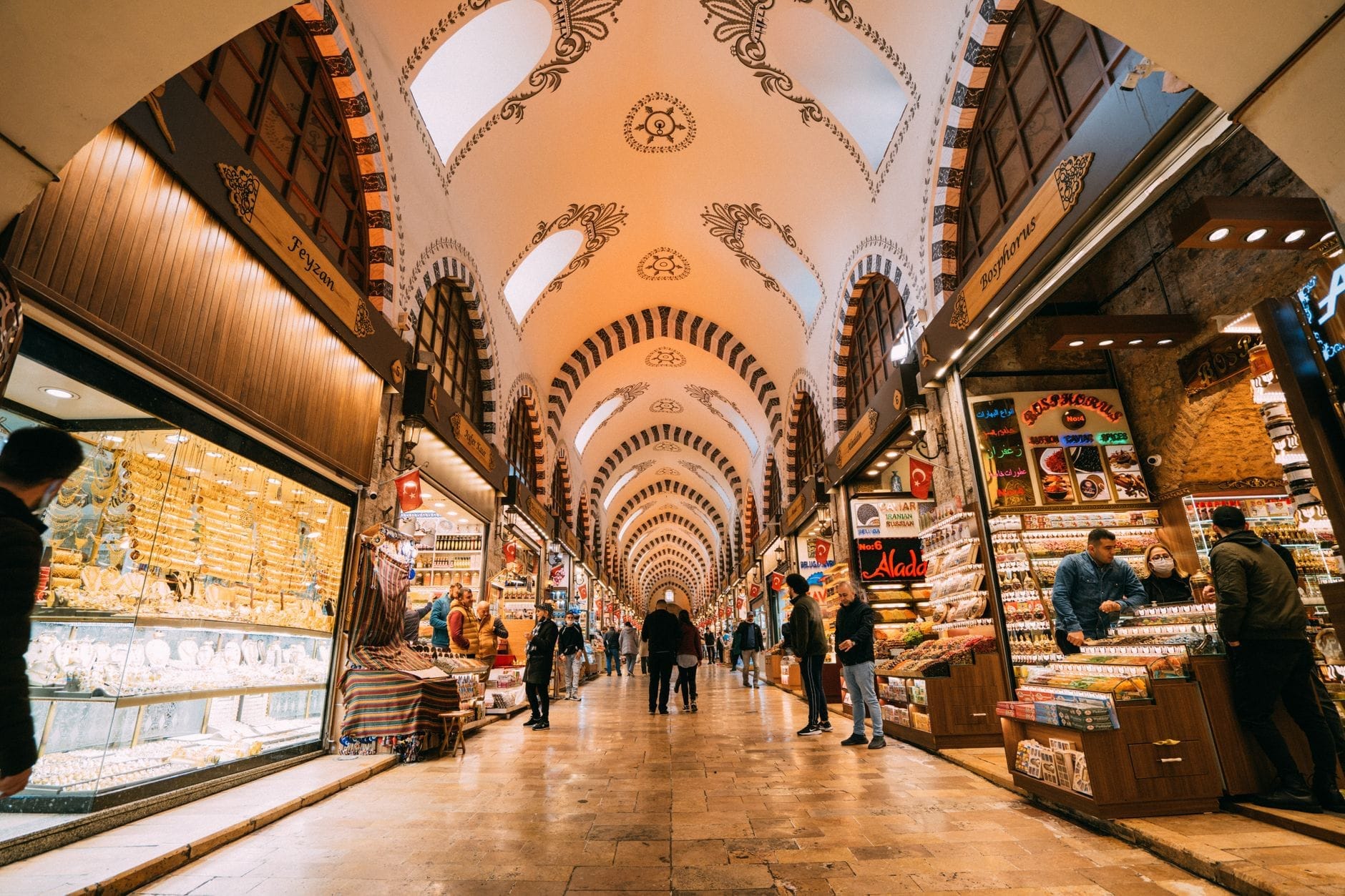
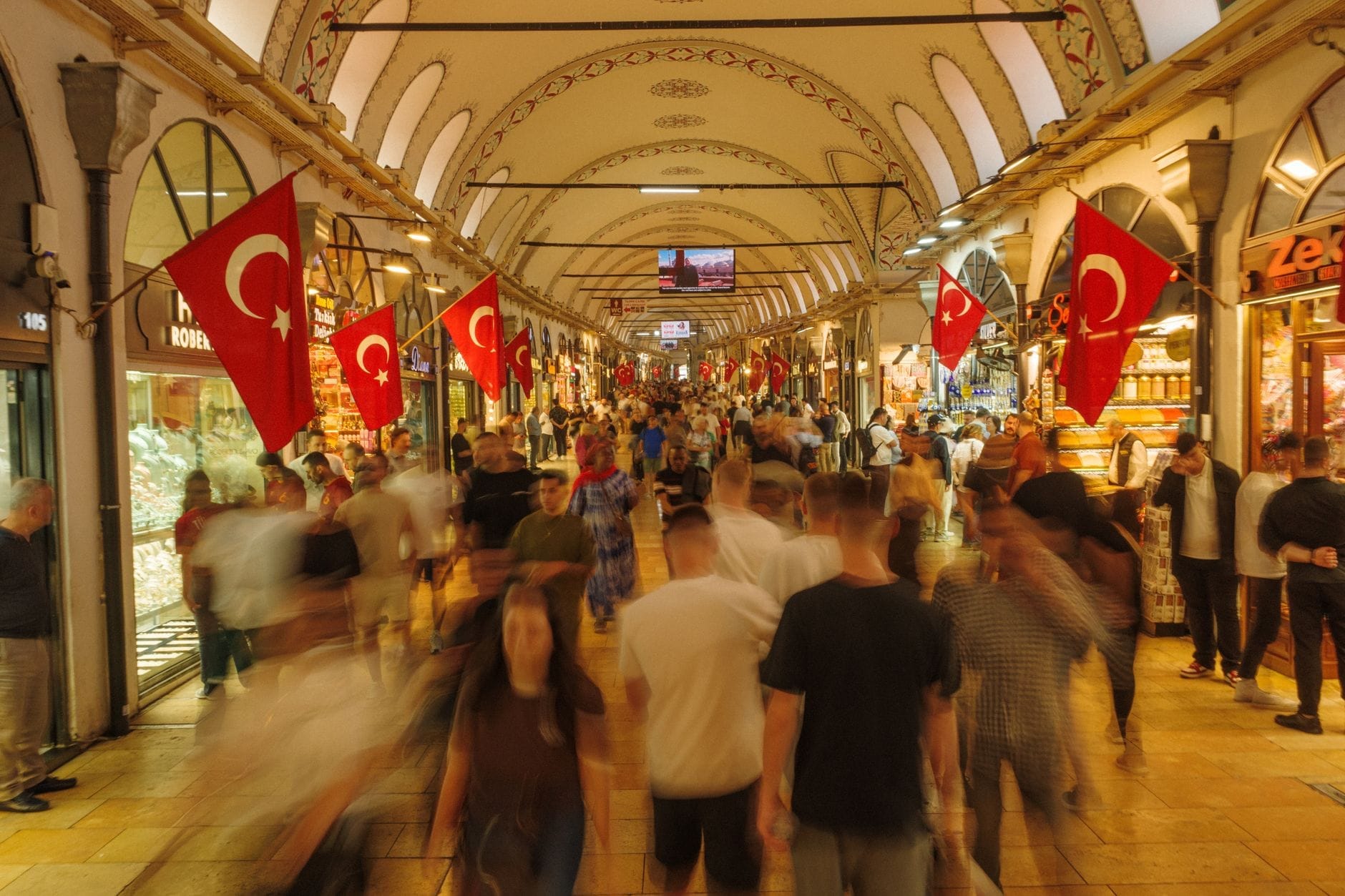
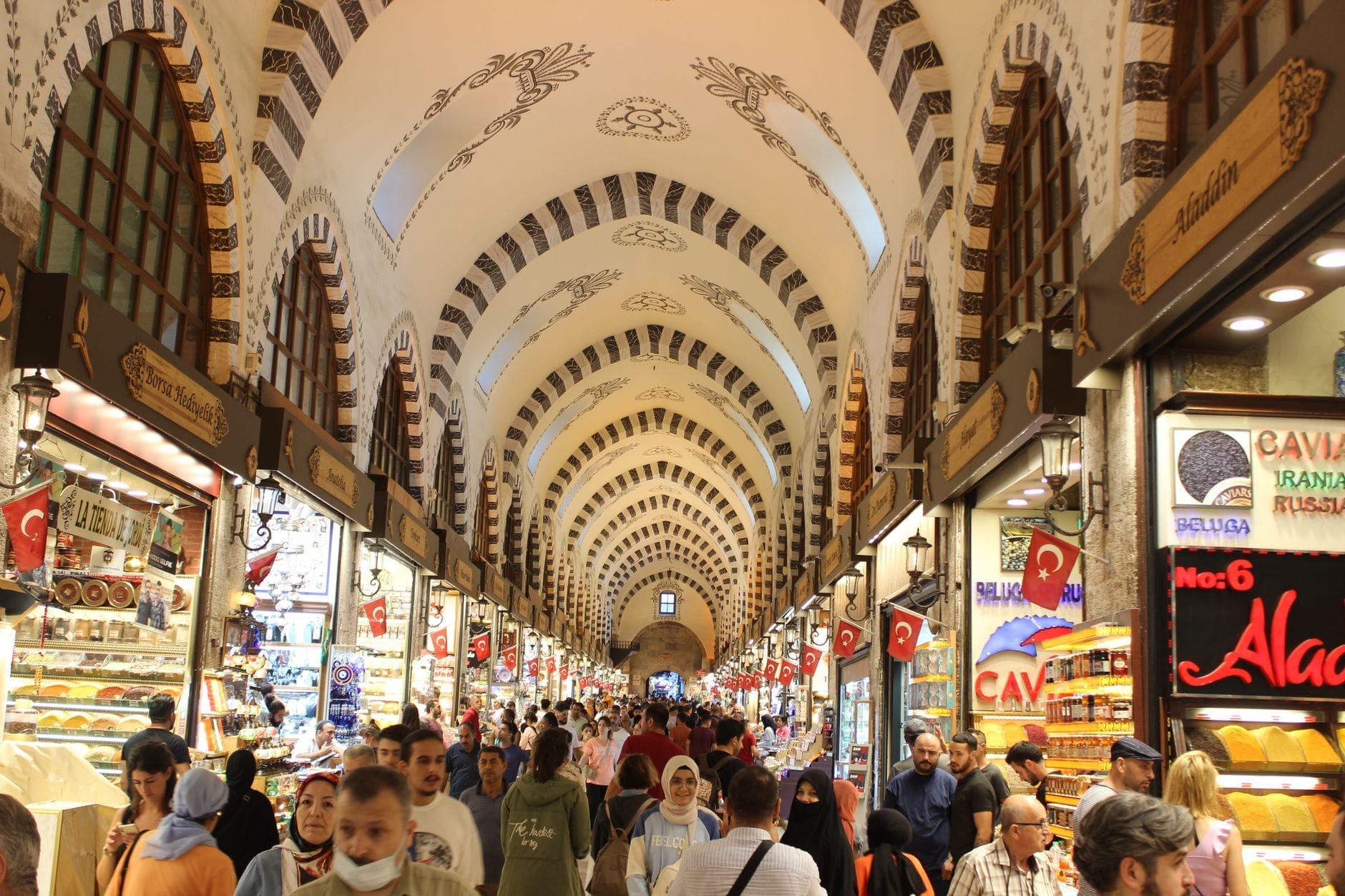
The Grand Bazaar Quarter in Istanbul's Fatih district is the commercial heart of the old city, built around one of the world's oldest and largest covered markets. It spans the zone between Beyazıt and Nuruosmaniye, pulling together centuries of trade history, Ottoman hans, and the surrounding street life of the historic peninsula.
The Grand Bazaar Quarter is where Istanbul's commercial identity took shape over five centuries. This is not simply a shopping district: it is a layered urban landscape of covered passages, Ottoman caravanserais, open-air book stalls, and neighborhood mosques that still function as a genuine trading center for locals and visitors alike.
Orientation
The Grand Bazaar Quarter occupies a ridge in the Fatih district on Istanbul's historic peninsula, roughly between Beyazıt Square to the west and the Nuruosmaniye Mosque to the east. The southern boundary runs along Yeniçeriler Caddesi, the main thoroughfare connecting Sultanahmet to Beyazıt, while the northern edge fades into the hans and wholesale streets of Mercan and Mahmutpaşa. This is one of the densest concentrations of commercial history in any city on earth.
Spatially, the quarter sits about a ten-minute walk uphill from the waterfront at Eminönü and the Spice Bazaar. To the east, the slope descends toward Sultanahmet and the main cluster of Byzantine and Ottoman monuments. Understanding this geography matters: the bazaar sits at a hinge point between the monumental tourist zone and the working commercial city, which is partly why it draws such a relentless stream of foot traffic.
The wider neighborhood connects directly to Sultanahmet via Yeniçeriler Caddesi and to Eminönü and the Golden Horn waterfront via the steep lanes of Mahmutpaşa. Beyazıt Square, immediately to the west of the bazaar's main gate, serves as the natural anchor point for the whole quarter, with Istanbul University on its northern edge and the Beyazıt Mosque framing the open plaza.
Character and Atmosphere
Early mornings here belong to the traders. Before 9am, delivery carts and porters called hamals move through the back lanes of the bazaar and the surrounding hans, restocking shops with bolts of fabric, boxes of jewelry components, and stacks of kilims. The stone-paved streets around Çadırcılar Caddesi smell of fresh tea and sawdust, and the light filtering through the arched vaults of the Grand Bazaar's interior is still soft and unhurried.
By mid-morning, the quarter transforms. Tour groups arrive from Sultanahmet, the tram stop at Beyazıt fills with commuters and day-trippers, and the Grand Bazaar's main corridors become genuinely difficult to navigate at a casual pace. The acoustics inside the covered structure are distinctive: the clatter of tea glasses, the calls of shopkeepers in four or five languages, the sudden silence of a side corridor where a goldsmith works at a bench, all of it compressed under painted Ottoman vaulting.
The streets immediately surrounding the bazaar tell a different story. Mahmutpaşa Yokuşu, running north toward Eminönü, is a working wholesale street where fabric shops and haberdashers cater to local traders rather than tourists. Move one block off the main corridors inside the bazaar and you find the same dynamic: craftsmen repairing watches, a tiny tea house where shopkeepers take breaks, a fountain tucked into a corner that most visitors walk past entirely.
By late afternoon, the light through the bazaar's high windows turns amber, and the energy shifts slightly. Some of the more tourist-focused carpet and souvenir stalls wind down, while the gold traders and textile merchants continue. After the bazaar closes in the early evening, the surrounding streets become properly local: tea houses fill with men playing backgammon, small restaurants serve the neighborhood's workers, and the whole quarter takes on a quieter, more residential character that most visitors never see.
⚠️ What to skip
The Grand Bazaar receives an estimated 250,000 to 400,000 visitors on peak days. If you visit between 10am and 3pm in summer, expect very tight conditions in the main corridors. Early morning, just after opening, or late afternoon offers a noticeably different experience.
What to See and Do
The Grand Bazaar itself is the obvious starting point. The structure covers roughly 30,700 square meters across 61 covered streets and contains over 4,000 shops. Its oldest section, the İç Bedesten (also called Cevahir Bedesten), sits at the historic core of the complex. This domed stone hall was built in the mid-fifteenth century, shortly after the Ottoman conquest of Constantinople, and originally served as a secure vault for the most valuable goods: antiques, icons, coins, and precious objects. Today it still houses antique dealers and jewelry traders, and the architecture alone justifies walking through.
Navigation is notoriously challenging. The bazaar's corridors are numbered and named, but the signage is inconsistent and the visual similarity between one arched passage and the next makes orientation difficult. The main gates give useful anchors: the Beyazıt Kapısı (Beyazıt Gate) on the western side, the Nuruosmaniye Kapısı on the east, the Mahmut Paşa Kapısı on the north, and the Örücüler Kapısı on the south. Write down which gate you entered before you start exploring.
💡 Local tip
Take a photograph of the gate name before you enter the bazaar. When you're ready to leave, ask any shopkeeper to point you toward that gate. The internal streets are numbered, but the logic isn't immediately obvious to first-time visitors.
Immediately outside the bazaar's western wall, the Sahaflar Çarşısı (secondhand book market) occupies a small courtyard between the bazaar and Beyazıt Square. This has been a book market since at least the Ottoman period and still sells Ottoman manuscripts, old maps, university textbooks, and general secondhand books. It is less visited than the bazaar itself and worth ten minutes of anyone's time.
Beyazıt Square frames the western approach to the quarter. The Beyazıt Mosque, completed in 1506 and one of the oldest surviving imperial mosques in the city, stands on the square's south side. Its courtyard is a genuine place of calm in an otherwise relentless neighborhood. The square also gives access to the main gate of Istanbul University, whose historic campus occupies former Ottoman palace grounds.
İç Bedesten (Cevahir Bedesten): the original fifteenth-century vaulted core of the Grand Bazaar, still used for antiques and jewelry
Sahaflar Çarşısı: the secondhand book market in the courtyard west of the bazaar, trading in books since the Ottoman period
Beyazıt Mosque: 16th-century imperial mosque with a peaceful courtyard, two minutes from the bazaar's main gate
Nuruosmaniye Mosque: 18th-century baroque Ottoman mosque at the bazaar's eastern entrance, often overlooked by visitors moving quickly through the quarter
Mahmutpaşa Yokuşu: the wholesale street north of the bazaar leading down to Eminönü, worth walking for its working character
For broader context on the quarter's history within the Byzantine and Ottoman city, the Ottoman Istanbul history guide provides detailed background on how the bazaar developed from the original bedesten into the vast covered complex it is today.
Shopping: What to Buy and How to Approach It
The Grand Bazaar is organized loosely by trade category, a legacy of the Ottoman guild system. The central corridors near the İç Bedesten concentrate goldsmiths and jewelers. The southwestern sections lean toward carpets and kilims. Leather goods, textiles, ceramics, and spice-adjacent souvenirs cluster toward the outer edges and the gates nearest Sultanahmet.
Prices are not fixed unless marked. Haggling is standard practice in most shops, though it is less aggressive than the reputation suggests. A reasonable approach is to show genuine interest, ask the price, and counter at around 60 to 70 percent of the opening figure for non-commodity items. For gold and silver sold by weight, prices track the daily market rate and there is less room for negotiation on the metal itself, though the workmanship charge can be discussed.
The quality range is very wide. Mass-produced ceramics painted to look hand-crafted, synthetic fabric sold as silk, and tourist-grade carpets priced as antiques are all present. The bazaar also contains genuine craftsmen, serious antique dealers, and high-quality textile merchants. The difference is usually visible in the quality of display, the specificity of the trader's knowledge, and whether they are willing to give you a receipt with full details. For significant purchases, particularly carpets and antiques, take time and do not commit on the first visit.
ℹ️ Good to know
The Grand Bazaar is closed on Sundays and on official and religious public holidays. Opening hours are generally 8:30am to 7pm Monday to Saturday, though individual shops may vary. Verify current hours before planning a specific visit around shopping.
Eating and Drinking
The food options inside the Grand Bazaar itself are functional rather than notable. Small restaurants and sandwich counters tucked into the corridors serve the bazaar's traders and staff, and the food is typically straightforward: soup, kebab sandwiches, börek, and strong tea. These places are cheap and unpretentious, and eating at a counter alongside a shopkeeper taking his lunch break is as authentic an experience as anything in the bazaar's more photogenic corridors.
The broader quarter around the bazaar has more variety. The streets of Beyazıt and the lanes between the bazaar and the Sultanahmet area have traditional Turkish restaurants serving dishes like kuzu tandır (slow-roasted lamb), mercimek çorbası (lentil soup), and pide. Most are priced for the working population of the neighborhood rather than tourists, which means good value relative to the restaurants on the Sultanahmet waterfront.
Beyazıt Square and the streets along Yeniçeriler Caddesi have tea houses and small cafés where simit sellers work outside and the interior is basic wooden furniture and a television. These are not destinations in the specialty coffee sense, but they provide exactly the right function after two hours of navigating the bazaar. For more considered eating and drinking, the Kapalıçarşı area connects walking distance to the Tahtakale and Eminönü waterfront, where fish sandwich boats and fresh produce vendors operate at the Galata Bridge end.
If you are looking for a deeper exploration of what Istanbul's food culture looks like beyond the bazaar, the Istanbul street food guide covers the full range of what the city offers, including several items available in this neighborhood.
Getting There and Around
The T1 tram line is the most practical way to reach the Grand Bazaar Quarter from either Sultanahmet or Eminönü. From Sultanahmet, it is two stops west to Beyazıt-Kapalıçarşı station, which deposits you directly in front of the bazaar's main gate on Yeniçeriler Caddesi. From Eminönü, it is two stops. The tram also connects westward along the historic peninsula toward Topkapı and Zeytinburnu, and eastward toward Kabataş and the funicular up to Taksim.
Walking from Sultanahmet takes about ten to twelve minutes along Yeniçeriler Caddesi, a flat and straightforward route. From the Spice Bazaar at Eminönü, the walk uphill through Mahmutpaşa takes about fifteen minutes and passes through one of the most concentrated wholesale shopping streets in the city. This approach from Eminönü is recommended at least once: the ascent from the waterfront through layers of commercial Istanbul gives a better sense of the quarter's place in the city's geography than arriving by tram.
Pay using an Istanbulkart on the tram for a cheaper fare than a single-use ticket. The card can be purchased at machines in tram stations and at newsstands. For detailed guidance on navigating Istanbul's transit network, the getting around Istanbul guide covers all transport modes and fare structures.
Within the quarter, walking is the only sensible option. The streets inside the bazaar are pedestrian-only, and the surrounding lanes are too narrow and congested for vehicles during trading hours. Taxis cannot enter most of the core area, so plan to walk the last few hundred meters from any drop-off point regardless of how you arrive.
Where to Stay
The Grand Bazaar Quarter itself has limited hotel accommodation compared to the adjacent Sultanahmet zone. Most travelers who want to be within walking distance of the bazaar stay in Sultanahmet, which offers a wide range of options from boutique hotels in restored Ottoman buildings to budget hostels near the Blue Mosque and Hagia Sophia. From Sultanahmet, the bazaar is a ten-minute walk or a single tram stop.
Staying directly in the bazaar quarter makes most sense for travelers whose primary interest is the market itself and who want to be in the area early before the crowds arrive. A handful of smaller hotels operate in the streets around Beyazıt and toward the Nuruosmaniye side. These tend to be quieter and less polished than the Sultanahmet options, with a more local character. The tradeoff is that the immediate neighborhood is oriented almost entirely around daytime commercial activity and becomes very quiet at night.
For a broader overview of where different types of traveler might want to base themselves across the city, the where to stay in Istanbul guide compares all the main neighborhoods with frank assessments of their strengths and drawbacks.
What to Know Before You Go
The Grand Bazaar is one of the most visited sites in Istanbul, and the pressure of that volume shows. The main corridors during peak hours are plainly uncomfortable: slow-moving, loud, and relentless in their commercial energy. Aggressive sales approaches, while less extreme than in some markets elsewhere, are still present, particularly in shops near the main tourist gates. If you walk in looking uncertain, you will be offered tea before you have taken five steps.
The surrounding streets can feel disorienting on a first visit, particularly the warren of wholesale lanes around Mercan and Tahtakale north of the bazaar. These areas are safe but dense, and the combination of foot traffic, delivery vehicles, and street vendors makes them tiring to navigate. Pickpocketing is a real concern in the most crowded sections of the bazaar and on the tram line approaching it from Eminönü. Keep bags in front of you and avoid carrying a wallet in a back pocket.
For general guidance on safety in Istanbul across different neighborhoods and contexts, the Istanbul safety guide covers what travelers actually need to know.
TL;DR
The Grand Bazaar Quarter is the commercial core of Istanbul's historic peninsula, centered on one of the world's oldest and largest covered markets, with over 4,000 shops across more than 60 covered streets and around 30,700 square meters of covered area.
Best visited early in the morning (just after 8:30am opening) or late afternoon to avoid the densest crowds; the surrounding streets have a different, more local character than the bazaar interior.
Use the Beyazıt-Kapalıçarşı tram stop on the T1 line for the most direct access; walking from Sultanahmet takes about ten minutes along Yeniçeriler Caddesi.
The quarter suits travelers interested in Ottoman history, serious shopping for gold, carpets, or antiques, and those wanting to explore the working commercial city beyond the monument zone.
Not ideal for travelers seeking quiet evenings, refined dining, or a base away from daytime crowds: the neighborhood is oriented almost entirely around commercial activity and closes down early.
Three days in Istanbul is enough to cover the imperial monuments of Sultanahmet, the 19th-century streets of Beyoğlu and Galata, and a Bosphorus excursion to the Asian side. This itinerary is built around logical geography, practical crowd advice, and practical logistics so you spend your time sightseeing, not backtracking.
Istanbul's skyline is defined by its mosques, and the city's finest range from world-famous Ottoman imperial complexes to exquisite tiled interiors few tourists ever find. This guide covers the best mosques in Istanbul, with practical advice on when to visit, what to look for, and how to plan your route.
Istanbul's museums span 1,500 years of history, from Byzantine treasures and Ottoman palace complexes to cutting-edge contemporary art. This guide covers the essential collections, the underrated finds, and everything you need to plan your visits efficiently.
Istanbul rewards visitors year-round, but the timing of your trip makes a real difference. This guide breaks down every season by weather, crowd levels, prices, and key events so you can choose the window that fits your priorities.
The Bosphorus strait is the reason Istanbul exists, and a cruise across it is one of the city's most rewarding experiences. This guide covers every type of cruise, from the 340 TL public ferry to private yachts, with clear advice on what's worth your money and what isn't.
Istanbul's location makes it one of the best-placed cities in the world for day trips. Within a few hours you can reach car-free Victorian islands, Black Sea beaches, ancient Bosphorus fishing villages, and forested nature parks — many reachable on public transport for just a few dozen lira.
Istanbul's transport network spans metro lines, trams, Bosphorus ferries, buses, and ride-hailing apps across a city of Istanbul's transport network spans metro lines, trams, Bosphorus ferries, buses, and ride-hailing apps across a city of nearly 15.7 million people.. This guide breaks down every option by cost, convenience, and route, so you can move around Istanbul without confusion or overpaying.
Istanbul is safe for most tourists who take standard urban precautions, but it pays to know what risks actually exist. This guide breaks down crime patterns, common scams, neighborhood safety, transport tips, and what official travel advisories really mean for your trip.
Istanbul Airport (IST) is one of the world's busiest aviation hubs, Istanbul Airport (IST) is one of the world's busiest aviation hubs, handling 84.4 million passengers in 2025 from a single integrated terminal.. This guide covers everything from ground transport and terminal layout to transfer tips and common pitfalls, so you arrive prepared.
Most visitors to Istanbul never cross the Bosphorus. That's a serious mistake. Istanbul's Asian side — anchored by Kadıköy and Üsküdar — holds some of the city's best food markets, waterfront views, historic mosques, and neighbourhood character. This guide covers everything you need to cross over and make the most of it.
Istanbul is not a beach city, but it sits within reach of some surprisingly good coastline. This guide covers the best beaches near Istanbul across the Black Sea, the Princes' Islands, and beyond — with straightforward advice on water quality, currents, crowds, and how to get there.
Modern Istanbul sits directly on top of Constantinople, the Byzantine capital for over a thousand years. This guide covers every major surviving structure, from Hagia Sophia to the Theodosian Walls, with practical details on tickets, opening hours, restoration closures, and the smartest routes to follow.
Istanbul is home to an estimated 125,000 or more street cats, treated not as strays but as community animals cherished by residents and visitors alike. This guide covers the history, cultural roots, famous cats, best neighborhoods to find them, and practical tips for cat lovers visiting the city.
Istanbul food is one of the great culinary traditions of the world, shaped by centuries of Ottoman court cooking, Anatolian regional flavors, and street food culture that runs 24 hours a day. This guide covers every essential dish, the best neighborhoods to eat in, practical pricing, and how to avoid the tourist-trap menus.
Istanbul is one of the world's great romantic cities, where Byzantine history, waterfront sunsets, and Ottoman grandeur combine to create unforgettable experiences for couples. This guide covers the best activities, from Bosphorus cruises and Turkish baths to car-free island escapes and candlelit dinners — with practical advice on timing, pricing, and what to skip.
Istanbul rewards those who look beyond Hagia Sophia and the Grand Bazaar. This guide covers 20 lesser-known attractions across both sides of the Bosphorus, from forgotten Byzantine churches and Ottoman fortresses to colorful waterfront villages and hilltop viewpoints that most visitors never reach.
The Historic Peninsula (Tarihi Yarımada) is the oldest and most monument-dense part of Istanbul, encompassing Sultanahmet, Fatih, Eminönü, Süleymaniye, and more. This guide covers every major sight, practical logistics, crowd management strategies, and the cultural context that makes this area one of the most historically significant urban zones on earth.
Spring is one of the best times to visit Istanbul, but April and May are quite different months. This guide covers weather realities, the Tulip Festival, Bosphorus cruises, crowd patterns, and practical planning tips to help you get the most out of a spring visit.
Winter is Istanbul's most underrated season. Menschenmengen thin out, hotel rates drop, and the city's historic skyline looks cinematic under grey skies or a rare dusting of snow. This guide covers exactly what to expect from the weather, which sights are worth it, and how to make the most of the season.
The meyhane is Istanbul's answer to the long, convivial dinner: shared meze plates, anise-scented rakı sipped slowly across hours, and live fasıl music drifting between tables. This guide covers everything from how a meyhane evening works to the best neighborhoods, what things cost, and the customs that separate a confident diner from a confused tourist.
The official Istanbul Museum Pass is a Ministry of Culture product covering 10+ state-run museums for 5 consecutive days. Before you buy, here's what it actually includes, what it misses, how much it costs, and how to calculate if it's worth it for your trip.
Istanbul's after-dark scene spans multiple continents, dozens of neighborhoods, and every budget. This guide breaks down where to go, when to go, how much to spend, and what nobody warns you about before you arrive.
Istanbul rewards budget travelers more than almost any major European-adjacent city, but only if you know where the real costs hide. This guide breaks down daily spending, transport, food, accommodation, and free sights so you can plan honestly and spend wisely.
Seven days is enough time to move beyond the obvious monuments and get a genuine feel for Istanbul — its neighborhoods, its ferries, its food, and its contradictions. This day-by-day itinerary balances the essential sights with practical logistics, clear budget guidance, and the kind of context that makes the difference between ticking boxes and actually understanding this city.
Istanbul served as the heart of the Ottoman Empire for nearly 500 years, and the city still carries that history in stone, tile, and ceremony. This guide covers the essential sites, the historical context behind them, and the practical details you need to visit them well.
Ramadan transforms Istanbul in ways most guidebooks overlook. This guide covers exactly what changes for visitors, which experiences are exclusive to the month, how to navigate iftar crowds, and what the common misconceptions get wrong.
Istanbul is one of the world's great shopping cities, layering 4,000-shop historic bazaars over modern malls and independent boutique streets. This guide covers every major shopping district, what to actually buy, realistic price ranges, and the practical details most guides leave out.
Istanbul rewards mga solo traveler with extraordinary variety: Byzantine monuments, ferry crossings, street food markets, and a public transport network that makes independent exploration easy. This guide covers safety realities, transport logistics, neighborhood choices, and the experiences that work best when you're traveling on your own terms.
Istanbul's street food scene is one of the city's great pleasures, and one of its great equalizers. Locals and visitors eat side by side at the same simit carts and fish sandwich stalls. This guide breaks down the essential dishes, the best neighborhoods to find them, realistic prices, and a few frank warnings about what to avoid.
Cappadocia is roughly 730 km from Istanbul, and getting there involves more planning than most travelers expect. This guide covers every transport option — flights, overnight buses, and the rail myth — with clear breakdowns of time, cost, and what to arrange before you arrive.
Every April, Istanbul plants 20 to 30 million tulips across its parks and public squares for the İstanbul Lale Festivali. This guide covers the best viewing spots, peak bloom timing, how to get there, and what most visitors get wrong about this free, city-wide event.
Istanbul rewards those who look up and out. Whether you want sweeping Bosphorus panoramas, minarets at golden hour, or a cocktail above the Golden Horn, this guide covers the city's finest viewpoints and elevated spots.
Istanbul rewards walkers like few cities on earth. Whether you follow a guided tour through Sultanahmet's ancient monuments or strike out alone along the Bosphorus shore, these are the routes, landmarks, and neighbourhoods that make the best walks in Istanbul unforgettable.
Istanbul's climate surprises most first-time visitors. Winters are cold and wet, summers are warm but rarely scorching, and the best windows for sightseeing are narrower than you'd expect. This guide breaks down every month so you can pack right, plan better, and avoid the most common weather-related mistakes.
The Sema is one of the world's oldest living spiritual rituals, and Istanbul has several places to witness it. This guide breaks down every major venue, current prices, seasonal schedules, and the etiquette you need to know before you go.
Istanbul is far more family-friendly than its reputation as a history-heavy destination suggests. This guide covers the best kid-approved attractions, practical logistics, seasonal advice, and frank assessments of what works — and what doesn't — when visiting Istanbul with children.
Istanbul rewards upscale travelers with a rare combination: imperial architecture, world-class hotels on the Bosphorus, serious fine dining, and private experiences that go far beyond the standard tourist circuit. This guide covers where to stay, what to book, and how to move through the city like an insider.
Istanbul is one of the world's most layered cities, where Byzantine churches sit beside Ottoman mosques, and Asian fishing villages are a ferry ride from European nightlife. This guide cuts through the noise with specific attractions, current prices, neighborhood breakdowns, and the practical warnings that most travel sites skip.
Istanbul's hammams are among the most atmospheric in the world, operating in buildings that have steamed visitors since the Ottoman era. This guide covers what actually happens inside, which hamams are worth the price, what things cost, and how to make the most of the experience without getting overcharged.
Istanbul is a city of distinct neighborhoods, and where you stay shapes everything from your morning commute to your dinner options. This guide breaks down the best areas for first-timers, budget travelers, couples, and anyone who wants more than just a central location.