Istanbul's Famous Cats: Everything You Need to Know
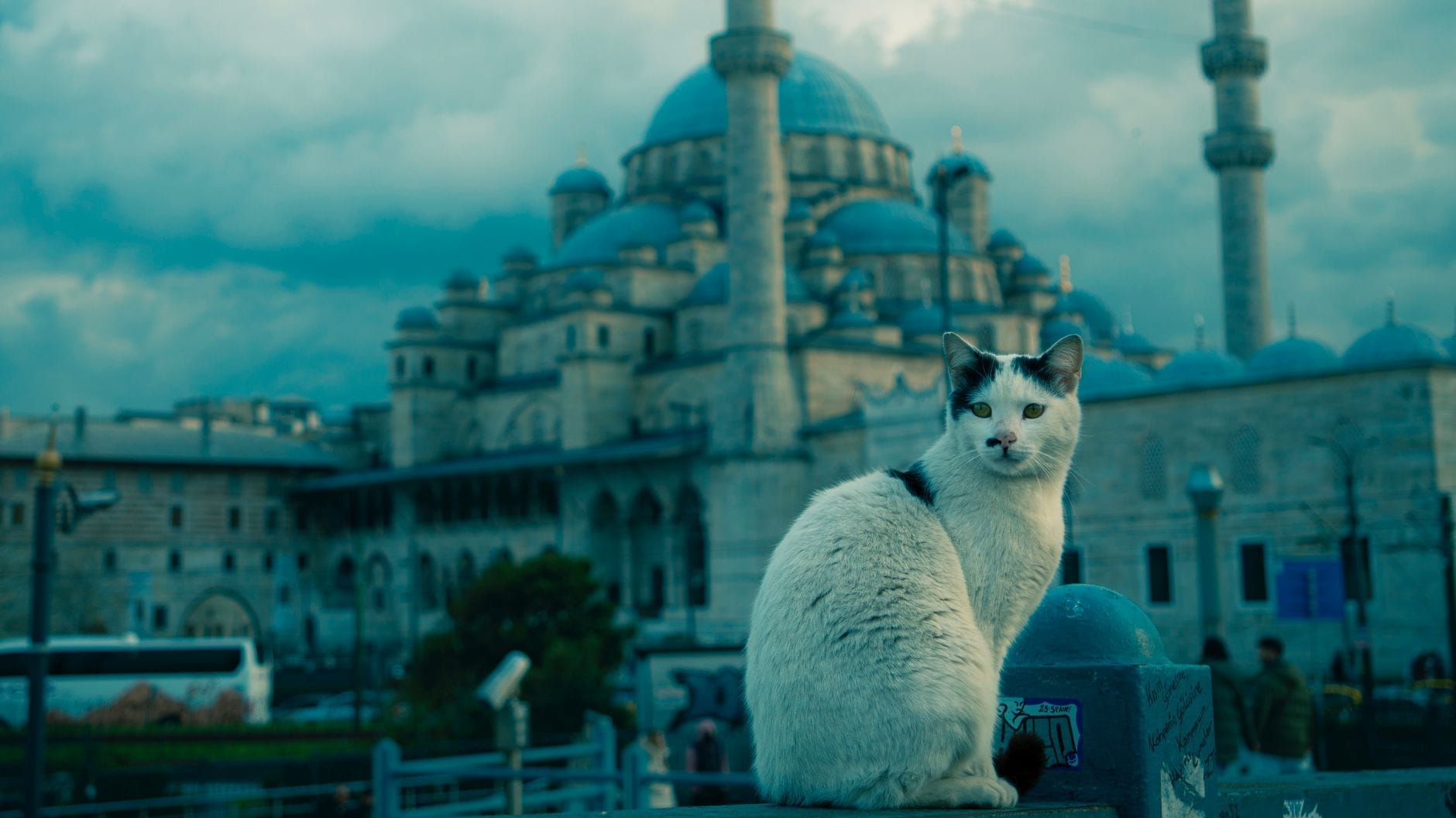
Istanbul is home to an estimated 125,000 or more street cats, treated not as strays but as community animals cherished by residents and visitors alike. This guide covers the history, cultural roots, famous cats, best neighborhoods to find them, and practical tips for cat lovers visiting the city.
Plan and book this trip
Tools from our partner Travelpayouts help you compare flights and hotels. If you book through them, we may earn a commission at no extra cost to you.
Flights
Hotels map
TL;DR
- Istanbul has an estimated 125,000+ street cats, known locally as sokak kedisi (community cats), cared for informally by residents, shopkeepers, and even municipalities.
- Cats are deeply woven into Turkish Islamic culture and Ottoman history — this is not a recent trend or tourist novelty. Read more in our Istanbul Ottoman history guide.
- Famous cats include Gli of Hagia Sophia (died 2020) and Tombili of Kadıköy, who has a bronze statue in her honor.
- The best neighborhoods for cat encounters include Sultanahmet, Karaköy, Fener-Balat, and Kadıköy — each with its own cat microculture.
- Two cat museums exist in Istanbul; admission details change frequently, so verify before you visit.
Why Istanbul Has So Many Cats
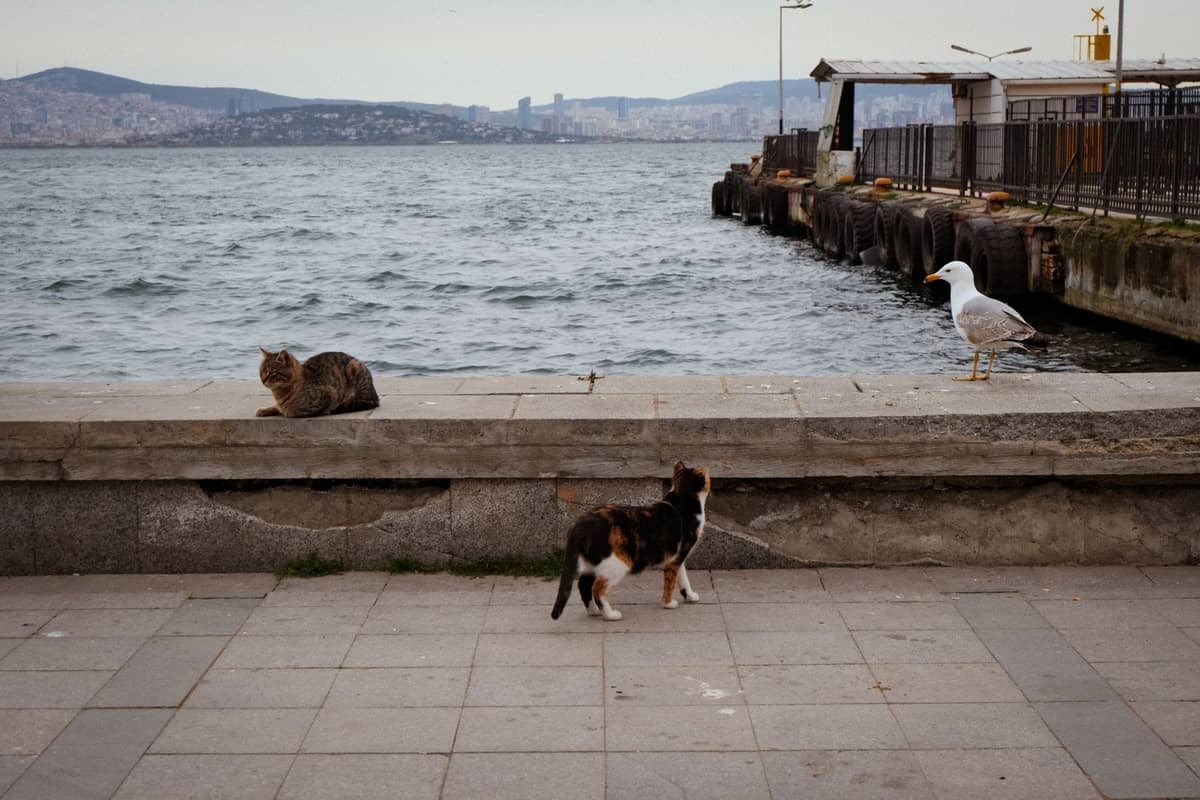
The sheer number of cats in Istanbul surprises most first-time visitors. Estimates put the city's street cat population at around 125,000, though some counts suggest the real number could be significantly higher — the difficulty of surveying a metropolitan area of nearly 16 million people sprawling across roughly 1,500 km² makes any precise figure speculative. What is clear is that these cats are not abandoned or feral in the conventional Western sense. They are communal animals, fed daily by residents, looked after by shopkeepers, and in some districts provided with purpose-built wooden shelters by the municipality.
The most cited explanation for the historical abundance of cats in Istanbul points to the Ottoman merchant trade. Cats were deliberately kept on ships travelling between Egypt and Istanbul to control rats in cargo holds. When those ships docked in Istanbul's ports, cats disembarked and stayed. Over centuries, the population grew and integrated into the city's social fabric. Historians and anthropologists are quick to note, however, that this single origin story is part cultural memory and part legend. The reality is almost certainly more complex, involving multiple waves of cats arriving through different trade routes over many centuries.
ℹ️ Good to know
Turkey follows a broadly protective approach toward street animals. Rather than sheltering cats in pounds, the usual practice has been to neuter, vaccinate, and return them to their neighborhoods. This policy is why you see cats that are clearly healthy and socialised, not skittish or unwell.
The Cultural and Religious Roots of Istanbul's Cat Reverence
In Islamic tradition, cats hold a uniquely elevated status. They are considered ritually clean animals — unlike dogs, which are considered ritually impure in many Islamic legal schools — and are permitted inside mosques. Stories about the Prophet Muhammad's affection for cats are widely known across the Muslim world, and in Istanbul these stories are part of everyday life, not just religious doctrine. You will find cats sleeping undisturbed inside mosque courtyards, curled on prayer rugs, and accepted without question by worshippers.
Ottoman-era charitable foundations (vakıfs) formalized the practice of feeding stray animals, with special emphasis during winter months when food was scarce. This institutional generosity eventually gave way to an informal but deeply embedded social contract: residents feed the cats, the cats control vermin, and the city looks the other way at the minor disorder this creates. This culture is visible today in the food bowls, water dishes, and improvised shelters you will find outside apartment buildings in virtually every neighborhood, from wealthy Nişantaşı to working-class Fatih.
Famous Cats You Should Know About
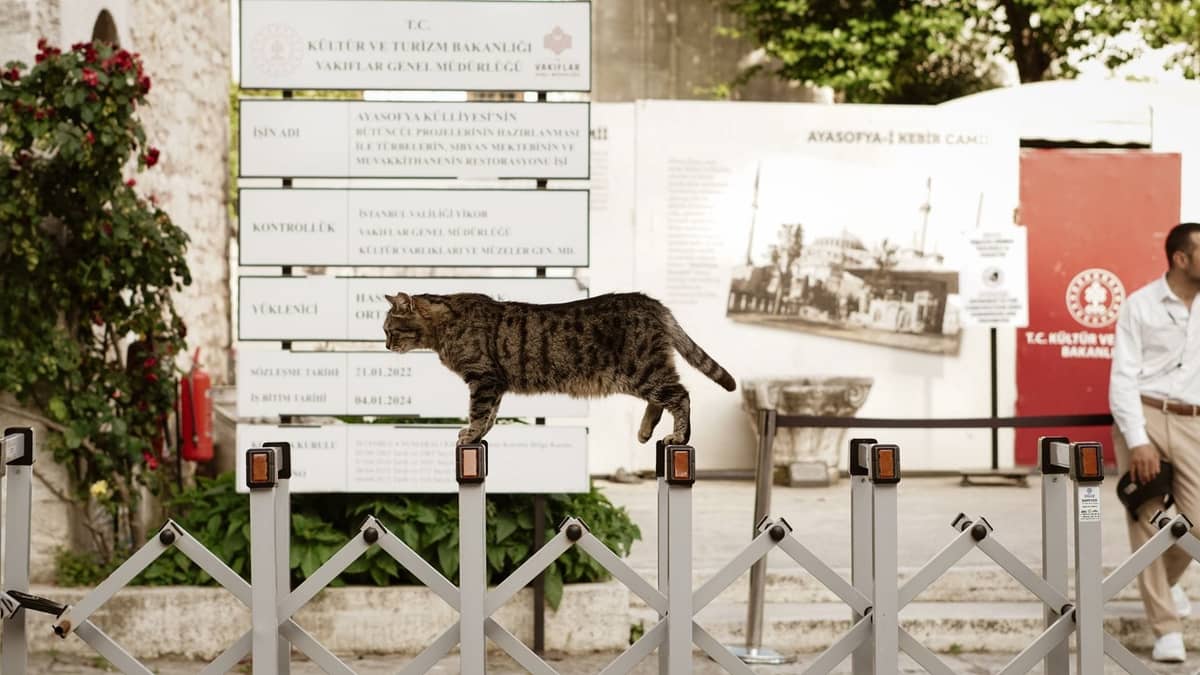
No cat in Istanbul's recent history captured international attention quite like Gli, the resident cat of Hagia Sophia. Gli (pronounced 'glee') lived inside the mosque-museum for roughly 16 years and was even photographed with President Obama during his 2009 visit. She had her own Wikipedia page, a substantial social media following, and became a symbol of the city itself. Gli passed away in November 2020. After the conversion of Hagia Sophia back to an active mosque, cats were initially encouraged to remain — fitting given Islam's regard for cats — though the practical arrangement has evolved over time.
Tombili is the other cat every Istanbul visitor should know. A portly tabby who lived in the Ziverbey neighborhood of Kadıköy, Tombili became an internet sensation for her habit of leaning casually against the edge of a step with one paw raised, looking utterly unbothered by the world. She died in 2016. Within months, locals had crowdfunded and installed a small bronze statue in her exact lounging pose on the same Kadıköy street where she used to sit. The statue is still there and has become a minor pilgrimage site for cat lovers.
- Gli (Hagia Sophia) Lived 2004–2020. Istanbul's most famous cat internationally, resident of Hagia Sophia for over a decade and photographed with world leaders.
- Tombili (Kadıköy) A street cat beloved for her relaxed posture. Died 2016; commemorated with a bronze statue in Ziverbey, Kadıköy.
- Sari (Various) A common type rather than a single cat — orange tabbies (sarı kedi, 'yellow cat') are particularly numerous and tend to be the most sociable with strangers.
The Best Neighborhoods to Encounter Istanbul's Cats
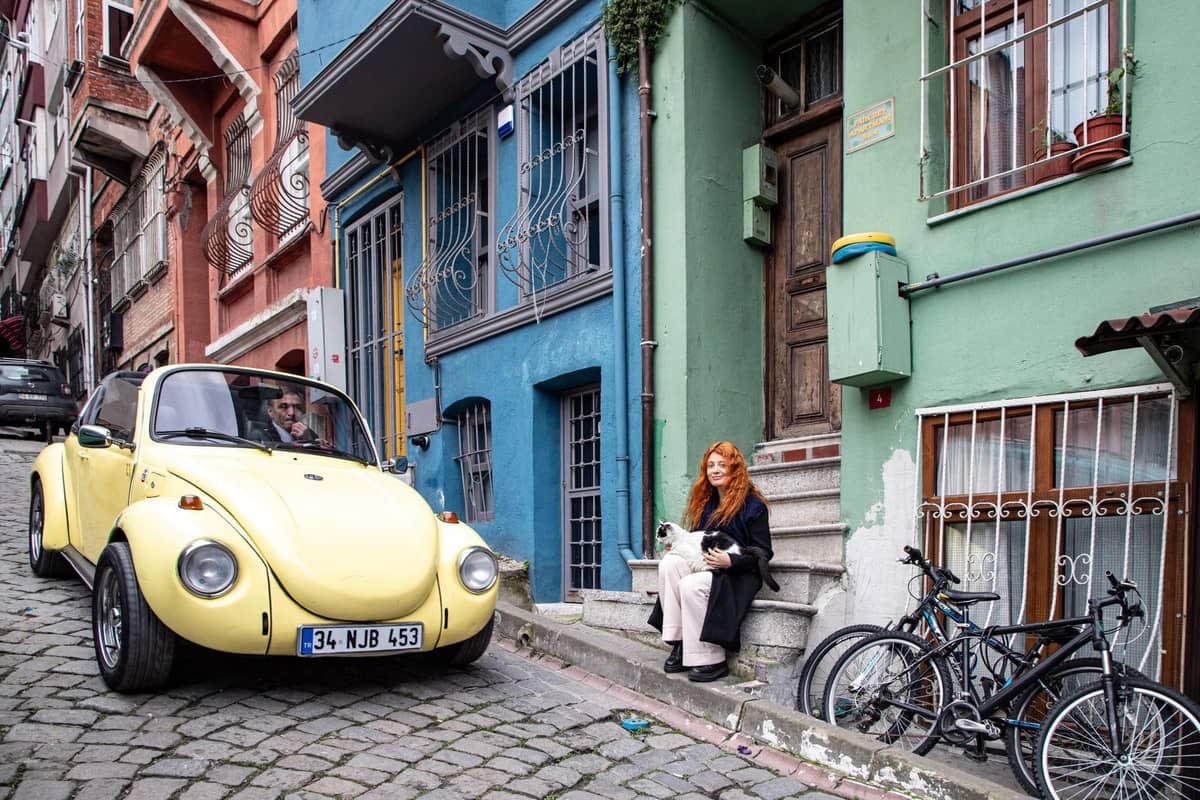
Cats are everywhere in Istanbul, but some neighborhoods offer richer encounters than others. Fener and Balat on the Golden Horn are particularly rewarding: the narrow, colorful streets of these historic Greek and Jewish neighborhoods see relatively few tour groups, and the resident cat colonies here are well-established. Cats drape themselves across crumbling Byzantine walls and peer from behind laundry lines — it feels more like 1970s Istanbul than most of the city does.
Karaköy and the area around the Galata Tower also have a dense cat population, partly because the neighborhood's fish restaurants and market stalls generate reliable food scraps. The cats here tend to be confident and approach visitors without hesitation. Similarly, the Eminönü waterfront near the Galata Bridge is excellent for cat spotting — the fishermen who line the bridge's lower deck often share their catch, and a permanent colony has established itself along the waterfront.
In Sultanahmet, the historic peninsula's main tourist zone, cats can be found inside the grounds of the Blue Mosque and around Gülhane Park. These cats are accustomed to tourists and will often pose patiently for photographs. The downside is that well-meaning tourists sometimes overfeed them unhealthy food, so the cats in prime tourist areas are occasionally less healthy-looking than those in residential neighborhoods.
⚠️ What to skip
Do not feed Istanbul's street cats human food like bread, chips, or processed snacks. These are harmful to cats. If you want to feed them, buy dry or wet cat food (kedi maması) from any neighborhood market — a small bag costs around 60-100 TRY. Locals will visibly appreciate the gesture.
Cat Museums, Shelters, and Dedicated Spaces
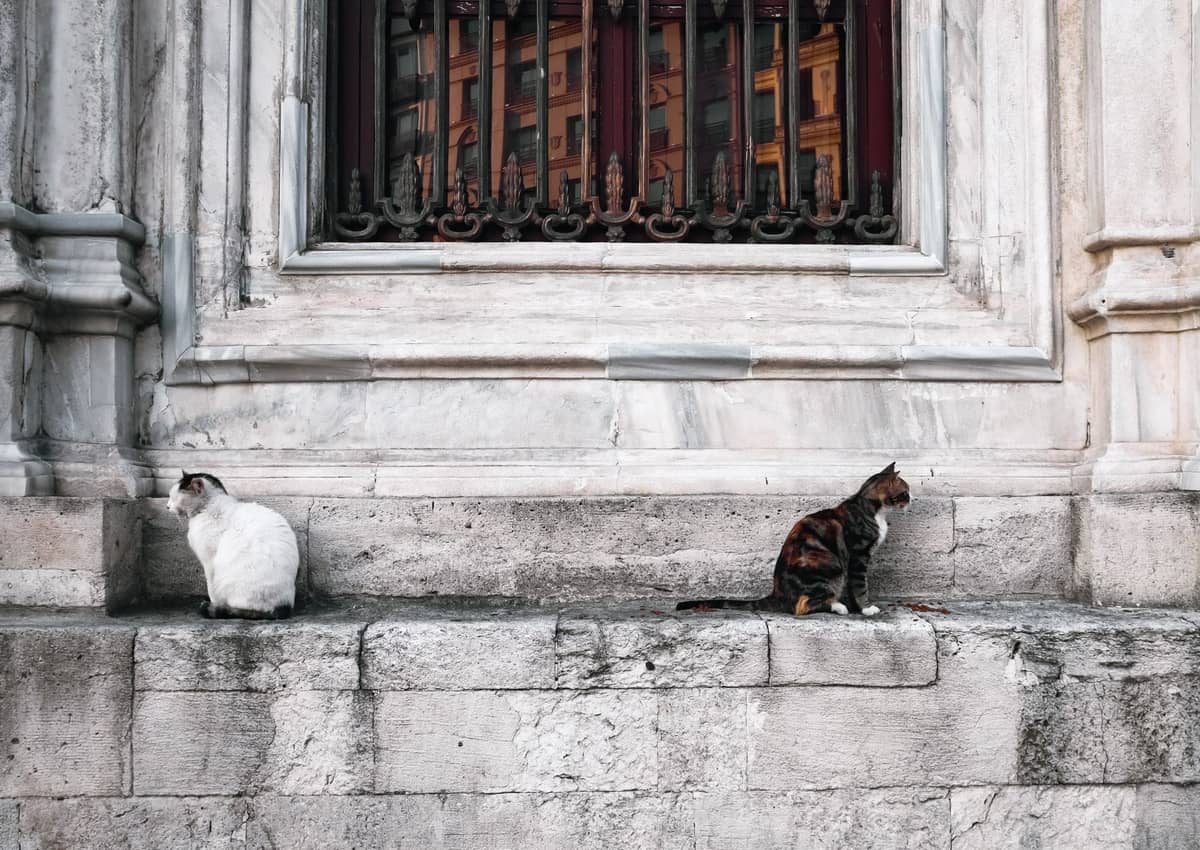
Istanbul has at least two venues specifically dedicated to cats as cultural subjects. The Istanbul Cat Museum in Beşiktaş, housed in the Çırağan Service Building of the Beşiktaş Municipality, was founded by Turkish writer Sunay Akın. It focuses on the history and artistic representation of cats in Istanbul, featuring sculptures, photographs, paintings, and archival material. A second cat museum operates in Kadıköy, with a similar focus on the cultural history of cats in the city. Opening hours and admission for both venues change periodically, so check with the municipalities directly before visiting rather than relying on third-party listings.
For visitors who want to do more than look, the Prinkipo Cat Shelter on Büyükada (the largest of the Princes' Islands) accepts donations and volunteers. The island itself is car-free and reached by ferry from Kabataş, making for a full day trip that combines sea air, electric vehicles, and a genuine encounter with cat welfare work rather than a curated tourist experience.
Practical Tips for Cat Lovers Visiting Istanbul
Istanbul's street cats are generally sociable and accustomed to human presence, but they are still animals with individual personalities. Some will approach you immediately; others will observe from a distance. The golden rule is to let the cat make the first move, especially with mothers who have kittens nearby. Crouching down to eye level and extending a hand slowly is the most reliable approach. Avoid picking cats up unless they are clearly comfortable with it — many Istanbul cats tolerate being petted but dislike being lifted.
- Buy kedi maması (dry cat food) from any neighborhood bakkal (corner shop) — widely available and costs very little.
- Photograph cats in the early morning or late afternoon when light is better and tourist crowds are thinner, particularly in Sultanahmet.
- The documentary 'Kedi' (2016, directed by Ceyda Torun) is an excellent pre-trip watch — it profiles seven Istanbul street cats and the people who care for them.
- Winter (December to February) is when the cats need extra attention most. If you visit in winter, you will notice locals leaving out extra food and makeshift shelters in doorways.
- Cats in mosque courtyards are generally calmer and in better condition than those in high-traffic tourist zones — seek them out for a quieter encounter.
- If you find an injured cat, the Istanbul Metropolitan Municipality (İBB) has animal services; district municipalities also run their own animal shelters and vet clinics.
✨ Pro tip
The Kedi documentary streams on various platforms and runs 79 minutes. Watching it before your trip will make your time in Istanbul noticeably richer — you will recognize neighborhood dynamics, understand the human-cat relationship, and know what to look for in different districts.
FAQ
Why are there so many cats in Istanbul?
The reasons are layered. Historically, cats arrived on merchant ships to control rats in cargo holds, and the Ottoman era's charitable foundations institutionalized feeding street animals. Islamic tradition also treats cats as ritually clean and worthy of care. Turkey's no-kill, no-capture policy means cats are neutered and returned to neighborhoods rather than removed, which maintains stable but large populations. The result is a city where cats have been integrated into daily life for centuries rather than managed as a problem.
Are Istanbul's street cats safe to pet?
Most are, but use common sense. Cats that approach you and rub against your legs are clearly comfortable. Cats that back away or flatten their ears are not. Avoid touching cats around the head or back if they seem tense. It is also worth washing your hands after petting any street animal. Rabies is present in Turkey, so if you are bitten or scratched, seek medical attention promptly — though bites from Istanbul's cats are genuinely rare.
Where can I find the Tombili statue in Kadıköy?
The bronze statue of Tombili is located on Günay Sokak in the Ziverbey neighborhood of Kadıköy, close to where the real Tombili used to lounge. From Kadıköy Market, it is about a 10-minute walk inland. The street is residential and easy to miss, so searching 'Tombili heykeli' in Google Maps will get you there directly.
What happened to Gli, the Hagia Sophia cat?
Gli lived inside Hagia Sophia from approximately 2004 and became one of Istanbul's most photographed animals. She died on 7 November 2020 at an animal hospital in Istanbul. Her death was announced on the official Hagia Sophia social media accounts and reported internationally. A cat named Sarı (a separate animal) has been spotted in the complex since, and several other cats continue to inhabit the Sultanahmet area.
Is there a cat museum in Istanbul worth visiting?
There are two cat-focused museums in Istanbul: one in Beşiktaş (founded by author Sunay Akın, housed in the Çırağan Service Building) and one in Kadıköy. Both focus on the cultural and artistic history of cats in the city rather than live animals. They are relatively small venues and best suited to dedicated cat enthusiasts or those interested in Istanbul's social history. Opening hours change frequently, so contact the Beşiktaş or Kadıköy municipalities directly for current information before making a special trip.