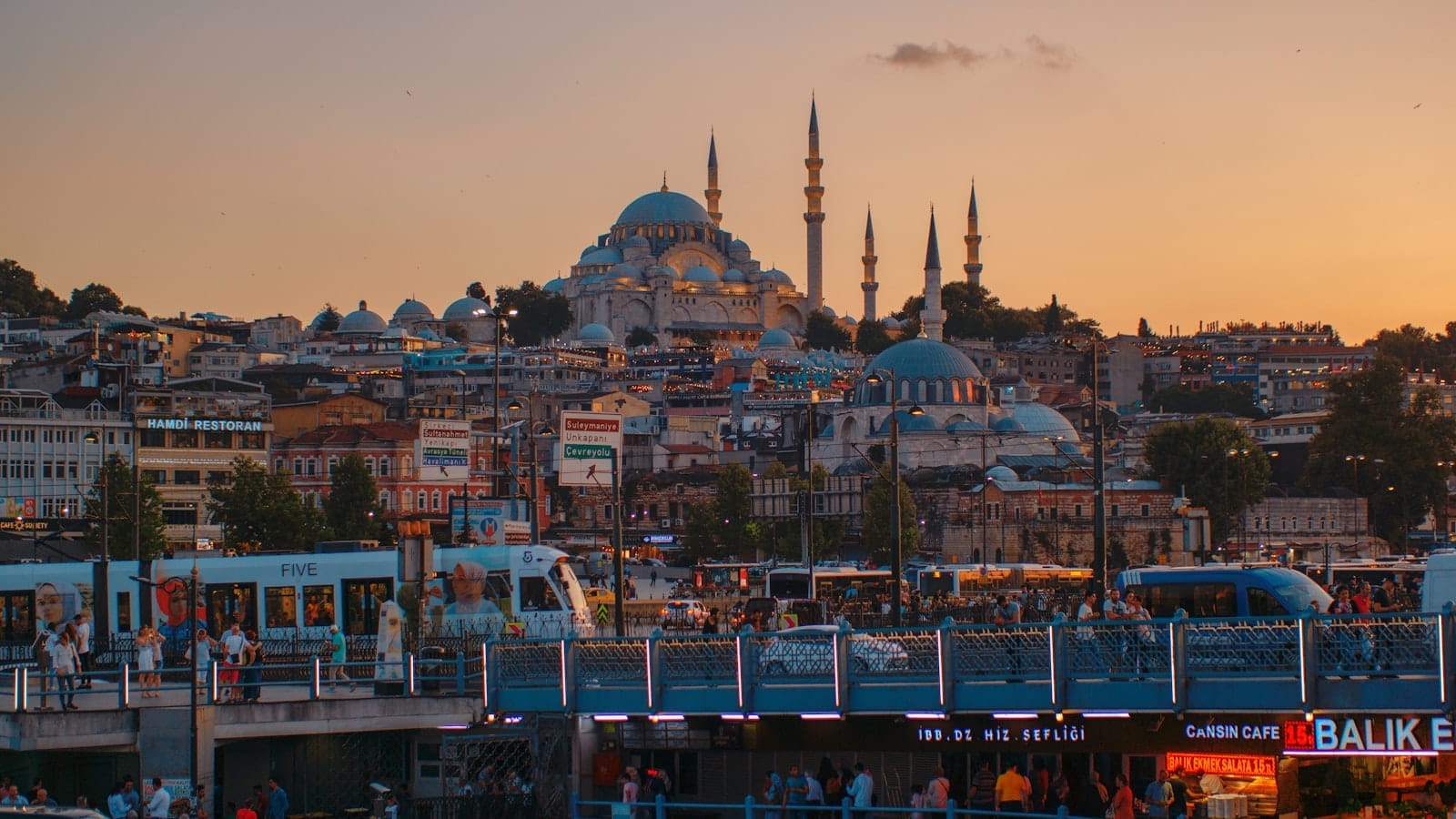
Eminönü sits where the Golden Horn meets the Bosphorus at the tip of Istanbul's historic peninsula, forming the city's oldest commercial port district. From the Spice Bazaar and Galata Bridge to ferry docks connecting every corner of the city, this neighborhood is Istanbul at its most kinetic. It is not a place to escape the crowds — it is a place to understand how the city has always worked.
Eminönü is the waterfront engine of Old Istanbul, a district where the ferry horns, fish smoke, and call to prayer have layered on top of each other for centuries. Standing at the mouth of the Golden Horn, it connects the historic peninsula to Karaköy across the water, to Üsküdar across the Bosphorus, and to the labyrinthine neighborhoods that climb the hills behind it. No other corner of the city compresses so much of Istanbul's identity into so few square kilometers.
Orientation: Where Eminönü Sits in the City
Eminönü occupies the northeastern tip of Istanbul's historic peninsula, the triangular landmass bounded by the Golden Horn to the north, the Bosphorus Strait to the east, and the Sea of Marmara to the south. Administratively it falls within the Fatih district, though its waterfront identity is entirely its own. Think of it as the hinge point between the walled old city and everything north of the water: Karaköy and GalataKaraköy sit directly across the Golden Horn, reachable on foot via the Galata Bridge in under ten minutes.
The Golden Horn itself is a horn-shaped estuary stretching roughly 7.5 kilometers northwest from its mouth here at Eminönü. Its southern bank traces through Eminönü and then continues to the historic neighborhoods of Fener and Balat before reaching the ancient land walls. The northern bank is dominated by Beyoğlu. This estuary is what made Istanbul strategically invaluable for over two millennia: it provided a sheltered natural harbor large enough to anchor entire war fleets, and its mouth at Eminönü was always the commercial gateway.
To the south and west of Eminönü's waterfront, the land rises sharply toward the Grand Bazaar slopes and the great mosque hilltops of the historic peninsula. The Spice Bazaar sits just steps from the ferry docks, and from there the streets climb toward the Grand Bazaar and eventually to Sultanahmet. This vertical geography is important: Eminönü is the low waterfront zone, and the monumental city rises behind it.
Character & Atmosphere
Eminönü operates at a pace unlike anywhere else in Istanbul. This is not a neighborhood for lingering over coffee — or rather, the lingering happens here in a very specific way, standing at a simit cart, watching the ferries dock, eating a fish sandwich from one of the boats moored along the waterfront. The district has an industrial-commercial energy that has softened over time with tourism but never fully converted to it.
Early mornings are the most revealing. By 7am the ferry docks are already processing commuters from Üsküdar and Kadıköy, the tea houses behind the Spice Bazaar are full of traders and market workers, and the smell of fresh simit drifts up from vendors pushing carts along the waterfront. The light at this hour — angled low across the Golden Horn, catching the minarets of the Yeni Camii and the seagulls wheeling above the ferry terminals — is one of Istanbul's most photogenic moments and one of its most genuinely unreconstructed ones.
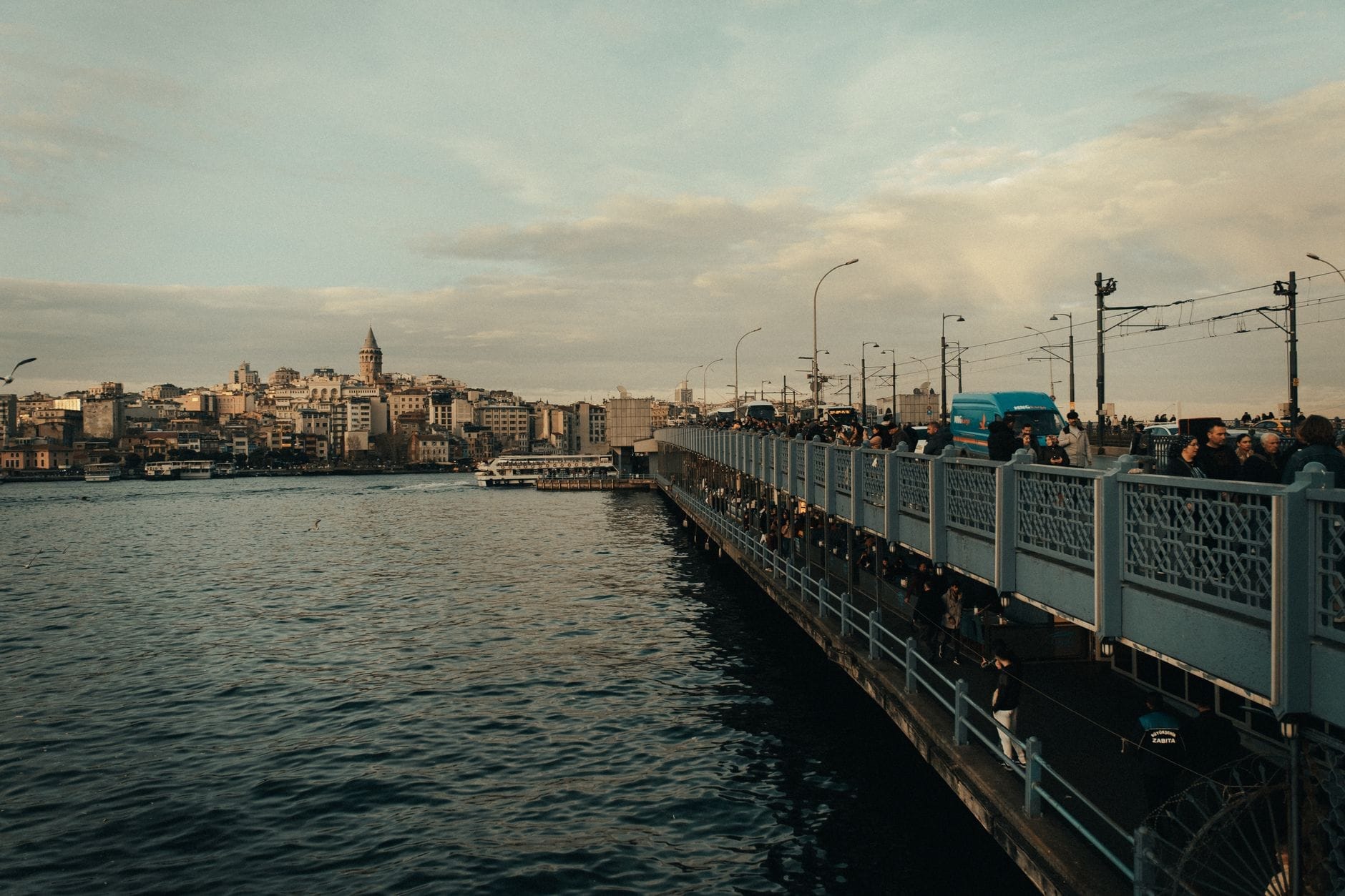
By mid-morning the tourist crowds arrive in full, converging on the Spice Bazaar and the Galata Bridge. The bridge itself is a social institution: its lower deck houses a row of fish restaurants, and its railings are lined with anglers from dawn to dusk regardless of weather. You can walk across it in five minutes but most people take longer, pausing to watch the ferries pass below or buy a grilled corn cob from a vendor on the span.
After dark, Eminönü quiets more than most Istanbul neighborhoods. The bazaars and most shops close by early evening. The ferry terminals keep operating and the fish sandwich boats remain lit up, but the area does not have a nightlife scene. This is a daytime district, and most visitors who stay nearby move to Karaköy or Beyoğlu for evening dining and drinks.
💡 Local tip
Visit the Spice Bazaar on a weekday before 10am to see it at its most atmospheric and before tour groups arrive. On weekends by mid-morning it becomes extremely congested around the main entrance.
What to See & Do
The Spice Bazaar (Mısır Çarşısı, literally the Egyptian Bazaar) is the district's anchor attraction, an L-shaped Ottoman market hall built in 1664 as part of the Yeni Camii complex. Inside, stalls sell dried fruit, nuts, lokum, spices, and herbal teas in quantities scaled for both tourists buying souvenirs and local traders buying wholesale. The interior smells extraordinary. Prices on the main corridor are tourist-oriented; venture into the surrounding streets for better value on the same products.
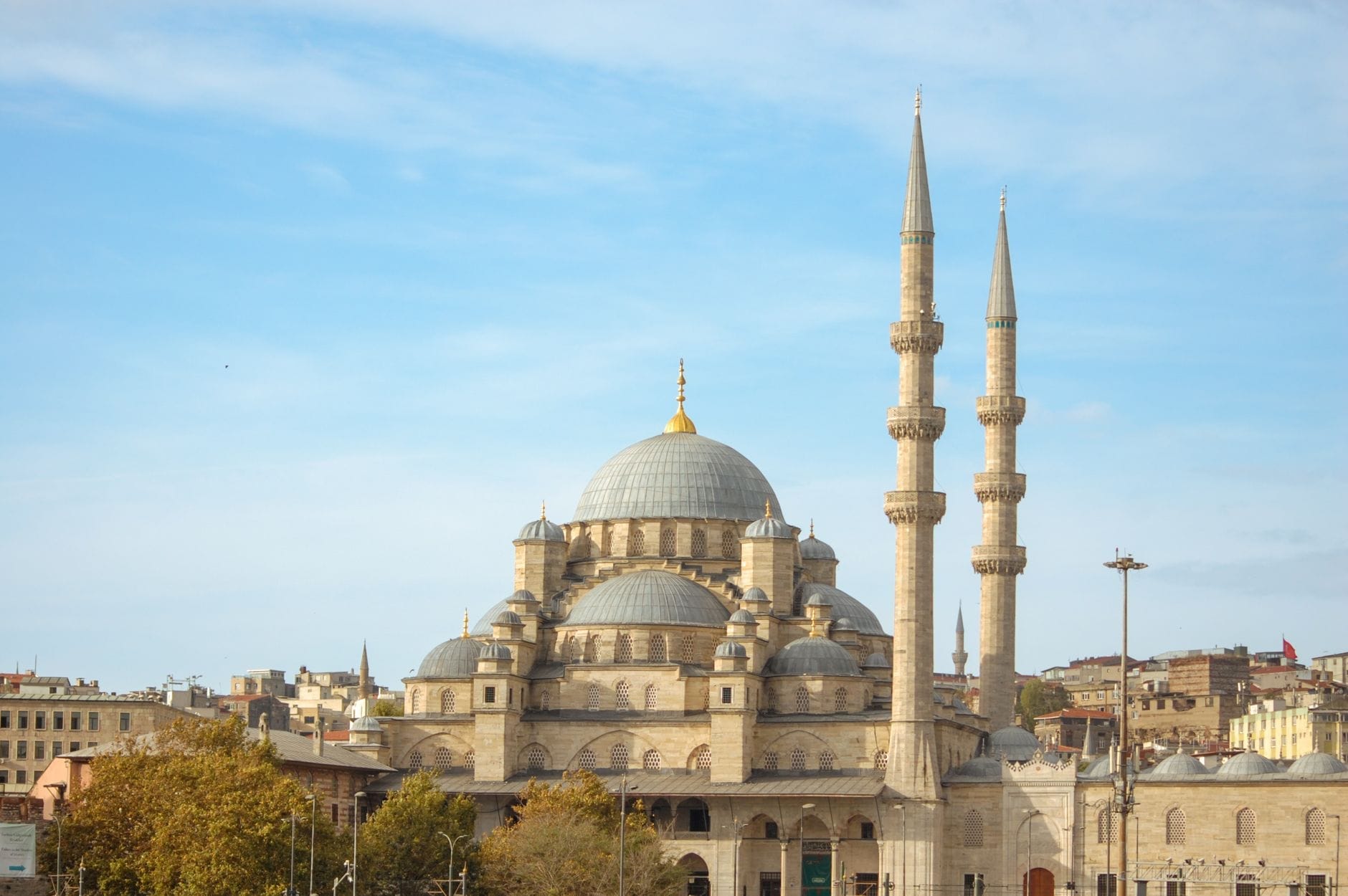
The Yeni Camii (New Mosque), which anchors the square in front of the Spice Bazaar, is a working mosque that visitors can enter outside prayer times. Despite its name, it dates to the early 17th century. Its courtyard offers a moment of quiet amid the surrounding commercial intensity. Nearby, the Galata Bridge deserves more than a crossing — walk its lower deck to appreciate the strange ecosystem of restaurants and teahouses built into the bridge structure itself, with the water visible through the windows.
The Golden Horn waterfront west of the ferry docks has been significantly improved with pedestrian paths and parks in recent years. Walking northwest along the southern shore takes you toward Fener and Balat, two of Istanbul's most historically layered neighborhoods — Greek Orthodox, Jewish, and Armenian communities left deep architectural marks here that are still visible. This walk, roughly 5 kilometers from Eminönü to the Fener waterfront, passes historic churches, the ruins of Byzantine harbor infrastructure, and community gardens.
From the Eminönü ferry docks, short Bosphorus cruise options depart regularly, offering views back toward the historic peninsula. For a full Bosphorus experience, the city ferry services provide one of the most affordable ways to see the strait. The Bosphorus cruise guide covers the different options and what each one offers.
Spice Bazaar (Mısır Çarşısı): the neighborhood's central market hall, built 1664
Yeni Camii: 17th-century mosque with accessible courtyard and interior
Galata Bridge: cross it, walk its lower restaurant level, photograph it from the waterfront
Golden Horn waterfront walk: west toward Fener and Balat, roughly 45-60 minutes one way
Eminönü ferry docks: catch the Üsküdar or Kadıköy ferry for Bosphorus views at minimal cost
Rüstem Paşa Mosque: a short walk uphill toward the Grand Bazaar, famous for its Iznik tile interior
A short climb uphill from Eminönü reveals one of the city's most under-visited Ottoman interiors. The Rüstem Paşa Mosque, tucked above the hans and textile shops of Tahtakale, is entirely faced in Iznik tiles — walls, columns, and arches covered in 16th-century ceramic work of extraordinary quality. It is easy to miss if you do not know where to look for the staircase entrance off the main commercial street.
Eating & Drinking
Eminönü's food scene is built on speed and tradition rather than innovation. The most iconic eating experience is the balık ekmek: a grilled mackerel fillet stuffed into bread with onion and lettuce, sold from boats moored at the Eminönü waterfront. It costs very little, the line moves fast, and eating one while watching the ferries dock is a genuine Istanbul ritual. The Istanbul street food guide gives broader context for what to eat and where across the city.
The streets immediately behind and around the Spice Bazaar are better for eating than the bazaar's interior stalls. The Tahmis Sokak area and the small alleys leading toward the han district offer traditional Turkish breakfast spots, köfte restaurants, and tea gardens frequented by traders and shopkeepers rather than tourists. Prices here are substantially lower than anything in Sultanahmet. A full breakfast or lunch can be had for the equivalent of a few euros.
The Galata Bridge's lower level holds a row of fish restaurants that serve decent grilled fish and meze at prices calibrated for tourists. The food is competent rather than exceptional, but the setting — water at window height, ferries passing close — is thoroughly entertaining. For better quality fish at lower prices, walk ten minutes to Karaköy's back streets or catch a ferry to Karaköy and explore from there.
Eminönü has almost no bar scene. Alcohol is available in the Galata Bridge restaurants but the surrounding neighborhood is predominantly conservative in character. For evening drinks, most visitors cross to Karaköy or walk up to Beyoğlu.
ℹ️ Good to know
The tea culture around the Spice Bazaar and Tahtakale is worth experiencing. Small çay bahçesi (tea gardens) in the courtyards of the hans (Ottoman trading inns) serve tea in tulip glasses and are the preferred rest stop of the surrounding market community. They rarely appear on tourist maps.
Getting There & Around
Eminönü is one of the easiest points in Istanbul to reach by public transport. The T1 tram line runs directly to Eminönü from Sultanahmet and Kabataş, making it a natural stop on any circuit of the historic peninsula. From Sultanahmet, it is two stops and under five minutes. From Kabataş (near Dolmabahçe Palace and the Beşiktaş ferry hub), it is a longer ride but still direct. The tram stop is right at the waterfront square. An Istanbulkart covers all tram, bus, and ferry journeys and is the most efficient payment method.
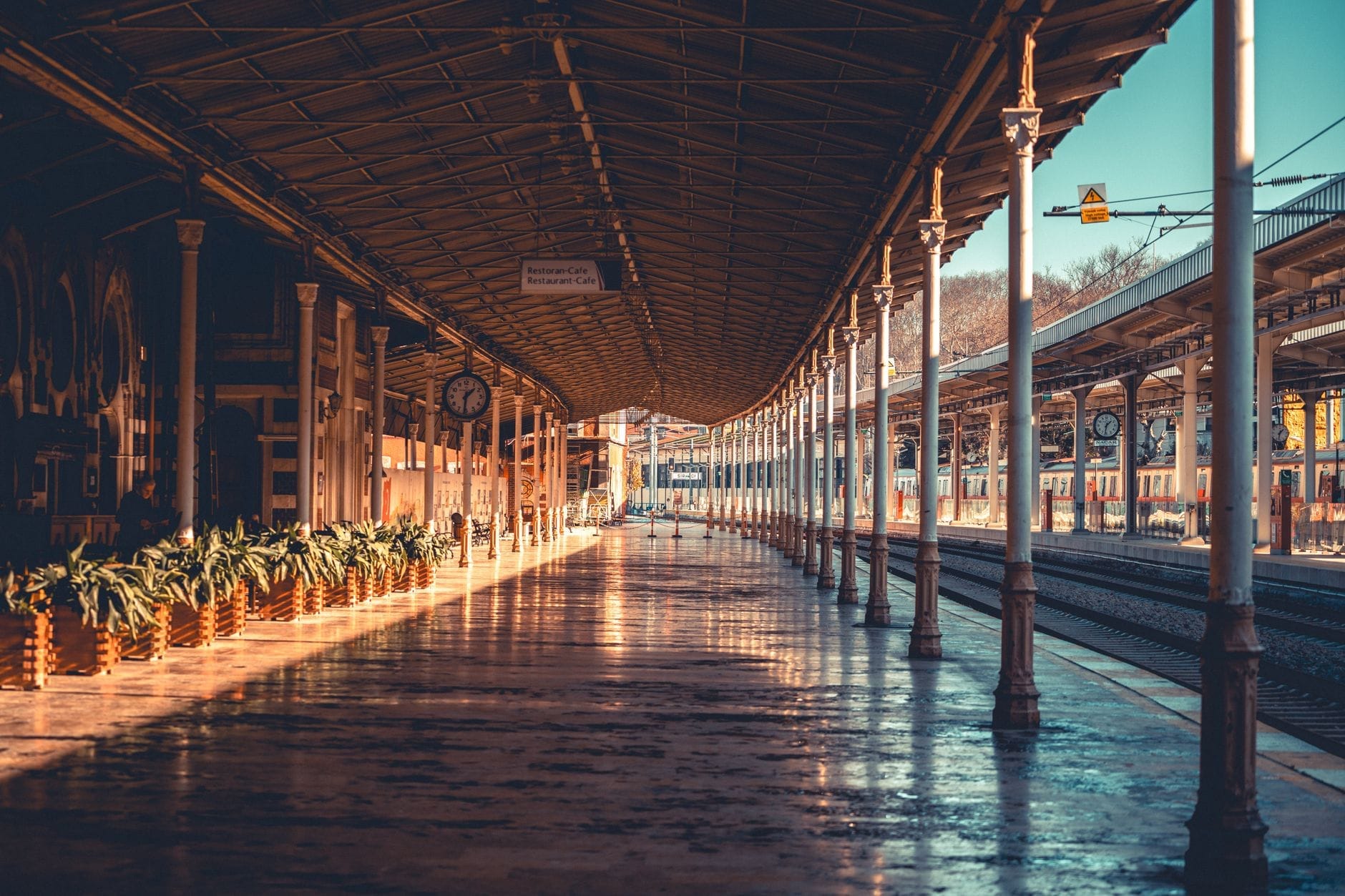
The Marmaray commuter rail line also stops at Sirkeci, the historic train station immediately adjacent to Eminönü, making this area one of the few places in Istanbul with simultaneous access to tram, rail, ferry, and bus networks in a single compact area. The M2 metro line's Haliç station, on the bridge spanning the Golden Horn, is about a 15-minute walk from Eminönü's waterfront but provides connections toward Taksim and beyond.
The ferry docks at Eminönü are a transit hub in their own right. Regular Şehir Hatları ferries depart for Üsküdar (approximately 10-15 minutes), Kadıköy (approximately 25 minutes), and various Bosphorus destinations. The Golden Horn ferry service runs up the estuary toward Eyüp. Ferry schedules run throughout the day with increased frequency during rush hours.
Within Eminönü, everything of interest is walkable. The Spice Bazaar, Yeni Camii, Galata Bridge, and the ferry docks are all within 200-300 meters of each other. Walking to Sultanahmet takes around 15-20 minutes on foot through relatively flat terrain along the waterfront and then uphill through the Cağaloğlu neighborhood. Walking to Karaköy across the Galata Bridge takes under 10 minutes.
⚠️ What to skip
The main Eminönü square and the approach to the Spice Bazaar are known spots for aggressive touts and occasional pickpocketing in the crowd. Keep bags in front of you in the narrow bazaar corridors and be firm with anyone who approaches you unprompted offering tours or 'free' entry to shops.
Where to Stay
Eminönü itself has limited hotel accommodation compared to neighboring Sultanahmet. Travelers prioritizing the major Ottoman monuments — Hagia Sophia, Topkapı Palace, the Blue Mosque — typically stay in Sultanahmet, which is a short tram ride or 20-minute walk away. Eminönü accommodation tends to be functional business hotels and guesthouses rather than boutique properties.
For travelers who want proximity to the water and the ferry network with more neighborhood character and dining options, KaraköyKaraköy across the Galata Bridge has become a strong alternative base. It offers a growing collection of boutique hotels, a genuine restaurant scene, and is a 10-minute walk from Eminönü's major attractions. The guide to staying in Istanbul covers all the main neighborhood options with practical comparisons.
Staying in Eminönü makes most sense for travelers who want maximum transit connectivity: the combination of tram, ferry, and Marmaray access from this single node means you can reach almost any part of the city quickly. The drawback is that the area is loud during the day, quiets unevenly after dark, and the immediately surrounding streets lean toward wholesale commercial activity rather than the kind of retail and restaurant density that makes a neighborhood pleasant to wander in the evening.
The Practical Reality
Eminönü is not a neighborhood you should skip — but it is also not one to romanticize. It is loud, congested, and uncompromisingly commercial during peak hours. The crowds around the Spice Bazaar can feel overwhelming on a summer weekend afternoon. The tourist infrastructure is real but thin: there are far fewer English-speaking cafes, curated shops, or design-forward restaurants here than in Karaköy or Beyoğlu.
What Eminönü offers instead is authenticity of a particular kind. This is a working district. The men hauling sacks of dried fruit, the ferry workers in orange vests, the tea boys running glasses from the çay garden to the nearby spice stall — they are not performing Istanbul for visitors. The Golden Horn waterfront and the layered history of the neighborhood, stretching from Byzantine harbor structures through Ottoman han architecture to the 20th-century industrial conversion projects, make it one of the most historically dense zones in a city defined by historical density. Reading the historic peninsula guide before visiting gives the surrounding context that makes walking through Eminönü meaningful.
TL;DR
Eminönü is Istanbul's oldest commercial waterfront, positioned where the Golden Horn meets the Bosphorus at the tip of the historic peninsula.
Essential stops include the Spice Bazaar, Yeni Camii, Galata Bridge, and the Rüstem Paşa Mosque — all within 10 minutes of each other on foot.
Best visited in the morning on weekdays; the midday tourist crush around the Spice Bazaar is real and relentless on weekends.
Excellent transit connectivity via T1 tram, Marmaray rail, and ferry docks makes it a logical base for peninsula exploration, though Karaköy offers a more comfortable overnight base.
Ideal for travelers who want to experience Istanbul's working waterfront character; less suited to those seeking evening dining scenes or quiet streets.
Three days in Istanbul is enough to cover the imperial monuments of Sultanahmet, the 19th-century streets of Beyoğlu and Galata, and a Bosphorus excursion to the Asian side. This itinerary is built around logical geography, practical crowd advice, and practical logistics so you spend your time sightseeing, not backtracking.
Istanbul's skyline is defined by its mosques, and the city's finest range from world-famous Ottoman imperial complexes to exquisite tiled interiors few tourists ever find. This guide covers the best mosques in Istanbul, with practical advice on when to visit, what to look for, and how to plan your route.
Istanbul's museums span 1,500 years of history, from Byzantine treasures and Ottoman palace complexes to cutting-edge contemporary art. This guide covers the essential collections, the underrated finds, and everything you need to plan your visits efficiently.
Istanbul rewards visitors year-round, but the timing of your trip makes a real difference. This guide breaks down every season by weather, crowd levels, prices, and key events so you can choose the window that fits your priorities.
The Bosphorus strait is the reason Istanbul exists, and a cruise across it is one of the city's most rewarding experiences. This guide covers every type of cruise, from the 340 TL public ferry to private yachts, with clear advice on what's worth your money and what isn't.
Istanbul's location makes it one of the best-placed cities in the world for day trips. Within a few hours you can reach car-free Victorian islands, Black Sea beaches, ancient Bosphorus fishing villages, and forested nature parks — many reachable on public transport for just a few dozen lira.
Istanbul's transport network spans metro lines, trams, Bosphorus ferries, buses, and ride-hailing apps across a city of Istanbul's transport network spans metro lines, trams, Bosphorus ferries, buses, and ride-hailing apps across a city of nearly 15.7 million people.. This guide breaks down every option by cost, convenience, and route, so you can move around Istanbul without confusion or overpaying.
Istanbul is safe for most tourists who take standard urban precautions, but it pays to know what risks actually exist. This guide breaks down crime patterns, common scams, neighborhood safety, transport tips, and what official travel advisories really mean for your trip.
Istanbul Airport (IST) is one of the world's busiest aviation hubs, Istanbul Airport (IST) is one of the world's busiest aviation hubs, handling 84.4 million passengers in 2025 from a single integrated terminal.. This guide covers everything from ground transport and terminal layout to transfer tips and common pitfalls, so you arrive prepared.
Most visitors to Istanbul never cross the Bosphorus. That's a serious mistake. Istanbul's Asian side — anchored by Kadıköy and Üsküdar — holds some of the city's best food markets, waterfront views, historic mosques, and neighbourhood character. This guide covers everything you need to cross over and make the most of it.
Istanbul is not a beach city, but it sits within reach of some surprisingly good coastline. This guide covers the best beaches near Istanbul across the Black Sea, the Princes' Islands, and beyond — with straightforward advice on water quality, currents, crowds, and how to get there.
Modern Istanbul sits directly on top of Constantinople, the Byzantine capital for over a thousand years. This guide covers every major surviving structure, from Hagia Sophia to the Theodosian Walls, with practical details on tickets, opening hours, restoration closures, and the smartest routes to follow.
Istanbul is home to an estimated 125,000 or more street cats, treated not as strays but as community animals cherished by residents and visitors alike. This guide covers the history, cultural roots, famous cats, best neighborhoods to find them, and practical tips for cat lovers visiting the city.
Istanbul food is one of the great culinary traditions of the world, shaped by centuries of Ottoman court cooking, Anatolian regional flavors, and street food culture that runs 24 hours a day. This guide covers every essential dish, the best neighborhoods to eat in, practical pricing, and how to avoid the tourist-trap menus.
Istanbul is one of the world's great romantic cities, where Byzantine history, waterfront sunsets, and Ottoman grandeur combine to create unforgettable experiences for couples. This guide covers the best activities, from Bosphorus cruises and Turkish baths to car-free island escapes and candlelit dinners — with practical advice on timing, pricing, and what to skip.
Istanbul rewards those who look beyond Hagia Sophia and the Grand Bazaar. This guide covers 20 lesser-known attractions across both sides of the Bosphorus, from forgotten Byzantine churches and Ottoman fortresses to colorful waterfront villages and hilltop viewpoints that most visitors never reach.
The Historic Peninsula (Tarihi Yarımada) is the oldest and most monument-dense part of Istanbul, encompassing Sultanahmet, Fatih, Eminönü, Süleymaniye, and more. This guide covers every major sight, practical logistics, crowd management strategies, and the cultural context that makes this area one of the most historically significant urban zones on earth.
Spring is one of the best times to visit Istanbul, but April and May are quite different months. This guide covers weather realities, the Tulip Festival, Bosphorus cruises, crowd patterns, and practical planning tips to help you get the most out of a spring visit.
Winter is Istanbul's most underrated season. Menschenmengen thin out, hotel rates drop, and the city's historic skyline looks cinematic under grey skies or a rare dusting of snow. This guide covers exactly what to expect from the weather, which sights are worth it, and how to make the most of the season.
The meyhane is Istanbul's answer to the long, convivial dinner: shared meze plates, anise-scented rakı sipped slowly across hours, and live fasıl music drifting between tables. This guide covers everything from how a meyhane evening works to the best neighborhoods, what things cost, and the customs that separate a confident diner from a confused tourist.
The official Istanbul Museum Pass is a Ministry of Culture product covering 10+ state-run museums for 5 consecutive days. Before you buy, here's what it actually includes, what it misses, how much it costs, and how to calculate if it's worth it for your trip.
Istanbul's after-dark scene spans multiple continents, dozens of neighborhoods, and every budget. This guide breaks down where to go, when to go, how much to spend, and what nobody warns you about before you arrive.
Istanbul rewards budget travelers more than almost any major European-adjacent city, but only if you know where the real costs hide. This guide breaks down daily spending, transport, food, accommodation, and free sights so you can plan honestly and spend wisely.
Seven days is enough time to move beyond the obvious monuments and get a genuine feel for Istanbul — its neighborhoods, its ferries, its food, and its contradictions. This day-by-day itinerary balances the essential sights with practical logistics, clear budget guidance, and the kind of context that makes the difference between ticking boxes and actually understanding this city.
Istanbul served as the heart of the Ottoman Empire for nearly 500 years, and the city still carries that history in stone, tile, and ceremony. This guide covers the essential sites, the historical context behind them, and the practical details you need to visit them well.
Ramadan transforms Istanbul in ways most guidebooks overlook. This guide covers exactly what changes for visitors, which experiences are exclusive to the month, how to navigate iftar crowds, and what the common misconceptions get wrong.
Istanbul is one of the world's great shopping cities, layering 4,000-shop historic bazaars over modern malls and independent boutique streets. This guide covers every major shopping district, what to actually buy, realistic price ranges, and the practical details most guides leave out.
Istanbul rewards mga solo traveler with extraordinary variety: Byzantine monuments, ferry crossings, street food markets, and a public transport network that makes independent exploration easy. This guide covers safety realities, transport logistics, neighborhood choices, and the experiences that work best when you're traveling on your own terms.
Istanbul's street food scene is one of the city's great pleasures, and one of its great equalizers. Locals and visitors eat side by side at the same simit carts and fish sandwich stalls. This guide breaks down the essential dishes, the best neighborhoods to find them, realistic prices, and a few frank warnings about what to avoid.
Cappadocia is roughly 730 km from Istanbul, and getting there involves more planning than most travelers expect. This guide covers every transport option — flights, overnight buses, and the rail myth — with clear breakdowns of time, cost, and what to arrange before you arrive.
Every April, Istanbul plants 20 to 30 million tulips across its parks and public squares for the İstanbul Lale Festivali. This guide covers the best viewing spots, peak bloom timing, how to get there, and what most visitors get wrong about this free, city-wide event.
Istanbul rewards those who look up and out. Whether you want sweeping Bosphorus panoramas, minarets at golden hour, or a cocktail above the Golden Horn, this guide covers the city's finest viewpoints and elevated spots.
Istanbul rewards walkers like few cities on earth. Whether you follow a guided tour through Sultanahmet's ancient monuments or strike out alone along the Bosphorus shore, these are the routes, landmarks, and neighbourhoods that make the best walks in Istanbul unforgettable.
Istanbul's climate surprises most first-time visitors. Winters are cold and wet, summers are warm but rarely scorching, and the best windows for sightseeing are narrower than you'd expect. This guide breaks down every month so you can pack right, plan better, and avoid the most common weather-related mistakes.
The Sema is one of the world's oldest living spiritual rituals, and Istanbul has several places to witness it. This guide breaks down every major venue, current prices, seasonal schedules, and the etiquette you need to know before you go.
Istanbul is far more family-friendly than its reputation as a history-heavy destination suggests. This guide covers the best kid-approved attractions, practical logistics, seasonal advice, and frank assessments of what works — and what doesn't — when visiting Istanbul with children.
Istanbul rewards upscale travelers with a rare combination: imperial architecture, world-class hotels on the Bosphorus, serious fine dining, and private experiences that go far beyond the standard tourist circuit. This guide covers where to stay, what to book, and how to move through the city like an insider.
Istanbul is one of the world's most layered cities, where Byzantine churches sit beside Ottoman mosques, and Asian fishing villages are a ferry ride from European nightlife. This guide cuts through the noise with specific attractions, current prices, neighborhood breakdowns, and the practical warnings that most travel sites skip.
Istanbul's hammams are among the most atmospheric in the world, operating in buildings that have steamed visitors since the Ottoman era. This guide covers what actually happens inside, which hamams are worth the price, what things cost, and how to make the most of the experience without getting overcharged.
Istanbul is a city of distinct neighborhoods, and where you stay shapes everything from your morning commute to your dinner options. This guide breaks down the best areas for first-timers, budget travelers, couples, and anyone who wants more than just a central location.