Visiting Istanbul During Ramadan: What to Expect, What to Eat, and What Not to Miss
Ramadan transforms Istanbul in ways most guidebooks overlook. This guide covers exactly what changes for visitors, which experiences are exclusive to the month, how to navigate iftar crowds, and what the common misconceptions get wrong.
Plan and book this trip
Tools from our partner Travelpayouts help you compare flights and hotels. If you book through them, we may earn a commission at no extra cost to you.
Flights
Hotels map
TL;DR
- Visiting Istanbul during Ramadan is completely viable for tourists: hotels, attractions, and most restaurants stay open throughout the month.
- The biggest practical impact is traffic chaos in the 90 minutes before iftar (sunset). Take the metro, not a taxi.
- Ramadan 2026 in Turkey runs approximately 19 February to 18 March, falling in late winter. Evenings are cold, so pack layers if you plan to join the Üsküdar or Beyazıt outdoor festival areas.
- Ramazan pidesi (special flatbread baked only during this month) and public iftar tables are genuine once-a-year experiences worth planning around.
- The Grand Bazaar and Spice Bazaar close for the 3-day Eid al-Fitr holiday immediately after Ramadan, not during it.
When Is Ramadan in Istanbul, and Why Does the Date Matter?
Ramadan follows the Islamic lunar calendar, which shifts roughly 10-11 days earlier each year. For 2026, Turkey's Religious Affairs Directorate (Diyanet İşleri Başkanlığı) expects Ramadan to begin around 19 February and end approximately 19–20 March, though the precise start and end dates depend on the official moon sighting. Eid al-Fitr, known locally as Şeker Bayramı (Sugar Holiday), follows immediately and lasts three days.
The timing shapes the entire character of your visit. Ramadan in late winter means sunset arrives in the early evening (roughly between 17:45 and 19:15 over the course of the month), making iftar a reasonable dinner hour rather than a 9 pm event. Temperatures drop sharply after dark, so the open-air festival areas in Eminönü and Beyazıt Square require a jacket. Compare this to summer Ramadan years, when iftar often falls closer to 21:00 and heat makes outdoor gatherings more intense. Late winter is arguably the more visitor-friendly version.
ℹ️ Good to know
Turkey does not observe Ramadan as a nationwide shutdown. Istanbul in particular, as the country's largest and most cosmopolitan city, operates close to normal for visitors. The experience here is significantly more accessible than Ramadan in smaller Anatolian towns.
What Actually Changes for Visitors During Ramadan
The short answer is: less than you might fear, and more than you might hope. On the practical side, Hagia Sophia, Topkapı Palace, the Grand Bazaar, and the Spice Bazaar all remain open on their standard schedules throughout the month.
Government offices and some banks may trim their afternoon hours slightly in the week before iftar, so staff can travel home before sunset. Museums generally maintain normal hours. The Grand Bazaar and Spice Bazaar do not close for Ramadan itself, but they shut completely for the three days of Eid al-Fitr immediately afterward. If your trip overlaps with Şeker Bayramı, plan bazaar visits in advance.
- Stays the same Major tourist attractions, metro and tram services, most hotels and restaurants, ferry schedules, and airport operations.
- Slightly adjusted Some government offices close 30-60 minutes earlier before iftar. A handful of local teahouses and small eateries in conservative neighborhoods may not serve food during daylight hours.
- Closed for Eid (3 days after Ramadan) Grand Bazaar, Spice Bazaar, many small shops and some administrative offices. This is the more disruptive period for tourism logistics than Ramadan itself.
- Busier than usual Mosques (especially at tarawih evening prayers), public squares with festival tents, and popular iftar restaurants from about 17:30 onward.
Traffic, Transport, and the Iftar Rush
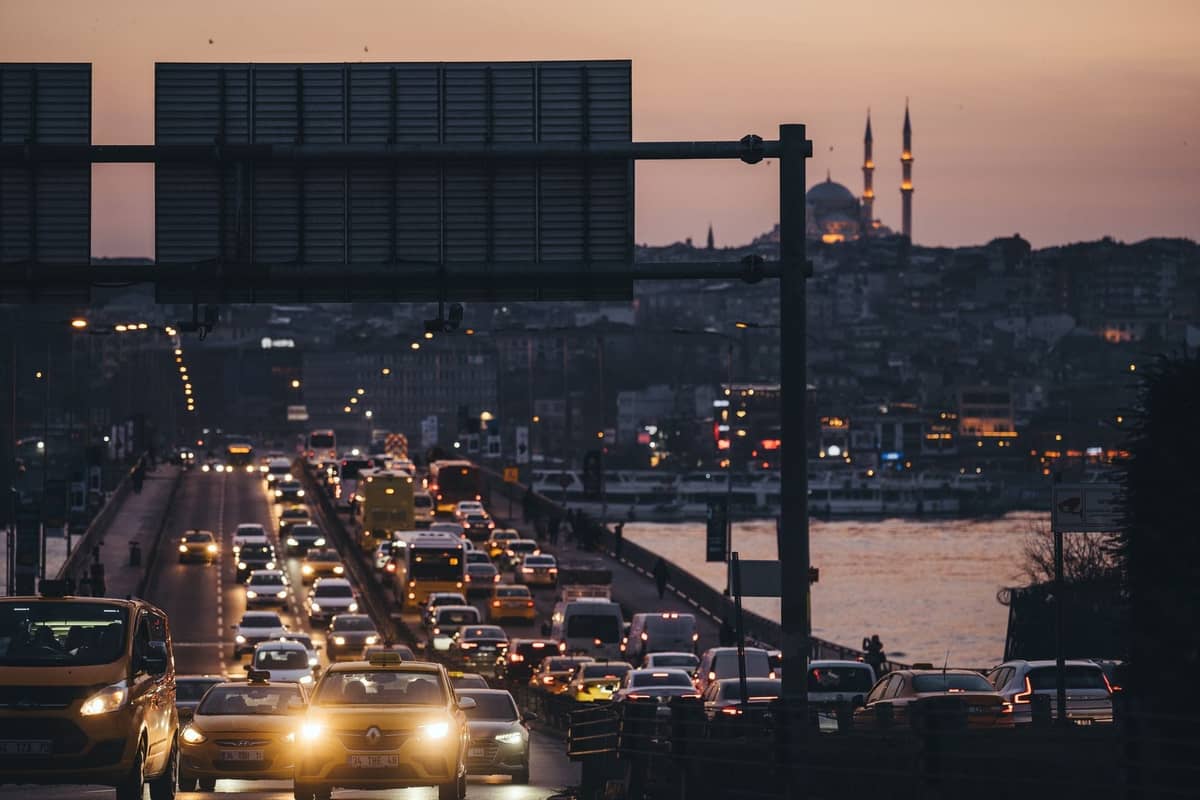
The single most disruptive daily event for visitors is the 90-minute window before iftar. From roughly 17:00 to 19:00, Istanbul's already-strained road network approaches gridlock. Everyone who has been fasting all day is trying to reach home, a restaurant, or a mosque before the call to prayer breaks the fast. Taxis in this window are a bad idea: meters run, traffic doesn't move, and drivers can be visibly tense.
The solution is straightforward. Istanbul's metro, tram, and Marmaray tunnel system operate on fixed tracks and are far less affected by surface traffic. If you're getting around Istanbul between roughly 16:30 and 19:30 during Ramadan, stick to rail-based transit. The Istanbulkart (Istanbul's contactless transit card) works across metro, tram, and most ferry services, and is available at machines in every metro station.
⚠️ What to skip
Avoid scheduling major cross-city taxi journeys between 17:00 and 19:30 during Ramadan. The traffic before iftar is the worst you will encounter all year, and there is no workaround except waiting it out or using rail transit.
Food and Drink During Ramadan: What Visitors Need to Know
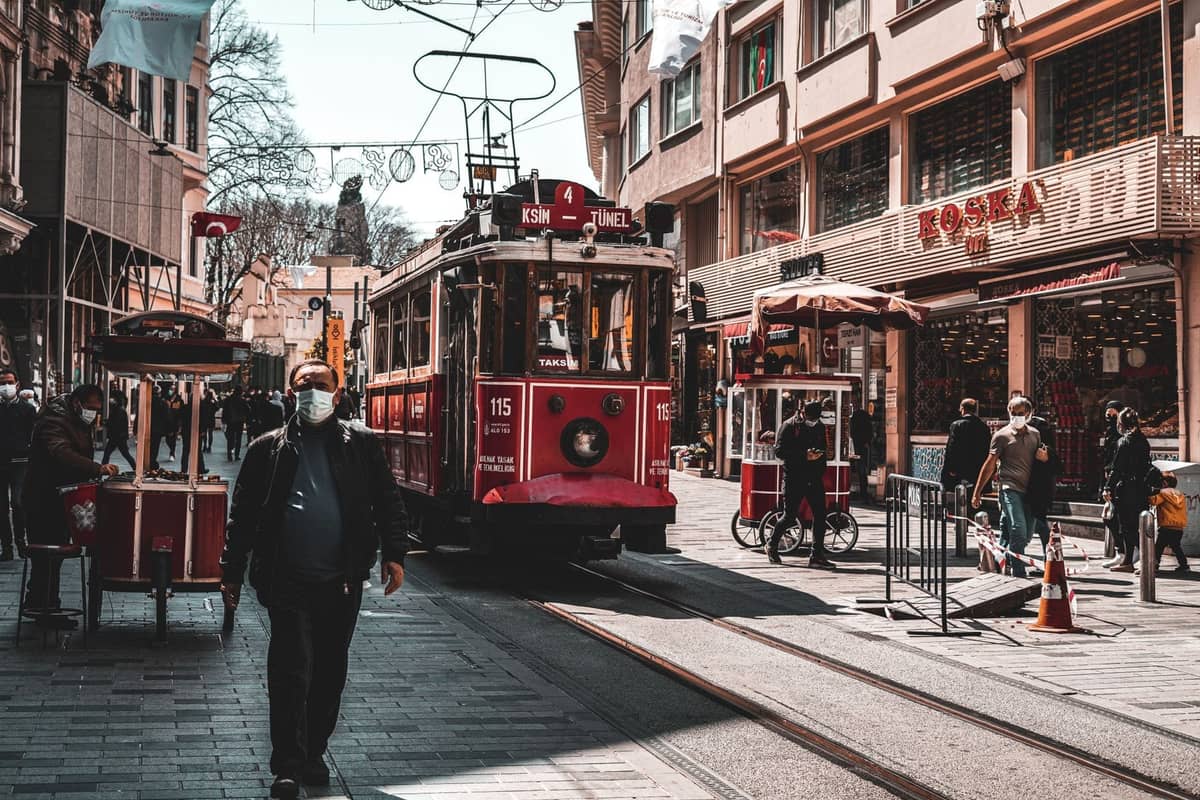
Non-Muslims are not required to fast, and there is no legal restriction on daytime eating or drinking in Turkey. Restaurants in tourist-heavy areas, including along İstiklal Avenue, Taksim, Sultanahmet, and around the Grand Bazaar, serve food and drink throughout the day without issue. The Istanbul food scene doesn't pause for Ramadan.
Where judgment is warranted: eating a sandwich loudly in front of a mosque at noon during Friday prayers, or smoking on a crowded commuter ferry surrounded by fasting locals, reads as inconsiderate rather than illegal. The courtesy benchmark is similar to avoiding loud music in a library. Most visitors who are simply eating lunch at a cafe will not encounter any reaction whatsoever.
The food story gets interesting after sunset. Ramazan pidesi is the standout item: a round, soft flatbread stamped with sesame and nigella seeds, baked only during Ramadan and sold at bakeries from late afternoon. Lines form outside good bakeries by 17:00. It's meant to be eaten fresh at iftar and pairs with olives, white cheese, and soup. Outside Ramadan, you simply cannot buy it. This alone is a reason to time a visit to the month.
- Ramazan pidesi: available only during Ramadan, from late afternoon at bakeries across the city.
- Güllaç: a Ramadan dessert made from thin wafers soaked in rose water and milk, served cold. Found at traditional pastane shops.
- İftar menus: set menus at restaurants ranging from simple soup-plus-main to elaborate spreads, which in recent years have often exceeded 700 TRY per person (verify current pricing, as costs shift quickly with inflation).
- Public iftar tables: the Istanbul Metropolitan Municipality sets up free communal iftar meals at several festival squares, open to anyone who sits down.
- Sahur dining: some restaurants near Sultanahmet and in Fatih stay open from midnight until around 03:30 to serve the pre-dawn meal, creating a late-night dining scene that doesn't exist outside Ramadan.
✨ Pro tip
Book iftar dinner reservations at least 2-3 days ahead for well-known restaurants in Sultanahmet and Karaköy. Tables at sunset fill instantly. If you don't have a reservation, arrive at least 30 minutes before iftar and be prepared to wait, or opt for the municipality's free public iftar tents where no reservation is needed.
Ramadan-Specific Experiences Worth Planning Around
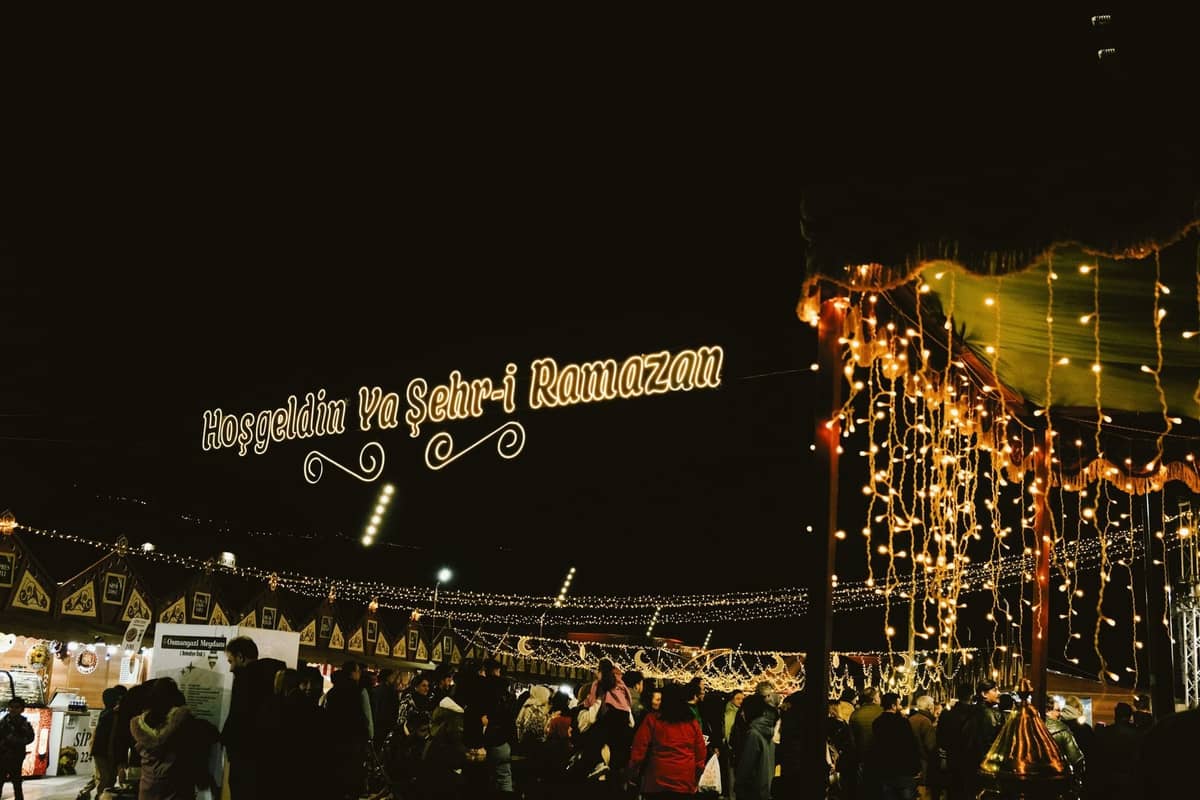
The Istanbul Metropolitan Municipality (İBB) organizes an extensive Ramadan cultural program each year, with stages and festival tents set up across the city. In recent years, major sites have included Üsküdar Mimar Sinan Square, Harbiye Cemil Topuzlu Open-Air Stage, Beyazıt Square, and Küçükçekmece Cennet Square. Programming typically includes traditional Karagöz and Hacivat shadow puppet theatre, live music, readings, and cultural talks. Events start after iftar and run until around midnight. Admission is free.
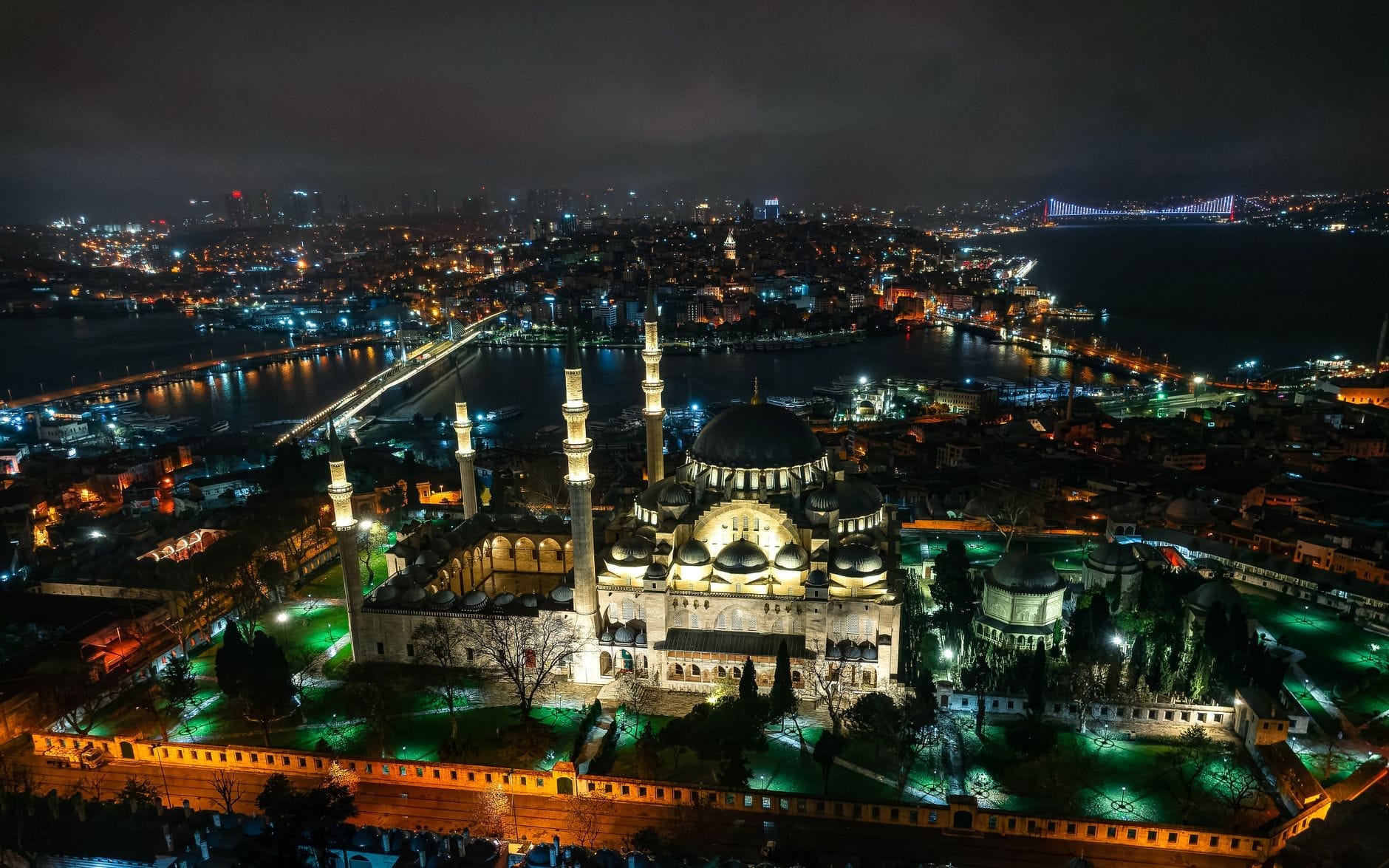
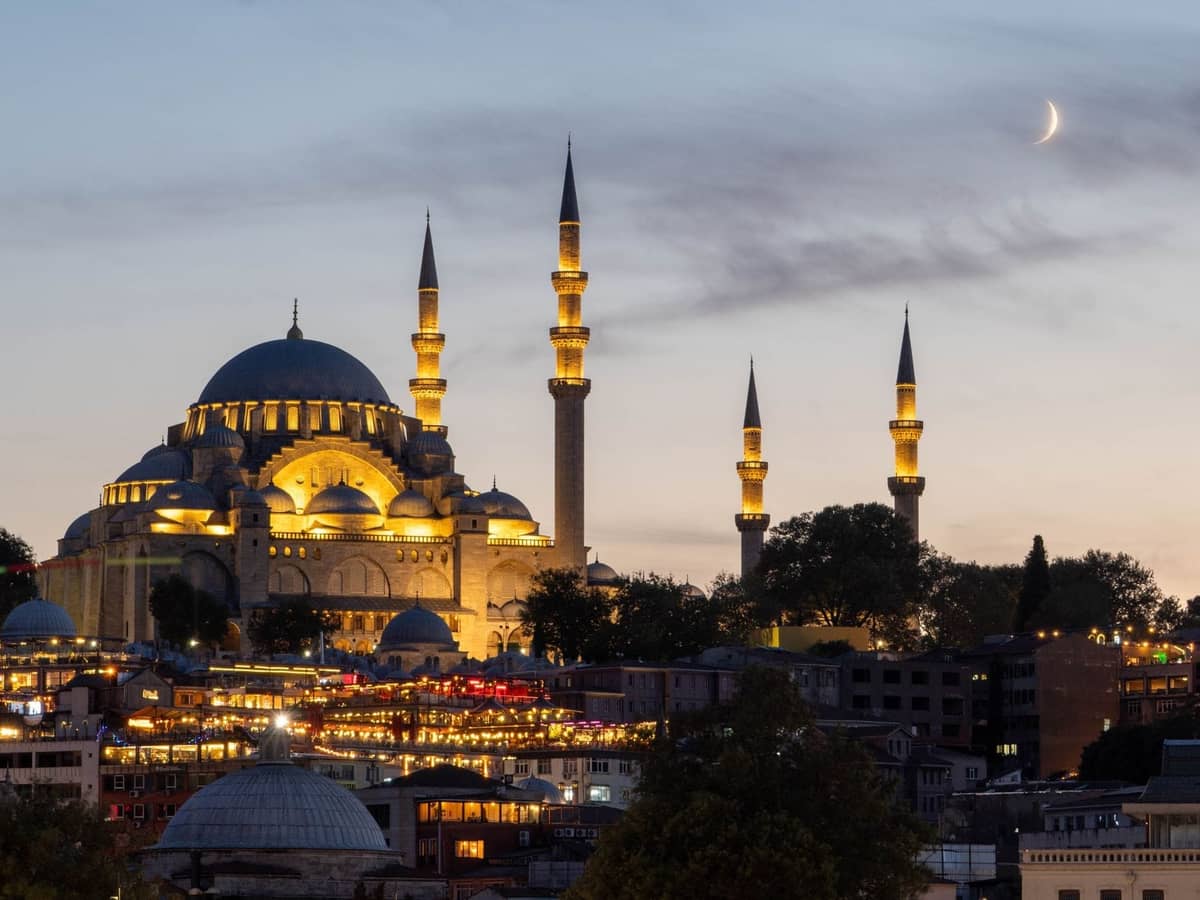
The spiritual atmosphere at Istanbul's great mosques intensifies significantly during Ramadan. Tarawih prayers after the final daily prayer (isha) draw large congregations to Süleymaniye Mosque and the Blue Mosque. Non-Muslims can observe from a respectful distance. The illuminated minarets at night, with Ramadan banners strung between them, create a visual spectacle that photographers specifically travel for.
One experience that surprises most visitors: the davulcu. A drummer walks through residential neighborhoods starting around 03:00 to wake Muslims for sahur (the pre-dawn meal before fasting begins again). In centrally located hotels in Fatih or Sultanahmet, you may hear this through your window. It's not an alarm; it's a centuries-old tradition. Light sleepers should bring earplugs, or simply appreciate it as a local detail that no theme park could replicate.
Practical Etiquette: How to Be a Respectful Visitor
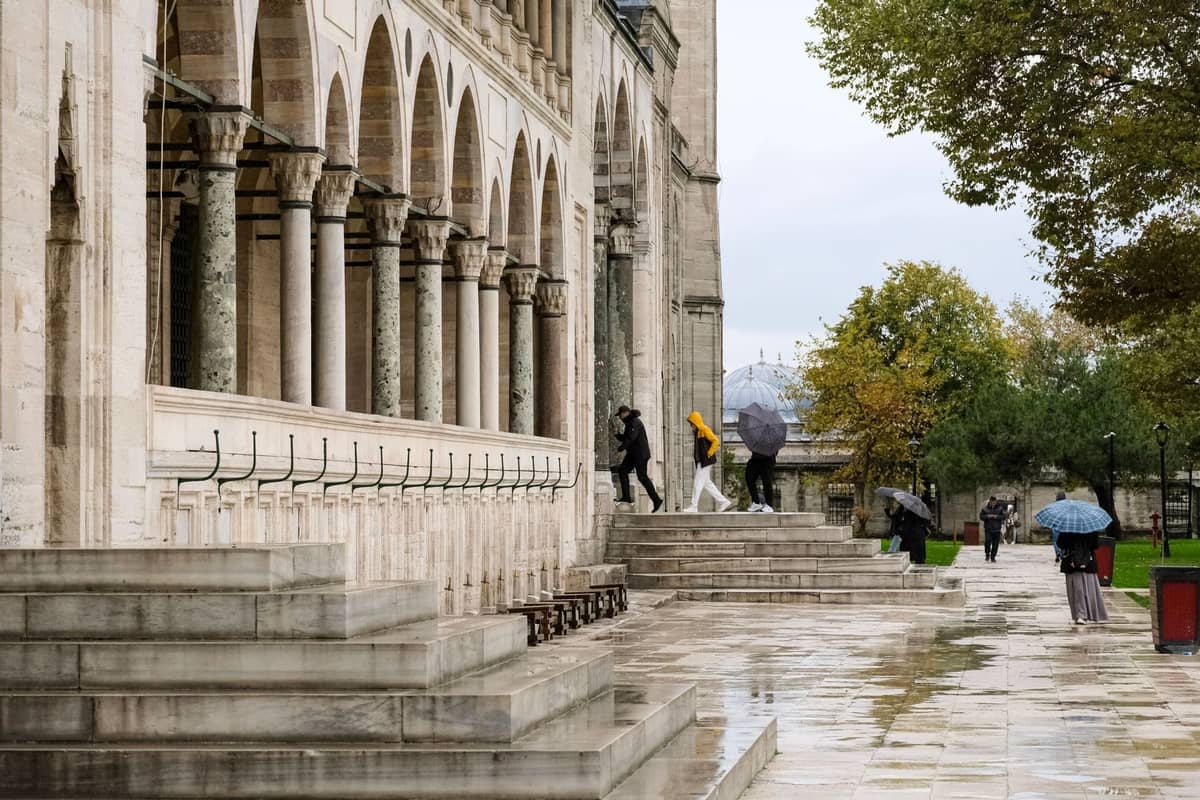
Istanbul is a secular city with a Muslim-majority population, and the balance during Ramadan is handled with considerable sophistication. The rules for visiting mosques don't change from the rest of the year: cover shoulders and legs, remove shoes at the entrance, and women should bring a headscarf. These apply year-round. Our guide to Istanbul's mosques covers the specific access rules for each major site.
During Ramadan, a few additional habits make you a more considerate guest. Avoid eating or drinking visibly in the immediate area of mosques during prayer times, particularly at Friday noon prayers. Keep noise levels reasonable near residential neighborhoods after midnight, since the evening festivals and sahur preparations mean residents are on an unusual schedule. Beyond that, normal tourist behavior is entirely appropriate. Istanbul's tourism economy does not expect or require visitors to modify their entire daily routine.
💡 Local tip
If you're invited to share iftar with a local family or at a communal table, accept. It's considered generous hospitality, and breaking fast together is genuinely one of the warmest social experiences the city offers. You do not need to have been fasting to participate.
Common Misconceptions About Ramadan in Istanbul
Several fears circulate among travelers planning trips that overlap with Ramadan. Most are either false or dramatically overstated for Istanbul specifically.
- "Everything will be closed" False. Istanbul's major bazaars, attractions, hotels, and most restaurants operate on normal schedules throughout Ramadan. Closures are concentrated in the three-day Eid period that follows.
- "I can't eat in public" False. There is no law prohibiting non-Muslims from eating or drinking during the day in Turkey. Ordinary cafe and restaurant dining continues without restriction in tourist areas.
- "Transport will be impossible" Partially true, but manageable. Road traffic is severe in the pre-iftar window. Rail transit is the straightforward workaround.
- "Alcohol is unavailable" False. Licensed bars and restaurants continue to serve alcohol throughout Ramadan. Some individual establishments may choose not to, but this is not a universal policy.
- "It's not a good time to visit" Arguable in the wrong direction. Ramadan adds evening festival culture, unique food, and a sense of community that simply doesn't exist the rest of the year. For the right traveler, it's an advantage.
For travelers weighing the best months overall, our best time to visit Istanbul guide covers seasonal trade-offs in full, including how Ramadan compares to peak summer crowds and spring festivals.
FAQ
Can I eat and drink in public in Istanbul during Ramadan?
Yes. There is no legal restriction on eating or drinking in public for non-Muslims in Turkey during Ramadan. Restaurants in tourist areas serve food and drink throughout the day. Using basic common sense about location and context (for example, not eating loudly in front of a mosque at prayer time) is appreciated but not legally required.
Will the Grand Bazaar and Spice Bazaar be open during Ramadan?
Yes, both bazaars remain open throughout Ramadan on their standard schedules. However, they close completely for the three-day Eid al-Fitr holiday (Şeker Bayramı) that begins immediately after Ramadan ends. If your visit falls during Eid, plan bazaar shopping before the holiday begins.
When is Ramadan in Istanbul in 2026?
Ramadan 2026 in Turkey is expected to begin around 19 February and end approximately 18 March, though the exact start date depends on the official moon sighting. Eid al-Fitr (Şeker Bayramı) follows immediately for three days. Always confirm closer to the date via Turkey's Diyanet İşleri Başkanlığı (Directorate of Religious Affairs).
Is it harder to get around Istanbul during Ramadan?
Road traffic is significantly worse in the 90 minutes before iftar, typically between 17:00 and 19:00. Taxis are impractical in this window. The metro, tram (T1 line), and Marmaray rail tunnel are unaffected by road conditions and are the recommended alternatives. Outside of this daily window, transport operates normally.
What unique food experiences are only available during Ramadan in Istanbul?
Ramazan pidesi (a round sesame and nigella-seed flatbread baked only during Ramadan) is the most iconic. It's sold at bakeries from late afternoon and is meant to be eaten fresh at iftar. Güllaç, a rose water milk dessert made with thin wafers, is also specific to the month. Many restaurants offer set iftar menus at sunset that aren't available the rest of the year. Municipal festival squares also serve free communal iftar meals, open to all visitors.