Spice Bazaar (Mısır Çarşısı): Istanbul's Ancient Market of Scent and Flavor
Built in 1664 as part of the Yeni Camii complex, the Spice Bazaar is a covered L-shaped market hall in Eminönü with around 85 shops selling spices, dried fruits, sweets, and lokum. Entry is free, the atmosphere is dense and sensory-rich, and the surrounding streets are just as interesting as the market itself.
Quick Facts
- Location
- Eminönü, Fatih, Istanbul (next to Yeni Camii)
- Getting There
- T1 tram to Eminönü stop, then 2-min walk across the square
- Time Needed
- 45 minutes inside; 1.5–2 hours with surrounding streets
- Cost
- Free entry; costs apply only to purchases
- Best for
- Food lovers, souvenir shoppers, history enthusiasts
- Official website
- visit.istanbul/spice-bazaar
What the Spice Bazaar Actually Is
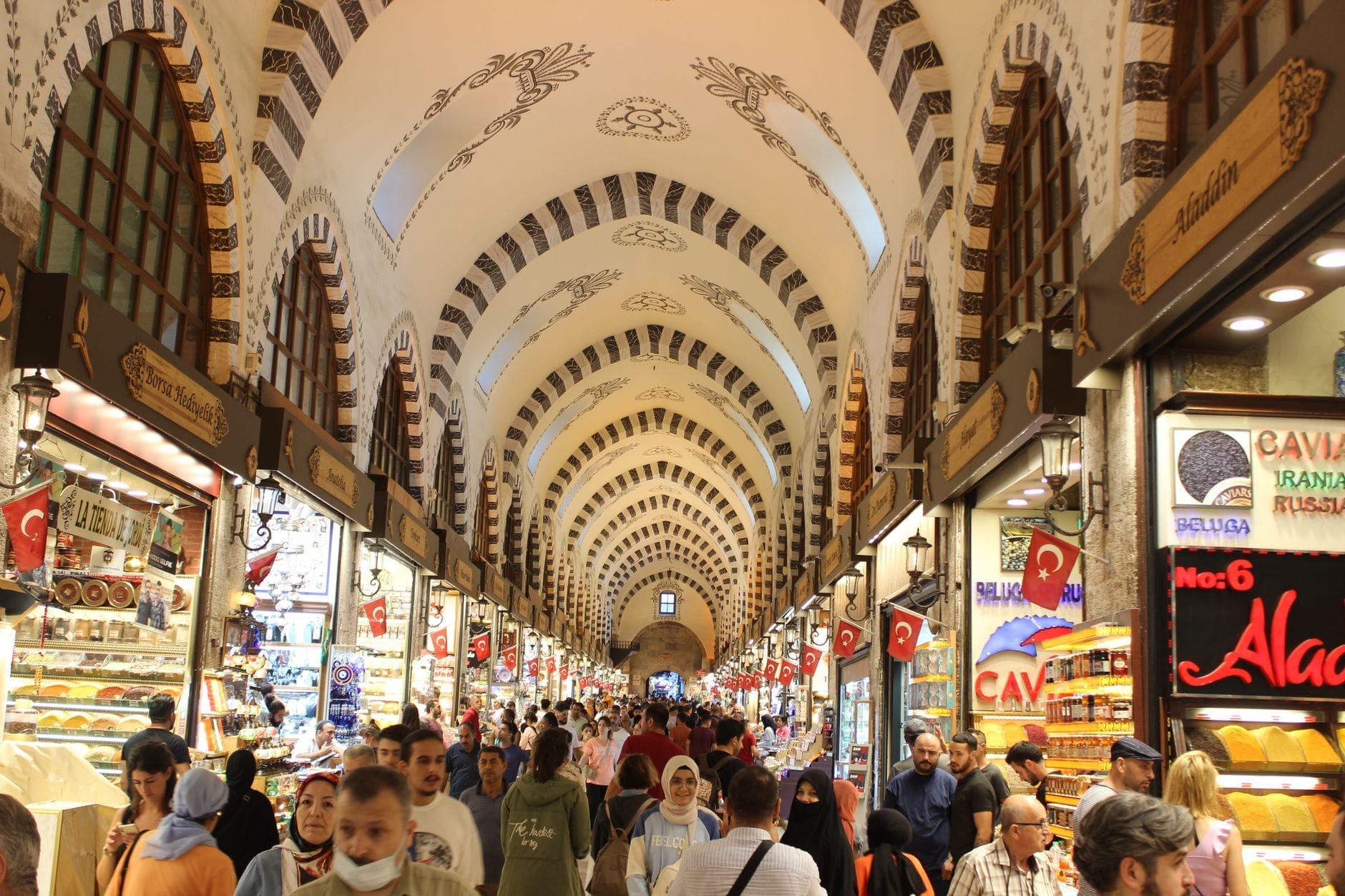
The Spice Bazaar, known in Turkish as Mısır Çarşısı (and sometimes called the Egyptian Bazaar), is one of Istanbul's oldest surviving covered markets, built in 1664 as part of the Yeni Camii mosque complex. It sits at the heart of Eminönü, the waterfront district where the Golden Horn meets the Bosphorus shoreline, and it has operated as a commercial market almost continuously since it was completed. Around 85 shops line its L-shaped interior, selling spices, dried herbs, lokum, nuts, honey, saffron, and increasingly, souvenirs and cosmetic products.
The name 'Egyptian Bazaar' has nothing to do with Egyptian goods specifically. The market was funded by tax revenues collected from Egypt, then an Ottoman province, which is why early records called it the Mısır Çarşısı. The building was commissioned by Turhan Sultan, mother of Sultan Mehmed IV, and designed by court architect Kasım Ağa. It survived two major fires over its history and was substantially restored between 1940 and 1943 by Istanbul Municipality. The upper floor once housed a court where merchants resolved commercial disputes.
ℹ️ Good to know
Entry is completely free. You pay only for what you buy. Opening hours are generally 09:00–19:30 daily, though hours may vary on religious and public holidays. Confirm locally if your visit falls near a holiday.
What You Sense When You Walk In
The most immediate experience is olfactory. Even before entering through one of the six arched doors, the air around the bazaar carries layers of cumin, cinnamon, dried rosebuds, and roasted nuts. Step inside and the smell intensifies: sacks of turmeric stacked against wooden shelves, glass jars of sumac and red pepper flakes, trays of pistachio-studded lokum dusted with powdered sugar. The vendors know exactly what they're doing with those open displays: they are designed to stop you in your tracks.
The interior is covered and weather-protected, with a vaulted ceiling that keeps the space cool in summer and sheltered in rain. The floor is level throughout, making it accessible for most visitors. Light enters from windows set high in the arched vaults, giving the interior a warm, slightly golden tone that intensifies in the afternoon. Acoustically, the bazaar is loud: vendors call out, shoppers negotiate, and the echo of a dozen languages bounces off the stone walls.
What changes dramatically by time of day is the density of people. Between 10:00 and 14:00, the bazaar is at full capacity, with tour groups moving through in clusters and the main corridor becoming narrow with foot traffic. Arriving at 09:00 when shops are just opening gives you a genuinely different experience: stall holders arranging their displays, the smell of freshly ground coffee from the corner shops, and space to actually examine products without being rushed.
💡 Local tip
If you want to photograph the interior without crowds obscuring every frame, arrive within 30 minutes of opening. The early light through the upper windows is also the best for photography.
Tickets & tours
Hand-picked options from our booking partner. Prices are indicative; availability and final rates are confirmed when you complete your booking.
Skip-the-line Hagia Sophia and Grand Bazaar tour
From 60 €Instant confirmationFree cancellationIstanbul walking tour through the Old City and the Bazaars
From 128 €Instant confirmationFree cancellationBosphorus Cruise and Istanbul Egyptian Bazaar tour
From 43 €Instant confirmationFree cancellationHagia Sophia, Blue Mosque, Grand Bazaar guided small group tour
From 24 €Instant confirmationFree cancellation
Historical and Architectural Context
The Spice Bazaar was conceived not as a standalone market but as a revenue-generating structure attached to the Yeni Camii (New Mosque) complex. This was standard Ottoman urban planning: mosques of imperial scale were surrounded by hans, bazaars, and charitable foundations whose commercial income paid for the mosque's upkeep and social programs. The same logic produced the Grand Bazaar and the hans around Rüstem Pasha Mosque a short walk uphill from Eminönü.
The building's L-shaped plan allowed it to wrap around the mosque precinct while maintaining separate entrances from two different streets. Six doors gave merchants from different districts their own access points. The upper level's function as a commercial court reflects how seriously Ottoman trade law took dispute resolution: the market was not just a place to buy things, but a regulated economic institution with formal governance.
Architecturally, the bazaar is less visually dramatic than Hagia Sophia or even the Grand Bazaar's labyrinthine passages, but the exterior's Ottoman stone arches and the relationship between the bazaar and the adjacent mosque courtyard are worth pausing to appreciate before you go inside.
What to Buy and What to Skip
The quality and authenticity of what's sold in the Spice Bazaar varies more than first-time visitors expect. The spices toward the back of individual stalls, stored in sealed glass or ceramic containers rather than open sacks, tend to be fresher. Saffron is sold widely here, but pricing varies significantly and low-cost saffron warrants scrutiny. Reputable shops will let you smell individual spices and will give you information about origin if you ask directly.
lokum lokum is one of the stronger purchases here. Many shops make their own or work directly with producers, and you can sample before buying. Look for varieties made with real fruit or nut fillings rather than synthetic flavorings. Dried fruits, pistachios, and walnuts are also consistently good value. Herbal tea blends, dried hibiscus, and rose hip are other reliable picks.
Where the bazaar has noticeably declined in quality is souvenirs. The last decade has seen a significant increase in mass-produced tourist goods mixed in with traditional food products. Some shops now sell items with no connection to spices or food at all. Stay focused on the consumable goods if you want to take home something worth having.
⚠️ What to skip
Haggling is less standard here than at the Grand Bazaar. Many shops now operate at fixed prices, especially for food goods. Asking politely for a discount on large quantities is acceptable; aggressive negotiation over a small bag of spices will not help your experience.
The Streets Around the Bazaar Are Half the Point
The Spice Bazaar is the center of a broader food district that extends through the surrounding streets and down toward the Eminönü waterfront. The outdoor vendors between the bazaar and Yeni Camii sell fresh produce, pickled vegetables, and dried goods at prices lower than inside the market. The street that runs along the bazaar's exterior toward the Galata Bridge side is dense with wholesale spice and food supply shops serving restaurant kitchens, which is where you'll find the most serious prices and the least tourist theater.
Walking through the bazaar and out the far end toward the Tahtakale neighborhood takes you into a wholesale district where everything from kitchen equipment to industrial quantities of dried goods is sold. It's considerably less polished than the market interior and considerably more interesting if you want to see how Istanbul's food supply chain actually functions. The smells shift from sweet and aromatic to savory and fermented as you move deeper into these streets.
The Rüstem Pasha Mosque, a 10-minute walk up the hill from the bazaar, is one of the most undervisited significant mosques in Istanbul and deserves time if you're in this area. Its interior Iznik tile panels are among the finest in the city. See our page on Rüstem Pasha Mosque for what to look for when you visit.
Getting There and Practical Notes
The T1 tram line is the most straightforward way to reach the Spice Bazaar. Take it to the Eminönü stop, which deposits you directly at the waterfront square in front of Yeni Camii. Walk toward the mosque and the bazaar's main entrance gates are immediately visible on the left side of the mosque courtyard. The walk from tram to bazaar entrance is under two minutes.
Ferries from the Asian side also dock at Eminönü, making the bazaar easily reachable from Kadıköy or Üsküdar with no need for a tram connection. The ferry terminal is a few minutes' walk from the bazaar along the waterfront. If you're arriving by taxi, ask for Mısır Çarşısı Eminönü and confirm the route avoids the one-way street system around Tahtakale, which can add significant time during peak hours.
The bazaar is located within Istanbul's historic peninsula, the same district that contains Topkapı Palace, the Blue Mosque, and the Basilica Cistern. It fits naturally into a half-day itinerary covering Eminönü and Sultanahmet. For a broader route through this part of the city, the historic peninsula guide covers logistics in detail.
💡 Local tip
The bazaar is closed on some religious holidays. If your visit coincides with Eid al-Fitr or Eid al-Adha, check locally before making this the centerpiece of your day.
Insider Tips
- The outer doors facing the street are less crowded than the main courtyard entrances. Enter through a side gate to start in a quieter section and work toward the main corridor.
- The covered passage directly outside the bazaar toward Yeni Camii has a row of fresh fish sellers and produce vendors who supply neighborhood kitchens. Prices here are significantly lower than inside.
- If you want to buy saffron, ask the shopkeeper to show you the stamens rather than buying pre-packaged powder. Whole saffron threads are easier to assess for quality and less susceptible to adulteration.
- The cafes on the upper level of the han buildings adjacent to the bazaar offer views down into the market square and are significantly less crowded than anything inside the tourist zone.
- The wholesale district behind the bazaar toward Tahtakale has kitchen supply shops selling Turkish copper goods, cast iron pans, and coffee equipment at prices significantly below tourist-facing shops.
Who Is Spice Bazaar (Mısır Çarşısı) For?
- Food travelers who want to buy high-quality spices, lokum, or dried goods directly from dedicated suppliers
- History and architecture enthusiasts interested in Ottoman commercial urban planning
- First-time Istanbul visitors wanting a concentrated sensory introduction to Turkish food culture
- Photographers working in the early morning, when light and crowd levels are both favorable
- Anyone combining a Sultanahmet or Eminönü day with a stop for local produce and snacks
Nearby Attractions
Other things to see while in Grand Bazaar & Bazaar Quarter:
- Grand Bazaar (Kapalıçarşı)
Founded in the 1460s under Sultan Mehmed II, the Grand Bazaar is one of the oldest and largest covered markets in the world. With 61 streets, over 4,000 shops, and about 30,700 square metres of covered space, it is an architectural and commercial landmark at the heart of Istanbul's historic peninsula.
- Rüstem Paşa Mosque
Rüstem Paşa Mosque is a 16th-century Ottoman mosque designed by Mimar Sinan, famous for its extraordinary density of hand-painted Iznik tiles covering almost every interior surface. Free to enter and tucked above the traders of Tahtakale near the Spice Bazaar, it rewards the curious traveler willing to climb a narrow staircase.