Hagia Sophia: The Building That Rewrote Architectural History
Standing at the heart of Sultanahmet for nearly 1,500 years, Hagia Sophia has been a Byzantine cathedral, an Ottoman mosque, a secular museum, and a mosque again. Nothing in Istanbul quite prepares you for its scale. This guide tells you exactly what to expect, when to go, and how to make the most of your visit.
Quick Facts
- Location
- Sultanahmet Square, Fatih, Istanbul
- Getting There
- Tram T1, Sultanahmet stop (1-minute walk)
- Time Needed
- 1 to 2 hours (more if visiting upper galleries)
- Cost
- Visitor area (including upper galleries): 25 EUR ticket for foreign tourists; worshippers enter free via a separate entrance
- Best for
- History lovers, architecture enthusiasts, first-time Istanbul visitors
- Official website
- muze.gen.tr/muze-detay/ayasofya
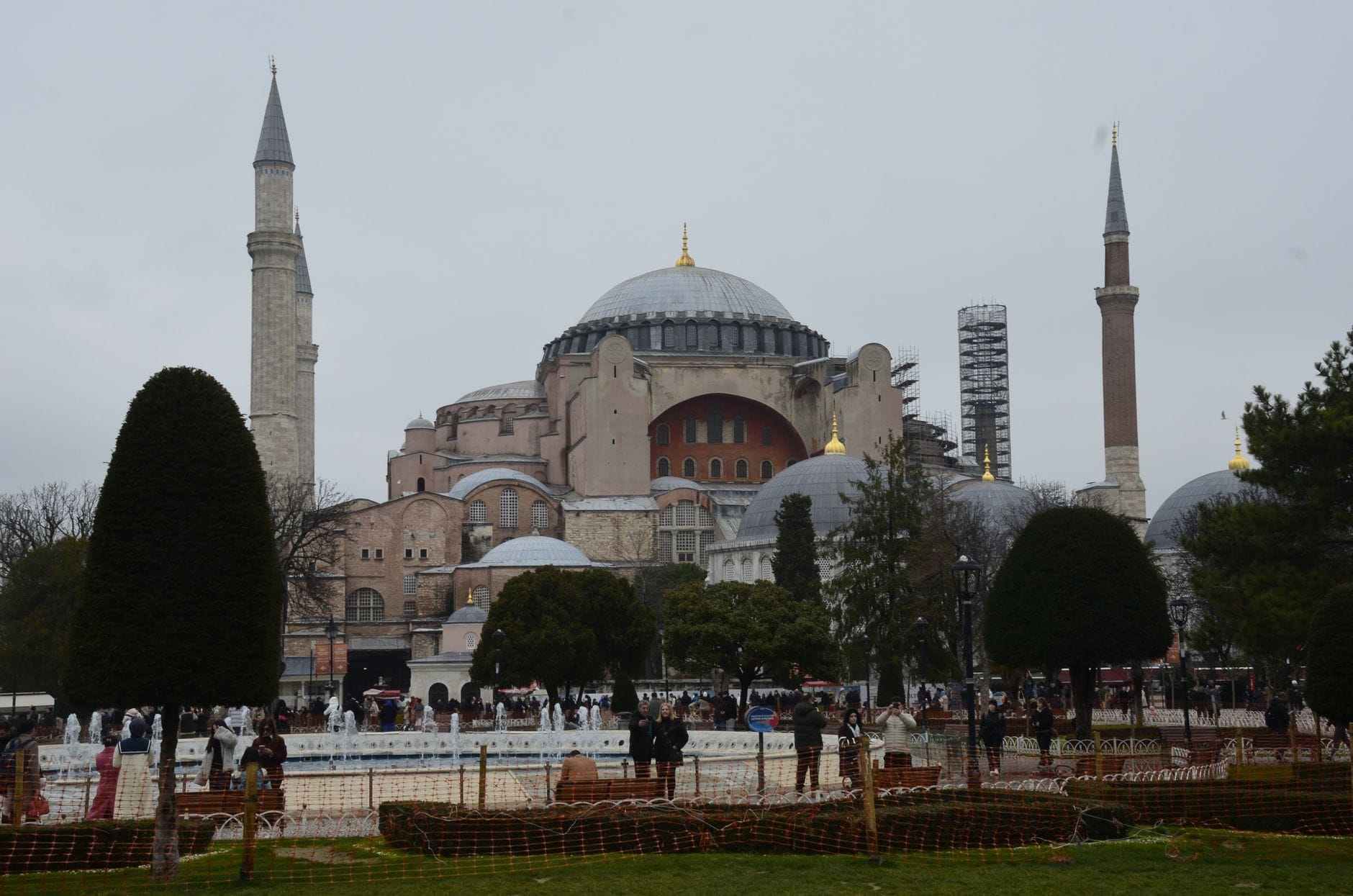
What Hagia Sophia Actually Is
Hagia Sophia, officially the Ayasofya-i Kebir Cami-i Şerifi (Hagia Sophia Grand Mosque), is one of the most consequential buildings ever constructed. That is not hyperbole. When Emperor Justinian I completed it in 537 CE, the dome was among the largest in the world and would remain one of the largest for centuries, with its engineering studied by later builders until Seville Cathedral was finished in 1520. Engineers and architects still study its construction with something close to bewilderment.
The building has lived multiple lives across a single site in the Sultanahmet neighborhood of Istanbul. It served as a Christian cathedral for nearly 900 years, becoming the spiritual center of Eastern Orthodoxy. After the Ottoman conquest of Constantinople in 1453, Sultan Mehmed II converted it into a mosque. It remained one until 1931, when it was closed for renovations. In 1935, Mustafa Kemal Atatürk opened it as a secular museum. Then, in July 2020, a presidential decree reconverted it into a functioning mosque, a decision that drew significant international attention and debate.
For the visitor, this layered identity is not just background reading. It is visible in every corner of the building, and understanding it transforms what you are looking at.
ℹ️ Good to know
Hagia Sophia is an active mosque. Entry to the visitor area is paid for foreign tourists, and access is restricted during the five daily prayer times. Friday noon prayers bring the most significant closures: the visiting area is generally closed to tourists for around 2 hours. Always check current prayer times and visitor regulations before you visit, as access can be interrupted around congregational prayers.
Inside the Building: What You Will See
The moment you pass through the outer narthex into the inner vestibule, the scale begins to register. The main dome sits about 55.6 meters above the floor and spans roughly 31 meters in diameter. Forty windows ring its base, and on a clear morning, the light they admit creates the impression the dome is floating above the nave. Byzantine writers described it as suspended from heaven by a golden chain. That effect is real, and it still works.
The prayer hall floor is now covered with carpet and lined with worshippers' rows facing Mecca. Large Ottoman calligraphic medallions hang from the upper walls, inscribed with the names of Allah, the Prophet Muhammad, and the first four caliphs. They are each over seven meters in diameter. Meanwhile, Byzantine mosaics of Christ, the Virgin Mary, and various emperors survive on the walls and in the upper galleries, some preserved behind curtains or positioned where they do not face the prayer direction directly. The two traditions coexist in the same space, separated by centuries and a few meters of stonework.
Look up at the half-domes framing the main dome on the east and west sides. These were a structural innovation that allowed the architects, Anthemius of Tralles and Isidorus of Miletus, to transfer the dome's enormous weight outward rather than downward, eliminating the need for the solid walls that made earlier Roman structures feel oppressive. The result is a nave of unusual openness, flooded with light even on overcast days.
Tickets & tours
Hand-picked options from our booking partner. Prices are indicative; availability and final rates are confirmed when you complete your booking.
Hagia Sophia skip-the-line entry ticket and optional audio guide
From 37 €Instant confirmationSkip-the-line Hagia Sophia and Grand Bazaar tour
From 60 €Instant confirmationFree cancellationHagia Sophia, Topkapi Palace and Basilica Cistern Istanbul tour
From 144 €Instant confirmationFree cancellationSkip-the-Line Entrance to Topkapi Palace, Hagia Sophia and Basilica Cistern
From 137 €Instant confirmationFree cancellation
The Upper Galleries: Where the Mosaics Are
The upper galleries require a separate paid ticket, set at 25 euros for foreign visitors as of 2026. Confirm current pricing on the official ticketing portal before you go, as rates are subject to change. The entrance to the galleries is via a sloping stone ramp at the northern end of the inner narthex, worn smooth by centuries of foot traffic.
The galleries hold the finest surviving Byzantine mosaics in the building. The Deesis mosaic, located in the south gallery, is considered one of the masterworks of Byzantine art. It depicts Christ flanked by the Virgin Mary and John the Baptist in intercession. The rendering of Christ's face, with its fine gradations of tesserae creating shadow and volume, looks nothing like the flat, frontal Byzantine style most people expect. It anticipates techniques that would later be called Renaissance by several hundred years. Stand close. The detail is worth the ticket price on its own.
Also in the south gallery: the mosaic of Emperor John II Komnenos and Empress Eirene flanking the Virgin, and a marble slab marking what is believed to be the tomb of Enrico Dandolo, the Doge of Venice who led the Fourth Crusade's sack of Constantinople in 1204. The placement is historically pointed. From the galleries, you also get the best overhead view of the prayer hall below and can observe the dome's engineering at close range.
💡 Local tip
Buy upper gallery tickets online in advance if possible. The ticket queue at the site can be long during peak summer months (June to August) and around Turkish public holidays. Arriving at opening time reduces both the queue and the crowd density inside the galleries.
How the Experience Changes by Time of Day
Early morning, around 8 to 9 AM, is when the light through the dome windows is most dramatic. The low angle of the sun pushes shafts of gold through the southern clerestory windows and across the marble floor. Visitor numbers are manageable at this hour, and the ambient sound is mostly the shuffle of feet on carpet and the occasional murmur of worshippers finishing the Fajr prayer.
By mid-morning, tour groups arrive in volume. The nave fills quickly, and the acoustics of the dome, which carry sound across the space in unexpected ways, make it difficult to hear a guide clearly from more than two meters away. If you are visiting independently, this is the period to focus on the upper galleries while the ground floor is at its most crowded.
Late afternoon, from around 3:30 PM onward, sees a secondary crowd as cruise passengers and day-trippers arrive. However, the light at this hour falls on the northern side of the dome and creates a different quality of illumination, cooler and more diffuse. Photographers often prefer it for interior shots. Note that sunset prayer (Maghrib) falls earlier in winter months, which can affect how much visiting time you have before the prayer hall is temporarily closed to tourists.
Friday is the week's most significant day for any active mosque in Turkey. The Friday noon (Jumu'ah) prayer draws a large congregation to Hagia Sophia, and visiting hours around midday are substantially disrupted. If your schedule is flexible, avoid Friday mornings entirely and plan a different Sultanahmet attraction for that slot.
Practical Walkthrough: Getting There and Getting In
The most direct public transport option is the T1 tram line, which runs from Kabataş through Karaköy, Eminönü, and on to Sultanahmet. The Sultanahmet stop places you directly in the square, with Hagia Sophia visible immediately to your left as you exit. The T1 is described in detail in the guide to getting around Istanbul. A single journey requires an Istanbulkart, the contactless transit card used across the city's metro, tram, and bus network.
At the entrance to the visitor area, you will find ticket checks for those with gallery/visitor tickets, while worshippers reach the prayer hall through a separate mosque entrance that is free. Shoes must be removed before entering the prayer area. Shoe bags are provided, and you carry your footwear with you inside. Women are required to cover their hair; scarves are available at the entrance for those who do not have one. Both men and women should have their shoulders and legs covered. Shorts and sleeveless tops are not permitted.
The main floor is largely accessible for visitors with mobility impairments, though the historic building has uneven stone surfaces in places. The upper galleries involve a long sloped ramp followed by stairs; there is no lift access to the gallery level. For visitors who cannot manage the ramp, the ground floor mosaics and the sheer spatial drama of the nave are themselves well worth the visit.
If you are planning a wider tour of the historic peninsula's monuments, the Istanbul Museum Pass covers several nearby sites, though it does not currently include Hagia Sophia's upper gallery ticket. Check the pass's current inclusions before purchasing.
Context: The Neighborhood and What Surrounds It
Hagia Sophia sits at the center of the Sultanahmet neighborhood, which is one of the most monument-dense areas anywhere in the world. Within a ten-minute walk, you can reach Topkapi Palace, the Blue Mosque, the Hippodrome, the Basilica Cistern, and the Museum of Turkish and Islamic Arts. The concentration is extraordinary, and most visitors significantly underestimate how much time they need in the area.
The Blue Mosque (Sultan Ahmed Mosque) stands directly across the square from Hagia Sophia. The architectural conversation between the two buildings was entirely intentional: Sultan Ahmed I built his mosque in the early 17th century in deliberate dialogue with Hagia Sophia, competing in scale while asserting Ottoman Islamic identity. Viewing them both in the same visit is logical and the contrast is instructive.
A short walk north brings you to Topkapi Palace, the administrative center of the Ottoman Empire for four centuries. Combining Hagia Sophia and Topkapi in a single day is possible but demanding. Most visitors find that two separate half-days serve both sites better.
⚠️ What to skip
The area around Sultanahmet Square is heavily trafficked by street touts offering unofficial guided tours. There are also persistent vendors near the entrance. Official guides can be hired through licensed agencies. Be cautious of any individual who approaches you unprompted offering to show you around.
Is Hagia Sophia Overhyped?
Frankly, most famous landmarks disappoint slightly in person. The Mona Lisa is smaller than expected. The Colosseum is surrounded by traffic. Hagia Sophia is one of the few that exceeds reasonable expectations on scale and atmosphere. The dome produces a physical response that photographs cannot transmit, a kind of spatial compression and release when you enter the nave.
That said, the experience has limits. It is an active mosque, not a museum, and the carpeted prayer hall no longer allows you to see the original marble floor in the way the museum years did. Some visitors who remember it as a museum find the current configuration more restricted. The building is also genuinely crowded for most of the day during summer months, which affects how contemplative the visit feels.
Visitors primarily interested in Byzantine art and history may find the upper galleries more rewarding than the main hall, since the mosaics there remain fully visible and the paid ticket keeps the crowd somewhat smaller. Visitors who want to understand Ottoman architectural achievement may actually be better served spending more time at the nearby Suleymaniye Mosque, which is less crowded and allows a more immersive experience of classical Ottoman mosque design.
For a fuller picture of Istanbul's Byzantine past, the guide to Istanbul's Byzantine history places Hagia Sophia in the broader context of the city's ancient Christian monuments, including the Chora Church and the Basilica Cistern.
Insider Tips
- Arrive within the first 30 minutes of opening. The ground floor is dramatically quieter, and the morning light through the dome windows is at its best. By 9:30 AM on a summer day, the nave is already filling with tour groups.
- The Deesis mosaic in the south gallery is the single most important artwork in the building. It is easy to walk past without recognizing it. Stand at roughly arm's length and look at the face of Christ. The gradation of tesserae and the sense of psychological depth are unlike anything else from the Byzantine period.
- Bring your own small scarf if you are female. The scarves provided at the entrance are functional but flimsy. A light cotton or linen scarf packed in your bag takes up almost no space and gives you full control over when to put it on and take it off.
- Photography of the interior is generally permitted. For the best dome shots, position yourself near the center of the nave and use a wide-angle lens or the ultra-wide setting on your phone. Shooting directly upward from the carpet is accepted during non-prayer times.
- The exterior apse, facing the Marmara Sea on the south side of the building, is often overlooked. Walking around the building's perimeter before entering gives you a sense of its mass and the later Ottoman additions, including the minarets added by successive sultans after 1453.
Who Is Hagia Sophia For?
- First-time Istanbul visitors for whom this is a non-negotiable anchor to the entire trip
- Architecture and engineering enthusiasts interested in Byzantine structural innovation and Ottoman additions
- Byzantine history and art lovers, particularly for the upper gallery mosaics
- Travelers interested in the intersection of world religions and how a single building has been claimed across traditions
- Photographers working with interior natural-light subjects, particularly in the early morning hours
Nearby Attractions
Other things to see while in Sultanahmet:
- Basilica Cistern
Built by Emperor Justinian I in 532 AD, the Basilica Cistern is one of Istanbul's most extraordinary ancient structures. Descend beneath Sultanahmet's streets into a vast, column-filled underground reservoir that once supplied water to the Byzantine imperial palace. Few places in the world feel quite like it.
- Blue Mosque (Sultan Ahmed Mosque)
The Sultan Ahmed Mosque, known universally as the Blue Mosque, is one of Istanbul's most recognizable landmarks. Built between 1609 and 1616, it remains an active place of worship that welcomes non-Muslim visitors outside prayer times. This guide covers everything you need to plan a smooth, respectful visit.
- Gülhane Park
Gülhane Park sits directly beside Topkapı Palace in Sultanahmet, occupying land that served as the Ottoman court's private outer garden for centuries. Open daily, free to enter, and containing one of Istanbul's oldest surviving monuments, it rewards visitors who take more than a passing glance.
- Hagia Irene
Hagia Irene (Aya İrini Müzesi) is the oldest surviving church structure in Istanbul, predating even Hagia Sophia. Sitting quietly inside the first courtyard of Topkapı Palace, it offers a rare encounter with raw Byzantine architecture — unrestored, unadorned, and old.