Blue Mosque (Sultan Ahmed Mosque): The Complete Visitor Guide
The Sultan Ahmed Mosque, known universally as the Blue Mosque, is one of Istanbul's most recognizable landmarks. Built between 1609 and 1616, it remains an active place of worship that welcomes non-Muslim visitors outside prayer times. This guide covers everything you need to plan a smooth, respectful visit.
Quick Facts
- Location
- Sultanahmet District, Fatih, Istanbul
- Getting There
- T1 tram to Sultanahmet stop, then 2-min walk
- Time Needed
- 45–90 minutes
- Cost
- Free entry (no ticket required; voluntary donations accepted)
- Best for
- Ottoman architecture, historic mosque interiors, photography
What the Blue Mosque Actually Is
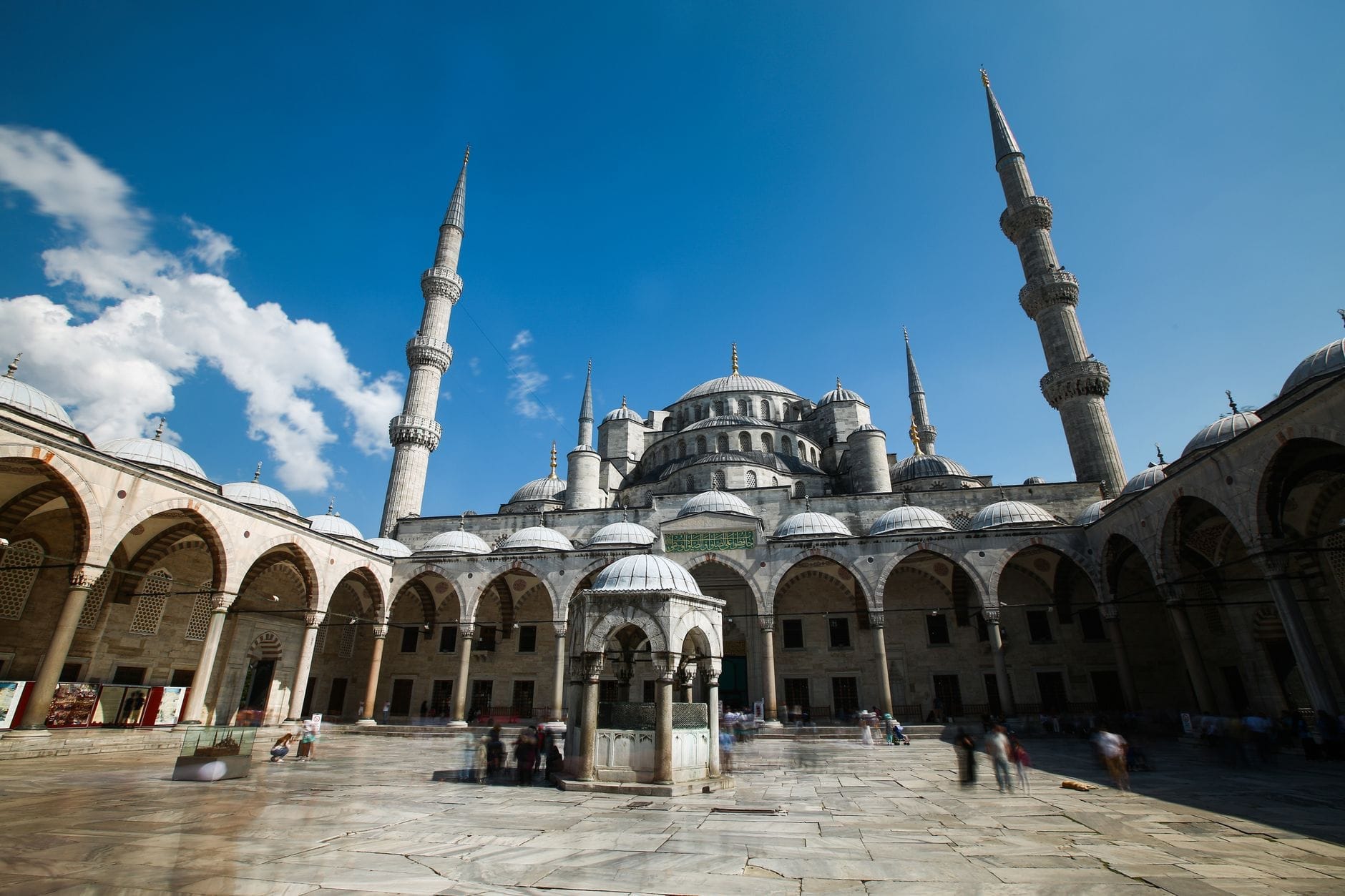
The Sultan Ahmed Mosque, completed around 1616 under the reign of Sultan Ahmed I, stands as the last great imperial mosque built in Istanbul during the classical Ottoman period. It faces Hagia Sophia across a broad plaza, and the two buildings define the skyline of the historic peninsula more than any other pair of structures in the city.
The nickname 'Blue Mosque' comes from the interior: roughly 20,000 hand-painted Iznik ceramic tiles in shades of cobalt, turquoise, and white cover the walls from mid-height upward. In full daylight, filtered through 260 stained-glass windows, the effect is genuinely striking. It is one of those interiors where photographs fail to capture the scale. The central dome measures 23.5 meters in diameter and rises 43 meters above the floor.
Unlike most mosques of similar status, the Sultan Ahmed Mosque has six minarets, a number that was considered architecturally provocative at the time of its construction, since the Grand Mosque in Mecca also had six. The Ottoman court eventually funded a seventh minaret in Mecca to resolve the symbolic tension. Standing in the outer courtyard and counting the slender pencil-shaped towers above you is one of those small moments of orientation that makes the building feel less abstract.
⚠️ What to skip
The mosque closes to visitors during the five daily prayer times. Closures typically last around 90 minutes. If you arrive and find the entrance cordoned off, wait nearby — the queue forms quickly and access resumes promptly after prayers.
When to Visit: Time of Day and Crowd Patterns
The mosque receives several million visitors per year, and the difference between a pleasant visit and a frustrating one comes down almost entirely to timing. Early morning, in the window between opening and the first midday prayer, offers the closest thing to a quiet experience. Arrive before 09:30 and the courtyard holds a fraction of the midday crowd. The light through the stained glass is softer but still beautiful, and you can stand inside without being pushed forward.
Midday to early afternoon is the most congested period, combining tour groups, independent travelers, and proximity to the Friday noon prayer, which restricts access on a weekly basis. Friday visitors should plan around this with particular care.
Late afternoon, particularly in the hour before the last prayer closure, offers the best interior light. The western-facing windows throw color across the tile work, and the crowd thins noticeably compared to midday. This window also tends to produce better photographs if the sky is clear.
From a photographic standpoint, the exterior is best approached at dawn when the forecourt is empty, or at dusk when the mosque is illuminated. The fountain courtyard to the north provides a framing advantage that most visitors miss. For a broader view of both the Blue Mosque and Hagia Sophia together, walk up to the Gulhane Park esplanade or consult a broader resource on Istanbul's best viewpoints for angle options.
Tickets & tours
Hand-picked options from our booking partner. Prices are indicative; availability and final rates are confirmed when you complete your booking.
Half day Morning Ottoman Splendors tour, including the Blue Mosque
From 48 €Instant confirmationFree cancellationIstanbul Basilica Cistern, Blue Mosque and Hagia Sophia tour
From 83 €Instant confirmationFree cancellationIstanbul mosaics and Blue Mosque 1-day small group tour
From 62 €Instant confirmationFree cancellationIstanbul combo tour of Hagia Sophia and Blue Mosque
From 114 €Instant confirmationFree cancellation
Inside the Mosque: What to Expect
Visitors enter through a separate entrance from worshippers, typically on the north or west side depending on current crowd management arrangements. You will pass through a low-ceilinged antechamber where shoe storage bags are provided, then step up into the main prayer hall.
The scale announces itself immediately. The central dome is supported by four semi-domes, each of which is supported by smaller exedras, so the ceiling appears to cascade downward in layers. Four massive 'elephant foot' columns, each roughly 5 meters in diameter, carry the primary structural load. The columns are considered the least elegant element of the design by architectural historians, a compromise made necessary by the building's unusual width.
The Iznik tile panels covering the lower walls date to the early 17th century, from the late period of Iznik production when the quality of certain pigments was beginning to decline. The coral-red underglaze (a color that Iznik potters had mastered in the preceding century) is less vivid here than in earlier examples like the tiles at the Rustem Pasha Mosque. That comparison is worth making if you want to understand what Iznik ceramics look like at their absolute peak.
For context on how this mosque fits into the larger history of Ottoman religious architecture across the city, the guide to Istanbul's best mosques covers buildings ranging from the 15th to the 18th century.
Dress Code and Entry Requirements
The Sultan Ahmed Mosque is an active place of worship, and the dress requirements are non-negotiable. Shoulders and knees must be covered for all visitors, regardless of gender. Women are required to cover their hair with a headscarf. Shoes must be removed before entering the prayer hall and placed in the bags provided or carried with you. Loaner scarves and fabric wraps are available at the entrance for those who arrive unprepared, though they are basic and sometimes in short supply during peak hours.
If you are visiting several mosques in a single day, the simplest approach is to wear long trousers and carry a light scarf in your bag. This removes the need to manage the loaner system entirely and respects the setting more naturally. Flip-flops are practical for a mosque visit since you will be removing your shoes repeatedly, but the floors inside can be cold in winter.
💡 Local tip
Women can tie a rectangular scarf loosely around the head and tuck the ends into a collar or neckline. This takes about 30 seconds and avoids the queue for loaners. A pashmina-size scarf is easy to carry and covers the shoulders simultaneously.
Historical and Architectural Context
Sultan Ahmed I was 19 years old when he commissioned the mosque, and he had no major military victories to justify the traditional practice of funding construction from war spoils. He drew instead from the state treasury, a decision that was considered irregular at the time. The architect was Sedefkar Mehmed Agha, a student of the legendary Mimar Sinan, and the building shows clear debts to Sinan's masterwork at the Suleymaniye Mosque and to the spatial organization of Hagia Sophia, which stands directly opposite.
That proximity to Hagia Sophia was deliberate. The two buildings functioned as a kind of symbolic conversation across the plaza, with the Byzantine basilica representing one religious tradition and the Ottoman mosque asserting another. The physical relationship between them is best understood by reading about Istanbul's Byzantine history alongside the Ottoman history of the city, which together explain why both buildings occupy the specific ground they do.
The mosque complex originally included a hospital, a primary school, a caravanserai, and a mausoleum for Sultan Ahmed I, who died in 1617 at age 27, just a year after the mosque's completion. The mausoleum is located in the mosque garden and is open to visitors. Ahmed I, his wife Kosem Sultan, and several of their children are buried there. It is a quiet, rarely-crowded space that most visitors walk past without noticing.
Getting There and Practical Logistics
The T1 tram line connects Kabatas (near Dolmabahce) with Bagcilar via the historic peninsula, stopping at Sultanahmet directly in front of the mosque complex. From Taksim Square, take the funicular down to Kabatas and board the T1 toward Bagcilar; the Sultanahmet stop is a short 2-minute walk from the mosque entrance. The journey from Kabatas takes roughly 15 minutes depending on traffic.
If you are staying in the Sultanahmet neighborhood, the mosque is likely walkable from your accommodation. If arriving from the Asian side, the Marmaray commuter rail connects to Sirkeci station on the European side, from which the mosque is a 10-minute walk along the waterfront or a one-stop tram ride.
The mosque sits on slightly elevated ground above the Hippodrome plaza. Coming from the Hagia Sophia direction, you cross the open square and arrive at the outer courtyard gate. Coming from the Hippodrome itself, you approach the north facade. Both approaches are pleasant on foot and the signage is clear.
ℹ️ Good to know
There is no official ticketing system and no timed entry. On peak summer days, queues at the visitor entrance can stretch 20–30 minutes. Arriving before 09:30 or after 16:00 largely eliminates this wait.
Managing Expectations
The Blue Mosque is one of the most visited sites in Turkey, and that volume has consequences. The visitor management inside the prayer hall keeps crowds moving through a roped corridor, which means you are not free to wander, pause, or find your own perspective. On a busy midday visit, the experience can feel more like a procession than an exploration.
Visitors who find crowded religious sites uncomfortable should weigh this honestly. The mosque interior is beautiful, but if your tolerance for dense tourist queuing is low, an early morning visit is worth the effort to arrange. Alternatively, Istanbul has working mosques of equal historical significance and far smaller crowds. The Rustem Pasha Mosque, for example, contains Iznik tile work from the peak period of Ottoman ceramics production and typically receives a fraction of the footfall.
For those who want the full historic peninsula experience in a structured way, it is worth reading the guide to the historic peninsula before your visit, which helps sequence the major sites including Hagia Sophia, the Topkapi Palace complex, and the Basilica Cistern.
Insider Tips
- The mausoleum of Sultan Ahmed I in the mosque garden is open to visitors at no cost and is almost always empty. It takes five minutes to visit and provides direct contact with early 17th-century Ottoman decorative arts in a setting without crowds.
- The outer courtyard, which is generally accessible and less affected by prayer-time closures than the interior, is worth spending time in. The central ablution fountain is an elegant piece of architectural detail, and the courtyard gives the best unobstructed view of all six minarets.
- Iznik tile production peaked in the mid-16th century. If you want to compare the Blue Mosque tiles to a finer example, visit the Rustem Pasha Mosque near the Spice Bazaar. The coral-red underglaze there is noticeably more vivid.
- Photography is permitted inside the mosque, but flash is not. A steady hand or a mirrorless camera with good low-light performance will produce better results than a phone in automatic mode. The light quality is highest in late afternoon.
- Friday visits require extra planning. The midday Friday prayer (Jumu'ah) is more significant than weekday prayers and the closure is longer. Plan your Friday visit either in the morning before noon or in the late afternoon.
Who Is Blue Mosque (Sultan Ahmed Mosque) For?
- First-time visitors to Istanbul wanting to understand the Ottoman architectural tradition
- Travelers interested in Islamic art and Iznik ceramic tile work
- History enthusiasts exploring the Byzantine and Ottoman layers of Sultanahmet
- Photographers targeting iconic Istanbul exteriors, especially at dawn or dusk
- Visitors combining the mosque with Hagia Sophia and the Topkapi Palace in a single day on the historic peninsula
Nearby Attractions
Other things to see while in Sultanahmet:
- Basilica Cistern
Built by Emperor Justinian I in 532 AD, the Basilica Cistern is one of Istanbul's most extraordinary ancient structures. Descend beneath Sultanahmet's streets into a vast, column-filled underground reservoir that once supplied water to the Byzantine imperial palace. Few places in the world feel quite like it.
- Gülhane Park
Gülhane Park sits directly beside Topkapı Palace in Sultanahmet, occupying land that served as the Ottoman court's private outer garden for centuries. Open daily, free to enter, and containing one of Istanbul's oldest surviving monuments, it rewards visitors who take more than a passing glance.
- Hagia Irene
Hagia Irene (Aya İrini Müzesi) is the oldest surviving church structure in Istanbul, predating even Hagia Sophia. Sitting quietly inside the first courtyard of Topkapı Palace, it offers a rare encounter with raw Byzantine architecture — unrestored, unadorned, and old.
- Hagia Sophia
Standing at the heart of Sultanahmet for nearly 1,500 years, Hagia Sophia has been a Byzantine cathedral, an Ottoman mosque, a secular museum, and a mosque again. Nothing in Istanbul quite prepares you for its scale. This guide tells you exactly what to expect, when to go, and how to make the most of your visit.