İstiklal Avenue: Istanbul's Most Famous Pedestrian Street
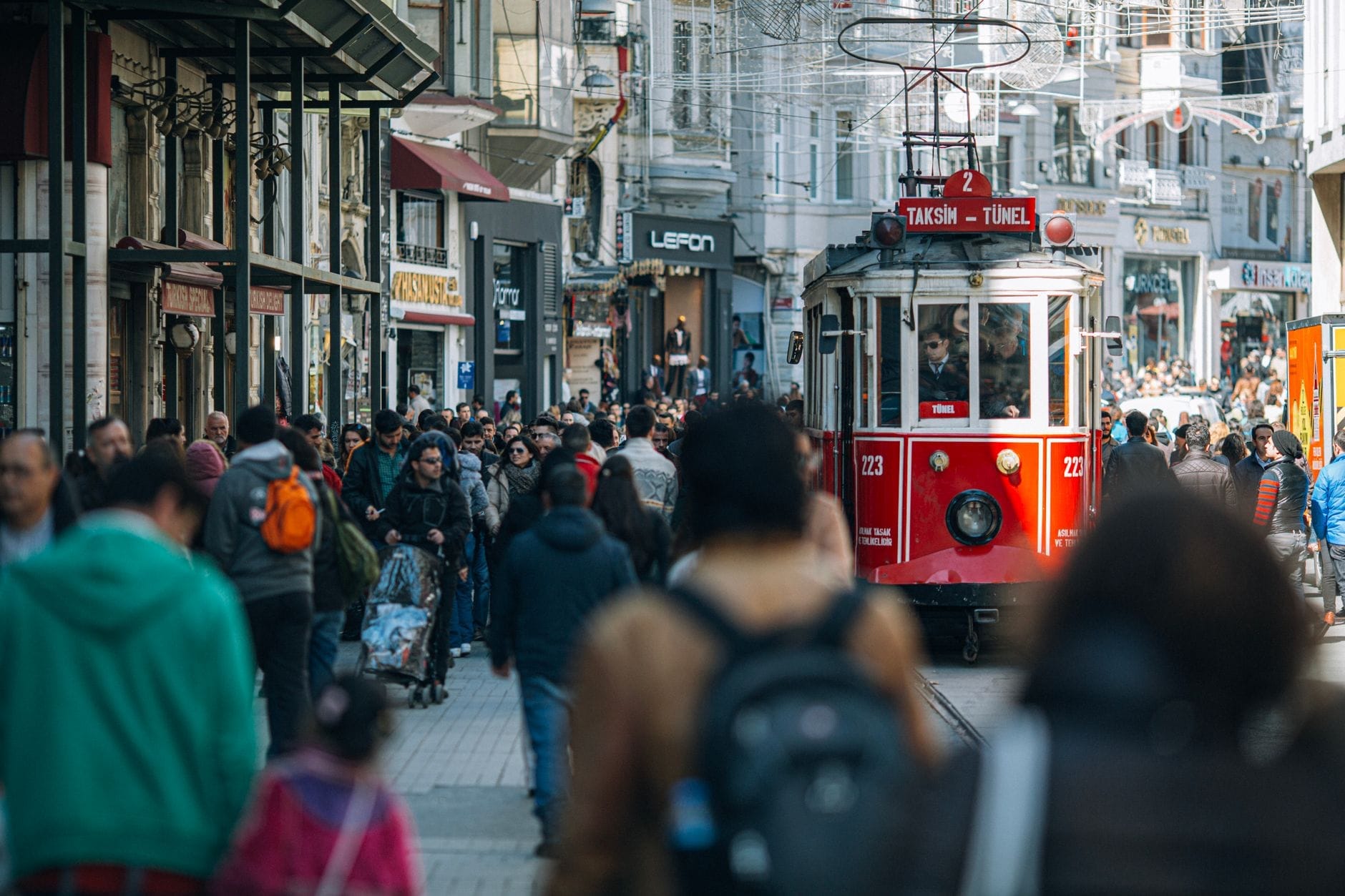
İstiklal Caddesi stretches 1.4 km through the heart of Beyoğlu, connecting Tünel Square to Taksim Square along a corridor of Belle Époque apartment buildings, independent bookshops, historic churches, and the iconic nostalgic tram. Free to walk at any hour, the avenue rewards visitors who go beyond the obvious and turn into its side streets.
Quick Facts
- Location
- Beyoğlu, Istanbul — from Tünel Square to Taksim Square
- Getting There
- Metro M2 to Taksim; T1 tram to Karaköy then Tünel funicular to Tünel Square
- Time Needed
- 1–3 hours for the avenue itself; half a day with side streets
- Cost
- Free (public street, open 24 hours)
- Best for
- First-time visitors, architecture lovers, evening strollers, shoppers
What İstiklal Avenue Actually Is
İstiklal Caddesi is a 1.4-kilometre pedestrian avenue running through the Beyoğlu district on Istanbul's European side. It connects Tünel Square in the south to Taksim Square in the north, threading through a corridor of late-Ottoman and 19th-century European-style apartment blocks, covered arcades (pasaj), consulate buildings, and churches belonging to Istanbul's historic Greek, Armenian, Catholic, and Anglican communities.
The avenue was historically known as the Grand Avenue of Pera, or Grande Rue de Péra, and served as the commercial and diplomatic spine of the Galata-Pera neighbourhood during the Ottoman Empire's final century. It was renamed İstiklal — meaning Independence — following the proclamation of the Turkish Republic on 29 October 1923. That name stuck, and the street has remained one of Istanbul's primary public gathering places ever since.
ℹ️ Good to know
İstiklal is a public street with no opening hours or admission fee. The nostalgic red tram that runs along the full length of the avenue operates during daytime hours; check current schedules locally, as service times vary.
The Walk: From One End to the Other
Most visitors approach from the Taksim Square end, which drops them straight into the thickest crowds near the chain stores and souvenir stalls. If you want a different perspective, start from the Tünel end instead. You arrive by taking the T1 tram to Karaköy, then riding the Tünel funicular — one of the world's oldest underground railways, opened in 1875 — up the steep hillside to Tünel Square. From there the avenue stretches ahead of you uphill, and you walk into it rather than being swept along with everyone else.
The first stretch from Tünel is noticeably quieter and more architecturally dense. The Galata Mevlevi Museum sits just off this end of the street, and the side lanes here lead into the antiques neighbourhood of Çukurcuma. As you move north, the texture shifts: bookshops cluster around the mid-section, and the grand 19th-century pasaj arcades, Çiçek Pasajı and the more intact Avrupa Pasajı among them, open off the main corridor. These iron-and-glass gallery buildings were modelled on Parisian counterparts and were built for a polyglot merchant class that no longer exists.
The avenue also passes several historic Christian churches that remain active, including the Greek Orthodox Aya Triada Kilisesi and the Catholic Saint Anthony of Padua Basilica. Their facades are easy to miss if you are moving quickly. The side streets running east toward Karaköy and Galata are steep and photogenic, leading down past meyhanes and small wine bars toward the waterfront.
Tickets & tours
Hand-picked options from our booking partner. Prices are indicative; availability and final rates are confirmed when you complete your booking.
Bosphorus sunset cruise on luxury yacht with guide
From 55 €Free cancellationIstanbul and Bosphorus cruise on private boat - half day afternoon tour
From 40 €Instant confirmationFree cancellationWhirling Dervishes live show and exhibition
From 29 €Instant confirmationBasilica Cistern fast-track entry ticket and optional audio guide
From 34 €Instant confirmation
How the Avenue Changes by Time of Day
Mornings before 10:00 belong to locals. The street sweepers are still working, the pasaj cafes are just opening their shutters, and the scale of the architecture is easier to appreciate without 50,000 people in your eyeline. The smell at this hour is coffee and fresh simit from the corner carts, with occasional gusts of cigarette smoke from shopkeepers setting up. The nostalgic tram makes its first runs in relative quiet, and you can photograph it without fighting for position.
By midday on weekends, the avenue is genuinely packed. Shoulder-to-shoulder crowds are the norm between roughly 14:00 and 20:00 on Saturdays. Movement slows to a shuffle near Galatasaray Square, which sits at the geographic midpoint of the street. If this density bothers you, the parallel street of Mis Sokak to the west offers a quieter alternative for a stretch.
Evenings are the avenue's strongest suit. After 19:00 the light turns golden on the stone facades, the music from live-music meyhanes drifts up from side streets, and the crowd shifts from shoppers to people who are simply out for the night. The tram stops running, but the street stays busy well past midnight. In summer the warmth lingers and tables spill onto pavements. In winter the avenue glitters with lights and the cold keeps the crowds thinner than you might expect.
💡 Local tip
For the best balance of atmosphere and manageability, visit on a weekday morning for architecture and details, then return on a weekday evening for food and people-watching. Weekend afternoons are the least comfortable time to walk the full length.
Historical and Cultural Context
The Pera neighbourhood that surrounds İstiklal Avenue developed as Istanbul's European quarter during the 17th and 18th centuries. Foreign diplomats, Levantine merchants, and members of Istanbul's non-Muslim communities built palaces, embassies, churches, and commercial arcades here, creating a district with an architectural character distinct from the Ottoman city across the Golden Horn. The Belle Époque buildings that now line the avenue date mostly from the late 19th and early 20th centuries, a period when the Ottoman administration was actively importing European architectural styles.
The transition from imperial avenue to republican pedestrian street was gradual. Cars were removed from the street and it was fully pedestrianized in 1990, at which point the nostalgic tram was also restored. For a full reading of how Beyoğlu fits into Istanbul's larger story, the Istanbul Ottoman history guide provides useful context on the relationship between this district and the older city across the water.
The avenue has also been a site of political demonstrations, celebrations, and occasionally violent incidents throughout its history. The New Year's Eve and Republic Day gatherings here draw enormous crowds. Travelers who are attentive to current political climate should check their government's travel advisory before visiting during major public events.
Getting There and Getting Around
The easiest approach is the M2 metro to Taksim, which deposits you directly at Taksim Square at the northern end of the avenue. From the historic peninsula, the T1 tram to Karaköy followed by the Tünel funicular to Tünel Square brings you to the southern entrance. Both routes use the Istanbulkart contactless card, which you can buy at metro stations and many kiosks.
If you are staying in or near Sultanahmet, the tram-and-funicular combination takes roughly 20–30 minutes depending on connections. Taxis and ride-hailing apps are an option but dropping off near İstiklal can be slow during peak hours because of surrounding street congestion.
The avenue itself is flat and paved, making it walkable for most visitors, though the side streets heading downhill toward Galata and Karaköy are steep and can be uneven underfoot. Comfortable shoes are worth wearing regardless; you will cover more ground than you expect if you explore the pasaj arcades and surrounding lanes.
Photography, Shopping, and Food
Photography is best in early morning light or in the blue hour after sunset when the street lamps reflect off the cobblestones. The nostalgic red tram, officially designated the T2 tramway, makes for an obvious shot but requires patience because the crowds close in fast around it. For a less-staged image, position yourself at the Tünel end and wait for the tram to approach against the canyon of buildings receding toward Taksim.
Shopping on the avenue itself skews toward chain stores, international brands, and a fairly predictable mid-market retail mix. The genuine finds are in the pasaj arcades and side streets: vinyl record shops, Turkish publishers, independent music venues, and small galleries occupy the interiors that tourists moving quickly along the main street often miss entirely. Avrupa Pasajı in particular is worth stepping into for its intact 19th-century ironwork, even if you buy nothing.
Food options directly on the avenue cater primarily to foot traffic, which means prices are higher and quality is inconsistent. For a better meal, turn into the side streets toward Asmalımescit or continue to the meyhane strip for something more considered. The Istanbul food guide covers the neighbourhood's dining options in detail, including the rakı-and-meze culture that operates just a few streets away from the main avenue.
Who Will Not Enjoy İstiklal Avenue
Visitors who strongly dislike crowds will find weekend afternoons on İstiklal unpleasant. The density of people at peak times makes it difficult to move at your own pace, look at buildings, or browse shops without being jostled. If your time in Istanbul is limited and you want fewer people, the historic peninsula's monuments will give you more concentrated reward for your hours.
The avenue is also somewhat overhyped as a destination in itself. The main street, taken in isolation, is a busy commercial corridor. Its value comes from using it as a framework for exploring the surrounding neighbourhood rather than treating the 1.4-kilometre walk as the point. Travelers expecting a polished European shopping boulevard will find it rougher and more chaotic than that. Travelers curious about how a large Turkish city actually functions day-to-day will find it rewarding on those terms.
Insider Tips
- Start your walk from the Tünel end, not Taksim. The southern section is less crowded, architecturally richer, and you walk with the flow of the avenue rather than against it.
- Step into every pasaj you see. Most tourists walk past the iron doors without entering. The Avrupa Pasajı and the Hazzopulo Pasajı both preserve 19th-century interiors and open into quiet courtyards that feel removed from the street outside.
- The side streets east of İstiklal heading down toward Galata contain some of Beyoğlu's best meyhanes and wine bars. These are not visible from the avenue itself and are almost entirely missed by visitors who stick to the main road.
- If you want to photograph the nostalgic tram, go before 09:00 on a weekday. The tram runs on a short fixed route along the full length of the avenue, so you can position yourself and wait — the wait is rarely more than a few minutes.
- The Galata Mevlevi Museum, just off the Tünel end of the avenue, stages whirling dervish ceremonies on certain days. It is easy to combine with a walk of İstiklal and far less crowded than the main tourist ceremony venues.
Who Is İstiklal Avenue For?
- First-time Istanbul visitors who want to orient themselves in the modern city
- Architecture and history enthusiasts interested in late-Ottoman and Belle Époque urban fabric
- Evening strollers and people who enjoy the social energy of a major city's main street
- Shoppers looking for independent bookshops, record stores, and covered arcade browsing
- Travelers building a half-day Beyoğlu itinerary that combines the avenue with Galata Tower and Karaköy
Nearby Attractions
Other things to see while in Beyoğlu:
- Çukurcuma Antique Quarter
Tucked between Cihangir and Galatasaray in Beyoğlu, the Çukurcuma Antique Quarter is a steep tangle of cobbled streets lined with over 150 antique and second-hand shops. Free to explore and steps from İstiklal Avenue, it rewards slow walkers with Ottoman brass, Soviet cameras, and vintage curiosities spilling out of storefronts onto the pavement.
- Galata Mevlevi Museum
Tucked along Galip Dede Street in Beyoğlu, the Galata Mevlevi Museum occupies a 15th-century dervish lodge that once formed the spiritual heart of Istanbul's Mevlevi Sufi order. Today it houses rotating collections of calligraphy, musical instruments, and ceremonial objects, arranged around a serene courtyard that feels worlds away from the crowds of nearby İstiklal Avenue.
- Museum of Innocence
Housed in a 19th-century wooden house in Çukurcuma, the Museum of Innocence transforms Orhan Pamuk's celebrated novel into a physical collection of over a thousand objects from everyday Istanbul life. Winner of the European Museum of the Year Award 2014, it is one of the most original museum experiences in Turkey.
- Pera Museum
Set inside a restored 19th-century hotel on Meşrutiyet Caddesi, Pera Museum blends Ottoman cultural artifacts with ambitious international loan exhibitions. It's compact enough to explore in two hours but rich enough to reward a longer stay.