Çukurcuma Antique Quarter: Istanbul's Most Atmospheric Place to Browse
Tucked between Cihangir and Galatasaray in Beyoğlu, the Çukurcuma Antique Quarter is a steep tangle of cobbled streets lined with over 150 antique and second-hand shops. Free to explore and steps from İstiklal Avenue, it rewards slow walkers with Ottoman brass, Soviet cameras, and vintage curiosities spilling out of storefronts onto the pavement.
Quick Facts
- Location
- Çukurcuma Caddesi and Faik Paşa Yokuşu, Beyoğlu, Istanbul
- Getting There
- Metro M2 to Taksim, then about a 10–15 minute walk south via İstiklal Caddesi and Turnacıbaşı Caddesi
- Time Needed
- 1–3 hours depending on browsing pace; allow more if visiting the Museum of Innocence
- Cost
- Free to enter and walk; individual purchases and the Museum of Innocence have their own prices
- Best for
- Antique hunters, architecture lovers, slow travelers, photographers
What Is the Çukurcuma Antique Quarter?
The Çukurcuma Antique Quarter is one of Istanbul's most distinctive urban districts: a compact neighborhood of steep, cobbled streets in Beyoğlu where antique dealing has been a way of life for generations. Spread primarily along Çukurcuma Caddesi and Faik Paşa Yokuşu, with radiating lanes off Turnacıbaşı Caddesi, the area holds well over a hundred independent antique and second-hand shops operating out of old apartment ground floors, former workshops, and converted garages. It sits geographically between the bohemian residential pocket of Cihangir to the southwest and the commercial axis of Galatasaray to the northeast, giving it a dual identity: part working traders' district, part artsy neighborhood that has slowly gentrified without fully surrendering its original character.
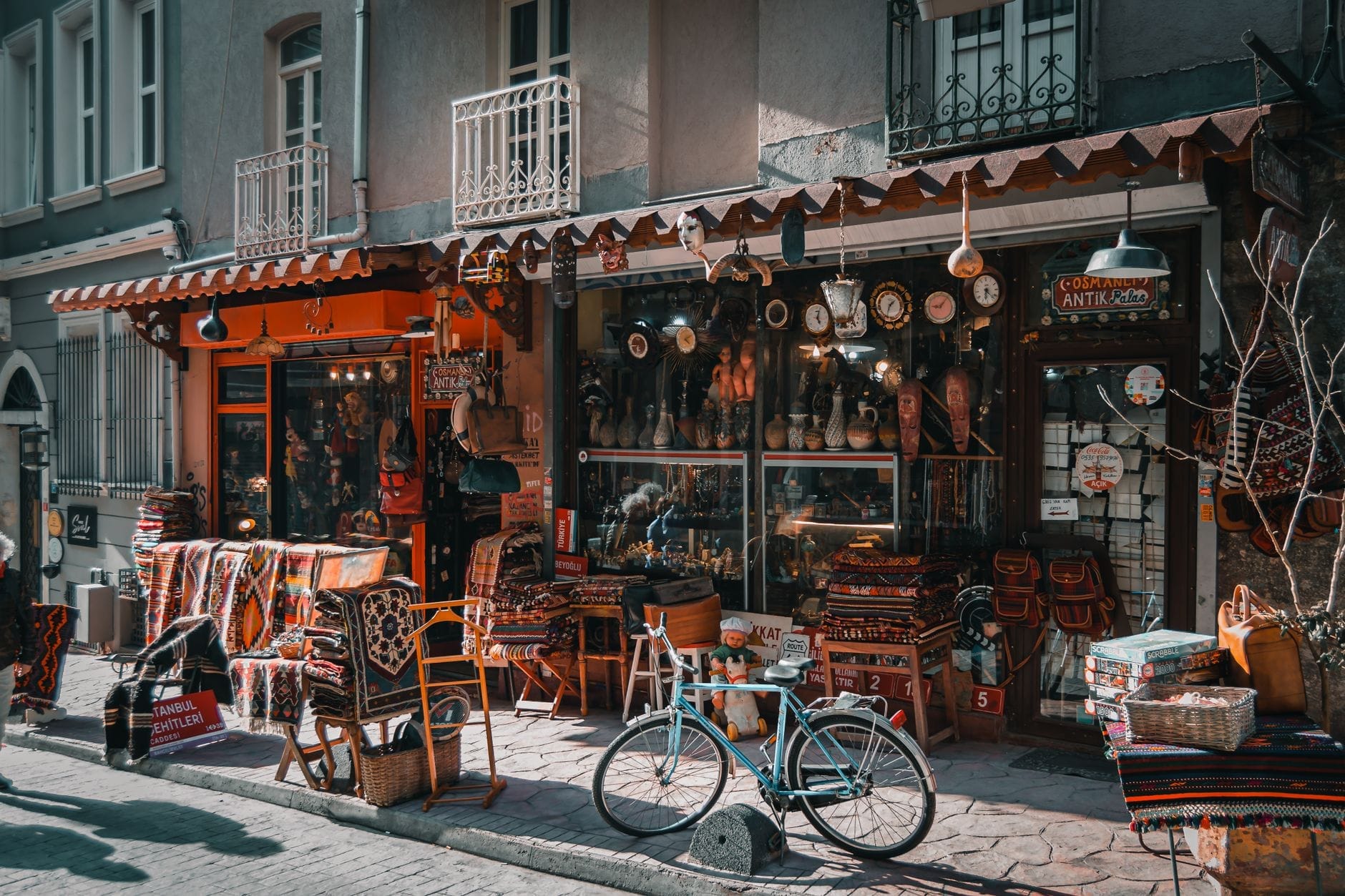
Unlike a market or a bazaar, Çukurcuma has no entrance gate, no ticket booth, and no official hours. You simply arrive, start walking downhill from Galatasaray or uphill from Cihangir, and let the storefronts guide you. Antique dealers stack their merchandise outside on good days, so the boundary between shop and street dissolves: you might find a 1960s floor lamp leaning against a wall next to a postcard rack, or a display of Bosphorus-era porcelain laid out on a folding table. The atmosphere is unhurried and, on a weekday morning, quiet.
💡 Local tip
Most shops open around mid-morning (often from about 10:00) and stay open into the early evening, typically until around 19:00, with many closed one day a week (often Monday). Aim for a weekday visit between 10:00 and 18:00 for the widest selection of open shops.
The Name, the Neighborhood, and Its Origins
The name Çukurcuma combines the Turkish words for 'pit' (çukur) and 'Friday' (cuma). One local tradition ties this directly to history: according to the story, Fatih Sultan Mehmet performed the first Friday prayer in a hollow or depression in this area following his conquest of Istanbul in 1453, giving the spot its lasting name. Whether or not this specific account is verifiable, it reflects how deeply the neighborhood is embedded in the city's collective memory of its Ottoman past.
The physical fabric of Çukurcuma is largely shaped by the late Ottoman and early Republican periods. Many of the buildings lining its streets date from the late 19th and early 20th centuries, when Beyoğlu was a cosmopolitan quarter home to Greek, Armenian, Jewish, and Levantine communities alongside Turkish residents. The neighborhood historically hosted a significant Greek population, and the traces of that era persist in the scale of the buildings, the style of the ironwork on balconies, and the occasional Greek inscription still visible above a doorway. The shift toward antiques as a dominant trade came gradually, as the district's older commercial character gave way to specialist dealers drawn by low rents and large storage spaces in building basements.
Çukurcuma sits within the broader Beyoğlu district, and its character makes much more sense once you understand Beyoğlu as a whole: a district of dramatic 19th-century apartment blocks, creative businesses, and cultural institutions layered on top of one another across a series of steep hills.
Tickets & tours
Hand-picked options from our booking partner. Prices are indicative; availability and final rates are confirmed when you complete your booking.
Bosphorus sunset cruise on luxury yacht with guide
From 55 €Free cancellationIstanbul and Bosphorus cruise on private boat - half day afternoon tour
From 40 €Instant confirmationFree cancellationWhirling Dervishes live show and exhibition
From 29 €Instant confirmationBasilica Cistern fast-track entry ticket and optional audio guide
From 34 €Instant confirmation
What You Will Actually Find in the Shops
The range of merchandise in Çukurcuma is genuinely wide. At the higher end, specialist dealers trade in Ottoman brass and copperware, Iznik-style ceramics, calligraphy panels, inlaid furniture, and antique kilims. These shops tend to be tidy, well-lit, and staffed by owners who know their stock's provenance and are willing to talk through it at length. Prices at these dealers are not bargains: they reflect genuine expertise and, in many cases, export paperwork for antiquities.
The more casual shops are where the browsing becomes absorbing. You will find crates of old postcards showing 20th-century Istanbul before its skyline changed beyond recognition, stacks of Turkish-language magazines from the 1970s, Soviet-era cameras, French enamelware, old pharmaceutical bottles in amber glass, theatrical costumes, and the occasional piece of furniture that looks like it was carried directly out of a Beyoğlu apartment unchanged. There is no clear hierarchy between junk and treasure here, which is precisely what makes the quarter interesting for curious visitors rather than just professional buyers.
One category worth noting: items that are classified as antiques over a certain age may require documentation to export legally from Turkey. If you plan to buy anything old and take it home, ask the dealer explicitly about export certification before agreeing on a price. Reputable dealers are familiar with this process.
⚠️ What to skip
Turkish law restricts the export of certain antiques and archaeological items. When purchasing older pieces, confirm with the seller whether an official export certificate is required and obtainable. This protects both you and the item.
How the Quarter Changes Through the Day
Early morning in Çukurcuma, before 10:00, belongs almost entirely to the people who live there: residents walking to the bakkal (corner shop), delivery trucks making tight turns on streets that were not designed for them, and shop owners rolling up shutters and arranging their stock on the pavement. The light at this hour is low and directional, catching the texture of the cobblestones and the painted ironwork of the older buildings particularly well for photography.
By mid-morning, the antique trade is properly open. This is when dealers are most engaged and least hurried, making it the best time to have a real conversation about a piece, negotiate without pressure, or simply be shown something from the back of the shop that is not on formal display. The atmosphere is calm and low-key, with a handful of other visitors but nothing approaching a crowd.
Afternoons, especially on weekends, bring more foot traffic from tourists staying in the Taksim or Cihangir areas. The lane outside the Museum of Innocence on Çukurcuma Caddesi becomes a focal point, and some of the street-level cafés fill up with people who have paused between shops. By late afternoon in summer, the heat in the narrow streets becomes significant, so carrying water is advisable. In winter, the streets are considerably quieter but the contrast with the warm interiors of the shops, many of which burn candles or have old oil heaters running, creates a particular kind of atmosphere that regular visitors specifically seek out.
The Museum of Innocence: Çukurcuma's Most Famous Resident
The Museum of Innocence sits on Çukurcuma Caddesi and is inseparable from any serious engagement with the neighborhood. Created by Nobel Prize-winning novelist Orhan Pamuk, the museum is a physical realization of his 2008 novel of the same name, which is set largely in Istanbul in the 1970s and 1980s. The building contains thousands of objects — cigarette stubs, ticket stubs, fabric swatches, photographs, playing cards — arranged in display cases that correspond to chapters of the novel. Even visitors who have not read the book respond to the museum's meticulous attention to the texture of everyday life in a specific time and place.
The museum charges a separate admission fee and operates its own opening hours (currently generally 10:00–18:00 and closed on Mondays), which should be verified before visiting in case of updates. It is worth treating as a distinct half-day visit combined with the antique quarter walk rather than a quick add-on. The gift shop sells copies of the novel in multiple languages, including an edition with a free museum entry ticket included, which has become a well-known quirk of the place.
Getting There, Getting Around, and Practical Considerations
The simplest approach is the M2 metro to Taksim Square, then a 10–15 minute walk south along İstiklal Avenue to Galatasaray Square, and from there down Turnacıbaşı Caddesi, which descends steeply into the heart of the antique quarter. Tram line T1 runs along the lower side of this part of the city via Karaköy and Tophane, with stops that bring you within walking distance of the quarter up the hill. If you are coming from the historic peninsula, the Galata Bridge walk through Karaköy and up Galip Dede Caddesi provides an excellent approach on foot.
The streets are steep and almost entirely cobbled, with irregular surfaces and significant changes in level. There are few dedicated pavements, and pedestrians often share the lane with slow-moving vehicles. For visitors using wheelchairs or pushing strollers, this is difficult terrain rather than mildly inconvenient: the main streets have no step-free infrastructure, and the side alleys are frequently narrower and more uneven than the main routes. Comfortable, flat-soled shoes with grip are strongly recommended for everyone.
Çukurcuma rewards visitors who combine it with the immediately surrounding neighborhood. A short walk brings you to the cafés of Cihangir, the galleries around Karaköy, and the Galata Tower. If you are building a self-guided walking tour through Beyoğlu, Çukurcuma fits naturally between İstiklal Avenue and Cihangir.
ℹ️ Good to know
There is no dedicated parking in the quarter, and the streets are too narrow for comfortable car access. Arriving by metro, tram, or on foot is strongly preferable to driving.
Photography, Weather, and Who Should Skip This
Photographically, Çukurcuma is excellent in overcast light, which is common in Istanbul from November through March. Harsh summer sun creates extreme contrast in the narrow lanes and bleaches the pastel tones of the older buildings. Overcast skies give the painted facades, the ironwork, and the merchandise displayed outside an even, revealing quality. The interiors of the shops are another matter: low light and mixed sources mean that a camera capable of handling high ISO is useful if you want to document the objects inside.
The quarter is not the right destination for every visitor. If you are working through a concentrated itinerary of major monuments, Çukurcuma will feel like a detour. It has no single landmark to stand in front of, no view to capture in ten minutes and move on from. It rewards patience and genuine interest in material culture, history through objects, and urban texture. Visitors who prioritize landmark monuments, large museums, or structured guided experiences may find more satisfaction in the major museums of Istanbul or the concentrated historic sites of Sultanahmet.
Equally, anyone with significant mobility challenges should be aware that the terrain here is among the most demanding in Istanbul for walking. The experience is fundamentally a walking and browsing one, and there is no way to see the quarter from a vehicle or take a seated tour of it.
Insider Tips
- Tuesday through Thursday mornings are the quietest time to visit: dealers are in residence, unhurried, and more likely to open storage rooms or discuss provenance in detail. Weekend afternoons bring a noticeably larger tourist crowd.
- The basement levels of some shops contain entirely different stock from what is displayed upstairs or at street level. If a ground-floor shop interests you, it is worth asking if there is more below: several dealers keep their larger furniture pieces and more affordable everyday items one floor down.
- Bring cash in Turkish lira. While some of the more established dealers accept card payments, many smaller shops and all outdoor traders work in cash only. There are ATMs on İstiklal Avenue a short walk away.
- If you are interested in buying a kilim or textile, prices in Çukurcuma are generally fairer than in the Grand Bazaar tourist strip, but you still need to know what you are looking at. Spend time handling pieces and comparing before committing.
- The area between Çukurcuma and Cihangir contains several good independent cafés that are far less crowded and considerably cheaper than those on İstiklal Avenue. After a circuit of the shops, walking a few minutes further downhill toward the Bosphorus viewpoints of Cihangir gives you a natural break with a view.
Who Is Çukurcuma Antique Quarter For?
- Antique collectors and dealers looking for Ottoman and early Republican period objects outside the Grand Bazaar circuit
- Travelers interested in the lived texture of Istanbul's modern history through everyday objects and 20th-century material culture
- Photographers drawn to urban architecture, street detail, and the kind of visual complexity that appears in narrow lanes with mixed-use storefronts
- Orhan Pamuk readers or literary travelers who want to experience the Museum of Innocence in the context of the neighborhood that inspired the novel
- Slow-paced explorers who prefer discovering a neighborhood organically over following a structured itinerary
Nearby Attractions
Other things to see while in Beyoğlu:
- Galata Mevlevi Museum
Tucked along Galip Dede Street in Beyoğlu, the Galata Mevlevi Museum occupies a 15th-century dervish lodge that once formed the spiritual heart of Istanbul's Mevlevi Sufi order. Today it houses rotating collections of calligraphy, musical instruments, and ceremonial objects, arranged around a serene courtyard that feels worlds away from the crowds of nearby İstiklal Avenue.
- İstiklal Avenue
İstiklal Caddesi stretches 1.4 km through the heart of Beyoğlu, connecting Tünel Square to Taksim Square along a corridor of Belle Époque apartment buildings, independent bookshops, historic churches, and the iconic nostalgic tram. Free to walk at any hour, the avenue rewards visitors who go beyond the obvious and turn into its side streets.
- Museum of Innocence
Housed in a 19th-century wooden house in Çukurcuma, the Museum of Innocence transforms Orhan Pamuk's celebrated novel into a physical collection of over a thousand objects from everyday Istanbul life. Winner of the European Museum of the Year Award 2014, it is one of the most original museum experiences in Turkey.
- Pera Museum
Set inside a restored 19th-century hotel on Meşrutiyet Caddesi, Pera Museum blends Ottoman cultural artifacts with ambitious international loan exhibitions. It's compact enough to explore in two hours but rich enough to reward a longer stay.