Galata Mevlevi Museum: Istanbul's Window into Sufi Mysticism
Tucked along Galip Dede Street in Beyoğlu, the Galata Mevlevi Museum occupies a 15th-century dervish lodge that once formed the spiritual heart of Istanbul's Mevlevi Sufi order. Today it houses rotating collections of calligraphy, musical instruments, and ceremonial objects, arranged around a serene courtyard that feels worlds away from the crowds of nearby İstiklal Avenue.
Quick Facts
- Location
- Galip Dede Cad. No:15, Beyoğlu, Istanbul
- Getting There
- Şişhane Metro (~500 m walk); Karaköy–Beyoğlu funicular also nearby
- Time Needed
- 1–1.5 hours
- Cost
- €7; free for certain categories (verify before visiting)
- Best for
- History enthusiasts, architecture lovers, those interested in Islamic mysticism
- Official website
- visit.istanbul/galata-mevlevi-house-museum
What Is the Galata Mevlevi Museum?
The Galata Mevlevi Museum, known locally as the Galata Mevlevihanesi Müzesi, is one of Istanbul's most historically layered cultural sites. Founded in 1491 by İskender Paşa, the complex served as a functioning tekke (dervish lodge) for the Mevlevi order, the Sufi brotherhood founded by the followers of the 13th-century Persian poet and mystic Jalal ad-Din Rumi. For over four centuries, this courtyard in the hills above Galata was a place of spiritual practice, music, poetry, and the meditative whirling ritual known as sema.
When the Turkish Republic closed all dervish lodges in 1925 as part of Atatürk's secularization reforms, the Mevlevihanesi lost its religious function but retained its architectural and cultural significance. The site has operated in various museum capacities since the 20th century, with its current form as a dedicated Mevlevi cultural museum taking shape in the early 2000s. The collection inside spans calligraphy, Sufi musical instruments, ceremonial costumes, and decorative objects that illuminate the interior world of the Mevlevi tradition.
💡 Local tip
The ticket office closes one hour before the museum does. If you arrive late in the afternoon, when closing time is 18:30, plan accordingly or you may be turned away at the gate.
The Architecture and Setting
The museum complex is built around a central courtyard that immediately resets your pace when you step through the entrance gate on Galip Dede Street. The exterior of that street is lined with music shops selling traditional instruments, which is not a coincidence: the area developed its association with music precisely because of the lodge's centuries-long influence on Ottoman musical culture.
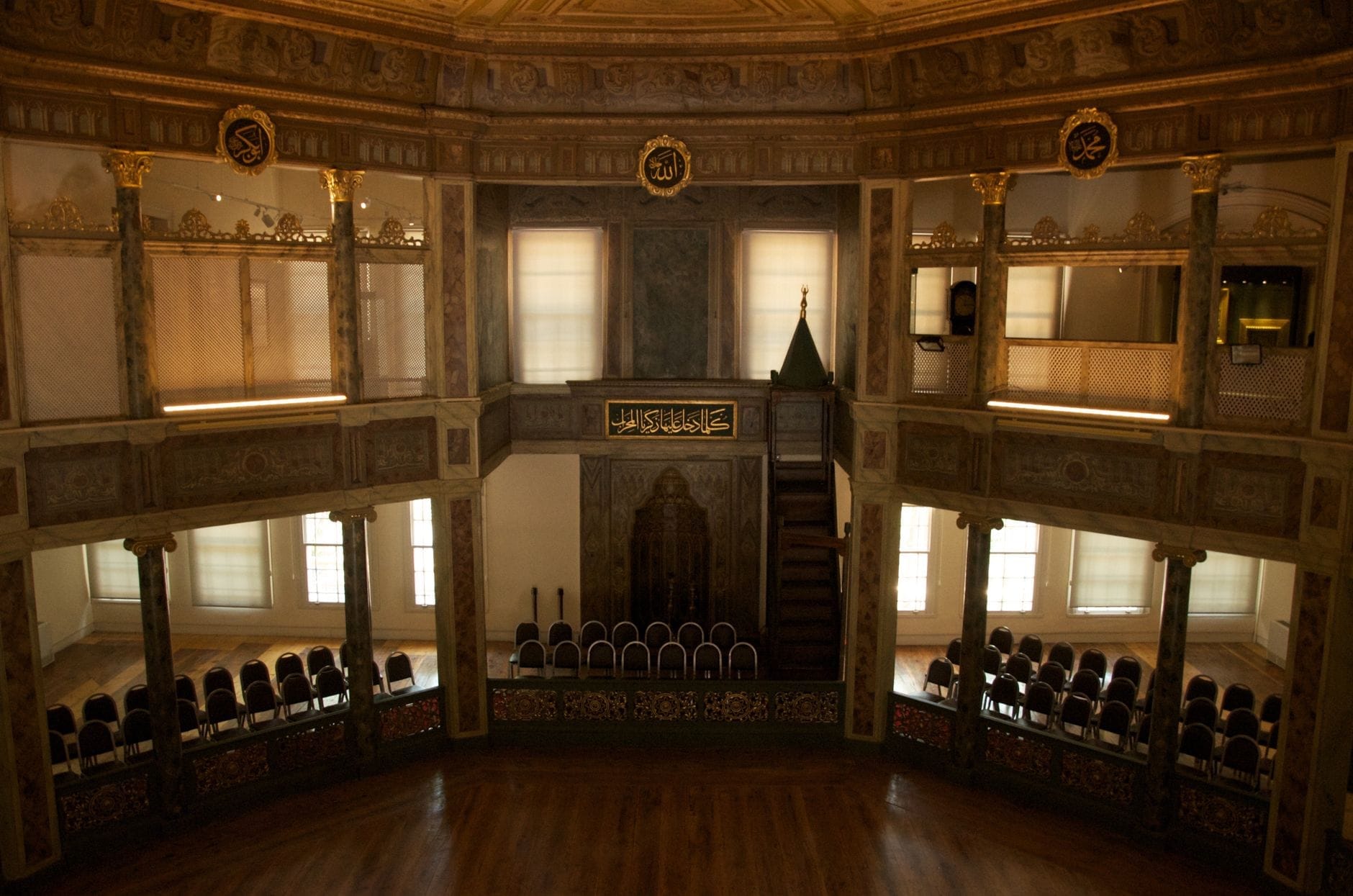
The centerpiece of the complex is the semahane, the octagonal ritual hall where sema ceremonies were performed. Its wooden galleries, carved balustrades, and proportioned dome are characteristic of Ottoman religious architecture adapted for Sufi ritual use rather than conventional congregational worship. The acoustics inside the semahane were clearly designed for sound: the space carries the resonance of ney flutes and chanted prayers remarkably well even in its now-empty, museum-configured state.
The surrounding garden contains a historic dervish cemetery with carved headstones, some topped with the distinctive tall felt hats (sikke) associated with the Mevlevi order. The grave markers use symbolic stone forms that varied according to the rank of the deceased within the lodge hierarchy, making the cemetery itself a kind of readable document for those who know how to interpret Ottoman funerary conventions. The garden is shaded by old plane trees and cypresses, and even on warm days it maintains a cooler, quieter atmosphere than the surrounding streets.
Tickets & tours
Hand-picked options from our booking partner. Prices are indicative; availability and final rates are confirmed when you complete your booking.
Galata Tower Skip-the-Line Ticket with Audio Guided Tour
From 47 €Instant confirmationFree cancellationBasilica Cistern, Galata Tower, Topkapi Palace, Hagia Sophia ticket
From 178 €Instant confirmationFree cancellationIstanbul Audio Guide Tour from Taksim Square Through Galata Tower
From 12 €Instant confirmationFree cancellationTopkapi Palace and Galata Tower Skip-the-Line Ticket
From 110 €Instant confirmationFree cancellation
What the Collection Covers
The permanent collection is modest in scale but strong in focus. Displays include examples of Ottoman hat painting, illuminated Quran manuscripts, and calligraphy panels produced by masters connected to the Mevlevi tradition. There are also sections dedicated to the material culture of Sufi practice: the distinctive woolen cloaks (hırka), the flowing white sema robes (tennure), and the instruments used in Mevlevi musical ceremonies, particularly the ney (end-blown reed flute), the kudum (small kettledrum), and the rebab.
For visitors already interested in the wider history of Ottoman Sufi culture, the collection pairs well with a visit to the Museum of Turkish and Islamic Arts in Sultanahmet, which holds a broader collection of Islamic decorative arts from across Turkey's history.
Labeling is available in Turkish and English, though some of the more specialized objects receive only brief explanations. Visitors with a deeper interest in Sufi practice may find the on-site information somewhat surface-level; a background read before visiting will make the displays considerably more meaningful.
How the Experience Changes by Time of Day
Morning visits, especially on weekdays, offer the most peaceful experience. By around 9:30 or 10:00 on a quiet Tuesday or Wednesday, you may have the courtyard and cemetery almost entirely to yourself. The light falls across the headstones and the semahane's wooden facade at a low angle in the morning, which is also the better time for photography without harsh contrast.
By late morning and into early afternoon, tour groups begin to arrive, typically clustered around a guide speaking in a single room at a time. The semahane in particular can feel crowded with a group of twenty people; it is a relatively intimate space. If you time your visit to the garden or the cemetery while a group occupies the main hall, you can redistribute the crowd effect quite effectively.
Late afternoon offers another quality window. The garden light turns warm and golden from around 17:00 onward, the day's main tour traffic has usually passed, and the courtyard takes on a contemplative atmosphere. The museum is closed on Mondays, so plan around that.
ℹ️ Good to know
Visiting hours: 09:00–18:30 daily except Monday; box office closes at 17:30. Closed Mondays. Hours and prices should be verified before your visit as they are subject to change.
Getting There and the Surrounding Neighborhood
The museum sits at the junction of Galip Dede Street and the lower end of İstiklal Avenue. From the Şişhane metro station (M2 line), the walk down to the museum entrance takes roughly five to seven minutes on a mild downhill slope. From Karaköy, the Tünel funicular drops you almost directly at the top of Galip Dede Street, a two-minute walk from the entrance. If you are arriving from the Sultanahmet side, the T1 tram to Karaköy is the simplest connection.
The neighborhood itself rewards a slow walk. Galip Dede Street has been associated with Ottoman musical instrument makers for generations, and several of the shops still sell hand-crafted ouds, bağlamas, and ney flutes. Nearby Galata Tower is a five-minute walk downhill. The area around it, known as Karaköy-Galata, has developed significantly in recent years and now has good cafes and breakfast spots if you want to eat before or after your visit.
💡 Local tip
Wear comfortable shoes. Galip Dede Street is a steep cobblestone slope. After the museum, the downhill walk to Karaköy takes about ten minutes and passes several interesting architectural details along the way.
Is It Worth Your Time?
The Galata Mevlevi Museum is not a large or sensory-overwhelming attraction. The collection fits into roughly 45 minutes of attentive viewing, and if you have no background interest in Sufi history, Ottoman religious culture, or Islamic calligraphy, you may find the displays only briefly engaging. The garden and cemetery are genuinely evocative, but they require some contextual knowledge to read beyond their surface beauty.
Where the museum earns its place in an Istanbul itinerary is in the combination of its architectural setting, historical depth, and the contrast it offers to the commercial energy of nearby İstiklal. If you are building a day around Beyoğlu, this site adds a quiet, substantive counterpoint. It is also one of the few places in Istanbul where you can engage directly with the material culture of the Mevlevi tradition without attending a ticketed performance.
For visitors specifically interested in whirling dervish ceremonies, the museum itself does not host regular sema performances. Check current listings separately, as performances sometimes take place on the premises for special occasions, and other venues in Istanbul, covered in the Istanbul whirling dervishes guide, offer scheduled shows throughout the year.
⚠️ What to skip
Visitors who come primarily for a whirling dervish performance should confirm current sema schedules and ticket arrangements in advance, as performance times and booking methods can change.
Practical Notes for Your Visit
Photography is generally permitted in the museum and garden without flash. The semahane's wooden interior photographs well in natural light from the gallery windows, particularly in the morning. Tripods are not typically allowed in Turkish state museums without prior permission.
As a site of significant religious and cultural heritage, quiet and respectful behavior is expected throughout the complex. The garden and cemetery in particular should be treated with appropriate consideration. There is no strict dress code enforced at the entrance, but modest clothing is appropriate given the site's character.
Accessibility within the site is limited by its historic structure: the garden paths and some interior areas involve uneven surfaces and steps. Free entry is listed for visitors with disabilities and one accompanying companion, but the physical accessibility of the site itself should be assessed in advance based on individual needs, as no official full-access certification has been confirmed.
Insider Tips
- The music shops lining Galip Dede Street before the museum entrance are worth a browse even if you have no intention of buying: several shops will let you listen to instruments being played and are accustomed to curious visitors.
- The dervish cemetery headstones are carved with tall felt hats (sikke) that indicate Mevlevi rank. The size, shape, and fluting of the stonework vary by the deceased's position in the lodge hierarchy — a small detail that becomes fascinating once you know to look for it.
- Weekday mornings between 10:00 and 11:30 consistently offer the fewest other visitors. If you want the semahane to yourself, that is your best window.
- The Tünel funicular, just a few minutes' walk uphill from the museum entrance, is one of Istanbul's oldest underground railways (opened 1875) and is worth riding for its own historic value as part of a broader Beyoğlu afternoon.
- Combine this visit with the Pera Museum about 10 minutes' walk away for a full afternoon of cultural depth in Beyoğlu without retracing your steps.
Who Is Galata Mevlevi Museum For?
- Travelers with an interest in Ottoman or Islamic history who want more than monuments
- Architecture enthusiasts drawn to Ottoman religious and civic buildings
- Visitors looking for a calm, low-crowd experience in the middle of a dense sightseeing day
- Anyone curious about Sufi culture, Rumi's legacy, or the history of the Mevlevi order
- Photographers seeking atmospheric interiors and garden settings with strong natural light
Nearby Attractions
Other things to see while in Beyoğlu:
- Çukurcuma Antique Quarter
Tucked between Cihangir and Galatasaray in Beyoğlu, the Çukurcuma Antique Quarter is a steep tangle of cobbled streets lined with over 150 antique and second-hand shops. Free to explore and steps from İstiklal Avenue, it rewards slow walkers with Ottoman brass, Soviet cameras, and vintage curiosities spilling out of storefronts onto the pavement.
- İstiklal Avenue
İstiklal Caddesi stretches 1.4 km through the heart of Beyoğlu, connecting Tünel Square to Taksim Square along a corridor of Belle Époque apartment buildings, independent bookshops, historic churches, and the iconic nostalgic tram. Free to walk at any hour, the avenue rewards visitors who go beyond the obvious and turn into its side streets.
- Museum of Innocence
Housed in a 19th-century wooden house in Çukurcuma, the Museum of Innocence transforms Orhan Pamuk's celebrated novel into a physical collection of over a thousand objects from everyday Istanbul life. Winner of the European Museum of the Year Award 2014, it is one of the most original museum experiences in Turkey.
- Pera Museum
Set inside a restored 19th-century hotel on Meşrutiyet Caddesi, Pera Museum blends Ottoman cultural artifacts with ambitious international loan exhibitions. It's compact enough to explore in two hours but rich enough to reward a longer stay.