Museum of Turkish and Islamic Arts: A Complete Visitor's Guide
Housed in a 16th-century Ottoman palace directly facing the Hippodrome, the Museum of Turkish and Islamic Arts holds one of the world's foremost collections of Islamic art, spanning carpets, calligraphy, ceramics, and manuscripts from the 8th to the 20th century. The building itself is half the story.
Quick Facts
- Location
- Ibrahim Pasha Palace, Binbirdirek Mah., At Meydanı Cd. No: 46, Sultanahmet, Fatih, Istanbul
- Getting There
- T1 tram, Sultanahmet stop (2-minute walk)
- Time Needed
- 1.5 to 2.5 hours
- Cost
- Approx. ₺390 (verify before visiting; Müze Kart accepted)
- Best for
- Islamic art, Ottoman history, carpet lovers, architecture enthusiasts
- Official website
- muze.gen.tr/muze-detay/tiem
What Is the Museum of Turkish and Islamic Arts?
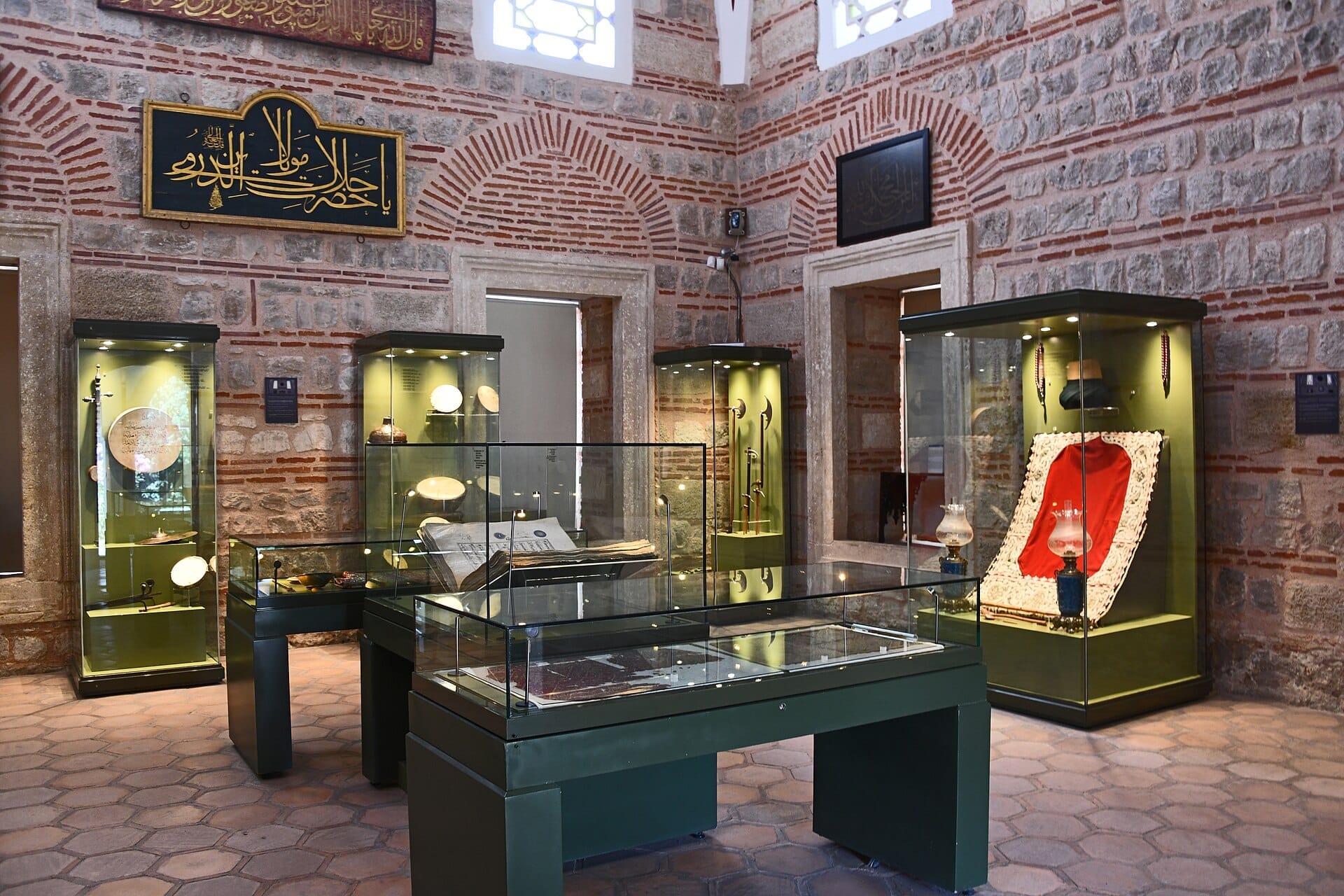
The Museum of Turkish and Islamic Arts (Türk ve İslam Eserleri Müzesi, or TIEM) is Turkey's first museum dedicated exclusively to Turkish and Islamic arts. It sits directly on Sultanahmet Square, the ancient Hippodrome of Constantinople, in the Ibrahim Pasha Palace: a sprawling, four-winged structure commissioned by Sultan Suleiman the Magnificent around 1520 and given to his beloved grand vizier Ibrahim Pasha. No other private citizen in the Ottoman Empire received such a palace, and its scale, overlooking the imperial Hippodrome, reflects that singular status.
The museum opened in 1914 as the Evkaf-ı İslamiye Müzesi (Museum of Islamic Foundations) within the Süleymaniye Mosque complex. After the proclamation of the Turkish Republic in 1923, it was renamed the Museum of Turkish and Islamic Arts. In 1983, the collection moved to its current home in the Ibrahim Pasha Palace, where a substantial restoration gave the building the structural stability it needed to house works ranging from 8th-century Umayyad carpets to 20th-century Anatolian ethnographic objects.
ℹ️ Good to know
Opening hours are officially listed as 09:00–18:45 daily, with box office closing at 18:45; hours may vary on public holidays, so confirm directly with the museum at +90 212 518 18 05 or tiem@ktb.gov.tr before visiting.
The Building: Ibrahim Pasha Palace
Before you enter a single gallery, stop in front of the palace's stone facade. The building is one of the most complete surviving examples of 16th-century Ottoman civil architecture in Istanbul, and it reads very differently from the mosque complexes that dominate the skyline. There are no minarets, no grand domes visible from street level. Instead, the palace presents a long, horizontal mass of stone and timber, with deep-set windows and an enclosed courtyard that turns inward, away from the public square.
Ibrahim Pasha's story gives the building a melancholy undertow. Suleiman's closest friend and most powerful vizier for 13 years, Ibrahim was executed by royal order in 1536, likely strangled in Topkapi Palace's own chambers. The palace passed through various uses over the centuries, including a period as a janissary barracks and later a court building, before being recognized for its architectural value and given to the museum.
The inner courtyard, reached through a stone-arched passageway, provides a rare moment of calm within Sultanahmet's otherwise relentless tourist foot traffic. If you are combining this visit with stops at the Blue Mosque or the Hippodrome, the museum's courtyard is a peaceful place to pause mid-morning before the crowds build.
Tickets & tours
Hand-picked options from our booking partner. Prices are indicative; availability and final rates are confirmed when you complete your booking.
Istanbul Turkish and Islamic Arts Museum with Audioguide
From 29 €Instant confirmationFree cancellationIstanbul dinner cruise with Turkish night show
From 35 €Instant confirmationFree cancellationIstanbul Camlica Tower Entry Ticket with Free Tea or Turkish Coffee
From 25 €Instant confirmationFree cancellationTraditional Turkish bath experience in Istanbul
From 58 €Instant confirmationFree cancellation
The Collection: What You Will Actually See
The museum's holdings cover Islamic art from the 8th to the 20th century, drawn from regions spanning the Iberian Peninsula to Central Asia. The collection is not a representative survey designed for casual tourists: it is a serious scholarly accumulation, and the depth of individual categories, particularly carpets and Quranic manuscripts, is extraordinary.
Carpets
The carpet collection is the museum's single most celebrated asset. It includes some of the earliest pile carpets known to survive anywhere in the world, including fragments from Seljuk Anatolia dating to the 13th century. These are not decorative showpieces in the modern sense: they are dense, geometric, almost austere objects, with colors that have shifted over centuries into warm ochres and faded crimsons. The gallery lighting is deliberately low to protect the dyes, which gives the room a particular atmosphere unlike the bright LED environments of most modern museums.
Later sections present Ottoman court carpets from the 15th and 16th centuries alongside Caucasian, Persian, and Anatolian village pieces. For anyone with a serious interest in textile history, this collection alone justifies the visit. Even for general visitors, standing in front of a carpet that is 700 years old and nearly intact is a genuinely striking experience.
Quranic Manuscripts and Calligraphy
The manuscript collection includes illuminated Qurans spanning from early Islamic centuries through the Ottoman imperial period. Some of the finest pieces were displayed internationally at the Smithsonian's Art of the Quran exhibition, which reflected the museum's status as a primary repository for this category of Islamic art. In the calligraphy section, the range of scripts, including Kufic, Naskh, Thuluth, and Diwani, allows a rare side-by-side comparison of how Arabic script evolved as both a religious practice and a visual art form.
Metalwork, Ceramics, and Woodwork
Additional galleries hold bronze and brass objects, Iznik ceramics in characteristic cobalt and turquoise glazes, carved wooden mihrab panels, and inlaid furniture. The wooden pieces in particular reward close attention: the precision of geometric inlay work carried out without power tools is easier to appreciate when you can stand within a meter of the object, which the museum's generally uncrowded galleries allow.
Ethnographic Section
A lower-floor ethnographic section reconstructs the interiors of nomadic Anatolian tents and traditional village dwellings. The execution is uneven: some displays feel dated by contemporary museum standards, and the interpretive signage in English is thinner here than in the upper galleries. That said, the reconstruction of a black goat-hair tent (known as a kara çadır) with its actual furnishings and woven trappings gives a grounded, material sense of how the carpets and textiles upstairs were originally used.
💡 Local tip
English-language labeling is good in the main galleries but sparse in the ethnographic section. If Islamic art history is your focus, spend the bulk of your time upstairs. The carpet and manuscript galleries alone can absorb 90 minutes comfortably.
When to Visit and How the Experience Changes
Sultanahmet is one of Istanbul's most heavily visited tourist zones, and the square outside fills quickly after 10:00. The museum, however, draws a fraction of the visitors that crowd Hagia Sophia or the Topkapi Palace. On most mornings, even in peak summer, the galleries are quiet enough to spend extended time with individual objects without other visitors in your frame.
Arriving at opening time, around 09:00, gives you the palace courtyard and first galleries almost entirely to yourself. The light entering the courtyard is cool and clean at that hour, particularly in spring and autumn. By mid-afternoon the museum's own footprint means the upper galleries can feel warm without strong air conditioning, so earlier visits are more comfortable in July and August.
April through June and September through October offer the most comfortable conditions overall, both for the museum visit and for the outdoor Sultanahmet area around it. For a broader picture of how the season affects sightseeing across the city, the best time to visit Istanbul guide is worth consulting before you plan your itinerary.
⚠️ What to skip
The museum building is a 16th-century palace with multiple levels, stone staircases, and uneven floors in some sections. Step-free access details are not clearly published. Visitors with mobility requirements should contact the museum directly at +90 212 518 18 05 before visiting.
Getting There
The museum sits on the west side of Sultanahmet Square, directly facing the former Hippodrome and a short walk from the Blue Mosque. The T1 tram line, which connects Kabataş to Bağcılar, stops at Sultanahmet station. From the tram stop, the palace entrance is a two-minute walk across the square. The area is entirely walkable from most Sultanahmet hotels.
If you are arriving from the Asian side or from farther across the city, the Marmaray commuter rail reaches Sirkeci station on the historic peninsula, from which the museum is a 10-to-15 minute walk or one tram stop away. For general transit advice across Istanbul, the getting around Istanbul guide covers tram, metro, and ferry options in detail.
Tickets, Passes, and Practical Logistics
Admission is currently ₺390 per adult, though ticket prices in Turkish lira change frequently and should be verified close to your visit. The museum participates in the national Müze Kart system, a museum pass card issued by the Ministry of Culture and Tourism that grants access to state museums across Turkey. If you are visiting multiple national museums during your stay, the Müze Kart can offer significant savings.
The Istanbul Museum Pass, a separate product covering a curated selection of major attractions, may or may not include this museum depending on the current pass configuration. Check the Istanbul Museum Pass guide for current inclusions before purchasing.
Photography is generally permitted in the galleries without flash. The carpet galleries in particular offer exceptional photographic detail if you use a low-light camera setting: the textures of century-old knotted pile are remarkable at close range. Bag storage lockers are available near the entrance, and large backpacks may need to be deposited before entry.
Is It Worth a Detour?
For travelers with an active interest in Islamic art, Ottoman history, or textile history, this museum is one of the most significant stops in Istanbul and arguably one of the most undervisited major collections in the city. The quality of the carpet holdings alone puts it in the top tier of world textile museums.
For general sightseers with a packed Sultanahmet itinerary, the answer is more conditional. The museum does not have the scale of Topkapi or the visual drama of Hagia Sophia. If you are choosing between competing priorities on a short trip, prioritize based on your interests. But if Islamic art, calligraphy, or carpet history resonates with you at all, this museum will deliver more than most visitors expect.
Visitors who prefer archaeology over decorative arts may find the Istanbul Archaeology Museums a more natural fit. Those interested specifically in Byzantine Istanbul will get more from the Chora Church or the Basilica Cistern nearby.
Insider Tips
- Stand at the upper-floor windows overlooking the Hippodrome for a perspective of the ancient chariot-racing ground that most visitors miss entirely: the museum's elevation gives you a clear line of sight to the obelisks and the oval layout of what was once the largest stadium in the ancient world.
- The museum café in the courtyard is quiet and serves decent Turkish coffee. It is a far better break option than the overpriced tourist cafes on the square outside.
- If you are traveling with the Müze Kart, the card also covers Topkapi Palace and the Istanbul Archaeology Museums nearby. Plan your day so you start at the Museum of Turkish and Islamic Arts early and move to Topkapi before its mid-morning crowds peak.
- The ethnographic section can be skipped without missing the collection's highlights if you are short on time. Focus your visit on the carpet galleries and the Quranic manuscripts upstairs.
- Audio guides, if available during your visit, are worth picking up specifically for the carpet section. The historical context around individual pieces, including their provenance from Anatolian mosques and their dating methods, significantly increases what you take away from the collection.
Who Is Museum of Turkish and Islamic Arts For?
- Travelers with a genuine interest in Islamic art, calligraphy, or manuscript history
- Carpet and textile enthusiasts: the Seljuk and Ottoman holdings are world-class
- Ottoman history buffs who want the civil and courtly side of the era beyond mosques and palaces
- Photographers looking for detailed, low-crowd interior subjects with exceptional texture
- Anyone seeking a serious cultural counterpoint to the spectacle of the surrounding Sultanahmet monuments
Nearby Attractions
Other things to see while in Sultanahmet:
- Basilica Cistern
Built by Emperor Justinian I in 532 AD, the Basilica Cistern is one of Istanbul's most extraordinary ancient structures. Descend beneath Sultanahmet's streets into a vast, column-filled underground reservoir that once supplied water to the Byzantine imperial palace. Few places in the world feel quite like it.
- Blue Mosque (Sultan Ahmed Mosque)
The Sultan Ahmed Mosque, known universally as the Blue Mosque, is one of Istanbul's most recognizable landmarks. Built between 1609 and 1616, it remains an active place of worship that welcomes non-Muslim visitors outside prayer times. This guide covers everything you need to plan a smooth, respectful visit.
- Gülhane Park
Gülhane Park sits directly beside Topkapı Palace in Sultanahmet, occupying land that served as the Ottoman court's private outer garden for centuries. Open daily, free to enter, and containing one of Istanbul's oldest surviving monuments, it rewards visitors who take more than a passing glance.
- Hagia Irene
Hagia Irene (Aya İrini Müzesi) is the oldest surviving church structure in Istanbul, predating even Hagia Sophia. Sitting quietly inside the first courtyard of Topkapı Palace, it offers a rare encounter with raw Byzantine architecture — unrestored, unadorned, and old.