Best Time to Visit Istanbul: A Month-by-Month Guide
Istanbul rewards visitors year-round, but the timing of your trip makes a real difference. This guide breaks down every season by weather, crowd levels, prices, and key events so you can choose the window that fits your priorities.
Plan and book this trip
Tools from our partner Travelpayouts help you compare flights and hotels. If you book through them, we may earn a commission at no extra cost to you.
Flights
Hotels map
TL;DR
- The best time to visit Istanbul is April–May or September–October: mild temperatures (15–23°C), manageable crowds, and lower prices than peak summer.
- Summer (June–August) is peak season: hot, humid, expensive, and the most crowded the city gets — worth it only if you prioritize long daylight hours or open-air events.
- Winter (December–February) has the lowest hotel rates and almost no queues at major sites, but expect cold, wet weather and reduced outdoor appeal.
- April brings the Istanbul Tulip Festival, when Emirgan Park and Gülhane Park are at their most photogenic.
- There is no single 'best' month — the right answer depends on whether you prioritize weather comfort, budget, or event access.
Spring (March–May): The Sweet Spot for Most Travelers
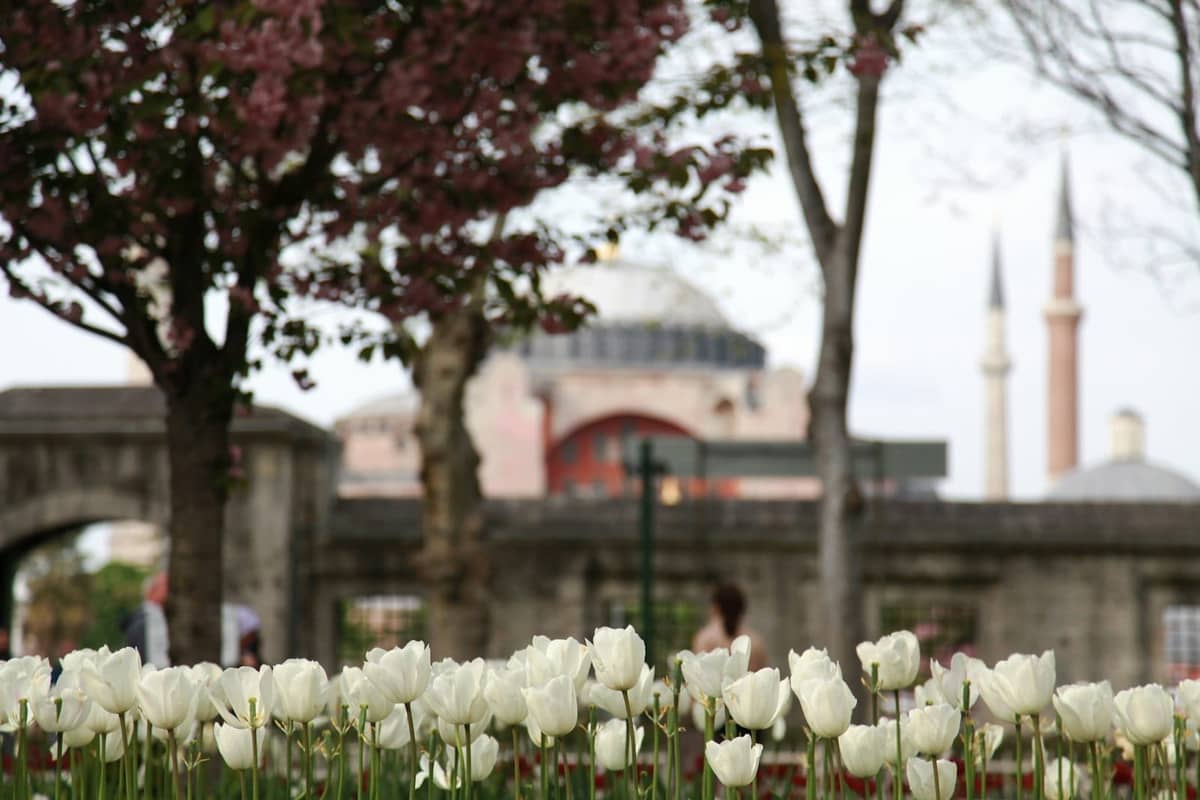
Spring is consistently the most recommended window to visit Istanbul, and for good reason. Daytime temperatures climb from around 12°C in March to 21°C by May, the city's parks erupt in color, and the tour-bus hordes of summer haven't yet arrived. You can walk the historic peninsula without feeling like you're being swept along in a current.
April is the undisputed highlight of spring. The Istanbul Tulip Festival runs roughly from late March through mid-April, with millions of bulbs planted across the city. Emirgan Park on the Bosphorus shore is the marquee venue, but Gülhane Park beside Topkapı Palace is equally rewarding and easier to reach. For the full story on timing and locations, see our Istanbul Tulip Festival guide.
💡 Local tip
April weekends during the Tulip Festival see significant domestic tourism. Visit Emirgan Park on a Tuesday or Wednesday morning to avoid the weekend crowds and get better photos.
May is arguably the finest single month to be in Istanbul. Rain is minimal, temperatures are comfortably warm without the summer humidity, and the city's outdoor café culture is in full swing. Hotel rates are higher than winter but noticeably lower than July and August. Book accommodation at least 6–8 weeks out for popular neighborhoods like Sultanahmet and Beyoğlu.
March is the shoulder of the shoulder season: some rain, cooler mornings, but very reasonable prices and thin crowds at major attractions like Hagia Sophia and Topkapı Palace. If your trip overlaps with the early tulip bloom (which can start in late March in a warm year), you get the color without the April crowds.
Summer (June–August): Peak Season, Peak Trade-offs
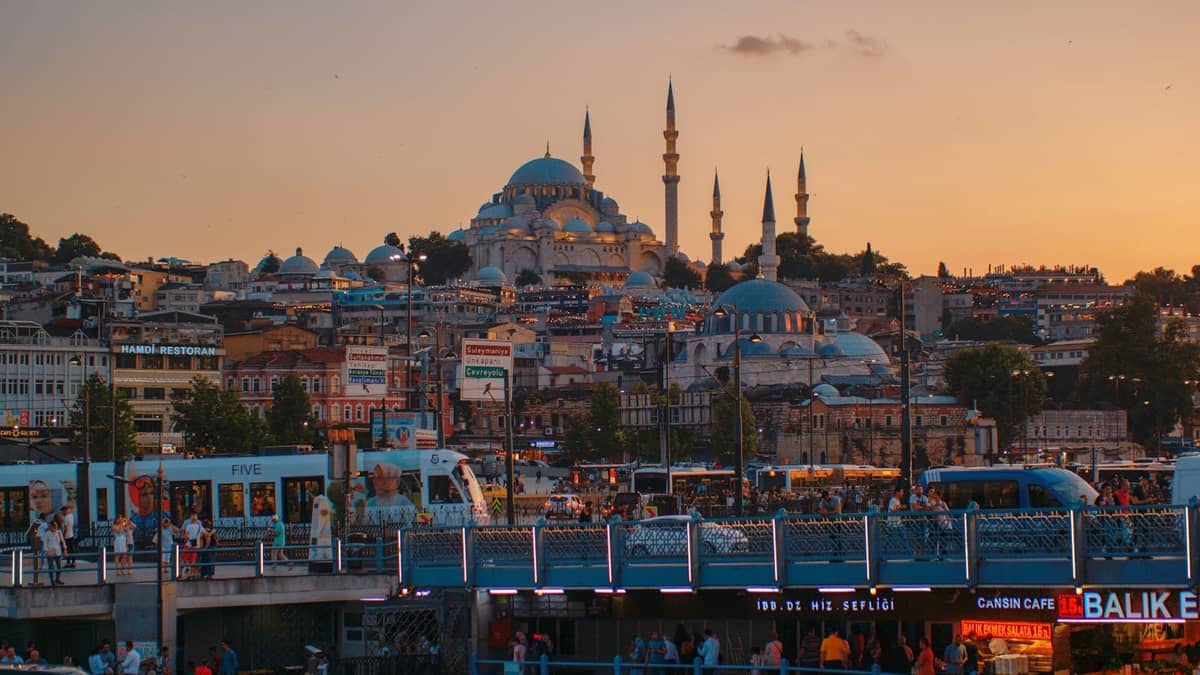
Summer in Istanbul is popular for a reason: long days, a full calendar of outdoor events, and the Bosphorus at its most inviting. But the trade-offs are real. Daytime highs regularly hit 28–30°C, humidity from the surrounding sea makes it feel hotter, and the tourist infrastructure is under maximum strain. Queue times at the Basilica Cistern, Topkapı Palace, and Hagia Sophia can stretch to 45–90 minutes without advance booking.
- Pros of visiting in summer Long daylight (sunset after 8:30 PM), the Istanbul Jazz Festival in July, open-air rooftop bars, Bosphorus swimming at village beaches, and a full ferry schedule to the Princes' Islands.
- Cons of visiting in summer Peak hotel prices (often 40–60% above shoulder season rates), the largest crowds at every major sight, uncomfortable midday heat especially on the Historic Peninsula, and higher demand for guided tours.
⚠️ What to skip
July and August are the most expensive months to fly into Istanbul and book hotels. If budget matters, summer is the wrong choice. If you must travel in summer, pre-book all major attraction tickets online and plan sightseeing for early morning (before 10 AM) or evening.
June sits in a more forgiving middle ground. Temperatures are warm but not yet at peak, and the surge in visitors from international school holidays hasn't fully hit. It's the best summer month for a Bosphorus cruise, when the water is calm and the light in the evening is exceptional.
Autumn (September–November): The Other Sweet Spot
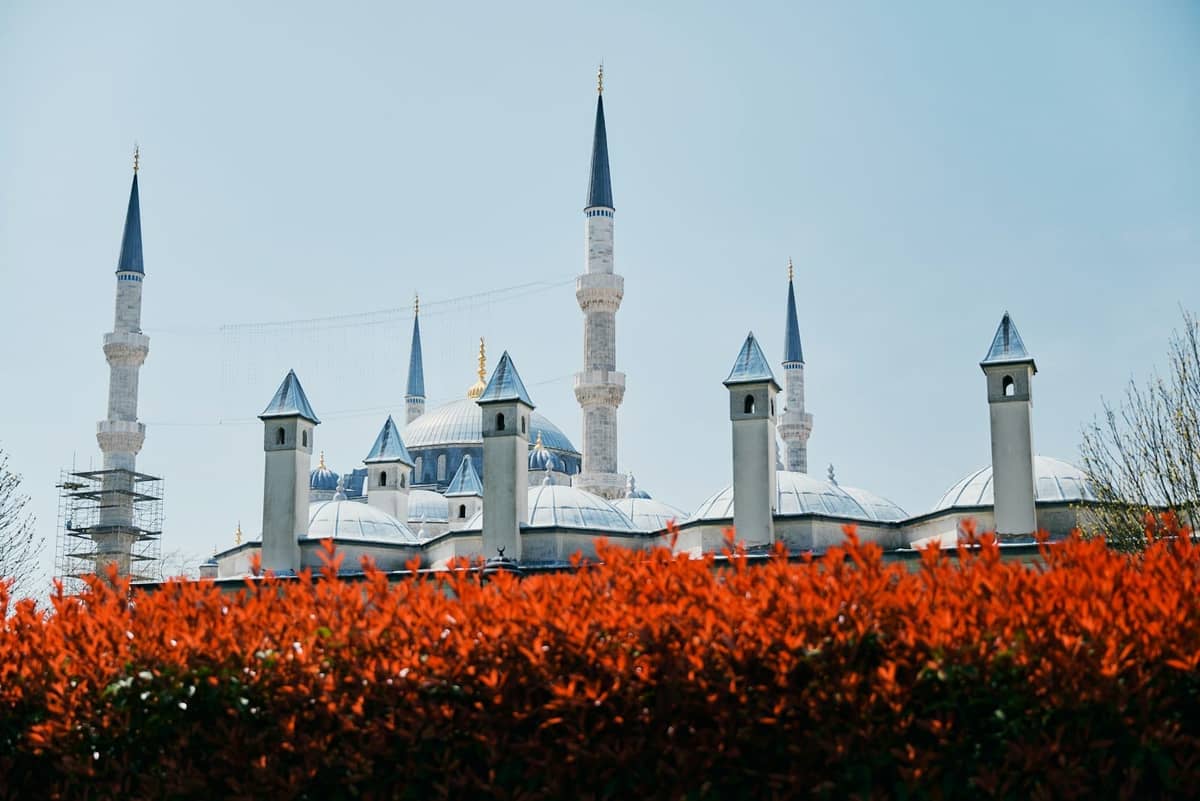
September is Istanbul's most underrated month. The summer crowds are thinning, temperatures drop to a comfortable 22–25°C, and the city settles back into its regular rhythm. Restaurant reservations are easier to get, queues at museums are shorter, and hotel prices begin to fall from their summer highs. The Bosphorus is still warm enough for a sunset ferry ride without a jacket.
October sharpens the appeal further. Highs of around 18–20°C suit walking the city's hills comfortably. The Republic Day celebrations on October 29 bring parades and fireworks, particularly around Taksim Square and the Bosphorus waterfront. If you're interested in the city's food scene, autumn is when Istanbul's food culture peaks — seasonal produce fills the markets, and the meyhane circuit along the Bosphorus villages is at its most atmospheric.
November is a different proposition. Rain increases sharply, temperatures can fall to 10–12°C, and the wind off the Bosphorus makes it feel colder. It's not an unpleasant city in November — Istanbul has excellent museums and covered bazaars that reward wet-weather days — but it's the least comfortable outdoor month before winter proper. Prices are low and the city feels authentically local, which suits some travelers perfectly.
✨ Pro tip
Early October is the single best week-long window in the year for a balance of weather, value, and reduced crowds. Temperatures are still comfortable, summer pricing has eased, and Istanbul's neighborhoods feel noticeably calmer.
Winter (December–February): Low Season, High Character
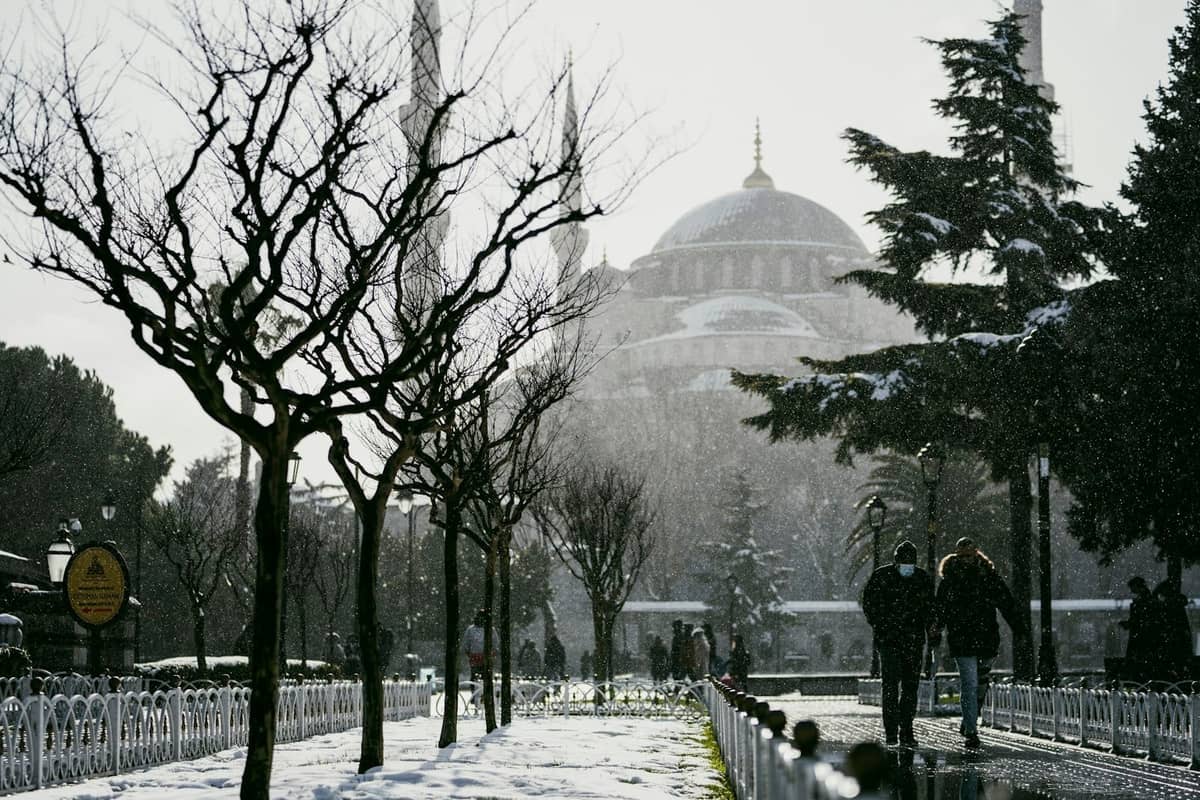
Istanbul in winter gets overlooked, and that's its strength. Average daytime highs sit between 8–11°C, and temperatures can dip to 3–5°C at night. Rain and overcast skies are frequent. Snow falls occasionally, typically in January or February, and when it does, the city is briefly spectacular — the domes of the Blue Mosque and Süleymaniye dusted in white are worth the cold.
Practically, winter means the lowest hotel rates of the year and essentially no queues at the city's major attractions. Walking through Topkapı Palace or the Grand Bazaar without shoulder-to-shoulder crowds is a qualitatively different experience. For travelers who prioritize depth over comfort, winter offers Istanbul at its most accessible.
The indoor offerings are excellent year-round: the Basilica Cistern, the Istanbul Archaeology Museums, the Pera Museum, and the city's centuries-old hamam circuit all make winter rain irrelevant. For a full breakdown of what to do in the cold months, see our Istanbul in winter guide.
Month-by-Month Summary: Weather, Menschenmengen, and Prices
- January–February Coldest months (3–10°C). Frequent rain, occasional snow. Lowest hotel prices and minimal tourist queues. Best for indoor attractions and budget travelers.
- March Warming up (8–15°C). Some rain, early tulip blooms possible by late month. Good value with thin crowds. Pack layers.
- April Peak spring (13–19°C). Istanbul Tulip Festival. Parks at their most photogenic. Moderate crowds, moderate prices. Book popular tours in advance.
- May Best all-round month (16–23°C). Comfortable heat, outdoor café culture in full swing. Prices rising but not yet peak. Highly recommended for first-time visitors.
- June Early summer (21–27°C). Long days, good for boat trips. Menschenmengen building but manageable. Prices approaching high season.
- July–August Peak season (26–30°C+, humid). Largest crowds and highest prices. Pre-book everything. Best for nightlife and open-air events; not ideal for midday sightseeing on foot.
- September Best autumn month (20–26°C). Menschenmengen and prices easing from summer. Bosphorus still warm. Excellent all-round conditions.
- October Comfortable and characterful (15–22°C). Republic Day celebrations on the 29th. Strong food and culture scene. Prices reasonable.
- November Noticeably wetter (10–16°C). Rain increasing. Low prices and fewer tourists. Good for museum-focused trips and anyone who finds summer too crowded.
- December Cool and wet (6–12°C). Christmas and New Year add some atmosphere. Low season pricing. Occasional snow possible late in the month.
Practical Considerations: Ramadan, Events, and Booking
Ramadan follows the Islamic lunar calendar, shifting roughly 10–11 days earlier each year. When it falls during spring or autumn, it can significantly affect the city's atmosphere, particularly around iftar (the fast-breaking meal at sunset). Restaurants in conservative neighborhoods may be quieter during the day, while evenings become genuinely festive, especially around mosques and the old city. It's a fascinating time to visit if you understand what to expect.
For a deeper understanding of how the holy month reshapes Istanbul, read our Istanbul Ramadan guide. Beyond Ramadan, the Istanbul Jazz Festival in early July, the Istanbul Biennial (held in odd-numbered years in September–November), and Republic Day on October 29 are the events most likely to affect hotel availability and pricing.
ℹ️ Good to know
Turkish public holidays — including Republic Day (October 29), Victory Day (August 30), and national religious holidays — can cause price spikes and full hotels in Istanbul. Check the holiday calendar for your travel dates and book at least 4–6 weeks ahead if your dates overlap.
If budget is your primary constraint, the Istanbul on a budget guide covers accommodation, transport, and eating well without overspending. The Istanbul Museum Pass can also reduce costs significantly if you plan to visit multiple paid attractions — see our Istanbul Museum Pass guide for current pricing and which sites it covers.
FAQ
What is the best month to visit Istanbul?
May and early October are the two strongest individual months. May offers warm, dry weather, full park blooms, and manageable crowds. Early October combines comfortable temperatures with post-summer price drops and an authentic local atmosphere. Both beat July and August for comfort and value.
Is summer a good time to visit Istanbul?
Summer works if you book well in advance and accept the trade-offs: temperatures regularly reach 28–30°C with humidity, hotel prices are at their annual peak, and queues at major sights like Topkapı Palace and the Basilica Cistern can be long. The upside is long daylight hours, open-air events, and the Bosphorus at its liveliest. Plan sightseeing for early mornings and take afternoons slowly.
What is the best time of year to visit Turkey for good weather in Istanbul?
April to June and September to October offer the most reliably pleasant weather for outdoor exploration: temperatures between 15–25°C, relatively low rainfall, and comfortable conditions for walking the city's hilly neighborhoods. Winter brings cold and rain; summer brings heat and humidity.
Is Istanbul worth visiting in winter?
Yes, for the right type of traveler. Winter (December–February) means the lowest hotel rates, virtually no queues at major attractions, and an authentic, uncrowded city. The trade-off is frequent rain, cold winds off the Bosphorus, and limited appeal for outdoor activities. Istanbul's indoor offerings — covered bazaars, museums, hamams, and its restaurant scene — are excellent year-round.
When should I visit Istanbul to avoid crowds?
March and November are the quietest months for tourism while still being fully functional travel periods. January and February have even fewer visitors but bring the coldest weather. If you want low crowds without sacrificing good weather, late September and early October are the best compromise: summer crowds have eased but temperatures remain comfortable.