What to Eat in Istanbul: A Food Lover's Guide
Istanbul food is one of the great culinary traditions of the world, shaped by centuries of Ottoman court cooking, Anatolian regional flavors, and street food culture that runs 24 hours a day. This guide covers every essential dish, the best neighborhoods to eat in, practical pricing, and how to avoid the tourist-trap menus.
Plan and book this trip
Tools from our partner Travelpayouts help you compare flights and hotels. If you book through them, we may earn a commission at no extra cost to you.
Flights
Hotels map
TL;DR
- Istanbul food ranges from 20-50 TL for a simit to 500 TL for a full sit-down meal at a local restaurant — it is far cheaper than most European cities if you eat where locals eat.
- The best street food clusters around Eminönü, Kadıköy market, and Beşiktaş — avoid overpriced tourist menus near Sultanahmet.
- Must-eat dishes: simit, balık ekmek, lahmacun, kokoreç, meze with rakı, and a proper Turkish breakfast.
- For a structured food experience, an Istanbul street food tour covers far more ground in less time than navigating solo.
- Prices are subject to sharp inflation in Turkey — always check current TRY exchange rates before budgeting.
Why Istanbul Food Is Different From Anything Else
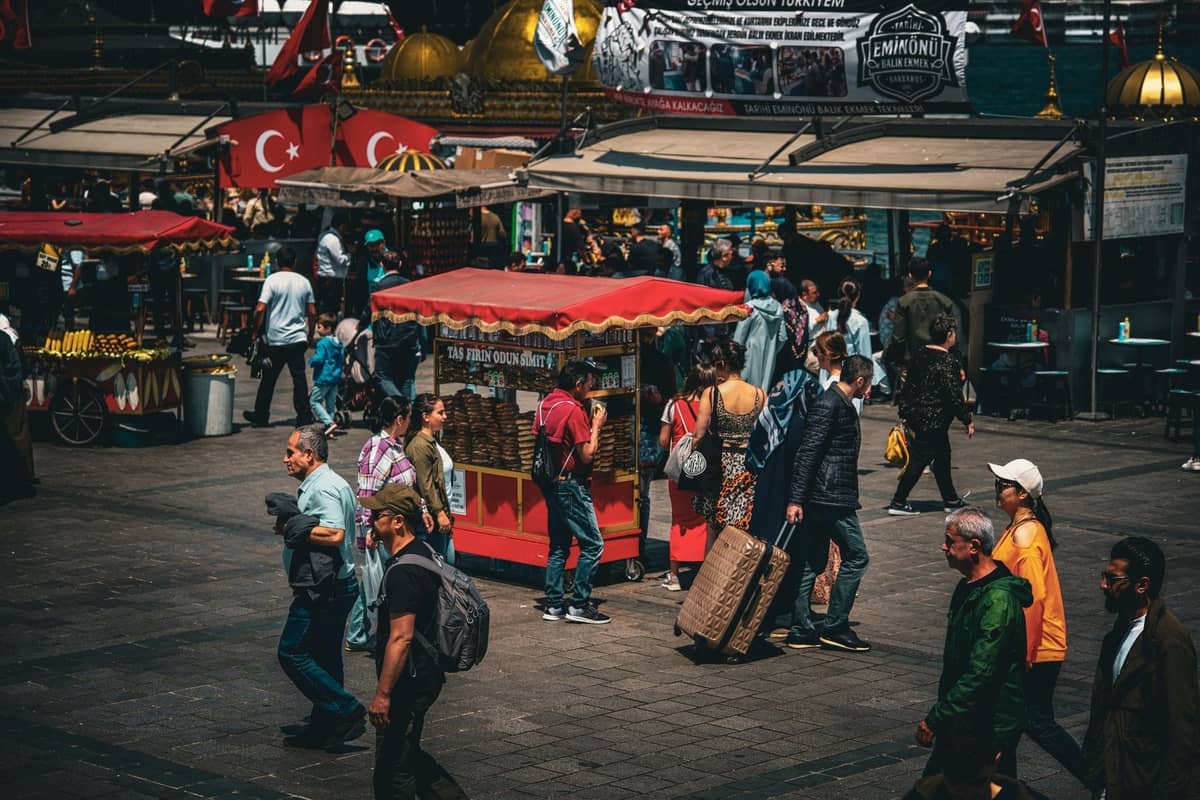
Istanbul sits at the intersection of Anatolian, Mediterranean, Balkan, and Middle Eastern culinary traditions, filtered through five centuries of Ottoman palace cooking. The result is a food culture that is simultaneously sophisticated and deeply casual. You can eat one of the finest lamb dishes of your life steps from where you bought a 15 TL sesame-crusted bread ring from a street cart. That contrast — refined and rough-and-ready existing side by side — is what makes eating in Istanbul unlike anywhere else.
The city's geography plays a role too. Istanbul has the Bosphorus, the Sea of Marmara, and the Black Sea all within reach, which means the fish is serious, fresh, and integral to the local diet. The Asian side of the city has its own distinct food character: quieter, more neighborhood-oriented, with markets and meyhanes (traditional taverns) that feel less performed than their European-side equivalents. Neither side is better — they're just different, and eating across both is worth the ferry ride.
The Essential Dishes: What to Order and Where
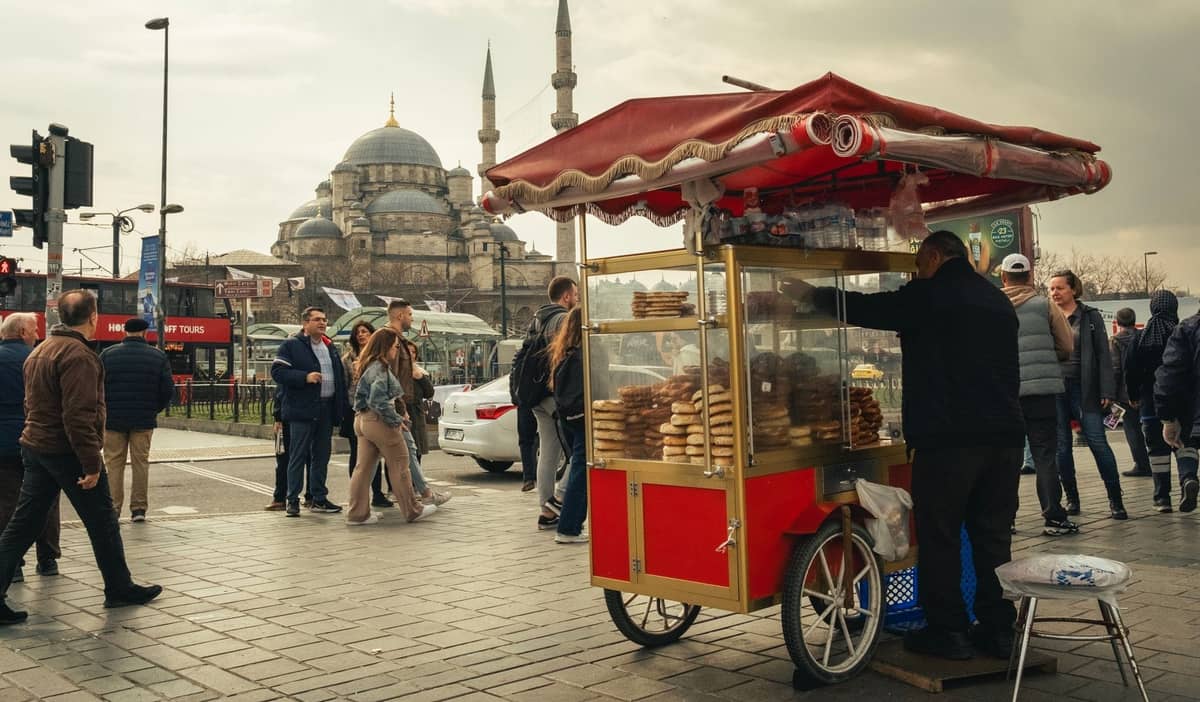
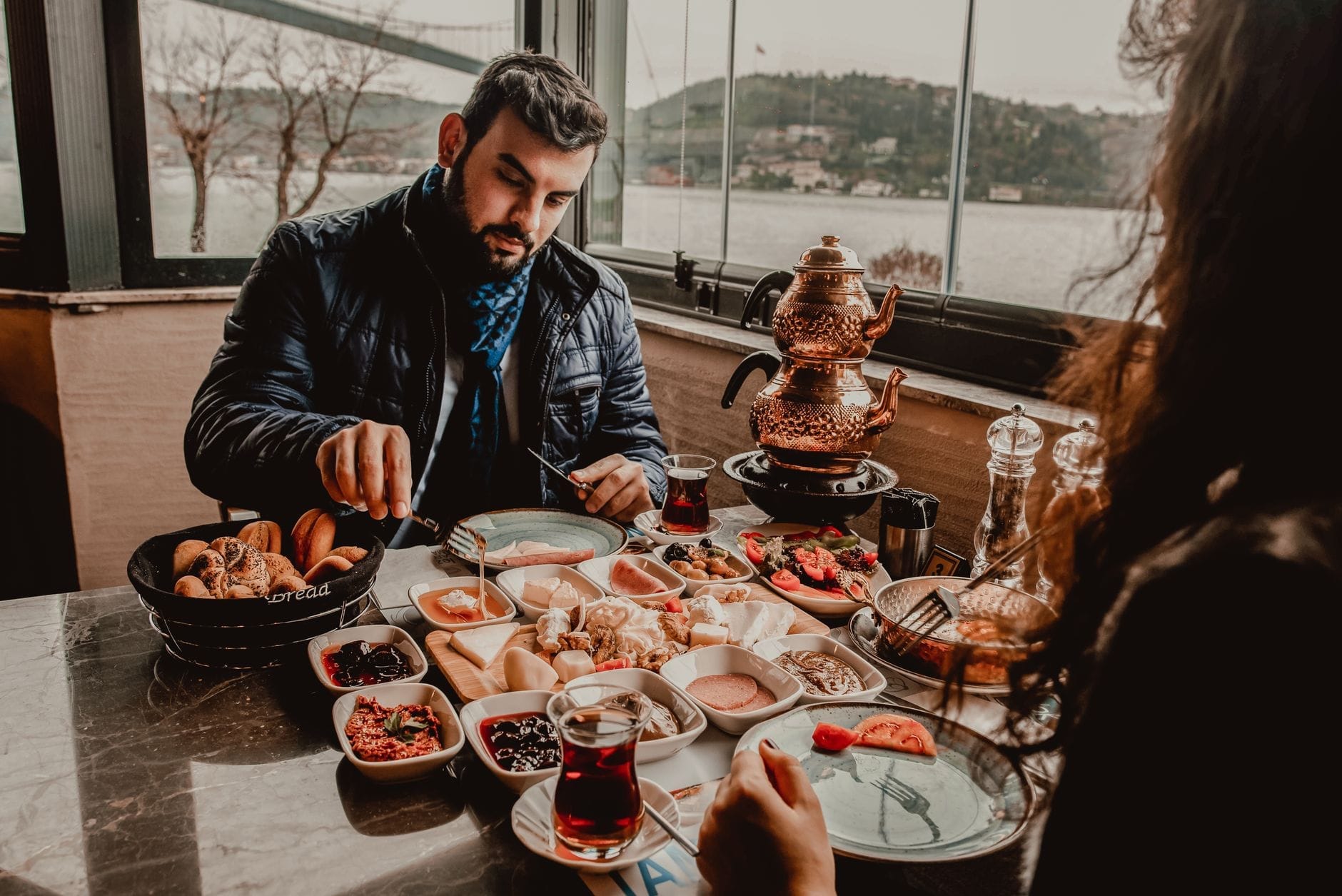
Simit is the starting point for any Istanbul food conversation. These sesame-encrusted circular breads, sold from red carts across the city for around 10-20 TL, are breakfast, snack, and emergency sustenance all in one. Pair one with a glass of tea and a wedge of white cheese from a bakkal (corner shop) and you have a local breakfast for under 50 TL. For a more complete morning meal, a traditional Turkish breakfast spread — featuring olives, cucumbers, tomatoes, eggs, multiple cheeses, honey, and clotted cream — is best done in Karaköy or the Fener-Balat neighborhood, where weekend kahvaltı spots fill up by 10am.
Balık ekmek (fish sandwich) is the iconic Eminönü meal: grilled mackerel stuffed into a half-loaf of bread with onions, lettuce, and a squeeze of lemon, sold from rocking boats along the Golden Horn for around 150-200 TL. It's popular for good reason — the fish is fresh and the setting (eating on a bench beside the Galata Bridge with ferries passing) is hard to beat. The quality does vary between vendors; the original boats nearest the Galata Bridge tend to be the most consistent.
- Lahmacun Thin flatbread topped with spiced minced meat and herbs, rolled up with parsley, onion, and lemon. Around 90-110 TL per piece. Order two — they're small.
- Kokoreç Seasoned lamb intestines grilled on a spit and chopped into a half-baguette. A late-night Istanbul staple with zero pretension. Around 100-150 TL for a portion. Not for the squeamish, but regulars swear by it.
- Kumpir Baked potato stuffed with butter, cheese, and an extensive selection of toppings — found primarily in Ortaköy. Around 200-250 TL, and filling enough to be a meal.
- Döner kebab The Istanbul version (especially the tantuni variety) differs from what you find in European fast food. Eat it from a dedicated dönercı, not a tourist-facing grill. Budget around 150-200 TL for a decent portion.
- Mercimek çorbası Red lentil soup, served everywhere, consistently good, and around 50-70 TL. Order it with a squeeze of lemon and dried mint stirred in.
- Meze Small plates served cold or warm — haydari (strained yogurt with herbs), patlıcan salatası (smoky eggplant), arnavut ciğeri (spiced lamb liver), and cacık (cucumber-yogurt). The foundation of any proper meyhane meal.
⚠️ What to skip
Avoid restaurants with picture menus and touts standing outside — especially around Sultanahmet, where prices can be two to three times higher than neighborhood spots serving better food. A meal that costs 500 TL in a local esnaf lokantası (tradesman's restaurant) can cost 1,500 TL in a tourist-facing equivalent nearby.
Neighborhood by Neighborhood: Where to Eat
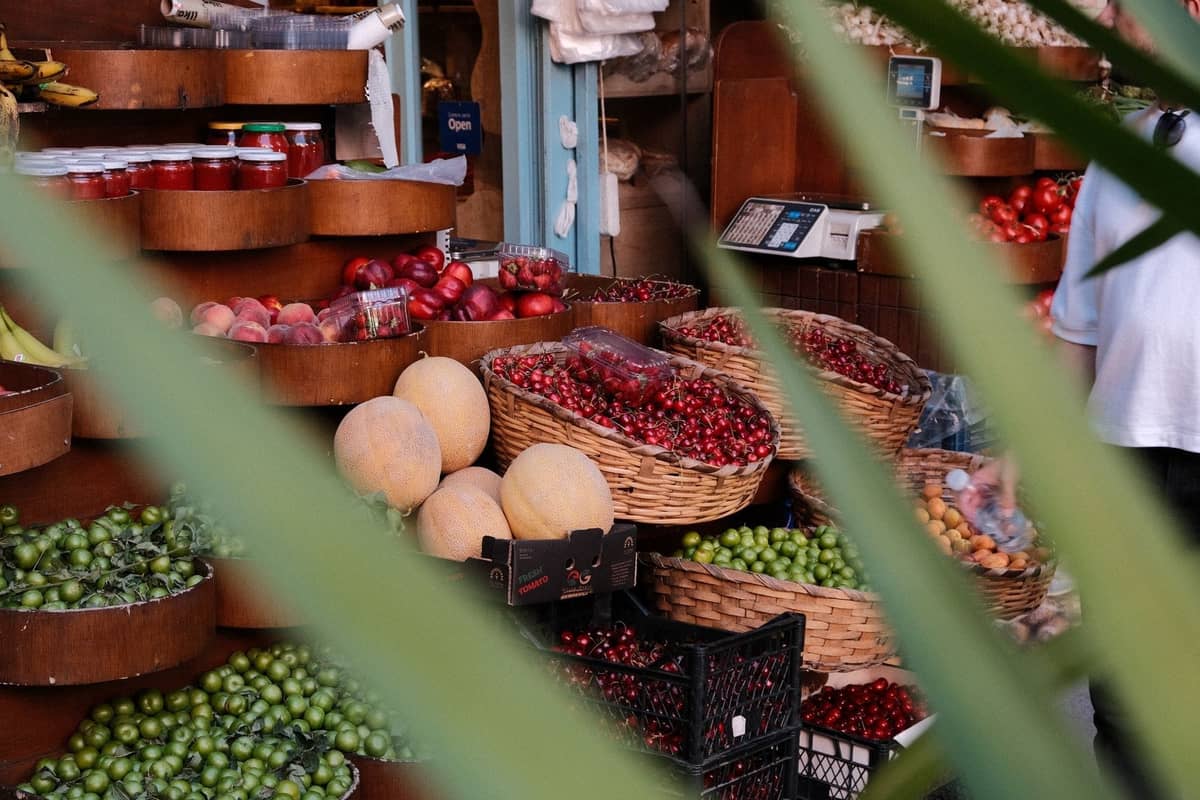
Kadıköy on the Asian side is arguably the best all-round food neighborhood in the city. The covered market (Kadıköy Çarşısı) sells excellent cheese, olives, cured meats, and fresh produce. The surrounding streets have a concentration of meyhanes, modern Anatolian restaurants, and casual sandwich spots that cater overwhelmingly to locals. Get off the ferry, walk into the market, and start eating. The Kadıköy market is at its best on weekday mornings before the weekend crowds arrive.
Karaköy and Galata have shifted significantly in the last decade, with a concentration of specialty coffee shops, modern Turkish brunch spots, and creative restaurants alongside older fish restaurants and working-class börek shops. The area around Karaköy is good for a 7am börek (flaky pastry filled with cheese or potato) from a traditional fırın (bakery) before the neighborhood wakes up properly.
Beyoğlu's backstreets behind İstiklal Avenue have a higher density of meyhanes, kebab specialists, and cheap lunch spots than the avenue itself, which is mostly cafes, fast food chains, and tourist shops. For a proper meyhane experience with cold meze and rakı (Turkey's anise spirit), head to the Asmalımescit or Nevizade areas in the evening. The rakı-and-meze tradition is well documented in the meyhane and rakı guide for anyone wanting more depth on that specific experience.
💡 Local tip
For the best cheap lunch in the city, find a esnaf lokantası — a tradesman's cafeteria style restaurant serving rotating daily dishes like slow-cooked beans, stuffed vegetables, and braised meat. Look for laminated menus in Turkish with handwritten specials. A full lunch with soup, main, and bread costs around 300-400 TL and the food is often genuinely excellent.
Turkish Breakfast, Tea, and Coffee: The Drink Culture
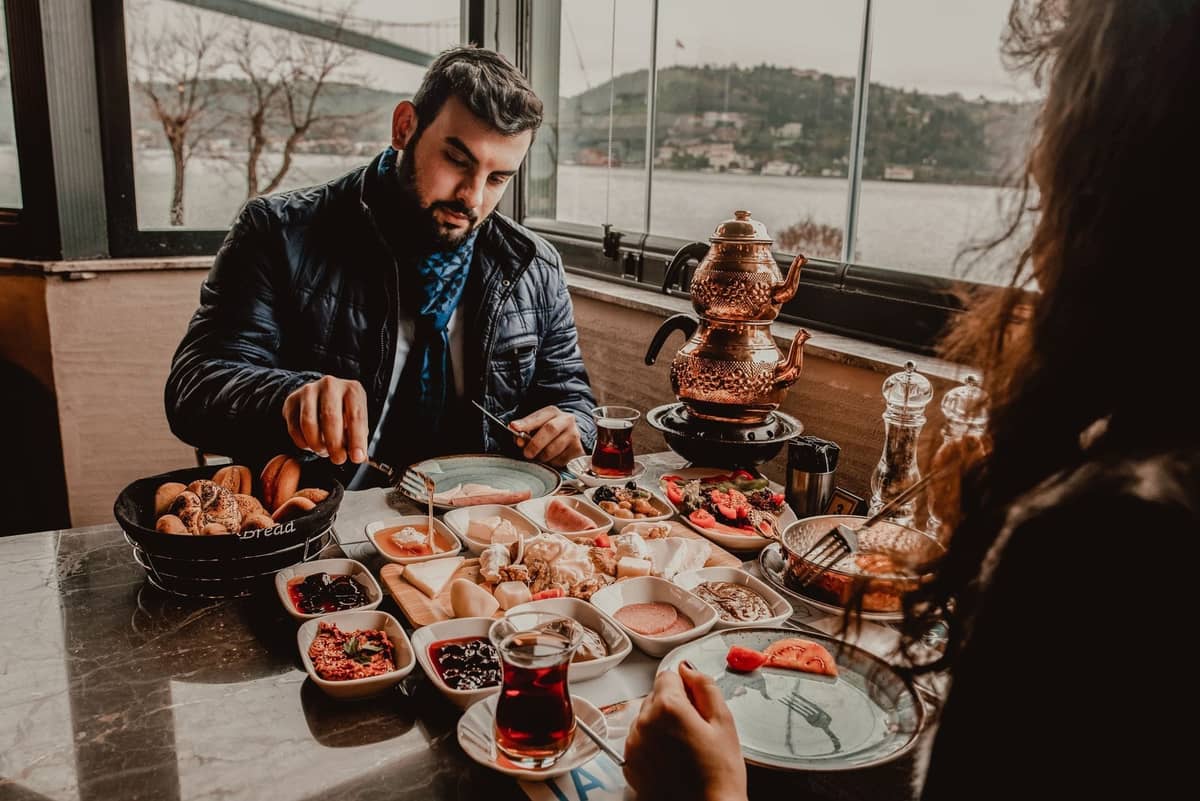
Tea (çay) is not optional in Istanbul — it is the social currency of the city. Served in small tulip-shaped glasses, usually black, and almost always free for refills when you're a customer somewhere. You'll pay around 10-20 TL per glass at a traditional tea house or around 40-60 TL at a café. The tea houses around the Grand Bazaar and Spice Bazaar are atmospheric but know their audience — prices are higher and the experience is partly performative. For a quieter glass, find a çay bahçesi (tea garden) in a residential neighborhood.
Turkish coffee is a different preparation from espresso: very finely ground, unfiltered, and simmered in a small copper pot (cezve). It arrives with the grounds settled at the bottom — don't drink those. The Spice Bazaar area around Eminönü has several traditional coffee roasters. Kurukahveci Mehmet Efendi, operating since 1871, sells freshly ground Turkish coffee by weight and is worth the queue. The coffee culture in Istanbul has also expanded to include high-quality specialty cafes, particularly in Karaköy, Moda, and Nişantaşı.
Alcohol is available and widely sold in Istanbul's restaurants and bars — Turkey is a secular country and the majority of restaurants in tourist and residential neighborhoods serve beer and wine. Efes is the dominant local lager, priced around 100 TL in a bar or restaurant. Rakı, the national spirit, is traditionally paired with fish or meze and diluted with cold water, turning milky white — the classic Turkish 'lion's milk'. Alcohol is generally unavailable or limited during Ramadan in some establishments, though this varies considerably by neighborhood.
Food Budget Reality: What Things Actually Cost
Istanbul food costs vary dramatically by venue type, not just by neighborhood. The city is not uniformly cheap, and tourist-facing restaurants near Sultanahmet or the major sights can charge European prices for mediocre food. But if you eat where Istanbul residents eat, the cost drops substantially. A meal at an inexpensive local restaurant runs around 500 TRY, while a mid-range three-course dinner for two sits around 2,200 TRY. These figures shift with ongoing inflation — the Turkish lira has experienced significant volatility, and food prices have seen sharp year-on-year increases. Always calculate against the current exchange rate rather than relying on price guides older than a few months.
- Simit from a street cart: 20-50 TRY
- Glass of tea: 10-20 TRY at a local tea house
- Half-litre bottled water: around 10-20 TRY
- Lentil soup at a lokanta: 50-70 TRY
- Lahmacun: 90-110 TRY per piece
- Balık ekmek (fish sandwich): 150-200 TRY
- Kumpir (stuffed potato): 200-250 TRY
- Full meal at a local esnaf lokantası: 300-500 TRY
- Beer at a bar or restaurant: around 100 TRY
- Mid-range dinner for two with wine: 2,000-3,000 TRY
✨ Pro tip
Tipping in Istanbul restaurants is customary at around 5-10% for sit-down meals. It is not automatically added to the bill in most local restaurants, unlike in many Western countries. Rounding up on taxis is the norm rather than calculating a percentage. At street food stalls, tipping is not expected.
Food Tours and Guided Eating: Are They Worth It?
A guided Istanbul food tour makes genuine sense for first-time visitors who want to cover a lot of culinary ground efficiently. The best tours take small groups through multiple neighborhoods, include stops at working markets, specialty producers, and street vendors that can be difficult to identify independently, and provide context about what you're eating. This is particularly valuable for navigating dishes like kokoreç or offal-based specialties where the uninitiated might hesitate without guidance.
The quality difference between tours is significant. Look for guides who are local residents rather than generic city tour operators who add food stops as an afterthought. Tours focused on a single neighborhood — Kadıköy, Eminönü, or Beyoğlu — tend to go deeper than city-wide food crawls. Half-day tours typically run 3-4 hours and cover 6-10 tasting stops. Prices vary; budget roughly $50-90 USD per person for a reputable small-group tour.
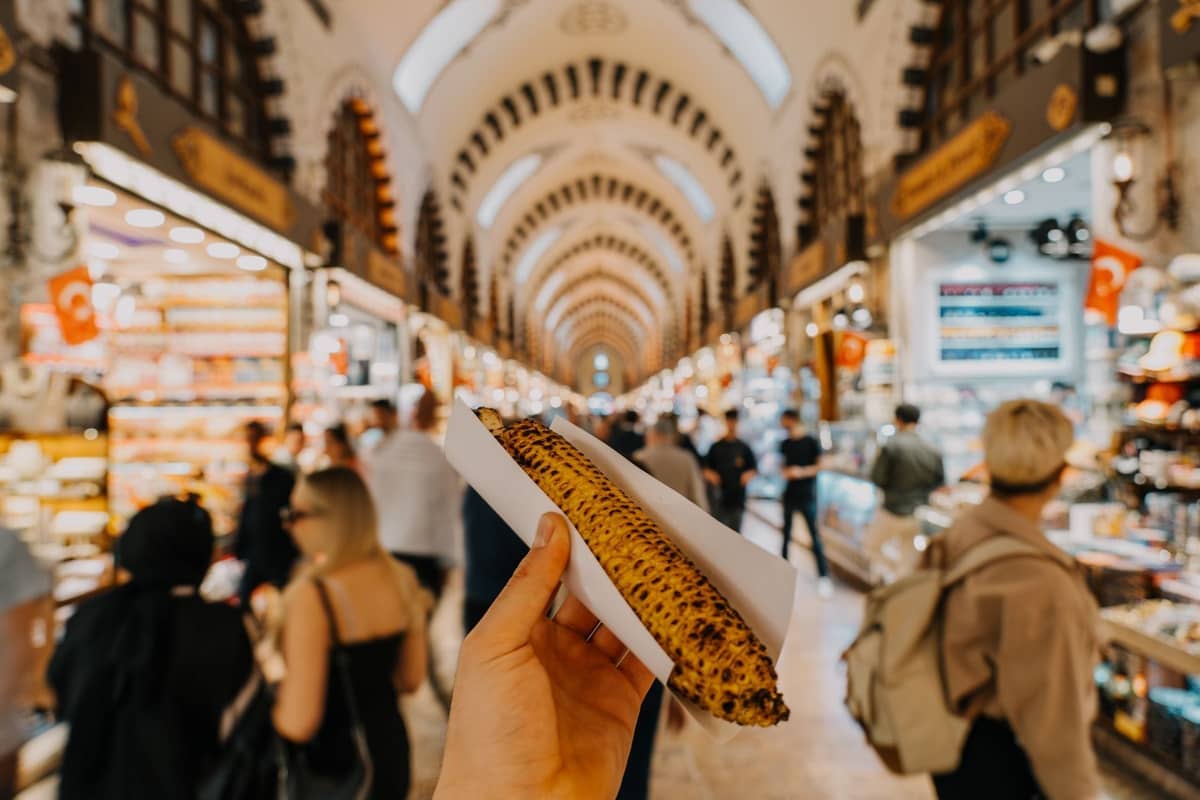
If you prefer to explore independently, pairing time in the Spice Bazaar with a walk through the surrounding streets of Eminönü gives an excellent overview of Istanbul's pantry: dried fruits, nuts, spices, pickles, and cured fish. The bazaar itself has become increasingly tourist-oriented, but the side streets remain working wholesale markets. Similarly, the Grand Bazaar area has several excellent lokantalar and börek shops used exclusively by traders — if you see men in shop aprons eating somewhere, follow them.
FAQ
What is the most famous food in Istanbul?
If forced to pick one, most locals would say the balık ekmek (fish sandwich) sold from boats in Eminönü is the most iconic Istanbul-specific food. But simit, döner kebab, lahmacun, and the full Turkish breakfast spread are all equally defining. Istanbul food is more of a system than a single dish.
Is Istanbul food expensive?
No, not if you eat like a local. Street food runs 10-200 TRY per item, and a full meal at a neighborhood lokanta costs around 300-500 TRY. Tourist-facing restaurants near the major sights are a different story and can charge several times more for similar quality food. The key is eating where Istanbul residents eat.
Is Istanbul good for vegetarians?
Istanbul is workable but not exceptional for strict vegetarians. Turkish cuisine is heavily meat-based, but there is substantial vegetarian street food: simit, gözleme (flatbread with cheese or potato filling), lahmacun occasionally exists in a vegetable version, and the meze tradition includes many plant-based cold dishes. Kadıköy has the most vegetarian-friendly restaurant options. Vegans will find it considerably harder.
When is the best time to eat street food in Istanbul?
Morning for simit, börek, and breakfast. Midday for lokanta lunch specials, which run out by 2-3pm. Late evening for kokoreç and döner, which peak after 10pm. The city eats late by European standards — dinner reservations at 9pm are completely normal, and many meyhanes don't hit their stride until after 10pm.
What should I avoid eating in Istanbul?
Avoid restaurants with aggressive touts at the door, laminated picture menus in five languages, and locations directly on the main tourist circuits without local patronage. Tap water is treated to meet national standards, but many locals and visitors prefer bottled water — this is a personal choice rather than a safety necessity. Pre-packaged tourist 'lokum' from airport-style shops is a significant step down from what you'll find at a proper confectioner in the bazaar districts.