Kadıköy Market District: Istanbul's Asian-Side Food and Market Hub
Kadıköy Çarşısı is a sprawling, walkable market district on Istanbul's Asian shore, packed with fishmongers, spice vendors, greengrocers, patisseries, and meyhanes. Free to explore, reached by ferry in minutes from the European side, and far less crowded than the Grand Bazaar.
Quick Facts
- Location
- Neşet Ömer Sokak and surrounding streets, Kadıköy, Asian Istanbul
- Getting There
- Ferry from Karaköy, Eminönü, or Beşiktaş to Kadıköy docks; M4 metro to Kadıköy station
- Time Needed
- 1.5 to 3 hours; longer if you eat and browse cafés
- Cost
- Free to enter; you pay only for what you buy
- Best for
- Food lovers, local market culture, photography, slow morning walks
- Official website
- www.kadikoy.bel.tr
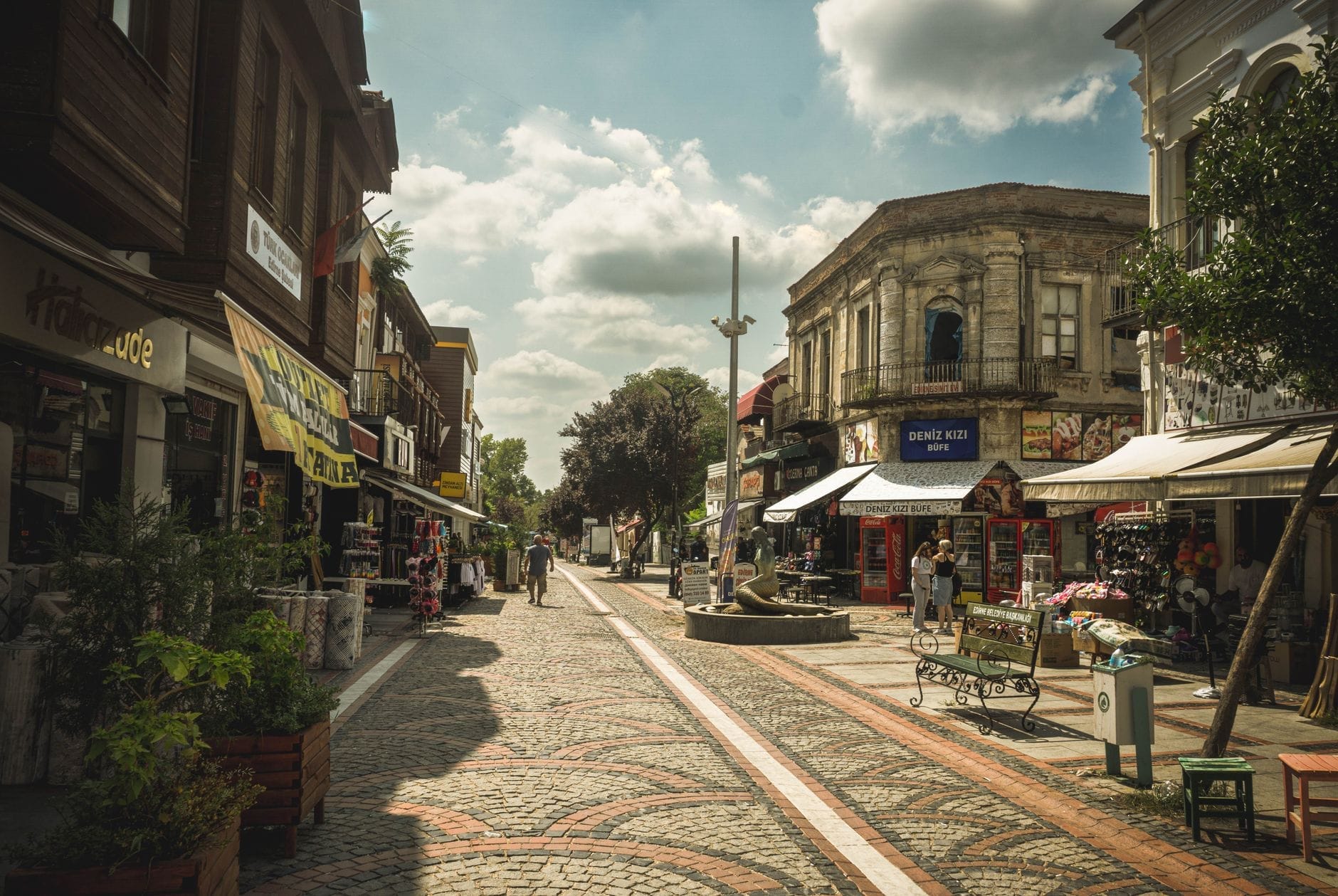
What Is Kadıköy Market District?
Kadıköy Çarşısı is not a roofed bazaar or a ticketed attraction. It is a dense network of pedestrianised streets just inland from the Kadıköy ferry docks, where ordinary Istanbul residents shop for their daily food alongside curious visitors. Fishmongers arrange glistening sea bass and mackerel on ice under bare bulbs, spice dealers fill small sacks of sumac and dried pepper at the doorway, and the smell of roasting coffee drifts out from narrow shop fronts onto the street. This is, in the most literal sense, where the Asian side of Istanbul eats.
The district occupies the area centred on Söğütlü Çeşme Caddesi and its tributary lanes, including the well-known Neşet Ömer Sokak. The core food market corridors are compact enough to walk completely in twenty minutes, but the broader district extends into café-lined backstreets, meyhanes (traditional taverns), and patisseries that reward slower exploration.
ℹ️ Good to know
Kadıköy Market District has no single entrance gate and no admission fee. Individual businesses set their own hours; most food shops open by 9am and stay open until evening. Separate weekly street markets in the wider Kadıköy area run on set days and locations that are distinct from the daily bazaar streets.
A Little History: From Chalcedon to Çarşı
Kadıköy district covers roughly 34 square kilometres of Istanbul's Asian shore and had a population of around 478,000 as of 2022. In the ancient world, this land was known as Chalcedon, a Greek colony founded before its more famous neighbour Byzantium across the strait. The Romans and later the Byzantines maintained the area as a productive agricultural and trading zone, and its identity as a commercial hub has held ever since.
Under the Ottomans, Kadıköy developed as a district of summer residences and market gardens supplying the city across the water. The late 19th and early 20th centuries brought a wave of Greek, Armenian, and Jewish merchants who built much of the commercial fabric that still defines the çarşı today. Many shop fronts in the older lanes retain their worn wooden joinery and wrought iron fittings from that period. The market has never been a grand architectural showpiece; its authority comes from continuity and daily use, not from grandeur.
Tickets & tours
Hand-picked options from our booking partner. Prices are indicative; availability and final rates are confirmed when you complete your booking.
Culinary walk with Kadikoy (Chalcedon) treasures
From 150 €Instant confirmationBosphorus sunset cruise on luxury yacht with guide
From 55 €Free cancellationIstanbul and Bosphorus cruise on private boat - half day afternoon tour
From 40 €Instant confirmationFree cancellationWhirling Dervishes live show and exhibition
From 29 €Instant confirmation
What You Will Find: The Texture of the Market
The fish market corridor is the most visually intense part of the çarşı. Vendors compete through presentation: whole fish arranged in colour-sorted fans, crates of mussels packed tight, live sea creatures moving in shallow tanks. Hawkers call prices loudly, and the scent of the sea hangs over the whole alley even in winter. This is not a sanitised food-hall experience; expect wet floors, close quarters, and the genuine theatre of a working wholesale-retail market.
The produce section runs alongside: towers of tomatoes, bundles of flat-leaf parsley, seasonal vegetables that follow the Turkish agricultural calendar rather than supermarket norms. In spring you will find wild greens and early cherries; in autumn, late figs, quince, and crates of pomegranates. The vendors here largely serve local customers who know prices and quality by long habit, which keeps standards high.
Deeper into the lanes, the character shifts toward specialty food shops. A delicatessen window might display thirty varieties of olive beside ceramic crocks of yogurt and sliced pastirma (cured beef). A spice merchant stacks open sacks of dried herbs against the wall, with hand-written price tags. Patisseries sell trays of baklava by weight and lokum in flavours that go well beyond the tourist-facing rose and pistachio. These are shops that exist to supply a neighbourhood, and browsing them feels accordingly unpretentious.
For broader context on eating well across Istanbul, the Istanbul food guide covers the city's culinary geography in detail. Kadıköy is consistently rated among the top two or three areas for serious eating.
How the Market Changes Through the Day
Morning is the best time to visit if you want to experience the market at full intensity. By 9am the fish stalls are fully loaded, the produce vendors are restacking their displays, and the bakeries are pulling fresh simit and börek from the oven. The light at this hour, especially in late spring or autumn, angles down through the narrow lanes in a way that makes even a simple stack of aubergines look painterly. Locals do their shopping before noon, so the pace is purposeful rather than leisurely.
Midday brings a shift: shoppers thin out, vendors take short breaks, and the cafés and köfte restaurants around the market fill with workers on lunch breaks. This is a good window to sit at a counter with a glass of ayran and a plate of something simple without competing for space.
By late afternoon the market lanes quiet considerably, but the surrounding streets pivot toward the evening economy. The meyhanes and fish restaurants begin setting outdoor tables. The craft beer bars and wine shops along Kadife Sokak, which locals sometimes call 'Bar Street,' start filling up around 7pm. The çarşı after dark is less market and more neighbourhood gathering place, with a noticeably younger crowd than you will find in Sultanahmet at the same hour.
💡 Local tip
Weekday mornings between 9am and 11am offer the freshest produce and fish with the least pedestrian congestion. Weekend afternoons, particularly Saturday from noon onward, are the most crowded period. If you are primarily here to shop for food, avoid weekend afternoons.
Getting There: Ferry, Metro, or Both
The most enjoyable approach is by ferry. Şehir Hatları ferries run regularly from Karaköy, Eminönü, and Beşiktaş on the European side, crossing the Bosphorus in about 20 minutes. The Kadıköy ferry docks deposit you at the waterfront, with the market district a five-minute walk straight inland. The crossing itself is part of the experience: the city spread across both shores, cargo ships moving between continents, and the smell of the water giving way to the smell of fish and spice as you approach the market.
If you are coming from deeper in the European side or from Sabiha Gökçen Airport, the M4 metro line runs directly to Kadıköy station, which lies a short walk inland from the ferry docks. From there the market is a short walk west. All public transport in Istanbul uses the Istanbulkart contactless card. See the getting around Istanbul guide for transport options across the city.
Taxis and ride-hailing apps can drop you at the Kadıköy waterfront, but the market streets themselves are pedestrian-priority and traffic moves slowly around the bazaar perimeter during peak hours. Arriving on foot from the docks is almost always faster than a car.
Kadıköy Compared to Istanbul's Other Markets
Visitors who have already spent time at the Grand Bazaar or the Spice Bazaar will notice the difference immediately. Kadıköy Çarşısı is oriented almost entirely toward local customers rather than tourists. There are very few souvenir stalls, no persistent touts, and prices are not displayed in euros or dollars. This is not a criticism of the historic bazaars, which have their own considerable merit, but it does mean Kadıköy operates at a different register.
The practical consequence: quality tends to be high and prices tend to be fair because local householders apply competitive pressure that tourist-facing markets do not face in the same way. The fish you buy here is the fish a Kadıköy family is taking home for dinner. That is a reliable quality signal.
For anyone spending time on the Asian side, the çarşı also integrates naturally with the broader Kadıköy waterfront and the Moda neighbourhood, which extends south along the shore. An hour in the market can flow naturally into a waterfront stroll, a tea on the Moda pier, or a meal at one of the meyhanes near the ferry terminal.
Photography, Accessibility, and Practical Notes
For photography, the fish market alley and the entrance to the main produce corridor in morning light are the most rewarding subjects. Vendors are generally relaxed about cameras but appreciate a nod or a brief greeting before you photograph them directly at close range. Wide-angle lenses suit the tight lanes; longer focal lengths work well for compressing the visual density of a stall display from a short distance.
On accessibility: the market streets are historic and uneven in places. Most of the main lanes are paved, but surface quality varies, there are frequent shallow steps at shop entrances, and occasional delivery vehicles move through the narrower corridors during morning hours. Wheelchair access is possible along the broader main arteries but is not straightforward in the innermost fish-market lanes.
Bring a small cloth bag or a reusable shopping tote if you plan to buy food. Very few vendors provide bags as a matter of course. A modest amount of cash in small denominations is useful for produce and spice stalls, though many of the larger food shops and restaurants accept cards.
⚠️ What to skip
If you arrive expecting the drama of the Grand Bazaar, Kadıköy will seem understated. It is not a spectacle market. The appeal is precisely that it is a working neighbourhood market with no performance layer. Visitors who want elaborately packaged Turkish products for gifts may find the selection here less curated than in tourist-facing shops in Sultanahmet or Karaköy.
Eating and Drinking in and Around the Market
Kadıköy's food culture extends well beyond the market stalls. The district has a dense concentration of meyhanes serving rakı alongside cold meze plates, neighbourhood lokantalar (canteen-style restaurants) with daily-changing dishes, and a growing craft beverage scene. For an introduction to meyhane culture, the Istanbul meyhane and rakı guide provides useful background.
Within the çarşı itself, several counters specialise in midday food: köfte with bread, lahmacun, freshly fried balık ekmek (fish sandwiches) near the water, and börek shops that sell by the slice. These are fast, cheap, and high-quality by any standard. Eating inside the market at a counter or standing at a stall is consistently better value than sitting down in a full-service restaurant right at the ferry docks, where prices reflect waterfront positioning rather than food quality.
For a broader orientation to the Asian side of Istanbul, including what else to do in Kadıköy before or after the market, the Istanbul Asian side guide covers the full neighbourhood range.
Insider Tips
- The fish market alley (look for the narrow covered corridor off Söğütlü Çeşme Caddesi) is the densest concentration of vendors and the best place to observe the morning restocking ritual before 10am.
- The side streets east of the main market, toward Mühürdar Caddesi, have a cluster of old-school spice and dry goods shops that see very few foreign visitors and sell at straightforward local prices.
- If you plan to take the ferry back to the European side, visit the market first and then walk south along the waterfront toward Moda before returning, to avoid hauling shopping through evening crowds at the docks.
- Several of the delicatessens in the çarşı will vacuum-pack cured meats, cheeses, and pickles for travel. Ask directly; it is a common enough request that most know how to package things for a suitcase.
- Sunday mornings sometimes bring smaller street-market activity around Moda, a short walk from the çarşı, with a more leisurely, younger crowd than the weekday bazaar.
Who Is Kadıköy Market District For?
- Food travellers who want to shop and eat where Istanbul residents actually shop and eat
- Photographers looking for unposed, working-market scenes with strong natural light in the morning
- Visitors combining the Asian-side market with a Bosphorus ferry crossing as a half-day itinerary
- Families with older children who are comfortable in busy pedestrian environments
- Travellers on a budget who want high-quality Turkish food without tourist-area pricing
Nearby Attractions
Other things to see while in Kadıköy:
- Haydarpaşa Train Station
Haydarpaşa Railway Station is a 1908 German neo-baroque masterpiece standing at the point where the Bosphorus meets the Sea of Marmara. Currently undergoing extensive restoration with reopening expected in late 2026 or early 2027, it remains one of the most architecturally striking buildings in Istanbul, as well as a pilgrimage site for anyone interested in the city's Ottoman and early-Republic history.
- Istanbul Toy Museum
Housed in a historic multi-storey wooden mansion in Göztepe, the Istanbul Toy Museum displays around 4,000 toys. Founded by poet Sunay Akın and opened on 23 April 2005, it offers a thoughtful, uncrowded alternative to the city's major museums.
- Moda Waterfront
Moda Waterfront (Moda Sahili) is a free public promenade on Istanbul's Asian shore, winding past the restored 1917 Moda Pier, rocky coves, and tea gardens overlooking the Sea of Marmara. Unlike the historic peninsula's monument-heavy tourism, this is where local Istanbulites actually spend their mornings and evenings.