Haydarpaşa Train Station: Istanbul's Most Melancholy Monument
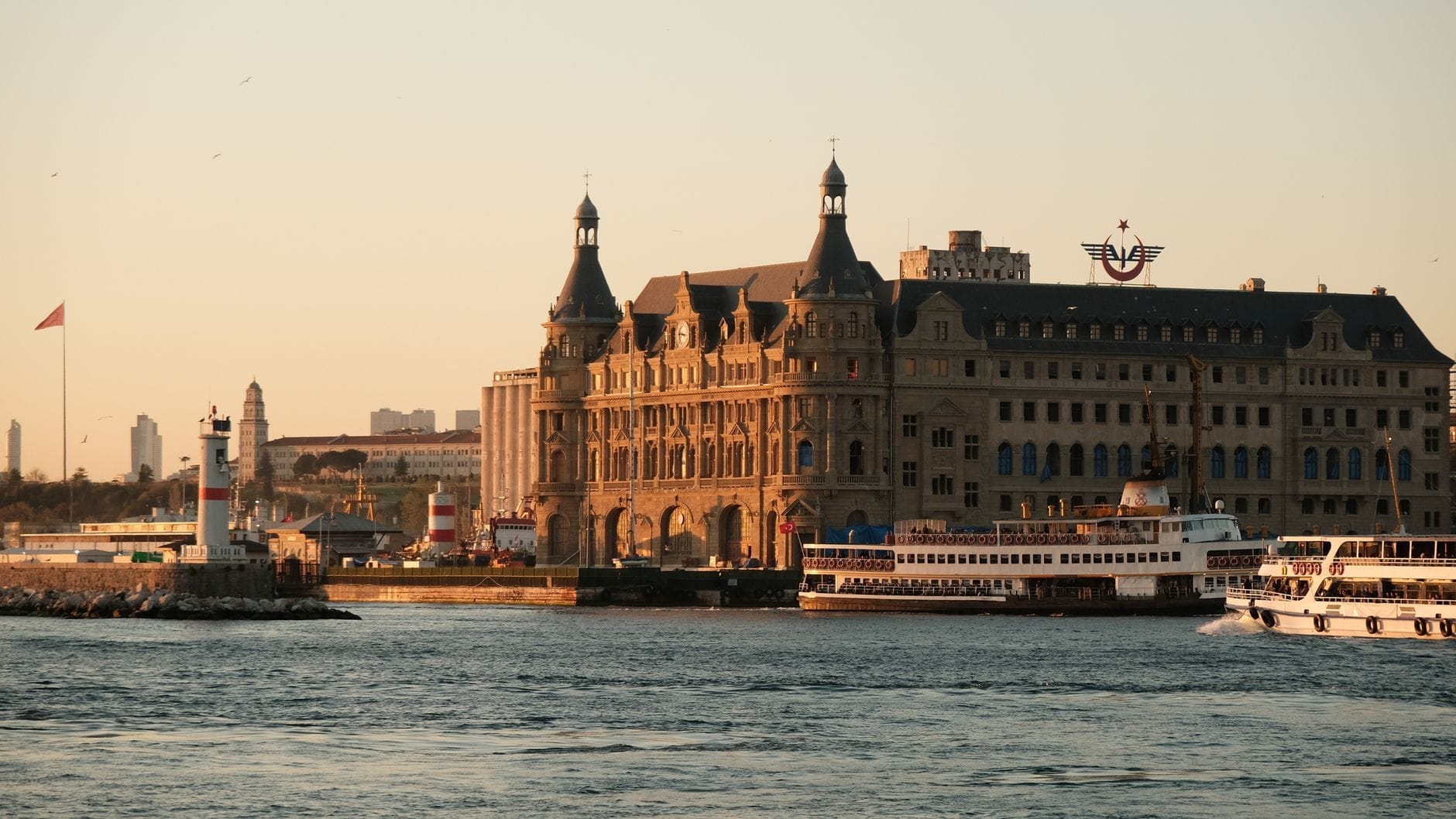
Haydarpaşa Railway Station is a 1908 German neo-baroque masterpiece standing at the point where the Bosphorus meets the Sea of Marmara. Currently undergoing extensive restoration with reopening expected in late 2026 or early 2027, it remains one of the most architecturally striking buildings in Istanbul, as well as a pilgrimage site for anyone interested in the city's Ottoman and early-Republic history.
Quick Facts
- Location
- Asian shore, where the Bosphorus meets the Sea of Marmara, ~500 m from Kadıköy center
- Getting There
- Ferry to Kadıköy, then 10-min walk south; or bus/dolmuş to Haydarpaşa stop
- Time Needed
- 30–60 minutes for exterior and waterfront
- Cost
- No official admission fee; the station is still under restoration (expected reopening late 2026/early 2027) with limited public access to the exterior and waterfront areas
- Best for
- Architecture lovers, history buffs, photographers, slow walkers between Kadıköy and the waterfront
- Official website
- www.wmf.org/monuments/haydarpa%C5%9F-railway-station
What Haydarpaşa Station Actually Is Right Now
Haydarpaşa Garı, to use its correct Turkish name, remains under extensive restoration as of mid-2026, with reopening expected in late 2026 or early 2027. Long-distance services have been suspended for years, and post-restoration plans include both terminal operations and museum functions. What you will find is one of the most photographically arresting buildings in Istanbul, sitting at the water's edge like a ship that forgot to leave port.
⚠️ What to skip
The station remains under restoration as of mid-2026, with reopening expected in late 2026 or early 2027. Go expecting to experience the exterior and waterfront as a minimum, and treat any interior access as dependent on construction progress at the time of your visit.
The station's current limbo is itself part of the story. Istanbul is a city where grand infrastructure projects stall, restart, and stall again, and Haydarpaşa has become a symbol of that particular kind of urban uncertainty. Locals have strong feelings about its fate. Walking around it, you will see everything from restoration scaffolding to sea birds perched on the stone cornices as if they own the place.
The Architecture: Why It Looks the Way It Does
The station was completed in 1908, financed and designed as part of the German-built Hejaz Railway, which the Ottoman Sultan Abdülhamid II intended to connect Istanbul to Medina. The architects were Otto Ritter and Helmut Cuno, both German, and they produced a building that reads as northern European neo-baroque dropped onto an Asian waterfront. The result is disorienting in the best possible way: a steeply pitched slate roof with copper-clad corner towers, pointed in the manner of a Rhineland castle, set against a backdrop of the Bosphorus and the European skyline across the water.
The structure rests on 1,100 timber piles driven into the seabed, a feat of engineering that was remarkable for its era and continues to define the building's relationship with the water. At certain angles from the ferry, the station appears to float. The stone facade uses a warm-toned sandstone that catches late afternoon light differently from the bright white marble you find elsewhere in Istanbul, giving it a distinctly Germanic gravity.
The station's design connects it to a broader story about Ottoman-German relations in the early 20th century, a story you can follow further at the Sirkeci Station on the European side, which served as the western terminus of the Orient Express and is now a working commuter station with a small museum. The contrast between the two buildings tells you a great deal about how different powers imagined Istanbul's place in the world.
Tickets & tours
Hand-picked options from our booking partner. Prices are indicative; availability and final rates are confirmed when you complete your booking.
Bosphorus sunset cruise on luxury yacht with guide
From 55 €Free cancellationIstanbul and Bosphorus cruise on private boat - half day afternoon tour
From 40 €Instant confirmationFree cancellationWhirling Dervishes live show and exhibition
From 29 €Instant confirmationBasilica Cistern fast-track entry ticket and optional audio guide
From 34 €Instant confirmation
How the Experience Changes by Time of Day
Morning, before 9:00, is the quietest window. The light comes in low from the east across the Asian hills, hitting the station's stone facade at a warm angle while the Bosphorus is often glassy and faintly misty. Commuter ferries cross in the background, their white hulls catching the early sun. The waterfront promenade in front of the station has a few runners and dog walkers but is otherwise empty. This is when the building feels most like itself, monumental without an audience.
Midday is serviceable but not special. The light goes flat, tour groups sometimes arrive from the Kadıköy market area, and the surrounding roads get busy. If you are coming from central Kadıköy, the walk south along the waterfront is pleasant regardless of hour, passing small tea gardens and fishermen.
Late afternoon, roughly from 15:00 until sunset, is the most rewarding time for photography. The station's west-facing facade catches direct sunlight, the copper towers glow, and the European skyline across the Bosphorus becomes a dramatic backdrop. Ferries crossing the strait appear small against the building's scale. In autumn, this golden-hour window lasts well into the early evening.
💡 Local tip
The best single photograph of Haydarpaşa Station is taken from the water, not the shore. If you are taking a Kadıköy-Eminönü or Kadıköy-Karaköy ferry, position yourself on the upper deck starboard side as you depart. The station will appear in full profile, water on three sides, with the city behind it.
Getting There and Getting Around the Area
The most enjoyable approach is by ferry from the European side. The Eminönü and Karaköy piers both have frequent crossings to Kadıköy, and the ride itself is one of Istanbul's better free-ish pleasures (you pay the ferry fare with an Istanbulkart). From the Kadıköy ferry pier, the station is a ten-minute walk south along the waterfront promenade, past the Haydarpaşa port complex. You cannot miss the roofline.
If you are coming from elsewhere on the Asian side, buses and dolmuş routes stop at Haydarpaşa directly. The nearest metro is on the M4 line at Kadıköy, a roughly 15-minute walk north through the market streets. Taxis and ride-hailing apps (BiTaksi, iTaksi) are easy to find in Kadıköy and will drop you at the station gate.
ℹ️ Good to know
Accessibility note: there are no elevators or ramps at the station building itself, according to available information. The waterfront promenade is flat and manageable, but the station's steps and exterior areas are not adapted for wheelchair access.
Historical Weight: What Happened Here
For most of the 20th century, Haydarpaşa was the point of departure for anyone leaving Istanbul by rail toward Anatolia, the Middle East, or the Hejaz. Generations of conscripts, pilgrims, merchants, and emigrants passed through its platforms. The emotional weight of that departure function, the last sight of the city before the long journey east, is baked into Turkish literary culture. Novels, poems, and film scenes are set in this station precisely because of what it meant to leave from here.
In 1917, during World War One, an explosion at the station killed around 150 people and caused massive damage to the building. The reconstruction that followed is largely responsible for the station's current form. A fire in 2010 caused additional damage to the roof, accelerating the debate about the building's future. That debate, between preservation advocates, commercial developers, and government agencies, remains unresolved.
The World Monuments Fund has listed Haydarpaşa as a site requiring conservation attention, placing it in a category alongside other threatened historic structures. For travelers with a specific interest in Istanbul's architectural history, this visit pairs naturally with the Byzantine and Ottoman heritage sites on the European side, though Haydarpaşa is entirely a product of the late Ottoman period, not the Byzantine era.
Combining Haydarpaşa with a Day in Kadıköy
The station sits at the southern end of a natural walking route that starts at the Kadıköy market and moves south through the residential streets toward the waterfront. This walk, done in either direction, takes about 20 to 30 minutes and passes through one of the most liveable and unhurried neighborhoods on the Asian side.
After visiting the station, the waterfront promenade running north toward the Kadıköy ferry pier has several tea houses and small restaurants where you can sit with a glass of çay and a view of the Bosphorus. The Moda waterfront is a short walk or taxi ride further south, and offers some of the most relaxed café culture on the Asian side, away from the main market crowds.
The combination of Haydarpaşa, the market streets, and the waterfront constitutes a full half-day without needing to rush anything. If you are basing yourself on the European side, this is an ideal way to cross the Bosphorus and experience the Asian side without a heavy itinerary.
Insider Tips
- The ferry approach from Eminönü or Karaköy gives you the best full view of the station from the water. Sit on the upper deck, starboard side when departing Kadıköy, for the most dramatic profile shot.
- Come on a weekday morning if you want to check interior access. Weekend visits tend to involve more uncertainty about which areas, if any, are open, and the surrounding streets are busier.
- The stone steps and waterfront area directly in front of the station are popular with local fishermen, particularly in the late afternoon. This human activity adds scale and life to photographs of what is otherwise a very large, very empty building.
- If the sky is overcast, the station actually photographs better than on bright sunny days. The flat light reduces contrast and lets the detail in the stone facade and copper towers read more clearly.
- The area between Haydarpaşa and the Kadıköy ferry pier has a string of small lokanta-style restaurants that serve working lunch crowds on weekdays. These are significantly cheaper and less touristy than the market-area options a few streets north.
Who Is Haydarpaşa Train Station For?
- Architecture and design enthusiasts who want to see a rare example of German neo-baroque on an Ottoman waterfront
- Photographers chasing the late-afternoon light on the Bosphorus, especially with the European skyline in the background
- History-minded travelers interested in late Ottoman and early Republic-era infrastructure
- Kadıköy day-trippers who want to extend a market visit with a waterfront walk to a landmark
- Travelers who appreciate atmospheric, slightly melancholy places where a building's story is told by absence as much as presence
Nearby Attractions
Other things to see while in Kadıköy:
- Istanbul Toy Museum
Housed in a historic multi-storey wooden mansion in Göztepe, the Istanbul Toy Museum displays around 4,000 toys. Founded by poet Sunay Akın and opened on 23 April 2005, it offers a thoughtful, uncrowded alternative to the city's major museums.
- Kadıköy Market District
Kadıköy Çarşısı is a sprawling, walkable market district on Istanbul's Asian shore, packed with fishmongers, spice vendors, greengrocers, patisseries, and meyhanes. Free to explore, reached by ferry in minutes from the European side, and far less crowded than the Grand Bazaar.
- Moda Waterfront
Moda Waterfront (Moda Sahili) is a free public promenade on Istanbul's Asian shore, winding past the restored 1917 Moda Pier, rocky coves, and tea gardens overlooking the Sea of Marmara. Unlike the historic peninsula's monument-heavy tourism, this is where local Istanbulites actually spend their mornings and evenings.