Karaköy and Galata sit at the point where the Golden Horn meets the Bosphorus, one a working waterfront transit hub and the other a steep medieval quarter climbing toward its famous 14th-century tower. Together they form one of Istanbul's most layered and walkable neighborhoods, where Genoese history, Ottoman banking heritage, and a contemporary café and gallery scene occupy the same cobblestone streets.
Karaköy and Galata occupy the northern bank of the Golden Horn, stacked vertically: Karaköy on the waterfront at the foot of Galata Bridge, and the Galata quarter rising sharply up the hill behind it toward the medieval tower that has defined this skyline for nearly seven centuries. What makes this area unlike anywhere else in Istanbul is the density of transitions, from fishing lines dangling off the bridge at dawn to art galleries and specialty coffee shops by mid-morning, from Ottoman banking palaces to Genoese stone towers, all within a ten-minute walk.
Orientation
Karaköy and Galata sit on the European side of Istanbul, in the Beyoğlu district, immediately north of the Golden Horn. The neighborhood occupies the narrow strip of waterfront at the northern end of Galata Bridge and the steep hill that climbs behind it. Across the water to the south lies Eminönü, the old city's commercial waterfront, part of the Fatih district. To the northeast, the neighborhood transitions into the broader Beyoğlu district, eventually reaching İstiklal Avenue and Taksim Square.
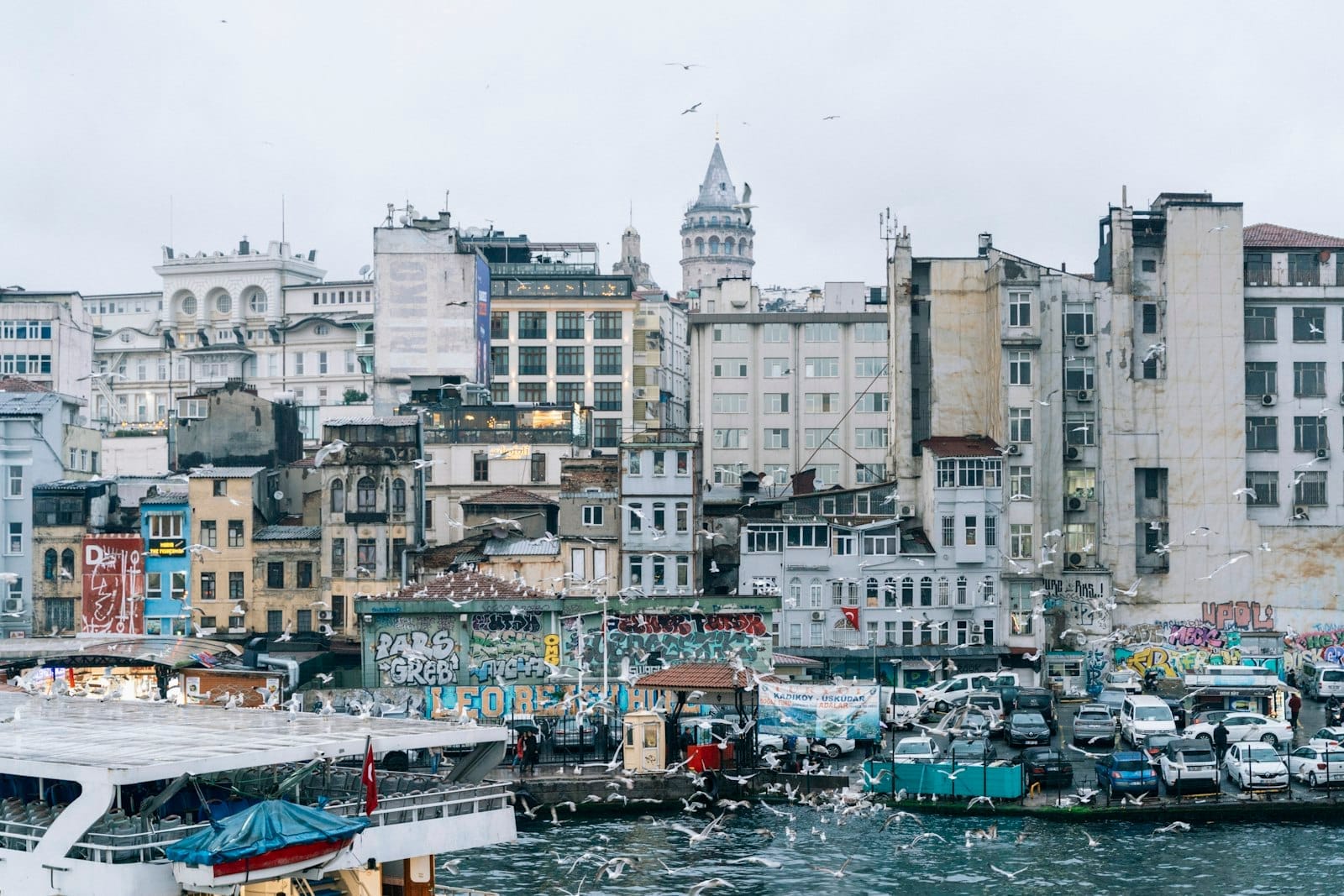
The two areas are physically inseparable but feel quite different. Karaköy is flat, fast, and functional: ferry terminals, a tram stop, fish stalls, and the wide quay of Galataport. Galata begins the moment you start climbing: the streets narrow, the stone gets older, and the pace slows. The main arteries connecting them are Yüksek Kaldırım, a stepped cobblestone lane that rises steeply from the waterfront, and Galip Dede Street, which runs more gradually upward and is lined with music shops, small galleries, and cafés before arriving at the base of the Galata Tower.
Bankalar Caddesi, which translates literally as 'Banks Street,' runs through the lower part of Galata and is worth understanding as a spine of the neighborhood. This was Istanbul's financial center in the late Ottoman period, and the grand stone buildings that housed European banks still stand, several of them converted into cultural institutions. The street connects the waterfront energy of Karaköy with the quieter residential pockets further up the hill.
ℹ️ Good to know
Karaköy and Galata are administratively part of the Beyoğlu district, though they function as a distinct neighborhood with their own identity. When locals say 'Galata,' they typically mean the area around the tower and the streets descending from it, not the broader Beyoğlu district.
Character & Atmosphere
Early mornings in Karaköy belong to the ferries. The first boats to the Asian side depart before 7am, and the waterfront is already animated with commuters, fishermen setting up along the bridge railings, and vendors selling simit and tea from glass-sided carts. The air carries salt and diesel and the low horn of a departing ferry. It is one of the more unvarnished, working-city scenes you will encounter anywhere near a tourist center in Istanbul.
By mid-morning the character shifts. The commuters disperse, the cafés open, and the streets climbing into Galata fill with a mix of locals, students from nearby art schools, and visitors making their way up to the tower. The light at this hour hits the limestone facades of the old buildings at a low angle, and the stepped lanes of Yüksek Kaldırım cast long shadows that make even a ten-minute walk feel like a scene from another century. Street cats, a fixture of Istanbul generally, seem particularly concentrated here: they occupy window ledges, stone steps, and the warm bonnets of parked delivery vans.
Afternoons bring the bulk of tourist foot traffic, especially around the Galata Tower itself. The small square in front of the tower gets crowded, and the surrounding streets fill with visitors comparing photos. Move one or two blocks in any direction, however, and the density drops considerably. The side streets off Galip Dede hold small instrument repair workshops, a few surviving antique dealers, and bakeries that have been in the same family for decades.
After dark, Karaköy's waterfront restaurants and meyhanes fill up, particularly on weekends. The area has become a serious destination for Istanbul's dining and bar scene over the past fifteen years, and some of the city's most respected kitchens are within a few blocks of the ferry terminal. It is a lively area at night but not aggressively so: the crowd skews mixed-age and local rather than purely tourist. The streets are well-lit and pedestrian traffic remains steady until midnight on most nights.
History & Context
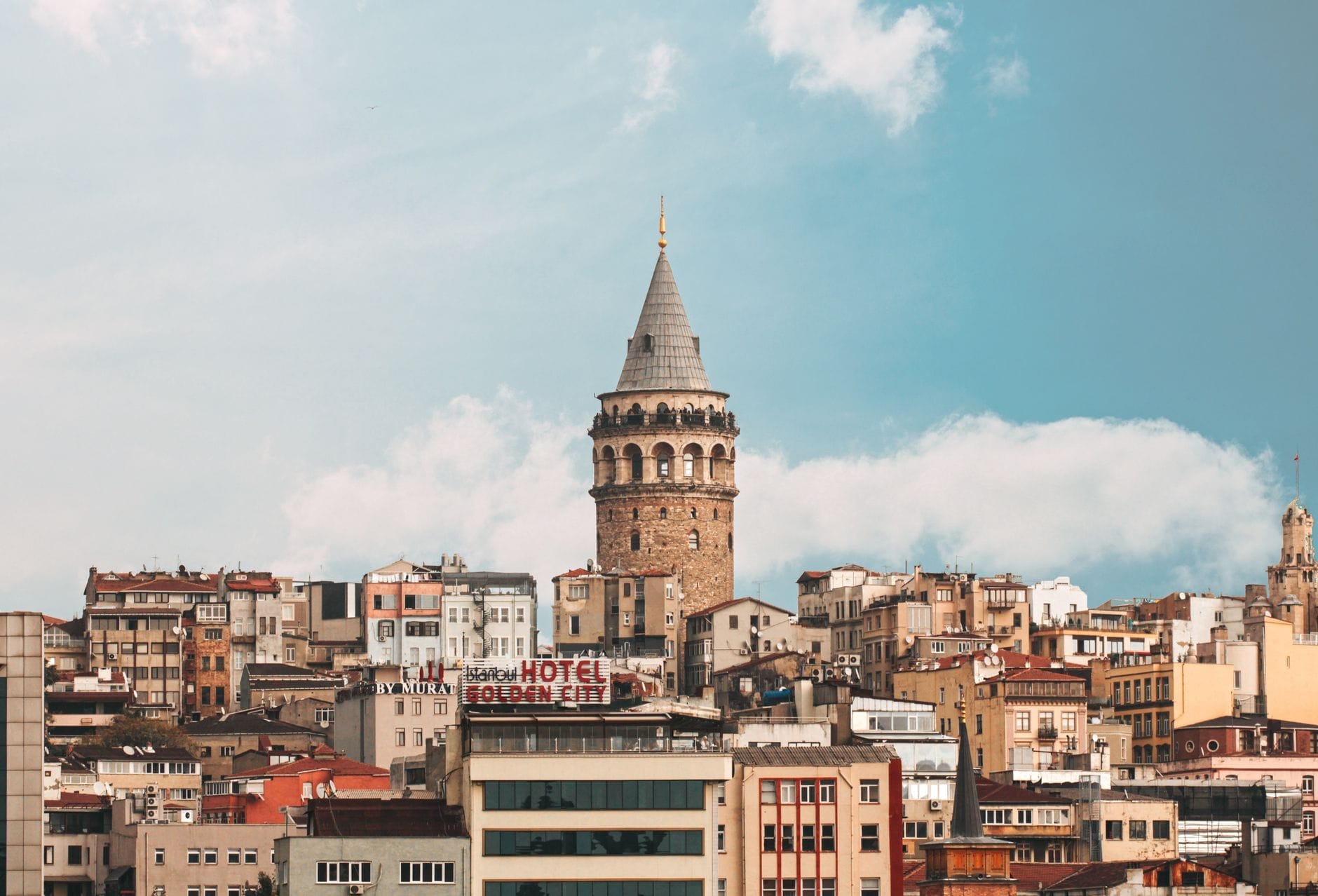
Galata's history as a distinct settlement predates the Ottoman conquest of Constantinople. The Genoese established a trading colony here in the 13th century, receiving the area as a concession from the Byzantine emperors. They fortified it with walls and towers, of which the Galata Tower, built in 1348, is the most significant survivor. At its peak the Genoese quarter was a self-governing commercial enclave, effectively a city within a city, separated from Constantinople by the Golden Horn.
After the Ottoman conquest in 1453, Galata retained its cosmopolitan character. It became home to Jewish, Greek, Armenian, and Frankish merchant communities alongside its established Genoese population. During the 19th century, as the Ottoman Empire sought to modernize its financial systems, Bankalar Caddesi became the address of choice for European banks and insurance companies. The building that now houses SALT Galata was originally the Ottoman Bank, completed in 1892, and it remains one of the most impressive pieces of late-Ottoman civic architecture in the city.
The Galata Mevlevi Museum, near the upper end of Galip Dede Street, adds another layer to the quarter's religious complexity. The lodge, or tekke, dates to the 15th century and was one of the most important centers of Sufi practice in the Ottoman world. It functioned continuously until the abolition of religious orders under Atatürk in the 1920s and is now a museum with regular sema ceremonies performed for visitors.
What to See & Do
The Galata Tower is the obvious starting point and genuinely worth the entrance fee, particularly if you visit near sunset when the light across the Bosphorus and the rooftops of the historic peninsula turns golden. The tower is 67 meters tall and the observation deck gives a 360-degree view that puts the entire geography of Istanbul into perspective: Topkapı to the south, the Bosphorus bridges to the north, Üsküdar across the water. Arrive early or late to avoid the longest queues.
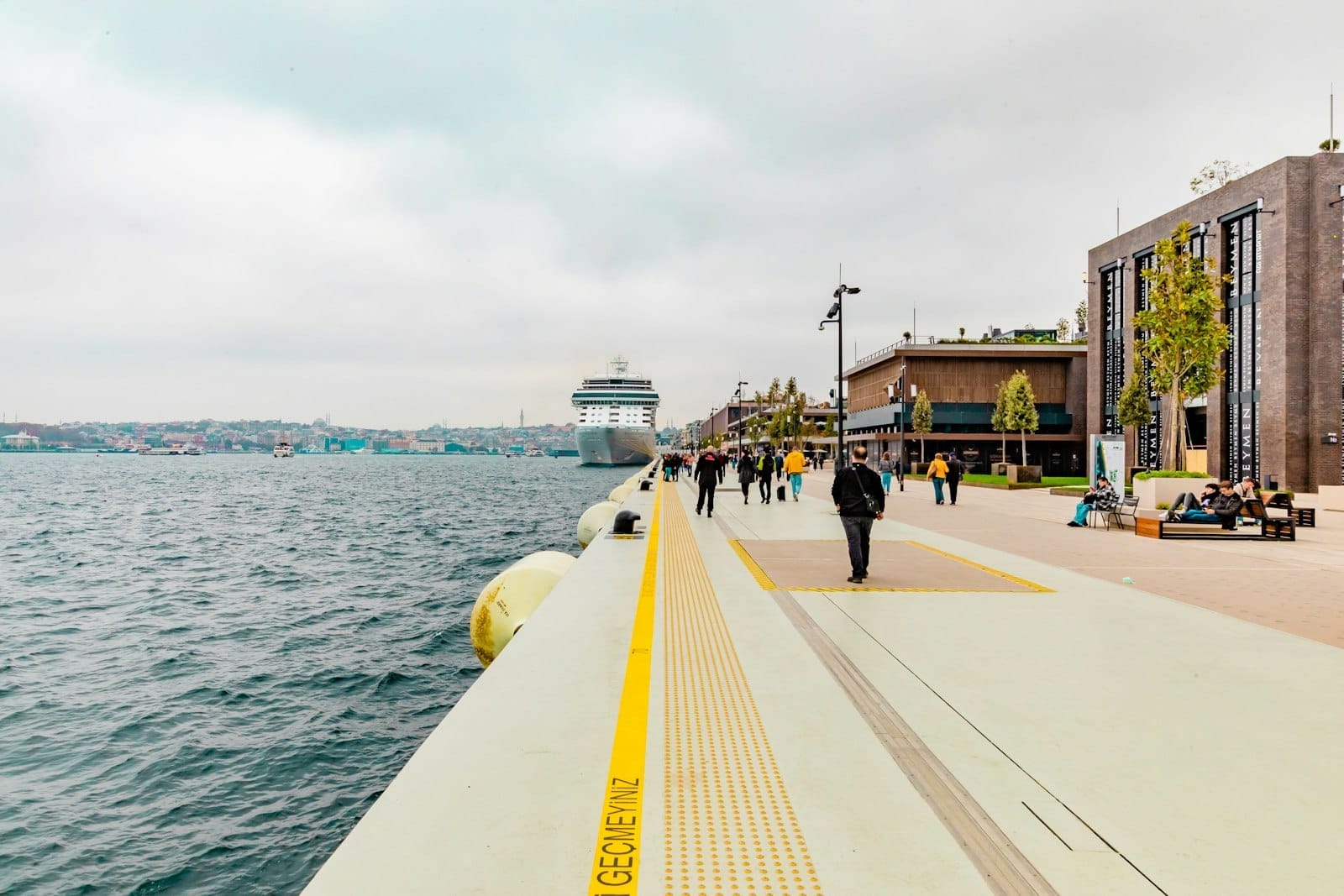
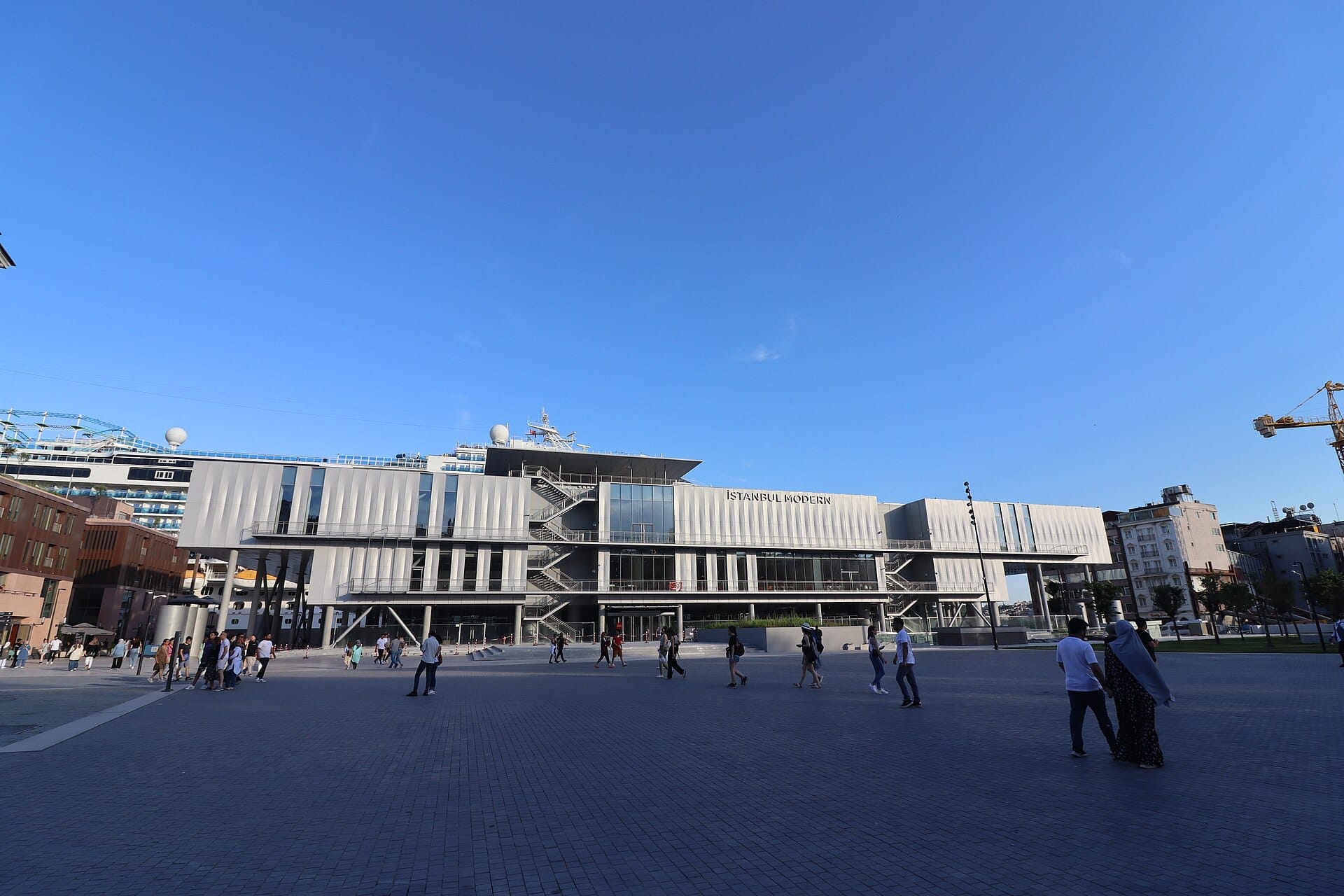
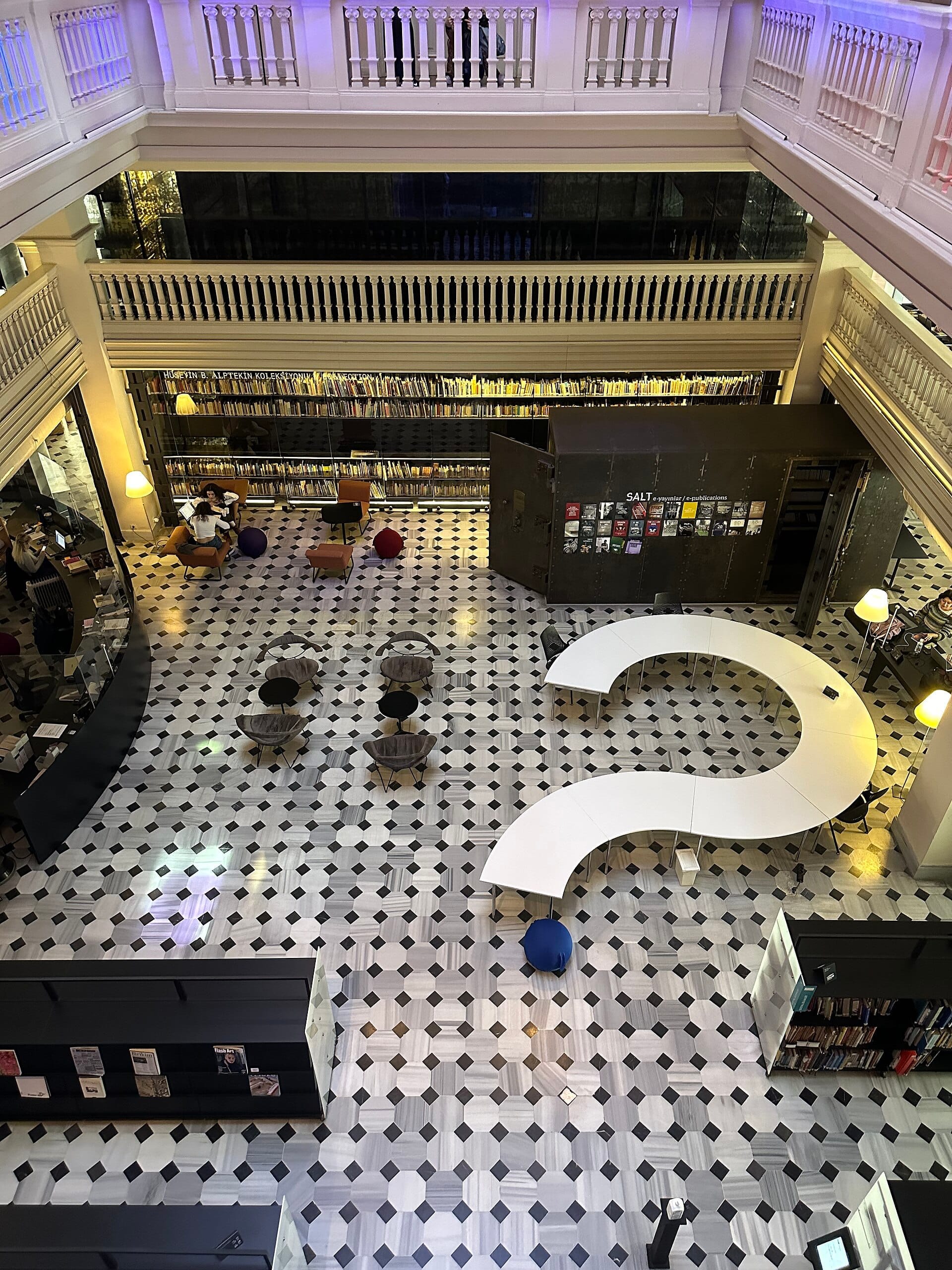
SALT Galata on Bankalar Caddesi is one of Istanbul's best contemporary cultural institutions. The building itself is as compelling as the exhibitions: a research library, archive, and gallery space arranged across the former bank's dramatic interior. Entry to most areas is free. Further along the waterfront, Galataport has transformed the cruise ship terminal into a mixed-use development with restaurants, a cultural venue, and public waterfront access. It has shifted some of Karaköy's commercial energy but also opened up a previously inaccessible stretch of the Bosphorus shoreline.
Galata Tower: 14th-century Genoese tower with panoramic observation deck
SALT Galata: cultural center in the former Ottoman Bank building on Bankalar Caddesi
Galata Mevlevi Museum: former Sufi lodge with sema ceremony performances
Galata Bridge: walk the bridge at any hour for views of the Golden Horn and Eminönü fish market below
Galataport: redeveloped cruise terminal with public waterfront promenade
Yüksek Kaldırım and Galip Dede Street: the main pedestrian routes up the hill, worth exploring slowly
Galata Bridge deserves more than a quick crossing. Fishing lines hang off both sides throughout the day, and below the bridge deck, a row of fish restaurants occupies the lower level, which is a slightly touristy but atmospheric place for a quick lunch. On the Eminönü side, the view back toward Karaköy and the tower on the hill is one of the classic Istanbul perspectives. The bridge also connects directly to the Eminönü and Golden Horn area, where the Spice Bazaar and Yeni Cami are within easy walking distance.
Eating & Drinking
Karaköy has become one of the most interesting places to eat in Istanbul, and the concentration of good restaurants in a small area is unusually high. The neighborhood draws a food-literate local crowd and the quality reflects that. For a broader sense of Istanbul's food culture and what to look for, the Istanbul food guide provides useful context before you sit down anywhere.
At the street food level, the area around the Galata Bridge and the Karaköy waterfront is known for balık ekmek, grilled fish sandwiches sold from boats moored along the quay. This is a genuine Istanbul institution rather than a tourist invention, and the price remains low. Börek shops and simit sellers are scattered throughout the neighborhood and represent the fastest and cheapest breakfast options.
The café scene in Galata, particularly along Galip Dede Street and the side streets around the tower, is well-developed. Specialty coffee arrived here earlier than in most Istanbul neighborhoods, and there are several independent roasters and brew bars within walking distance of each other. Many double as gallery spaces or record shops. For a more traditional experience, the tea houses along the waterfront in Karaköy serve çay in the classic tulip-shaped glasses alongside backgammon boards. If you want to explore Istanbul's meyhane culture and the tradition of raki and meze, the Istanbul meyhane and raki guide explains what to order and how it works.
Restaurants in Karaköy cover a wide price range. The waterfront area and the streets immediately behind it have options from simple lunch counters serving fresh fish by weight to more formal dinner establishments with Bosphorus views and wine lists. The neighborhood skews slightly upmarket compared to Eminönü across the bridge, but it is not difficult to eat well here for a modest budget if you stick to the lokanta-style places or the fish sandwich boats.
💡 Local tip
The covered market passage near the Karaköy tram stop has a cluster of casual breakfast spots popular with local workers: börek, menemen (egg and tomato scramble), and strong tea at very reasonable prices. It opens early and fills up fast between 7am and 9am.
Getting There & Around
Karaköy is one of the best-connected points in Istanbul's transit network. The T1 tram line stops directly at Karaköy, on the waterfront adjacent to the Galata Bridge. From here the tram runs west through Eminönü to Sultanahmet and the historic peninsula, making this one of the most efficient connections between the two sides of the Golden Horn. The ride from Karaköy to Sultanahmet takes under ten minutes.
From Karaköy, ferries operate regularly to Kadıköy and Haydarpaşa on the Asian side, a crossing of roughly 20-25 minutes that doubles as one of the more pleasant ways to spend time in Istanbul. Ferry schedules are posted at the terminal and services run from early morning until late evening. The Istanbulkart contactless smart card is accepted on both the tram and the ferries, and buying one from a machine at the Karaköy terminal is straightforward.
For reaching the upper parts of Galata and beyond to İstiklal Avenue, two options run close together. The historic Tünel funicular, one of the oldest underground railways in the world, runs from near the Karaköy waterfront up to Tünel Square at the southern end of İstiklal, a journey of under two minutes. Alternatively, the M2 metro has a stop at Şişhane, which is a short walk from the Galata Tower via Galip Dede Street. Both are covered by the Istanbulkart.
On foot, Karaköy connects naturally to several adjacent neighborhoods. Walking across Galata Bridge leads to Eminönü in around five minutes. Walking uphill through Galata eventually delivers you to Beyoğlu and İstiklal Avenue. Walking northeast along the waterfront from Galataport passes through Tophane and eventually reaches Beşiktaş, a route that takes about 20-30 minutes at a comfortable pace and passes several notable restaurants and galleries along the way.
⚠️ What to skip
The streets climbing from Karaköy up to Galata Tower are steep and the cobblestones can be slippery when wet. Wear shoes with good grip, particularly in winter or after rain. The Tünel funicular is the practical alternative if mobility is a concern.
Where to Stay
Karaköy and Galata have become a preferred base for visitors who want to avoid the heavier tourist concentration of Sultanahmet while remaining within easy reach of the historic peninsula's major sites. The accommodation options here skew toward boutique hotels and design properties rather than large international chains, and the price point is generally mid-range to upper-mid-range. For a broader look at Istanbul's accommodation options by neighborhood, the where to stay in Istanbul guide covers the key trade-offs in detail.
The waterfront strip in Karaköy suits travelers who want maximum transit convenience: the tram stop, ferry terminals, and Tünel funicular are all within a few minutes on foot, and the Galataport development has brought additional hotel inventory to the area. The streets immediately behind the waterfront are quieter and better suited to light sleepers, while properties on or very near the main quay can be noisy, particularly early morning when ferries and trams begin operating.
The Galata hill itself, particularly the streets between the tower and the lower end of Galip Dede, has a cluster of smaller boutique properties and guesthouses. These offer a quieter, more atmospheric base than the waterfront, but the steep terrain means arriving with heavy luggage requires planning. The trade-off is real character: stone-walled rooms, rooftop terraces with views toward the Bosphorus, and easy walking access to some of the city's best independent cafés and restaurants.
ℹ️ Good to know
Karaköy and Galata are not ideal for travelers who prioritize being within walking distance of Sultanahmet's major sites such as Hagia Sophia and Topkapı Palace. The tram connection is fast, but these neighborhoods work better as a base for explorers than for monument-focused itineraries.
Who It's Best For
Karaköy and Galata are deeply rewarding for a specific kind of traveler. The area rewards curiosity and a willingness to walk slowly through layered history without the guardrails of a fully curated tourist experience. It is not a neighborhood where the main attraction is a single monument: the experience is cumulative, built from the ferry crossing at dawn, the climb up Yüksek Kaldırım, a long coffee in a side-street café, and an afternoon in SALT Galata's archive.
Travelers who find Sultanahmet too polished or Taksim too commercial often settle on Karaköy as their preferred base, and the logic holds. The neighborhood is urban and functional rather than scenic in a postcard sense, but the density of things worth discovering in a small area is high. It also sits at the intersection of Istanbul's major transit lines, which makes day trips to neighborhoods like Fener and Balat or the Asian side straightforward without backtracking.
The neighborhood's main drawback is noise and crowds during peak tourist season, particularly around the Galata Tower and on Galata Bridge at midday. The main waterfront road carries significant traffic, and some of the streets immediately off the quay can feel congested on summer weekends. First-time visitors to Istanbul who want the most efficient access to the classic monuments may find Sultanahmet a more practical first base, with Karaköy as a destination for a half-day or evening rather than a full stay.
TL;DR
Karaköy and Galata cover the waterfront and the steep hill above the northern end of Galata Bridge, with excellent transit connections by tram, ferry, and the historic Tünel funicular.
The area has deep historical layers: Genoese fortifications, Ottoman banking heritage, and Sufi cultural sites, all visible in the surviving architecture.
The food and café scene is among the best in Istanbul, with a mix of street-level fish sandwiches and börek stalls alongside serious restaurants and specialty coffee bars.
Best suited to travelers who want a non-touristy but centrally located base, with easy access to both the historic peninsula and the Asian side via ferry.
Not ideal for those prioritizing walking distance to Sultanahmet's major monuments, or for travelers who want a quiet neighborhood: the waterfront is active and noisy from early morning.
Three days in Istanbul is enough to cover the imperial monuments of Sultanahmet, the 19th-century streets of Beyoğlu and Galata, and a Bosphorus excursion to the Asian side. This itinerary is built around logical geography, practical crowd advice, and practical logistics so you spend your time sightseeing, not backtracking.
Istanbul's skyline is defined by its mosques, and the city's finest range from world-famous Ottoman imperial complexes to exquisite tiled interiors few tourists ever find. This guide covers the best mosques in Istanbul, with practical advice on when to visit, what to look for, and how to plan your route.
Istanbul's museums span 1,500 years of history, from Byzantine treasures and Ottoman palace complexes to cutting-edge contemporary art. This guide covers the essential collections, the underrated finds, and everything you need to plan your visits efficiently.
Istanbul rewards visitors year-round, but the timing of your trip makes a real difference. This guide breaks down every season by weather, crowd levels, prices, and key events so you can choose the window that fits your priorities.
The Bosphorus strait is the reason Istanbul exists, and a cruise across it is one of the city's most rewarding experiences. This guide covers every type of cruise, from the 340 TL public ferry to private yachts, with clear advice on what's worth your money and what isn't.
Istanbul's location makes it one of the best-placed cities in the world for day trips. Within a few hours you can reach car-free Victorian islands, Black Sea beaches, ancient Bosphorus fishing villages, and forested nature parks — many reachable on public transport for just a few dozen lira.
Istanbul's transport network spans metro lines, trams, Bosphorus ferries, buses, and ride-hailing apps across a city of Istanbul's transport network spans metro lines, trams, Bosphorus ferries, buses, and ride-hailing apps across a city of nearly 15.7 million people.. This guide breaks down every option by cost, convenience, and route, so you can move around Istanbul without confusion or overpaying.
Istanbul is safe for most tourists who take standard urban precautions, but it pays to know what risks actually exist. This guide breaks down crime patterns, common scams, neighborhood safety, transport tips, and what official travel advisories really mean for your trip.
Istanbul Airport (IST) is one of the world's busiest aviation hubs, Istanbul Airport (IST) is one of the world's busiest aviation hubs, handling 84.4 million passengers in 2025 from a single integrated terminal.. This guide covers everything from ground transport and terminal layout to transfer tips and common pitfalls, so you arrive prepared.
Most visitors to Istanbul never cross the Bosphorus. That's a serious mistake. Istanbul's Asian side — anchored by Kadıköy and Üsküdar — holds some of the city's best food markets, waterfront views, historic mosques, and neighbourhood character. This guide covers everything you need to cross over and make the most of it.
Istanbul is not a beach city, but it sits within reach of some surprisingly good coastline. This guide covers the best beaches near Istanbul across the Black Sea, the Princes' Islands, and beyond — with straightforward advice on water quality, currents, crowds, and how to get there.
Modern Istanbul sits directly on top of Constantinople, the Byzantine capital for over a thousand years. This guide covers every major surviving structure, from Hagia Sophia to the Theodosian Walls, with practical details on tickets, opening hours, restoration closures, and the smartest routes to follow.
Istanbul is home to an estimated 125,000 or more street cats, treated not as strays but as community animals cherished by residents and visitors alike. This guide covers the history, cultural roots, famous cats, best neighborhoods to find them, and practical tips for cat lovers visiting the city.
Istanbul food is one of the great culinary traditions of the world, shaped by centuries of Ottoman court cooking, Anatolian regional flavors, and street food culture that runs 24 hours a day. This guide covers every essential dish, the best neighborhoods to eat in, practical pricing, and how to avoid the tourist-trap menus.
Istanbul is one of the world's great romantic cities, where Byzantine history, waterfront sunsets, and Ottoman grandeur combine to create unforgettable experiences for couples. This guide covers the best activities, from Bosphorus cruises and Turkish baths to car-free island escapes and candlelit dinners — with practical advice on timing, pricing, and what to skip.
Istanbul rewards those who look beyond Hagia Sophia and the Grand Bazaar. This guide covers 20 lesser-known attractions across both sides of the Bosphorus, from forgotten Byzantine churches and Ottoman fortresses to colorful waterfront villages and hilltop viewpoints that most visitors never reach.
The Historic Peninsula (Tarihi Yarımada) is the oldest and most monument-dense part of Istanbul, encompassing Sultanahmet, Fatih, Eminönü, Süleymaniye, and more. This guide covers every major sight, practical logistics, crowd management strategies, and the cultural context that makes this area one of the most historically significant urban zones on earth.
Spring is one of the best times to visit Istanbul, but April and May are quite different months. This guide covers weather realities, the Tulip Festival, Bosphorus cruises, crowd patterns, and practical planning tips to help you get the most out of a spring visit.
Winter is Istanbul's most underrated season. Menschenmengen thin out, hotel rates drop, and the city's historic skyline looks cinematic under grey skies or a rare dusting of snow. This guide covers exactly what to expect from the weather, which sights are worth it, and how to make the most of the season.
The meyhane is Istanbul's answer to the long, convivial dinner: shared meze plates, anise-scented rakı sipped slowly across hours, and live fasıl music drifting between tables. This guide covers everything from how a meyhane evening works to the best neighborhoods, what things cost, and the customs that separate a confident diner from a confused tourist.
The official Istanbul Museum Pass is a Ministry of Culture product covering 10+ state-run museums for 5 consecutive days. Before you buy, here's what it actually includes, what it misses, how much it costs, and how to calculate if it's worth it for your trip.
Istanbul's after-dark scene spans multiple continents, dozens of neighborhoods, and every budget. This guide breaks down where to go, when to go, how much to spend, and what nobody warns you about before you arrive.
Istanbul rewards budget travelers more than almost any major European-adjacent city, but only if you know where the real costs hide. This guide breaks down daily spending, transport, food, accommodation, and free sights so you can plan honestly and spend wisely.
Seven days is enough time to move beyond the obvious monuments and get a genuine feel for Istanbul — its neighborhoods, its ferries, its food, and its contradictions. This day-by-day itinerary balances the essential sights with practical logistics, clear budget guidance, and the kind of context that makes the difference between ticking boxes and actually understanding this city.
Istanbul served as the heart of the Ottoman Empire for nearly 500 years, and the city still carries that history in stone, tile, and ceremony. This guide covers the essential sites, the historical context behind them, and the practical details you need to visit them well.
Ramadan transforms Istanbul in ways most guidebooks overlook. This guide covers exactly what changes for visitors, which experiences are exclusive to the month, how to navigate iftar crowds, and what the common misconceptions get wrong.
Istanbul is one of the world's great shopping cities, layering 4,000-shop historic bazaars over modern malls and independent boutique streets. This guide covers every major shopping district, what to actually buy, realistic price ranges, and the practical details most guides leave out.
Istanbul rewards mga solo traveler with extraordinary variety: Byzantine monuments, ferry crossings, street food markets, and a public transport network that makes independent exploration easy. This guide covers safety realities, transport logistics, neighborhood choices, and the experiences that work best when you're traveling on your own terms.
Istanbul's street food scene is one of the city's great pleasures, and one of its great equalizers. Locals and visitors eat side by side at the same simit carts and fish sandwich stalls. This guide breaks down the essential dishes, the best neighborhoods to find them, realistic prices, and a few frank warnings about what to avoid.
Cappadocia is roughly 730 km from Istanbul, and getting there involves more planning than most travelers expect. This guide covers every transport option — flights, overnight buses, and the rail myth — with clear breakdowns of time, cost, and what to arrange before you arrive.
Every April, Istanbul plants 20 to 30 million tulips across its parks and public squares for the İstanbul Lale Festivali. This guide covers the best viewing spots, peak bloom timing, how to get there, and what most visitors get wrong about this free, city-wide event.
Istanbul rewards those who look up and out. Whether you want sweeping Bosphorus panoramas, minarets at golden hour, or a cocktail above the Golden Horn, this guide covers the city's finest viewpoints and elevated spots.
Istanbul rewards walkers like few cities on earth. Whether you follow a guided tour through Sultanahmet's ancient monuments or strike out alone along the Bosphorus shore, these are the routes, landmarks, and neighbourhoods that make the best walks in Istanbul unforgettable.
Istanbul's climate surprises most first-time visitors. Winters are cold and wet, summers are warm but rarely scorching, and the best windows for sightseeing are narrower than you'd expect. This guide breaks down every month so you can pack right, plan better, and avoid the most common weather-related mistakes.
The Sema is one of the world's oldest living spiritual rituals, and Istanbul has several places to witness it. This guide breaks down every major venue, current prices, seasonal schedules, and the etiquette you need to know before you go.
Istanbul is far more family-friendly than its reputation as a history-heavy destination suggests. This guide covers the best kid-approved attractions, practical logistics, seasonal advice, and frank assessments of what works — and what doesn't — when visiting Istanbul with children.
Istanbul rewards upscale travelers with a rare combination: imperial architecture, world-class hotels on the Bosphorus, serious fine dining, and private experiences that go far beyond the standard tourist circuit. This guide covers where to stay, what to book, and how to move through the city like an insider.
Istanbul is one of the world's most layered cities, where Byzantine churches sit beside Ottoman mosques, and Asian fishing villages are a ferry ride from European nightlife. This guide cuts through the noise with specific attractions, current prices, neighborhood breakdowns, and the practical warnings that most travel sites skip.
Istanbul's hammams are among the most atmospheric in the world, operating in buildings that have steamed visitors since the Ottoman era. This guide covers what actually happens inside, which hamams are worth the price, what things cost, and how to make the most of the experience without getting overcharged.
Istanbul is a city of distinct neighborhoods, and where you stay shapes everything from your morning commute to your dinner options. This guide breaks down the best areas for first-timers, budget travelers, couples, and anyone who wants more than just a central location.