Galata Tower Museum: Istanbul's Medieval Landmark with 360° Views
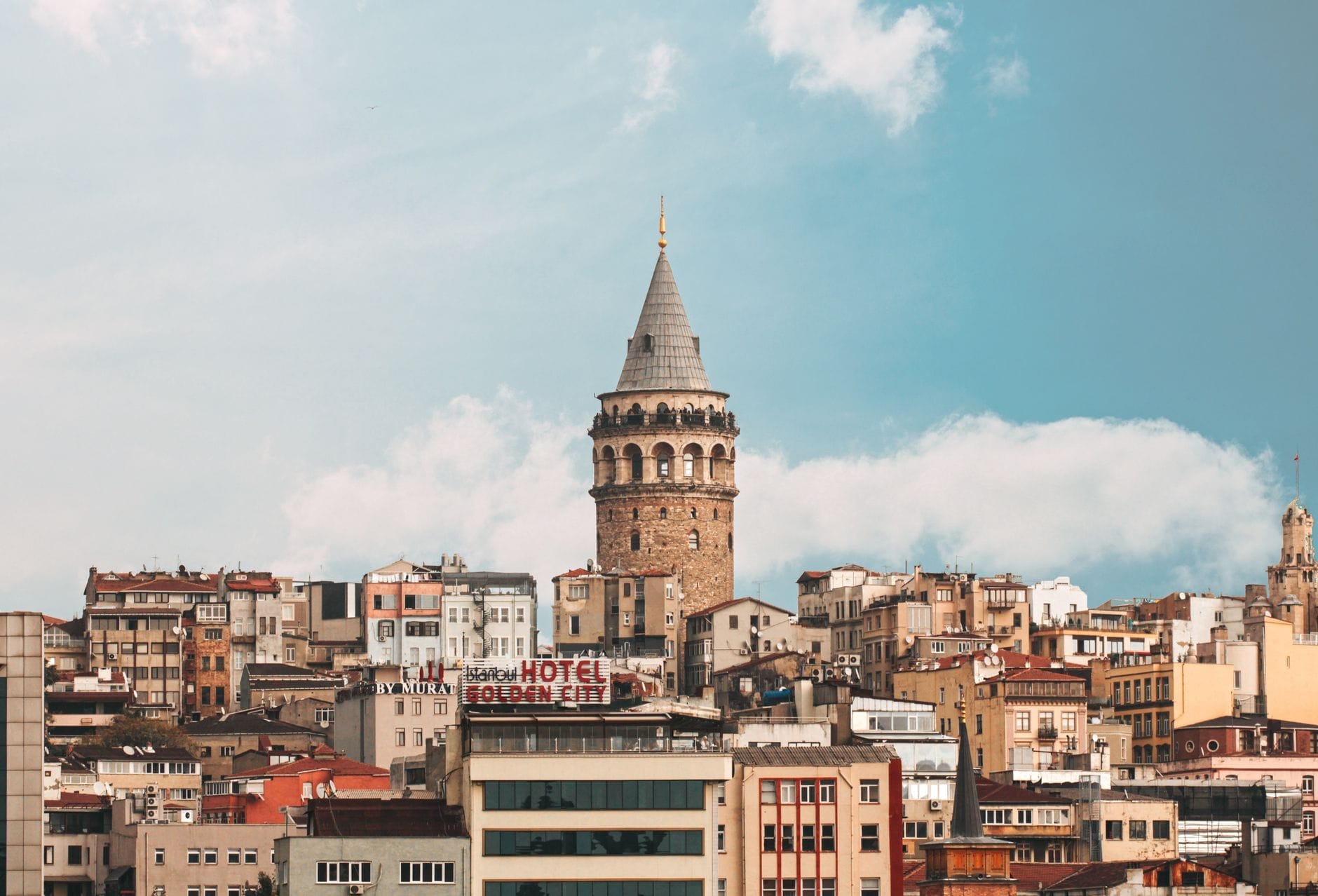
Rising 66.9 meters above the Galata/Karaköy area, Galata Tower is one of Istanbul's most recognizable structures. Built by the Genoese in 1348, it now functions as a museum with an observation balcony offering uninterrupted views across the Bosphorus, the Golden Horn, and the rooftops of the historic peninsula.
Quick Facts
- Location
- Bereketzade, Galata Kulesi, 34421 Beyoğlu, Istanbul
- Getting There
- Şişhane (M2 metro, 2–5 min walk) or Karaköy (T1 tram, 8 min uphill walk)
- Time Needed
- 45–90 minutes, including queue and balcony time
- Cost
- Approx. ₺650 (verify current price); children under 6 free. Open daily 08:30–23:00, last entry 22:00
- Best for
- Panoramic city views, history enthusiasts, photographers, first-time visitors
- Official website
- akmistanbul.gov.tr/galata-tower
What Galata Tower Actually Is
Galata Tower Museum, known in Turkish as Galata Kulesi Müzesi, is a medieval stone tower that has stood above the Galata neighborhood since 1348. It was built by the Genoese merchant colony that controlled this quarter of Constantinople under the name Christea Turris, the Tower of Christ. At 66.9 meters tall, it was one of the tallest structures in the medieval city, and it still dominates the skyline of the Karaköy and Galata neighborhood today.
The site has a longer history than most visitors realize. A Byzantine lighthouse or watchtower is believed to have stood here as early as the 6th century under Emperor Justinian. The Genoese rebuilt it substantially in stone in 1348, and the tower went through several transformations under Ottoman rule, eventually acquiring its distinctive conical roof during the 19th century reign of Sultan Mahmud II. It was converted into the Galata Tower Museum and reopened on 6 October 2020.
The tower sits at the geographic center of the Karaköy and Galata neighborhood, a short walk from the waterfront, the Galata Bridge, and the lower end of İstiklal Avenue. Understanding its position on the map helps explain why the view from the top is so compelling: you are standing at the hinge point between old Istanbul to the south and the 19th-century European quarter to the north.
The View: What You See from the Observation Balcony
The observation balcony sits approximately 51 meters above ground level. On a clear day, the panorama is genuinely extraordinary. To the south, the historic peninsula stretches out with the domes of Hagia Sophia, the Blue Mosque, and Süleymaniye Mosque visible simultaneously. To the east, the Bosphorus opens up with ships at anchor and the Asian hills beyond. To the north, the streets of Beyoğlu and Galata slope away toward Taksim. To the west, the Golden Horn curves inland past Fener and Balat.
The balcony is narrow, roughly 1.5 to 2 meters wide, and encircled by a metal railing. At busy times, you are sharing it with a significant number of people moving in a slow circuit. The wind at this height can be considerable, especially between October and March, when gusts come off the Bosphorus and the temperature feels noticeably colder than at street level. Bring an extra layer if you are visiting in the cooler months.
💡 Local tip
Photography tip: The southeast-facing arc of the balcony gives you the classic shot with Hagia Sophia and the Bosphorus in the same frame. In the late afternoon, the light falls directly onto the historic peninsula from the west, which is ideal for photography. At sunrise, the Golden Horn glows orange from the east-facing side.
The quality of the view depends heavily on weather. Istanbul's autumn and winter months bring frequent overcast skies, and on foggy or hazy days, distant landmarks like the Princes' Islands and the Anatolian shore disappear entirely. Spring and early autumn offer the clearest atmospheric conditions. If visibility is poor when you arrive, the ticket is not worth the cost for the view alone, though the tower itself and its museum floors remain interesting regardless.
Tickets & tours
Hand-picked options from our booking partner. Prices are indicative; availability and final rates are confirmed when you complete your booking.
Galata Tower Skip-the-Line Ticket with Audio Guided Tour
From 47 €Instant confirmationFree cancellationBasilica Cistern, Galata Tower, Topkapi Palace, Hagia Sophia ticket
From 178 €Instant confirmationFree cancellationIstanbul Audio Guide Tour from Taksim Square Through Galata Tower
From 12 €Instant confirmationFree cancellationTopkapi Palace and Galata Tower Skip-the-Line Ticket
From 110 €Instant confirmationFree cancellation
Time of Day: When to Go and What Changes
Opening time at 08:30 is by far the quietest window. The queue, if any, forms later in the morning. The light in the first hour after sunrise hits the historic peninsula from a low angle, casting long shadows across the domed rooftops and illuminating the minarets in a way that midday flat light does not replicate. If you are serious about photography, this is your window. The air at this hour also tends to be clearer before the haze of city traffic builds up.
Midday and early afternoon, roughly 11:00 to 16:00, are peak hours. Midday and early afternoon, roughly 11:00 to 16:00, are peak hours. Queues can stretch to 30 to 45 minutes on weekends and during summer. The balcony is at its most crowded during this window, and the experience becomes more about managing the crowd than absorbing the view. Weekdays are noticeably calmer than Saturdays and Sundays.
Evening visits have a different character entirely. From roughly an hour before sunset through to dusk, the light turns warm and the cityscape shifts dramatically as the Bosphorus and the rooftops catch the orange and pink tones. By full dark, the illuminated minarets and the lights of tankers on the Bosphorus create a version of the view that is completely different from daytime. The tower stays open until 23:00 with last entry at 22:00, making a late visit a genuine option. Menschenmengen tend to thin again after 20:00 on most weeknights.
Inside the Tower: The Museum Floors
The 2020 renovation converted the tower's interior into a multi-floor museum covering the history of Galata and the tower itself. Displays cover the Genoese period, the Ottoman transformation of the quarter, and the tower's varied functions over the centuries, including its use as a fire watchtower. The presentation is a mix of artifacts, models, and informational panels, and while it is not as deep or as richly curated as Istanbul's major museums, it provides enough context to make the climb meaningful rather than purely a tick-box exercise.
The tower's floors are reached by a lift (elevator) that operates between the entrance level and the upper floors, which is useful given the height. However, the final stretch to the balcony involves narrow stairs, and the balcony access itself is not fully accessible for visitors with significant mobility limitations. If this is a concern, check directly with the official site before visiting. For broader context on Istanbul's medieval Byzantine structures, the Istanbul Byzantine history guide covers the architectural legacy of this era in detail.
ℹ️ Good to know
The museum is operated under Turkey's Ministry of Culture and Tourism via AKM Istanbul. Ticket prices and hours listed here were accurate at time of writing but change periodically. Always verify at akmistanbul.gov.tr before your visit.
Getting There: Transit and Walking Routes
The fastest public transit option is the M2 metro to Şişhane station. From the exit, the tower is roughly a 2 to 5 minute walk downhill through the Galata neighborhood, past the antique dealers and coffee shops that line the cobbled streets. The walk is straightforward and well-signposted.
From the waterfront, take the T1 tram to Karaköy and walk uphill through the Galata district for about 8 minutes. The hill is steep on this route, paved with uneven stones in places, so comfortable footwear matters. This approach is worthwhile because the walk through lower Galata, past the Galata Mevlevi Museum and the 16th-century hans (caravanserais), is interesting in itself.
From Taksim Square, the tower is about a 10-minute walk south along İstiklal Avenue toward Galata. This route passes through Beyoğlu and drops steeply at the Galata end. It is one of the more pleasant approaches if you are already in the Beyoğlu area.
Is It Worth the Ticket Price?
At approximately ₺650 (roughly €28–30 at recent exchange rates), the Galata Tower is priced at the upper end of Istanbul's attraction spectrum. For first-time visitors who want a comprehensive visual understanding of Istanbul's geography and skyline, it delivers clear value: there is no other single point in the city that places the historic peninsula, the Golden Horn, and the Bosphorus simultaneously in view at this angle and height.
For visitors on a tighter budget, it is worth knowing that several of Istanbul's viewpoints are free or significantly cheaper. Pierre Loti Hill offers Golden Horn views from a cafe setting at no entry cost, and Çamlıca Hill on the Asian side gives a broader elevated panorama. The Galata Tower's specific strength is its central position and the quality of the historic peninsula view, which the alternatives do not fully replicate.
Repeat visitors to Istanbul who have already done the tower once will likely find the ticket hard to justify. The interior museum, while respectable, is not substantial enough to draw people back. The view, spectacular as it is, does not change in a way that rewards a second visit unless you specifically want to experience it at a different time of day or season.
⚠️ What to skip
The hourly capacity cap of 100 visitors means that during peak summer weekends, you may wait 45 minutes or more in the street-level queue. There is no shade at the queue area. Bring water and plan your timing accordingly.
The Surrounding Galata Neighborhood
The tower is surrounded by one of Istanbul's most layered neighborhoods. The streets of Galata, sloping between the waterfront and the base of the tower, are lined with small music shops, antique dealers, cafes, and the occasional meyhane. The Galata Mevlevi Museum, home to one of Istanbul's most historically significant Sufi lodges, is a short walk away and makes an excellent complement to the tower visit.
Downhill toward the water, Karaköy has developed significantly over the past decade into one of the city's more interesting food and coffee neighborhoods, with specialty cafes and small restaurants filling what were once wholesale fish and spice warehouses. After descending from the tower, the waterfront area and the Galata Bridge are worth at least 30 minutes of walking time.
Insider Tips
- Arrive at 08:30 when the tower opens. The queue is almost always empty, the air is clearer, and the light on the historic peninsula is at its most photogenic. This single decision makes a larger difference to the experience than any other factor.
- Weekday mornings between Tuesday and Thursday are consistently less crowded than any other slot. Avoid Saturday afternoons entirely if you are sensitive to crowds on the narrow balcony.
- The elevator inside the tower is not always well-signposted from the entrance. Look for it immediately after the ticketing area on the ground floor rather than starting up the spiral staircase, which is significantly more tiring for no payoff in the view.
- If the weather is hazy or overcast, check the view from the street-level area around the tower base before buying your ticket. You can see roughly how far visibility extends from ground level. If you cannot clearly see the Hagia Sophia dome from the Galata area, the view from the balcony will be disappointing.
- The neighborhood cafes on the streets immediately below the tower, particularly on Galata Kulesi Sokağı, serve coffee and tea at a fraction of the price of anything inside or immediately adjacent to the tower. Grab a drink before or after, sit at a street table, and you get a pleasant view of the tower itself from below.
Who Is Galata Tower For?
- First-time visitors to Istanbul who want a geographic overview of the city before exploring individual neighborhoods
- Photographers seeking the classic Istanbul skyline shot combining Hagia Sophia, the Bosphorus, and the Golden Horn
- History travelers interested in the Genoese and Byzantine layers of Istanbul's medieval past
- Evening visitors who want to see Istanbul's illuminated skyline from an elevated vantage point
- Travelers combining the visit with a walk through Karaköy and Galata as a half-day itinerary
Nearby Attractions
Other things to see while in Karaköy & Galata:
- Galataport
Galataport Istanbul is a 400,000 m² mixed-use development stretching 1.2 km along the Karaköy-Tophane shoreline. The promenade is free to walk, the views across the Bosphorus are among the best in the city, and the complex houses Istanbul Modern along with dozens of restaurants and shops. It also functions as a fully operational cruise port, thanks to a world-first underground terminal.
- Istanbul Modern
Housed in a purpose-built Renzo Piano building on the Galataport waterfront, Istanbul Modern is Turkey's first museum of modern and contemporary art. The 2023 building brings together rotating exhibitions, a permanent collection of Turkish art, and some of the best Bosphorus views in the city.
- SALT Galata
Housed in the meticulously restored 1892 headquarters of the Imperial Ottoman Bank on Bankalar Caddesi, SALT Galata is a major contemporary arts and research institution in Istanbul. Admission is free, the permanent Ottoman Bank Museum collection is genuinely fascinating, and the research library draws scholars from across the region.