Yeni Cami (New Mosque): Istanbul's Ottoman Landmark at the Heart of Eminönü
Standing at the edge of the Golden Horn where ferries, trams, and the Spice Bazaar converge, Yeni Cami is one of Istanbul's most recognizable Ottoman mosques. Construction began in 1597 and the mosque was completed in 1663, making it centuries old despite its misleading name. Entry is free, the architecture is impressive, and the surrounding square is one of the city's great people-watching spots.
Quick Facts
- Location
- Southern end of Galata Bridge on Yeni Cami Cd., Eminönü, Fatih, Istanbul — next to the Spice Bazaar, at the foot of Galata Bridge
- Getting There
- T1 tram to Eminönü stop; the mosque is easily visible from the tram platform
- Time Needed
- 30–60 minutes for the interior and courtyard; longer if you combine it with the Spice Bazaar
- Cost
- Free entry; voluntary donations welcome (Turkish lira preferred)
- Best for
- Ottoman architecture, religious atmosphere, photography, and combining with a waterfront walk
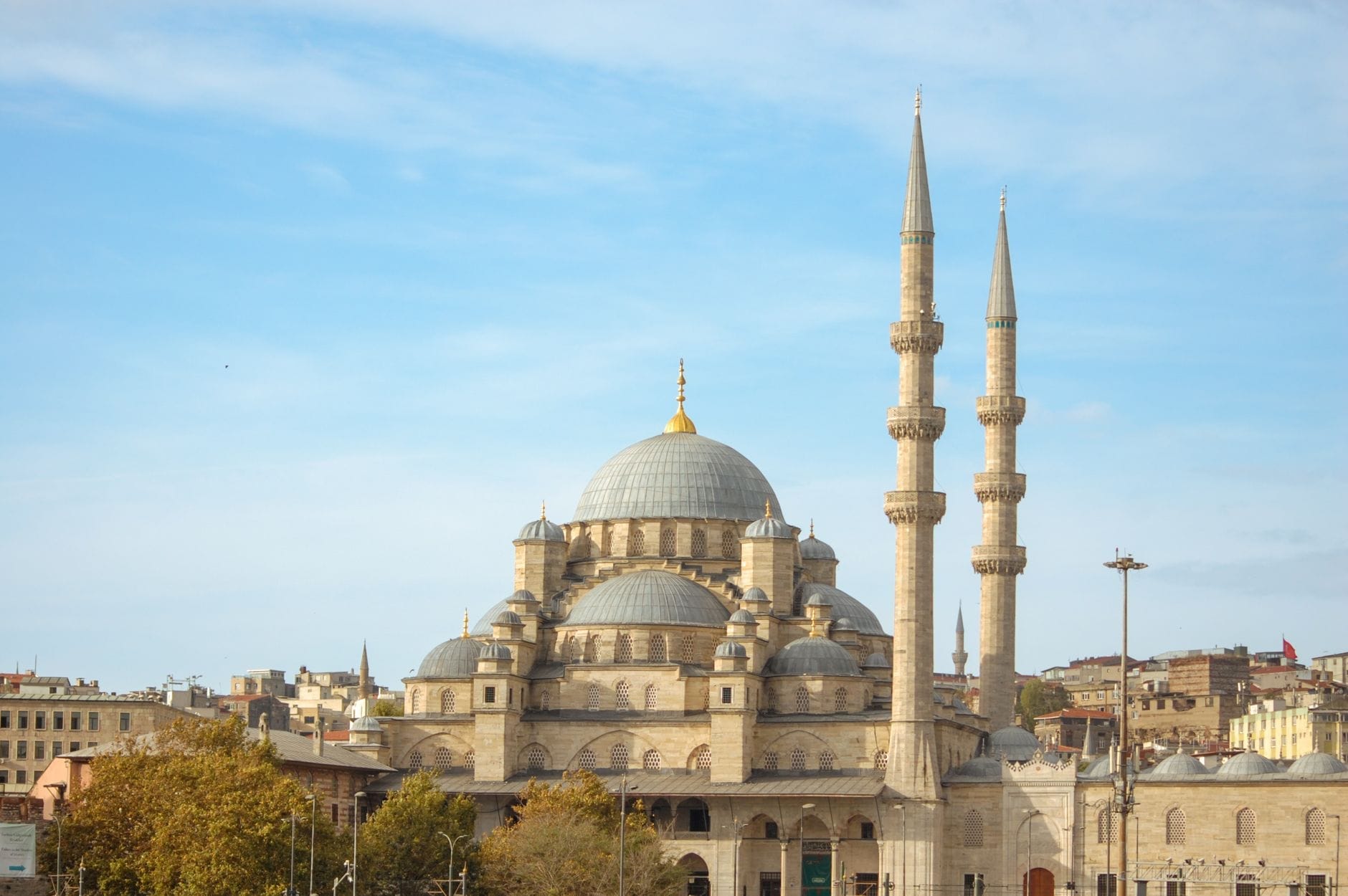
What Is Yeni Cami, and Why Does It Matter?
Yeni Cami, which translates literally as 'New Mosque', is one of the great ironies of Istanbul's built environment. The name was given during construction in the late 16th century, when it was indeed new. More than 400 years later, the mosque is anything but, yet the name has stuck. Its historical official name, Valide Sultan Camii (Valide Sultan Mosque), later known as Yeni Valide Sultan Camii (New Valide Sultan Mosque), hints at a more complicated origin story involving some of the most powerful women in Ottoman history.
The mosque was commissioned in 1597 by Safiye Sultan, the consort of Sultan Murad III and later Valide Sultan (Queen Mother) under Sultan Mehmed III. Construction stalled several times over political and financial upheaval, and the project sat incomplete for decades. It was eventually finished in 1663 and inaugurated in 1665 under Turhan Hatice Sultan, another Valide Sultan who revived the project and saw it through to completion. The mosque is therefore the product of two royal women separated by more than half a century, a fact that gives it an unusual dynastic weight within Istanbul's mosque landscape.
Architecturally, Yeni Cami belongs to the classical Ottoman tradition developed in the era of Mimar Sinan. Its structural logic follows the plan of Sinan's Şehzade Mosque: a central dome supported by four piers and flanked by four half-domes, creating an expansive, column-free interior. For context on how this fits within the broader Ottoman building tradition, the best mosques in Istanbul guide walks through the key sites side by side.
ℹ️ Good to know
Yeni Cami is an active place of worship. Access is restricted during the five daily prayer times (namaz). Arrive outside these windows — mid-morning and mid-afternoon are generally safe — and plan at least 10 minutes for removing shoes and covering up at the entrance.
The Setting: Why Eminönü Makes This Mosque Special
No mosque in Istanbul sits in a more kinetic location. Yeni Cami occupies the southwest corner of Eminönü, on the Golden Horn near the southern end of the Galata Bridge, and the T1 tram line deposits hundreds of passengers every few minutes. The square itself is a constant circulation point: commuters crossing from the Asian side via ferry, tourists heading toward the Grand Bazaar, fishermen lining the Galata Bridge above, and locals picking up spices from the Egyptian Bazaar, which was built as part of the same külliye (mosque complex) and sits directly adjacent.
The pigeons are a fixture worth mentioning. Vendors sell seed bags near the mosque entrance, and the birds gather in numbers that can feel almost theatrical. Mornings in particular see the forecourt alive with this low-key chaos, the smell of roasting corn from nearby street carts mixing with sea air drifting off the Golden Horn. It is not a quiet, meditative approach, but it is an authentically Istanbul one.
If you are combining the mosque with broader neighborhood exploration, Eminönü and the Golden Horn reward a longer half-day. The waterfront between the ferry terminals and the Galata Bridge is one of the city's most photogenic stretches, especially at golden hour.
Tickets & tours
Hand-picked options from our booking partner. Prices are indicative; availability and final rates are confirmed when you complete your booking.
Bosphorus sunset cruise on luxury yacht with guide
From 55 €Free cancellationIstanbul and Bosphorus cruise on private boat - half day afternoon tour
From 40 €Instant confirmationFree cancellationWhirling Dervishes live show and exhibition
From 29 €Instant confirmationBasilica Cistern fast-track entry ticket and optional audio guide
From 34 €Instant confirmation
The Architecture Up Close
From the square, Yeni Cami presents a stacked silhouette of cascading domes and two sharp minarets rising above the waterfront. The exterior is clad in grey stone, the color shifting noticeably depending on light conditions: silver-blue on overcast mornings, warm ochre in late afternoon sun. The main portal is ornate without being overwrought, framed by stalactite-carved muqarnas that cast deep shadow patterns throughout the day.
The inner courtyard (avlu) is surrounded by a colonnaded arcade with a central ablution fountain. This transition space is where the noise of Eminönü begins to fade. Stone underfoot, the proportional rhythm of the arches, and the sudden reduction in foot traffic create a noticeable shift in atmosphere before you even step inside the prayer hall.
Inside, the main dome rises impressively at its apex and is ringed by windows that flood the hall with diffuse natural light. The interior is decorated with Iznik tiles in deep blue and turquoise, concentrated around the mihrab (prayer niche) and mimber (pulpit). The tile work here is not as densely spectacular as in some sections of the Blue Mosque, but the overall spatial effect, the sense of being beneath a structure engineered to feel weightless, is every bit as powerful. Visitors who arrive expecting a secondary attraction often leave reassessing that expectation.
💡 Local tip
Photography inside the prayer hall is generally permitted when the mosque is open to visitors, but be respectful of worshippers. Shoot from the rear of the hall and avoid using flash near the mihrab area. The quality of interior light peaks on clear mornings when the south-facing windows are fully illuminated.
Best Times to Visit and How the Experience Changes
Early morning, roughly 09:00–10:30, is the most peaceful window. The square has not yet filled with the midday tour bus traffic, the light is angled and warm, and the mosque interior feels contemplative. This is also the best time for exterior photography with clean foregrounds.
By late morning and early afternoon the square reaches peak density. The Spice Bazaar draws large groups, tram stops overflow, and the mosque entrance sees a steady queue of visitors. The experience is not unpleasant, but it is crowded. If you visit between noon and 13:30, you will likely find the mosque closed for Friday or midday prayers depending on the day, so plan accordingly.
Late afternoon brings a second, quieter window from around 15:30 to 17:30. The western sun illuminates the minarets and stone facade at a flattering angle, and the square takes on a slower rhythm as the day-tripping crowds thin out. Sunset from the forecourt, with the Galata Bridge and the opposite shore visible, is genuinely atmospheric; visiting hours for the interior typically end in the early evening rather than late at night.
Season matters less here than time of day, though summer midday heat on the exposed square can be oppressive. Spring and autumn visits, as detailed in the best time to visit Istanbul guide, offer the most comfortable outdoor conditions for the surrounding waterfront walk.
Practical Walkthrough: What to Expect at the Entrance
The main entrance for visitors is typically through the courtyard gate facing Eminönü Square. Shoes must be removed before entering the prayer hall; bags and plastic shoe covers or racks are usually available at the threshold. Women should cover their hair, and both men and women need to cover their shoulders and legs. Sarongs and headscarves are sometimes available for loan at the entrance, though bringing your own is more reliable.
There is no ticket booth, no turnstile, and no structured tour infrastructure. You enter, explore at your own pace, and leave. The absence of ticketing pressure is one of the mosque's quiet advantages over the more heavily managed historical sites nearby. Donation boxes are placed near the exit.
⚠️ What to skip
Prayer times shift daily based on sunrise and sunset calculations, and they are not always posted at the entrance in languages other than Turkish. A quick search for Istanbul prayer times on the day of your visit will let you plan your arrival window precisely.
Combining Yeni Cami with the Surrounding Area
Yeni Cami works best as part of a morning or afternoon route rather than a standalone trip. The Spice Bazaar is literally attached to the mosque complex, making it a natural pairing. From there, the Galata Bridge is a five-minute walk and worth crossing on foot for views of the mosque's silhouette from the water level.
Heading further into the historic peninsula, the Rüstem Pasha Mosque is a ten-minute walk toward the Grand Bazaar area and offers something quite different: a smaller, intimately tiled mosque that is far less visited than its setting might suggest. The contrast between the grand civic scale of Yeni Cami and the jewel-box interior of Rüstem Pasha is one of the best architectural double-bills in the city.
Who Will Enjoy This and Who Might Not
Yeni Cami rewards visitors with even a passing interest in Ottoman architecture or Islamic art. The scale, the tile work, and the spatial engineering of the interior are worth genuine attention. It is also an easy inclusion for anyone spending time in Eminönü for the market and waterfront, since it requires no detour.
Those expecting a serene, uncrowded spiritual experience comparable to a village mosque will be disappointed. The location makes total quiet almost impossible outside of early mornings. Similarly, visitors who have already spent significant time at the Blue Mosque or Süleymaniye may find the interior familiar rather than revelatory. This does not make Yeni Cami lesser, but it does mean setting expectations accurately before arrival.
Travelers with mobility concerns should note that the square approach is flat and manageable, but the interior has low-pile carpet over stone floors, and there are no seating options beyond the mosque's own prayer furniture. Detailed step-free access information for wheelchair users is not consistently documented, so contacting the mosque administration in advance is advisable.
Insider Tips
- Visit on a weekday rather than Friday to avoid the surge in foot traffic that coincides with Friday noon prayers (Cuma namazı). The square fills dramatically and the mosque itself closes to tourists during this extended midday service.
- The raised platform on the northeast corner of Eminönü Square, near the tram stop, gives you an elevated view of the mosque's forecourt and the Galata Bridge in the same frame. It is the most useful photography position and most visitors walk straight past it.
- The Spice Bazaar entrance closest to Yeni Cami leads you directly into the spice and dried fruit section rather than the more crowded souvenir end. Start there to get a sense of the bazaar before the tour groups arrive from the opposite entrance.
- If you visit in the afternoon and find the mosque interior unremarkable in low light, look up at the transition zone between the main dome and the half-domes. The pendentives and the way light moves across them from the high windows changes noticeably every 20–30 minutes on partly cloudy days.
- The cats that inhabit the courtyard are a regular feature, particularly in warm weather. They tend to congregate near the ablution fountain in the late afternoon. This is very much an Istanbul thing and not something to be alarmed by.
Who Is Yeni Cami (New Mosque) For?
- First-time Istanbul visitors wanting an introduction to classical Ottoman mosque architecture without a ticket queue
- Photographers looking for a waterfront mosque silhouette, especially at dawn or late afternoon
- Travelers combining a morning at the Spice Bazaar and Galata Bridge into a single Eminönü loop
- Those interested in Ottoman history and the role of Valide Sultans in imperial patronage
- Visitors on a tight budget who want significant architectural and cultural depth without spending anything
Nearby Attractions
Other things to see while in Eminönü & the Golden Horn:
- Galata Bridge
Galata Bridge spans the Golden Horn between Eminönü and Karaköy, carrying trams, traffic, and dozens of rod-wielding anglers at any hour. It costs nothing to cross, takes about 15 minutes to walk, and offers some of the most layered views in the city. This guide tells you what to expect at each time of day, and how to make the most of the lower deck.
- Sirkeci Train Station
Sirkeci Train Station in Eminönü is one of Istanbul's most storied buildings, built in 1890 as the Istanbul terminus of the Orient Express. Today it serves Marmaray commuters while its ornate façade and tiled halls quietly narrate a century of continental travel.