Büyükada: Istanbul's Largest Car-Free Island
Büyükada is the biggest of Istanbul's Princes' Islands, sitting in the Sea of Marmara about 20 km from the city center. No private cars, no exhaust fumes, no urban noise. Just Victorian-era wooden mansions, pine-scented hills, Byzantine monastery ruins, and a ferry pier busy with Istanbulites escaping the city for the day.
Quick Facts
- Location
- Adalar district, Sea of Marmara, Istanbul Province (postal code 34970)
- Getting There
- Passenger ferry from Eminönü, Kabataş, Kadıköy, Bostancı and other Asian-side piers (such as Maltepe or Tuzla/Pendik, depending on season and timetable) to Büyükada İskelesi (Büyükada pier)
- Time Needed
- 4–6 hours for a day trip; overnight possible with island accommodation
- Cost
- No entrance fee to the island; access via paid ferry (Istanbulkart accepted). Istanbulkart itself costs around 70–80 TRY to purchase, excluding top-ups — verify current ferry fares before travel
- Best for
- Slow days, walking, cycling, Ottoman architecture, and escaping the city crowd
- Official website
- http://www.buyukada.org/buyukada-english
What Büyükada Actually Is
Büyükada — the name simply means 'Big Island' in Turkish — is the largest of nine islands in the Adalar archipelago in the Sea of Marmara, southeast of central Istanbul. It measures approximately 5.4 square kilometers, stretches about 4.3 km in length and up to around 1.5 km in width, and rises to a high point of roughly 202 meters at the peak called Yücetepe. The Greek name, Prinkipos, comes from Byzantine usage and is still used by some residents of the island's historical Greek community.
What makes Büyükada genuinely different from any other Istanbul attraction is the absence of private motor vehicles. This is not a recent pedestrianization project or a tourist gimmick — the island has functioned this way for generations, and the ban on private cars remains in place. Visitors move on foot, by bicycle, or by licensed electric vehicles that have replaced the horse-drawn phaetons (carriages) that were phased out around 2020. The silence when you step off the ferry is noticeable and immediate.
💡 Local tip
Arrive on the first or second ferry of the morning (before 9:00 AM on weekends) to walk the main street and the hill path to Aya Yorgi in relative quiet. By noon on summer Saturdays and Sundays, the pier area and the main bazaar street are packed.
History: From Byzantine Exile Colony to Ottoman Resort
The island's long human story begins in the Byzantine period, at least as far back as the 8th century, when Emperor Justinian II is associated with building a monastery and summer palace on the island. In the middle Byzantine era, Büyükada served a darker function: it was a place of exile and confinement for inconvenient members of the imperial court and deposed rulers. The isolation that made it attractive as a resort also made it effective as a prison.
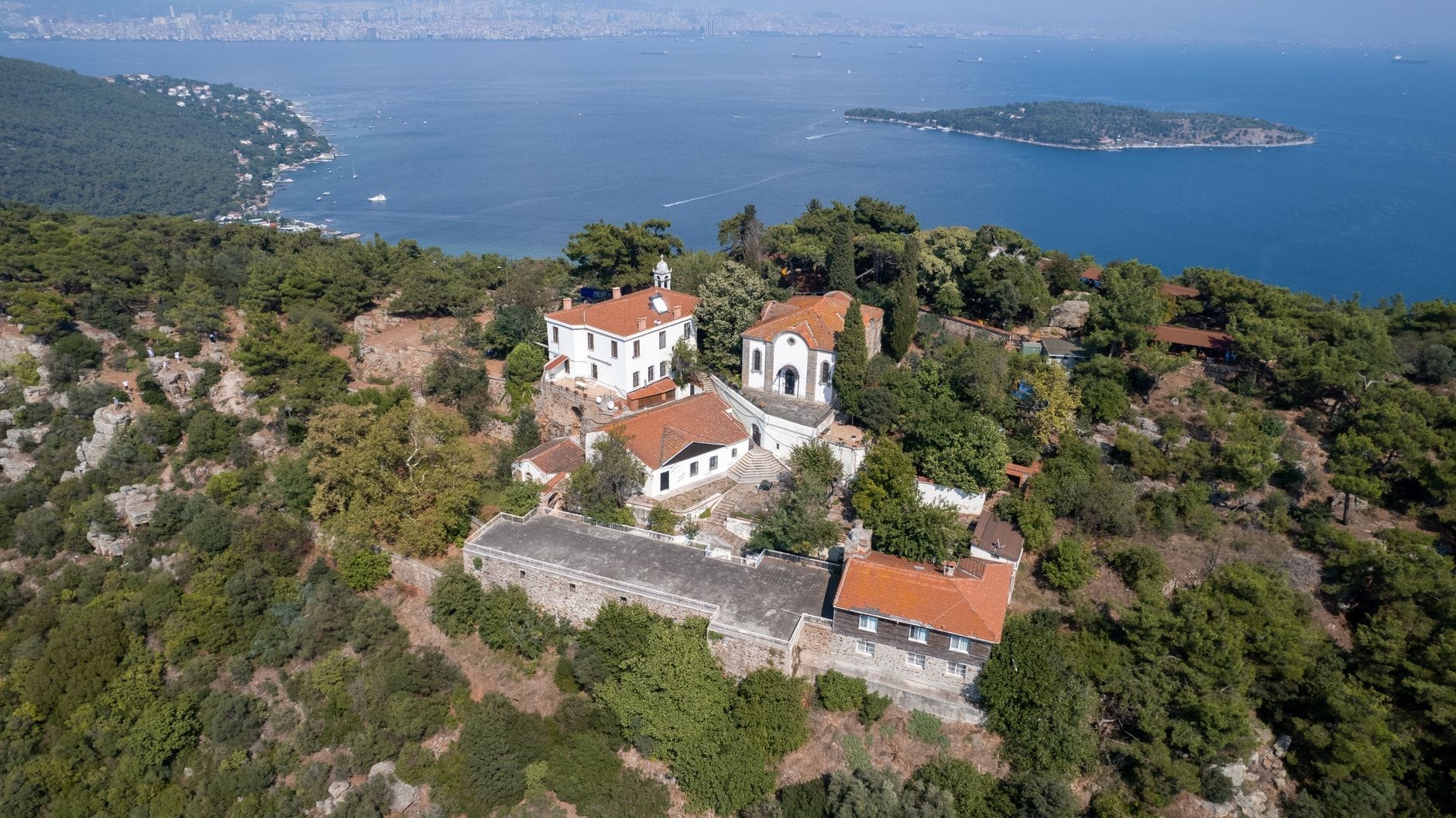
The Hagios Georgios (Aya Yorgi) Monastery near the summit of Yücetepe is the island's oldest surviving religious structure. It dates back at least to the Byzantine era and became an active place of Greek Orthodox pilgrimage, a role it maintains today. The monastery has been renovated and rebuilt across the centuries, so what visitors see now reflects layers of different periods rather than a single original structure.
Under the Ottomans, the Princes' Islands were largely left to their non-Muslim communities. Greek Orthodox, Jewish, and Armenian families established themselves here and built the elaborate late-19th-century wooden mansions that remain the island's architectural signature. When the Heybeliada–Büyükada ferry route opened in 1846, the islands became more accessible from Istanbul, and wealthy Ottoman families began summering here in numbers. The grand timber houses — called yalı or köşk depending on their type — that line the streets behind the ferry pier represent this gilded period of island life.
For historical context on Istanbul's Ottoman legacy, the Istanbul Ottoman history guide provides useful background on how the city's aristocratic geography developed.
Tickets & tours
Hand-picked options from our booking partner. Prices are indicative; availability and final rates are confirmed when you complete your booking.
Bosphorus sunset cruise on luxury yacht with guide
From 55 €Free cancellationIstanbul and Bosphorus cruise on private boat - half day afternoon tour
From 40 €Instant confirmationFree cancellationWhirling Dervishes live show and exhibition
From 29 €Instant confirmationBasilica Cistern fast-track entry ticket and optional audio guide
From 34 €Instant confirmation
Arriving and First Impressions
The ferry crossing from Eminönü or Kabataş takes roughly 60 to 100 minutes depending on the route and how many intermediate island stops are made. The journey itself is part of the experience: the boat passes under the shadow of Istanbul's European and Asian shorelines, skirts the Marmara coastline, and delivers you to a small wooden pier backed by pine trees and the pastel facades of the old neighborhood. On clear days, the approach from the water gives a panoramic impression of the island's topography that is hard to match from shore.
The pier area is the island's commercial center. The main clock tower, dating from 1904, stands immediately visible as you walk off the ferry. A short street lined with restaurants, cafes, ice cream stands, and bicycle rental shops leads into the main bazaar area. The smells here are a combination of grilled fish, fresh sesame rings (simit), and, in summer, the faint sweetness of pine resin drifting down from the hillside above. Bicycle rental is cheap and straightforward; most shops rent by the hour and do not require a deposit, though you should verify current rates on arrival.
Ferries to Büyükada are operated by Şehir Hatları (Istanbul city lines) and depart from piers including Eminönü, Kabataş, Kadıköy, and Bostancı. Paying with an Istanbulkart is the most efficient option. For more on navigating Istanbul's transit system, see the getting around Istanbul guide.
Exploring the Island: The Lower Town and Mansion Streets
The flat lower section of the island, concentrated around the pier and the two main parallel streets, is where most visitors spend their time. The wooden mansions here are impressive in their scale and detail. Many are painted in faded yellows, greens, and blues, with ornate carved wooden balconies and enclosed upper-floor loggias (cumba) projecting over the street. Some have been converted to boutique hotels or restaurants; many remain private residences, occasionally visible through iron gates.
Two beaches — Yörük Ali Plajı on the east side of the island and Nakibey Plajı to the northwest — are reachable on foot or by bicycle. Both charge a small entry fee in summer and can become crowded on hot weekends from June through August. The water quality in the Marmara has historically varied, and conditions change seasonally, so it is worth checking current water quality reports before swimming.
Cycling the perimeter road is one of the more pleasant ways to see the island's residential neighborhoods, particularly the northern stretches where fewer visitors reach and the wooden houses are more modest and lived-in. The road hugs the coastline in places and offers several informal viewpoints looking back toward Istanbul's Asian shore.
⚠️ What to skip
The island's terrain is significantly hillier than it appears on the map. The upper hill climb to Aya Yorgi Monastery involves sustained steep gradients. Cycling up is possible but physically demanding. Visitors with limited mobility or those sensitive to heat should plan the monastery visit for early morning and carry water.
Aya Yorgi Monastery: The Hilltop Destination
The Hagios Georgios Monastery (Aya Yorgi in Turkish) sits near the island's 202-meter summit and is the primary reason many visitors come to Büyükada beyond a simple beach day. The path from the lower town winds upward through pine and cypress woodland. In spring, the forest floor shows wildflowers. In summer, the shade is welcome but the heat is still significant. The ascent takes approximately 30 to 40 minutes on foot at a comfortable pace.
A distinctive tradition of the pilgrimage path is the practice of unspooling a length of string from the base of the hill to the monastery. The string is tied at the start, and the pilgrim walks holding it to the top, as an act of devotion. Even non-religious visitors will notice the thin threads woven into the rocks and fence posts along the route, left by those who have made the climb in hope or prayer.
The monastery complex at the top is modest in scale but the setting is panoramic. On a clear day, the view from near the summit encompasses the full Marmara horizon, including the Asian Istanbul skyline, the neighboring islands, and — in ideal conditions — the distant Uludağ mountain near Bursa. The monastery church itself is small and plainly decorated inside, but it remains an active place of worship and receives Greek Orthodox pilgrims, particularly around St. George's Day in late April. Visitors should dress modestly and observe quiet when services are in progress.
Time of Day and Seasonal Shifts
The single most important variable on Büyükada is time of arrival. The island receives a large share of Istanbul's weekend escape traffic from June to September. On a sunny Saturday in July, the ferry from Kabataş can be standing-room only, and the main pier street by midday resembles a small urban market. The atmosphere is still enjoyable but is completely different from the quiet pace of an early morning in April or a gray October afternoon.
Spring (April and May) is widely considered the best time to visit. The pine forests are green, temperatures are comfortable for walking (typically 14 to 20 degrees Celsius), the crowds have not yet peaked, and the wild flowers visible from the hilltop path are at their most varied. Autumn, particularly September and early October, brings similar conditions with the added quality of golden afternoon light and fewer tourists. Winter visits are possible and give access to a ghostly, quieter version of the island — many shops and restaurants close from November to March, and the ferry schedule reduces significantly.
For a fuller picture of when Istanbul's seasons favor outdoor exploration, see the best time to visit Istanbul guide, which covers climate patterns and how they affect day-trip destinations like Büyükada.
ℹ️ Good to know
Photography note: The best light on the wooden mansion facades hits from the east in the morning (approach from the pier side) and from the west in late afternoon (the road toward Yörük Ali beach). The hilltop at Aya Yorgi offers wide-angle sea views at almost any time of day; a polarizing filter helps cut Marmara haze in summer.
Eating, Drinking, and Spending Time
The island has a solid range of restaurants concentrated near the pier and along the main shopping street, most of them serving fish and meze-style Turkish food. Prices are moderately higher than equivalent Istanbul neighborhoods, as everything edible arrives by ferry. For a sit-down lunch, tables facing the water tend to fill by noon on weekends; arriving before 12:00 or after 14:00 makes it easier to get a spot without waiting.
Several old Greek-style bakeries and pastry shops sell cookies and ring-shaped biscuits (koulouri) that have been a local specialty since the island's mixed-community past. These are worth seeking out as an alternative to the standard tourist cafe circuit. The island also has a small covered market hall (çarşı) near the pier where local produce and packaged goods are sold.
If the ferry ride itself is as much of an attraction as the island, the Bosphorus cruise guide covers other ways to see Istanbul from the water.
Who Should Reconsider the Trip
Büyükada is not the right choice for every traveler. Those with very limited time in Istanbul (one or two days) may find the roughly 100-minute ferry crossing each way consumes more of their schedule than the island warrants relative to the city's denser collection of major monuments. The island's main draw is atmosphere and pace, not a single unmissable sight — if you are working through a specific cultural itinerary, the city itself will keep you occupied.
Visitors who struggle with heat and hills should be aware that the combination of summer temperatures, exposed hilltop paths, and limited shade on some of the main streets can make a peak-summer visit uncomfortable between 11:00 AM and 3:00 PM. The island is also poorly suited for travelers with significant mobility limitations: the terrain is uneven, cobblestone streets are common near the pier area, and the monastery path is steep and unpaved in sections.
Insider Tips
- The Şehir Hatları ferry from Bostancı on the Asian side is often less crowded than the Eminönü or Kabataş departures, and the crossing is shorter; along with other Asian-side lines (such as Maltepe or Tuzla/Pendik), it is among the most practical routes if you are staying on the Asian side of Istanbul.
- Bicycle rental shops near the pier fill up quickly on weekend mornings in summer. If you want to cycle the perimeter road, arrive by 9:00 AM or reserve in advance if the shop allows it.
- Many of the island's older wooden mansions are on the streets running perpendicular to the main bazaar road, not on the waterfront itself. Walk one or two blocks inland from the tourist circuit to see the residential architecture without the crowd.
- The string pilgrimage tradition on the Aya Yorgi path means the trail markers are partly decorated with threads and small offerings. These are considered sacred objects — do not remove or disturb them.
- Out of season (November through February), some ferry connections reduce to a few departures per day. Check the current Şehir Hatları timetable before planning a winter visit to avoid being stranded at the pier when the last return ferry has already left.
Who Is Büyükada (Princes' Islands) For?
- Istanbulites and travelers who want a half-day or full-day break from the city's traffic and density
- Architecture enthusiasts interested in late-Ottoman wooden residential buildings
- Walkers and cyclists comfortable with moderate hills and a 2–3 hour active itinerary
- Those interested in Byzantine and Greek Orthodox history in an accessible outdoor setting
- Photographers looking for the combination of sea light, weathered wooden facades, and panoramic hilltop views
Nearby Attractions
Combine your visit with:
- Ağva
Ağva is a small resort town in Istanbul's Şile district where the Göksu and Yeşilçay rivers converge at the Black Sea coast. About 115 km from the city center, it draws Istanbulites seeking calm water, forested riverbanks, and a pace of life that the megacity simply cannot offer. This guide covers how to get there, what to expect, and whether it suits your trip.
- Belgrad Forest
Belgrad Forest (Belgrad Ormanı) is a 5,442-hectare forested reserve on Istanbul's European side, about 20 km north of the city center. Once an Ottoman hunting ground and water source, it now serves as the city's primary green lung, offering walking trails, picnic areas, and centuries-old dams.
- Heybeliada
Heybeliada, the second largest of the Princes' Islands in the Sea of Marmara, offers a rare counterpoint to Istanbul's intensity. With motor vehicles banned, the island moves at the pace of bicycle wheels and electric shuttles, framed by 19th-century wooden mansions and the scent of pine.
- Kilyos Beach
Kilyos Beach sits on Istanbul's Black Sea coast, about 30 kilometers north of the city center in the Sarıyer district. It is the most accessible seaside escape for Istanbul residents and visitors, offering wide sandy shoreline, seasonal beach clubs, and a dramatically different atmosphere from the Bosphorus waterfronts.