Heybeliada: Istanbul's Quiet Island of Pine Forests and Ottoman Mansions
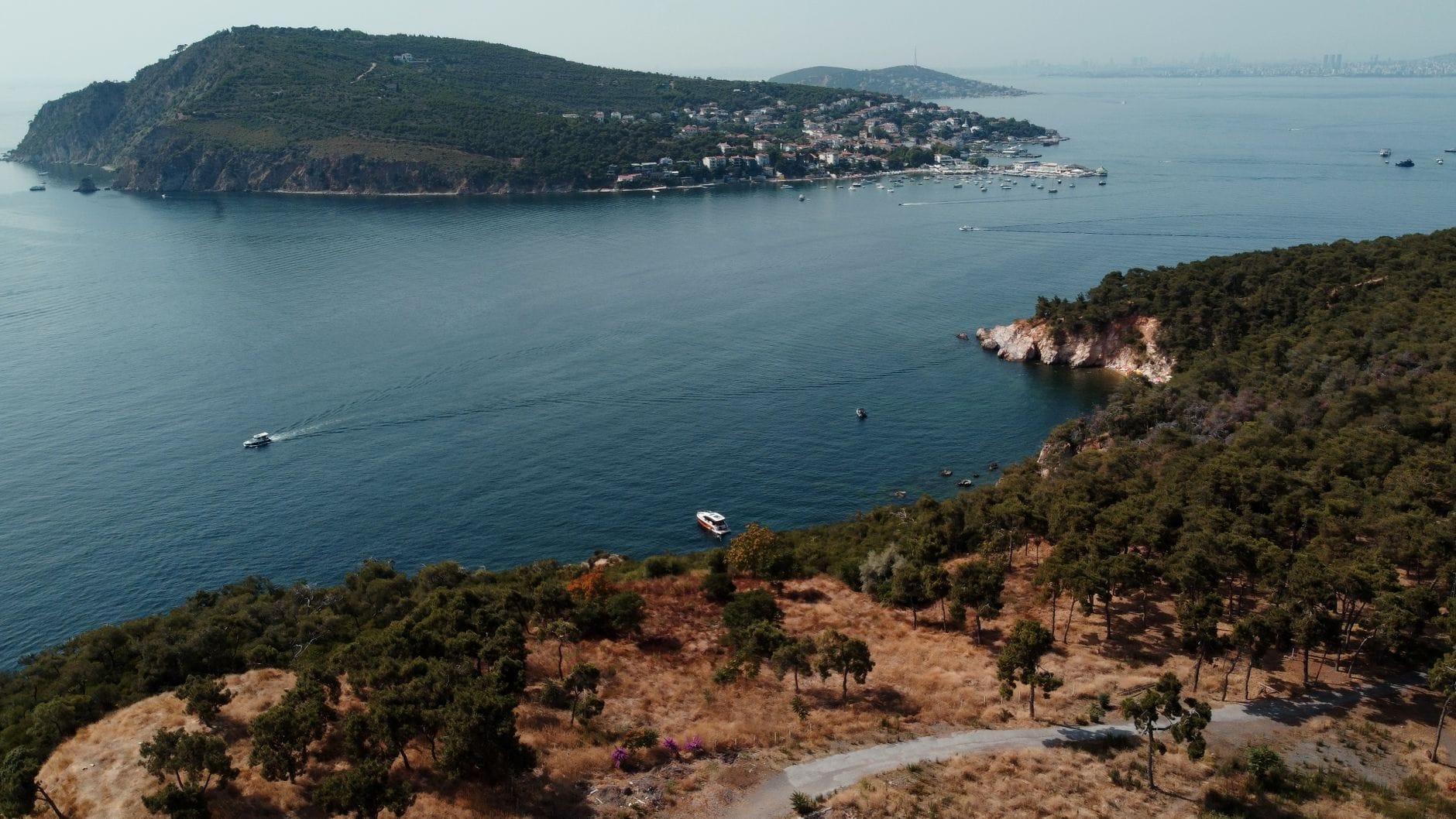
Heybeliada, the second largest of the Princes' Islands in the Sea of Marmara, offers a rare counterpoint to Istanbul's intensity. With motor vehicles banned, the island moves at the pace of bicycle wheels and electric shuttles, framed by 19th-century wooden mansions and the scent of pine.
Quick Facts
- Location
- Adalar district, Sea of Marmara, Istanbul Province — approx. 15 km southeast of central Istanbul
- Getting There
- Ferry from Eminönü, Beşiktaş/Kabataş, or Bostancı (Şehir Hatları and Mavi Marmara services); journey ~90–105 min from Eminönü depending on route
- Time Needed
- Half day to full day; a full day is recommended to explore both hills and the waterfront properly
- Cost
- No island entrance fee; costs are the ferry ticket (priced in TRY, verify current fares with operator) plus food and bicycle hire
- Best for
- Slow travel, architecture lovers, cyclists, families wanting a car-free day, anyone needing relief from the city
- Official website
- www.adalar.bel.tr
What Heybeliada Actually Is
Heybeliada (known in Greek as Halki, or Χάλκη) is the second largest of the nine Princes' Islands scattered across the Sea of Marmara, roughly 15 kilometres southeast of central Istanbul. It sits in the Adalar district alongside its more famous neighbour Büyükada, but it draws a fraction of the crowds, which is precisely its appeal.
The island's defining characteristic is the near-total ban on motor vehicles. Transport here means your own feet, a hired bicycle, or the electric vehicles that serve residents. The silence is noticeable the moment the ferry departs. You can hear birds, the creak of wooden gates, and the rustle of pine. After Istanbul's soundtrack of traffic, ferries, and construction, Heybeliada feels different in a way that is hard to anticipate until you step off the boat.
The island is not undiscovered. On summer weekends, the waterfront fills with day-trippers from the city and the ferry schedule expands to meet demand. But Heybeliada receives far fewer visitors than Büyükada, and its two main hills, Ümit Tepe and Değirmentepe (which rises to 136 metres), remain quiet enough on most mornings to feel genuinely removed from the metropolis. If you are researching the Büyükada experience and wondering whether to go further, the answer is yes: Heybeliada rewards the extra ferry stop.
💡 Local tip
Arrive on a weekday morning and you will have the pine-shaded lanes nearly to yourself. Weekend afternoons in July and August are significantly more crowded, and bicycle rental queues grow long by midday.
The Ferry Crossing: How to Get There
The journey is part of the experience. Şehir Hatları and Mavi Marmara both operate services to the Princes' Islands, with departures from Eminönü, Kabataş, Beşiktaş, and Bostancı on the Asian side. The full run from Kabataş typically takes around 90 minutes, stopping at Kınalıada, Burgazada, and Heybeliada before continuing to Büyükada; some Eminönü–Adalar services are scheduled at around 105 minutes. Bostancı crossings on the Asian side are shorter.
Fares are paid in Turkish lira and can be covered by Istanbulkart on Şehir Hatları services. Prices change periodically, so confirm current fares directly with the operator before your visit. Seasonal schedules are significantly different from winter services: in summer, sailings run throughout the day; in winter, frequency drops and some services are suspended entirely.
Check the return ferry timetable before you explore. Missing the last boat is not a crisis, since accommodation exists on the island, but it is worth planning around. For broader context on navigating Istanbul's water transport, the Bosphorus cruise guide covers the ferry network in detail.
⚠️ What to skip
Ferry schedules change seasonally and can be disrupted by weather. Strong winds on the Sea of Marmara occasionally cause cancellations or delays. Check the Şehir Hatları or Mavi Marmara website before you travel, especially in autumn and winter.
Tickets & tours
Hand-picked options from our booking partner. Prices are indicative; availability and final rates are confirmed when you complete your booking.
Bosphorus sunset cruise on luxury yacht with guide
From 55 €Free cancellationIstanbul and Bosphorus cruise on private boat - half day afternoon tour
From 40 €Instant confirmationFree cancellationWhirling Dervishes live show and exhibition
From 29 €Instant confirmationBasilica Cistern fast-track entry ticket and optional audio guide
From 34 €Instant confirmation
The Waterfront and the Village Center
The ferry docks at a small pier flanked by a modest row of restaurants, cafes, and bicycle rental shops. The smell is a particular mix: salt air, frying fish from the waterfront lokantalar, and, as you move inland, pine resin warming in the sun. The village center is compact and walkable in under ten minutes end to end.
Late morning is when the village feels most alive. The cafes fill with day-trippers eating a late breakfast, bicycle rental staff negotiate with groups, and the bakers near the pier have usually just sold out of their morning simit. By early afternoon, most visitors have pushed inland or taken their bikes uphill, and the waterfront empties slightly before the return-ferry rush around 5 or 6 PM.
The wooden architecture along the seafront promenade and the lanes behind it is largely from the 19th and early 20th centuries, when wealthy Istanbul families built summer retreats here. Many buildings show the distinctive Ottoman-era wooden construction style: wide bay windows, latticed balconies, steeply pitched roofs, and peeling pastel paint that photographs extraordinarily well in morning light. Some are lovingly restored; others are in obvious decay. Both states are worth looking at.
Ümit Tepe and the Halki Seminary
The more historically significant of the island's two hills is Ümit Tepe, crowned by the Heybeliada Greek Orthodox Seminary, known internationally as the Halki Seminary or Theological School of Halki. Founded in 1844 within the Monastery of the Holy Trinity, the seminary trained Greek Orthodox clergy for over a century before the Turkish government closed it in 1971 as part of regulations restricting private higher education.
The closure has been a sustained diplomatic point of tension between Turkey, Greece, the European Union, and the United States, with repeated calls for reopening at the highest governmental levels. The building itself, a handsome neoclassical structure set among pines with sweeping views over the sea, remains standing and maintained by the Ecumenical Patriarchate, but it is not currently open to the public as an active institution. From the outside, it is one of the most evocative spots on the island, worth the climb regardless of the institutional history.
The walk up to Ümit Tepe takes about 20 to 30 minutes on foot from the pier, passing through quiet residential streets. The path is cobbled in places and moderately steep. The view from the summit back toward Istanbul across the Marmara is one of the better island perspectives in the city, comparable to what you find on Çamlıca Hill but without the antenna towers and far fewer visitors.
Naval History and Değirmentepe
Heybeliada has a parallel identity as a centre of Ottoman and Turkish naval education. The Naval High School, known as Deniz Lisesi, was established on the island in 1773, making it one of the oldest continuously operating naval academies in the region. The institution eventually relocated to the mainland, but its legacy gives the island an additional layer of institutional history beyond its role as a summer retreat.
Değirmentepe, the island's highest point at 136 metres, takes its name from the windmill (değirmen) that once stood at its summit. The climb here is more demanding than the route to Ümit Tepe and is best done on foot rather than bicycle, given the gradient. The reward is a wide panorama of the Marmara, with the coastlines of both the European and Asian sides of Istanbul visible on clear days. A sanatorium opened at Yeşilburun in 1924 and operated until 2006; its ruins are visible from certain trails on this side of the island, adding a melancholy architectural note to the landscape.
Cycling, Beaches, and Moving Around the Island
Bicycle rental is available at multiple shops near the ferry pier. Prices are in Turkish lira and change seasonally; rentals are typically by the hour or half day. The island's lanes are largely flat or gently rolling along the coast but climb steeply toward both main hilltops. A circuit of the coastal perimeter is manageable in a couple of hours at a relaxed pace and gives a thorough cross-section of the island: pine groves, waterfront fishing spots, small beaches, and stretches of undisturbed shoreline.
There are small swimming areas around the island's perimeter. None are developed beach resorts with facilities; bring your own towel and check water quality locally before swimming, as conditions vary. The northern and eastern shores tend to be quieter than the areas immediately around the ferry pier.
Visitors with limited mobility should be aware that the island's terrain is significantly more challenging than it appears from the waterfront. The cobbled streets, hilly paths, and absence of accessible lifts or escalators make the hilltop sites difficult to reach for those with mobility constraints. The waterfront and village center are more manageable. For a fuller picture of accessible options across the islands, the day trips from Istanbul guide covers the Princes' Islands alongside other options.
ℹ️ Good to know
Photography: The island is at its most photogenic in the two hours after sunrise and the hour before sunset. The wooden mansions catch warm directional light, and the waterfront reflects the sky clearly when winds are calm. Midday in summer produces harsh overhead light that flattens the architecture.
Eating and Drinking on Heybeliada
The restaurant options near the pier are straightforward: fish restaurants, meyhane-style spots serving meze and raki, and a handful of cafes. Quality is acceptable but not remarkable, and prices reflect the island premium typical of all the Princes' Islands. The practical advice is to eat well in Istanbul before the ferry if you are on a budget, and to treat waterfront food here as part of the atmosphere rather than a culinary destination in itself.
If the island meyhane culture interests you, Istanbul's mainland equivalent is considerably better value. The Istanbul meyhane and raki guide covers where to eat properly in the city. On the island, the fish and meze spreads on the waterfront are still enjoyable in their own right, especially in the late afternoon with the ferry traffic on the water as backdrop.
Seasonal Considerations and When to Visit
Spring and early summer are the best periods to visit Heybeliada. April through June offers mild temperatures, green pine hillsides, and manageable crowds. The island is at its most photogenic after the winter rains have cleared and before the summer heat peaks. September and October are also excellent: the crowds thin after August, the sea is warm enough to swim, and the light on the wooden mansions takes on an amber quality.
July and August bring significant weekend crowds, particularly on Saturdays. The ferry from Eminönü fills up, bicycle rental queues form by mid-morning, and the waterfront restaurants are busy at every service. The island does not collapse under this pressure the way Büyükada does, but it is noticeably different from a weekday visit in May. Winter is quiet to the point of being almost deserted: many restaurants close or operate reduced hours, ferry frequency drops sharply, and the island takes on a contemplative quality that some visitors find appealing and others find bleak.
For a broader look at how Istanbul's seasons affect visitor experience across different sites, the best time to visit Istanbul guide is worth reading before you plan the trip.
Insider Tips
- Take the first or second morning ferry from Eminönü rather than waiting for a midday departure. Arriving before 10 AM means bicycle rental is immediate, the hilltop paths are shaded, and you have the Halki Seminary viewpoint to yourself.
- The Asian-side ferries from Bostancı are significantly shorter in journey time and often less crowded than the Eminönü service. If you are based in Kadıköy or Üsküdar, this is the smarter route.
- Bring cash in Turkish lira. Card acceptance on the island is inconsistent, particularly at smaller bicycle rental shops and street food stalls near the pier.
- If you want a swim, walk past the first cove you see. The areas within five minutes of the pier are the most crowded. Continue along the coastal path in either direction for fifteen minutes and the water becomes noticeably quieter.
- The Halki Seminary exterior is visible and accessible as a viewpoint even though the building itself is not open to the public. The pine-framed approach road from the north side of Ümit Tepe is the best angle for photographs.
Who Is Heybeliada For?
- Travelers who need a half-day reset from the intensity of Istanbul's historic peninsula
- Cyclists and walkers who want car-free terrain with genuine historical layers
- Architecture enthusiasts interested in late Ottoman wooden summer house construction
- Families with older children who can manage moderate hill walking
- Anyone curious about the Halki Seminary and the Greek Orthodox presence in Istanbul
Nearby Attractions
Combine your visit with:
- Ağva
Ağva is a small resort town in Istanbul's Şile district where the Göksu and Yeşilçay rivers converge at the Black Sea coast. About 115 km from the city center, it draws Istanbulites seeking calm water, forested riverbanks, and a pace of life that the megacity simply cannot offer. This guide covers how to get there, what to expect, and whether it suits your trip.
- Belgrad Forest
Belgrad Forest (Belgrad Ormanı) is a 5,442-hectare forested reserve on Istanbul's European side, about 20 km north of the city center. Once an Ottoman hunting ground and water source, it now serves as the city's primary green lung, offering walking trails, picnic areas, and centuries-old dams.
- Büyükada (Princes' Islands)
Büyükada is the biggest of Istanbul's Princes' Islands, sitting in the Sea of Marmara about 20 km from the city center. No private cars, no exhaust fumes, no urban noise. Just Victorian-era wooden mansions, pine-scented hills, Byzantine monastery ruins, and a ferry pier busy with Istanbulites escaping the city for the day.
- Kilyos Beach
Kilyos Beach sits on Istanbul's Black Sea coast, about 30 kilometers north of the city center in the Sarıyer district. It is the most accessible seaside escape for Istanbul residents and visitors, offering wide sandy shoreline, seasonal beach clubs, and a dramatically different atmosphere from the Bosphorus waterfronts.