Fatih Mosque (Fatih Camii): The Conqueror's Legacy in Istanbul's Heart
Commissioned by Sultan Mehmed II a decade after the Ottoman conquest of Constantinople, Fatih Mosque stands as one of Istanbul's most historically charged religious sites. Unlike the tourist-heavy mosques of Sultanahmet, this one belongs primarily to the local neighborhood — and that contrast is exactly what makes it worth visiting.
Quick Facts
- Location
- Hattat Nafiz Caddesi No: 6, Fatih, Istanbul (European side)
- Getting There
- Metro M1B to Emniyet-Fatih station (~10 min walk); buses from Eminönü or Taksim to Fatih Camii stop
- Time Needed
- 30–60 minutes for the mosque and courtyard complex; allow more for the surrounding külliye
- Cost
- Free (donations welcome)
- Best for
- Ottoman history, architecture, authentic neighborhood atmosphere, photography
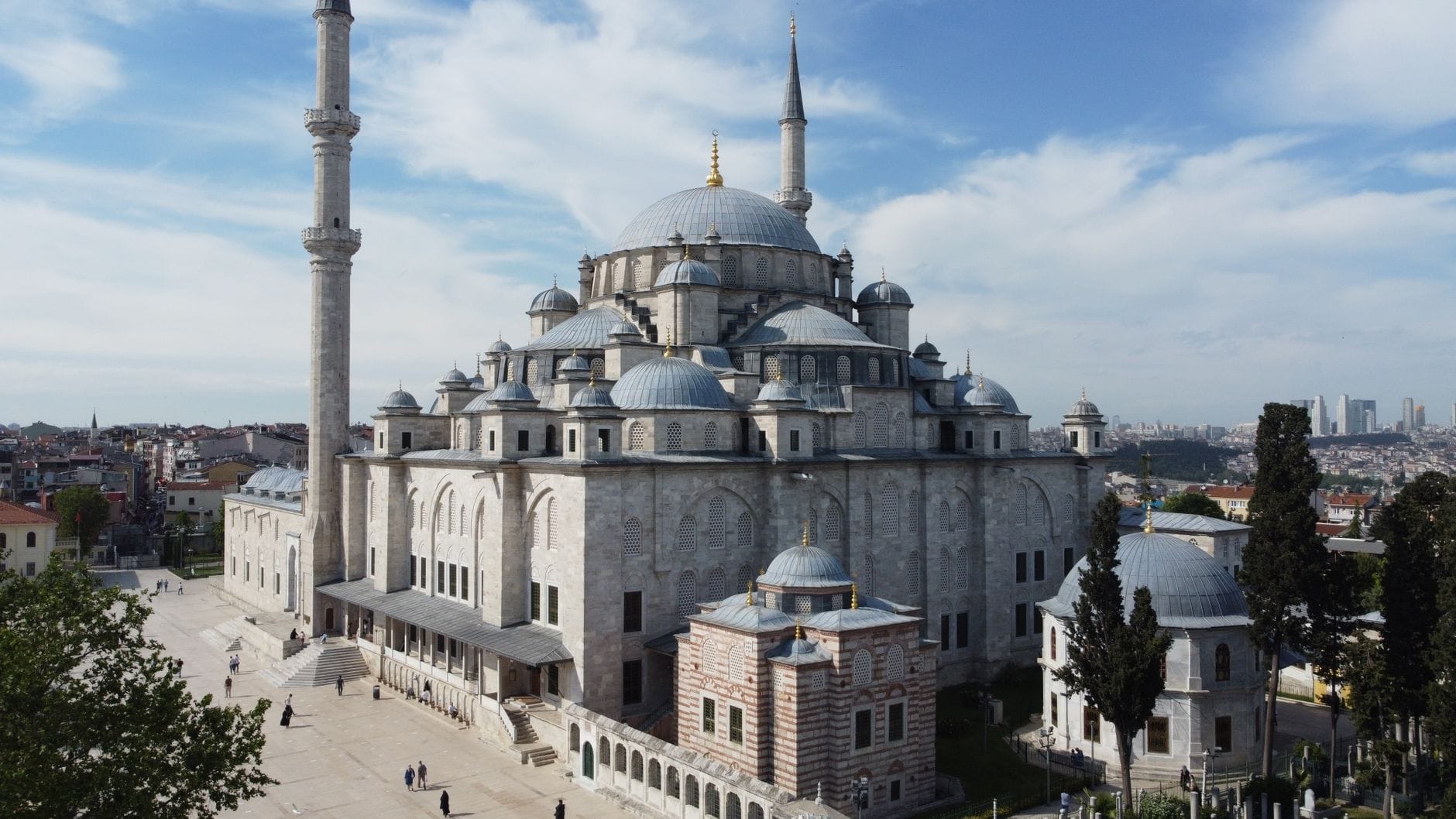
Why Fatih Mosque Deserves a Place on Your Itinerary
Fatih Camii is not on every tourist's radar, and that is precisely its advantage. While visitors pack into the Blue Mosque and Hagia Sophia a few kilometers to the southeast, Fatih Mosque operates on its own rhythm — a working neighborhood mosque in one of Istanbul's most conservative and historically layered districts. The experience here feels genuinely local in a way that the Sultanahmet corridor rarely does.
The mosque sits at the center of a large Ottoman complex known as the Fatih Külliyesi, which originally included madrasas, a hospital, a caravanserai, a library, and a public kitchen. Most of those structures are gone or altered, but the scale of the surviving ensemble still communicates the ambition of the original project: this was meant to announce, in stone, that the Ottoman empire had fully replaced the Byzantine one.
💡 Local tip
Avoid visiting on Friday between roughly 12:00 and 13:30. The mosque fills entirely for Friday noon prayers (Cuma namazı), and non-worshipping visitors are not admitted during this time. Any other weekday morning offers the quietest experience.
History: A Mosque Built to Claim a Civilization
Sultan Mehmed II, known as Fatih (the Conqueror), commissioned this mosque around 1463 — a decade after his forces captured Constantinople in 1453 and ended the Byzantine Empire. The location was deliberate: it was built on or near the site of the Church of the Holy Apostles, the burial place of Byzantine emperors and one of the most sacred Christian sites in the eastern world. Whether the church was demolished to make way for the mosque or had already fallen into ruin is debated among historians, but the symbolic weight of the site was unmistakable.
Construction lasted approximately seven years, completing around 1470. The original mosque represented one of the earliest and grandest examples of classical Ottoman religious architecture — larger in ambition than anything previously built in the city under Ottoman rule. Then, in 1766, a major earthquake caused catastrophic damage to the structure. The mosque was rebuilt by 1771 under architect Mehmet Tahir during the reign of Sultan Mustafa III. This means the building visitors see today is largely an 18th-century structure, not a 15th-century one — a distinction that matters architecturally and is worth knowing before you arrive.
What does survive from the original 15th-century complex includes the outer courtyard portal, portions of the surrounding walls, and most significantly, the türbe (tomb) of Mehmed II himself. For those interested in the full arc of Istanbul's Ottoman history, the tomb of the Conqueror carries genuine historical weight — this is the man who reshaped the trajectory of an entire civilization.
Tickets & tours
Hand-picked options from our booking partner. Prices are indicative; availability and final rates are confirmed when you complete your booking.
Half day Morning Ottoman Splendors tour, including the Blue Mosque
From 48 €Instant confirmationFree cancellationIstanbul Basilica Cistern, Blue Mosque and Hagia Sophia tour
From 83 €Instant confirmationFree cancellationIstanbul mosaics and Blue Mosque 1-day small group tour
From 62 €Instant confirmationFree cancellationIstanbul combo tour of Hagia Sophia and Blue Mosque
From 114 €Instant confirmationFree cancellation
What You See: The Mosque, Courtyard, and Tombs
The Exterior and Approach
Approaching along Fevzipaşa Avenue, the mosque's lead-grey domes and twin minarets rise above a neighborhood of tea houses, street vendors, and small shops selling religious goods. The scale is immediately impressive — the central dome reaches about 26 meters in diameter, and the overall profile dominates the surrounding streets. The stonework is pale and worn in places, and the minarets have the clean, tapering form characteristic of late Ottoman design.
The outer courtyard is large and somewhat austere, with old plane trees that shade the space in warmer months. On weekday mornings, elderly men sit on benches near the ablution fountains, pigeons cluster near the gates, and the ambient sounds are mostly local: conversation in Turkish, the rumble of buses on Fevzipaşa, the distant call of the ezan. It is easy to spend time here without entering the mosque itself.
Inside the Prayer Hall
The interior is spacious, cool, and relatively plain compared to the ornate tilework of the Blue Mosque or the golden mosaics glimpsed at Hagia Sophia. The dominant colors are cream, pale grey, and the red of the carpeted prayer floor. Light enters through banks of windows at multiple levels, giving the space a bright, open quality that many older Ottoman mosques lack. The mihrab (prayer niche) and minber (pulpit) are finely carved but restrained in decoration.
Non-Muslim visitors are welcome outside of prayer times and should remove shoes before stepping onto the carpeted area. Women are expected to cover their hair — scarves are sometimes available at the entrance, but bringing your own is more reliable. The dress code applies strictly: shoulders and legs must be covered. Unlike some tourist-facing mosques, Fatih is a fully active place of worship, and the atmosphere reflects that.
ℹ️ Good to know
Opening hours are approximately 08:00–17:00 daily, with the mosque closed to visitors during each of the five daily prayer times. The closure periods are roughly 15–30 minutes each. Arrive between prayers for uninterrupted access.
The Tomb of Mehmed II
Adjacent to the mosque, the türbe of Mehmed II is one of the most visited spots in the complex, particularly among Turkish and Muslim visitors who come to pay their respects. The tomb is housed in an octagonal domed structure with a tiled interior and a large sarcophagus at its center. The tomb of his wife, Gülbahar Hatun, stands nearby. The atmosphere inside is quiet and devotional — expect to see visitors praying, and conduct yourself accordingly. Photography inside tombs is generally not welcome.
How the Experience Changes by Time of Day
Early morning, around 09:00–10:00, is the calmest window. The light entering the prayer hall from the eastern windows is warm and angled, and the courtyard is largely empty. This is the best time for photography of the exterior and for a quiet walk through the külliye grounds.
Midday brings more activity: local worshippers arriving for the öğle (noon) prayer, street food vendors setting up on Fevzipaşa, and occasional small tour groups. The Wednesday and Saturday market in the surrounding streets draws large numbers of local shoppers, which adds color but also foot traffic. Late afternoon, around 16:00–17:00, is another relatively quiet window before the akşam (evening) prayer closes the mosque to visitors.
Winter visits have a particular atmosphere. The courtyard trees are bare, the light is low and grey, and the mosque sees fewer outsiders. Rain on the stone courtyard, the smell of damp wool from worshippers' coats, and the sound of the ezan carrying across the cold rooftops create a sensory combination that is specific to this part of the city in this season.
Getting There and Getting Around
The most straightforward public transport route is the M1B metro line to Emniyet-Fatih station, followed by roughly a 10-minute walk north along Ak Şemsettin Street. Alternatively, buses from Eminönü or Taksim marked for Fatih stop directly at or near the Fatih Camii stop on Fevzipaşa Avenue. For those exploring the broader Fatih district — including the Valens Aqueduct or the Zeyrek Mosque — the area is best navigated on foot, as the streets are narrow and traffic is heavy.
The neighborhood around the mosque is dense with small restaurants and lokanta (local eateries) serving lunch crowds of workers and students. The streets northwest of the complex toward Edirnekapı contain some of the city's less-visited Byzantine-era remnants, making this a productive area for a half-day of walking if you combine multiple sites.
⚠️ What to skip
The Fatih district is socially conservative by Istanbul standards. Dress modestly even outside the mosque. Public displays of affection are uncommon here and may draw attention.
Photography and Practical Notes
The exterior and courtyard are freely photographable. Inside the prayer hall, photography is tolerated during non-prayer hours but should be done discreetly and without flash. Avoid pointing cameras at worshippers. The best exterior shots come from the streets to the north and east, where the full dome and minaret profile is visible against the sky without obstructions. A wide-angle lens helps given the scale of the courtyard.
For travelers interested in pairing this visit with other significant mosques in the city, the guide to Istanbul's best mosques covers how Fatih Camii fits alongside Süleymaniye, the Blue Mosque, and lesser-known examples across the city.
Is It Worth the Visit?
For visitors primarily interested in interior grandeur and artistic detail, Fatih Mosque is not the most rewarding mosque in Istanbul. The 18th-century rebuild, while competent, lacks the architectural innovation of the Süleymaniye or the historic drama of the Blue Mosque's interior. The surrounding külliye is fragmentary, and there is relatively little interpretive signage for non-Turkish visitors.
Where Fatih Mosque excels is in authenticity and historical resonance. This is a place where the Ottoman claim on Constantinople is written into the landscape. The tomb of Mehmed II draws pilgrims and curious visitors alike. And the neighborhood itself — unglamorous, devout, quietly going about its day — offers a version of Istanbul that is far removed from the polished tourism of Sultanahmet. That contrast, for the right kind of traveler, is the entire point.
Travelers using a broader Istanbul itinerary can find useful context in the Historic Peninsula guide, which covers how Fatih fits into a logical sequence of visits across the old walled city.
Insider Tips
- The Wednesday open-air market (pazar) on the streets near Fatih Mosque is one of the largest neighborhood markets in Istanbul. It starts early and winds down by early afternoon — worth timing your visit around if you want to see the area at its most local.
- The outer portal surviving from the original 1463–1470 construction is identifiable by its mukarnas (honeycomb vaulting) and inscription panels. Look for it on the western approach to the inner courtyard — it is more ornate than the 18th-century sections around it.
- The külliye grounds include a large cemetery immediately behind the mosque, which is quiet, shaded, and almost entirely ignored by visitors. Old tombstones with Ottoman calligraphy stand among the trees — worth a slow walk through.
- Combine a Fatih Mosque visit with the Zeyrek Mosque (a converted Byzantine church) about 15 minutes' walk to the south for a morning that covers both major Ottoman and Byzantine layers of the neighborhood in a single outing.
- Tea houses (çay ocakları) immediately outside the mosque gates serve very cheap tea to a local clientele. Sitting with a glass of çay after your visit and watching the neighborhood is free and provides a quieter reflection on what you just saw than any guidebook can offer.
Who Is Fatih Mosque For?
- Travelers interested in Ottoman history who want to go beyond the Sultanahmet circuit
- Visitors seeking a local mosque experience without tourist crowds
- Architecture enthusiasts comparing 15th-century Ottoman design with later 18th-century rebuilds
- Photographers looking for atmospheric neighborhood scenes alongside religious architecture
- Those tracing the history of Constantinople's transformation after 1453
Nearby Attractions
Other things to see while in Fatih:
- Chora Church (Kariye Mosque)
The Chora Church, now Kariye Mosque, preserves the most complete cycle of late Byzantine mosaics and frescoes anywhere in the world. Tucked inside the Fatih district near the ancient Theodosian Walls, it rewards visitors who make the effort to reach it — but requires some planning around prayer times and dress codes.
- Panorama 1453 History Museum
The Panorama 1453 History Museum in Istanbul's Fatih district puts visitors at the center of one of history's most decisive moments: the Ottoman conquest of Constantinople on May 29, 1453. Housed in Topkapı Culture Park beside the ancient Theodosian Walls, the museum wraps a 38-meter-high, 238-meter-long cylindrical painting around a raised viewing platform, blending painted canvas with three-dimensional foreground figures to create an effect that is disorienting in the best possible way.
- Süleymaniye Mosque
Rising above the Golden Horn on Istanbul's Third Hill, Süleymaniye Mosque is widely regarded as the finest work of Ottoman imperial architecture. Built between 1550 and 1557 under the direction of master architect Mimar Sinan for Sultan Suleiman the Magnificent, it remains a functioning mosque with free admission and considerably fewer visitors than the Blue Mosque in Sultanahmet.
- Theodosian Walls
Built in the 5th century CE and stretching roughly 5.7 kilometers from the Golden Horn to the Sea of Marmara, the Theodosian Walls stood for over a thousand years as the most formidable defensive barrier in the medieval world. Today they form one of Istanbul's most atmospheric and undervisited monuments: free, open-air, and bracingly honest about the passage of time.