Zeyrek Mosque: Istanbul's Forgotten Byzantine Giant
Zeyrek Mosque, once the Monastery of Christ Pantokrator, is the second-largest surviving Byzantine structure in Istanbul. Built in the 12th century on a hill above the Golden Horn, this five-domed complex of joined churches offers rare architectural drama with almost none of the tourist crowds.
Quick Facts
- Location
- Fazilet Sk., Zeyrek Mahallesi, Fatih, Istanbul
- Getting There
- Bus to Unkapanı, then 10-min uphill walk through the Zeyrek/İMÇ fabric bazaar neighborhood
- Time Needed
- 30–60 minutes at the mosque; add 30 min to explore the surrounding streets
- Cost
- Free entry (donation appreciated); no fixed ticket price
- Best for
- Byzantine history enthusiasts, architecture lovers, off-the-beaten-path explorers
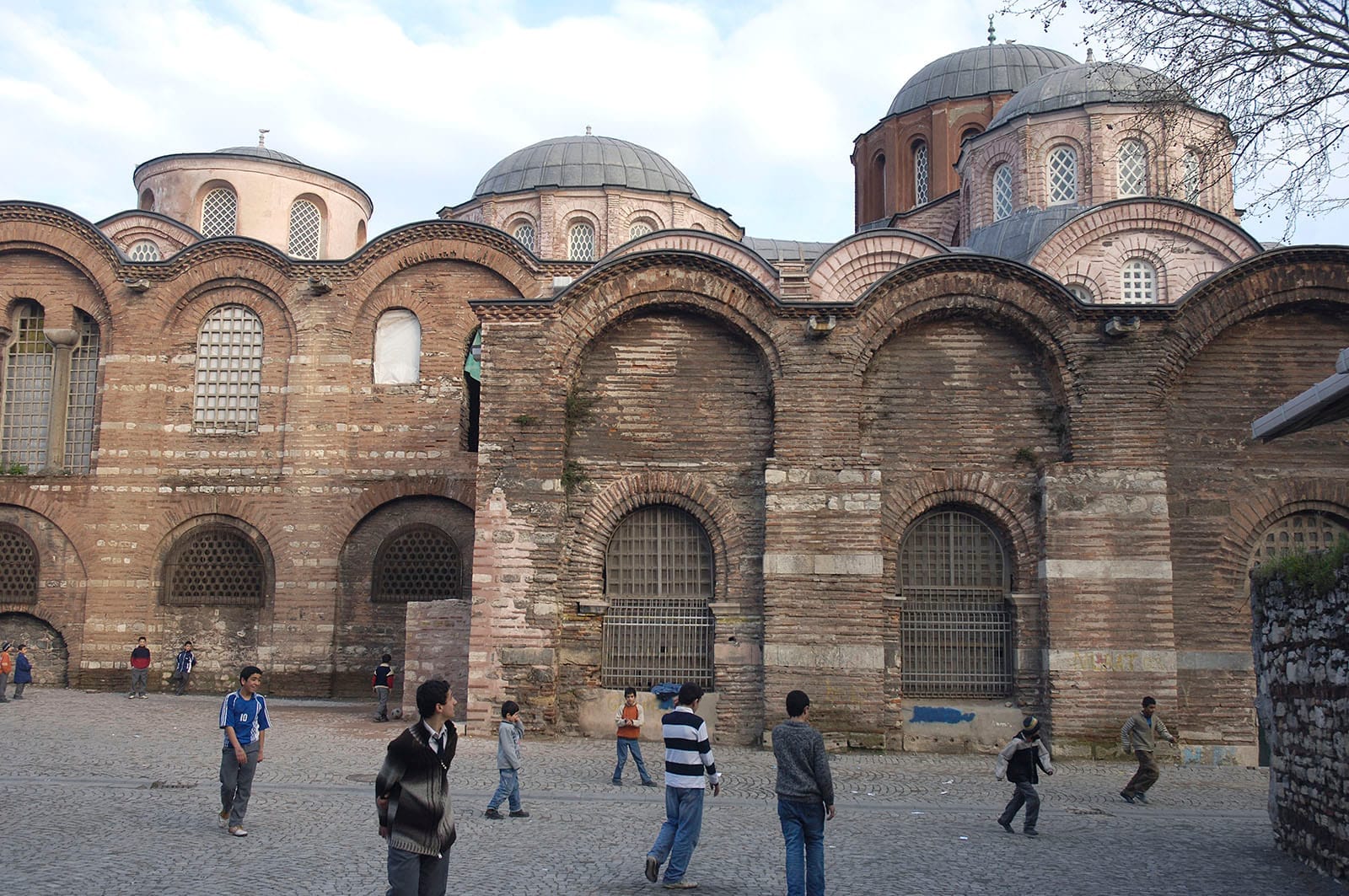
What Is Zeyrek Mosque?
Zeyrek Mosque, officially Molla Zeyrek Camii, is the converted remains of the Monastery of Christ Pantokrator, a 12th-century Byzantine imperial complex on the third hill of Istanbul's historic peninsula. Its official Byzantine name in Greek is Μονή του Παντοκράτορος Χριστού. The building it occupies is not one church but three: two former Byzantine churches and a funerary chapel, physically joined and topped by five domes, with a single Ottoman-era minaret rising from one corner. The structure dates primarily from between 1118 and 1136, making it nearly nine centuries old.
After Hagia Sophia, this is the largest surviving Byzantine religious building in Istanbul. That ranking is not a minor footnote. The Pantokrator complex was, in its day, one of the most significant monastic institutions in the entire Byzantine world, serving as the mausoleum of several emperors of the Komnenos and Palaiologos dynasties. Today it functions as an active mosque, which means you can walk in, stand under those ancient domes, and absorb the weight of that history for free.
ℹ️ Good to know
Visiting hours are generally 09:00–18:00 daily, but as an active mosque, access to the interior may be restricted during the five daily prayer times. Arriving between prayers is the safest strategy. Dress modestly: cover shoulders and legs, and women should bring a headscarf.
The History Behind the Stones
Construction of the Pantokrator complex began under Empress Irene of Hungary, wife of Emperor John II Komnenos, with the south church completed around 1118–1124. After Irene died in 1134, John II continued the project, adding a second church to the north and connecting them with a funerary chapel dedicated to the Archangel Michael around 1136. That chapel became the imperial mausoleum, housing the sarcophagi of multiple Byzantine emperors including John II himself and other members of the Komnenos dynasty.
The monastery attached to the complex was one of the largest in Constantinople and housed a renowned hospital. It served as a center of learning, a library, and a political institution. In 1453, following the Ottoman conquest of Constantinople, the complex was converted into a mosque and the surrounding buildings into a madrasa. The name Zeyrek comes from Molla Zeyrek, an early Ottoman scholar who taught here after the conversion.
The layers of history visible inside the building are remarkable: Byzantine brickwork, faint traces of original mosaic decoration, Ottoman whitewash, and the structural interventions of multiple restoration campaigns. For travelers interested in the long arc of Istanbul's past, this site connects directly to what you see at Hagia Sophia and the Chora Church, the three forming an informal trilogy of great surviving Byzantine monuments in the city.
Tickets & tours
Hand-picked options from our booking partner. Prices are indicative; availability and final rates are confirmed when you complete your booking.
Half day Morning Ottoman Splendors tour, including the Blue Mosque
From 48 €Instant confirmationFree cancellationIstanbul Basilica Cistern, Blue Mosque and Hagia Sophia tour
From 83 €Instant confirmationFree cancellationIstanbul mosaics and Blue Mosque 1-day small group tour
From 62 €Instant confirmationFree cancellationIstanbul combo tour of Hagia Sophia and Blue Mosque
From 114 €Instant confirmationFree cancellation
The Architecture: What You're Actually Looking At
From the outside, the mosque's Byzantine origins are unmistakable. The exterior walls show the distinctive alternating bands of brick and stone that characterize Middle Byzantine construction, with recessed brick joints creating a textured, almost woven surface. The five domes sit at slightly different heights, reflecting the organic process by which three separate structures were linked together rather than designed as one. The minaret, added after the Ottoman conversion, is slim and single-balconied, a pragmatic addition rather than an architectural statement.
Step through the entrance and the interior immediately signals its age. The floor level has risen over the centuries, so the proportions feel slightly compressed compared to the original space. Look up and you will see the Byzantine masonry of the dome drums, the remnants of decorative marble revetment on the lower walls, and the shapes of blocked windows that once let in more light. The mosque furniture is simple and contemporary, creating a visual contrast that some visitors find jarring and others find deeply moving: a 12th-century imperial mausoleum used for Friday prayers by neighborhood families.
The original floor was covered in polychrome marble, and fragments of opus sectile (cut stone mosaic) have been documented by archaeologists. Most of the precious mosaic decoration that once covered the interior walls and vaults was removed or plastered over after the 1453 conversion, though traces remain. The funerary chapel in the middle section, where the imperial sarcophagi once stood, retains some of the most interesting architectural detail.
Visiting at Different Times of Day
Morning, roughly 09:00–11:00, is the most peaceful time to visit. The neighborhood is quiet, the light coming through the south-facing windows illuminates the interior at a low angle that picks out the texture of the old brickwork, and the few other visitors you encounter tend to be architecture researchers or travelers with a specific purpose rather than casual passers-by. The smell inside is of old stone, faint incense, and the slight dampness that comes with thick Byzantine masonry.
By mid-afternoon the surrounding Zeyrek neighborhood comes to life. The streets around the mosque are lined with wooden Ottoman-era houses, tea gardens, and small workshops. Cats are a constant presence on every surface. The outdoor café immediately adjacent to the mosque, Zeyrekhane, sits in the former Byzantine hospice garden and has a terrace with views across the Golden Horn toward Süleymaniye. Sitting there after visiting the mosque, with tea and the panorama laid out below, is one of the genuinely underrated experiences in this city.
💡 Local tip
Friday midday is the worst time to visit: the main congregational prayer makes interior access impossible for non-worshippers. Plan around it by arriving before 11:30 or after 13:30 on Fridays.
Getting There and Walking the Neighborhood
The mosque sits in the Zeyrek neighborhood, roughly halfway between Sultanahmet and the Fatih district's main streets. There is no metro station directly adjacent. The most practical approach is to take a bus to Unkapanı, then walk uphill through the fabric bazaar district (İMÇ) for about ten minutes. The climb on the way back is noticeable but not strenuous. Alternatively, from Sultanahmet, the walk via the Valens Aqueduct takes around 25–30 minutes and passes through residential Fatih streets that few tourists ever see.
The Zeyrek neighborhood itself rewards slow walking. The streets immediately around the mosque contain some of Istanbul's best-preserved traditional wooden houses, many dating from the late Ottoman period. This area is covered in more detail in the Fatih neighborhood guide, but the short version is: arrive with comfortable shoes, no tight schedule, and a willingness to take wrong turns.
The terrain is notably uneven. Cobblestones, steep inclines, and broken pavements are the norm rather than the exception. Visitors with mobility challenges should be aware that there are no accessible ramps or lifts in this historic area, and the mosque entrance itself involves steps.
Photography and Practical Notes
Photography inside the mosque is generally tolerated when prayers are not in progress, but use discretion: no flash, avoid photographing worshippers, and keep movements quiet. The exterior is easier to photograph in the morning when the sun hits the south facade directly. For the classic five-dome roofline shot, a position slightly downhill to the south works well. The Zeyrekhane café terrace also provides an elevated angle back toward the mosque's domes with the Golden Horn in the background.
Weather matters here more than at heavily trafficked tourist sites. Rain makes the cobblestone streets slippery and the approach from Unkapanı uncomfortable. The mosque itself is always open regardless of weather, but the real pleasure of this visit, the neighborhood walk and the terrace café, is weather-dependent. Check the Istanbul weather guide before planning your visit, and consider spring (April to May) or early autumn (September to October) for the most comfortable conditions.
How Zeyrek Fits Into the Wider City
Most visitors to Istanbul's Byzantine monuments concentrate on Sultanahmet: Hagia Sophia, the Basilica Cistern, and the Hippodrome. Zeyrek Mosque sits completely outside that circuit, which is both its limitation and its appeal. It takes deliberate effort to get here, and that effort filters out the crowds entirely. If you are following the Byzantine history trail through Istanbul, Zeyrek should be near the top of your list alongside the Chora Church and the remnants of the Theodosian Walls.
Combining Zeyrek with nearby monuments makes sense logistically. The Valens Aqueduct is a ten-minute walk to the south and provides another Roman-era anchor to the same afternoon. The Süleymaniye Mosque is visible from the Zeyrekhane terrace and about fifteen minutes on foot to the southwest.
⚠️ What to skip
Zeyrek Mosque is not the right choice if you need fast, efficient sightseeing. There is no audio guide, no information panels in English, and the interior, while architecturally significant, requires some prior knowledge to fully appreciate. Read up on Byzantine architecture before you go, or pair the visit with a guided tour of the historic peninsula.
Insider Tips
- The Zeyrekhane Restaurant and café in the mosque's former Byzantine garden complex serves tea and food on a terrace with one of the best Golden Horn views in the city. It is the single best reason to linger in the area after seeing the mosque.
- If you want to understand what the interior originally looked like, visit the Chora Church (Kariye Mosque) first. Its surviving Byzantine mosaics give essential visual context for imagining what Zeyrek's stripped walls once held.
- The neighborhood around the mosque is one of the few places in Istanbul where late Ottoman timber-frame houses survive in quantity. Walk the streets north and east of the mosque for ten minutes to see architecture that exists almost nowhere else in the city at this density.
- There is no fixed ticket booth and no official entrance fee. A donation of a modest amount in Turkish lira is appropriate. Carry small bills.
- For the best exterior photographs, come between 09:00 and 10:30 in spring or summer when the light hits the south facade cleanly and before the alley below the mosque fills with parked cars and delivery vehicles.
Who Is Zeyrek Mosque (Pantokrator Church) For?
- Byzantine history and architecture enthusiasts who want to go beyond Hagia Sophia
- Travelers doing a full historic peninsula itinerary over multiple days
- Photographers looking for Byzantine texture, Ottoman streetscapes, and Golden Horn panoramas in one location
- Slow travelers who enjoy neighborhoods over monuments and are happy to walk without a fixed plan
- Visitors with a specific interest in medieval church architecture and imperial mausolea
Nearby Attractions
Other things to see while in Fatih:
- Chora Church (Kariye Mosque)
The Chora Church, now Kariye Mosque, preserves the most complete cycle of late Byzantine mosaics and frescoes anywhere in the world. Tucked inside the Fatih district near the ancient Theodosian Walls, it rewards visitors who make the effort to reach it — but requires some planning around prayer times and dress codes.
- Fatih Mosque
Commissioned by Sultan Mehmed II a decade after the Ottoman conquest of Constantinople, Fatih Mosque stands as one of Istanbul's most historically charged religious sites. Unlike the tourist-heavy mosques of Sultanahmet, this one belongs primarily to the local neighborhood — and that contrast is exactly what makes it worth visiting.
- Panorama 1453 History Museum
The Panorama 1453 History Museum in Istanbul's Fatih district puts visitors at the center of one of history's most decisive moments: the Ottoman conquest of Constantinople on May 29, 1453. Housed in Topkapı Culture Park beside the ancient Theodosian Walls, the museum wraps a 38-meter-high, 238-meter-long cylindrical painting around a raised viewing platform, blending painted canvas with three-dimensional foreground figures to create an effect that is disorienting in the best possible way.
- Süleymaniye Mosque
Rising above the Golden Horn on Istanbul's Third Hill, Süleymaniye Mosque is widely regarded as the finest work of Ottoman imperial architecture. Built between 1550 and 1557 under the direction of master architect Mimar Sinan for Sultan Suleiman the Magnificent, it remains a functioning mosque with free admission and considerably fewer visitors than the Blue Mosque in Sultanahmet.