Maiden's Tower (Kız Kulesi): Istanbul's Most Iconic Islet
Perched on a small rocky islet about 200 meters off the Üsküdar shore, Maiden's Tower is one of Istanbul's most recognizable silhouettes. The tower has served as a customs post, lighthouse, watchtower, and restaurant over its long history, and a 2023 restoration has returned it to sharp condition. Getting there requires a short boat crossing, and the panoramic views of the Bosphorus from the terrace are the real reward.
Quick Facts
- Location
- Small islet ~200 m off the Üsküdar coast, at the southern entrance of the Bosphorus, Istanbul
- Getting There
- Boat from Üsküdar (Salacak) or Karaköy/Galataport piers (crossing takes a few minutes); Üsküdar is served by ferries from Eminönü and Beşiktaş, and by the Marmaray rail line
- Time Needed
- 1 to 1.5 hours for a daytime visit; allow more if dining in the evening restaurant
- Cost
- Paid admission, typically packaged with boat transfer; tours and bundled tickets are advertised from around USD $46 for adults as of 2026 — verify current TRY prices directly with the operator before visiting
- Best for
- Bosphorus views, photography, couples, history enthusiasts
- Official website
- kizkulesi.gov.tr/en
What Maiden's Tower Actually Is
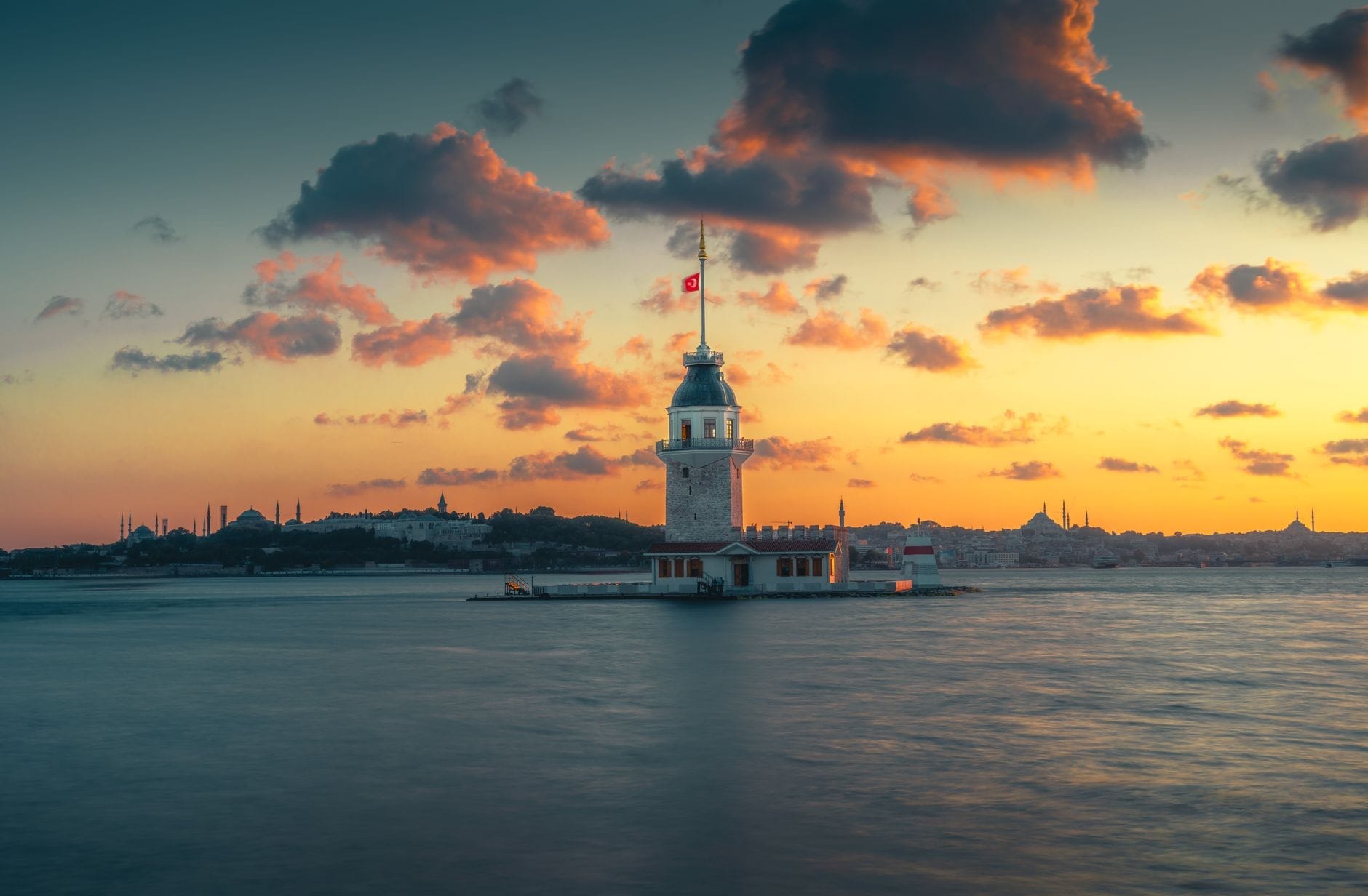
Kız Kulesi, or Maiden's Tower, is a small stone tower rising from its own private islet at the southern mouth of the Bosphorus Strait, roughly 200 meters from the Üsküdar waterfront. It is one of Istanbul's most photographed structures, appearing on postcards, paintings, and the reverse of the old 10-lira banknote. From almost any elevated point in central Istanbul, its silhouette is instantly recognizable: a cylindrical stone base capped with a conical roof, sitting alone in the middle of the water with the city spread out behind it.
The tower has been many things across its long history. The site is thought to have been used as a customs station controlled by the Athenian general Alcibiades in the early 5th century BC. A proper tower was constructed here during the Byzantine period under Emperor Manuel I Komnenos, who reigned from 1143 to 1180. A wooden structure on the islet burned in 1721, and the current stone tower dates to 1763. Over subsequent centuries it functioned as a lighthouse, quarantine station, and watchtower before eventually becoming a café and restaurant. A major restoration completed in 2023 brought the structure back to its best condition in decades.
ℹ️ Good to know
The tower is also known historically as Leander's Tower or the Tower of Leandros, a name derived from the Greek myth of Hero and Leander, though that legend is geographically associated with the Hellespont (Dardanelles), not the Bosphorus. The Turkish name Kız Kulesi translates directly as 'Maiden's Tower,' tied to a separate local Ottoman-era legend involving a sultan's daughter.
The Boat Crossing and Arrival
There is no bridge or causeway to Maiden's Tower. Access is entirely by boat, with services departing from Üsküdar (Salacak) and from Karaköy/Galataport on the European side. The crossings are short, just a few minutes each way, but the ride itself is part of the experience. On the Üsküdar approach you are looking directly at the European skyline — the minarets of the historic peninsula, the hills of Beyoğlu, and the Bosphorus traffic of tankers and ferries all in a single frame. From Kabataş, you cross the water looking back toward the Asian shore with the tower growing larger in front of you.
Admission is typically bundled with the boat transfer rather than sold separately, so there is no ticket booth on the Üsküdar waterfront to hunt for. Purchase tickets in advance online to avoid waiting, particularly during weekends and public holidays when demand is highest. The islet itself is small, with limited space on the surrounding platform, so crowds can feel concentrated even when total visitor numbers are moderate.
💡 Local tip
Book tickets online before you arrive. Walk-up availability on weekends and in summer can be limited, and pre-booking often confirms a specific departure time for the boat, reducing waterfront waiting.
Tickets & tours
Hand-picked options from our booking partner. Prices are indicative; availability and final rates are confirmed when you complete your booking.
Maiden's Tower Entry Ticket with Audio Guide
From 39 €Instant confirmationFree cancellationGalata Tower Skip-the-Line Ticket with Audio Guided Tour
From 47 €Instant confirmationFree cancellationIstanbul Camlica Tower Entry Ticket with Free Tea or Turkish Coffee
From 25 €Instant confirmationFree cancellationBasilica Cistern, Galata Tower, Topkapi Palace, Hagia Sophia ticket
From 178 €Instant confirmationFree cancellation
What You See Inside and on the Terrace
After the 2023 restoration, the interior has been reorganized as a museum and exhibition space covering the tower's layered history, with displays on its Byzantine, Ottoman, and modern roles. The interiors are compact. The tower was never large, and the circular rooms stack vertically with narrow stairs connecting them. Visitors with mobility limitations should be aware that the interior is almost entirely staircase-dependent; the tower is not considered accessible for wheelchairs or strollers, and those with mobility concerns should contact the operator directly before booking.
The terrace at the top is where the visit earns its price. On a clear day the panorama takes in the Sea of Marmara to the south, the full sweep of the European and Asian Bosphorus shores, the minarets of Sultanahmet, Süleymaniye, and the roofline of Topkapı Palace. The water directly below catches the light differently at every hour — silver-grey under morning cloud, deep blue by midday, and gold-to-amber in the hour before sunset. If the visibility is poor due to sea fog or heavy rain, the tower loses much of its appeal; clear or partly cloudy days are strongly preferable.
The terrace is the best photography position in Istanbul for capturing the European skyline from water level, including the Blue Mosque and Hagia Sophia framed together across the water. A wide-angle lens or a standard smartphone camera is sufficient; the distance is not so great that a telephoto is necessary.
How the Experience Changes by Time of Day
Morning visits, when the tower opens at 09:00, offer the fewest crowds and the softest light on the European skyline. The Bosphorus at this hour carries heavy commercial traffic, which adds a sense of the strait as a working waterway rather than a scenic backdrop. The air often smells of salt and diesel in equal measure, and the ferry horns of the Şehir Hatları boats passing between Eminönü, Üsküdar, and Beşiktaş give a low, steady background rhythm to the morning.
Midday is the busiest period. Visitor groups arrive in clusters tied to boat departure times, and the small platform can feel crowded. The light is harsher for photography, and the café inside offers limited respite when the terrace is packed. If your priority is the view rather than the meal, a late-morning visit just before the lunch rush is the practical compromise.
The hour before closing is often quieter again. The light on the Asian shore turns warm, and the European skyline begins to pick up the amber tones that make it look like an Ottoman miniature painting. On some evenings, special restaurant services may be offered, transforming the visit into a dinner experience with the Bosphorus lit up below and the city glittering in the background; these operate under separate hours and pricing, so check current details directly with the operator.
Getting to Üsküdar and the Tower
Üsküdar is one of the most accessible points on the Asian shore. The Marmaray commuter rail line connects it directly to Sirkeci on the European side under the Bosphorus, and Şehir Hatları ferries run frequently from Eminönü and Beşiktaş. From Kadıköy, dolmuş minibuses and municipal buses cover the coastal road north to Üsküdar in under 20 minutes. For a broader sense of the neighborhood before or after the tower visit, the Üsküdar waterfront has its own character worth spending time in.
Boat services to the tower also depart from Kabataş on the European side, making it straightforward to combine with visits to Dolmabahçe Palace or a Bosphorus cruise on the same day. If you are building a full-day itinerary, plan the tower visit for the morning or early afternoon and leave the later hours for exploring the Üsküdar neighborhood on foot.
💡 Local tip
From Üsküdar pier, the tower boats depart from a designated dock slightly separate from the main ferry terminal. Look for the Kız Kulesi signage along the waterfront rather than heading to the main Şehir Hatları berths.
Is It Worth the Visit?
The price point is the most common sticking point. At around USD $46 for a bundled ticket (verify current prices before visiting), Maiden's Tower is one of Istanbul's more expensive individual attraction fees when compared to the Istanbul Museum Pass, which covers multiple major museums. The islet itself is tiny, the interior exhibition is modest in scale, and the time most visitors spend on the island rarely exceeds an hour. For that price, you are primarily paying for the boat transfer, the terrace views, and the right to say you stood inside the tower.
That said, the view from the terrace is genuinely singular. No other publicly accessible point in Istanbul gives you that particular perspective: standing in the middle of the Bosphorus, equidistant between Europe and Asia, with the full panorama of the city visible in every direction. Many of Istanbul's famous viewpoints look at the tower from the shore; this is the one place where the shore looks back at you from the tower. For first-time visitors with a strong interest in Istanbul's landscape and history, that experience has clear value.
Travelers on a tight budget may find the Galata Tower or Çamlıca Hill offer comparable or broader panoramas at lower cost. Those who skip Maiden's Tower miss the islet experience itself, not the view.
Practical Notes and What to Bring
The islet is exposed to Bosphorus wind regardless of season. Even in summer, a light layer is useful on the terrace. In winter the crossing and the terrace can be cold, and the sea can be choppy enough to make the brief boat ride uncomfortable for those with motion sensitivity. Spring and autumn, broadly April through June and September through October, offer the most reliable conditions for the outdoor portion of the visit.
There is no significant baggage storage or cloakroom on the islet. Keep bags to a manageable size. Photography is permitted throughout, and the terrace light in the late afternoon is the best window for images of the European skyline. Wide-angle captures work well; the full sweep from minaret to minaret across the Golden Horn requires a lens that can take in roughly 120 degrees.
If you are planning a broader day across the Asian shore, the Mihrimah Sultan Mosque in Üsküdar is a short walk from the waterfront and is an underappreciated work by the great Ottoman architect Sinan. The Asian side of Istanbul rewards a full afternoon of exploration beyond the tower itself.
Insider Tips
- Book the first morning boat on a weekday. The platform is near-empty before 10:30, the light is soft on the European skyline, and the Bosphorus traffic is at its most active, with tankers and ferries providing constant movement in the background.
- The tower appears at its most photogenic from the outside, not from within. For the classic postcard shot with the full Bosphorus behind it, take a Şehir Hatları ferry between Eminönü and Kadıköy: the route passes close to the islet and gives you a free, unobstructed view from the water level without paying admission.
- If you are visiting primarily for the evening restaurant experience, note that any special dinner services operate under separate hours and require a different reservation from the daytime ticket. Confirm availability, exact hours, and current pricing directly with the operator well in advance.
- Wear rubber-soled shoes. The dock approach can be wet and the stone surfaces on the islet become slippery in rain or sea spray.
- Check weather forecasts with particular attention to visibility. Sea fog in winter and haze in late summer can reduce the terrace views to a grey wall of mist, which makes the visit much less rewarding. A clear or partly cloudy day makes a meaningful difference.
Who Is Maiden's Tower (Kız Kulesi) For?
- First-time visitors to Istanbul who want to experience the Bosphorus from the water
- Photographers targeting the European skyline from a mid-strait position
- Couples looking for an atmospheric evening dinner with Bosphorus views
- History enthusiasts interested in Byzantine and Ottoman waterway infrastructure
- Travelers combining an Asian-side day with Üsküdar neighborhood exploration
Nearby Attractions
Other things to see while in Üsküdar:
- Beylerbeyi Palace
Beylerbeyi Palace is Istanbul's most elegant waterfront royal residence, built in the mid-1860s (completed between 1861 and 1865) as a summer retreat and diplomatic guesthouse for Ottoman Sultan Abdülaziz. Sitting directly on the Asian bank of the Bosphorus, it offers a quieter, more intimate alternative to Dolmabahçe, with 26 rooms, six ceremonial halls, and gardens that frame one of the city's finest waterway views.
- Çamlıca Hill
Büyük Çamlıca Tepesi rises around 280 metres above the Asian shore of the Bosphorus, offering unobstructed views across both sides of Istanbul. Free to enter and accessible from Üsküdar, it rewards visitors who time their visit well and punishes those who arrive without checking the weather.
- Çamlıca Mosque
Rising from Çamlıca Hill above Üsküdar, the Grand Çamlıca Mosque is Turkey's largest place of worship, with six minarets, a 72-metre dome, and sweeping views across both sides of Istanbul. Entry is free, and the complex is open daily to visitors and worshippers alike.
- Mihrimah Sultan Mosque (Üsküdar)
Overlooking the waterfront in Üsküdar’s historic center since 1548, the Mihrimah Sultan Mosque was designed by Mimar Sinan for the daughter of Suleiman the Magnificent. It is free to enter, seconds from the ferry pier, and one of the most graceful pieces of Ottoman architecture on the Asian shore.