Beylerbeyi Palace: Ottoman Grandeur on the Asian Shore of the Bosphorus
Beylerbeyi Palace is Istanbul's most elegant waterfront royal residence, built in the mid-1860s (completed between 1861 and 1865) as a summer retreat and diplomatic guesthouse for Ottoman Sultan Abdülaziz. Sitting directly on the Asian bank of the Bosphorus, it offers a quieter, more intimate alternative to Dolmabahçe, with 26 rooms, six ceremonial halls, and gardens that frame one of the city's finest waterway views.
Quick Facts
- Location
- Beylerbeyi neighborhood, Üsküdar district, Asian shore of the Bosphorus, Istanbul
- Getting There
- Take a ferry to Üsküdar, then a taxi or bus north to Beylerbeyi (approx. 10–15 min ride). Alternatively, bus from Kadıköy or Beşiktaş. Immediately north of the Bosphorus Bridge on the Asian side.
- Time Needed
- 1.5 to 2 hours for palace tour and gardens
- Cost
- 800 TL (foreign visitors, includes audioguide); 200 TL (domestic); 100 TL (gardens only). Verify before visiting — prices change.
- Best for
- Ottoman architecture, diplomatic history, Bosphorus scenery, photography of the exterior and gardens
- Official website
- millisaraylar.gov.tr
What Is Beylerbeyi Palace and Why Does It Matter?
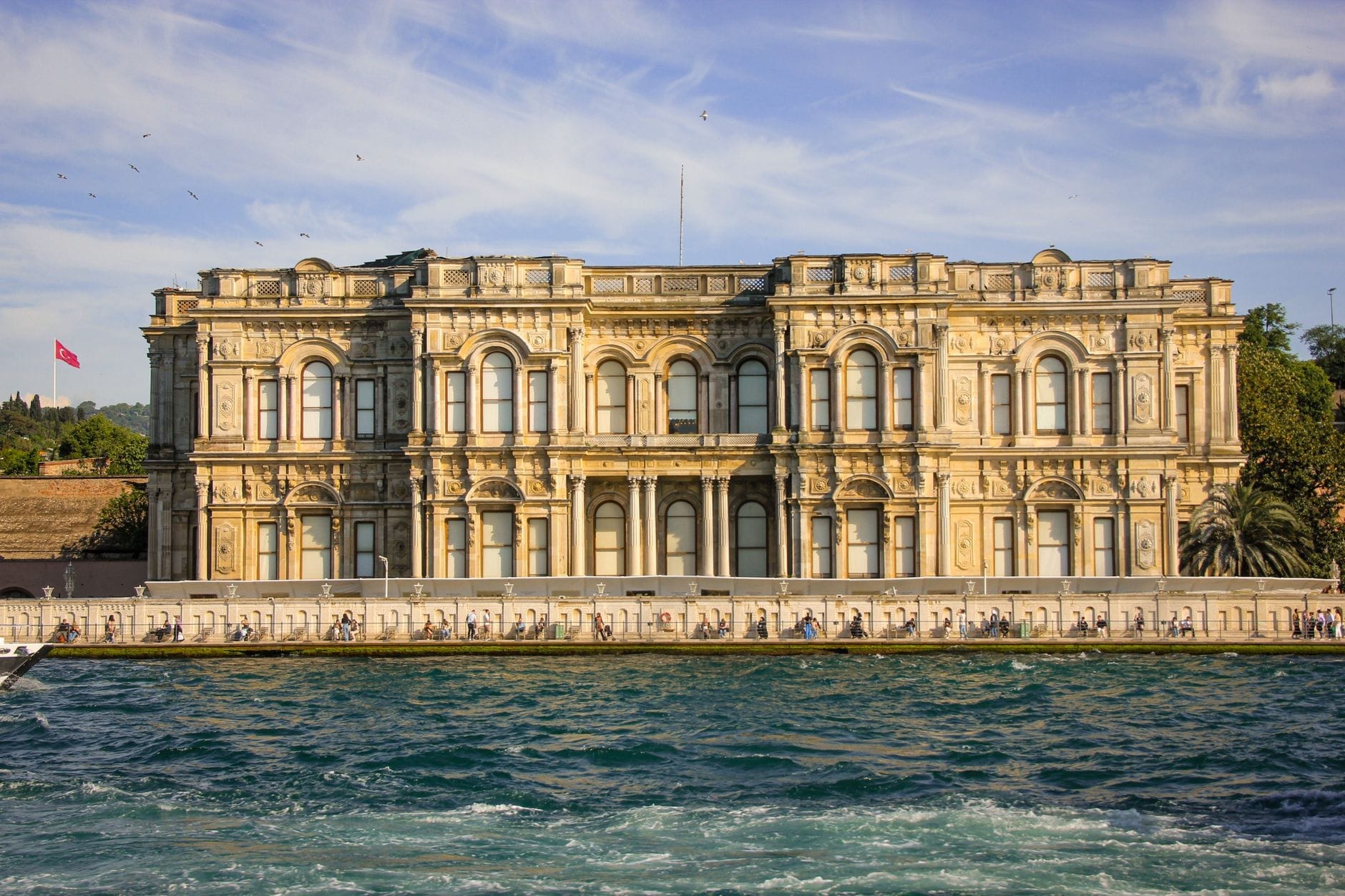
Beylerbeyi Palace (Turkish: Beylerbeyi Sarayı) stands on the Asian bank of the Bosphorus in Istanbul's Üsküdar district, a three-story marble structure that reads almost like a reflection of European classicism filtered through Ottoman taste. Built in the mid-1860s (completed between 1861 and 1865) on the orders of Sultan Abdülaziz and designed by the brothers Sarkis and Agop Balyan — members of the prominent Armenian architectural dynasty that shaped much of 19th-century Istanbul — the palace was never meant to be the seat of imperial government. It was something more specific: a place to impress.
Foreign royalty and heads of state were received here while the main court remained at Dolmabahçe across the water. Empress Eugénie of France, wife of Napoleon III, stayed at Beylerbeyi in 1869 on her way to the opening of the Suez Canal, reportedly admiring the building so much that she used its window designs as inspiration for interior decorations back in Paris. The palace later served as a gilded prison of sorts: Sultan Abdülhamid II spent the final years of his life here after being deposed in 1909, dying within its walls in 1918.
That combination — diplomatic showpiece, summer escape, and reluctant final chapter for a deposed sultan — gives Beylerbeyi a layered quality that purely ceremonial palaces sometimes lack. For visitors interested in Istanbul's Ottoman history, the palace offers a more contemplative experience than the grander but more crowded Dolmabahçe on the European shore.
💡 Local tip
Photography is not permitted inside the palace. If you want to capture the architecture, focus on the exterior facades, the gardens, and the Bosphorus-facing terrace before entering. Morning light hits the white marble facade from the east, making pre-11am the best window for exterior shots.
The Architecture: What You Actually See
The palace sits low and wide along the waterfront, its white limestone facade punctuated by tall arched windows and ornate balconies that lean toward a hybrid Ottoman-Baroque style. The Balyan brothers trained in Paris and brought European compositional principles back to Istanbul, but at Beylerbeyi they tempered the grandeur with proportions that feel almost residential. Unlike the theatrical scale of Dolmabahçe, Beylerbeyi reads as refined rather than overwhelming.
The interior holds 26 rooms in total, including six ceremonial halls, arranged across three floors. The furnishings are largely original, including large Bohemian crystal chandeliers, gilded mirror frames, hand-knotted Hereke carpets, and custom-designed furniture crafted from walnut and rosewood. Ceilings are painted with floral and geometric motifs rather than heavy fresco scenes, keeping the atmosphere lighter than in many European palaces of the same era. Visitors follow a set guided route through the public rooms, which preserves the space well but means you cannot linger freely.
The marble pool on the ground floor, designed to cool the air naturally through evaporation, is one of the more architecturally inventive features in the building. It sits in a high-ceilinged hall where the sound of water and the temperature drop are both immediately noticeable in summer.
Tickets & tours
Hand-picked options from our booking partner. Prices are indicative; availability and final rates are confirmed when you complete your booking.
Beylerbeyi Palace Skip-the-Line Ticket with Audio Guide
From 21 €Instant confirmationFree cancellationBosphorus sunset cruise on luxury yacht with guide
From 55 €Free cancellationIstanbul and Bosphorus cruise on private boat - half day afternoon tour
From 40 €Instant confirmationFree cancellationWhirling Dervishes live show and exhibition
From 29 €Instant confirmation
The Gardens and the Waterfront Setting
The gardens at Beylerbeyi are worth visiting even if you skip the interior. Three notable kiosks stand in the grounds and upper terraces: the Ahır Köşkü (Stable Pavilion), built to house the sultan’s horses, and the Sarı Köşk and Mermer Köşk, which functioned as smaller pavilions within the palace complex. The landscaping is formal without being stiff, with mature Mediterranean cypress trees, rose plantings, and a series of terraced paths leading down toward the Bosphorus edge.
The view from the lower garden is one of the more quietly dramatic Bosphorus perspectives you can find in Istanbul. Tankers and ferries pass close to shore; the European skyline with the minarets of the old city is visible on clear days. The garden-only ticket at 100 TL makes this a low-cost option if your main interest is the waterfront setting rather than the palace interior.
If the gardens give you an appetite for more Bosphorus scenery, the surrounding area of Üsküdar has several worthwhile stops. The Maiden's Tower sits just offshore and is visible from the waterfront walk south of the palace. The neighborhood itself has a calm, residential character distinct from the more tourist-heavy European side.
Visiting by Time of Day: How the Experience Shifts
Arriving at opening time around 09:00 gives you the best chance of exploring before the midday rush. The palace visit follows a fixed route through the rooms rather than completely free roaming, so you still move broadly in sequence even if you can pause briefly in each space. Early morning also means cooler temperatures inside the palace during summer, since the stone interiors retain nighttime cool for the first few hours.
By early afternoon, particularly in summer, the gardens fill with families and the tour groups cycle through more quickly. The light on the Bosphorus is high and flat in the middle of the day, which reduces drama in exterior photographs but makes the gardens pleasant for walking. Late afternoon, from around 15:30 onward, sees the crowds thin noticeably and the waterfront light soften as the sun moves west toward the European shore.
⚠️ What to skip
The palace is closed on Mondays. Always confirm current opening hours before visiting — seasonal schedules can affect opening and closing times. The general pattern is 09:00 to 17:30 (last entry around 17:00), but this is subject to change.
Getting to Beylerbeyi Palace
The palace is on the Asian side, in the Beylerbeyi sub-district of Üsküdar, immediately north of the 15 July Martyrs Bridge (the first Bosphorus Bridge). The most practical approach from the European side is to take a ferry to Üsküdar from Eminönü or Beşiktaş, then a taxi or local bus north to the palace. The ride from Üsküdar ferry dock to the palace gate takes roughly 10 to 15 minutes depending on traffic.
If you are already on the Asian side, buses from Kadıköy pass through Üsküdar and continue toward Beylerbeyi. The Marmaray commuter rail also connects European stations to Üsküdar, making it easier to reach the Asian shore without a ferry. For a fuller picture of transit options across the city, the getting around Istanbul guide covers Istanbulkart usage and route planning in detail.
Taxis from Üsküdar ferry terminal are straightforward and metered. The palace has a visible entrance gate and parking area, so drivers will know the destination by name.
Practical Details for Visitors
All visitors must wear protective booties over their shoes inside the palace — these are provided at the entrance. Tours follow a fixed route through the rooms; English-language audioguides are included with the foreign visitor ticket (800 TL as per the latest official tariff, but prices adjust periodically, so verify before purchasing online or at the gate). The domestic ticket is 200 TL, and the garden-only entrance is 100 TL.
The building is a three-story 19th-century structure without modern lift installation, which makes full access difficult for visitors with mobility limitations. There is no detailed accessibility information available from official sources at this time, so visitors with specific requirements should contact the palace administration directly before planning their trip.
Weather affects the experience meaningfully. In winter, the gardens lose much of their visual appeal and the Bosphorus can be grey and rough, but the interior tour remains unchanged. On overcast days the marble facade appears flat rather than luminous. Spring (April to June) and early autumn (September to October) offer the best conditions: mild temperatures, clear water, and the chance of fog lifting off the strait in the morning.
Beylerbeyi pairs naturally with a visit to Dolmabahçe Palace on the European side for a full comparison of late Ottoman imperial architecture — though doing both in a single day requires an early start and comfortable shoes. The two palaces represent distinct personalities despite sharing the same Balyan architectural lineage.
Who Should Consider Skipping It
Beylerbeyi Palace is a focused, medium-depth attraction rather than a landmark experience. Visitors with limited time in Istanbul who need to prioritize will likely find that Topkapı or Dolmabahçe deliver more visual range and historical scope. If your interest in Ottoman interiors is casual rather than deliberate, the palace may feel like a repetition of themes you have already seen.
The mandatory guided tour format also means you cannot move at your own pace or double back to linger in rooms that interest you. Visitors who prefer open, self-paced exploration of historic spaces may find the format slightly restrictive. Photography restrictions inside the palace can also be frustrating for travelers whose primary mode of engagement is visual documentation.
For those primarily interested in the Asian side of the city rather than the palace itself, Üsküdar's waterfront, the Mihrimah Sultan Mosque, and the streets around the ferry terminal offer a full afternoon of exploration without entering any ticketed attraction.
Insider Tips
- Book or arrive early on weekday mornings to join a smaller tour group. Weekend afternoons can mean waiting through multiple group cycles before your turn starts.
- The garden-only ticket at 100 TL is a legitimate option if you are on a budget or short on time. The Bosphorus view from the lower garden is one of the most underrated vantage points on the Asian shore.
- Bring a lightweight bag rather than a large backpack — storage space at the entrance is limited and oversized bags may not be permitted on the tour.
- The palace sits directly under the approach path of the Bosphorus Bridge. Early morning and late afternoon ferry traffic on the strait makes for good photography from the garden, especially with a telephoto lens.
- Combine the visit with the Üsküdar neighborhood by arriving via the Şehir Hatları ferry from Eminönü. The ferry crossing itself takes about 20 minutes and offers good views of the historic peninsula before you reach the Asian shore.
Who Is Beylerbeyi Palace For?
- History travelers with a specific interest in late Ottoman court life and 19th-century imperial architecture
- Visitors who have already seen Dolmabahçe and want a quieter, less crowded comparison point
- Photography enthusiasts focused on exterior architecture and Bosphorus waterfront scenes
- Travelers exploring the Asian side of Istanbul who want a structured cultural anchor to their day
- Couples and small groups looking for a scenic afternoon that combines a historic site with waterfront walking
Nearby Attractions
Other things to see while in Üsküdar:
- Çamlıca Hill
Büyük Çamlıca Tepesi rises around 280 metres above the Asian shore of the Bosphorus, offering unobstructed views across both sides of Istanbul. Free to enter and accessible from Üsküdar, it rewards visitors who time their visit well and punishes those who arrive without checking the weather.
- Çamlıca Mosque
Rising from Çamlıca Hill above Üsküdar, the Grand Çamlıca Mosque is Turkey's largest place of worship, with six minarets, a 72-metre dome, and sweeping views across both sides of Istanbul. Entry is free, and the complex is open daily to visitors and worshippers alike.
- Maiden's Tower (Kız Kulesi)
Perched on a small rocky islet about 200 meters off the Üsküdar shore, Maiden's Tower is one of Istanbul's most recognizable silhouettes. The tower has served as a customs post, lighthouse, watchtower, and restaurant over its long history, and a 2023 restoration has returned it to sharp condition. Getting there requires a short boat crossing, and the panoramic views of the Bosphorus from the terrace are the real reward.
- Mihrimah Sultan Mosque (Üsküdar)
Overlooking the waterfront in Üsküdar’s historic center since 1548, the Mihrimah Sultan Mosque was designed by Mimar Sinan for the daughter of Suleiman the Magnificent. It is free to enter, seconds from the ferry pier, and one of the most graceful pieces of Ottoman architecture on the Asian shore.