Dolmabahçe Palace: Ottoman Grandeur on the Bosphorus
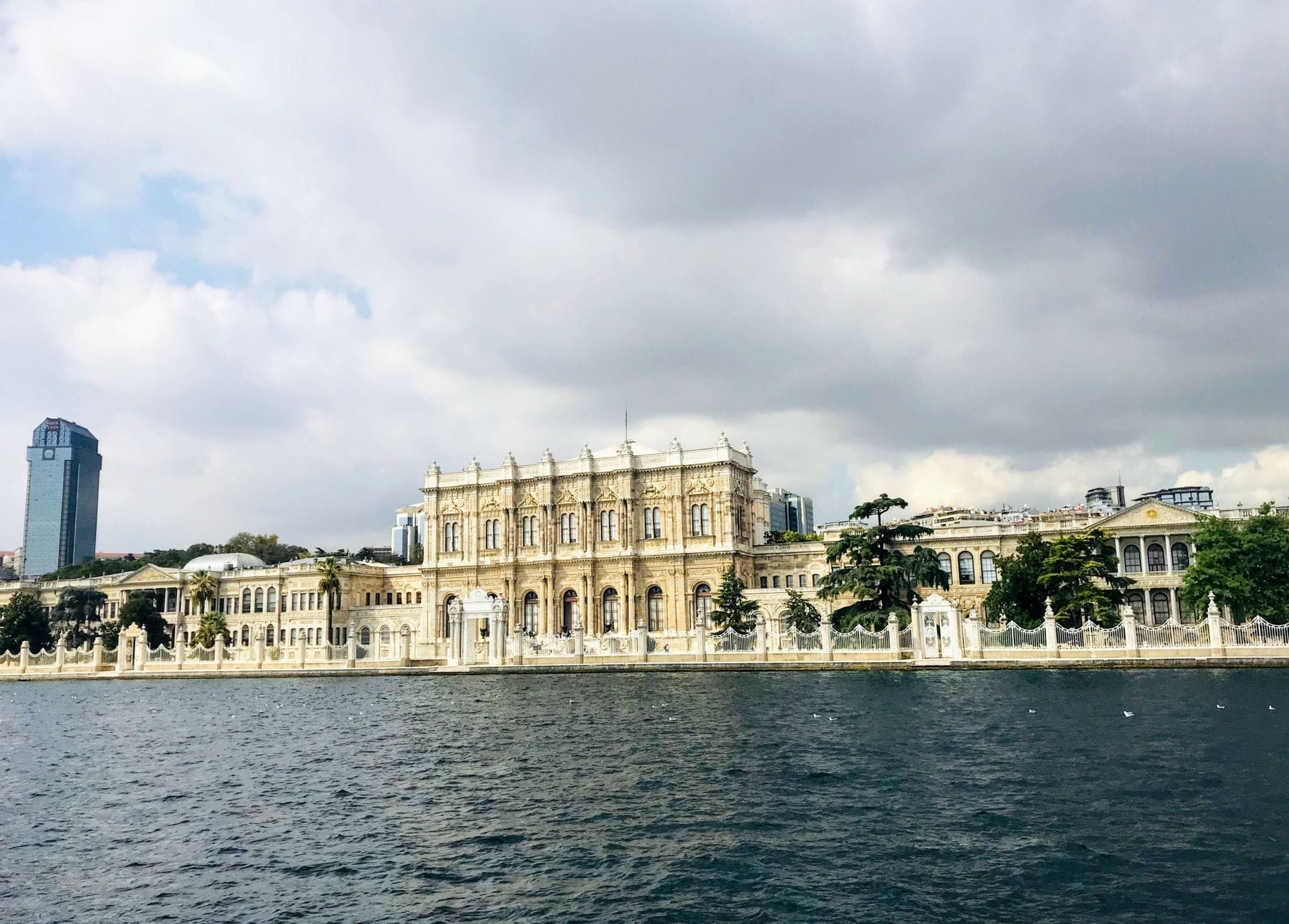
Dolmabahçe Palace stretches along the European shore of the Bosphorus in Beşiktaş, combining Ottoman imperial ambition with 19th-century European Baroque and Neoclassical styles in a single vast complex. Built between 1843 and 1856, it served as the administrative center of the late Ottoman Empire and later as a residence where Mustafa Kemal Atatürk spent his final days and died. With 285 rooms, monumental ceremonial halls, and a waterfront facade that commands the strait, it is among the most architecturally significant palaces on the continent.
Quick Facts
- Location
- Vişnezade, Dolmabahçe Caddesi, Beşiktaş, Istanbul (European side, Bosphorus waterfront)
- Getting There
- Bus or taxi to Beşiktaş; the palace is walkable from Kabataş tram stop (T1 line). Ferries run to the nearby Beşiktaş pier.
- Time Needed
- 2–4 hours depending on which sections you visit (Selamlık, Harem, and museum collections each take significant time)
- Cost
- Paid entry; ticket prices in Turkish lira vary by section. Verify current rates at millisaraylar.gov.tr before visiting.
- Best for
- History enthusiasts, architecture lovers, Ottoman and early Republican-era cultural interest
- Official website
- millisaraylar.gov.tr
What Dolmabahçe Palace Actually Is
Dolmabahçe Palace is not a fortress or a walled citadel. It is a sprawling, single-block palace built in the European palace tradition, set directly on the Bosphorus waterfront with a roughly 600-meter-long sea facade. Sultan Abdülmecid I commissioned it in 1843 as a deliberate architectural statement: the Ottoman Empire was modernizing, and its imperial seat would look like a European royal palace, not a medieval fortress. Construction was completed in 1856 at enormous cost, drawing on Baroque, Neoclassical, and Rococo vocabularies while layering in Ottoman ornamental detail throughout.
The result is a building of genuine scale. Britannica describes it as the largest and most sumptuous palace in Turkey, and the numbers support that: 285 rooms, 46 halls, 6 hammams, and 68 toilets spread across a footprint that was once cited as the largest monoblock palace building in the country. What makes it worth visiting beyond the statistics is the interior: gilded ceilings, crystal chandeliers commissioned from Bohemia and Baccarat, parquet floors of rare wood, and an overall atmosphere of 19th-century imperial ambition that is hard to find anywhere else in Istanbul.
ℹ️ Good to know
The palace is open Tuesday through Sunday, generally from 09:00 to around 17:00. Closing time and last entry can vary slightly by season and ticket type, and hours can shift for national holidays or special events. Always check millisaraylar.gov.tr for current hours before you go.
The Layout: Two Palaces in One
Dolmabahçe is divided into two main sections, each sold as a separate ticket or combined in certain packages. The Selamlık (State Apartments) was the ceremonial and administrative wing where sultans received foreign ambassadors and held official functions. The Harem-Mabeyn complex was the private residential quarter. These are not simply different rooms in the same corridor: they reflect a formal spatial logic about Ottoman court life, with clear boundaries between public power and private life.
The centerpiece of the Selamlık is the Ceremonial Hall, which contains one of the largest chandeliers in the world: a Bohemian crystal chandelier weighing approximately 4.5 tonnes and holding around 750 lamps. The ceiling above it is among the most photographed interior spaces in Istanbul. Whether you find this overwhelming or magnificent will likely determine how much you enjoy the palace overall, because this level of ornamental density is consistent throughout.
The Harem section is equally large and more intimate in scale, with rooms designed for family life, education, and leisure rather than formal ceremony. Both wings open onto manicured gardens that separate the palace interior from the Bosphorus shoreline. The gardens are accessible with a palace ticket and offer unobstructed views of the strait and the Asian shore. For context on how this palace fits into the broader Ottoman architectural legacy across Istanbul, the Istanbul Ottoman history guide covers the wider picture.
Tickets & tours
Hand-picked options from our booking partner. Prices are indicative; availability and final rates are confirmed when you complete your booking.
Dolmabahce Palace and Two Continents tour
From 50 €Instant confirmationFree cancellationTopkapi Palace, Dolmabahce Palace, Hagia Sophia Skip-the-Line Ticket
From 140 €Instant confirmationFree cancellationBasilica Cistern, Topkapi, Dolmabahce and Hagia Sophia combo ticket
From 174 €Instant confirmationFree cancellationDolmabahce Palace, Hagia Sophia, Basilica Cistern Skip-the-Line Ticket
From 110 €Instant confirmationFree cancellation
What the Visit Feels Like at Different Times
Arriving early, shortly after the 09:00 opening, is the clearest advantage a visitor can have here. The mandatory guided tour format means groups form at the entrance and move through rooms in sequence. In the first hour of the day, those groups are small and the palace is quiet enough to hear your footsteps on the parquet. The morning light entering from the Bosphorus side catches the crystal chandeliers and gilded surfaces in a way that afternoon light, diffused and flatter, does not replicate.
By mid-morning, tour groups from cruise ships and organized excursions begin arriving. The Ceremonial Hall, already a tight space for photography with roped barriers keeping visitors to the edges, becomes crowded. The audio from multiple tour guides in different languages overlaps. If you are there primarily for the interior architecture and want to process what you are seeing, late arrivals make that difficult.
Late afternoon, particularly in the final hour before closing, sees numbers thin again. The quality of light is lower and the gardens can feel slightly rushed if staff are beginning to clear sections, but the trade-off in crowd reduction is real. Weekdays are consistently less busy than weekends, and avoiding Turkish public holidays will make a noticeable difference.
💡 Local tip
Visits are often conducted in guided groups, especially in the main halls, but audio guides and more self-paced routes are also available depending on current regulations. Check the format at the entrance so you know whether you will be in a guided group or can move independently.
The Atatürk Connection: A Room Frozen in Time
One of the most affecting details in the palace is not architectural. Mustafa Kemal Atatürk, the founder of the Turkish Republic, died in Dolmabahçe Palace on 10 November 1938. His bedroom is preserved, and the clock in that room is famously stopped at 09:05, the recorded time of his death. The stillness of those stopped clock faces in an otherwise ornate and busy interior carries a weight that purely architectural tourism does not.
Every year on 10 November, Turkey observes a national moment of silence at 09:05. At Dolmabahçe, this moment has particular gravity. Understanding this layer of the palace's history requires some background in early Republican Turkey, which the Istanbul history guide touches on in broader context.
Getting There and Moving Through the Area
Dolmabahçe Palace sits in Beşiktaş, one of Istanbul's most connected districts on the European Bosphorus shore. The most practical approach for most visitors is the T1 tram, which runs from Bağcılar through the historic peninsula and terminates at Kabataş, a 10-15 minute walk from the palace entrance. From Kabataş you follow the shoreline north along Dolmabahçe Caddesi: the palace walls and gates appear on your left. Taxis from Sultanahmet or Taksim are straightforward and take roughly 15-25 minutes depending on traffic, which on this coastal road can be heavy in the late morning.
Coming by ferry is a pleasant alternative: the Beşiktaş ferry pier is served by city ferries from Eminönü, Karaköy, and the Asian shore. A ferry crossing followed by a 10-minute walk along the waterfront is a genuinely enjoyable way to approach the palace. The Bosphorus cruise guide includes ferry logistics and broader options for seeing the Bosphorus waterfront.
The palace has two gates: the Treasury Gate (Hazine Kapısı) on the sea side and the Imperial Gate (Saltanat Kapısı) on the land side. Ticket purchase and tour group assembly happen at the main entrance on Dolmabahçe Caddesi. Bags are checked. Large luggage is not permitted inside, so do not come directly from your hotel with a suitcase.
Photography, Practicalities, and Known Limitations
Photography is permitted in most areas of the palace without flash, though specific rooms may be restricted and this can change. The interiors are heavily lit with artificial light supplementing the natural light from tall windows, which means camera settings need adjustment. The Ceremonial Hall is too large and bright for most phone cameras to handle without visible distortion or blown highlights. A camera with manual exposure control produces significantly better results.
Footwear matters: you will wear plastic overshoes provided at the entrance to protect the parquet floors. These are provided free and worn over your own shoes. Comfortable walking shoes underneath make a long circuit much easier. There are no coat or bag check facilities clearly indicated in visitor accounts, so travel light.
On the question of who should reconsider this visit: if Ottoman or 19th-century European decorative arts are not interesting to you, the palace can feel like an extended exercise in gilded excess. The mandatory guided tour format removes the freedom to linger or skip, and English-language tours do not always run at convenient intervals. Budget travelers should also note that ticket prices in Turkish lira, while subject to change, have been increasing with inflation and are no longer negligible. Verify current prices at millisaraylar.gov.tr before building your budget.
⚠️ What to skip
The palace is closed on Mondays and on some national holidays. Ticket prices are in Turkish lira and are set separately for the Selamlık and Harem sections. The Istanbul Museum Pass does not currently include Dolmabahçe Palace, but confirm this before visiting, as pass inclusions can change.
The Surrounding Area: Making a Full Day
Dolmabahçe sits at the foot of Beşiktaş, a district with good lunch options along the main streets behind the palace. Ortaköy, further north along the Bosphorus coast, is a 20-minute walk or short taxi ride and has a waterfront square with cafes and the photogenic Ortaköy Mosque overlooking the Bosphorus Bridge. The combination of the palace in the morning and Ortaköy in the afternoon works well as a single Bosphorus-focused day.
Alternatively, combine Dolmabahçe with Yıldız Palace, the late Ottoman imperial retreat set in forested grounds above Beşiktaş, for a day focused entirely on the palaces of this stretch of the Bosphorus. The two are distinct in character: Dolmabahçe is theatrical and waterfront-facing, Yıldız is more secluded and less visited.
Insider Tips
- Book tickets online via millisaraylar.gov.tr in advance, especially for weekends and summer months. Walk-up queues for ticket purchase can add 30-45 minutes to your arrival time.
- If you are choosing between the Selamlık and the Harem and can only do one, the Selamlık contains the Ceremonial Hall and is architecturally the more dramatic. The Harem gives a richer sense of daily imperial life but is less visually overwhelming.
- The palace garden facing the Bosphorus is often overlooked: after the interior tour ends, take 10 minutes to walk to the waterfront terrace. The view of the strait from palace-level is one of the better Bosphorus viewpoints in this part of the city.
- Atatürk's bedroom and the stopped clocks are in the Selamlık section, not the Harem. If seeing this room is your primary reason for visiting, confirm with staff at entry that it is accessible on the day you are visiting, as restoration work can occasionally close specific rooms.
- The guided tour pace is set by your guide and the group: if your English-language group moves faster than you would like, note room numbers or details to photograph and research later. Trying to break away from the group is not permitted and will cause friction with staff.
Who Is Dolmabahçe Palace For?
- Travelers with a serious interest in Ottoman history and late imperial court culture
- Architecture enthusiasts drawn to 19th-century European-Ottoman stylistic fusion
- History visitors tracing Atatürk's life and the founding of the Turkish Republic
- Those doing a dedicated Bosphorus itinerary combining palaces, waterfront neighborhoods, and sea views
- Photographers with a specific interest in ornate interior spaces and historical detail
Nearby Attractions
Other things to see while in Beşiktaş & Ortaköy:
- Ortaköy Mosque
Standing directly on the Bosphorus shoreline in the Ortaköy neighborhood of Beşiktaş, the Büyük Mecidiye Camii is a 19th-century neo-Baroque mosque framed by the Bosphorus Bridge. Entry is free, the setting is extraordinary, and the surrounding square is one of the liveliest spots on the European waterfront.
- Yıldız Palace & Park
Yıldız Palace is the sprawling late-Ottoman complex where Sultan Abdülhamid II ruled an empire for 33 years. Set across 50 hectares of forested hillside in Beşiktaş, it combines imperial pavilions, a porcelain factory, and one of Istanbul's most undervisited public parks — all with Bosphorus views.