Yıldız Palace & Park: The Ottoman Court Above the Bosphorus
Yıldız Palace is the sprawling late-Ottoman complex where Sultan Abdülhamid II ruled an empire for 33 years. Set across 50 hectares of forested hillside in Beşiktaş, it combines imperial pavilions, a porcelain factory, and one of Istanbul's most undervisited public parks — all with Bosphorus views.
Quick Facts
- Location
- Yıldız Mah., Beşiktaş, Istanbul (European side, Bosphorus hillside)
- Getting There
- M7 metro to Yıldız station; buses 29/41/43/62 from Taksim; ferry to Beşiktaş pier then uphill bus or walk
- Time Needed
- 2–4 hours for palace + park; half a day if exploring thoroughly
- Cost
- Foreign visitors: 850 TRY; domestic: 150 TRY; children under 6: free. Museum Pass Türkiye accepted (except picnic areas & some special sections). Verify prices before visiting.
- Best for
- Ottoman history, quiet green space, Bosphorus viewpoints, photography, picnics
- Official website
- millisaraylar.gov.tr
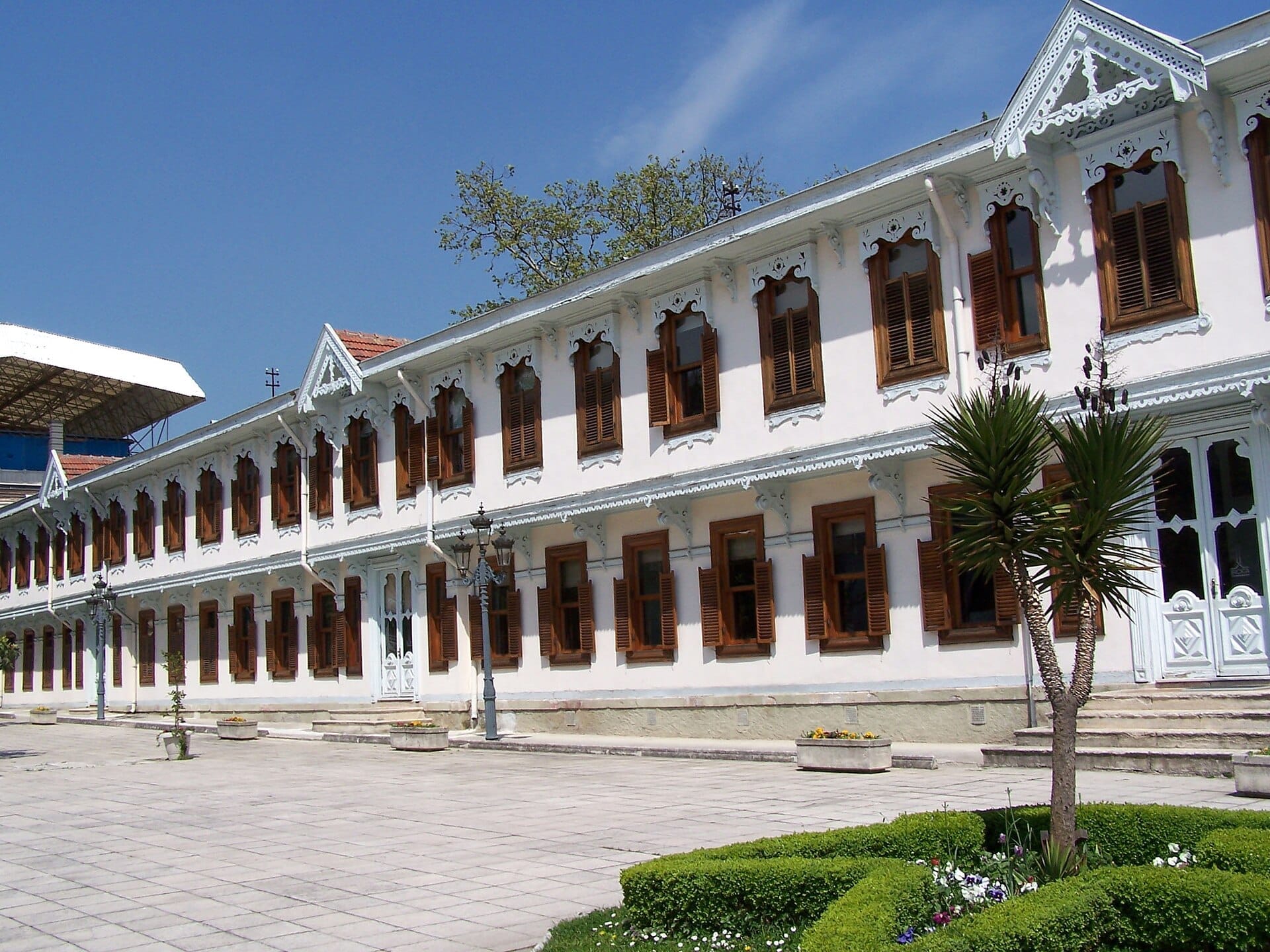
What Yıldız Palace Actually Is
Yıldız Palace — Yıldız Sarayı in Turkish, meaning 'Star Palace' — is not a single building but a collection of pavilions, kiosks, gardens, and support structures spread across roughly 50 hectares of wooded hillside above the Bosphorus in the Beşiktaş district. Most visitors picture a compact royal residence. The reality is closer to a self-contained imperial village: there was a theatre, a carpentry workshop, a porcelain factory, stables, greenhouses, and accommodation for hundreds of staff, all enclosed within high walls and tiered terraces that step down toward the waterway below.
The complex is administered by Turkey's National Palaces Administration (Milli Saraylar), the same body that manages Dolmabahçe and Beylerbeyi. Not all of the grounds are open to casual visitors at once — some sections are used by Yıldız Technical University, and the layout can be confusing without a site map. But that same scale is precisely what makes a morning here feel different from any other palace visit in the city: you can wander forested paths for twenty minutes without seeing another tourist.
ℹ️ Good to know
Opening hours and ticket prices change periodically. Current reported hours are approximately 09:00–17:00/17:30, with the ticket office closing around 17:00–17:30. The palace is reported to close on Wednesdays or Mondays (and on many public holidays, and during Ramadan and Eid al-Adha). Confirm locally or via the official Milli Saraylar website before visiting.
The History Behind the Walls
Yıldız's imperial history is bound almost entirely to one sultan. Abdülhamid II moved the Ottoman court here from Dolmabahçe Palace in April 1877, and for the next 33 years — until his deposition by the Young Turks in 1909 — this hillside compound functioned as the actual seat of Ottoman government. Ministers received audiences here. Foreign dignitaries arrived here. The telegraph lines that connected an empire to its provinces ran through these walls. The palace was not a retreat; it was where decisions were made.
The reasons for the move were partly personal: Abdülhamid II was notably security-conscious, and Yıldız's elevated, walled position suited a sultan who survived multiple assassination attempts. The forested grounds were easier to control than Dolmabahçe's exposed waterfront setting. He expanded the complex substantially during his reign, adding pavilions and infrastructure that gave the compound an almost village-like self-sufficiency. For context on this period of Istanbul's past, the Istanbul Ottoman history guide traces how the empire's final century shaped the city's architecture and geography.
After the proclamation of the Turkish Republic in 1923, Yıldız's buildings were gradually redistributed. Atatürk used the Sale Pavilion (Şale Köşkü) during his visits to Istanbul. Parts of the grounds passed to Yıldız Technical University. The palace complex was eventually opened to the public as a museum site, though the process of restoration has been long and uneven — some pavilions are fully open, others remain closed for works or institutional use.
Tickets & tours
Hand-picked options from our booking partner. Prices are indicative; availability and final rates are confirmed when you complete your booking.
Yildiz Palace Skip-the-Line Ticket and Audio Guide
From 50 €Instant confirmationFree cancellationBosphorus sunset cruise on luxury yacht with guide
From 55 €Free cancellationIstanbul and Bosphorus cruise on private boat - half day afternoon tour
From 40 €Instant confirmationFree cancellationWhirling Dervishes live show and exhibition
From 29 €Instant confirmation
Navigating the Complex: What to See
The most significant structures open to visitors include the Sale Pavilion (Şale Köşkü), the largest and most elaborately decorated building on the grounds, used to receive heads of state and still displaying its original period furnishings. Its reception halls feature European-influenced decoration typical of late-Ottoman taste: gilded ceilings, parquet floors, large mirrors, and furniture that blends Ottoman craftsmanship with Second Empire styling imported from France.
The Malta Pavilion and the Çadır Pavilion sit at different elevations in the park and offer views across the treetops toward the Bosphorus. Both have been converted into cafes, making them useful rest stops on a long walk. The Yıldız Palace Museum itself focuses on objects connected to the court: imperial porcelain produced at the on-site factory, photographs, weapons, and personal effects from Abdülhamid II's reign.
One section that surprises many visitors is the former porcelain factory, which produced European-style tableware for the court and as diplomatic gifts. It operated from the 1890s until the early Republic period. Nearby, the park's greenhouse structures hint at how seriously Abdülhamid II took the botanical side of the estate. If you plan to visit several major palace sites during your trip, check whether the Istanbul Museum Pass covers your planned entries — it is accepted at Yıldız and reduces the administrative friction of multiple separate ticket purchases.
The Park Itself: An Undervisited Urban Forest
Yıldız Park is technically separate from the palace museum admission and functions as a public green space that Istanbul residents use without giving it a second thought. On weekend mornings, families spread out on the grassed terraces near the Malta Pavilion. Elderly men occupy the benches along the upper paths. Dogs are walked on the quieter forest trails. The park has the feel of somewhere actively used rather than preserved for tourism.
The tree canopy here is mature and dense — planes, chestnuts, and pines that date back in some cases to the 19th-century plantings. On a hot summer afternoon, the shade makes walking the paths genuinely comfortable when the waterfront and open plazas of the city below feel punishing. In spring, the flowering trees add color to paths that are otherwise all dark bark and filtered green light. The smell of pine resin is noticeable on warm days in the upper sections of the park.
For a broader look at Istanbul's green spaces and when they're at their best, the guide to Istanbul in spring covers the seasonal rhythms across the city's parks and gardens, including the tulip displays at nearby Emirgan.
When to Visit and How the Experience Changes
Weekday mornings between 09:30 and 11:30 are consistently the quietest time. The ticket office opens at nine, and the first hour sees almost no crowds — you can move through the Sale Pavilion's rooms without waiting. By early afternoon on weekends, the cafe pavilions fill up and the main paths through the park get busy with local families. This is not a problem necessarily, but the atmosphere shifts from contemplative to social.
Seasonally, autumn (late September through November) brings arguably the best conditions: the tree cover turns amber and gold, temperatures are comfortable for extended walking, and the light that falls through the canopy in the late afternoon is softer than summer's harsh midday glare. Spring is also excellent. Summer visits are manageable if you arrive early, but the upper parts of the park can feel airless on hot afternoons. Winter visits are possible — and occasionally dramatic if there is snow on the forested slopes — but confirm the palace is open before traveling specifically for this.
⚠️ What to skip
The palace and park are built on steep hillside terrain. Expect uneven stone paths, steps between terrace levels, and long walking distances between pavilions. Flat or low-heeled shoes are essential. Visitors with mobility limitations should check directly with site staff about accessible routes before arriving — no verified step-free route information is available from official sources at time of writing.
Getting There from Different Parts of Istanbul
The M7 metro line has a station named Yıldız, which is the most direct public transit option from central Istanbul. From Taksim, buses 43R and 30D serve the Beşiktaş area and stop close to the palace entrance — the ride takes around 15–20 minutes depending on traffic. If you are coming from the Asian side, a ferry to Beşiktaş pier followed by a short local bus ride or a 15-minute uphill walk will get you there. The walk up from the pier is steep enough to feel like a workout, so the bus is preferable if you are already carrying bags or want to arrive fresh.
Beşiktaş is well-connected to most of the city's major transit nodes. If you are unfamiliar with Istanbul's public transport system, the guide to getting around Istanbul covers the Istanbulkart payment system and how to navigate the metro, bus, and ferry network.
Photography and Practical Details
Photography is generally permitted in the park and in the exterior areas of the complex. Inside the palace buildings, photography rules vary by section — some rooms allow it, others do not, and the signage is not always consistent. Ask staff at each entrance if in doubt rather than assuming.
The best light for exterior photography of the pavilions is in the morning, when the sun is low and hits the facades from the east. The views of the Bosphorus through the tree cover are most visible from the upper terraces near the Malta Pavilion — from here you can see across to the Asian shore on clear days. A wide-angle lens or a phone camera in portrait mode captures the canopy-to-water perspective well.
If you want to extend the visual experience of the Bosphorus after visiting Yıldız, the Bosphorus cruise guide outlines how to see the palace's hillside position from the water — a perspective that makes the sheer scale of the complex much easier to understand.
Who Should Skip This
Travelers with very limited time in Istanbul who are prioritizing the major monuments should probably visit Yıldız only if they have already covered Topkapı and Dolmabahçe. The palace museum collection, while historically significant, is smaller and less spectacular than either of those, and the buildings require more contextual knowledge of late Ottoman history to fully appreciate. If you are in Istanbul for two or three days and working through the essentials, Yıldız is not the obvious first choice.
Visitors who are not comfortable with significant walking on uneven, hilly terrain may also find the site frustrating. The park sections between pavilions involve real elevation changes with steps and sometimes unmarked paths. For those, a visit focused purely on the enclosed palace museum section is possible, but you would miss much of what makes the complex distinctive. Nearby Dolmabahçe Palace is more compact, fully guided, and easier to navigate in a shorter time window.
Insider Tips
- The Malta Pavilion cafe has a terrace with filtered Bosphorus views. Order tea and sit outside rather than inside — the interior is comfortable but the terrace view is the reason to stop here. It is most peaceful on weekday mornings before 11:00.
- The ticket office closes around 17:00–17:30, well before the listed site closing time. Arriving after 16:30 risks being turned away even if the gates appear open. Aim to be at the ticket window by 16:00 at the latest.
- The grounds are large enough that you can enter through the main palace gate and exit at a different point closer to the Beşiktaş waterfront, turning your visit into a one-way downhill walk rather than a loop. Ask staff at the entrance which gates are currently exit-accessible.
- The forested upper park is used by Istanbul joggers and dog walkers early in the mornings before the palace opens. If you want the atmosphere of the park without the admission fee, the public park sections are accessible separately from the ticketed palace buildings.
- Museum Pass Türkiye is accepted here but does not cover all sections of the complex — specifically picnic areas and some special exhibition sections. Check at the ticket window which buildings your pass includes before heading in.
Who Is Yıldız Palace & Park For?
- Ottoman history enthusiasts who want to understand the empire's final decades beyond the Topkapı era
- Photographers looking for forested, park-style settings combined with historic architecture and Bosphorus glimpses
- Travelers who want a quiet, crowd-light alternative to the main Sultanahmet monuments
- Local-experience seekers who want to share a green space with Istanbul residents rather than tour groups
- Visitors pairing a palace visit with a Beşiktaş waterfront walk or a Bosphorus cruise
Nearby Attractions
Other things to see while in Beşiktaş & Ortaköy:
- Dolmabahçe Palace
Dolmabahçe Palace stretches along the European shore of the Bosphorus in Beşiktaş, combining Ottoman imperial ambition with 19th-century European Baroque and Neoclassical styles in a single vast complex. Built between 1843 and 1856, it served as the administrative center of the late Ottoman Empire and later as a residence where Mustafa Kemal Atatürk spent his final days and died. With 285 rooms, monumental ceremonial halls, and a waterfront facade that commands the strait, it is among the most architecturally significant palaces on the continent.
- Ortaköy Mosque
Standing directly on the Bosphorus shoreline in the Ortaköy neighborhood of Beşiktaş, the Büyük Mecidiye Camii is a 19th-century neo-Baroque mosque framed by the Bosphorus Bridge. Entry is free, the setting is extraordinary, and the surrounding square is one of the liveliest spots on the European waterfront.