Ortaköy Mosque: Istanbul's Most Photogenic Waterfront Prayer Hall
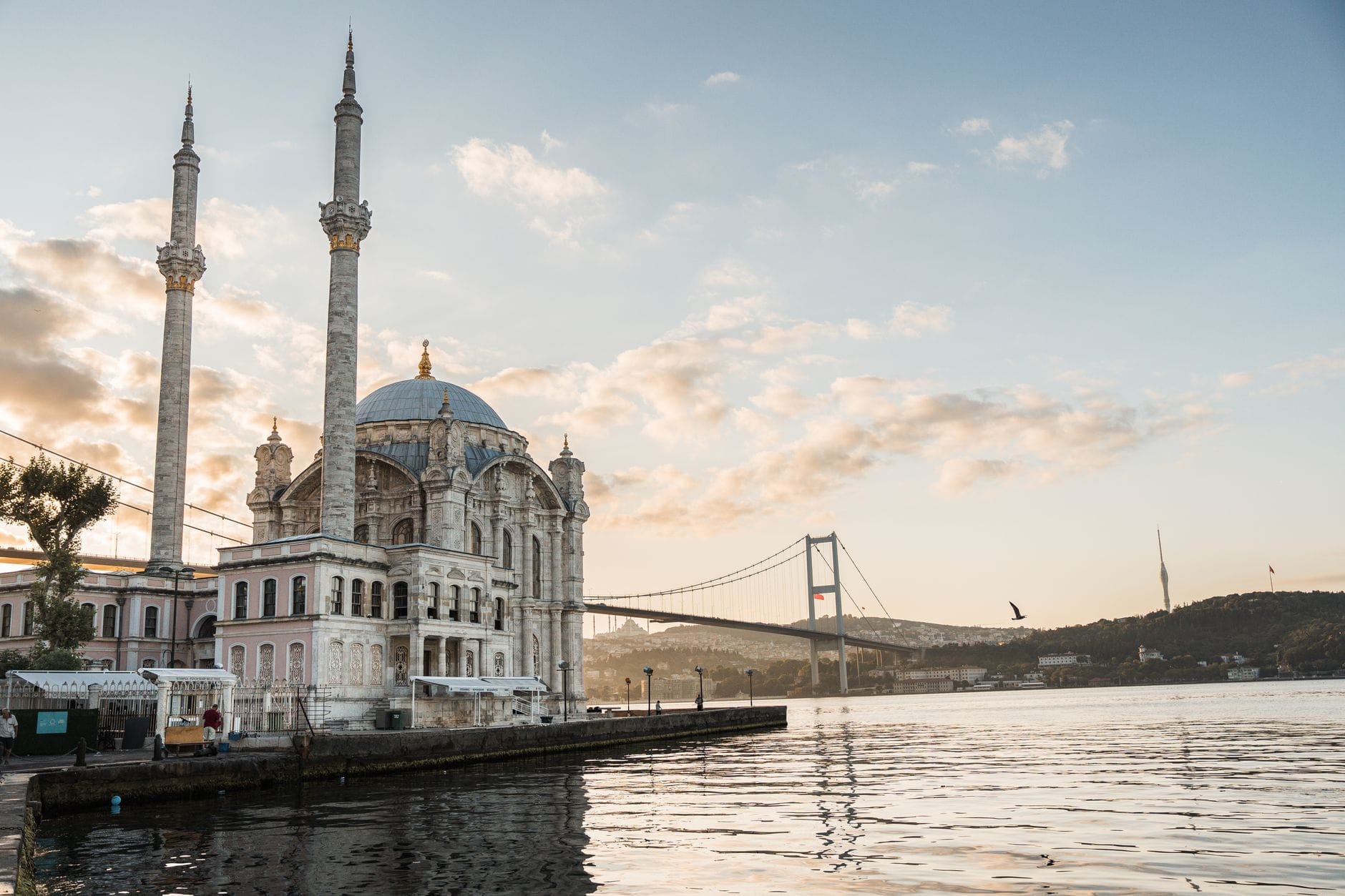
Standing directly on the Bosphorus shoreline in the Ortaköy neighborhood of Beşiktaş, the Büyük Mecidiye Camii is a 19th-century neo-Baroque mosque framed by the Bosphorus Bridge. Entry is free, the setting is extraordinary, and the surrounding square is one of the liveliest spots on the European waterfront.
Quick Facts
- Location
- Ortaköy Meydanı, Beşiktaş, Istanbul — directly on the Bosphorus waterfront
- Getting There
- Buses 40, 40T, or 42T from Taksim; buses 22, 22RE, or 25E from Kabataş (reachable by tram from Sultanahmet)
- Time Needed
- 30–60 minutes for the mosque; add 1–2 hours to explore the surrounding square and waterfront
- Cost
- Free entry (donation-based)
- Best for
- Architecture lovers, photographers, waterfront walkers, and anyone combining a mosque visit with the Bosphorus atmosphere
- Official website
- http://en.besiktas.bel.tr/entry/ortakoy-mosque
What Is Ortaköy Mosque and Why Does It Matter?
The Büyük Mecidiye Camii, universally known as Ortaköy Mosque, is one of the most immediately recognizable religious buildings in Istanbul, not because of its size, but because of its position. It sits at the water's edge in Ortaköy square, flanked by the first Bosphorus Bridge (Boğaziçi Köprüsü) behind it, with the strait stretching out in front. That combination of 19th-century ornamental stonework, open water, and suspension bridge engineering is precisely why this mosque appears on more Instagram grids than almost any other spot in the city.
Built between 1854 and 1856 by architects Garabet Balyan and Nigoğos Balyan (Garabet Balyan is often singled out in sources) on the commission of Sultan Abdülmecid I, the mosque replaced an earlier 18th-century structure on the same plot. It belongs to a cohort of Ottoman waterfront mosques built during the Tanzimat reform era, when sultans were actively blending European architectural influences with Ottoman religious building traditions. The result here is neo-Baroque: curving cornices, ornamental pilasters, large arched windows flooding the interior with Bosphorus light, and a restrained elegance that feels quite different from the domed monumentalism of, say, the classical Ottoman mosques on the historic peninsula.
ℹ️ Good to know
Opening hours are approximately 09:00–18:00 daily, but access pauses during prayer times. Approximate visiting windows are 09:00–11:15, 12:35–14:15, and 15:25–16:15. On Fridays, the mosque is closed to non-worshippers from around 10:30 to 13:45. Verify current times locally before planning your visit.
The Architecture: Neo-Baroque on the Bosphorus
Standing at the waterfront railing and looking at the mosque from across the square, the first thing you notice is how light it appears. Many Ottoman mosques read as massive, gravity-bound structures. Ortaköy Mosque reads almost as decorative, with its white stone facades, paired minarets rising slender from the corners, and large windows that seem to dissolve the wall surface into glass and frame. The neo-Baroque influence explains this: Balyan drew on European Baroque traditions, which prized rhythmic surface decoration and theatrical spatial effects, and translated them into an Ottoman mosque typology.
The main prayer hall is square in plan, measuring 12.25 metres per side, topped by a single central dome. The interior is notably bright by Ottoman mosque standards. Sunlight comes in from multiple directions through the large windows, and the decoration inside is restrained compared to the exterior ornamental richness. A two-storey Hünkar Kasrı, the sultan's pavilion, is attached at the northern entrance via elliptical stairs. This was the private entrance used by the Ottoman sultan when attending Friday prayers, a common feature in imperial mosques.
The building has had a turbulent structural history. The 1894 Istanbul earthquake damaged it significantly. Further reinforcement work was carried out around 1960, and a fire in 1984 necessitated major restoration. What visitors see today largely reflects that restoration work, which aimed to preserve the original design faithfully.
If you want to put this mosque in broader architectural context, it is worth reading about the Süleymaniye Mosque and the Blue Mosque beforehand. Those classical Ottoman structures use a fundamentally different architectural grammar, which makes the contrast with Ortaköy's Baroque sensibility much easier to appreciate.
Tickets & tours
Hand-picked options from our booking partner. Prices are indicative; availability and final rates are confirmed when you complete your booking.
Half day Morning Ottoman Splendors tour, including the Blue Mosque
From 48 €Instant confirmationFree cancellationIstanbul Basilica Cistern, Blue Mosque and Hagia Sophia tour
From 83 €Instant confirmationFree cancellationIstanbul mosaics and Blue Mosque 1-day small group tour
From 62 €Instant confirmationFree cancellationIstanbul combo tour of Hagia Sophia and Blue Mosque
From 114 €Instant confirmationFree cancellation
How the Experience Changes Through the Day
Morning is the most composed time to visit. Between 09:00 and 10:30, the square is relatively quiet. The light comes from the southeast, catching the mosque's facade at an angle that emphasizes the decorative relief work on the exterior. The air near the water carries a faint smell of brine and diesel from passing ferries. A handful of vendors set up tea carts early, and local residents walk the waterfront before the tourist crowds arrive. The mosque interior at this hour is serene, with soft light coming through the large windows.
By midday, particularly on weekends, the Ortaköy square fills considerably. The kumpir vendors (baked potatoes piled with toppings, a neighborhood signature) start drawing queues along the alley running parallel to the waterfront. The mosque itself closes temporarily for prayer, so midday is often better spent exploring the square and nearby streets. The smell of grilling corn and fresh waffle dough becomes more pronounced as the food stalls fully open.
Late afternoon, around 16:00 to 17:30, offers the most dramatic photography conditions. The sun moves toward the northwest, and the Bosphorus Bridge behind the mosque catches warm light. The water reflects the sky, and the mosque appears almost luminous. If there are any clouds, the scene becomes more dynamic. This is the window that most photographers target, and the square will reflect that with more people holding cameras and phones aloft at the waterfront railing.
💡 Local tip
For the iconic shot of the mosque framed by the Bosphorus Bridge, position yourself on the small waterfront promenade to the left (south) of the mosque square. A slightly lower vantage point brings both structures into the same frame most effectively.
Visiting the Mosque: What to Expect Inside
Ortaköy Mosque is an active place of worship and receives visitors outside prayer times. Entry is free, operating on a donation basis. At the entrance, shoes must be removed and stored in the provided cubbies or a bag you carry. Women are required to cover their hair; headscarves are sometimes available at the entrance, but bringing your own is more reliable. Both men and women should have shoulders and legs covered. The dress code applies regardless of the outside temperature.
The interior is smaller than many visitors expect. The 12.25-metre-square prayer hall means the space fills quickly when even a moderate number of visitors are present simultaneously. Carpets cover the floor, the mihrab (prayer niche) faces Mecca, and the minbar (pulpit) sits to its right. The decoration is elegant without being overwhelming. Speak quietly and move without disrupting worshippers who may be present even outside formal prayer times.
⚠️ What to skip
Mobility note: the connection between the main prayer hall and the sultan's pavilion involves elliptical stairs, and the general structure is multi-storey. There is no confirmed step-free or wheelchair-accessible route based on available information. Visitors with mobility impairments should contact the mosque administration in advance.
The Ortaköy Neighborhood: What Surrounds the Mosque
The mosque sits at the center of Ortaköy square, which is one of the more pleasurable waterfront areas on the European Bosphorus shore. The neighborhood itself is part of Beşiktaş district and has a distinct character: a mix of art galleries, jewelry workshops, cafes, and street food vendors compressed into a network of narrow streets behind the waterfront. For a broader sense of the area, the Beşiktaş-Ortaköy neighborhood guide covers the district's layout and other points of interest in detail.
The kumpir alley running just off the main square is a genuine local institution, not a tourist confection. Vendors here have been serving baked potatoes loaded with butter, cheese, olives, corn, and dozens of other toppings for decades. It is worth trying even if you have just eaten. The waffles sold nearby are equally popular with weekend visitors.
If you are continuing along the Bosphorus, Dolmabahçe Palace is a 20-minute walk south along the waterfront. It is another major product of the Tanzimat-era ambition to combine European and Ottoman aesthetics, so visiting both in one outing creates a coherent architectural narrative.
Worth Your Time?
Ortaköy Mosque is worth visiting, but with clear expectations. The interior is modest. If you have already spent time in the Süleymaniye Mosque or the Blue Mosque, you will not find new architectural revelation inside. What Ortaköy offers is the setting: a functioning Ottoman mosque occupying one of the finest waterfront positions in the city, free to enter, in a neighborhood that rewards walking and eating rather than formal sightseeing.
Travelers who focus exclusively on the historic peninsula and large Ottoman monuments sometimes skip Ortaköy entirely, which is a reasonable choice if time is genuinely short. But for anyone spending more than three days in Istanbul, combining the mosque with the Bosphorus waterfront walk and the surrounding neighborhood makes for one of the more enjoyable half-days the city offers. See the 3-day Istanbul itinerary for how Ortaköy fits into a short trip.
Who should skip it: travelers who find crowded waterfront squares exhausting, particularly on summer weekends when Ortaköy draws very large numbers of visitors. The atmosphere on a Saturday afternoon in July is markedly different from a Tuesday morning in October. If solitude and quiet contemplation are what you are looking for in a mosque experience, visit early on a weekday morning or consider Ortaköy as a secondary stop rather than a primary destination.
Getting There: Practical Directions
There is no metro station directly at Ortaköy. The most practical public transport routes are buses. From Taksim, take bus 40 or 40T, which runs along the Bosphorus shore and stops at Ortaköy square. Journey time is roughly 15–20 minutes depending on traffic, which can be heavy on weekends. From Kabataş (reachable by tram T1 from Sultanahmet or Beyoğlu, or by the Kabataş funicular from Taksim), buses 22, 22RE, and 25E serve Ortaköy.
The Istanbulkart smart card works on all these bus routes and is far cheaper than paying cash fares. If you do not already have one, picking one up before exploring the Bosphorus shore makes practical sense. For a fuller overview of getting around the city, the Istanbul transport guide covers all options including ferry routes, which are a scenic alternative for reaching Bosphorus neighborhoods.
Taxis and ride-hailing apps (Uber operates via licensed taxis in Istanbul; BiTaksi and iTaksi are local alternatives) will drop you directly at the square, which is convenient if you are arriving with luggage or in a group. Traffic congestion along the Bosphorus shore on weekend afternoons can make taxis slower than buses during peak hours.
Insider Tips
- Visit on a weekday morning before 10:00 for the calmest atmosphere inside the mosque and the most photogenic light on the facade. Weekend afternoons in summer see the square become extremely congested.
- The best angle for photographing the mosque with the Bosphorus Bridge in the frame is from the waterfront promenade south of the square, not from directly in front of the building. Moving 50 metres south opens up the composition significantly.
- Bring your own headscarf rather than relying on ones available at the entrance. Having it in your bag saves time and ensures a better fit.
- The kumpir vendors in the alley just off the square are the neighborhood's most celebrated street food offering. The queue moves faster than it looks, and the potatoes are good. Order one after your mosque visit, not before, since eating near the entrance is not appropriate.
- If you are visiting on a Friday, note the extended closure to non-worshippers during midday. Plan to arrive before 10:15 or after 14:00 to avoid the dead time when the mosque is inaccessible.
Who Is Ortaköy Mosque For?
- Architecture enthusiasts interested in Ottoman neo-Baroque and the Tanzimat-era building tradition
- Photographers targeting Istanbul's most recognizable waterfront compositions
- Travelers combining a mosque visit with a Bosphorus waterfront walk and casual neighborhood exploration
- First-time visitors wanting a free, accessible introduction to Istanbul's active mosque culture without the crowds of the major historic peninsula sites
- Anyone building a half-day Bosphorus itinerary that includes Dolmabahçe Palace to the south of Ortaköy
Nearby Attractions
Other things to see while in Beşiktaş & Ortaköy:
- Dolmabahçe Palace
Dolmabahçe Palace stretches along the European shore of the Bosphorus in Beşiktaş, combining Ottoman imperial ambition with 19th-century European Baroque and Neoclassical styles in a single vast complex. Built between 1843 and 1856, it served as the administrative center of the late Ottoman Empire and later as a residence where Mustafa Kemal Atatürk spent his final days and died. With 285 rooms, monumental ceremonial halls, and a waterfront facade that commands the strait, it is among the most architecturally significant palaces on the continent.
- Yıldız Palace & Park
Yıldız Palace is the sprawling late-Ottoman complex where Sultan Abdülhamid II ruled an empire for 33 years. Set across 50 hectares of forested hillside in Beşiktaş, it combines imperial pavilions, a porcelain factory, and one of Istanbul's most undervisited public parks — all with Bosphorus views.