Ecumenical Patriarchate of Constantinople: The Spiritual Center of Eastern Orthodoxy in Istanbul
Tucked into Istanbul's historic Fener neighborhood along the Golden Horn, the Ecumenical Patriarchate of Constantinople is one of Christianity's oldest and most significant institutions. The complex centers on St George's Cathedral, an active place of worship and pilgrimage that has anchored Eastern Orthodox life in this city for over four centuries.
Quick Facts
- Location
- Fener (Phanar) district, Golden Horn, Istanbul
- Getting There
- Public bus along the Golden Horn corridor to Fener/Balat stops; taxi from Eminönü takes roughly 10 minutes
- Time Needed
- 45 minutes to 1.5 hours
- Cost
- Free entry; donations welcomed
- Best for
- History enthusiasts, religious travelers, Byzantine heritage seekers
- Official website
- patriarchate.org/home
What Is the Ecumenical Patriarchate of Constantinople?
The Ecumenical Patriarchate of Constantinople is the spiritual and administrative center of the Eastern Orthodox Church, one of the oldest Christian institutions in continuous existence. Located in the Fener district of Istanbul, the complex is built around St George's Cathedral, which has served as the patriarchal seat since the early 17th century. Before that, the Patriarchate occupied Hagia Sophia and a succession of other churches throughout Constantinople's long history.
The bishopric itself is traditionally traced to around 38 CE, and the Patriarch was granted the formal title at the Council of Chalcedon in 451. Today, the Ecumenical Patriarch is recognized within Eastern Orthodoxy as 'first among equals' among the heads of the world's autocephalous Orthodox churches, giving this modest compound in a quiet Istanbul neighborhood a weight of significance that far exceeds its physical scale.
For visitors with an interest in Byzantine history, this is one of the few places in Istanbul where the living continuity of that world is felt rather than simply displayed. It is not a ruin or a converted monument. Liturgy still takes place here. Clergy still walk these corridors. That distinction matters.
💡 Local tip
Visiting hours for the Church of St George are generally during daytime, and the Patriarchate publishes a regular schedule of services. Hours can shift around religious feast days and liturgical services. Check the official website or contact the Patriarchate before your visit, especially if traveling specifically for this attraction.
The Church of St George: What You Will Actually See
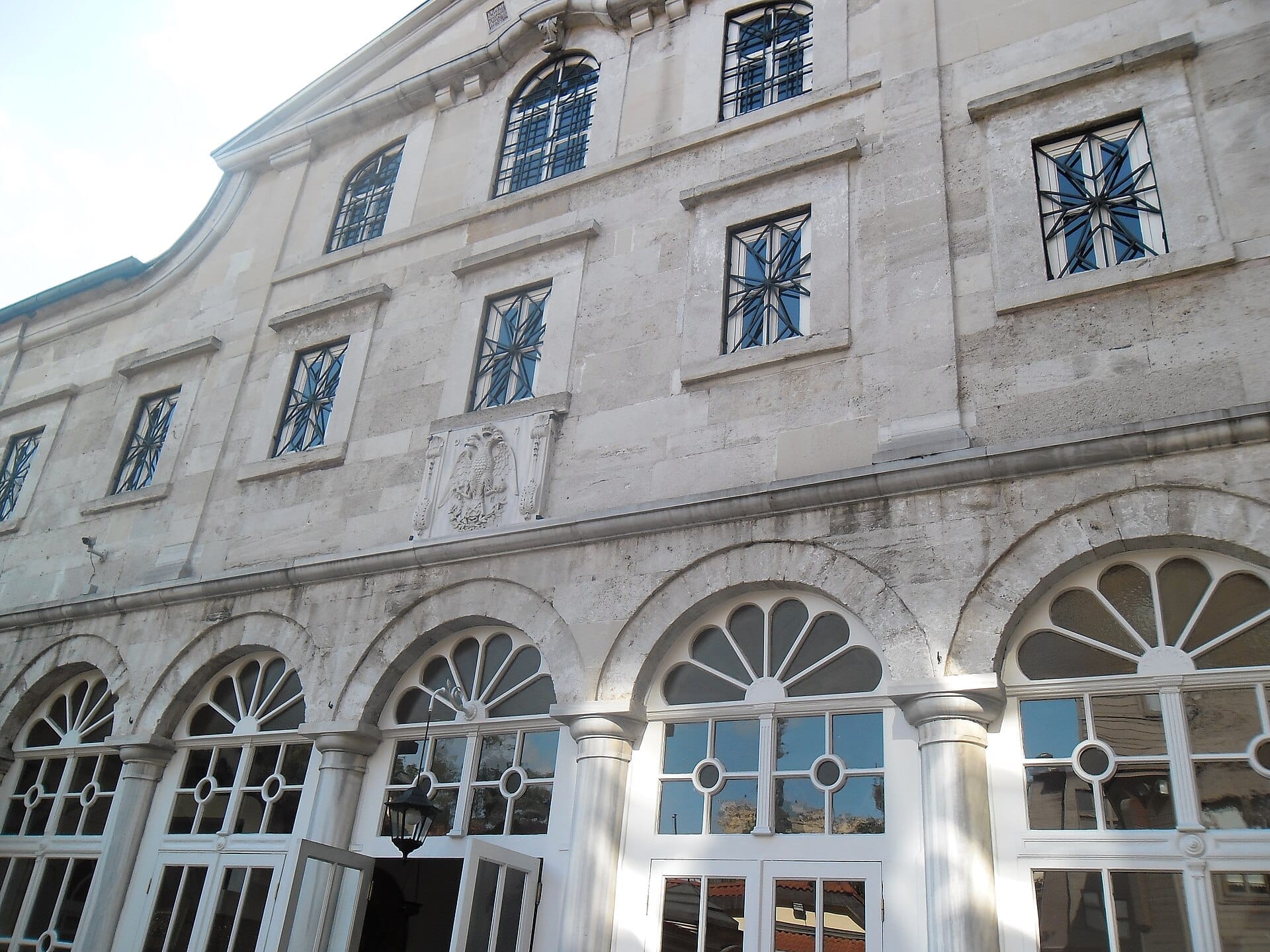
The Cathedral of St George is a relatively modest building by the standards of other great church complexes, which surprises most visitors expecting architectural grandeur. The current structure dates from 1720, constructed after fire destroyed an earlier building, and its exterior is restrained to the point of near-anonymity from the street. The patriarchal compound sits behind a gate on Sadrazam Ali Paşa Caddesi, and it requires a moment of orientation before you realize the full scope of what surrounds you.
Inside the cathedral, the atmosphere changes completely. The interior is richly decorated with gilded iconostasis screens, hanging oil lamps, and layers of sacred objects accumulated over centuries. The patriarchal throne, carved from wood and richly embellished, is one of the most venerated objects in Orthodox Christianity. Alongside it, the cathedral preserves relics of significant saints, including portions attributed to St Gregory the Theologian and St John Chrysostom, both former Patriarchs of Constantinople.
The mosaics and icons display a visual vocabulary that will be immediately familiar to anyone who has spent time with Byzantine art, but here they carry devotional weight rather than museum context. The smell of incense is present throughout the day, and the quality of light inside shifts considerably depending on the hour, with late morning creating the warmest illumination through the upper windows.
Tickets & tours
Hand-picked options from our booking partner. Prices are indicative; availability and final rates are confirmed when you complete your booking.
Bosphorus sunset cruise on luxury yacht with guide
From 55 €Free cancellationIstanbul and Bosphorus cruise on private boat - half day afternoon tour
From 40 €Instant confirmationFree cancellationWhirling Dervishes live show and exhibition
From 29 €Instant confirmationBasilica Cistern fast-track entry ticket and optional audio guide
From 34 €Instant confirmation
The Fener Neighborhood: Context and Atmosphere
Fener, known historically by its Greek name Phanar, sits along the western shore of the Golden Horn. For centuries it was the center of Istanbul's Greek Orthodox community, and the Patriarchate gave the neighborhood its lasting name in diplomatic history: the Phanariots, the influential Greek Orthodox families who served the Ottoman court, took their name from this district.
The neighborhood today is quiet by Istanbul standards, with narrow streets, a mix of older timber houses in various states of repair, and the occasional tea house or bakery. It sits adjacent to Balat, the historic Jewish quarter, and the two neighborhoods are usually explored together. Walking between them takes less than ten minutes and gives a clear sense of the layered religious and ethnic geography that once defined this part of the city.
In the mornings, the streets around the Patriarchate are subdued. A handful of pilgrims and curious visitors arrive early. By late morning, small tour groups begin to appear, though the site never approaches the crowd density of Sultanahmet. The relative quiet is part of what makes the visit worthwhile: you can actually pause and absorb the space without managing around tour group bottlenecks.
ℹ️ Good to know
The gate of the Patriarchate, known as the Orta Kapı, has been welded shut since the execution of Patriarch Gregorios V in 1821 following the Greek War of Independence. It remains sealed as a symbol of mourning and historical memory. This detail, easy to miss, is worth knowing before you arrive.
Historical Weight: Why This Place Matters
The Ecumenical Patriarchate has survived in Istanbul through conditions that would have extinguished most institutions. After the Ottoman conquest of Constantinople in 1453, Sultan Mehmed II formally recognized the Patriarchate and allowed it to continue functioning, though its legal and political status has been subject to dispute and negotiation ever since. The complex has burned, been relocated multiple times, and its community has shrunk dramatically over the twentieth century following population exchanges and emigration.
The Halki Seminary, the Patriarchate's theological school located on the island of Heybeliada in the Princes' Islands, was closed by the Turkish state in 1971 under laws restricting private higher education. Its reopening remains a recurring subject in Turkish-Greek and Turkish-EU diplomatic discussions. This ongoing tension between an ancient institution and its modern political context is something visitors sense here even without knowing the details.
For those interested in this broader story of the city's layered religious identity, a visit here pairs well with exploring Chora Church and the Hagia Sophia, both of which were converted from Byzantine churches and carry their own complicated histories.
Getting There and Practical Logistics
The Patriarchate is located at approximately 41.029°N, 28.952°E in the Fener district, on Sadrazam Ali Paşa Caddesi. It is not on a metro line, which catches some visitors off guard. The most practical approach from central Istanbul is a taxi from Eminönü, which takes roughly 10 minutes under normal traffic conditions. Public buses along the Golden Horn corridor serve the Fener and Balat stops.
Driving or arriving by taxi is easier than it might appear on a map, as the roads along the Golden Horn waterfront are generally navigable. Parking is limited in the immediate area, so self-driving visitors should expect to walk a short distance from wherever they find a space. The area involves some elevation changes and uneven cobblestones, which matters for anyone with mobility concerns.
Most visitors combine this stop with the surrounding neighborhood. The walk northwest toward Eyüp Sultan Mosque is feasible on foot and adds context to the religious history of this stretch of the Golden Horn. In the other direction, Balat's colorful streets and cafe culture offer a natural complement to the solemnity of the Patriarchate visit.
⚠️ What to skip
Security measures are in place at the entrance. Visitors may need to show identification and may be asked the purpose of their visit. This is standard practice and not cause for concern, but it means arriving with your passport or a photo ID is advisable.
Dress Code, Behavior, and Photography
The Church of St George is an active place of worship, not a museum. Visitors should dress modestly: shoulders and knees covered for both men and women. There is no formal dress code enforced at the gate, but entering in beachwear or revealing clothing would be considered disrespectful and may result in being asked to leave or wait.
Photography inside the cathedral is generally permitted for personal and non-commercial purposes, but you should be attentive to whether a service is in progress. During active liturgy, photography should stop entirely. The patriarchal throne and iconostasis are among the most photographed elements, and the light quality inside varies considerably: late morning typically offers the most useful natural light for photography.
Behavior should be quiet and respectful throughout. Visitors who enter during liturgy should stand toward the back and observe rather than circulate through the space. This is a functioning church with clergy and worshippers present, and the experience is richer for treating it as such rather than as a sightseeing stop.
Is It Worth Your Time?
For visitors with a genuine interest in religious history, Christian heritage, or the complex history of Istanbul's minority communities, the Ecumenical Patriarchate of Constantinople delivers an experience that is genuinely rare. This is not a recreated historical tableau. It is an institution that has operated continuously for over a millennium and a half, still functioning in the same city where it was established, surrounded by the echoes of everything it has survived.
For visitors primarily focused on dramatic architecture, sweeping views, or high-energy sightseeing, this is not the right stop. The visual rewards are real but understated. The compound is modest in scale, the exterior is quiet, and the significance is largely historical and devotional rather than immediately spectacular.
If your itinerary is built around Istanbul's major religious monuments, this belongs on the list alongside Süleymaniye Mosque and the Byzantine churches of the historic peninsula. It offers a perspective on the city's religious geography that those monuments, for all their grandeur, cannot provide.
Insider Tips
- Arrive between 10:00 and 11:30 on a weekday for the best combination of open access, good interior light, and minimal crowds. Weekends can bring more visitors, including organized religious tour groups.
- The sealed middle gate, known as the Orta Kapı, is easy to walk past without noticing. Look for the permanently shut central door: it has been welded closed since 1821 as a gesture of historical mourning and remains that way today.
- If you want to witness an Orthodox liturgy, major feast days such as Orthodox Easter bring the most elaborate services, but they also bring the largest crowds and tightest security protocols. Planning well in advance is essential for feast day visits.
- Combine this visit with Balat immediately to the south. The neighborhood's painted houses, independent cafes, and antique shops make for a natural two-hour loop that gives the Patriarchate visit a wider cultural frame.
- The Patriarchate's official website (ec-patr.org) publishes announcements of major services and feast days. Checking it before your visit lets you time your arrival either to witness a service or to avoid one, depending on your preference.
Who Is Ecumenical Patriarchate of Constantinople For?
- Travelers interested in Byzantine and early Christian history
- Religious pilgrims and Orthodox Christian visitors
- Architecture and sacred art enthusiasts focused on pre-Ottoman Constantinople
- Anyone exploring the layered minority history of Istanbul's Golden Horn neighborhoods
- Slow travelers who prefer depth over spectacle and want fewer crowds
Nearby Attractions
Other things to see while in Fener & Balat:
- Eyüp Sultan Mosque
Built in 1458 over the tomb of Abu Ayyub al-Ansari, a companion of the Prophet Muhammad, Eyüp Sultan Mosque stands as one of the holiest sites in Turkey. Located on the Golden Horn outside the old city walls, it draws both devout pilgrims and curious travelers seeking a side of Istanbul that most tourist itineraries overlook.
- Miniatürk
Miniatürk is an open-air miniature park on Istanbul's Golden Horn shore, displaying 135–139 scale models of Turkey's most significant monuments at 1:25 ratio. Opened in 2003, it spans 60,000 square metres and works as a surprisingly efficient primer on Turkish history and architecture.
- Pierre Loti Hill & Café
Perched 55 metres above the Golden Horn in the Eyüpsultan district, Pierre Loti Hill is a rare place where history, literature, and one of Istanbul's finest panoramas converge. Take the cable car or walk through a centuries-old cemetery to reach a teahouse that became famous after a French novelist's visits in the late 1870s.
- Rahmi M. Koç Museum
Housed in a 12th-century anchor foundry and a historic shipyard on the northern shore of the Golden Horn, the Rahmi M. Koç Museum is Turkey's first major museum dedicated to the history of transport, industry, and communications. From vintage locomotives and submarines to early automobiles and scientific instruments, the collection spans 27,000 m² and rewards several hours of exploration.