Eyüp Sultan Mosque: Istanbul's Most Sacred Pilgrimage Site
Built in 1458 over the tomb of Abu Ayyub al-Ansari, a companion of the Prophet Muhammad, Eyüp Sultan Mosque stands as one of the holiest sites in Turkey. Located on the Golden Horn outside the old city walls, it draws both devout pilgrims and curious travelers seeking a side of Istanbul that most tourist itineraries overlook.
Quick Facts
- Location
- Eyüp district, European side, along the Golden Horn
- Getting There
- Ferry from Eminönü or Karaköy to Eyüp pier (Haliç Hattı line), then a 5-minute walk
- Time Needed
- 1.5 to 2.5 hours, including the cemetery and Pierre Loti Hill
- Cost
- Free entry; donations welcomed at the tomb
- Best for
- History seekers, architecture enthusiasts, pilgrims, off-the-beaten-path travelers
What Eyüp Sultan Mosque Actually Is
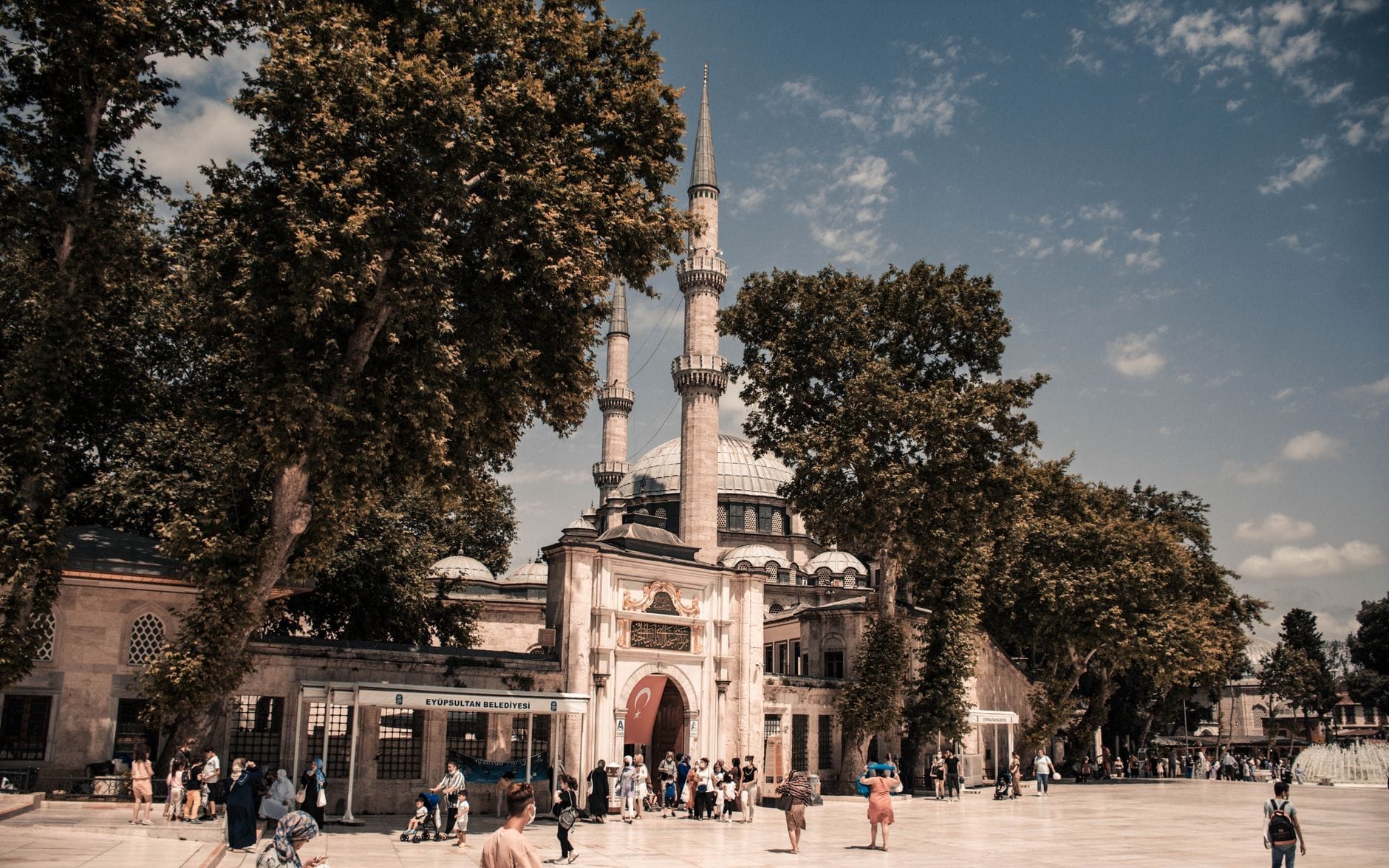
Eyüp Sultan Mosque is not simply a place of worship. It is the most emotionally significant mosque in Istanbul, and arguably in all of Turkey, for reasons that go far deeper than architecture or age. The complex is built around the reputed tomb of Abu Ayyub al-Ansari (known in Turkish as Eyüp Ensari), a companion and standard-bearer of the Prophet Muhammad who died during the Arab siege of Constantinople in the seventh century. For Muslims, proximity to this tomb carries profound spiritual weight.
Sultan Mehmed II ordered the mosque's construction in 1458, just five years after the Ottoman conquest of Constantinople. The choice of location was deliberate: by honoring a figure from Islam's earliest history at the very gates of the former Byzantine capital, the Ottomans anchored their new empire in sacred legitimacy. Ottoman sultans were traditionally girded with the sword of Osman here before ascending the throne, a ceremony that continued for centuries.
The mosque you see today is not the original structure. After the 1458 building fell into serious disrepair, it was entirely rebuilt in 1800 in an Ottoman Baroque style under Sultan Selim III. The result is a pale stone exterior with two slender minarets, a central dome roughly 17.5 meters in diameter supported by smaller semi-domes and vaulted bays, and interior tilework that mixes classical Iznik patterns with the more florid decorative taste of the late Ottoman period. For more context on Istanbul's mosque architecture, see our guide to the best mosques in Istanbul.
The Approach: What You Notice Before You Enter
The walk from the Eyüp ferry pier to the mosque takes about five minutes and tells you immediately that this is not tourist territory in the conventional sense. The streets narrow, the pace slows, and the demographic shifts. You will see families from across Turkey and from abroad, many carrying prayer beads, some in traditional dress. Vendors sell rose water, religious books, and simit from carts near the entrance. The smell of burning incense drifts from small shops selling prayer accessories.
The main gate opens into a large courtyard shaded by an ancient plane tree that, by many accounts, is several hundred years old. Pigeons gather beneath it in clusters. The courtyard surface is marble, worn smooth by millions of footsteps, and it can feel slightly slippery in wet weather. On Fridays and during Ramadan, this courtyard fills to capacity.
💡 Local tip
Arrive on a Tuesday or Wednesday morning for the calmest experience. Fridays draw large crowds for midday prayer, and weekends attract families in greater numbers. If you want to observe prayer without crowds blocking your view of the courtyard, a weekday just after the morning prayer session works well.
Tickets & tours
Hand-picked options from our booking partner. Prices are indicative; availability and final rates are confirmed when you complete your booking.
Half day Morning Ottoman Splendors tour, including the Blue Mosque
From 48 €Instant confirmationFree cancellationIstanbul Basilica Cistern, Blue Mosque and Hagia Sophia tour
From 83 €Instant confirmationFree cancellationIstanbul mosaics and Blue Mosque 1-day small group tour
From 62 €Instant confirmationFree cancellationIstanbul combo tour of Hagia Sophia and Blue Mosque
From 114 €Instant confirmationFree cancellation
Inside the Mosque and Tomb Complex
Non-Muslim visitors are welcome inside the mosque outside of prayer times. The interior is calmer and more intimate than the great imperial mosques of Sultanahmet. The light is softer, filtered through stained glass set into the lower walls, and the tilework around the mihrab is fine, with deep cobalt and turquoise Iznik panels dating to the restoration period. The carpet is thick and the acoustics are muted, giving the space a hushed, focused quality.
The tomb of Abu Ayyub al-Ansari sits in a separate mausoleum directly adjacent to the mosque, accessible from the courtyard. This is where the site's emotional intensity concentrates. Visitors queue to pass close to the ornate tomb chamber, which is encased in gilded grilles and lit by hanging lamps. Many people pray quietly, some weep. Regardless of your own faith, the atmosphere is unmistakable: this is a place where grief, devotion, and hope arrive together.
⚠️ What to skip
Dress modestly before entering. Women must cover their hair (scarves are available at the entrance if you don't have one), and both men and women should cover their shoulders and knees. Remove shoes before entering both the mosque and the mausoleum. Speaking loudly or taking intrusive photographs inside the tomb chamber is considered disrespectful and will draw immediate looks from other visitors.
Photography inside the mosque and mausoleum is technically permitted in many areas but requires judgment. Wide-angle shots of the architecture are generally fine. Photographing individuals in prayer is not appropriate. The courtyard, the plane tree, and the exterior details of the minarets make for strong images without entering sensitive spaces.
The Cemetery and the Walk to Pierre Loti Hill
Extending up the hillside directly behind the mosque is one of Istanbul's most atmospheric cemeteries, a layered landscape of Ottoman tombstones that climbs steeply through cypress trees. Turbaned marble headstones from the eighteenth and nineteenth centuries sit alongside newer graves. The stones are inscribed in Ottoman script, which most contemporary Turkish visitors also cannot read, adding a layer of historical distance that feels appropriate.
The walk through the cemetery leads to Pierre Loti Hill, named after the French novelist Julien Viaud who wrote under the pen name Pierre Loti and who was known to sit at the café here overlooking the Golden Horn. A cable car (teleferik) connects the hill to the waterfront below, which is useful if you want to descend without retracing your steps through the cemetery. The views from the hilltop across the Golden Horn and toward the historic peninsula are among the quieter panoramic points in the city, well away from the Galata Tower crowds.
The cemetery walk takes about 20 to 30 minutes at a relaxed pace. The path is unpaved in sections and moderately steep, with uneven ground from tree roots and old paving stones. This makes it difficult for wheelchairs and challenging with strollers. Wear shoes with some grip, particularly if rain is possible.
How the Experience Changes by Time of Day
Early morning, around 8 to 9am, the mosque and its surroundings have a completely different character. The courtyard is quiet, often occupied only by a handful of elderly men completing their morning prayers and a few pigeons. The light at this hour is low and angled, catching the carved stone details on the minarets and warming the pale facades. If you want to observe without feeling intrusive, this is the best window.
By late morning and midday, the site becomes significantly busier. Tour groups from the broader Istanbul circuit occasionally stop here, but more commonly the visitors are Turkish domestic tourists, pilgrims from other Muslim-majority countries, and a smattering of independent travelers. The tomb queue can stretch considerably. By 2pm on any day, the energy is at its highest and the sensory density, the noise from the surrounding streets, the incense from nearby vendors, the call to prayer from the minarets overhead, is at its most concentrated.
Late afternoon, after about 4pm, the crowds thin again. The Golden Horn light turns amber and the shadows from the minarets lengthen across the courtyard. This is a good time for photography and for sitting on the low stone walls around the plane tree to observe the space without feeling rushed.
ℹ️ Good to know
During Ramadan, Eyüp Sultan transforms completely after sunset. The area around the mosque becomes a focal point for iftar (the meal breaking the fast), with outdoor food stalls, large communal gatherings, and a festive atmosphere that continues well into the night. If your visit coincides with Ramadan, this is worth planning around specifically.
Getting There and Practical Logistics
The most enjoyable way to reach Eyüp is by ferry along the Golden Horn. The Golden Horn ferry departs from Eminönü and Karaköy on the European side, stopping at several piers before reaching Eyüp. The journey from Eminönü takes roughly 30 to 40 minutes and costs the standard ferry fare payable with an Istanbulkart. This route gives you a water-level perspective of the Golden Horn that most visitors traveling by bus or taxi miss entirely. For broader context on moving around the city, see our guide to getting around Istanbul.
Buses also serve the Eyüp district from multiple points on the European side, and taxis can drop you directly at the mosque entrance. The surrounding streets are narrow, and traffic near the mosque on weekends can be slow. If arriving by taxi, ask to be dropped at Eyüp İskelesi (the Eyüp ferry pier) and walk the short distance from there.
Eyüp Sultan Mosque sits in the Eyüp district, technically adjacent to but distinct from the Fener-Balat neighborhood. The two areas are connected by a pleasant waterfront walk along the Golden Horn, which takes about 15 minutes. Many visitors combine the two, spending the morning at the mosque and the afternoon exploring Balat's painted houses and café-lined streets.
Who Should Think Twice
Eyüp Sultan Mosque is an active place of worship, not a museum. Visitors who approach it purely as a sightseeing checkbox, expecting the same kind of open access and neutral presentation as a heritage site, may find the experience more complex than anticipated. The queue to view the tomb can be slow and emotionally intense. The neighborhood is conservative, and the atmosphere inside the complex is genuinely devotional, not performative.
Travelers with significant mobility limitations should be aware that the cemetery walk to Pierre Loti Hill involves steep, uneven terrain. The mosque courtyard itself is accessible at ground level, and the teleferik cable car offers an alternative for reaching the hilltop, but the overall area is not designed with accessibility infrastructure.
If your primary interest is imperial Ottoman architecture at its grandest scale, the Süleymaniye Mosque or Blue Mosque in Sultanahmet offer more immediately dramatic interiors. Eyüp Sultan's significance is historical and spiritual rather than architecturally spectacular, and visitors who understand that distinction tend to find it among the most affecting sites in Istanbul.
Insider Tips
- After visiting the mosque, walk north along the Golden Horn waterfront path toward Balat rather than taking the ferry back immediately. The 15-minute walk passes small tea gardens and gives you a ground-level view of the historic city walls approaching from the water side.
- The cable car (teleferik) at the top of Pierre Loti Hill runs from the hilltop down to the Eyüp waterfront. Take it up from the bottom first if you want to skip the cemetery climb, then walk down through the tombstones at your own pace for a more atmospheric descent.
- Small bottles of rose water are sold by vendors near the mosque entrance and are used as a gentle fragrance inside the tomb area. Buying one is not expected but is a respectful gesture if you plan to spend time inside the mausoleum.
- The neighborhood restaurants around the mosque serve straightforward Turkish home cooking, börek, lentil soup, and rice dishes, at prices significantly lower than the tourist-facing restaurants in Sultanahmet or Beyoğlu. Look for places with handwritten menus and no English translation.
- If you visit on a Friday, be aware that the entire area around the mosque becomes extremely crowded around midday prayer. Either arrive before 10am or after 2pm to avoid the peak congestion in the streets and courtyard.
Who Is Eyüp Sultan Mosque For?
- Travelers interested in Ottoman history and the early Islamic heritage of Istanbul
- Visitors who want to experience a working pilgrimage site rather than a tourist attraction
- Anyone combining a visit with a walk through the Fener-Balat neighborhood
- Photographers looking for authentic atmosphere, morning light, and Golden Horn ferry approaches
- Visitors during Ramadan seeking the most atmospheric iftar setting in the city
Nearby Attractions
Other things to see while in Fener & Balat:
- Ecumenical Patriarchate of Constantinople
Tucked into Istanbul's historic Fener neighborhood along the Golden Horn, the Ecumenical Patriarchate of Constantinople is one of Christianity's oldest and most significant institutions. The complex centers on St George's Cathedral, an active place of worship and pilgrimage that has anchored Eastern Orthodox life in this city for over four centuries.
- Miniatürk
Miniatürk is an open-air miniature park on Istanbul's Golden Horn shore, displaying 135–139 scale models of Turkey's most significant monuments at 1:25 ratio. Opened in 2003, it spans 60,000 square metres and works as a surprisingly efficient primer on Turkish history and architecture.
- Pierre Loti Hill & Café
Perched 55 metres above the Golden Horn in the Eyüpsultan district, Pierre Loti Hill is a rare place where history, literature, and one of Istanbul's finest panoramas converge. Take the cable car or walk through a centuries-old cemetery to reach a teahouse that became famous after a French novelist's visits in the late 1870s.
- Rahmi M. Koç Museum
Housed in a 12th-century anchor foundry and a historic shipyard on the northern shore of the Golden Horn, the Rahmi M. Koç Museum is Turkey's first major museum dedicated to the history of transport, industry, and communications. From vintage locomotives and submarines to early automobiles and scientific instruments, the collection spans 27,000 m² and rewards several hours of exploration.