Miniatürk: Turkey's Monuments in Miniature on the Golden Horn
Miniatürk is an open-air miniature park on Istanbul's Golden Horn shore, displaying 135–139 scale models of Turkey's most significant monuments at 1:25 ratio. Opened in 2003, it spans 60,000 square metres and works as a surprisingly efficient primer on Turkish history and architecture.
Quick Facts
- Location
- İmrahor Caddesi No.7, Örnektepe, Golden Horn shoreline, Beyoğlu
- Getting There
- Bus lines 47, 47Ç, 47E, 47N from Eminönü; 36T from Taksim; TB1 from Sultanahmet
- Time Needed
- 1.5 to 2.5 hours
- Cost
- Moderate admission fee (currently 900 TL for standard tickets; verify price on-site); children aged 5 and under reported free
- Best for
- Families, architecture enthusiasts, first-time Istanbul visitors
- Official website
- http://www.miniaturk.com.tr/Eng/Index
What Miniatürk Actually Is
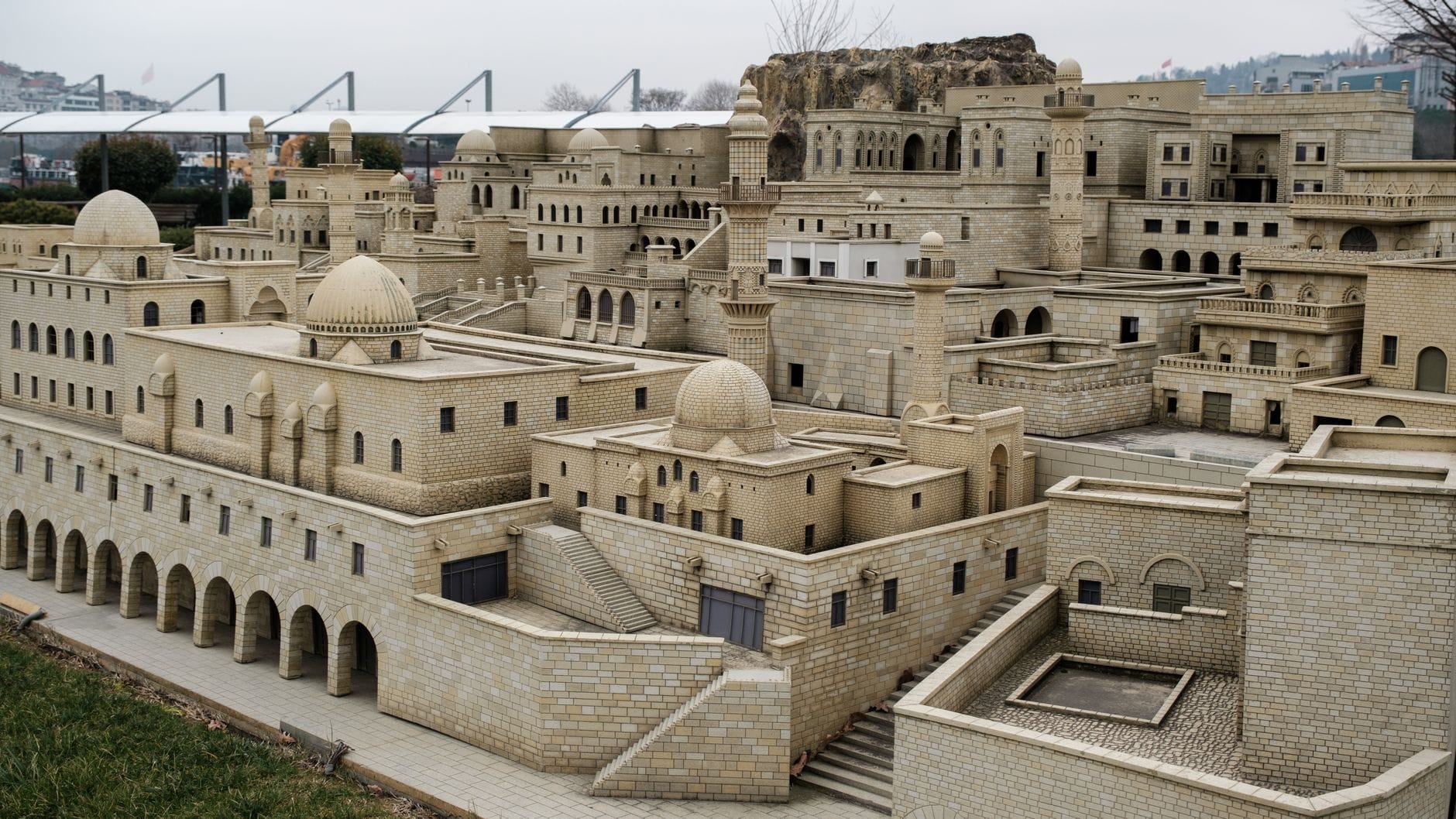
Miniatürk opened on 2 May 2003 as Turkey's first miniature park, built and operated by Istanbul Metropolitan Municipality Culture Inc. on the northeastern shore of the Golden Horn. The park covers 60,000 square metres in total, with 15,000 square metres dedicated to the model display area. It contains roughly 135–139 models, each constructed at a 1:25 scale, precise enough to appreciate architectural detail but compact enough to walk the entire collection in under two hours.
The roughly 135–139 models span three broad categories: monuments from Istanbul itself, structures from across Anatolia, and landmarks from territories that were part of the Ottoman Empire. That last category means you will encounter miniature versions of places now located in other countries, which gives the park an unusual geopolitical texture beyond what most visitors expect from a miniature attraction.
ℹ️ Good to know
Ticket prices and opening hours change periodically. As of the latest official information, the park is open to visitors every day of the week except Monday, generally between 10:00 and 18:00. Confirm current details directly with the park or its official website before visiting, especially outside peak tourist season.
Walking the Models: What You Actually See
The path through Miniatürk is paved and roughly circular, running close to the Golden Horn shoreline on one side. The layout is not strictly chronological or geographical, so you move between Byzantine churches, Seljuk caravanserais, Ottoman mosques, and modern engineering projects within a few steps of each other. That adjacency is either disorienting or fascinating depending on your patience with context-free spectacle.
Highlights that draw the most visitors include scaled versions of Hagia Sophia, the Blue Mosque, Topkapi Palace, Ephesus, the Selimiye Mosque in Edirne, and Atatürk International Airport (an interesting archival piece now that the airport has been decommissioned). The Cappadocia rock formations and several ancient temple sites also appear, giving a sense of just how geographically diverse Turkey's heritage is.
If you have already visited Hagia Sophia or Topkapi Palace in person, the miniatures carry more meaning: you notice which details the builders chose to emphasise and which were simplified. For first-time visitors who have not yet seen the originals, the park functions well as an orientation map of what is worth prioritising during a longer Istanbul stay.
Beyond the models, the park includes a children's playground, a small sightseeing train that loops the grounds, interactive zones, and covered rest areas. There is a café and gift shop near the entrance. The models themselves are fixed in landscaped garden settings with small ponds and waterways representing the Bosphorus and surrounding seas, which adds a sense of geography when viewed from slightly elevated points along the path.
Tickets & tours
Hand-picked options from our booking partner. Prices are indicative; availability and final rates are confirmed when you complete your booking.
The tour of Golden Horn and Miniaturk Park tour in Istanbul
From 50 €Free cancellationBosphorus sunset cruise on luxury yacht with guide
From 55 €Free cancellationIstanbul and Bosphorus cruise on private boat - half day afternoon tour
From 40 €Instant confirmationFree cancellationWhirling Dervishes live show and exhibition
From 29 €Instant confirmation
Time of Day: How the Experience Shifts
Midmorning on weekdays is the calmest window. School groups arrive frequently, particularly in spring, so the atmosphere between 09:00 and 11:00 tends to be quieter before tour buses arrive. Weekend afternoons draw families, and the paths near the most recognisable Istanbul models get genuinely crowded, making photography frustrating.
The Golden Horn setting means the light quality is good in the morning, with the waterway visible across the park boundary and the Fener and Balat hillside in the distance. By early afternoon in summer, the open paved paths reflect heat and there is limited shade between model clusters. Bring water and wear sun protection from May through September. In winter, the park stays open but the landscaping looks sparse, and the lack of green softening around the models removes some of the visual appeal.
💡 Local tip
Arrive at opening time on a weekday for the best photography conditions: low-angle morning light, no crowds, and the Golden Horn surface relatively calm and reflective in the background.
Getting There from Central Istanbul
Miniatürk is not on a metro line, which is the main logistical inconvenience. From Eminönü, bus lines 47, 47Ç, 47E, and 47N run along the Golden Horn shore and stop close to the park entrance. The journey takes roughly 15 to 20 minutes depending on traffic on İmrahor Caddesi. From Taksim, bus 36T serves the area. From Sultanahmet, the TB1 line connects directly. If arriving by Metrobus, change at Halıcıoğlu and take bus 41ST or a local minibus toward Miniatürk.
The park is also walkable from the Fener and Balat neighbourhood in around 15 to 20 minutes along the waterfront. Combining a Miniatürk visit with a walk through Balat's coloured houses and Greek Orthodox heritage sites makes for a logical half-day itinerary. There is a 300-vehicle car park on-site if you are travelling by car or taxi.
Cultural and Historical Context
The park was conceived partly as an educational project and partly as civic pride infrastructure. Turkey covers a landmass that hosted several of the ancient world's most significant civilisations, and most visitors to Istanbul never get beyond the historic peninsula. Miniatürk compresses that argument into a walkable format: Hittite monuments, Roman amphitheatres, Byzantine churches, Ottoman complexes, and modern infrastructure appear on the same circuit.
The inclusion of Ottoman-era landmarks from territories now in other countries, such as the Mostar Bridge in Bosnia and Herzegovina and monuments from former Balkan provinces, makes the park a mild statement about Ottoman heritage and modern Turkish historical identity. It is an interesting companion piece to the Panorama 1453 Museum, which dramatises the Ottoman conquest of Constantinople and is located on the other side of the old city walls.
What to Expect
Miniatürk is not a substitute for seeing Turkey's actual monuments. The scale means detail is limited, and the park format keeps things at a surface level. Serious architecture or history travellers will find it mildly interesting for half an hour and then reach saturation. But that framing undersells what the park does well.
For families with children, it works extremely well. The scale of the models is large enough to feel tangible rather than toy-like, the grounds are safe and strollable, and the sightseeing train holds genuine appeal for under-tens. For visitors who have only a few days in Istanbul and will not reach Cappadocia, Ephesus, or Anatolian cities, the park gives a condensed visual sense of what they are missing. And for anyone who has just arrived in the city and is still orienting, the park functions as an unexpectedly useful mental map.
Visitors who should consider skipping it: those with limited time who are prioritising the historic peninsula, anyone who finds miniature parks intrinsically uninteresting, and solo travellers focused on authentic neighbourhood culture rather than curated spectacle. The neighbourhood itself, along the industrial Golden Horn waterfront, offers little else in the immediate vicinity to justify a special trip if Miniatürk does not appeal.
⚠️ What to skip
The Golden Horn waterfront location can be windy in autumn and winter. The models are outdoors and largely unprotected, so rainy-day visits are uncomfortable and photographs suffer from flat grey light. Check the forecast before making a special trip.
Insider Tips
- The models of Istanbul's own landmarks, particularly Hagia Sophia and Topkapi, are positioned in the section closest to the water. Walk past the entrance gift shop before stopping, and do the circuit counterclockwise to reach the Istanbul cluster when the park is still quiet.
- The sightseeing train covers the full circuit and is a useful first pass for orientation before you walk the path on foot. Buy the train ticket at the entrance when you buy general admission rather than hunting for it mid-visit.
- Photography works best for models on the southern and western edges of the path, where the Golden Horn appears in the background. A slightly elevated position on the path gives a sweeping view of multiple models together, which is more compelling than tight close-ups.
- Combine the visit with a walk into Balat afterward. Head south along the waterfront for 15 minutes to reach Balat's sloped streets, independent cafés, and the Ecumenical Patriarchate of Constantinople. The contrast between the compressed miniature city and the real working neighbourhood is sharper than you might expect.
- If you are visiting with children who speak Turkish, the interactive stations have audio and digital display elements in Turkish that extend engagement significantly. English signage at the models themselves is available but the interactive zones are primarily Turkish-language.
Who Is Miniatürk For?
- Families with children aged 4 to 12 who want an active, visual outdoor experience
- First-time Istanbul visitors wanting a spatial overview of Turkish history and monuments before exploring the real sites
- Travellers on a tight itinerary who will not reach Ephesus, Cappadocia, or other Anatolian destinations
- Architecture enthusiasts looking for a comparative overview of Ottoman, Byzantine, and Seljuk building traditions in one location
- Visitors combining the park with a Fener-Balat neighbourhood walk for a full half-day itinerary
Nearby Attractions
Other things to see while in Fener & Balat:
- Ecumenical Patriarchate of Constantinople
Tucked into Istanbul's historic Fener neighborhood along the Golden Horn, the Ecumenical Patriarchate of Constantinople is one of Christianity's oldest and most significant institutions. The complex centers on St George's Cathedral, an active place of worship and pilgrimage that has anchored Eastern Orthodox life in this city for over four centuries.
- Eyüp Sultan Mosque
Built in 1458 over the tomb of Abu Ayyub al-Ansari, a companion of the Prophet Muhammad, Eyüp Sultan Mosque stands as one of the holiest sites in Turkey. Located on the Golden Horn outside the old city walls, it draws both devout pilgrims and curious travelers seeking a side of Istanbul that most tourist itineraries overlook.
- Pierre Loti Hill & Café
Perched 55 metres above the Golden Horn in the Eyüpsultan district, Pierre Loti Hill is a rare place where history, literature, and one of Istanbul's finest panoramas converge. Take the cable car or walk through a centuries-old cemetery to reach a teahouse that became famous after a French novelist's visits in the late 1870s.
- Rahmi M. Koç Museum
Housed in a 12th-century anchor foundry and a historic shipyard on the northern shore of the Golden Horn, the Rahmi M. Koç Museum is Turkey's first major museum dedicated to the history of transport, industry, and communications. From vintage locomotives and submarines to early automobiles and scientific instruments, the collection spans 27,000 m² and rewards several hours of exploration.