Tennoji is southern Osaka's most historically layered district, where Shitennoji Temple — founded in 593 AD — sits within walking distance of Japan's second-tallest skyscraper. A major rail hub with deep shitamachi roots, it rewards visitors who want more than the neon corridors of Namba.
Tennoji is southern Osaka at its most contradictory and compelling: a district where Buddhist temple bells echo a few blocks from a 300-metre glass tower, and where retro shotengai arcades spill into a 28-hectare park. It is one of Osaka's oldest settled areas and, increasingly, one of its most transformed.
Orientation
Tennoji sits in the southeastern arc of central Osaka, anchored by Tennoji Station on the southern edge of central Osaka, near the border of Tennoji and Abeno wards. On a mental map of the city, it occupies the bottom of the central spine: Umeda is roughly 6 kilometres to the north, Namba about 2.5 kilometres to the northwest, and Osaka Castle roughly 4 kilometres to the northeast. This position makes Tennoji feel like a gateway between central Osaka and the older, quieter residential wards that stretch further south toward Sumiyoshi and Sakai.
The neighbourhood's core is organised around three focal points that sit within comfortable walking distance of each other: Tennoji Station and the Abeno Harukas skyscraper complex to the east; Tennoji Park (Chausuyamacho) and its zoo in the centre; and Shitennoji Temple, roughly 700 metres north of the station on Shitennoji 1-chome. Surrounding residential sub-districts such as Horikoshicho, Kitakawahoricho, and Minamikawahoricho form the quieter residential fabric between these landmarks. Just west of the park, the Shinsekai district and the Tsutenkaku Tower mark the boundary with what was historically Osaka's working-class entertainment quarter.
Tennoji's neighbours matter for planning your itinerary. Shinsekai is immediately walkable to the west, reachable through Tennoji Park in about 10 minutes on foot. Namba is three stops north on the Osaka Metro Midosuji Line, placing the city's main entertainment district within easy reach without making Tennoji feel like an extension of it.
Character & Atmosphere
Tennoji is one of those rare urban districts that genuinely changes character depending on the time of day and which street you happen to be on. The area around the station exits — particularly the Abeno side — is high-density commercial Osaka: department stores stacked inside Japan's second-tallest building, covered shopping arcades running parallel to bus terminals, commuters moving through with practised efficiency. At 8am on a weekday, this part of Tennoji feels like the centre of the city, not its southern fringe.
Walk ten minutes north up Shitennoji-suji toward the temple and the density drops sharply. The streets narrow, the buildings get lower, and you begin to pass small neighbourhood tofu shops, a hardware merchant who has clearly not changed his window display in decades, and a sake vendor whose sliding door is already open at mid-morning. This is shitamachi Osaka — the old downtown, unpretentious and self-sufficient. The sound here is bicycle bells and the distant clatter of a school yard, not tannoy announcements.
Tennoji Park itself shifts mood with the light. In the morning, the paths through the park fill with older residents walking dogs and young parents pushing strollers. By mid-afternoon, school groups arrive at the zoo entrance, and on weekends the lawns host families with picnic sheets. After dark, the park gates close and the energy pulls back toward the station, where the eating and drinking strips around the Tennoji MIO shopping complex and the streets southeast of the station stay active until late.
Tennoji is not a district that performs for tourists in the way that Dotonbori does. It is a functioning urban hub where most of the people you pass are residents going about daily life. That authenticity is part of what makes it worth a full day rather than a passing visit, but it also means that signage and menus are more frequently Japanese-only than in areas with heavier tourist infrastructure.
ℹ️ Good to know
Tennoji has two distinct commercial zones on opposite sides of the station: the Abeno-Harukas side (east) is modern and upscale; the Tennoji Park side (west) leads toward older, more local streets and Shinsekai. Orient yourself by deciding which direction you want to head before exiting.
What to See & Do
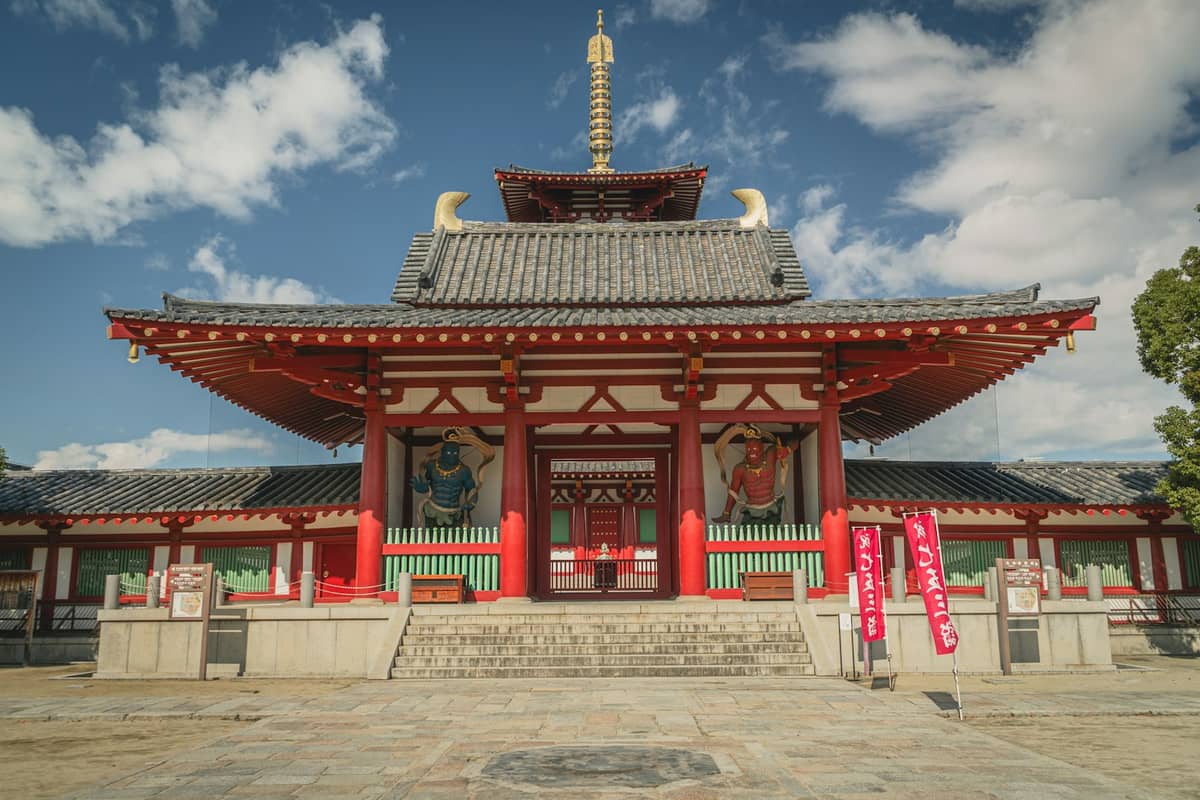
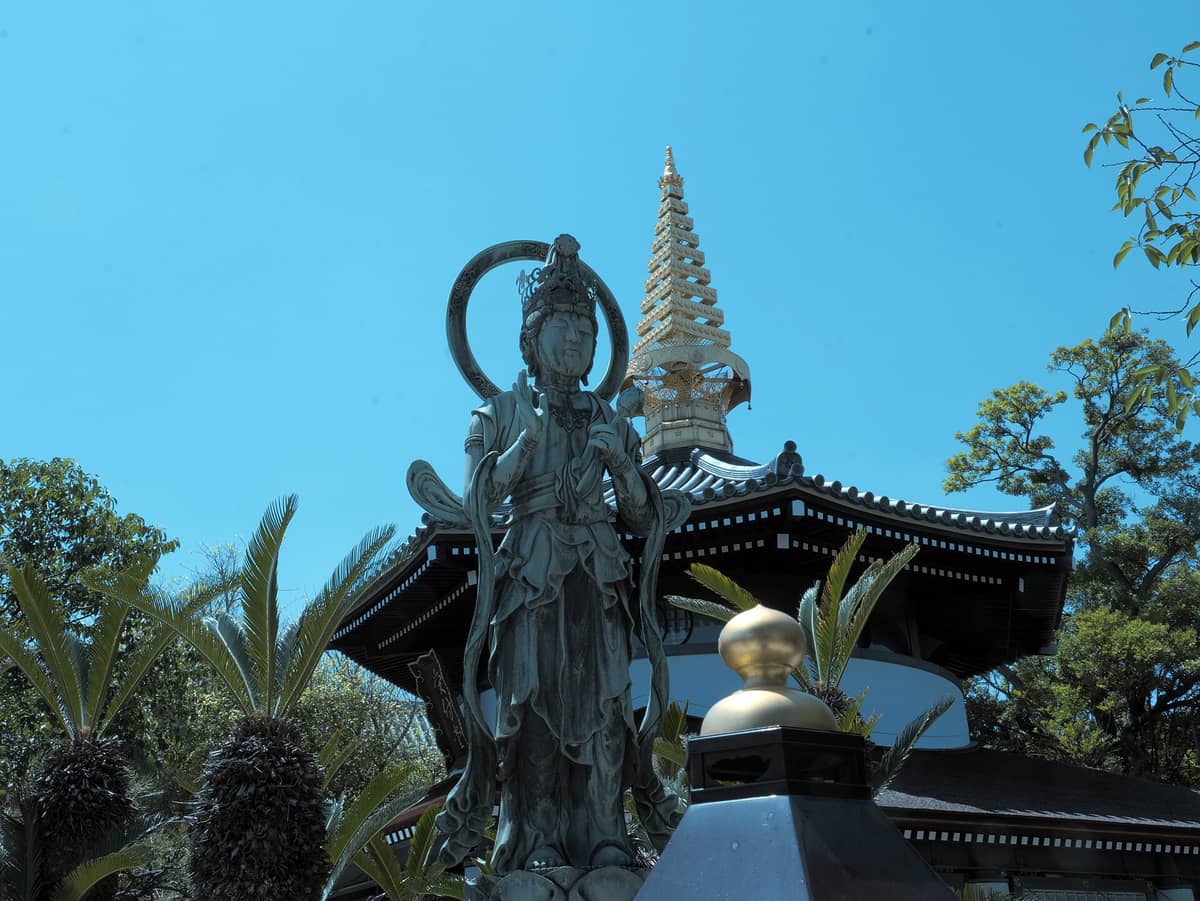
The oldest reason to come to Tennoji is Shitennoji Temple, one of Japan's earliest Buddhist temples, founded in 593 AD by Prince Shotoku. The current structures are reconstructions — the originals burned repeatedly over the centuries — but the layout of the temple complex follows the original seventh-century plan almost exactly, making it a rare example of early Japanese Buddhist architecture in its original spatial configuration. The grounds include a five-storey pagoda, a golden hall, and a covered cloister that encloses the inner precinct. Entry to the outer garden is free; the inner precinct charges a small admission fee. On the 21st and 22nd of each month, a large flea market takes over the grounds, making these some of the best days to visit.
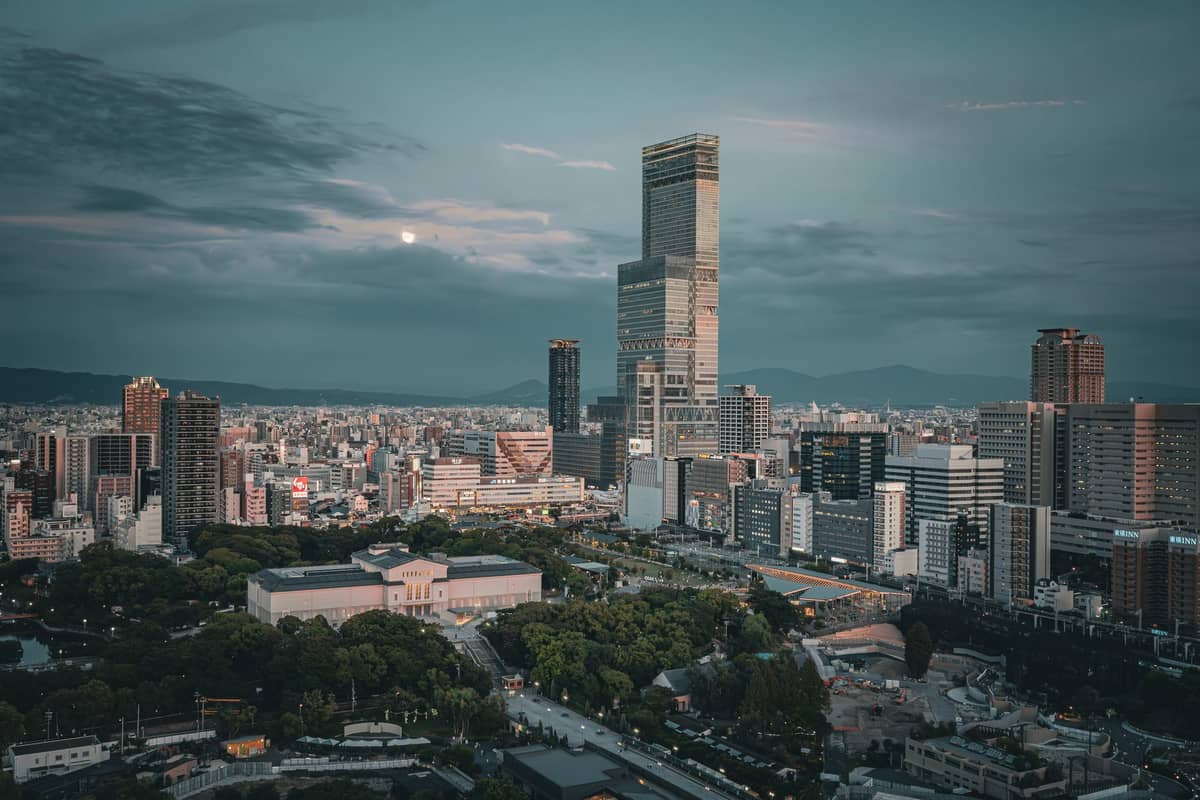
Rising directly above Tennoji Station, Abeno Harukas is the defining modern landmark of the neighbourhood. At 300 metres, it is among the tallest buildings in Japan. The upper floors house Harukas 300, an observatory with panoramic views across Osaka toward Osaka Bay to the west and, on clear days, the Kii Peninsula to the south. Below the observatory, the building contains a department store, hotel, and museum. Even if you skip the paid observatory, the lower floors are worth exploring for the scale alone.
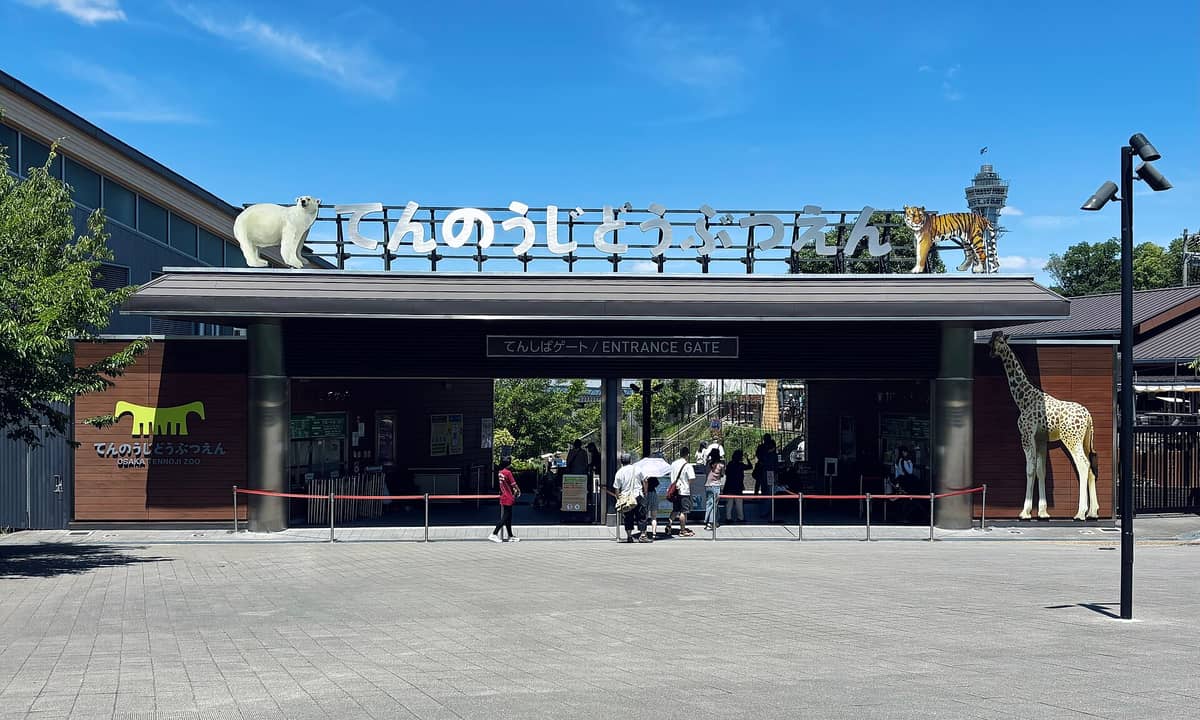
Tennoji Park covers about 28 hectares and contains several distinct destinations within its boundaries. Tennoji Zoo is one of Japan's oldest zoos, opened in 1915, and remains popular with families. The Osaka City Museum of Fine Arts, on the park's western edge, holds a significant collection of Japanese and Chinese art. The park itself is a pleasant buffer between the station area and Shinsekai, and its central paths are a genuinely calming place to decompress after the energy of the commercial zones.
Shitennoji Temple: roughly 600–700m north of the station, open daily, inner precinct has a small fee
Abeno Harukas: directly above Tennoji Station, observatory on floors 58-60
Tennoji Zoo: within Tennoji Park, one of Japan's oldest zoos
Osaka City Museum of Fine Arts: western edge of Tennoji Park
Shinsekai and Tsutenkaku Tower: 10-15 minutes on foot through Tennoji Park
Flea market at Shitennoji: held on the 21st and 22nd of each month
Tennoji also serves as a southern base for visiting Isshinji Temple, a striking modern Buddhist temple famous for its gates made from the cremated remains of past worshippers — unusual, historically significant, and unexpectedly moving. It sits just south of Shitennoji Temple and is free to enter.
💡 Local tip
If you visit Shitennoji on the 21st of the month, arrive before 10am to walk the flea market before it gets crowded. Antique ceramics, vintage textiles, and old Japanese kitchenware are the main draws. Bring cash.
Eating & Drinking
Tennoji's food scene divides roughly along the same east-west axis as its overall character. On the Abeno side of the station, Abeno Harukas and the adjacent Tennoji MIO mall contain floors of restaurants covering everything from Osaka-style kushikatsu (deep-fried skewers) to ramen chains, sushi counters, and international options. These are convenient, reliable, and oriented toward shoppers — not the place to find the most distinctive meals in the district, but useful when you want to eat quickly and without uncertainty.
The more interesting eating is found in the streets northeast and northwest of the station. The covered arcade running northwest from the station toward the park area has a cluster of affordable lunch spots: teishoku (set meal) restaurants serving grilled fish, miso soup, and rice for under 1,000 yen, alongside curry houses and small udon shops where turnover is fast and portions generous. These places are aimed at local office workers and residents, not tourists, and the menus reflect that.
The Shinsekai district, reachable through Tennoji Park, is the traditional home of kushikatsu in Osaka. The concentrated strip of kushikatsu restaurants along Shinsekai's main streets is the most tourist-aware part of the broader Tennoji area, but the food itself is genuinely good and reasonably priced: expect to pay around 150-300 yen per skewer, with a meal of eight to ten skewers plus beer coming in well under 2,000 yen per person. The cardinal rule in kushikatsu dining: never double-dip a skewer into the communal sauce.
For coffee, the streets around Shitennoji Temple have seen the opening of several small independent cafés in converted townhouses over recent years, catering to a younger crowd drawn by the neighbourhood's relative quiet and lower rents. These tend to open mid-morning and close by early evening. Tennoji is not a late-night drinking district in the way that Namba or even parts of Shinsekai are — most restaurants and bars begin to wind down around 10-11pm.
Getting There & Around
Tennoji Station is one of the most connected rail hubs in Osaka, combining multiple lines under one roof and making it easy to reach from almost anywhere in the city or the wider Kansai region. JR lines serving the station include the Osaka Loop Line (connecting clockwise to Osaka Station and Kyobashi), the Hanwa Line (running south toward Wakayama and providing a connection for JR Haruka Express services from Kansai International Airport), and the Yamatoji Line (heading east toward Nara). The JR Haruka limited express from KIX to Tennoji takes approximately 35-40 minutes, making this one of the fastest airport-to-district connections in Osaka — confirm fares and schedules with JR West before travelling, as pricing changes periodically.
The Osaka Metro serves Tennoji Station on two lines: the Midosuji Line, which runs north through Namba, Shinsaibashi, and Yodoyabashi to Umeda and Shin-Osaka; and the Tanimachi Line, which heads north through Tanimachi 9-chome and connects the district to the Osaka Castle area and Higobashi. Kintetsu Railway operates from Osaka-Abenobashi Station, which is integrated into the same complex as Tennoji Station, with services running southeast toward Yoshino and the Kinki interior.
For travel to Sumiyoshi Taisha and the older southern neighbourhoods, the Hankai Uemachi Line tram departs from Tennojieki-mae — the stop in front of the station — and travels south along a street-level track. It is one of Osaka's last surviving tram lines, and the ride itself has a pleasant, unhurried quality that contrasts sharply with the subway. Within the immediate neighbourhood, almost everything of interest is reachable on foot: Shitennoji Temple is about a 10-minute walk north, Tennoji Park is a 5-minute walk west, and Shinsekai is around 10-15 minutes through the park.
💡 Local tip
The Osaka Amazing Pass covers entry to Tennoji Zoo and unlimited Osaka Metro rides for one or two days. If you're combining Tennoji with other Metro-connected sights, check whether the pass saves you money before buying individual tickets. Verify current inclusions at the official Osaka Metro site before your trip.
For broader Osaka transit planning, the getting around Osaka guide covers IC card options, day passes, and line-by-line advice for navigating the city.
Where to Stay
Tennoji is an underrated base for a stay in Osaka, particularly for travellers who prioritise direct airport access, historical sightseeing, and a neighbourhood feel over proximity to the Namba nightlife strip. The area around Tennoji Station and Abeno Harukas has seen significant hotel development over the past decade, with a range of options from business hotels aimed at domestic travellers to mid-range international chains.
Staying in Tennoji puts you two metro stops from Namba and six from Umeda — close enough to reach either for an evening out, far enough that you return to quieter streets. The direct JR Haruka connection to Kansai International Airport is a genuine practical advantage if you have an early flight or a late arrival. Hotel prices in Tennoji generally run somewhat lower than equivalent accommodation in Namba or Shinsaibashi, reflecting its position slightly south of the main tourist concentration.
Travellers choosing Tennoji as a base should note that it works particularly well for itineraries that include day trips south and east: Nara is accessible via the Yamatoji Line directly from Tennoji Station, making it one of the most convenient neighbourhoods for day-tripping to the deer parks and temples of Japan's ancient capital.
Families with children may find Tennoji particularly practical: the zoo, the park, and the accessible temple grounds provide a full day of activity within walking distance of most hotels in the area, and the neighbourhood is calmer in the evenings than Namba or Dotonbori. The Abeno Harukas observatory also works well as a visual orientation exercise early in a Osaka trip.
⚠️ What to skip
The streets immediately around Shinsekai, just west of Tennoji Park, have historically had a more rough-and-ready character than the rest of the neighbourhood. The area has gentrified considerably in recent years, but it still draws a different crowd at night than the station area does. Standard urban awareness applies after dark — nothing unusual for a major Japanese city, but worth noting if you are walking back through the park late in the evening.
Is Tennoji Worth Your Time?
Tennoji is one of Osaka's most genuinely layered neighbourhoods, and the case for spending at least a full day here is strong for almost any type of traveller. It is not a single-attraction stop: the combination of Shitennoji Temple, Abeno Harukas, Tennoji Park, and the walking proximity to Shinsekai means there is a realistic full day of activity without repetition. It fits naturally into broader Osaka itineraries — see the complete things to do in Osaka guide for how Tennoji connects to the rest of the city.
For travellers focused purely on nightlife and the Dotonbori strip, Tennoji is easy to visit as a half-day excursion rather than a base. But for those interested in Osaka's historical and urban depth — the kind of traveller who wants to understand the city rather than just photograph its most famous signs — Tennoji delivers more per hour than many more-visited districts. It also provides a useful contrast to the polished tourism infrastructure of Shinsaibashi or the castle district, showing a version of Osaka that is still, in large part, working on its own terms.
TL;DR
Tennoji combines Osaka's oldest Buddhist temple (Shitennoji, 593 AD), one of its tallest modern buildings (Abeno Harukas, 300m), a 28-hectare park with zoo, and direct rail access to Kansai Airport — making it one of the city's most practically complete districts.
Best suited to: history-focused travellers, families, budget-conscious visitors looking for a quieter residential base with strong transit connections, and those day-tripping to Nara via the direct Yamatoji Line.
Less suited to: visitors whose main priority is Osaka's nightlife or the Dotonbori-Namba entertainment strip, who would be better based further north.
Walk west through Tennoji Park to reach Shinsekai and Tsutenkaku Tower; walk north for 10 minutes to reach Shitennoji Temple and the surrounding shitamachi streets.
Honest drawback: English-language signage and menus thin out quickly once you leave the station complex — a minor inconvenience that also signals you are somewhere locals actually use.
Three days is enough time to cover Osaka's essential neighbourhoods, eat your way through its famous food scene, and still avoid the rookie mistakes that waste half a day. This itinerary is built around the city's subway network, logical geographic clusters, and the real trade-offs between tourist staples and worthwhile alternatives.
Osaka is a dense urban city, but it hides some genuinely excellent green spaces. From the riverside sakura corridors of Kema Sakuranomiya to the sweeping grounds of Expo '70 Commemorative Park, here are the best gardens and parks the city has to offer, organized by type and neighborhood.
Osaka holds its own against much larger museum cities as a museum city. Whether you're drawn to ancient Japanese history, world-class contemporary art, or interactive science, these are the museums worth building your itinerary around.
Osaka is better known for neon signs and street food than spiritual sites, but its temples and shrines are among the most rewarding in western Japan. This guide covers the best sacred places to visit, from ancient foundations to architecturally daring modern complexes, with practical tips on when to go and what to expect.
Osaka rewards visitors year-round, but the experience changes dramatically depending on when you go. This guide breaks down each season's weather, crowd levels, price patterns, and standout events so you can choose the timing that suits your priorities.
Osaka rewards those who look up, look out, and look down from its rooftops, towers, and waterways. This guide covers the best viewpoints in Osaka, from 300-meter observatories to lantern-lit alleys that frame the city in a completely different way.
Osaka sits at the heart of the Kansai rail network, putting some of Japan's greatest destinations within an hour's reach. This guide covers the best day trips from Osaka with precise travel times, fare comparisons, rail pass breakdowns, and a clear take on what each destination is actually worth.
Osaka rewards travelers who explore on foot. From the neon-lit canal at Dotonbori to ancient shrines, riverside parks, and covered shopping streets that double as social spaces, the city is packed with free experiences. This guide covers the best of them, organized by type.
Osaka has one of the most efficient urban transport networks in Japan, with nine color-coded metro lines, overlapping JR and private railways, and a tap-and-go IC card system that connects virtually every corner of the city. This guide covers everything from airport transfers to day passes, so you spend less time figuring out tickets and more time exploring.
Osaka is Japan's third-largest city and one of Asia's most compelling urban destinations. But is it worth your limited travel time? This guide cuts through the noise with a clear look at what Osaka delivers — and where it falls short.
Osaka is served by two airports with very different purposes. Kansai International (KIX) handles almost all international flights, while Itami (ITM) is a domestic-only hub. This guide breaks down every transport option, current fare ranges, journey times, and which airport actually makes sense for your trip.
The Osaka Amazing Pass bundles unlimited transit with free attraction entry across the city. This guide breaks down current prices, what the pass actually covers, how to buy the new e-ticket version, and whether the math works out for your itinerary.
Osaka's anime scene is anchored by Den Den Town in Nipponbashi, a compact district packed with over 150 specialist shops covering manga, figures, retro games, doujinshi, and cosplay. This guide covers every key spot, the best stores, practical logistics, and where to find anime culture outside the main district.
Osaka's cherry blossom season typically peaks in early April, but the full picture is more nuanced than most guides admit. From riverside parks with 5,000 trees to a rare late-blooming tunnel at the Mint Bureau, this guide covers exactly when to go, where to stand, and how to avoid the most crowded mistakes.
Osaka rewards couples who look beyond the neon and crowds. This guide covers the most romantic experiences in the city, from panoramic observatory dates and evening bay cruises to quiet temple lanes and seasonal illumination events, with a clear take on what's worth it and what to skip.
Osaka rewards those who look beyond Dotonbori and Osaka Castle. This guide uncovers the city's overlooked shrines, nostalgic neighborhoods, market streets, and natural escapes that locals actually love.
Autumn is one of Osaka's strongest seasons, with koyo (fall foliage) peaking from mid-November into early December across parks, castle grounds, and riverside paths. This guide covers the best viewing spots, seasonal weather, crowd patterns, and practical logistics so you can plan with confidence.
Thinking about visiting Osaka between December and February? This guide covers the real winter weather, what's open, the best seasonal events, crowd patterns, and a clear take on whether a winter trip makes sense for you.
Osaka after dark is a different city entirely. From the neon-lit canal banks of Dotonbori to the whisky bars of Kitashinchi and the club floors of Shinsaibashi, this guide covers every tier of Osaka nightlife with practical logistics, practical recommendations, and the local knowledge to do it right.
Osaka rewards budget travelers more than almost any other major Japanese city. Between free parks, cheap street food, and the right transit pass, you can cover the highlights without spending a fortune. This guide breaks down exactly where to spend, where to save, and what the tourist traps actually cost.
Osaka has a surprisingly strong onsen scene for a major urban center, ranging from the enormous themed Spa World to sleek modern complexes and neighborhood sento. This guide covers the top facilities, realistic pricing, tattoo policies, seasonal timing, and everything else you need before you strip down and soak.
Osaka and Kyoto sit just 30 minutes apart by train, but they offer very different experiences as a home base. This guide breaks down transport links, accommodation costs, crowd dynamics, and the kind of traveler each city suits best, so you can make the right call before you book.
Osaka is one of Japan's great shopping cities, with distinct districts for every budget and interest. This guide breaks down the best areas, what to buy in each, how tax-free shopping works, and the traps to avoid — so you spend time buying, not wandering.
Osaka has one of the most serious street food cultures in Japan, built around the local philosophy of kuidaore: eat until you drop. This guide covers the essential dishes, the best areas to find them, practical logistics, and a clear take on what lives up to the hype.
The Sanyo Shinkansen makes Osaka to Hiroshima one of Japan's most rewarding day trips, covering roughly 342 km in around 80 minutes. This guide breaks down every transport option, real fare ranges, booking strategy, and what to prioritize once you arrive in Hiroshima.
Kyoto is just 24 minutes from central Osaka by train, but choosing the wrong route can cost you time and money. This guide covers every transport option, from the cheapest private railways to the shinkansen, plus practical advice on where to go in Kyoto once you arrive.
Nara is one of the most rewarding day trips from Osaka, with ancient temples, free-roaming deer, and journey times under an hour. This guide breaks down every transport option, compares costs, and gives you the practical detail to make the day run smoothly.
Osaka rewards walkers more than almost any city in Japan. This guide breaks down the best self-guided walking routes by neighborhood, covers the transit passes that make hopping between areas affordable, and gives you the practical detail you need to plan a full day on foot without second-guessing yourself.
From the whale sharks of Kaiyukan to the Mushroom Kingdom at Universal Studios Japan, Osaka delivers serious family fun across every age group. This guide covers the best kid-friendly attractions, current admission prices, crowd patterns, and practical logistics to make your family trip run smoothly.
Tenjin Matsuri is one of Japan's three great festivals, held every July at Osaka Tenmangu Shrine. This guide covers the 2026 dates, the land and boat processions, fireworks timings, viewing options, and everything you need to plan your visit without the usual tourist pitfalls.
Osaka rewards visitors with a rare combination of serious history, world-class food, and nightlife that runs until dawn. This guide covers the top things to do in Osaka Japan, from feudal castles and temple districts to canal-side street food and sweeping city views, with up-to-date prices, the best times to visit each attraction, and a clear take on what is worth your time.
Universal Studios Japan is one of the most-visited theme parks in Asia, and also one of the most misunderstood. This guide covers everything first-timers get wrong: dynamic ticket pricing, Super Nintendo World timed entry, Express Pass strategy, and the fastest routes from central Osaka.
Osaka has earned its reputation as Japan's kitchen over centuries, and the city's food culture runs far deeper than the few dishes that dominate travel blogs. This guide covers the essential Osaka foods every visitor should try, with real prices, the best areas to eat them, and practical advice on what to skip.
Choosing where to stay in Osaka shapes your entire trip. This guide breaks down every major neighborhood by vibe, price, and practicality — so you can book the right area, not just the cheapest room.