Self-Guided Walks in Osaka: Routes, Passes, and What to Know Before You Go
Osaka rewards walkers more than almost any city in Japan. This guide breaks down the best self-guided walking routes by neighborhood, covers the transit passes that make hopping between areas affordable, and gives you the practical detail you need to plan a full day on foot without second-guessing yourself.
Plan and book this trip
Tools from our partner Travelpayouts help you compare flights and hotels. If you book through them, we may earn a commission at no extra cost to you.
Flights
Hotels map
TL;DR
- Osaka's best walking districts include the castle area, Dotonbori/Namba, Tennoji/Shinsekai, Nakanoshima island, and Tenjinbashisuji shopping street.
- The Osaka Metro 1-Day Pass (Enjoy Eco Card) costs ¥820 on weekdays and ¥620 on weekends — buy it before you walk, not after, to save on metro hops between routes. See our full guide to getting around Osaka for more transport detail.
- Osaka Castle Park is open 24 hours and free to enter; only the main tower museum charges admission (closes around 17:00–18:00, depending on season).
- Spring (March to May) and autumn (October to November) offer the most comfortable walking weather. July and August are hot and humid, with temperatures frequently above 30°C.
- Most routes below work as standalone half-day walks or can be combined into a full day with a budget-friendly transit pass.
Why Osaka Works So Well for Walking
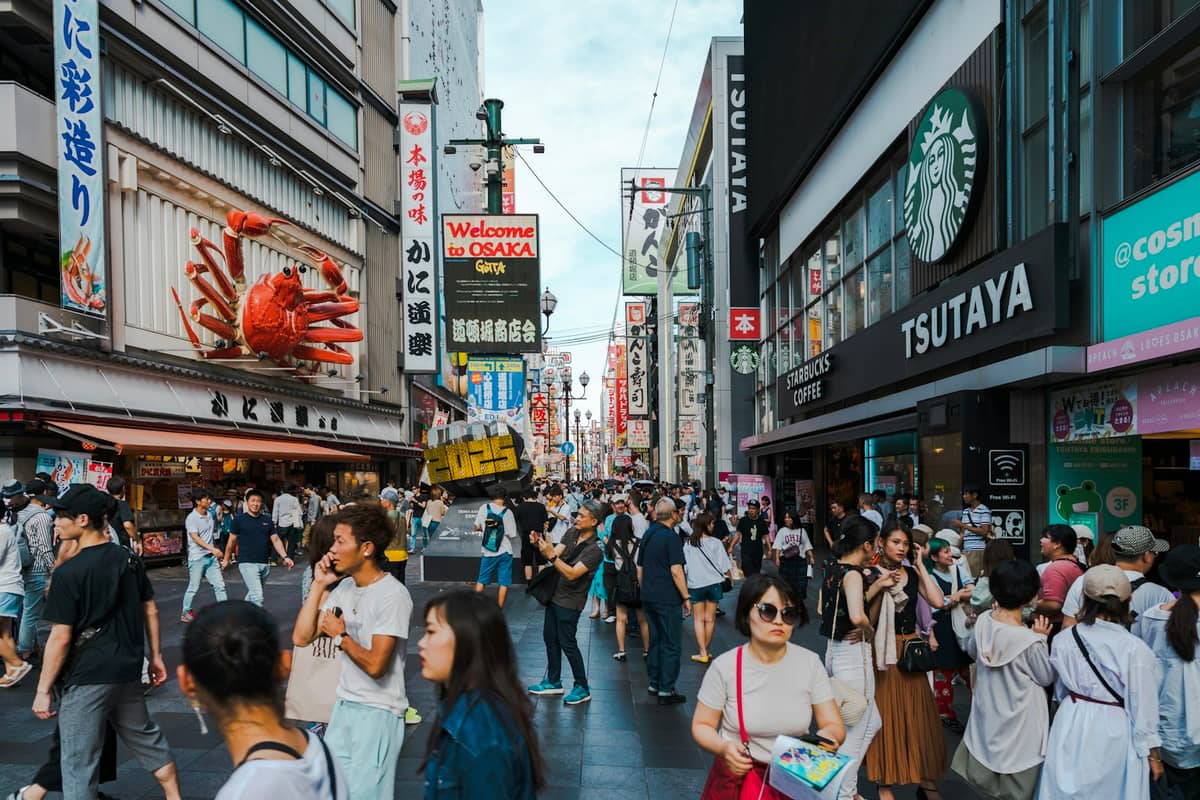
Osaka is a flat, low-lying city built on the plains around Osaka Bay, which means almost no hills to deal with. Footpaths are well-maintained, pedestrian crossings are plentiful, and most key attractions cluster tightly within their neighborhoods. A single district can fill a half-day at a relaxed pace, and with Osaka Metro connecting them, you can realistically cover two or three distinct areas in one day without exhausting yourself.
The city is also more walkable at unusual hours than most major destinations. Osaka Castle Park is open 24 hours, which means early-morning and late-evening walks are genuinely rewarding, especially during sakura season when the trees are lit after dark. Dotonbori comes fully alive after dark, and Shinsekai is more interesting at dusk than midday. Osaka walks aren't just for daylight hours.
💡 Local tip
Buy your Osaka Metro 1-Day Pass (Enjoy Eco Card) before starting any walking route that requires transit hops. It costs ¥820 on weekdays and drops to ¥620 on weekends and public holidays. Digital versions with QR code entry are available via the Osaka Metro app and platforms like Klook, so you don't need to visit a ticket machine.
Route 1: Osaka Castle and the Historic East
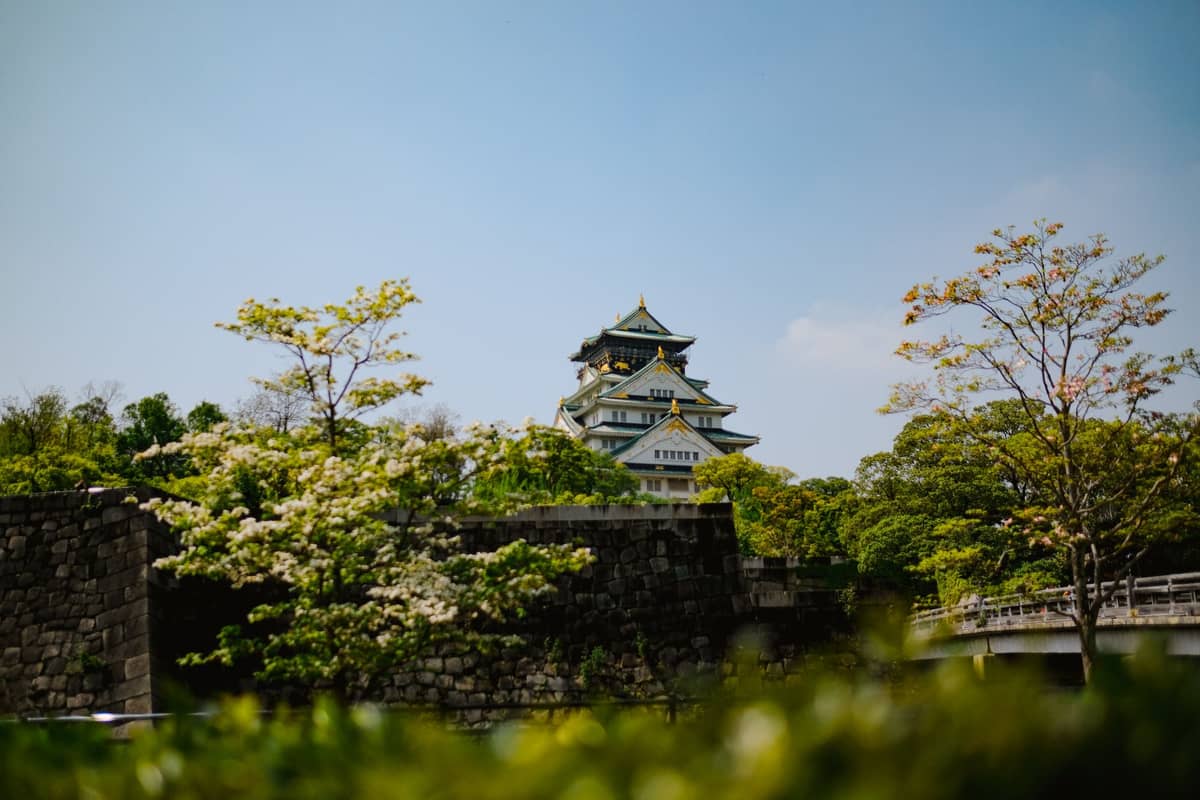
This is the most iconic self-guided walk in Osaka and the natural starting point for first-time visitors. The route centers on Osaka Castle, one of Japan's most recognizable landmarks, and extends through the surrounding park and into the adjacent museum district.
Start at Tanimachi 4-chome Station (Osaka Metro Chuo or Tanimachi lines) and walk into the castle grounds from the south gate. The park itself is free and open around the clock, making it one of the best free walks in the city regardless of what time you arrive. The main tower museum is open daily from 09:00 to 18:00, with last admission around 17:30. Note that the interior closes from December 28 to January 1 each year, though the park remains fully accessible. Admission to the tower is around ¥1,200 for adults; verify current pricing before visiting as it can change.
After the castle, walk west toward the Tenmabashi area along the Okawa River, then cross to Nakanoshima Park, a narrow island between two rivers that makes for a peaceful mid-route detour. The park contains rose gardens that bloom in May and November. From there, you can connect easily to the Nakanoshima cultural district or head south toward Shinsaibashi.
- Best entry point Tanimachi 4-chome Station or Osakajokoen Station (JR Osaka Loop Line)
- Walk length 3-5 km depending on how much of the park you explore
- Time needed 2-3 hours for the park and tower; half a day if extending to Nakanoshima
- Best season Cherry blossom season (late March to early April) when the castle grounds fill with sakura; extended hours sometimes apply during this period
- Cost Free for the park; ¥1,200 for the keep museum
⚠️ What to skip
A common mistake: people assume the entire castle site closes at 17:00. Only the main tower museum does. The park grounds are open 24 hours and free, so you can walk the outer paths, moats, and stone walls any time of day or night. During Golden Week and cherry blossom season, the castle sometimes extends tower hours to around 18:00 or later — check the official Osaka Castle website before your visit.
Route 2: Dotonbori, Namba, and the South
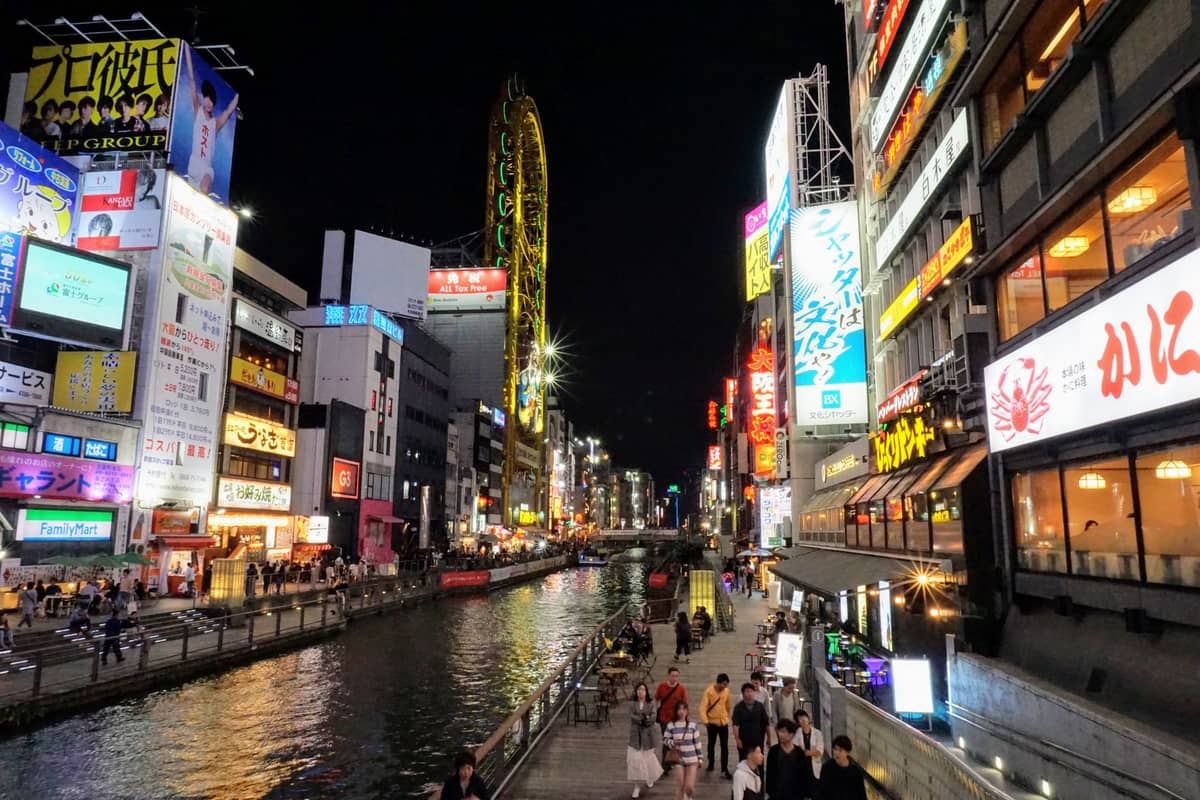
The Minami district is where Osaka's street food, neon signs, and shopping culture concentrate into a dense, walkable grid. This route starts at Dotonbori Canal and works outward through Namba's covered arcades, then down toward Shinsekai.
Begin on the Dotonbori canal walkway, which runs along the south bank of the Dotonbori River. This is one of Osaka's most photographed stretches, and it's most visually striking at night when the canal reflects the surrounding signage. Walk east along the canal toward Hozenji Yokocho, a narrow stone-paved alley just off Dotonbori that feels entirely different from the main drag. The small Hozenji Temple here is perpetually covered in moss, kept moist by water offerings from visitors.
From Hozenji, walk south into the Shinsaibashi-suji shopping arcade and continue through to Namba Parks or pivot toward Shinsekai — a 15-minute walk south that puts you in a completely different atmosphere. Shinsekai is built around Tsutenkaku Tower and retains a retro working-class character that's genuinely distinct from the tourist-facing parts of Namba. The kushikatsu restaurants here are the real deal.
✨ Pro tip
Do this route in two parts: Dotonbori in the evening for atmosphere and photos, Shinsekai and Tennoji in the late morning before crowds arrive. Shinsekai gets busy on weekends from midday onward. Weekday mornings before 11:00 are noticeably quieter.
Route 3: Nakanoshima and the Kitahama Riverside
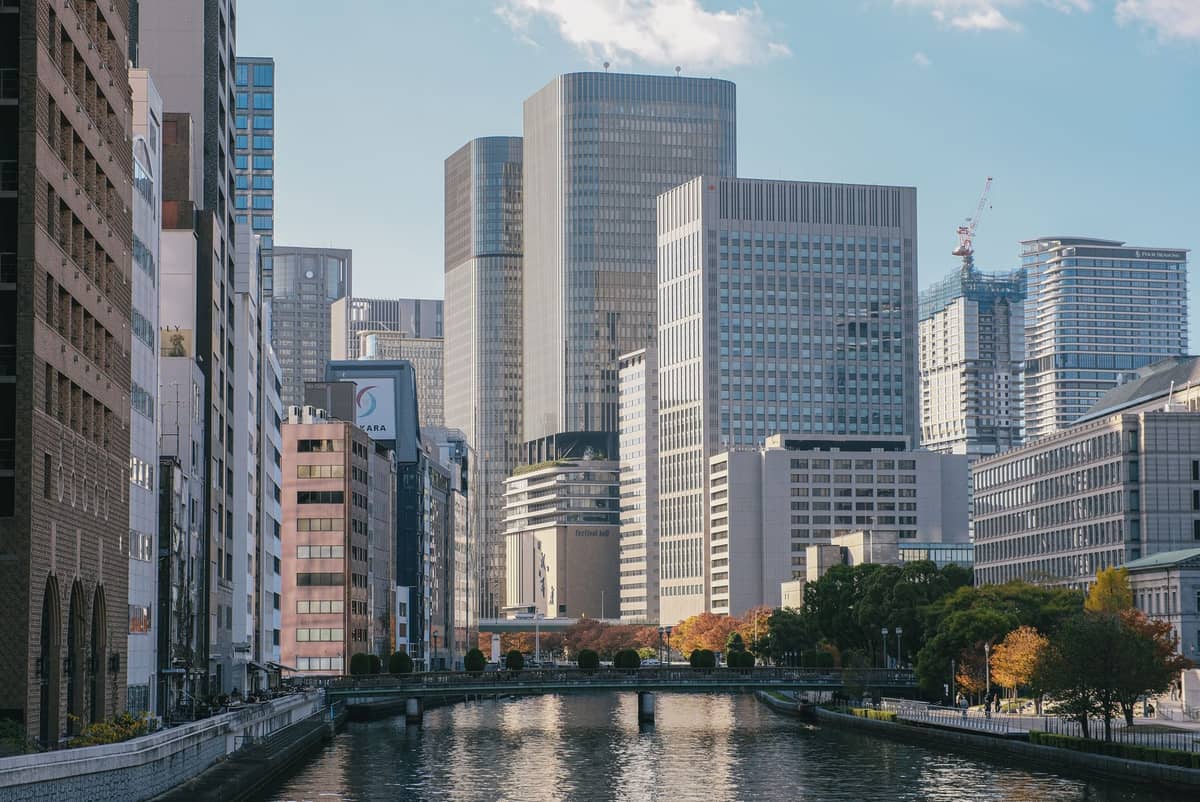
Nakanoshima is an island district between the Dojima and Tosabori rivers, and it's one of the more underappreciated walking areas in central Osaka. The architecture alone justifies the detour: the district contains some of the city's best Meiji and Taisho-era Western-style buildings, including the Osaka City Central Public Hall (built 1918) and the nearby Bank of Japan Osaka branch.
Walk west along the island from Nakanoshima Park toward the National Museum of Art Osaka and the Nakanoshima Museum of Art Osaka. The riverside path on the south side of the island along the Tosabori is pleasant and largely uncrowded on weekdays. This walk suits anyone interested in architecture, art, or simply a quieter route away from the main tourist corridors.
Extend the route by walking east along the Kitahama Retro District, where preserved early 20th-century buildings now house cafes and antique shops. Kitahama Station sits at the eastern end, making for an easy exit or transit connection.
Route 4: Tennoji, Shitennoji, and the Southern Temples
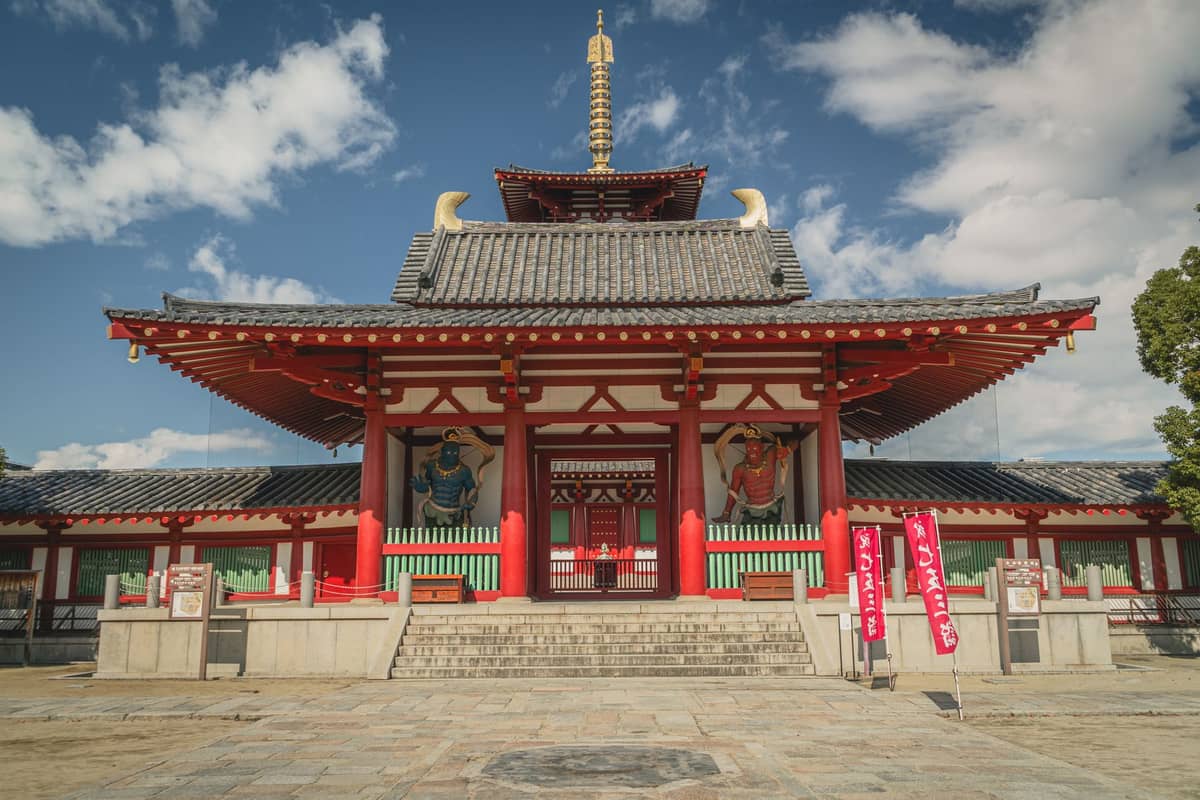
The Tennoji district makes a strong base for a self-guided walk through Osaka's older temple and shrine landscape. Start at Shitennoji Temple, one of Japan's oldest Buddhist temples, founded in 593 CE. The main temple precinct charges a small admission fee (around ¥300 for the inner garden area; verify before visiting), but the outer grounds are free.
From Shitennoji, walk north to Tennoji Park and the adjacent Tennoji Zoo, or continue south toward Isshinji Temple, a visually striking modern Buddhist temple known for its unusual architectural design. The contrast between Shitennoji's classical forms and Isshinji's contemporary approach makes this one of the more interesting temple walks in the city. Finish at Abeno Harukas for an elevated view over the city, or stay at ground level and loop back through Shinsekai.
Seasonal Timing and Practical Logistics
Osaka's climate shapes how comfortable these walks actually are. Spring (March to May) and autumn (October to November) are the most favorable seasons for extended walking, with mild temperatures and lower humidity. Summer (June through August) brings temperatures that regularly exceed 30°C alongside high humidity, especially during the rainy season (tsuyu) from early June to mid-July, when June alone averages around 185 mm of rainfall. If you're walking in summer, start before 09:00 and take a midday break indoors. Our guide on the best time to visit Osaka covers this in more detail.
During cherry blossom season (typically late March to early April), Kema Sakuranomiya Park along the Okawa River offers one of Osaka's best sakura walks, with approximately 4,800 trees lining the riverbanks. It connects naturally with the castle area route. For autumn foliage, Osaka Castle Park and Shitennoji both have notable color, though Osaka's autumn foliage is less spectacular than Kyoto's — a realistic expectation worth setting. See Osaka in autumn for specific timing and spots.
- Comfortable walking shoes are non-negotiable: temple and shrine grounds typically involve uneven stone paths and steps.
- IC cards (Suica or ICOCA) work on all Osaka Metro lines and JR lines, making fare payment seamless between walking routes.
- Most Osaka Metro stations have coin lockers near the exits — useful for storing bags while you walk.
- Convenience stores (7-Eleven, FamilyMart, Lawson) are everywhere and serve as reliable water stops, restroom access points, and emergency snack sources.
- Tipping is not customary in Japan, including at cafes and restaurants you'll pass along these routes.
- Tap water in Osaka is safe to drink — refill a bottle rather than buying single-use plastic.
For walkers planning multiple districts in one day, the Osaka Amazing Pass (approximately ¥3,500 for one day) bundles unlimited metro rides with free or discounted entry to dozens of attractions including Tsutenkaku Tower and Osaka Museum of History. It's worth the cost if you plan to visit three or more paid attractions. If you're mainly walking and skipping interiors, the standard Enjoy Eco Card at ¥620-820 is sufficient.
FAQ
Do I need to book a guided walking tour, or can I do it myself in Osaka?
Osaka is genuinely easy to navigate independently. Street signage is bilingual in most tourist areas, and Google Maps works reliably for walking directions. Self-guided walks are the norm here, not the exception. Guided tours add value mainly for historical interpretation (Osaka Castle's interior, for example) rather than navigation.
Is the Osaka Metro 1-Day Pass worth it for walking routes?
It depends on how many metro trips you make between walking areas. A single Osaka Metro journey typically costs ¥180-360 depending on distance. If you're taking three or more separate trips in a day, the Enjoy Eco Card at ¥620 (weekends) or ¥820 (weekdays) pays for itself. On a weekend, it often makes sense even for two trips.
What is the best walking route in Osaka for first-time visitors?
The Dotonbori to Shinsekai route covers the most distinctively Osakan experiences in a compact area: street food, neon signs, the canal, old-school entertainment districts, and Tsutenkaku Tower. Do it over four to five hours starting in the late afternoon so you're in Dotonbori after dark. The castle area walk is the second-best starting point, especially if you're interested in history.
Is Osaka flat enough to walk long distances comfortably?
Yes. Osaka is almost entirely flat — built on low-lying plains near Osaka Bay, with most of the city sitting close to sea level. There are no significant hills in the central walking areas. The main physical challenge in summer is heat and humidity, not elevation.
Can I combine an Osaka walking day with a day trip to Kyoto or Nara?
Easily. Kyoto is about 15 minutes from Shin-Osaka or Osaka Station by shinkansen (or around 30 minutes by JR Special Rapid), and Nara is roughly 45 minutes by express train from Namba. Both are realistic day trips that you can combine with a morning or evening walk in Osaka. See our guides on the Osaka to Kyoto route and the Osaka to Nara route for logistics.