Osaka Castle Park: What to Expect Before You Visit
Osaka Castle Park stretches across 105.6 hectares in the heart of the city, wrapping Japan's most recognizable feudal castle in layered moats, stone walls, and open plazas. Entry to the grounds is free around the clock, though the reconstructed main tower museum charges admission. This guide covers what the park really looks and feels like at different times of day, how to navigate it efficiently, and whether it deserves your time.
Quick Facts
- Location
- 1-1 Osakajo, Chuo-ku, Osaka 540-0002
- Getting There
- Osakajokoen Station (JR Osaka Loop Line) or Morinomiya Station (JR / Osaka Metro Chuo, Nagahori Tsurumi-ryokuchi, and Tanimachi lines) — 15–20 min walk to the main tower
- Time Needed
- 1.5–3 hours for a thorough visit; 45 min if only walking the outer grounds
- Cost
- Grounds: Free. Main Tower Museum: ¥1,200 (adults), ¥600 (university & high school students with ID), free for junior high and younger
- Best for
- History enthusiasts, photographers, families, cherry blossom season visitors, joggers and park walkers
- Official website
- www.osakacastlepark.jp/?lang=en
What Osaka Castle Park Actually Is
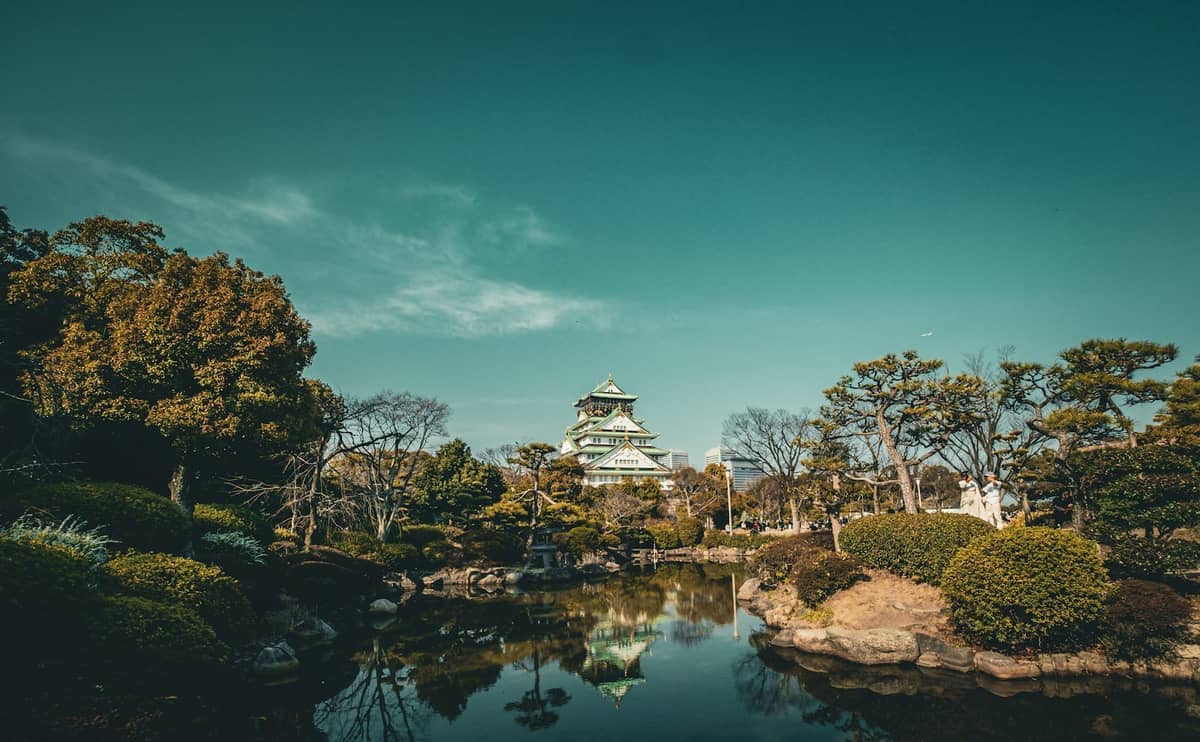
Osaka Castle Park is a Special Historic Site covering 105.6 hectares in the Chuo ward of central Osaka. At its center stands the main keep of Osaka Castle, a 1931 reinforced-concrete reconstruction of the tower that dominated the Sengoku and Edo periods. The surrounding park includes two wide moats, original stone walls constructed from massive granite blocks, the Nishinomaru Garden, several historic gates, and large open lawns that fill with local residents on almost any dry day.
The key distinction every visitor should understand before arriving: the grounds are free and open 24 hours, but entering the main tower museum costs ¥1,200 for adults. Many people spend a satisfying two hours here without ever paying a yen, walking the perimeter walls and photographing the tower from the outer bailey. Whether the museum warrants the admission fee depends heavily on your interest in the Warring States period (Sengoku era) of Japanese history.
ℹ️ Good to know
Main Tower Museum hours: 09:00–17:00 (last admission 30 min before closing), closed December 28–January 1. Hours can vary seasonally, so check the official site before visiting.
The History Behind the Stone Walls
The original Osaka Castle was commissioned by Toyotomi Hideyoshi in 1583, intended to surpass Nobunaga's Azuchi Castle in scale and prestige. Hideyoshi used the site of the destroyed Ishiyama Honganji temple, a powerful Buddhist fortress that had resisted the Oda clan for a decade. The castle Hideyoshi built was enormous by any standard, ringed by double moats and stone walls assembled from granite shipped from across Japan. It became the political center of a newly unified country.
The Tokugawa clan destroyed the Toyotomi castle completely in 1615 after the Siege of Osaka and built an entirely new structure over it, raising the ground level significantly. That Tokugawa tower was struck by lightning and burned in 1665 and was not rebuilt for over two centuries. The current main tower dates from 1931, built through public subscription as a civic monument, and underwent a major renovation in 1997. It is, in architectural terms, a modern building dressed in historic style, something that the museum inside addresses honestly.
The park itself was designated a Special Historic Site by the Japanese government, one of the highest levels of cultural protection. This means the layout of the grounds, the moats, and the original stone walls are carefully preserved and subject to strict controls. For more on how Osaka Castle fits into the city's broader temple and historic site landscape, the guide to Osaka's best temples and shrines offers useful context.
Tickets & tours
Hand-picked options from our booking partner. Prices are indicative; availability and final rates are confirmed when you complete your booking.
Bike tour to Osaka Castle and park area
From 50 €Instant confirmationFree cancellationOsaka local food tour in Dotonbori and Shinsekai
From 51 €Instant confirmationFree cancellationGuided day tour from Osaka to Nara Park, Arashiyama and Fushimi Inari
From 59 €Instant confirmationFree cancellationHimeji, Nara and Kobe full-day tour from Osaka
From 76 €Instant confirmationFree cancellation
How the Park Changes Through the Day
Early morning, roughly 6:00–8:00, is when the park belongs to Osaka's residents. The wide paths fill with joggers moving at a steady clip past the stone walls, elderly couples walking in quiet conversation, and groups doing tai chi or stretching on the open lawns near Nishinomaru Garden. The air is noticeably quieter, and the tower, when it catches the low eastern light, photographs cleanly without crowds in the foreground. The smell of damp stone from the moats is strongest at this hour.
By 10:00 the tour buses begin arriving. The main approach from Osakajokoen Station fills steadily, and the queue for the main tower elevator can stretch to 30 minutes or more by late morning during peak tourist season. The plaza in front of the tower, the Honmaru plaza, shifts from calm to crowded within about an hour. If you plan to go inside the tower, being in line at the 09:00 opening is meaningfully better than arriving mid-morning.
Afternoons on weekends draw families with children who use the wide-open second bailey (Nino-maru) as an informal play space. On weekdays, school groups are common in spring and autumn. The late afternoon light from the west catches the gold shachi ornaments on the tower roof and the white plaster walls in a way that morning light does not. Photographers willing to stay until 30 minutes before the main tower closes will find the crowds have thinned considerably.
After dark, the tower is illuminated against the sky and visible from the outer moat path, which remains open. Night visits to the grounds are unusual enough that the park feels genuinely quiet, though the illuminated castle makes for striking photographs from the stone bridges. There are no facilities open after the tower closes, so bring water if you plan an evening walk.
Walking the Park: A Practical Route
Many visitors approach through Otemon Gate, the main formal entrance. This gate dates from the Tokugawa reconstruction and gives a genuine sense of the fortification's scale, its stone walls rising steeply from the outer moat. From Otemon, the path leads through the outer bailey and across a bridge over the inner moat to the Honmaru plaza where the main tower stands. This gate dates from the Tokugawa reconstruction and gives a genuine sense of the fortification's scale, its stone walls rising steeply from the outer moat. From Otemon, the path leads through the outer bailey and across a bridge over the inner moat to the Honmaru plaza where the main tower stands.
An alternative entry from Osakajokoen Station brings you in through the northern side of the park, passing alongside cherry trees that line the inner moat. This route is longer but substantially more scenic in spring, and less trampled than the Otemon approach at peak hours. This route is longer but substantially more scenic in spring, and less trampled than the Otemon approach at peak hours.
The Nishinomaru Garden, located in the western section of the park, requires a small separate admission fee (verify current price before visiting) and contains about 300 cherry trees, making it one of the city's most concentrated viewing spots during the cherry blossom season in late March to early April. The covers the best timing and spots across the city, including this garden. making it one of the city's most concentrated viewing spots during the cherry blossom season in late March to early April. The Osaka cherry blossom guide covers the best timing and spots across the city, including this garden.
💡 Local tip
The stone walls of the inner moat are built from some of the largest quarried stones in Japan. Look for the carved crests (daimyo mon) left by the various feudal lords who contributed stone during the Tokugawa reconstruction. Finding them is a quiet way to engage with the site that most visitors walk past entirely.
Inside the Main Tower Museum
The interior of the main tower functions as an eight-floor museum dedicated to Osaka Castle's history and to Toyotomi Hideyoshi's life and era. Exhibits are well-labeled in English and include armor, weapons, documents, and scale models of the castle at different periods in its history. The museum is clear that the building itself is a 1931 construction, which earns it some credibility among history-conscious visitors.
The top floor observation deck offers views across the city in all directions. On clear days you can see Abeno Harukas to the south and the distant mountains of the Ikoma range to the east. The view is good but not exceptional compared to dedicated observation facilities. The elevator takes most visitors to the upper floors; there is also a staircase. The interior can feel cramped during peak season, with queues forming at the elevator and each floor filling with tour groups moving at different speeds.
If you are primarily interested in elevated views over Osaka rather than the historical museum, the Umeda Sky Building and Abeno Harukas both offer observation experiences that rival or exceed the tower's top floor for pure panoramic value.
Seasonal Experience and Weather Considerations
Spring is the park's peak season. Spring is the park's peak season. About 300 cherry trees line Nishinomaru Garden and the inner moat area, drawing large crowds from late March through early April. The combination of the white tower, pink blossoms, and stone walls is genuinely striking. It is also when queues for the tower museum are longest and the park is most crowded overall. Weekdays are significantly more manageable than weekends during this period. drawing large crowds from late March through early April. The combination of the white tower, pink blossoms, and stone walls is genuinely striking. It is also when queues for the tower museum are longest and the park is most crowded overall. Weekdays are significantly more manageable than weekends during this period.
Autumn brings lower crowds and comfortable temperatures, usually October and November, and the park's tree-lined paths take on warm gold and orange tones. Summer visits are possible but Osaka's summer humidity is significant, with Autumn brings lower crowds and comfortable temperatures, usually October and November, and the park's tree-lined paths take on warm gold and orange tones. Summer visits are possible but Osaka's summer humidity is significant, with temperatures often above 30°C from July through August. The open plaza in front of the tower offers no shade and becomes genuinely uncomfortable by midday. Mornings are the only reasonable time for summer visits. The open plaza in front of the tower offers no shade and becomes genuinely uncomfortable by midday. Mornings are the only reasonable time for summer visits.
Winter visits from December through February are quiet, with thin crowds and cool temperatures. Snow is infrequent in Osaka but when it falls, the castle grounds become unusually photogenic. For a full breakdown of when to visit Osaka across all seasons, the best time to visit Osaka guide covers each month in detail.
⚠️ What to skip
In summer, the open areas of the park offer almost no shade. Bring water, apply sunscreen before entering, and plan to finish your visit by 10:00 or after 16:00. Heatstroke is a real risk for visitors who underestimate Osaka's July and August temperatures.
Getting There and Getting Around the Park
The most convenient train access is via JR Osaka Loop Line to Osakajokoen Station, The most convenient train access is via JR Osaka Loop Line to Osakajokoen Station, about a 10–15 minute walk to the main tower. Morinomiya Station, served by both the JR Osaka Loop Line and the Osaka Metro Chuo and Nagahori Tsurumi-ryokuchi lines, provides an alternative approach from the east side of the park. Both routes are well-signposted in English. Morinomiya Station, served by both the JR Osaka Loop Line and the Osaka Metro Chuo and Nagahori Tsurumi-ryokuchi lines, provides an alternative approach from the east side of the park. Both routes are well-signposted in English.
Inside the park, the main paths are paved and flat, making them generally accessible with strollers and wheelchairs. The Honmaru area near the tower and several historic gate approaches include steps or uneven stone surfaces. Barrier-free routes and elevator access within the main tower are available; the official site publishes an accessible route map (PDF) for visitors with mobility challenges.
The Osaka Amazing Pass, which covers unlimited metro rides and free admission to selected attractions, includes the Osaka Castle Main Tower. If you plan to visit multiple paid attractions in a day, check whether the pass makes financial sense for your itinerary using the Osaka Amazing Pass guide.
Insider Tips
- The eastern approach through Tanimachi 4-chome Station (Osaka Metro) puts you at a quieter park entrance near the Ote Yagura watchtower, far from the main tour bus crowds at Otemon Gate. You can reach the Honmaru plaza in about 20 minutes while passing some of the most photogenic wall sections in the entire park.
- The carved daimyo crests on the inner moat's stone walls are easy to miss. Slow down and look at the granite blocks themselves on the inner moat's western face. Some blocks are over five meters long and bear faint carved crests from the clans that supplied them during the Tokugawa construction in the 1620s.
- If you want the tower without the queue, arrive at 09:00 sharp on a weekday. On busy days in peak season, the queue for the elevator inside the tower can add 20–30 minutes to your visit even after you have paid admission.
- The roof of the Kinukake Yagura watchtower (on the north side of the inner moat) is one of the best vantage points for photographing the main tower with the moat in the foreground, and it is almost always overlooked by visitors who head straight to the Honmaru plaza.
- For a free elevated perspective, the path along the top of the inner moat's southern stone wall near the Sakuramon Gate gives you a clear sightline across the water to the tower, with less foot traffic than the main plaza approach.
Who Is Osaka Castle Park For?
- History and architecture enthusiasts with a specific interest in Japan's Sengoku and Edo periods
- Photographers who are willing to visit at opening or late afternoon to avoid the mid-day crowd
- Cherry blossom season visitors in late March to early April, particularly for the Nishinomaru Garden
- Families with children who benefit from the free open grounds for unstructured time between paid attractions
- Joggers and walkers who want a large, safe, well-maintained park route in central Osaka
Nearby Attractions
Other things to see while in Osaka Castle Area:
- Osaka Castle
Osaka Castle is one of Japan's most recognizable landmarks, rising above a 105-hectare park in the heart of the city. The main tower houses a detailed museum tracing the castle's turbulent history, while the surrounding grounds reward slow exploration at almost any hour.
- Osaka Castle Nishinomaru Garden
Nishinomaru Garden occupies the western bailey of Osaka Castle Park, a separately ticketed lawn and garden space that offers some of the most direct, unobstructed views of the castle keep anywhere in the city. In spring, roughly 300 cherry trees transform it into one of Osaka's most photogenic spots. Outside cherry blossom season it remains a calm, green retreat from the castle crowds.
- Osaka International Peace Center (Peace Osaka)
The Osaka International Peace Center, known as Peace Osaka, is a sobering museum dedicated to the memory of the 1945 Osaka air raids and the city's wartime experience. Located south of Osaka Castle Park, it offers one of Kansai's most thoughtfully curated looks at civilian suffering, historical accountability, and the case for peace. Admission is ¥250 for adults.
- Osaka Museum of History
The Osaka Museum of History (大阪歴史博物館) traces the city's evolution from a 7th-century imperial capital to one of Japan's great commercial centers. Housed in a striking tower beside Osaka Castle Park, it offers some of the most coherent historical storytelling of any museum in western Japan, at an entry price that makes it one of the best-value cultural stops in the city.