Osaka Castle Nishinomaru Garden: Cherry Blossoms, Castle Views, and Quiet Corners
Nishinomaru Garden occupies the western bailey of Osaka Castle Park, a separately ticketed lawn and garden space that offers some of the most direct, unobstructed views of the castle keep anywhere in the city. In spring, roughly 300 cherry trees transform it into one of Osaka's most photogenic spots. Outside cherry blossom season it remains a calm, green retreat from the castle crowds.
Quick Facts
- Location
- 2 Osaka-jo, Chuo-ku, Osaka 540-0002 (inside Osaka Castle Park, western bailey)
- Getting There
- JR Osaka Loop Line: Osakajokoen Station. Osaka Metro: Tanimachi 4-chome Station (Tanimachi/Chuo Lines)
- Time Needed
- 45–90 minutes (longer during cherry blossom season)
- Cost
- Adults ¥300 (from April 2026; previously ¥200); ¥350 during spring evening illumination. Junior high students and younger: free. Verify current prices before visiting.
- Best for
- Cherry blossom viewing, castle photography, peaceful walking, couples
- Official website
- osakacastle.org/nishinomaru-garden
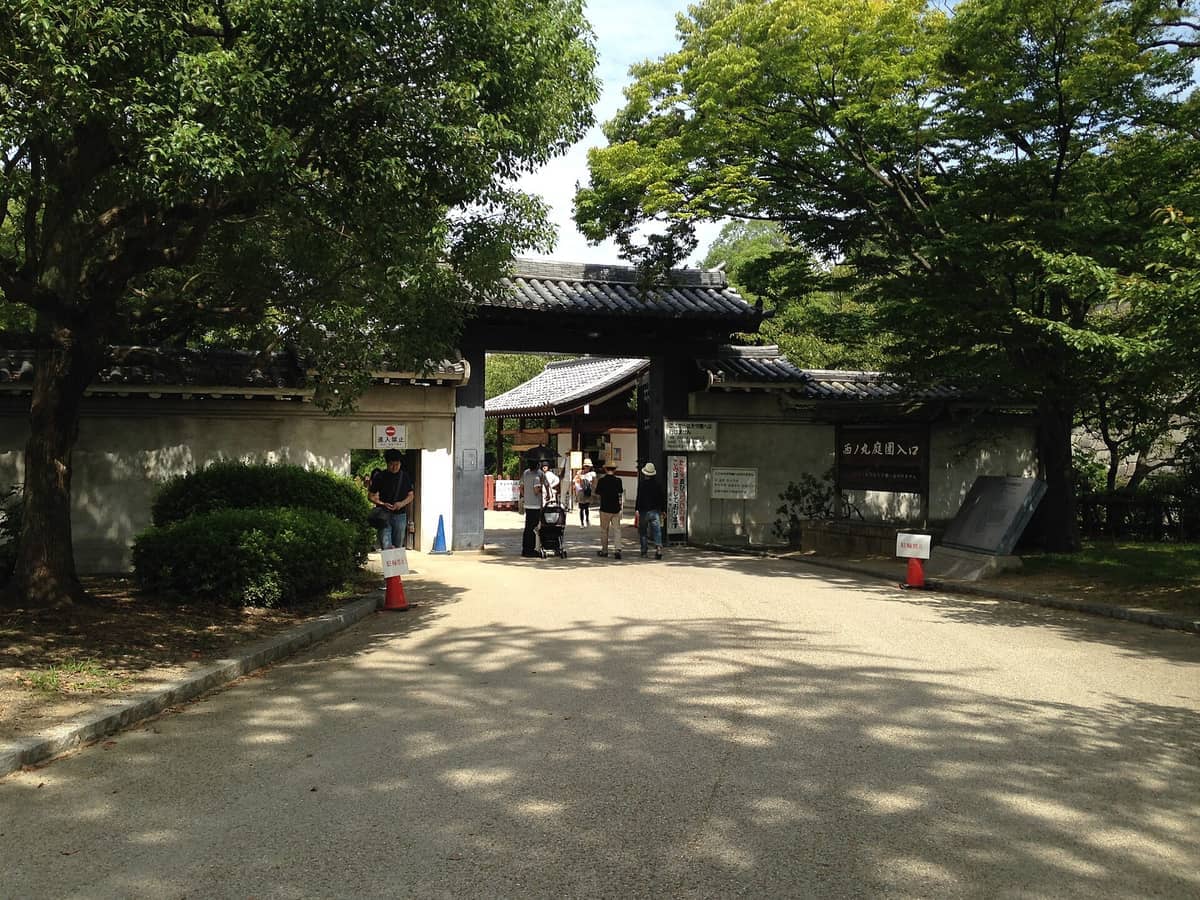
What Nishinomaru Garden Actually Is
Osaka Castle Nishinomaru Garden is a separately ticketed enclosure on the western side of Osaka Castle Park, set on the grounds of the castle's former western bailey. The admission fee is low, and what you get in return is access to a well-maintained open lawn ringed by trees, with the castle keep rising above the stone walls in the near distance. It is one of the few vantage points in the park where the keep appears isolated against the sky, without power lines, rooftops, or tourist infrastructure cutting across the frame.
The garden occupies a meaningful portion of Osaka Castle Park, which covers 105.6 hectares, and contains roughly 300 cherry trees concentrated across the lawn. Outside of blossom season, the trees are simply green canopy over a quiet grassy space. A traditional tea house sits within the garden grounds, though it is not wheelchair accessible. The ticket barrier at the entrance keeps this section noticeably calmer than the open areas of the castle park, even in peak periods.
ℹ️ Good to know
Nishinomaru Garden requires a separate admission ticket from the Osaka Castle keep. You can enter the garden without visiting the castle interior, and vice versa. If you plan to visit both, budget time and budget accordingly.
The Cherry Blossom Experience: What Sets This Garden Apart
Osaka Castle is one of the most recognized cherry blossom destinations in the city, and Nishinomaru Garden is the heart of that reputation. The roughly 600 trees, a mix of Yoshino and other varieties, bloom in late March to early April, and when they are at full flower the lawn becomes layered in pale pink and white against the green grass and grey stone of the castle walls. For cherry blossom viewing in Osaka, this garden is the single location where you can sit on the ground under blooming trees and have the castle keep in your direct line of sight.
During the blossom season, opening hours extend to around 21:00, and the garden is illuminated in the evening. The night blossom experience is a separate category from the daytime visit: lantern-lit paths, the castle keep lit up above the walls, and the pink flowers catching the light from below. Evening entry during this period carries a special rate of ¥350 for adults. Expect queues at the entrance gate on weekends. Weekday mornings between 09:00 and 11:00 are the most manageable, with crowds building sharply after midday.
⚠️ What to skip
During peak cherry blossom weekends, the garden can reach capacity. Arrival before 10:00 on weekdays significantly improves the experience. Alcohol is permitted in the garden during blossom season, and the atmosphere shifts noticeably in the afternoon toward hanami picnic groups. If you prefer a quieter visit, come early.
Outside the blossom window, the garden is worth visiting primarily for the castle view and the low admission cost, but the dramatic seasonal quality is gone. Autumn brings some colour from the deciduous trees, which softens the landscape in October and November. Summer is workable in the early morning before heat and humidity build, but the garden offers limited shade on the open lawn.
Tickets & tours
Hand-picked options from our booking partner. Prices are indicative; availability and final rates are confirmed when you complete your booking.
Bike tour to Osaka Castle and park area
From 50 €Instant confirmationFree cancellationOsaka local food tour in Dotonbori and Shinsekai
From 51 €Instant confirmationFree cancellationGuided day tour from Osaka to Nara Park, Arashiyama and Fushimi Inari
From 59 €Instant confirmationFree cancellationHimeji, Nara and Kobe full-day tour from Osaka
From 76 €Instant confirmationFree cancellation
How the Experience Changes by Time of Day
Early morning, just after the 09:00 opening, the garden receives direct eastern light. The castle keep catches the sun at a low angle that sharpens the white plaster of the upper stories against the dark roof tiles. The air inside the park in the morning often carries a faint dampness from the surrounding moats. On weekdays, this hour sees almost no crowds.
By late morning, school groups and tour buses arrive at the wider castle park. The garden itself, behind its entrance gate, stays calmer than the outer park, but you will hear the general noise of the surrounding area. The light on the castle at midday becomes flat, which reduces the visual impact for photography. The late afternoon hours, around 15:00 to 16:00, bring soft westerly light directly onto the garden and the castle's western face, making this one of the better windows for photography if morning is not possible.
During standard operating hours in the non-sakura seasons, Nishinomaru Garden is open from 9:00 to 17:00 (March to October) or 9:00 to 16:30 (November to February), with last admission 30 minutes before closing. There is no evening visit available outside the cherry blossom period. Plan your departure accordingly, as the castle park paths can take 15 minutes or more to exit depending on which gate you use.
Historical Context: The Western Bailey
The term Nishinomaru translates directly as "western circle" or western bailey, referring to its function in the original castle layout as the secondary defensive enclosure to the west of the main keep complex. Osaka Castle's history is layered: the original castle was built by Toyotomi Hideyoshi from 1583, destroyed, reconstructed by the Tokugawa shogunate in the 17th century, and the current reinforced concrete keep dates to 1931. The western bailey would have housed secondary structures and served as part of the castle's defensive ring. Today that ground is open lawn and garden, which gives the space its particular quality: a large, empty, historically loaded area where the scale of the original fortification is readable in the stone walls that still define the enclosure. For more on the castle's full history, the Osaka Castle keep has detailed exhibits on all construction periods.
The garden sits within Osaka Castle Park, one of the largest urban green spaces in Osaka, covering over 105 hectares. The park as a whole is free to enter; the garden is the separately charged section. This distinction trips up some visitors who assume the entire park is ticketed, or conversely assume the garden is included in the castle keep ticket.
Getting There and Getting Around Inside
The most direct route for most visitors is the JR Osaka Loop Line to Osakajokoen Station. From the station exit, the castle park's north gate is a short walk, and signage within the park guides you toward Nishinomaru Garden. The walk from the station to the garden entrance takes roughly 10 minutes at a moderate pace along paved paths.
Alternatively, Osaka Metro's Tanimachi 4-chome Station (Tanimachi Line and Chuo Line) places you near the southern approach to the castle park. This route involves a longer walk through the park before reaching the garden, but it passes several other features including the castle's outer moat. If you are already exploring the Osaka Castle area on foot, the southern approach integrates naturally into a circuit.
Inside the garden, the paths are mostly flat and wide enough for wheelchair users to navigate comfortably. The full circuit of the garden lawn involves a fair amount of walking, so people with limited mobility should allow extra time or choose a route that covers the central viewing areas rather than the perimeter. The tea house within the grounds is not wheelchair accessible.
💡 Local tip
Wear comfortable walking shoes. The castle park as a whole involves significant walking on stone paths, packed gravel, and uneven surfaces around the moat areas. The garden interior is more forgiving, but reaching it from any station still requires a 10–20 minute walk.
Photography Notes
The primary composition most visitors want is the castle keep framed by cherry blossoms in the foreground, or the keep reflected in low-angle light with the stone wall base visible. The garden's open lawn gives you room to step back and use a standard or short telephoto lens rather than having to shoot wide. During blossom season, the trees directly below the castle's visible face are the most photographed, and space around them is limited on busy days.
For the castle keep views from outside the garden, the broader best viewpoints in Osaka guide covers several angles including from the park's outer areas, which are free to access. Nishinomaru Garden's advantage is proximity and the framing provided by the cherry trees, not any exclusive angle that cannot be approximated from elsewhere.
Closed Days and Seasonal Closures
Nishinomaru Garden is closed on Mondays. If Monday falls on a national holiday, the closure shifts to the following weekday. It is also closed during the New Year holiday period, approximately December 28 through January 4. Plan around these closures: Osaka has several national holidays in late April and early May (Golden Week), which can affect which weekdays are open in any given year.
⚠️ What to skip
Always confirm current opening hours and admission prices directly with the official Osaka Castle website before your visit. Hours, fees, and seasonal schedules can change, and the figures in this guide should be treated as reference points rather than confirmed current information.
Insider Tips
- The garden's best castle photograph is taken from the far northwestern corner of the lawn, where the keep appears centered above the stone wall with minimal tree obstruction. Most visitors cluster near the entrance and miss this angle entirely.
- If you are visiting during cherry blossom season and want the illuminated evening experience without the largest crowds, try a Tuesday or Wednesday evening in the first week of the illumination period, before word spreads that the blossoms are at full bloom.
- The garden ticket does not include the castle keep. If you want both, buy your garden ticket first, spend time in the garden early in the morning, and then join the castle keep queue as it opens. Midday queues for the keep can stretch 30–45 minutes.
- The tea house inside the garden serves matcha and wagashi (Japanese sweets). It is a reasonable place to sit down and take in the garden at a slower pace, and the tatami seating requires removing shoes, so wear socks.
- Nishinomaru Garden is listed on some versions of the Osaka Amazing Pass as a complimentary attraction. If you are already planning to use the pass for transit or other paid attractions on the same day, check whether your pass version includes the garden before paying separately at the gate.
Who Is Osaka Castle Nishinomaru Garden For?
- Travelers visiting Osaka in late March or early April for cherry blossom season
- Photographers who want the castle keep framed by natural foreground elements
- Couples looking for a low-key, scenic stop that does not require significant planning
- Visitors who want to experience Osaka Castle Park beyond just the keep interior
- Budget travelers, given the low admission cost relative to most major Osaka attractions
Nearby Attractions
Other things to see while in Osaka Castle Area:
- Osaka Castle
Osaka Castle is one of Japan's most recognizable landmarks, rising above a 105-hectare park in the heart of the city. The main tower houses a detailed museum tracing the castle's turbulent history, while the surrounding grounds reward slow exploration at almost any hour.
- Osaka Castle Park
Osaka Castle Park stretches across 105.6 hectares in the heart of the city, wrapping Japan's most recognizable feudal castle in layered moats, stone walls, and open plazas. Entry to the grounds is free around the clock, though the reconstructed main tower museum charges admission. This guide covers what the park really looks and feels like at different times of day, how to navigate it efficiently, and whether it deserves your time.
- Osaka International Peace Center (Peace Osaka)
The Osaka International Peace Center, known as Peace Osaka, is a sobering museum dedicated to the memory of the 1945 Osaka air raids and the city's wartime experience. Located south of Osaka Castle Park, it offers one of Kansai's most thoughtfully curated looks at civilian suffering, historical accountability, and the case for peace. Admission is ¥250 for adults.
- Osaka Museum of History
The Osaka Museum of History (大阪歴史博物館) traces the city's evolution from a 7th-century imperial capital to one of Japan's great commercial centers. Housed in a striking tower beside Osaka Castle Park, it offers some of the most coherent historical storytelling of any museum in western Japan, at an entry price that makes it one of the best-value cultural stops in the city.