Osaka International Peace Center (Peace Osaka): What to Expect Before You Visit
The Osaka International Peace Center, known as Peace Osaka, is a sobering museum dedicated to the memory of the 1945 Osaka air raids and the city's wartime experience. Located south of Osaka Castle Park, it offers one of Kansai's most thoughtfully curated looks at civilian suffering, historical accountability, and the case for peace. Admission is ¥250 for adults.
Quick Facts
- Location
- 2-1 Osakajo, Chuo-ku, Osaka (south of Osaka Castle Park)
- Getting There
- Osaka Metro Morinomiya Station
- Time Needed
- 1.5 to 2.5 hours
- Cost
- Adults ¥250 / High school students ¥150 / Elementary and junior high school students free / Over 65 free
- Best for
- History-focused travelers, students, those interested in WWII civilian experience
- Official website
- http://www.peace-osaka.or.jp
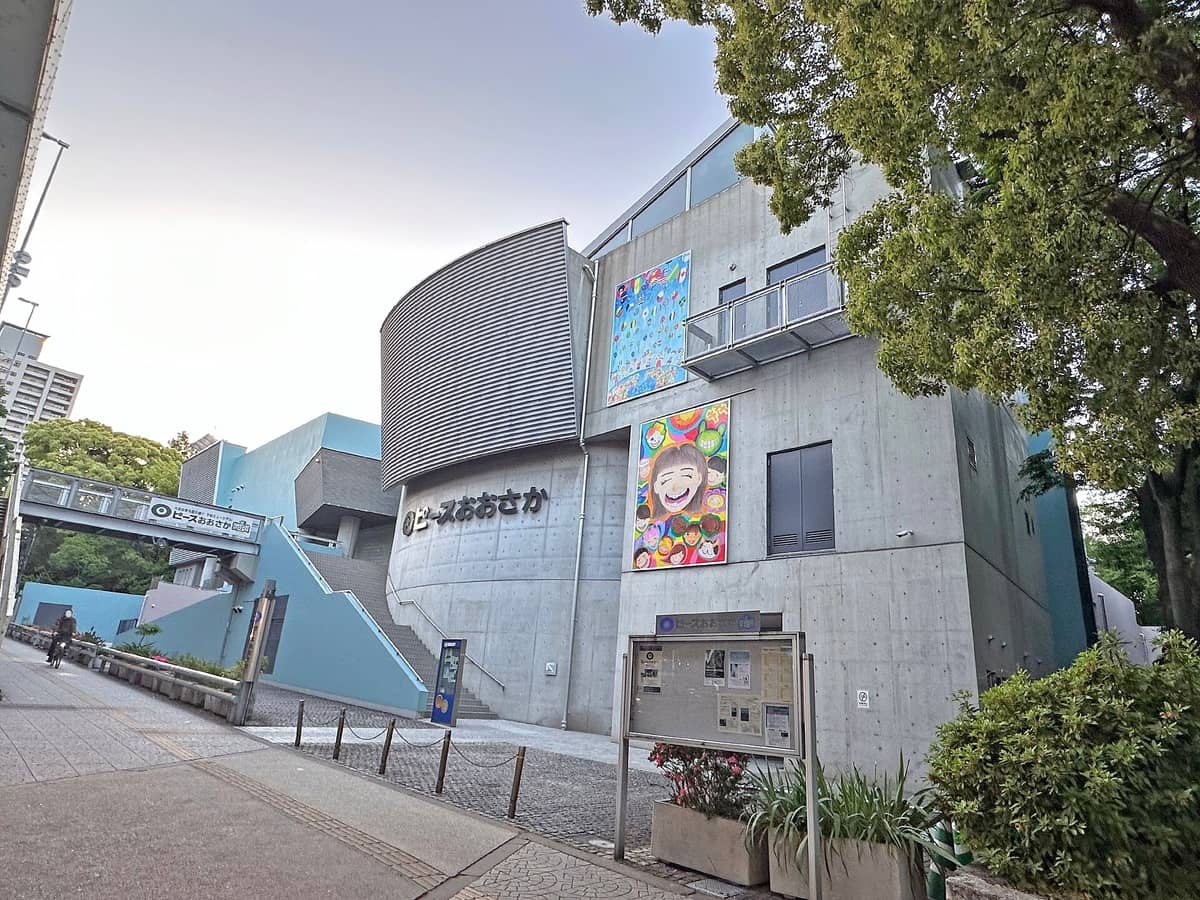
What Is Peace Osaka?
The Osaka International Peace Center, widely known as Peace Osaka, is a public museum operated by the Osaka International Peace Center Foundation. Its core mission is to document the human cost of the Second World War as experienced in Osaka, particularly through the catastrophic American firebombing campaigns of 1945, and to use that history as a framework for promoting peace. The building sits just south of the main grounds of Osaka Castle Park, which makes it easy to include in a broader day exploring the castle area, but the experience inside the museum is a deliberate contrast to the surrounding parkland.
Between March and August 1945, Osaka was struck by multiple large-scale incendiary bombing raids. The most devastating, on the night of March 13–14, 1945, involved hundreds of B-29 bombers and killed thousands of civilians, destroying large swaths of the city in a matter of hours. Peace Osaka was established to ensure these events remain part of Osaka's collective memory, not just a footnote in military history. The exhibitions treat civilians, not combatants, as the central subjects.
ℹ️ Good to know
Peace Osaka is closed every Monday, on the day following national holidays (outside September to November), on the designated month-end organization day, and from December 28 through January 4. Always check the official site before visiting, as additional closure dates apply for monthly maintenance.
What You Will See Inside
The permanent exhibition is organized chronologically and thematically, moving from the causes and escalation of the Pacific War through to the postwar reconstruction of Osaka. The museum does not shy away from difficult material. Artifacts include charred household objects recovered from bomb sites, clothing from air raid victims, and personal testimonies gathered from survivors. Scale models of the city before and after the raids give a spatial sense of just how comprehensively the firebombing altered Osaka's urban landscape.
Panels throughout the museum are presented in Japanese, but English translations are available for most core content, making the museum accessible to international visitors with a genuine interest in the subject. Audio guides or supplementary English materials may be available, though it is worth confirming current language support at the front desk on arrival.
Later sections of the exhibition broaden the focus to include other wartime experiences, postwar reconstruction, and the continuing global case for disarmament and peace. The framing is explicitly pacifist, which some visitors will find deeply meaningful and others may find one-dimensional depending on what context they are looking for. This is not a museum that attempts to balance multiple national narratives in the way that some war museums in Europe do. Its perspective is grounded in the civilian experience of Osaka.
For travelers planning a deeper look at Osaka's history, Peace Osaka pairs naturally with a visit to Osaka Castle and the Osaka Museum of History, both of which are nearby and address different periods of the city's past.
Tickets & tours
Hand-picked options from our booking partner. Prices are indicative; availability and final rates are confirmed when you complete your booking.
Osaka local food tour in Dotonbori and Shinsekai
From 51 €Instant confirmationFree cancellationGuided day tour from Osaka to Nara Park, Arashiyama and Fushimi Inari
From 59 €Instant confirmationFree cancellationHimeji, Nara and Kobe full-day tour from Osaka
From 76 €Instant confirmationFree cancellationDay trip to Hiroshima and Miyajima by bullet train from Osaka
From 287 €Instant confirmationFree cancellation
How the Experience Changes by Time of Day
Peace Osaka does not attract the large tourist volumes that the castle itself does, so crowd pressure is rarely an issue. That said, the museum occasionally hosts school groups, particularly on weekday mornings during the Japanese academic year. If you prefer a quieter, more contemplative experience, arriving shortly after opening at 09:30 or opting for a weekday afternoon tends to produce the fewest interruptions.
The museum's interior is naturally lit in parts and artificially lit in others. The tone inside is quiet and measured regardless of time of day. There is no dramatic shift in the experience from morning to afternoon. What changes more significantly is what you choose to do with the time afterward. Visiting in the morning allows you to walk through Osaka Castle Park while the light is good for photography, or to combine the museum with the castle tower before crowds peak there around midday.
Getting There and Practical Details
The closest subway station is Morinomiya on the Osaka Metro Chuo and Nagahori Tsurumi-ryokuchi lines. From Morinomiya Station, the museum is reachable on foot in roughly 5 to 10 minutes by walking northwest toward the castle grounds. Tanimachi Yonchome Station on the Tanimachi and Chuo lines is also a reasonable option if you are approaching from the Umeda or Namba direction, with a walk of similar length through the castle park.
Peace Osaka sits within easy walking distance of several significant sites in the Osaka Castle area. Combining it with a visit to the castle itself, the Osaka Castle Park grounds, or the Osaka Museum of History on the same half-day is entirely practical.
Admission is ¥250 for adults and ¥150 for high school students. Children in elementary and junior high school enter free of charge. Visitors aged 65 and over enter free with valid identification, as do visitors with disabilities and one accompanying caregiver. Group rates (parties of 20 or more) are available at ¥200 for adults. Last admission is at 16:30, and the museum closes at 17:00.
💡 Local tip
If you are visiting Osaka Castle on the same day, consider doing Peace Osaka first. The castle tends to be more crowded by mid-morning, and ending your visit at the castle park in the afternoon gives you open sky and greenery after the intensity of the museum.
Photography and Accessibility
Photography policies inside the museum should be checked at the entrance desk, as restrictions may apply in certain exhibition areas. The building itself is accessible to visitors with mobility requirements, and the free admission policy for visitors with disabilities is one of the more thoughtful aspects of the museum's public access approach. Wheelchair users should have no particular difficulty navigating the main exhibition floors, though confirming lift and ramp access with the museum directly before visiting is always advisable.
Outdoor photography of the building and its surroundings, including the adjacent castle park, is unrestricted. The contrast between the museum's architectural severity and the backdrop of Osaka Castle makes for an interesting compositional subject.
Who Will Appreciate This Museum Most, and Who Might Not
Peace Osaka works best for travelers who arrive with some background knowledge of the Pacific War or who are willing to engage slowly with text-heavy exhibits. If you have already visited Hiroshima's Peace Memorial Museum or Nagasaki's Atomic Bomb Museum, Peace Osaka offers a complementary perspective focused on conventional firebombing rather than nuclear weapons, with Osaka's particular experience at its center.
Travelers looking for a quick, visually stimulating attraction, or those primarily interested in Osaka's food, shopping, or nightlife culture, will likely find this museum a mismatch for their itinerary. The experience is intentionally slow and reflective. It rewards patience and curiosity, but it is not a casual stop.
For travelers exploring Osaka's broader cultural landscape, the best museums in Osaka guide can help you decide where Peace Osaka fits within a wider itinerary.
⚠️ What to skip
The content of the permanent exhibition includes graphic images of civilian casualties and descriptions of mass death. Parents should assess whether the material is appropriate for younger children, even though admission is free for under-15s.
Insider Tips
- The museum receives relatively few international visitors compared to Osaka Castle, which means staff are often genuinely pleased to assist and may offer additional context beyond what the panels provide. Do not hesitate to ask questions at the front desk.
- Check the museum's official website for any temporary exhibitions before you visit. Themed displays tied to memorial anniversaries, particularly around March and August, can add significant depth to the permanent collection.
- If you are visiting in late spring or autumn, the walk between Morinomiya Station and the museum passes through the quieter southern edges of Osaka Castle Park, which are far less crowded than the main plaza around the castle tower. It is worth taking slowly.
- The museum shop, if open, occasionally carries publications in Japanese on Osaka's wartime history that are not widely available elsewhere. If you read Japanese or are interested in historical documentation, it is worth a look.
- Combine this visit with the Osaka Museum of History, about 15–20 minutes by foot or a short metro hop away. Together they give you a long arc of Osaka's history from the ancient period through the twentieth century.
Who Is Osaka International Peace Center (Peace Osaka) For?
- History and WWII-focused travelers seeking civilian perspectives on the Pacific War
- Students and educators with an interest in Japanese wartime history
- Visitors who have been to Hiroshima or Nagasaki and want a complementary Osaka-specific perspective
- Travelers who appreciate slow, reflective museum experiences over high-stimulation attractions
- Budget-conscious visitors, given the very low admission cost and free entry for many categories
Nearby Attractions
Other things to see while in Osaka Castle Area:
- Osaka Castle
Osaka Castle is one of Japan's most recognizable landmarks, rising above a 105-hectare park in the heart of the city. The main tower houses a detailed museum tracing the castle's turbulent history, while the surrounding grounds reward slow exploration at almost any hour.
- Osaka Castle Nishinomaru Garden
Nishinomaru Garden occupies the western bailey of Osaka Castle Park, a separately ticketed lawn and garden space that offers some of the most direct, unobstructed views of the castle keep anywhere in the city. In spring, roughly 300 cherry trees transform it into one of Osaka's most photogenic spots. Outside cherry blossom season it remains a calm, green retreat from the castle crowds.
- Osaka Castle Park
Osaka Castle Park stretches across 105.6 hectares in the heart of the city, wrapping Japan's most recognizable feudal castle in layered moats, stone walls, and open plazas. Entry to the grounds is free around the clock, though the reconstructed main tower museum charges admission. This guide covers what the park really looks and feels like at different times of day, how to navigate it efficiently, and whether it deserves your time.
- Osaka Museum of History
The Osaka Museum of History (大阪歴史博物館) traces the city's evolution from a 7th-century imperial capital to one of Japan's great commercial centers. Housed in a striking tower beside Osaka Castle Park, it offers some of the most coherent historical storytelling of any museum in western Japan, at an entry price that makes it one of the best-value cultural stops in the city.