Osaka Museum of History: Ten Floors of the City's Story
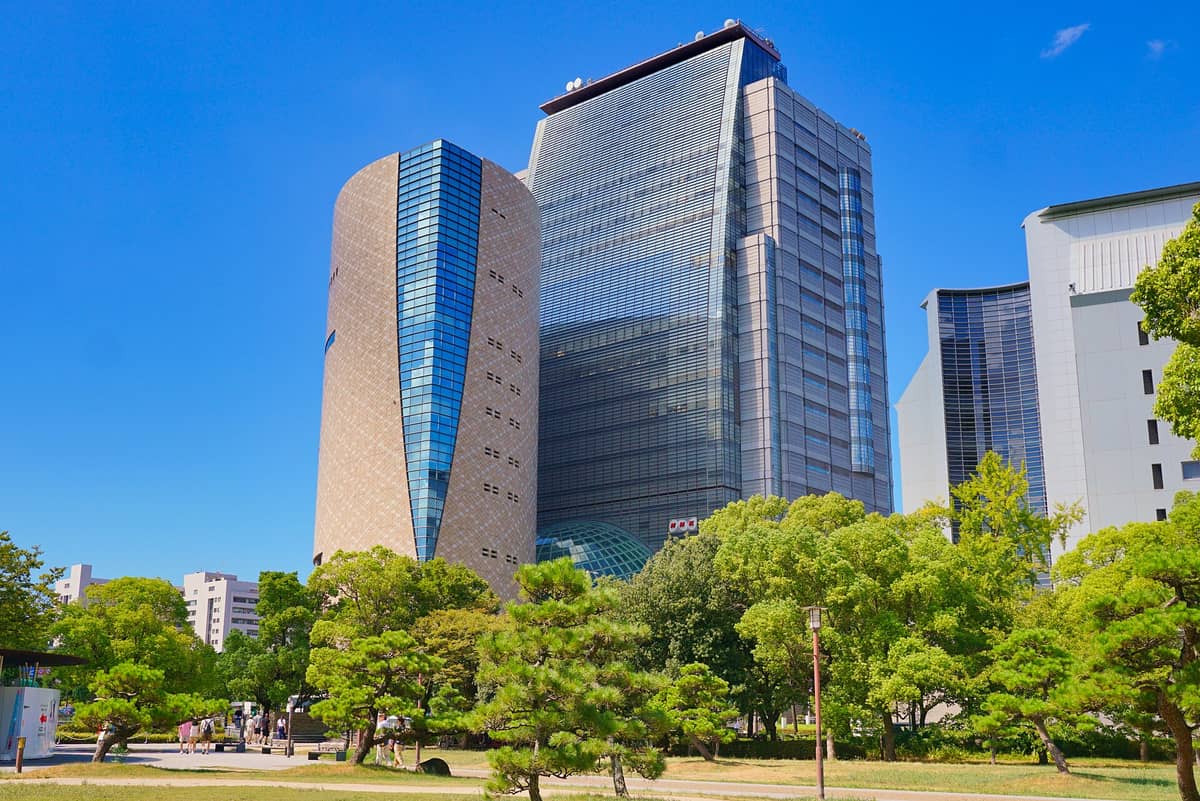
The Osaka Museum of History (大阪歴史博物館) traces the city's evolution from a 7th-century imperial capital to one of Japan's great commercial centers. Housed in a striking tower beside Osaka Castle Park, it offers some of the most coherent historical storytelling of any museum in western Japan, at an entry price that makes it one of the best-value cultural stops in the city.
Quick Facts
- Location
- 4-1-32 Otemae, Chuo-ku, Osaka — southwest edge of Osaka Castle Park
- Getting There
- Tanimachi 4-chome Station (Tanimachi & Chuo lines), Exit 9 — 2-min walk
- Time Needed
- 1.5 to 3 hours, depending on pace and special exhibitions
- Cost
- Adults ¥600 / High school & university students ¥400 / Junior high school age and younger: Free
- Best for
- History enthusiasts, families, rainy-day culture seekers
- Official website
- www.osakamushis.jp/eng
What the Osaka Museum of History Actually Is
The Osaka Museum of History occupies a purpose-built ten-story tower that opened in 2001 on the former grounds of Naniwa Palace, one of Japan's earliest imperial courts, established in the 7th century. That layering of old and new is not accidental. Portions of the original palace foundations are visible through glass panels in the basement, and the museum's top floors put you level with the upper ramparts of Osaka Castle to the northeast, creating a visual conversation between two of the city's most historically significant sites.
The permanent collection covers five exhibition floors and moves chronologically in reverse: you begin at the top (floor 10) in the ancient period and descend through medieval merchant culture, the Edo-era commercial explosion, and eventually into 20th-century Osaka. This top-down structure is a considered curatorial choice, not just an architectural quirk. It means the oldest, most visually dramatic material comes first, when your energy and attention are highest.
💡 Local tip
Take the elevator directly to floor 10 when you enter. The museum is designed to be explored from the top down, and starting at the bottom means working against the exhibition's narrative logic.
Floor by Floor: What You'll Actually See
Floor 10 is the most theatrical space in the building. A life-size reconstruction of the Naniwa-no-Miya (Naniwa Palace) main hall greets you with bright vermillion columns, a lacquered floor, and court officials rendered in meticulous reproduction — some seated, some mid-ceremony. The scale is genuinely surprising. This is not a scaled model in a vitrine; it is a walk-through environment where you can stand inside the court's central axis and understand something about the physical presence of 7th-century imperial architecture.
Floors 9 and 8 move into the city's development as a commercial center, particularly the Edo period (1603–1868) when Osaka earned the title of Japan's 'kitchen,' supplying rice and goods to the rest of the country via an intricate network of waterways. The dioramas here are detailed enough to reward close inspection: canal scenes with merchant boats, figures in period dress, and scale models of the city's historic ward layout. English-language labeling covers the key exhibits, though some secondary display panels remain Japanese-only.
The lower floors shift toward modern and contemporary history, including the city's industrial transformation in the Meiji and Taisho eras, the damage of World War II, and postwar reconstruction. This section tends to receive less attention from visitors who are tiring by the time they reach it, but the mid-20th-century material is handled with more directness than you might expect from a civic museum in Japan.
ℹ️ Good to know
Floor 7 contains rotating special exhibitions that carry a separate admission fee. Check the museum's English website before visiting if you want to know what's currently showing, as the content varies significantly.
Tickets & tours
Hand-picked options from our booking partner. Prices are indicative; availability and final rates are confirmed when you complete your booking.
Osaka local food tour in Dotonbori and Shinsekai
From 51 €Instant confirmationFree cancellationGuided day tour from Osaka to Nara Park, Arashiyama and Fushimi Inari
From 59 €Instant confirmationFree cancellationHimeji, Nara and Kobe full-day tour from Osaka
From 76 €Instant confirmationFree cancellationDay trip to Hiroshima and Miyajima by bullet train from Osaka
From 287 €Instant confirmationFree cancellation
The View and the Setting
The museum's position beside Osaka Castle Park gives it a geographic advantage that most urban history museums lack. From the upper floors, the view north and east takes in Osaka Castle's white tenshu (main tower) framed against the park's tree line, with the city spreading beyond. On clear autumn mornings, when the castle is caught in low-angle light, this is one of the more composed views in central Osaka.
Pairing a visit here with time in Osaka Castle Park makes practical sense. The castle grounds are a short walk from Exit 9, and if you arrive at the museum when it opens at 09:30, you can complete the interior by late morning and then spend the afternoon at the castle, which tends to be most crowded midday anyway; the museum itself is open 09:30–17:00 with last admission at 16:30.
Visiting by Time of Day
Morning visits, particularly on weekdays, are noticeably quieter. The museum draws a mixed crowd: school groups, which tend to arrive mid-morning in clusters and concentrate on the interactive lower floors; older Osaka residents, who often spend extended time with the Edo-period sections; and international tourists moving quickly through the highlights. Arriving at opening means you'll have the floor 10 reconstruction largely to yourself, which matters because the acoustics of the space change significantly when it fills.
Afternoon visits on weekends can feel congested in the upper floors, though it rarely reaches the kind of crowd pressure you'd find at Osaka Castle itself. The museum closes at 17:00, with last admission at 16:30, which gives adequate time for a focused visit even if you arrive at 14:00. Summer afternoons between July and August bring the most visitors; the air conditioning is effective, making the museum a legitimate refuge from Osaka's intense summer heat.
⚠️ What to skip
The museum is closed every Tuesday (or the following Wednesday if Tuesday falls on a public holiday), and also closes December 28 through January 4. Check before building an itinerary around it.
Practical Details: Getting There, Tickets, and Accessibility
Tanimachi 4-chome Station is the most direct access point, served by both the Tanimachi Line and Chuo Line of the Osaka Metro. Exit 9 brings you to street level roughly 100 meters from the museum entrance — close enough that you'll see the building immediately. The walk is flat with no significant obstacles, which also makes it straightforward for visitors using wheelchairs.
Admission for adults is ¥600 for the permanent collection, which is low by the standards of comparable institutions. High school and university students pay ¥400. Children of junior high school age and younger enter free. Osaka City residents aged 65 and over enter free with ID. Visitors with disability certificates, plus one accompanying caregiver, also enter free. Groups of 20 or more receive a modest discount: ¥540 for adults, ¥360 for students.
All exhibition floors are barrier-free and accessible by elevator. Wheelchairs are available on loan at the general information desk. Accessible toilets are on each floor. Guide dogs are permitted throughout. If accessibility is a primary concern when planning your Osaka itinerary, this is one of the more reliably accommodating options in the city. For a broader look at cultural options, see our guide to the best museums in Osaka.
Archaeological Layer: What's Beneath the Building
The museum sits on excavated foundations of Naniwa Palace (難波宮), which served as an imperial capital in the 7th century under Emperor Kotoku. These foundations were rediscovered in the mid-20th century during construction projects in the area and are now a designated national historic site. The museum's basement level allows visitors to view sections of the actual archaeological remains through protective glass, an experience that is easy to underestimate if you're moving quickly.
For visitors who have already explored Osaka Castle, the museum provides historical context that the castle itself, despite its impressive exterior, does not fully deliver. The castle's current reinforced-concrete structure was rebuilt in 1931 and again renovated in 1997, whereas the museum's archaeology and documentation offer a more layered account of the city's actual continuity across centuries.
Photography and Practical Logistics
Photography is permitted in most of the permanent exhibition areas, though rules may change for special exhibitions. The floor 10 reconstruction is the most photographed space in the building: wide-angle lenses or a standard smartphone on a wide setting capture the full depth of the hall best. Natural light from the building's large windows supplements the internal lighting on the upper floors, so morning visits typically yield better photography conditions than late afternoon, when interior lighting dominates.
There is a museum shop on the ground floor with books, replicas, and city-history themed goods, weighted toward Japanese-language publications but with some English titles. The shop is accessible without paying admission if you only want to browse. A small café or rest area is available in the building; check the current layout on the museum's English site, as facilities have been updated over the years.
Honest Assessment: Is It Worth Your Time?
At ¥600, the Osaka Museum of History is one of the more straightforward decisions in the city. The scale of the floor 10 reconstruction alone justifies the entry price for most visitors. Where the museum falls short is in its English-language coverage of secondary materials: many explanatory panels are Japanese-only, which limits the depth available to non-readers of Japanese. The broad strokes are communicated clearly, but the fine detail is often inaccessible. This is a limitation worth knowing, not a reason to skip the museum, but it does mean specialists in Japanese history may feel they're receiving only a fraction of the available information. For a context-rich introduction to how Osaka evolved from ancient imperial site to commercial metropolis, the permanent collection serves that purpose well. It pairs naturally with a morning in the Osaka Castle area and can anchor one of the stronger half-days in the city.
Travelers who find civic history museums dry or overly academic may feel less rewarded here than at more experience-driven attractions. If your priority is sensory atmosphere rather than historical narrative, the Osaka Museum of Housing and Living in Tenjinbashisuji offers a more immersive, walking-through-history format. Both are legitimate options depending on what you want from a museum visit.
Insider Tips
- The basement archaeological viewing area is skipped by most visitors who are descending quickly toward the exit. Pause here: the exposed Naniwa Palace foundations are a nationally designated historic site, and the interpretive panels here are better in English than some of the upper floors.
- On the 10th floor, position yourself at the far end of the palace hall reconstruction and look back toward the entrance. This gives the fullest sense of the hall's depth and is the best angle for photographs without other visitors in frame — easiest to achieve at opening time on a weekday.
- The museum's English website shows current special exhibition schedules. Some special exhibitions are genuinely strong additions; others are niche and primarily of interest to Japanese audiences. Checking in advance helps you decide whether to budget the extra admission fee.
- If you're combining this with Osaka Castle, visit the museum first. The museum provides historical context that makes the castle visit more meaningful, and the castle gets significantly more crowded through the middle of the day.
- Residents of Osaka City aged 65 and over enter free with ID. If you're traveling with older family members who hold Japanese residency, this is worth noting at the ticket window.
Who Is Osaka Museum of History For?
- History and culture travelers who want coherent narrative rather than spectacle
- Families with children old enough to engage with large-scale reconstructions and dioramas (the 10th-floor palace hall particularly holds attention)
- Visitors on a budget seeking genuine cultural depth at low cost
- Travelers caught in Osaka's summer heat or a rainy afternoon who want several hours of air-conditioned, substantive content
- Anyone combining a visit with Osaka Castle who wants historical grounding before the castle itself
Nearby Attractions
Other things to see while in Osaka Castle Area:
- Osaka Castle
Osaka Castle is one of Japan's most recognizable landmarks, rising above a 105-hectare park in the heart of the city. The main tower houses a detailed museum tracing the castle's turbulent history, while the surrounding grounds reward slow exploration at almost any hour.
- Osaka Castle Nishinomaru Garden
Nishinomaru Garden occupies the western bailey of Osaka Castle Park, a separately ticketed lawn and garden space that offers some of the most direct, unobstructed views of the castle keep anywhere in the city. In spring, roughly 300 cherry trees transform it into one of Osaka's most photogenic spots. Outside cherry blossom season it remains a calm, green retreat from the castle crowds.
- Osaka Castle Park
Osaka Castle Park stretches across 105.6 hectares in the heart of the city, wrapping Japan's most recognizable feudal castle in layered moats, stone walls, and open plazas. Entry to the grounds is free around the clock, though the reconstructed main tower museum charges admission. This guide covers what the park really looks and feels like at different times of day, how to navigate it efficiently, and whether it deserves your time.
- Osaka International Peace Center (Peace Osaka)
The Osaka International Peace Center, known as Peace Osaka, is a sobering museum dedicated to the memory of the 1945 Osaka air raids and the city's wartime experience. Located south of Osaka Castle Park, it offers one of Kansai's most thoughtfully curated looks at civilian suffering, historical accountability, and the case for peace. Admission is ¥250 for adults.