Osaka Castle: Beyond the Postcard Shot
Osaka Castle is one of Japan's most recognizable landmarks, rising above a 105-hectare park in the heart of the city. The main tower houses a detailed museum tracing the castle's turbulent history, while the surrounding grounds reward slow exploration at almost any hour.
Quick Facts
- Location
- 1-1 Osakajo, Chuo-ku, Osaka (Osaka Castle Area)
- Getting There
- JR Osakajokoen Station (Osaka Loop Line, 15-20 min walk); Tanimachi 4-chome Station (Osaka Metro, ~18 min walk)
- Time Needed
- 2–4 hours (park + museum)
- Cost
- Park: free. Museum: ¥1,200 adults / ¥600 university & high school students (with ID) / free junior high school students and younger (with proof of age)
- Best for
- History enthusiasts, castle architecture, cherry blossom season, panoramic city views
- Official website
- www.osakacastle.net
What Osaka Castle Actually Is (and Isn't)
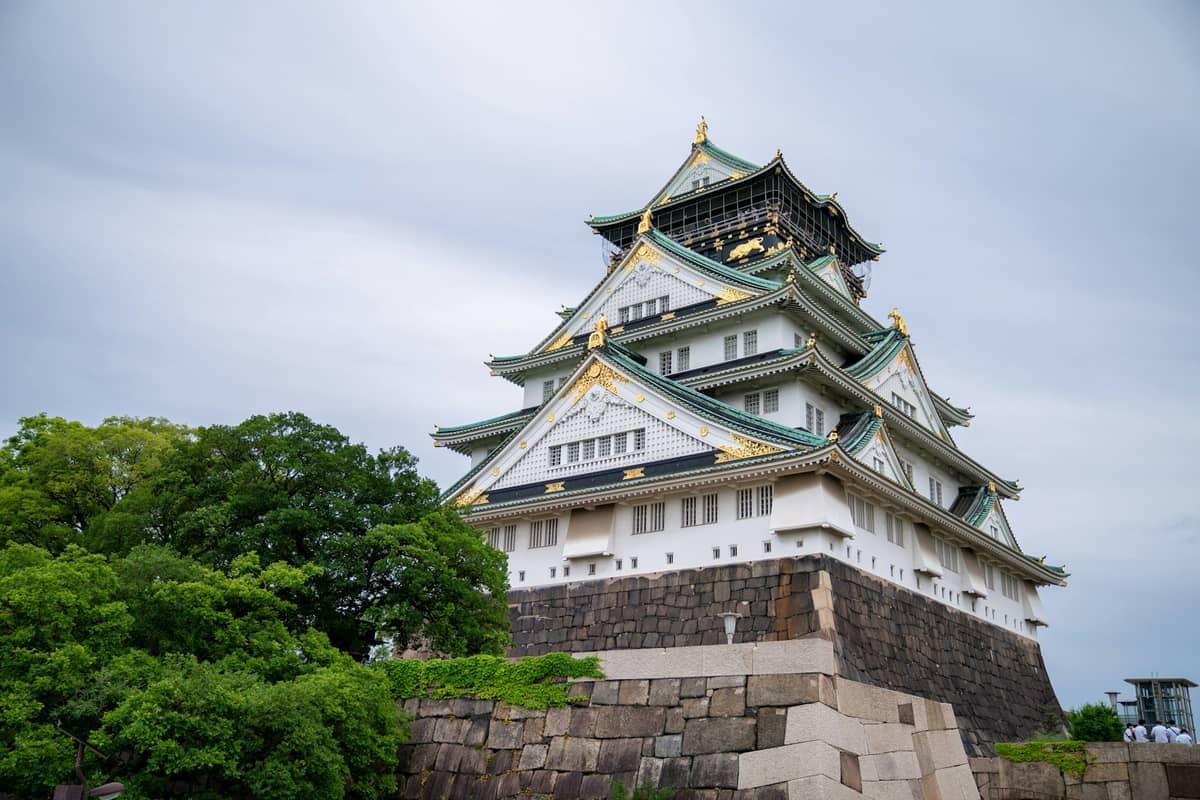
Osaka Castle (大阪城, Osakajo) is simultaneously three things: a landscaped public park free to anyone who walks through its stone gates, a formidable example of Momoyama-period fortification design, and a modern museum occupying the reconstructed main tower. Understanding this layered structure before you arrive prevents the most common disappointment: visitors who expect a pristine feudal interior discover instead an elevator-equipped concrete building rebuilt in 1931, with historical exhibits on every floor. That is not a reason to skip it. The museum is genuinely informative, the views from the eighth floor are among the best in central Osaka, and the park surrounding it is one of the city's most pleasant open spaces. But you should go knowing what you are paying for.
The castle's origins trace to 1583, when Toyotomi Hideyoshi, the warlord who came closest to unifying Japan's warring states, ordered construction on the site of the Ishiyama Hongan-ji temple. Hideyoshi designed the castle as a statement of absolute power: the stone walls were assembled from enormous granite blocks, many still visible today, quarried and transported across considerable distances. The original structure was destroyed and rebuilt multiple times through the early Edo period, and the current main tower dates from 1931, built by the city of Osaka using public donations. It was Japan's first major castle reconstruction of the modern era.
ℹ️ Good to know
The park grounds are free and open 24 hours a day. Museum admission (¥1,200 for adults) covers only the main tower interior. You can spend a perfectly satisfying half-day in the park without buying a ticket.
The Park at Different Hours
Early mornings, roughly between 7 and 9 a.m., are when the park shows its quieter character. Joggers use the wide paths between the moats, older residents practice tai chi near the inner bailey, and the tower itself catches direct eastern light that photographers specifically time their visits around. The stone walls, built from pale grey granite blocks of improbable size, are easiest to appreciate at this hour without tour groups gathering in front.
By mid-morning, organized tours begin arriving by bus, and the plaza in front of the main tower fills steadily. From around 10 a.m. to 3 p.m., the area immediately around the tower is its most crowded, with queues at the entrance and the surrounding plaza busy with visitors taking photos. If you plan to enter the museum, arriving just at the 9 a.m. opening significantly reduces your wait time at the ticket counter.
Late afternoon, from about 4 p.m. onward, the crowd thins noticeably, though the museum closes at 6 p.m. with last entry at 5:30 p.m. The low-angle afternoon light turns the golden roof ornaments distinctly warmer and makes for better photographs of the exterior than the flat midday sun. The park in the evening, after the museum closes, becomes a destination for Osaka residents walking, cycling, and picnicking. The outer moat in particular, bordered by stone walls, is calm and largely tourist-free after 6 p.m.
💡 Local tip
For cherry blossom season (typically late March to early April), the Nishinomaru Garden within the castle park is one of Osaka's top viewing spots. The garden has separate entry fees and its own hours. Check timing carefully, as peak bloom shifts year to year.
Tickets & tours
Hand-picked options from our booking partner. Prices are indicative; availability and final rates are confirmed when you complete your booking.
Bike tour to Osaka Castle and park area
From 50 €Instant confirmationFree cancellationOsaka local food tour in Dotonbori and Shinsekai
From 51 €Instant confirmationFree cancellationGuided day tour from Osaka to Nara Park, Arashiyama and Fushimi Inari
From 59 €Instant confirmationFree cancellationHimeji, Nara and Kobe full-day tour from Osaka
From 76 €Instant confirmationFree cancellation
Inside the Main Tower: The Museum Floor by Floor
The interior of the Osaka Castle Museum (大阪城天守閣) spreads across eight floors connected by elevator and stairs. The experience is primarily educational rather than atmospheric: the building's 1931 concrete structure means you are walking through exhibits in a purpose-built museum, not through preserved castle rooms. The displays themselves are well-produced, covering the castle's construction under Hideyoshi, the battles that destroyed and rebuilt it, and Osaka's role in the Edo-period economy.
Floors one through seven contain chronological exhibits with models, armor, paintings, and reconstructed scenes. English signage and information panels are available throughout, making the museum accessible without a guide. The most compelling display for many visitors is the detailed scale model of the original castle complex, which conveys just how much larger and more elaborate the Momoyama-era structure was compared to what stands today. There are also hands-on display areas and reproduction artifacts that make it reasonable for children.
The eighth floor is the observation deck, and the view justifies the admission price on its own if you're interested in a rooftop perspective of central Osaka. On clear days you can see across the city toward the mountains of Nara and Kyoto in one direction, and toward Osaka Bay in the other. The deck is exposed to wind and open to the sky, so on winter visits it can be quite cold.
⚠️ What to skip
The museum is closed December 28 through January 1. On public holidays and during cherry blossom season, expect significant queues. The ticket line can stretch 30–45 minutes during peak periods, even after the 9 a.m. opening.
The Stone Walls and Fortification Design
One underappreciated aspect of Osaka Castle is the engineering of its defensive perimeter, which survives largely intact and is entirely free to walk around. The castle uses a series of concentric moats and stone embankments, and the granite walls of the inner bailey are among the most impressive in Japan. Several stones in the outer wall are enormous by any standard, including a single block called the Takoishi (octopus stone) near the Otemon Gate, reportedly one of the largest cut stones used in any Japanese castle construction. It measures approximately 5.5 meters high and about 11.7 meters wide.
Walking the full perimeter of the inner moat takes around 30 to 40 minutes at a relaxed pace and gives a clear sense of how the castle was designed to repel attackers through layered barriers. The Otemon Gate, the main western entrance, and the Sakuramon Gate on the south side stand on sites dating back to the Edo period and are worth examining closely. The contrast between the rough, massive granite of the outer walls and the refined architectural detail of the tower above is one of the castle's most striking visual qualities.
Seasonal Considerations and Weather
Spring and autumn are the strongest seasons to visit. Cherry blossoms in late March to early April transform the park into one of the most photographed spots in Osaka, with the Nishinomaru Garden offering a particularly composed view of the tower behind rows of blooming trees. Autumn color follows in November, with the ginkgo trees lining the park paths turning deep yellow. For more detail on timing, this seasonal breakdown for Osaka covers the full year.
Summer visits, particularly July and August, are demanding. Osaka's humid subtropical climate means midday temperatures regularly exceed 33°C, with the open stone plazas around the castle offering little shade. If you visit in summer, arrive at 9 a.m. when temperatures are still manageable, carry water, and plan to be finished by noon. The park's tree-lined paths along the moat edges offer more relief than the central plaza. Winter is drier and quieter, and while the tower gardens look spare, the reduced crowds and low-angled light have their own appeal.
⚠️ What to skip
June and early July are Osaka's rainy season (tsuyu), with roughly 185mm of rain and frequent overcast days. The castle views are still available, but slick stone paths and persistent rain can make the outdoor sections less enjoyable. Check the forecast before planning a park-focused day.
Getting There and Practical Access
The most straightforward approach is the JR Osaka Loop Line to Osakajokoen Station, which deposits you at the northern edge of the park, roughly 15 to 20 minutes on foot from the main tower. From there, the path through the park is signposted and pleasant, passing through the outer moat area before reaching Otemon Gate. If you are coming from the Tanimachi or Tennoji area by Osaka Metro, Tanimachi 4-chome Station on the Tanimachi Line or Chuo Line places you around 18 minutes on foot from the entrance.
The castle is relatively central and fits naturally into routes that include nearby attractions. The Osaka Museum of History sits a short walk from the castle grounds and covers overlapping historical territory in a complementary way. The Nishinomaru Garden, within the castle park, has separate admission and is especially worth combining in spring.
The castle and its park are wheelchair accessible in the main areas, and the museum tower has elevators serving all floors. Strollers can navigate the park paths well, though some of the stone-paved areas near the gates are uneven. Children junior high school age and younger enter the museum free with proof of age, which makes it a reasonable family option, particularly combined with time in the surrounding park.
For a structured route through the area, the Osaka Castle area walking tours guide covers a logical sequence that includes the castle, its fortification walls, and the surrounding district without redundant backtracking.
Who Should Think Twice
Visitors who travel primarily for authentic feudal interiors, the kind preserved in castles like Himeji or Matsumoto, will find Osaka Castle's museum format a noticeable step down. The 1931 reconstruction means there is nothing inside that dates from the original construction period, and the building is fundamentally a concrete museum wearing a castle's exterior. It is worth being honest about this.
Similarly, those visiting Osaka on a very tight itinerary who have already spent substantial time at other historical sites may find the park more rewarding than the paid museum, particularly on days when queue times are long. The free sections, including the outer and inner moats, the Otemon Gate, and the park paths, deliver much of the visual impact without the ¥1,200 admission fee.
Insider Tips
- The Otemon Gate area at the western entrance receives morning light directly on the stone walls from around 8 to 10 a.m. This is the best angle for photographing the gate and surrounding walls without direct backlight.
- If you're visiting during cherry blossom season, the Nishinomaru Garden (within the castle park but separately ticketed) closes earlier than the main park. Check its current hours before making it the final stop of your visit.
- The museum's eighth-floor observation deck can see you waiting in a separate short queue even after entering the building, since it fills up during busy periods. Going up to the top floor first thing, then working back down through the exhibits, avoids the worst of this.
- The castle park's inner moat path on the eastern side (behind the tower) is far quieter than the main plaza approach and offers a different perspective on the stone walls with far fewer people in frame.
- If you hold an Osaka Amazing Pass, verify current inclusion of Osaka Castle Museum, as covered attractions on pass schemes are subject to change.
Who Is Osaka Castle For?
- History and architecture travelers who want context for Japan's feudal period in a well-explained museum format
- Cherry blossom season visitors looking for a city-center setting that combines architecture with large numbers of flowering trees
- Families with children under 15, who enter the museum free and benefit from the park's open space
- Photographers working early-morning or late-afternoon visits for exterior shots and elevated city views
- First-time visitors to Osaka who want a single site that introduces the city's feudal and modern history together
Nearby Attractions
Other things to see while in Osaka Castle Area:
- Osaka Castle Nishinomaru Garden
Nishinomaru Garden occupies the western bailey of Osaka Castle Park, a separately ticketed lawn and garden space that offers some of the most direct, unobstructed views of the castle keep anywhere in the city. In spring, roughly 300 cherry trees transform it into one of Osaka's most photogenic spots. Outside cherry blossom season it remains a calm, green retreat from the castle crowds.
- Osaka Castle Park
Osaka Castle Park stretches across 105.6 hectares in the heart of the city, wrapping Japan's most recognizable feudal castle in layered moats, stone walls, and open plazas. Entry to the grounds is free around the clock, though the reconstructed main tower museum charges admission. This guide covers what the park really looks and feels like at different times of day, how to navigate it efficiently, and whether it deserves your time.
- Osaka International Peace Center (Peace Osaka)
The Osaka International Peace Center, known as Peace Osaka, is a sobering museum dedicated to the memory of the 1945 Osaka air raids and the city's wartime experience. Located south of Osaka Castle Park, it offers one of Kansai's most thoughtfully curated looks at civilian suffering, historical accountability, and the case for peace. Admission is ¥250 for adults.
- Osaka Museum of History
The Osaka Museum of History (大阪歴史博物館) traces the city's evolution from a 7th-century imperial capital to one of Japan's great commercial centers. Housed in a striking tower beside Osaka Castle Park, it offers some of the most coherent historical storytelling of any museum in western Japan, at an entry price that makes it one of the best-value cultural stops in the city.