Osaka Museum of Housing and Living: Walking Through Edo-Period Osaka
The Osaka Museum of Housing and Living (大阪くらしの今昔館) reconstructs full-scale streets and merchant homes from the late Edo period, letting visitors walk through and enter period-accurate interiors. Located on the 8th floor of the Osaka Municipal Housing Information Center in Kita-ku, it offers one of the most tactile history experiences in the city at a modest admission price.
Quick Facts
- Location
- 8F, 6-4-20 Tenjinbashi, Kita-ku, Osaka (Umeda area)
- Getting There
- Tenjinbashisuji 6-chome Station (Osaka Metro Tanimachi & Sakaisuji Lines, Hankyu Railway) — Exit 3 connects directly to the building
- Time Needed
- 1.5 to 2.5 hours
- Cost
- Adults ¥600 / High school, college, and junior high school students ¥300 / Elementary school and younger free (verify before visiting)
- Best for
- History lovers, families with older children, travelers curious about daily Japanese life beyond temples and castles
- Official website
- www.osaka-angenet.jp/konjyakukan
What This Museum Actually Is
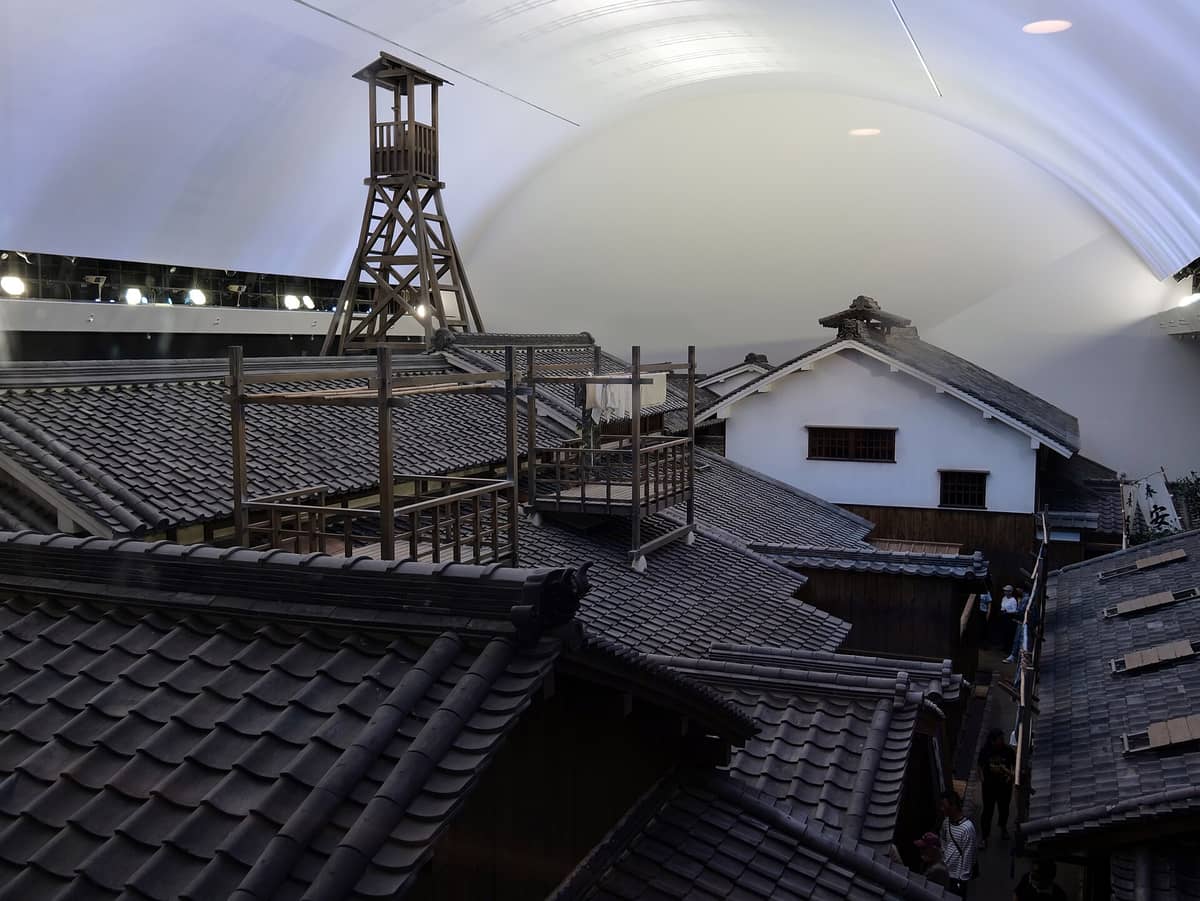
Most Osaka museums show you artifacts behind glass. The Osaka Museum of Housing and Living does something stranger and more memorable: it rebuilds the city as it was. The permanent exhibition occupies a cavernous upper floor of a modern government building in Kita-ku, and inside that floor sits a reconstructed Osaka merchant townscape from the late Edo period, rendered at full scale. You walk the streets. You step into the houses. You crouch under low doorframes into rooms where the tatami smells faintly of rush grass and paper lanterns cast warm light over lacquered furniture.
This is not a diorama. The reconstruction is detailed enough that you can trace the grain in the wooden lattice facades, examine the layout of a merchant's shop floor opening onto the street, and understand at a glance why these narrow machiya townhouses were designed the way they were. Upper floors of the same building then trace how Osaka housing evolved through the Meiji, Taisho, and Showa eras, showing the shift from Edo-era merchant culture toward the modern Japanese urban apartment.
💡 Local tip
The museum is closed every Tuesday and during the New Year holiday period (December 29 to January 3). Last admission is 16:30, and the doors close at 17:00. Arriving at 15:30 gives you a comfortable two hours without rushing.
The Edo Townscape: What You See and Feel
The centerpiece of the museum is the 9th-floor Edo townscape, accessed after purchasing your ticket on the 8th floor. The moment the exhibition space opens up around you, the scale surprises most visitors. The reconstructed street runs in a gentle arc, flanked by wooden storefronts, a sento (public bathhouse), a dyer's shop with fabric hanging overhead, and residences of varying sizes. The ceiling above is lit to simulate a night sky, which means the lantern light from the shops carries more visual weight than it would in a bright gallery.
Sound design is subtle but well-judged: the low ambient noise of a period street, occasionally punctuated by recordings of traditional vendors' calls. It stops short of feeling like a theme park. The overall effect is closer to a stage set than a performance, which is appropriate because the space asks you to observe rather than participate. You move at your own pace, peer into shop interiors through lattice screens, and read explanatory panels in Japanese and English.
What makes the Edo section genuinely instructive is the density of social information embedded in the architecture. The gap in size between a wealthy merchant's house and a rented nagaya tenement row is immediately visible. You can see where domestic and commercial space overlapped, how light entered these buildings, and why fire was such a recurring catastrophe in Edo-period Osaka. These are things a textbook explains abstractly; here they become spatial.
Tickets & tours
Hand-picked options from our booking partner. Prices are indicative; availability and final rates are confirmed when you complete your booking.
Osaka local food tour in Dotonbori and Shinsekai
From 51 €Instant confirmationFree cancellationGuided day tour from Osaka to Nara Park, Arashiyama and Fushimi Inari
From 59 €Instant confirmationFree cancellationHimeji, Nara and Kobe full-day tour from Osaka
From 76 €Instant confirmationFree cancellationDay trip to Hiroshima and Miyajima by bullet train from Osaka
From 287 €Instant confirmationFree cancellation
How the Experience Changes by Time of Day
Weekday mornings between 10:00 and 12:00 are the quietest. The museum draws school groups, but they tend to arrive mid-morning and can fill the townscape section with significant noise and movement. If you arrive right at opening on a weekday when the museum is open, you may have stretches of the reconstructed street nearly to yourself, which makes a real difference when you are trying to absorb the atmosphere rather than queue to look through a doorway.
Weekend afternoons from 13:00 onward tend to bring families and tourist groups. The space handles moderate crowds reasonably well because the reconstructed street has enough length and branching points to absorb people, but the smaller interior rooms become awkward when multiple visitors are trying to look in simultaneously. Weekday late afternoons, after 14:30, are a reliable second-choice slot.
The Upper Floors: Meiji to Showa
The exhibition continues on higher floors with reconstructed interiors from the Meiji and Taisho periods onward. Here the materials shift: wood gives way to concrete and tile, and the rooms begin to incorporate Western-style furniture alongside traditional elements. A reconstructed Showa-era apartment interior, complete with period appliances, television sets, and consumer goods, tends to provoke a different kind of attention from visitors who grew up in Japan. For international visitors, it functions more as a document of mid-20th-century domestic life and the speed at which it changed.
The transition from Edo to Showa is handled chronologically and clearly labeled. Even without fluent Japanese, the visual progression is legible. English-language explanatory panels cover the most significant exhibits, though some secondary panels and labels remain only in Japanese.
ℹ️ Good to know
The museum occasionally runs special exhibitions alongside the permanent collection. These carry a separate admission charge (combined tickets with the permanent exhibition have been offered for around ¥1,000 for adults in some periods, but pricing varies — verify at the ticket desk or official site).
Getting There and Practical Logistics
Access could not be more straightforward. Exit 3 of Tenjinbashisuji 6-chome Station connects directly into the building that houses the museum, so you arrive at the entrance without going outside. The station sits on both the Osaka Metro Tanimachi Line and Sakaisuji Line, as well as the Hankyu Senri Line, making it reachable from most parts of central Osaka with at most one transfer.
The museum is on the 8th floor of the Osaka Municipal Housing Information Center. Elevators serve the building fully. Note that while the building itself is accessible, parts of the reconstructed townscape have uneven surfaces and steps characteristic of traditional Japanese architecture. Visitors with significant mobility limitations should check the current situation with the museum directly before visiting. For broader context on getting around the city, the guide to getting around Osaka covers Osaka Metro line connections in detail.
The museum is located at the northern end of the Tenjinbashisuji Shopping Street, one of Japan's longest covered shopping arcades. The arcade stretches south from the station area and is worth walking before or after your museum visit, particularly if you want a contrast between contemporary Osaka street retail and what the exhibition shows of its historical predecessor.
Photography and What to Bring
Photography is permitted throughout the permanent exhibition. The Edo townscape is lit for atmosphere rather than photography, which means auto-exposure systems tend to overexpose the street scenes or underexpose the interior rooms. If you shoot with a camera rather than a phone, manual exposure control will produce much better results. On a phone, HDR mode or a slower shutter in dim conditions helps. The night-sky ceiling creates a natural frame for wide shots of the street.
The museum is entirely indoors, so weather is irrelevant. This makes it a strong choice for rainy days in Osaka, which cluster in June and early July during the tsuyu rainy season, and again in late August through September during typhoon season. No special footwear is required, though you will be asked to remove shoes to enter some traditional interiors, so slip-on shoes save minor inconvenience.
💡 Local tip
Rainy days are arguably the best time to visit. Outdoor Osaka attractions thin out and this museum stays dry, calm, and worth the same admission fee regardless of what the sky is doing.
Is It Worth Your Time? An Honest Assessment
At ¥600 for adults, the Osaka Museum of Housing and Living is among the better-value museums in the city. The permanent exhibition is coherent, well-maintained, and genuinely engaging for anyone curious about how urban Japan actually lived before the postwar reconstruction. It does not have the brand recognition of Osaka Castle or the spectacle of the Umeda Sky Building, but it rewards a different kind of attention.
Travelers who want high-octane visual experiences or who are primarily interested in Osaka's food and nightlife will find this quieter than expected. The museum does not have a strong food or retail component, and the gift shop is modest. It is also probably less engaging for young children than for school-age kids and adults, because the historical context requires some frame of reference to appreciate. That said, children who are drawn to miniature worlds and dressing up (some kimono experience options have been offered at or near the museum) tend to respond well.
For travelers building an itinerary around Osaka's cultural depth rather than its nightlife, this museum pairs naturally with a visit to Osaka Tenmangu Shrine, a short walk away, and a walk along Tenjinbashisuji. Together these three form a half-day loop through the Kita-ku neighborhood that most short-stay visitors miss entirely. If you want to explore further, the Osaka hidden gems guide covers other overlooked corners of the city worth your time.
Insider Tips
- Arrive at 10:00 on a Wednesday or Thursday to have the reconstructed Edo street largely to yourself. School groups typically arrive from 10:30 onward and alter the atmosphere considerably.
- Remove your shoes before entering any of the traditional interior spaces — there are lockers and designated areas for this. Slip-on shoes or those with easy fastenings will save you repeated inconvenience.
- The 9th-floor townscape is lit as a night scene. If you are shooting with a phone, try your camera's night mode or slow-shutter setting to capture the lantern light properly rather than getting a washed-out or murky result.
- The Osaka Amazing Pass (a day-pass card available for tourists) has at various times included free or discounted entry to this museum. Check the current pass benefits before purchasing your ticket separately.
- Tenjinbashisuji Shopping Street begins directly at the station and runs south for approximately 2.6 kilometers. Walk at least the northern section before or after your museum visit — the contrast between the reconstructed Edo streetscape inside and the contemporary covered arcade outside is genuinely interesting.
Who Is Osaka Museum of Housing and Living For?
- History and architecture enthusiasts who want to understand how Osaka was built and lived in before the postwar era
- Travelers visiting on rainy or very hot days who need a comfortable, indoor full-morning activity
- Families with school-age children looking for an educational experience that goes beyond a standard temple visit
- Photographers interested in atmospheric interior and architectural subjects with strong low-light character
- Budget-conscious travelers: at ¥600 adult admission, it offers substantive content at a low cost
Nearby Attractions
Other things to see while in Umeda (Kita):
- Kids Plaza Osaka
Kids Plaza Osaka, located in Kita-ku near the Umeda area, is Japan's first museum built specifically for children. Across multiple floors of interactive, play-based exhibits, it keeps kids engaged for hours while giving adults genuine insight into how children learn through experience. Whether you have a toddler or a curious ten-year-old, this is one of Osaka's most reliably rewarding family stops.
- Osaka Tenmangu Shrine
Founded in 949 CE and dedicated to the Shinto deity of scholarship, Osaka Tenmangu Shrine is a centuries-old and culturally significant shrine in western Japan. Free to enter and just minutes from Minamimorimachi Station, it offers a genuine window into Osaka's spiritual and festive life — most famously as the stage for Tenjin Matsuri, held every July.
- Tenjinbashisuji Shopping Street
Tenjinbashisuji Shopping Street (天神橋筋商店街) runs 2.6 kilometres through Osaka's Kita Ward, connecting hundreds of shops, restaurants, and everyday businesses under a continuous covered arcade. Rooted in Edo-period merchant culture, it remains one of the city's most authentic commercial corridors and a practical alternative to tourist-facing shopping districts.
- Umeda Sky Building
The Umeda Sky Building is one of Osaka's most architecturally distinctive structures, connecting two towers at 173 meters via a circular open-air observatory. Whether you visit at noon for clear skyline views or at sunset when the city shifts from gold to neon, the Kuchu Teien (Floating Garden) Observatory delivers an experience that earns its place on a short itinerary.