Tenjinbashisuji Shopping Street: Japan's Longest Covered Arcade
Tenjinbashisuji Shopping Street (天神橋筋商店街) runs 2.6 kilometres through Osaka's Kita Ward, connecting hundreds of shops, restaurants, and everyday businesses under a continuous covered arcade. Rooted in Edo-period merchant culture, it remains one of the city's most authentic commercial corridors and a practical alternative to tourist-facing shopping districts.
Quick Facts
- Location
- Tenjinbashi, Kita-ku, Osaka 530-0041 (1-chome to 7-chome)
- Getting There
- Tenjinbashisuji 6-chome Station (Osaka Metro Tanimachi & Sakaisuji Lines, Hankyu); Minami-Morimachi Station (mid-arcade); Osaka Tenmangu Station (JR Tozai Line, southern end)
- Time Needed
- 1.5–3 hours depending on pace; allow longer if dining
- Cost
- Free to enter; individual shop and restaurant prices vary
- Best for
- Everyday Japanese street shopping, local food, Osaka neighbourhood atmosphere
- Official website
- http://www.tenjin123.com
What Tenjinbashisuji Actually Is
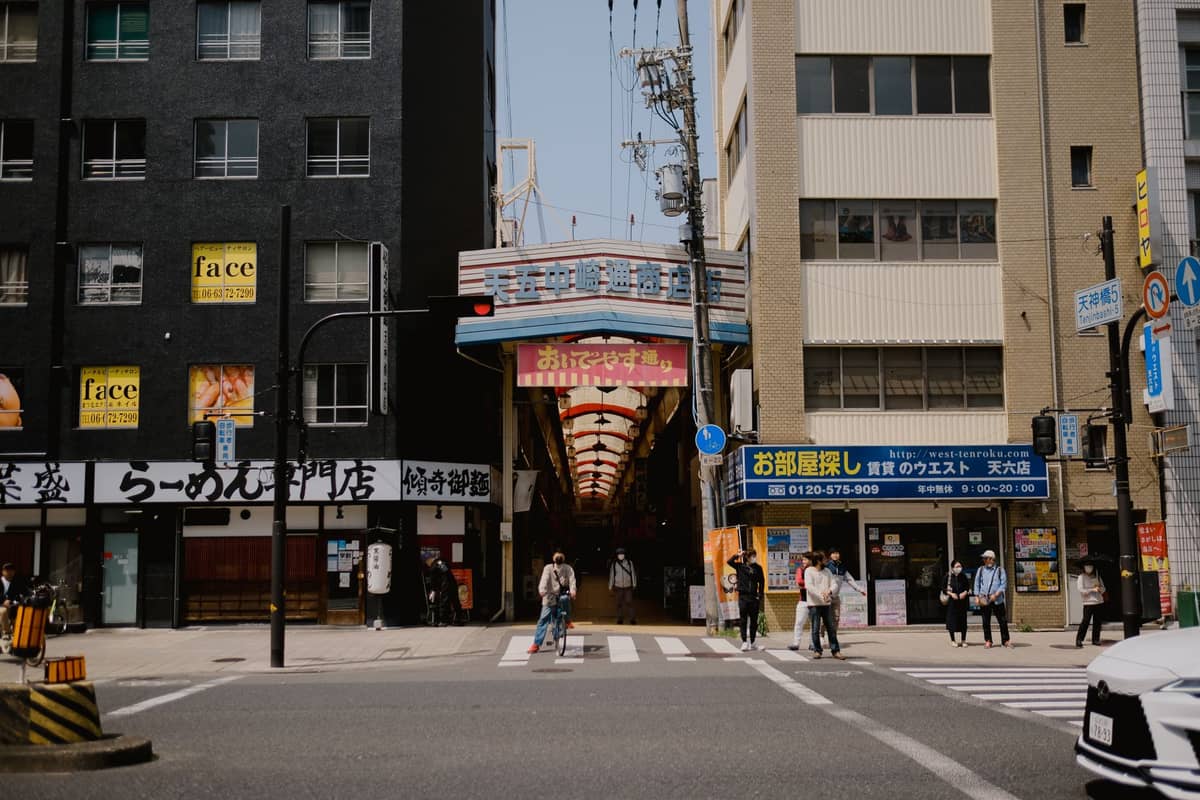
Tenjinbashisuji Shopping Street (天神橋筋商店街) is commonly cited as the longest covered shopping arcade in Japan, running approximately 2.6 kilometres from its southern entrance near Osaka Tenmangu Shrine to its northern tip at Tenjinbashisuji 6-chome. That measurement is not hyperbole. Walking the full length at a comfortable pace, stopping to look into shops, takes a genuine 40 to 60 minutes without entering anywhere. The arcade is divided into seven numbered sections (chome), each with its own character, ranging from dense food stalls in the lower sections to quieter residential-facing shops further north.
Unlike Shinsaibashi or the department-store corridors around Osaka Station, Tenjinbashisuji is not a curated tourist experience. It is an active neighbourhood commercial street where local residents buy groceries, get haircuts, pick up hardware, and eat lunch. That ordinariness is precisely what makes it interesting for visitors who want to understand what daily life in Osaka looks like outside the postcard zones.
💡 Local tip
The arcade itself is accessible at all hours, but most shops open around 10:00 and close by 19:00. Restaurants typically run 11:00 to 21:00, though hours vary by establishment. Arriving before 10:30 gives you an uncrowded first look at the street before the midday rush builds.
Historical Roots: From Shrine Gateway to Shopping Arcade
The street's origins trace back to the mid-17th century, around 1653, when commercial activity developed near the Tenma Aomono-Ichiba produce market. Its primary function, though, was as a pedestrian approach to Osaka Tenmangu Shrine, the city's major Shinto shrine dedicated to the scholar-deity Tenjin. During the Edo period (1603–1867), shrine approaches (monzen-machi) were natural locations for commerce: pilgrims needed food, tools, and souvenirs, and merchants were glad to provide them.
The street took its recognisably modern form during the Meiji period (1868–1912), when urbanisation and the expansion of rail infrastructure accelerated commercial growth in Kita Ward. The covered arcade structure, now ubiquitous across Japanese cities, was added later to allow year-round trading regardless of rain or summer heat. What you see today is the product of roughly four centuries of incremental commercial evolution, not a single planned development.
At the southern end of the street, Osaka Tenmangu Shrine remains the spiritual anchor of the whole corridor. Visiting both together takes less than two hours and gives the area a meaningful historical through-line rather than just a shopping errand.
Tickets & tours
Hand-picked options from our booking partner. Prices are indicative; availability and final rates are confirmed when you complete your booking.
Kyoto Walking Tour and Shopping at Nishiki Market
From 76 €Instant confirmationFree cancellationKobe: Mt. Rokko Night View, Kitano Ijinkan, Arima Onsen Full Day Tour
From 47 €Instant confirmationFree cancellationOsaka local food tour in Dotonbori and Shinsekai
From 51 €Instant confirmationFree cancellationGuided day tour from Osaka to Nara Park, Arashiyama and Fushimi Inari
From 59 €Instant confirmationFree cancellation
Walking the Street: What You Encounter Section by Section
Most visitors enter from the southern end, near 1-chome and 2-chome, where the street is most compressed and the food presence is strongest. Takoyaki stands, kushikatsu counters, and ramen shops sit within metres of each other, and the smell of frying batter is near-constant. This section is also closest to the shrine and tends to attract the most foot traffic during the day.
Moving north through 3-chome and 4-chome, the density of restaurants gives way to a broader mix: clothing shops selling practical everyday wear (not fashion-label goods), 100-yen stores, pharmacies, rice merchants, and small electronics dealers. These sections feel more like a neighbourhood high street than a tourist corridor. Signage is predominantly in Japanese, prices are aimed at residents, and the pace of shopping slows noticeably.
The northern sections, 5-chome to 7-chome, become progressively quieter and are less visited by international tourists. The arcade still functions, but gaps between shops appear, and the streetscape opens slightly. This end is most useful if you're making your way toward the Tenjinbashisuji 6-chome Station and want to walk through rather than backtrack.
ℹ️ Good to know
The arcade is step-free along its full length, making it accessible to visitors with pushchairs or mobility aids. The connecting subway stations have varying accessibility infrastructure; check Osaka Metro's official station guides for lift availability at specific exits.
How the Street Changes Throughout the Day
Before 10:00, the arcade is quiet in a revealing way. Shopkeepers are hosing down the entrance to their stores, pulling up shutters, and arranging displays. The air smells of clean concrete and, near the food stalls, of the previous day's cooking oil being replaced. A few early-rising locals pass through, but the street is genuinely calm. This is the best time to photograph the covered arcade's structure without crowds obscuring the sightlines.
By midday, the food sections are at their most active. Lunch sets appear in restaurant windows, and the queues at popular stands form quickly. Local office workers, students from nearby schools, and older residents doing their weekly shopping all share the same narrow pedestrian channel. The noise level rises considerably: recorded shop jingles, food vendors calling out, and the general compressed hum of a busy indoor street market.
Late afternoons on weekdays tend to see a secondary surge as school-age visitors and after-work shoppers arrive. Weekends bring a more noticeable tourist presence in the lower sections, though never to the intensity of Dotonbori or Shinsaibashi on a Saturday evening. By 19:00, the majority of shops have closed, and the street takes on a different character: quieter, with restaurants still operating and a few stragglers finishing dinner.
Food, Drink, and What to Buy
Tenjinbashisuji is not primarily a food destination in the way that Kuromon Ichiba Market is, but it rewards patient browsing. The staple items here are Osaka working-class food: kushikatsu (breaded and fried skewers), udon, okonomiyaki, and a range of small sweet shops selling Japanese confectionery at prices far below what you'd pay in a department-store basement. Several tofu shops sell fresh blocks directly to residents, and rice merchants still operate here in a form that has largely disappeared from other parts of the city.
For comparison, Kuromon Ichiba Market in Namba is better for fresh seafood and high-end produce, while Tenjinbashisuji excels at everyday goods and affordable cooked food. They serve different purposes and are worth visiting separately.
In terms of shopping, this is not a place to find international brands or boutique retail. What you will find are practical household goods, local clothing, seasonal decorations tied to the Japanese calendar, and occasional antique or secondhand shops tucked between newer businesses. The 100-yen shops (hyaku-en stores) here stock a range of items worth browsing if you're looking for small, inexpensive souvenirs with genuinely local utility.
Getting There and Practical Navigation
The most practical approach depends on which end of the street you want to start at. For the southern end (nearest the shrine and the densest food section), take the JR Tozai Line to Osaka Tenmangu Station. For the northern end, Tenjinbashisuji 6-chome Station on the Osaka Metro Tanimachi and Sakaisuji Lines, and also served by the Hankyu Railway, puts you directly at the top of the arcade via Exit 8. Minami-Morimachi Station connects to the mid-section and is useful if you're coming from central Osaka Metro routes.
The street sits in Kita Ward, north of the main Umeda commercial hub, making it a logical half-day extension after visiting Osaka Station or the Umeda area. On foot from Umeda, the southern entrance is roughly 15 to 20 minutes along surface streets.
There is no single obvious entrance. The street intersects several cross streets at regular intervals, and you can enter or exit at any point. Navigation is straightforward: follow the covered arcade north or south depending on your starting point. Numbering increases as you move north, with 1-chome at the bottom and 7-chome at the top. Most shops do not display English-language exterior signage, but the type of business is almost always visually obvious.
⚠️ What to skip
Cash is strongly recommended. While larger restaurants may accept cards, and some shops and food stalls accept IC cards (like ICOCA or Suica) for small purchases, many smaller businesses still operate on a cash-only basis.
Weather and Seasonal Considerations
The covered arcade makes Tenjinbashisuji genuinely weather-independent, which is a meaningful advantage in Osaka's climate. During June and July, when the city's rainy season brings roughly 185 mm of precipitation to an already humid environment, the arcade stays dry and continues to function normally. In the peak summer heat of July and August, when outdoor temperatures regularly exceed 30°C, the shade of the covered corridor provides relief, though without air conditioning. Dress lightly and carry water.
Spring and autumn offer the most comfortable walking conditions. The street has no cherry blossom or autumn foliage of its own, but it sits within easy walking distance of areas that do. For seasonal context, the Osaka Tenmangu Shrine at the southern end is associated with the Tenjin Matsuri, one of Japan's three major festivals, held annually in late July. The street takes on a different energy in the days surrounding the festival.
Photography Tips
The arcade's covered structure creates even, diffuse lighting throughout the day, which suits detail shots of shop displays and signage. Wide-angle shots of the corridor work best in the morning before crowds accumulate. The most photogenic sections are in the lower chome, where the density of hanging signs, merchandise displays, and overlapping shop fronts creates visual compression. The intersection points where cross streets break the arcade roof are worth noting: these spots allow brief bursts of natural light and give a sense of the street's relationship to the surrounding city grid.
Insider Tips
- Walk the full length north to south, starting at Tenjinbashisuji 6-chome Station and ending at Osaka Tenmangu Shrine. This direction means you finish at one of Osaka's most significant historical sites rather than back at a subway platform, and it naturally rewards you with a destination rather than a gradual fade-out.
- The tofu shops and rice merchants in the mid-sections (3-chome and 4-chome) are among the few places in central Osaka where you can observe specialist food retail that has largely disappeared from other urban districts. Even if you don't buy anything, the interiors are worth a look.
- Avoid arriving hungry on a weekday between 12:00 and 13:30. The popular lunch spots in the lower sections fill quickly, and queue times at good ramen or udon counters can reach 20 to 30 minutes. Arriving by 11:30 or after 14:00 cuts wait times significantly.
- The numbered sections (chome) are posted on small signs above the arcade at each block transition. Keeping track of which chome you're in helps you gauge how far you've walked and prevents the disorientation that sets in about halfway through a full south-to-north traverse.
- The Osaka Museum of Housing and Living is located directly above Tenjinbashisuji 6-chome Station and presents a full-scale recreation of an Edo-period Osaka street, including a simulated version of what this area once looked like. Pairing the two makes the historical context of the shopping street considerably more vivid.
Who Is Tenjinbashisuji Shopping Street For?
- Visitors who want everyday Japanese commercial culture rather than curated tourist shopping
- Travellers prioritising affordable food and local dining over restaurant-guide recommendations
- Anyone visiting Osaka during rainy season who needs reliable indoor walking options
- Travellers combining a visit to Osaka Tenmangu Shrine with a leisurely walk northward
- Photographers looking for documentary street scenes without crowds as overwhelming as Dotonbori
Nearby Attractions
Other things to see while in Umeda (Kita):
- Kids Plaza Osaka
Kids Plaza Osaka, located in Kita-ku near the Umeda area, is Japan's first museum built specifically for children. Across multiple floors of interactive, play-based exhibits, it keeps kids engaged for hours while giving adults genuine insight into how children learn through experience. Whether you have a toddler or a curious ten-year-old, this is one of Osaka's most reliably rewarding family stops.
- Osaka Museum of Housing and Living
The Osaka Museum of Housing and Living (大阪くらしの今昔館) reconstructs full-scale streets and merchant homes from the late Edo period, letting visitors walk through and enter period-accurate interiors. Located on the 8th floor of the Osaka Municipal Housing Information Center in Kita-ku, it offers one of the most tactile history experiences in the city at a modest admission price.
- Osaka Tenmangu Shrine
Founded in 949 CE and dedicated to the Shinto deity of scholarship, Osaka Tenmangu Shrine is a centuries-old and culturally significant shrine in western Japan. Free to enter and just minutes from Minamimorimachi Station, it offers a genuine window into Osaka's spiritual and festive life — most famously as the stage for Tenjin Matsuri, held every July.
- Umeda Sky Building
The Umeda Sky Building is one of Osaka's most architecturally distinctive structures, connecting two towers at 173 meters via a circular open-air observatory. Whether you visit at noon for clear skyline views or at sunset when the city shifts from gold to neon, the Kuchu Teien (Floating Garden) Observatory delivers an experience that earns its place on a short itinerary.