Abeno Harukas: Osaka from 300 Metres Up
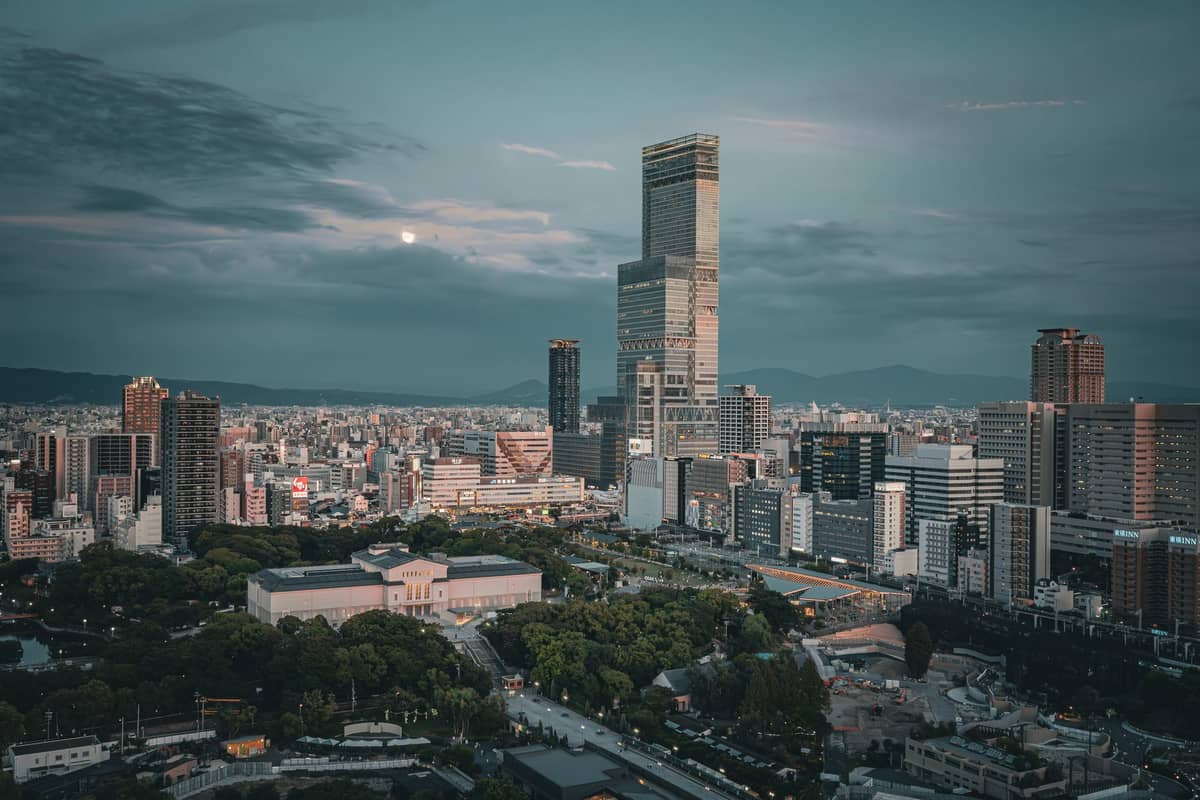
Abeno Harukas is Osaka's tallest building, rising 300 metres above Tennoji in southern Osaka. The Harukas 300 observatory spans floors 58 to 60 and delivers sweeping views across the city, Osaka Bay, and on clear days, the mountains of Nara and beyond. It is also a major transit hub, shopping complex, and art museum rolled into one vertical neighbourhood.
Quick Facts
- Location
- 1-1-43 Abenosuji, Abeno-ku, Osaka (Tennoji district)
- Getting There
- Tennoji Station (JR, Osaka Metro Midosuji & Tanimachi Lines); Osaka Abenobashi Station (Kintetsu) — all directly connected to the building
- Time Needed
- 1–2 hours for the observatory; half a day if you explore the mall, art museum, and neighbourhood
- Cost
- Paid admission for Harukas 300 observatory; prices vary by age and group size — check the official site for current rates. Approximately half price for visitors with disability certificates.
- Best for
- City panoramas, architecture enthusiasts, families, accessibility-conscious travellers, evening skyline seekers
- Official website
- www.abenoharukas-300.jp/en/observatory/information.html
What Abeno Harukas Actually Is
Abeno Harukas is not purely an observation tower. It is a 300-metre mixed-use skyscraper that contains a department store across its lower floors, an art museum, a hotel, and the Harukas 300 observatory at its peak. The name comes from an archaic Japanese word meaning 'to brighten' or 'to clear the mind', which tells you something about how it was intended to be experienced rather than merely visited.
The building sits directly above one of Osaka's major rail interchanges. JR Tennoji Station, Osaka Metro's Midosuji and Tanimachi lines, and the Kintetsu Osaka Abenobashi Station all feed into or directly connect with the base of the building. This means the entire tower functions as a kind of vertical city gate for the Tennoji and Abeno districts, pulling in commuters, shoppers, and tourists in equal measure. For visitors arriving from Kansai International Airport on the JR Haruka Express, Tennoji is actually the first major stop before Shin-Osaka, making Abeno Harukas one of the first landmarks many international visitors encounter at ground level.
💡 Local tip
The Harukas 300 observatory is open daily from 09:00 to 22:00, with last entry at 21:30. Hours can change without notice, so confirm on the official site the morning of your visit.
The View from 300 Metres: What to Expect
The observatory occupies floors 58, 59, and 60, each offering a slightly different relationship with the city below. Floor 58 is an indoor observation lounge with floor-to-ceiling glass on all sides and a cafe where you can sit with a coffee and take in the view at your own pace. Floor 59 steps it up with a partial outdoor terrace, where the wind and ambient noise remind you that you are genuinely exposed to the sky. Floor 60 is the rooftop, fully open-air, and where the physical scale of the panorama fully registers.
Looking north, the grid of Osaka stretches towards Umeda's cluster of towers and the curve of Osaka Castle Park in the middle distance. To the west, on a clear day, Osaka Bay reflects the light in silver sheets, and you can pick out the distinctive bridges of the port area. On days with exceptional visibility, typically in winter and early spring when the air is coldest and driest, the mountain ridges of Nara Prefecture appear as a faint purple-grey silhouette to the east. The view is genuinely different from any direction you face, which is why spending time to rotate around all sides is worthwhile rather than anchoring yourself to one spot.
Looking directly down is its own experience. The plaza and rail infrastructure below shrinks to an abstract pattern of rooftops, platforms, and the distinctive green canopy of Tennoji Park. It gives you a clear sense of how Osaka's southern districts are laid out relative to each other: the zoo, the gardens, Shinsekai's low-rise streetscape, and the older neighbourhood grids that surround them.
Tickets & tours
Hand-picked options from our booking partner. Prices are indicative; availability and final rates are confirmed when you complete your booking.
Kobe: Mt. Rokko Night View, Kitano Ijinkan, Arima Onsen Full Day Tour
From 47 €Instant confirmationFree cancellationOsaka local food tour in Dotonbori and Shinsekai
From 51 €Instant confirmationFree cancellationGuided day tour from Osaka to Nara Park, Arashiyama and Fushimi Inari
From 59 €Instant confirmationFree cancellationShiga Day Trip with Miho Museum, Lake Biwa and Waterbird Shrine
From 70 €Instant confirmationFree cancellation
Morning, Afternoon, and Night: How the Experience Changes
Morning visits, shortly after opening at 09:00, attract a thinner crowd and often offer the clearest air. The low-angle light from the east creates strong shadows across the city grid and can make for striking photography. The indoor observation lounge is calm at this hour, with few queues for the high-speed elevator.
Midday and early afternoon bring the most visitors, particularly on weekends and during school holiday periods. The views remain excellent in good weather, but expect the outdoor terrace to fill up quickly and the photo spots along the glass panels to attract small clusters of people. Summer midday visits carry one practical drawback: the rooftop becomes uncomfortably hot under direct sun in July and August, when temperatures regularly exceed 33–35°C. Bring water and consider limiting your time on the fully exposed upper floor.
Evening visits, particularly in the window between 19:00 and 21:00, offer something that daytime cannot: Osaka's city lights spreading in every direction without a horizon. The transition from dusk to full night, typically between 18:30 and 19:30 depending on season, transforms the view entirely. The street grids below illuminate into orange lines, the bay catches reflections from port lighting, and the Tsutenkaku Tower in Shinsekai flickers into its neon outline a short distance to the northwest. If you can only visit once, the evening window is consistently the most visually rewarding.
⚠️ What to skip
On overcast or rainy days, the rooftop views can be significantly reduced or entirely obscured by cloud cover, particularly in the rainy season (early June to mid-July) and typhoon season (August–September). Always check the weather before buying tickets.
Getting There and Navigating the Building
Access from central Osaka is straightforward. From Namba, the Osaka Metro Midosuji Line runs directly to Tennoji in about six minutes. From Umeda (Osaka/梅田), the same line takes around ten minutes. JR trains on the Osaka Loop Line also call at Tennoji, making the building reachable from Osaka Castle Park or the bay area without a transfer. All access routes lead into the base of the tower, which is directly connected to the Kintetsu Abeno Harukas department store entrance and the elevator banks serving the upper floors.
The building itself is large enough to be briefly disorienting on first entry. Observatory ticketing is handled separately from the department store and art museum, so follow signs specifically for Harukas 300. If you are combining your visit with the surrounding Tennoji neighbourhood, note that the ground-floor concourse also connects to the outdoor forecourt facing the Abeno Harukas park strip, which serves as a natural transition point between the tower and the streets leading south toward Shinsekai.
Accessibility throughout the building is notably well-managed. The facility is promoted as a Universal Tourism destination, with dedicated wheelchair routes, elevator access to all observatory levels, and discounted admission for visitors with disability certificates. The step-free connections from the subway and JR station platforms into the building make this one of the more accessibility-friendly viewpoints in the city.
Beyond the Observatory: What Else Is in the Building
The Abeno Harukas Art Museum occupies a dedicated floor within the tower and runs temporary exhibitions throughout the year, typically drawing from both Japanese collections and international touring shows. The programme changes seasonally, so it is worth checking what is on before your visit rather than treating it as a guaranteed addition to your itinerary.
The Kintetsu department store fills the lower floors with retail, food halls, and restaurants. The food basement in particular is well-regarded for its selection of prepared foods, sweets, and bento options, which is useful if you are planning a picnic in nearby one of Osaka's parks. The upper restaurant floors have panoramic city-facing windows on some levels, offering a less expensive alternative to observatory admission if your primary goal is simply to eat at height.
Photographing Abeno Harukas
For exterior shots of the tower itself, the best vantage point is from the open plaza area to the south or from the elevated walkways around Tennoji Station's west exit. From ground level, the building's taper and height are hard to capture in a single frame without a wide-angle lens. The tower photographs well at blue hour, when the sky still holds colour and the building's upper floors are lit.
From the observatory, the most interesting compositional challenge is finding foreground elements to anchor the vast urban expanse. The rooftop railing lines work well in wide shots, while the glass panels on floor 58 offer clean, reflection-free photography from specific angles. For views that include Tsutenkaku Tower in frame, position yourself on the northwest side of the observation deck.
💡 Local tip
Photography tripods are generally not permitted on the observatory floors. A small travel tripod or gorilla pod resting on the railing ledge is a practical workaround for low-light evening shots.
Who Will Not Enjoy This Visit
Travellers who dislike heights will find the rooftop terrace genuinely unnerving: the outdoor exposure is real and the wind at 300 metres can be significant, particularly in winter. The indoor floors mitigate this somewhat, but the psychological scale of the view from the upper level is considerable.
Budget-focused visitors might weigh the observatory admission against alternatives. The Umeda Sky Building in northern Osaka offers a comparable open-air observation experience at a lower height and, depending on timing, a lower price point. If you are travelling on a tight budget, also consult a guide to free things to do in Osaka before committing to paid observatory admission.
On overcast or hazy days, the cost-to-experience ratio falls noticeably. Unlike some attractions where bad weather adds atmosphere, a sky observation deck simply offers less when visibility is poor. If there is significant cloud cover at ground level, the view from floor 60 is likely to be a grey wall rather than a panorama.
Insider Tips
- The high-speed elevator to the observatory takes about 50 seconds from ground level — worth experiencing in itself, but if you are sensitive to pressure changes, slow down your swallowing beforehand.
- Weekday mornings between 09:00 and 10:30 are consistently the quietest period. Weekend afternoons, especially during Japanese national holidays (Golden Week in late April to early May, Obon in August), see significant queues.
- The observatory cafe on floor 58 allows you to sit with purchased drinks for as long as you like. Ordering something small and settling in at a window seat during sunset can extend your visit without additional cost.
- Winter clear-day visits in December and January often yield the longest sightlines. Humidity is lower and the air temperature suppresses atmospheric haze, making distant mountains visible when they would be completely invisible in summer.
- If the Abeno Harukas Art Museum has an exhibition running during your visit, the combined ticket (observatory plus museum) may offer a better value than buying separately. Check the official site for current bundled offers.
Who Is Abeno Harukas For?
- First-time visitors to Osaka who want a geographic orientation of the city before exploring at street level
- Evening and nighttime photography enthusiasts looking for the best elevated vantage point in southern Osaka
- Families with children who find the multi-floor observatory format engaging beyond a single viewing level
- Travellers with mobility requirements who need a step-free, wheelchair-accessible viewpoint with elevator access throughout
- Architecture and urban planning enthusiasts interested in studying Osaka's city grid and spatial development from above
Nearby Attractions
Other things to see while in Tennoji:
- Isshin-ji Temple
Isshin-ji Temple in Tennoji is one of Osaka's most singular religious sites, where modern concrete architecture meets a centuries-old Buddhist tradition of incorporating the cremated remains of the deceased into sacred statues. Free to enter and open daily, it rewards thoughtful visitors with a genuinely unusual encounter with Japanese memorial culture.
- Shitennoji Temple
Founded in 593 by Prince Shotoku, Shitennoji Temple is considered Japan's first officially established Buddhist temple. Spanning a full city block in Tennoji, it offers a rare straight-axis temple layout, a serene pond garden, and a modest treasure house — all within easy reach of central Osaka.
- Tennoji Zoo
Osaka Tennoji Zoo has been open since 1915, making it one of Japan's oldest and most accessible city zoos. Here's everything you need to plan a smart visit.