Tsutenkaku Tower: Osaka's Retro Icon in the Heart of Shinsekai
Standing 103 meters above the old-school streets of Shinsekai, Tsutenkaku Tower has marked Osaka's working-class south for over a century. This guide covers what to see, when to go, how to get there, and whether the experience justifies the ticket price.
Quick Facts
- Location
- 1-18-6 Ebisuhigashi, Naniwa-ku, Osaka — Shinsekai district
- Getting There
- Ebisucho Station (Sakaisuji Line) or Dobutsuen-mae Station (Midosuji / Sakaisuji Lines)
- Time Needed
- 1–2 hours for observation deck; longer if adding Tower Slider or DIVE & WALK
- Cost
- Adults ¥1,500 / Children (5–14) ¥800 for the main observation deck. Extra fees for special attractions.
- Best for
- Retro Osaka atmosphere, panoramic city views, families, first-time visitors
- Official website
- www.tsutenkaku.co.jp
What Tsutenkaku Tower Is — and Why It Matters
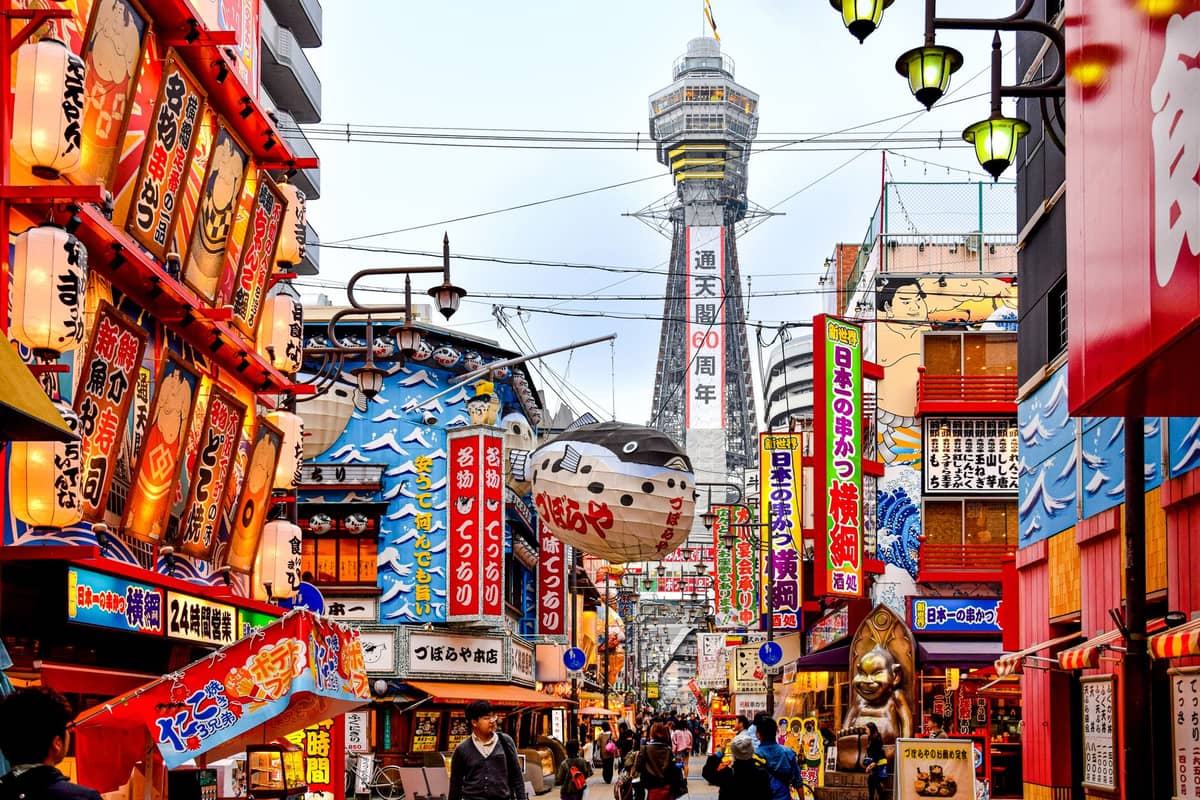
Standing 103 meters above the old-school streets of Shinsekai, Tsutenkaku Tower has marked Osaka's working-class south for over a century. This guide covers what to see, when to go, how to get there, and whether the experience justifies the ticket price. Tsutenkaku Tower (通天閣) is the defining landmark of Shinsekai, a district in southern Osaka that has spent much of the last century swinging between boom and neglect. The tower's name translates loosely as 'reaching heaven through the sky,' and at 103 meters tall it once genuinely felt that way — the original version was considered one of the tallest structures in Asia when it opened in 1912. That first tower was modeled partly on the Eiffel Tower in Paris and the Arc de Triomphe, a signal that Meiji-era Osaka was looking outward and upward.
The original tower was demolished in 1943, its steel donated to the wartime effort. The current structure dates from 1956, when Shinsekai residents pooled funds to rebuild their neighborhood's centrepiece during the postwar recovery. That act of collective civic pride gives the tower a different kind of weight than a purpose-built tourist attraction. It is not a spectacle dropped into a neighborhood for visitors. It grew out of one.
Tsutenkaku sits at the northern tip of Shinsekai, a district that retains an atmosphere you will not find in Namba or Umeda — low-rise streets lined with kushikatsu restaurants, pachinko parlors, retro signage, and a population that skews older and local. Walking here from the main subway exit, the first sight of the tower between low buildings produces a strangely nostalgic effect, even for first-time visitors.
The Observation Decks: What You Actually See
The main observation deck sits at around 87 meters. The view is panoramic but not dramatic in the way a rooftop tower over a dense skyline can be — Osaka's south is relatively low-rise, and the horizon stretches wide and flat. On a clear day you can pick out Abeno Harukas to the southeast (Osaka's tallest skyscraper at 300 meters), Osaka Castle to the north, and the mountains of Nara prefecture on the eastern horizon. On hazy summer days, visibility drops significantly and the view becomes more about the foreground of Shinsekai's rooftop geometry than the distant cityscape.
The standard ticket also provides access to Biliken, the gold-painted 'God of Things as They Should Be,' a local lucky deity whose statue inside the tower has had his feet rubbed smooth by generations of visitors. It is a small but genuinely charming detail. For an additional fee, the outdoor 'Tenbo Paradise' deck and the cantilevered 'TIP THE TSUTENKAKU' platform give you exposure to open air and more dramatic angles over the street below. Abeno Harukas, a ten-minute walk away, offers views from a much higher elevation if that is your primary goal.
💡 Local tip
For the clearest views, visit on a winter morning between October and February. The air is drier and visibility extends to the Ikoma and Rokko mountain ranges. Arrive right at opening (09:00) to beat coach tour groups, which typically arrive mid-morning.
Tickets & tours
Hand-picked options from our booking partner. Prices are indicative; availability and final rates are confirmed when you complete your booking.
Kobe: Mt. Rokko Night View, Kitano Ijinkan, Arima Onsen Full Day Tour
From 47 €Instant confirmationFree cancellationOsaka local food tour in Dotonbori and Shinsekai
From 51 €Instant confirmationFree cancellationGuided day tour from Osaka to Nara Park, Arashiyama and Fushimi Inari
From 59 €Instant confirmationFree cancellationShiga Day Trip with Miho Museum, Lake Biwa and Waterbird Shrine
From 70 €Instant confirmationFree cancellation
How the Experience Changes Through the Day
Mornings at Tsutenkaku are relatively calm. The streets of Shinsekai are quieter before 10:00, and the tower sees its lightest crowds in the first hour after opening. The light is clean and angled, and the surrounding district still carries the slightly deserted quality of an old neighbourhood waking up slowly. The smell of frying oil from kushikatsu shops has not yet taken hold of the air — that builds through the afternoon.
By midday the district fills considerably. Weekends in particular bring school groups, domestic tourists, and international visitors arriving together. The queue for the observation deck elevator can stretch to 30–45 minutes during peak hours on Saturdays in spring and autumn. The noise level inside the tower is high, with arcade-style attractions and souvenir shops competing for attention on multiple floors.
Evening visits offer the best lighting for photography. The tower illuminates after dark, and its neon outline against the sky has a quality that daytime visits lack. The Shinsekai streets below also take on a warmer character at night, with shop windows glowing and the sound of television and conversation spilling out of open-front kushikatsu counters. However, the tower's last entry is at 21:15, so there is a narrow window for combining a night exterior view with an elevator ride to the top.
ℹ️ Good to know
Opening hours: 09:00–21:45 daily (last entry 21:15). Tower Slider and some special attractions have shorter operating windows (Tower Slider 10:00–20:00, last entry 19:30; DIVE & WALK 09:10–19:00, last entry 18:15). Verify current hours on the official site before visiting, as hours can change seasonally.
Special Attractions: Tower Slider, DIVE & WALK, and Tenbo Paradise
In recent years the tower has added several paid extras that extend the experience well beyond a standard observation deck visit. The TOWER SLIDER is a 60-meter-long enclosed slide that descends from the third floor to the first floor of the building. It costs approximately ¥1,100 for adults (15–65) and ¥600 for children (ages 7–14), and operates separately from the observation deck ticket. It is genuinely fast and brief — over in around ten seconds — but lines on busy days can stretch the wait. Children and adults who enjoy that kind of low-stakes physical excitement tend to find it memorable. Those expecting a long, leisurely slide may be underwhelmed.
DIVE & WALK is a more immersive experience priced at ¥3,000 for adults (15–65) and ¥2,000 for children (ages 9–14). It is an indoor attraction using visual and audio environments to simulate movement and depth. It is worth noting that both these add-ons have age, height, or health restrictions — check before bringing young children or visitors with mobility or cardiac conditions.
Tenbo Paradise and TIP THE TSUTENKAKU add outdoor exposure to the standard observation deck visit and require an additional fee on top of the main observation deck ticket. On windy days the outdoor platform is noticeably blustery, and the cantilevered deck produces the mild vertigo that glass-floor platforms are designed to provoke. For most visitors, these are optional extras rather than essential upgrades.
Getting There: Transit and Walking Routes
The most direct route is via Ebisucho Station on the Osaka Metro Sakaisuji Line. From there it is a short, flat walk of about three minutes southwest along the shopping street toward the tower. The route is clearly signposted and essentially impossible to miss — the tower is visible from street level well before you arrive. Dobutsuen-mae Station (Midosuji and Sakaisuji Lines) is a slightly longer walk of around six to seven minutes but places you at the southern edge of Shinsekai, which gives a fuller sense of the district before you reach the tower. Shin-Imamiya Station (JR Osaka Loop Line and Nankai Main Line) is another option for those arriving from Namba or Tennoji.
If you are combining this with other southern Osaka attractions, Shitennoji Temple is about a 20-minute walk northeast, and Tennoji with its park and zoo is walkable to the east. The area rewards slow exploration on foot more than rapid transit-hopping.
💡 Local tip
If you have an Osaka Amazing Pass, confirm whether Tsutenkaku Tower admission is currently included, as pass benefits can change. Check the official pass documentation before your visit.
Practical Details: Accessibility, Photography, and What to Bring
The tower has a wheelchair-accessible entrance and elevators to the main observation deck, making it one of the more accessible viewpoints in central Osaka for visitors with mobility impairments. Restrooms are available within the building, and the lower floors have souvenir shopping and food kiosks. There is no strict dress code.
For photography, the interior lighting of the observation deck is artificial and warm, which can challenge smartphone cameras in auto mode. The outdoor Tenbo Paradise deck removes this problem and allows natural-light shots of the cityscape. Wide-angle lenses or smartphone ultra-wide modes work well for interior shots of the curved deck windows. From street level, the best exterior photographs are taken from the southern pedestrian approach along Jan Jan Yokocho alley, where the tower frames tightly above the low shopfronts.
Weather affects the experience significantly. On days with high humidity, which is common from June through September, the view is often hazy and the observation deck itself becomes sticky and crowded. The best time to visit Osaka for tower views is October through December or late February through April, when the air tends to be cleaner and crowd levels more manageable.
Is Tsutenkaku Worth It? An Honest Assessment
The tower itself is not Osaka's most spectacular viewpoint. The observation deck at Abeno Harukas reaches nearly three times the height, and the Umeda Sky Building offers a more dramatic architectural experience. What Tsutenkaku provides that those cannot is context: the view from here is inseparable from the neighbourhood below it. Looking down on Shinsekai's low-slung rooftops, the grid of neon signs, and the flow of people through the old street market gives a specific, grounded sense of the city that high-altitude panoramas lack.
The ¥1,500 base ticket is reasonable for the experience. Adding all the optional extras pushes the cost up substantially, and some visitors feel the extras are more theme-park filler than genuine additions. If you are travelling on a tight budget, the exterior of the tower and a walk through Shinsekai's streets costs nothing and captures much of the character of the place. See the free things to do in Osaka guide for context on how it compares to other no-cost options in the city.
Visitors who should consider skipping the paid entrance: those who have already visited a taller Osaka viewpoint and are pressed for time, those who are primarily interested in the street-level atmosphere of Shinsekai rather than a top-down view, and anyone who finds crowded indoor attractions with loud commercial elements wearing. The exterior and the surrounding neighbourhood are freely accessible and worth at least 30 minutes of anyone's time in Osaka's south.
Insider Tips
- Visit on a weekday rather than a weekend. Saturday afternoon crowds can mean 30–45 minute elevator queues. A Tuesday morning in autumn is a fundamentally different experience.
- After descending from the tower, walk south into Jan Jan Yokocho — a covered arcade lined with shogi parlors, old-school restaurants, and pachinko halls. It gives you the unvarnished Shinsekai atmosphere that the tower's interior floors, packed with souvenir shops, cannot.
- The tower changes its lighting colour on special occasions and national holidays. If you happen to be in Osaka on a public holiday, check the official site for the evening illumination schedule — the coloured lighting is photogenic from street level and costs nothing to enjoy.
- Kushikatsu (deep-fried skewers) is the definitive local food of Shinsekai. The rule at local shops is no double-dipping in the communal sauce. Eat before or after the tower rather than rushing past the restaurants — the neighbourhood's food culture is as much a reason to visit as the tower itself.
- The Biliken statue inside the tower has its own protocol: rub the soles of his feet, not his body, to receive good luck. It is a small ritual but one that locals take seriously and that connects the tower to its prewar cultural roots.
Who Is Tsutenkaku Tower For?
- First-time visitors to Osaka wanting to understand the city's southern character
- Families with children aged 7 and up, particularly those keen on the Tower Slider
- Photographers interested in retro urban streetscapes and neon-lit evening scenes
- Travellers pairing a Shinsekai food walk with a short cultural stop
- History-minded visitors interested in postwar Japanese urban reconstruction
Nearby Attractions
Other things to see while in Shinsekai:
- Imamiya Ebisu Shrine
Imamiya Ebisu Shrine is Osaka's most celebrated shrine of commercial prosperity, drawing hundreds of thousands of visitors each January for the Toka Ebisu festival. Free to enter, easy to reach, and deeply tied to the city's mercantile identity, it rewards visitors who look beyond the tourist circuit.