Isshin-ji Temple: Osaka's Bone Buddha and the Art of Remembrance
Isshin-ji Temple in Tennoji is one of Osaka's most singular religious sites, where modern concrete architecture meets a centuries-old Buddhist tradition of incorporating the cremated remains of the deceased into sacred statues. Free to enter and open daily, it rewards thoughtful visitors with a genuinely unusual encounter with Japanese memorial culture.
Quick Facts
- Location
- 2-8-69 Osaka, Tennoji-ku, Osaka 543-0062
- Getting There
- Shitennoji-mae Yuhigaoka Station (Tanimachi Line, about 8–9 min walk); Tennoji Station (JR/Metro, about 8–10 min walk)
- Time Needed
- 30–60 minutes
- Cost
- Free
- Best for
- History lovers, architecture enthusiasts, travelers interested in Japanese memorial traditions
- Official website
- http://www.isshinji.or.jp
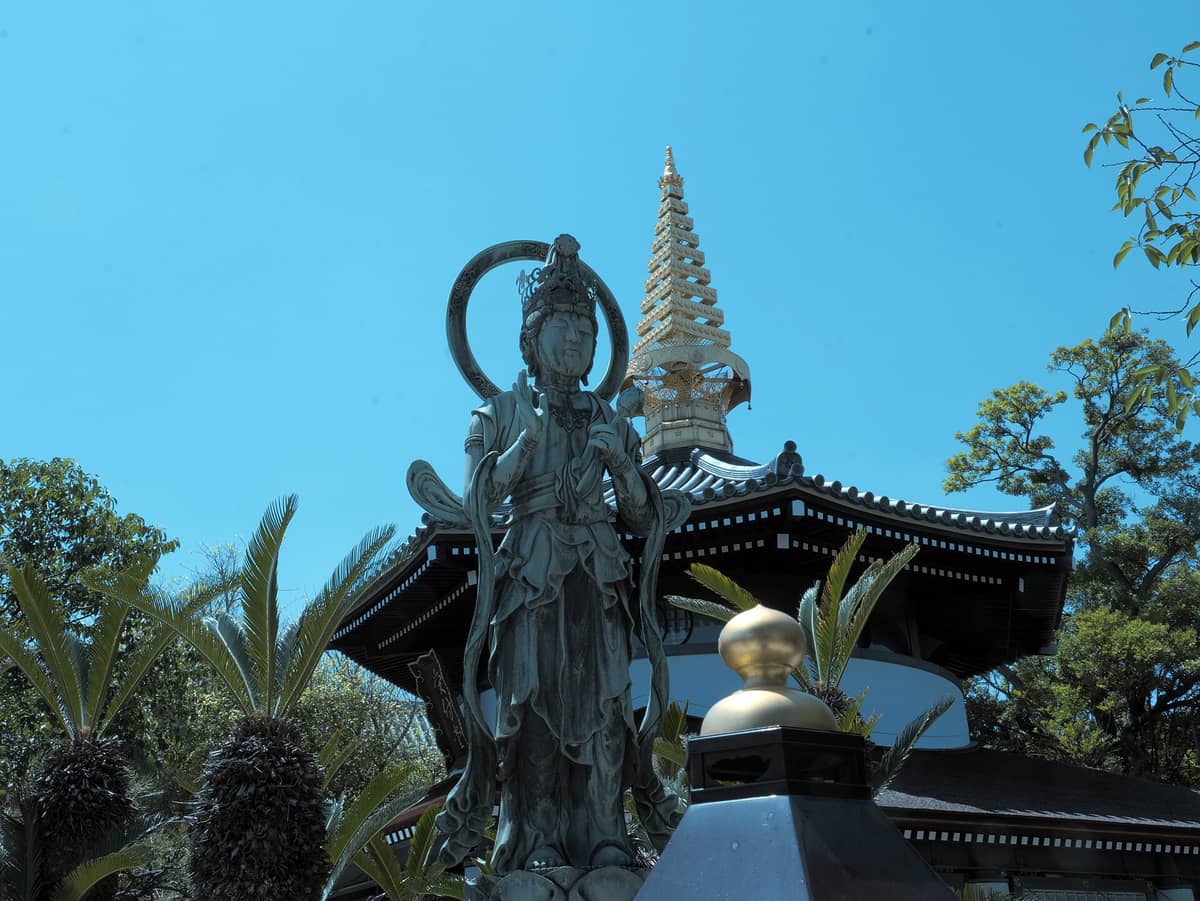
What Isshin-ji Temple Actually Is
Isshin-ji Temple (一心寺) is a working Buddhist temple in Tennoji Ward that has been receiving the ashes of the deceased for centuries, folding them into a practice that is almost entirely unique in Japan. Since the Meiji era, the temple has periodically collected the cremated remains of worshippers and incorporated them into large Buddha statues, each one built from the bones of tens of thousands of people. These figures, known informally as the Bone Buddha (Okotsu Butsu), sit within the main hall and represent successive generations of the dead, commemorated together in a single sacred form.
This is not a gimmick or a recent invention. The practice reflects a genuine strand of Japanese Buddhist thought about community, impermanence, and the relationship between the living and the dead. Visiting Isshin-ji is not like visiting a conventional temple. It raises questions that most tourist attractions do not.
ℹ️ Good to know
Opening hours: Temple grounds open 5:00–18:00 daily. Main hall and Bone Buddha viewing: 9:00–16:00 daily. Admission is free throughout. Verify hours directly with the temple before visiting, as they may vary on special days.
The Bone Buddha: What You Will See
Inside the main hall, the Bone Buddha statues are displayed behind glass and lit in soft amber tones. The figures are formally posed in the style of traditional Buddhist iconography, but their surface texture is noticeably different from stone or bronze: denser, more complex, with an almost geological quality. Knowing that the material is human remains changes the way you look at it. Many visitors fall quiet.
The statues are created roughly once every decade, each one incorporating the ashes of approximately 150,000 to 220,000 individuals. The most recent figures represent different historical periods, so the hall functions partly as a layered memorial spanning generations. Japanese visitors, particularly older ones, often come to pray before the figures in which a relative's remains may be included. You will see incense sticks placed with deliberate care, and hear the murmur of sutras.
Photography policies inside the main hall should be observed carefully. The space is treated as an active place of worship, not a display. Even if photography is permitted in some areas, discretion is expected, particularly when other visitors are in prayer.
Tickets & tours
Hand-picked options from our booking partner. Prices are indicative; availability and final rates are confirmed when you complete your booking.
Kobe: Mt. Rokko Night View, Kitano Ijinkan, Arima Onsen Full Day Tour
From 47 €Instant confirmationFree cancellationOsaka local food tour in Dotonbori and Shinsekai
From 51 €Instant confirmationFree cancellationGuided day tour from Osaka to Nara Park, Arashiyama and Fushimi Inari
From 59 €Instant confirmationFree cancellationShiga Day Trip with Miho Museum, Lake Biwa and Waterbird Shrine
From 70 €Instant confirmationFree cancellation
Architecture: A Temple That Rejects the Expected
Isshin-ji's exterior is one of the most visually striking elements of the visit, and it catches most visitors off guard. Rather than the subdued wood and tile of a classical Japanese temple, the buildings here feature bold modern construction: exposed concrete, asymmetrical massing, and gate structures with a graphic quality that reads almost as sculptural installation. The main gate in particular, rebuilt in 1997, incorporates cartoon-like oni (demon) figures rendered in a style that sits somewhere between folk art and pop imagery.
The effect is deliberately layered. Isshin-ji has rebuilt and updated its structures multiple times across its history, and each era has left its mark. The result is a compound that reads as a conversation between different centuries, none of them shy about their moment. For travelers who have spent several days visiting classically preserved temples, the contrast is genuinely jarring in a way that prompts useful reflection about what a Buddhist temple is allowed to be.
If the architecture of Tennoji interests you more broadly, the neighborhood rewards a longer walk. Shitennoji TempleShitennoji Temple, founded in 593 CE and one of Japan's oldest Buddhist institutions, is less than ten minutes away on foot and offers a very different architectural register: formal, reconstructed classical, and historically significant in ways that complement what Isshin-ji represents.
How the Experience Changes by Time of Day
Early morning, between 5:00 and 8:00, Isshin-ji is at its quietest. The incense haze is still fresh from the previous evening, and the grounds smell of cedar and ash. Regulars, often elderly, come to pay respects before the city fully wakes. There is a meditative atmosphere that is difficult to replicate later in the day. The light in the courtyard at this hour is soft and indirect, good for photographs of the exterior architecture without crowds.
Midday brings tour groups and casual visitors from nearby Tennoji Park and the shopping areas around Tennoji Station. The main hall is still accessible and the Bone Buddha can be viewed, but the contemplative quality thins. Weekends see noticeably more visitors than weekdays, particularly in the late morning.
Late afternoon, as the main hall closes at 16:00, the grounds settle again. The low angle of the sun catches the gate carvings in ways that sharpen the sculptural detail. This is also when the nearby Tennoji district transitions toward its evening character, making it easy to move onward to dinner.
💡 Local tip
Best time to visit: Weekday mornings between 8:00 and 10:00. You will encounter the temple at its most contemplative, with minimal crowds and the main hall fully open. Avoid Saturday and Sunday middays during spring and autumn, when Tennoji as a whole is at peak visitor density.
Getting There and Practical Navigation
The most direct approach by public transit is from Shitennoji-mae Yuhigaoka Station on the Osaka Metro Tanimachi Line, approximately 8–9 minutes on foot. From Tennoji Station, which is served by both the JR Osaka Loop Line and Osaka Metro Midosuji and Tanimachi Lines, the walk is roughly 8–10 minutes depending on your route. Ebisucho Station on the Sakaisuji Line is also within walking distance, around 7–8 minutes.
Tennoji is one of Osaka's major transit hubs, which makes Isshin-ji straightforward to combine with other stops in the area. The Tennoji neighborhood also contains Tennoji Zoo, Tennoji Park, and the Abeno Harukas skyscraper, so a half-day in this part of the city can be organized without much backtracking.
The temple itself is free to enter, and there are no ticketing queues or timed entry systems. You walk in directly from the street. Wear shoes you can remove easily if you plan to step into any of the interior spaces, and dress modestly, particularly if you are visiting on a day with active ceremonies or memorials.
⚠️ What to skip
Wheelchair and mobility access: Multiple sources confirm easy pedestrian access from nearby stations, but specific details about ramps, paved pathways, or accessible facilities within the temple compound are not consistently documented. Visitors with mobility requirements should contact the temple directly before visiting.
Cultural Context: Why This Place Matters
Isshin-ji sits within a broader tradition of Japanese Buddhist memorial practice that treats the relationship between the dead and the living as ongoing rather than severed. The temple accepts ashes from families across Japan, not just from Osaka, and the Bone Buddha statues represent a collective act of remembrance rather than individual commemoration. This communal dimension is central to understanding what you are looking at.
The temple was established in the late Heian period and has rebuilt itself repeatedly across centuries of fire, war, and reconstruction. Its willingness to integrate modern architectural language into a sacred compound reflects a pragmatic approach to continuity that some traditional Buddhist institutions resist. Isshin-ji has chosen a different path, one that prioritizes the living practice over the preservation of historical appearance.
Travelers with a particular interest in Osaka's religious landscape can extend this visit into a fuller exploration. A guide to the best temples and shrines in Osaka puts Isshin-ji in context alongside the city's other significant religious sites, including Sumiyoshi Taisha and the Hozenji precinct in Namba.
Who Should Reconsider
Isshin-ji is not the right stop for every traveler. If you are primarily looking for photogenic traditional Japanese scenery, the visual experience here is more challenging than beautiful. The architecture is deliberately unconventional, and the main hall's interior, centered on remains, is unsettling in a way some visitors find uncomfortable rather than illuminating. Children may not find anything to engage with, and parents should consider whether the subject matter is appropriate for younger ages.
If you have limited time in Osaka and are weighing this against other Tennoji options, Shitennoji Temple is the more historically legible choice for a first-time visitor to the city. Isshin-ji rewards those who are already somewhat familiar with Japanese Buddhist culture and want to encounter something that does not fit the usual template.
Insider Tips
- The courtyard adjacent to the main gate has a small incense stand where visitors can purchase and light sticks as an offering. Participating, rather than just observing, changes the quality of the experience considerably.
- The oni demon figures on the rebuilt gate are far more detailed than they appear from a distance. Step close and look at the carving work: there is a dark humor in the expressions that reflects a long tradition of Japanese folk belief about the afterlife.
- Isshin-ji is located directly north of Osaka Tennoji Park's cemetery and green space, and the walk between the two takes you through a quiet residential stretch that most visitors skip. It is worth the few extra minutes.
- If you want to understand the Bone Buddha statues more fully before you visit, the temple's official website (isshinji.or.jp) carries some Japanese-language documentation on the practice. A translation app will handle the text adequately.
- Combine your visit with Shitennoji Temple, which is about an eight-minute walk east. The contrast between Shitennoji's reconstructed classical architecture and Isshin-ji's deliberate modernism makes both places more interesting.
Who Is Isshin-ji Temple For?
- Travelers interested in Buddhist traditions and Japanese memorial culture
- Architecture enthusiasts drawn to unconventional or hybrid religious buildings
- Anyone who wants to move beyond Osaka's most-visited sights into something genuinely unusual
- Visitors combining a half-day in Tennoji with Shitennoji Temple, Tennoji Zoo, or Abeno Harukas
- Photographers looking for textures, carvings, and architectural contrast rather than conventional temple scenery
Nearby Attractions
Other things to see while in Tennoji:
- Abeno Harukas
Abeno Harukas is Osaka's tallest building, rising 300 metres above Tennoji in southern Osaka. The Harukas 300 observatory spans floors 58 to 60 and delivers sweeping views across the city, Osaka Bay, and on clear days, the mountains of Nara and beyond. It is also a major transit hub, shopping complex, and art museum rolled into one vertical neighbourhood.
- Shitennoji Temple
Founded in 593 by Prince Shotoku, Shitennoji Temple is considered Japan's first officially established Buddhist temple. Spanning a full city block in Tennoji, it offers a rare straight-axis temple layout, a serene pond garden, and a modest treasure house — all within easy reach of central Osaka.
- Tennoji Zoo
Osaka Tennoji Zoo has been open since 1915, making it one of Japan's oldest and most accessible city zoos. Here's everything you need to plan a smart visit.