Osaka on a Budget: How to Visit for Less
Osaka rewards budget travelers more than almost any other major Japanese city. Between free parks, cheap street food, and the right transit pass, you can cover the highlights without spending a fortune. This guide breaks down exactly where to spend, where to save, and what the tourist traps actually cost.
Plan and book this trip
Tools from our partner Travelpayouts help you compare flights and hotels. If you book through them, we may earn a commission at no extra cost to you.
Flights
Hotels map
TL;DR
- The Osaka Amazing Pass (3,500 yen/day) bundles unlimited Osaka Metro rides with free entry to 40+ attractions, including Osaka Castle and the Umeda Sky Building — worth it if you plan to see 3+ paid sights in a day.
- Visit in January–February or June for hotel rates 30–50% lower than cherry blossom season, with far smaller crowds at major sights.
- Street food around Dotonbori and Kuromon Market feeds you well for 500–1,000 yen per stop — no sit-down restaurant required.
- Osaka has dozens of genuinely free attractions: Osaka Castle Park, Nakanoshima Park, and most Shinto shrines cost nothing to enter.
- Tap water is safe to drink, convenience store bento beats most tourist-area restaurants, and tipping is not expected anywhere in Japan.
The Osaka Amazing Pass: When It's Worth It and When It Isn't
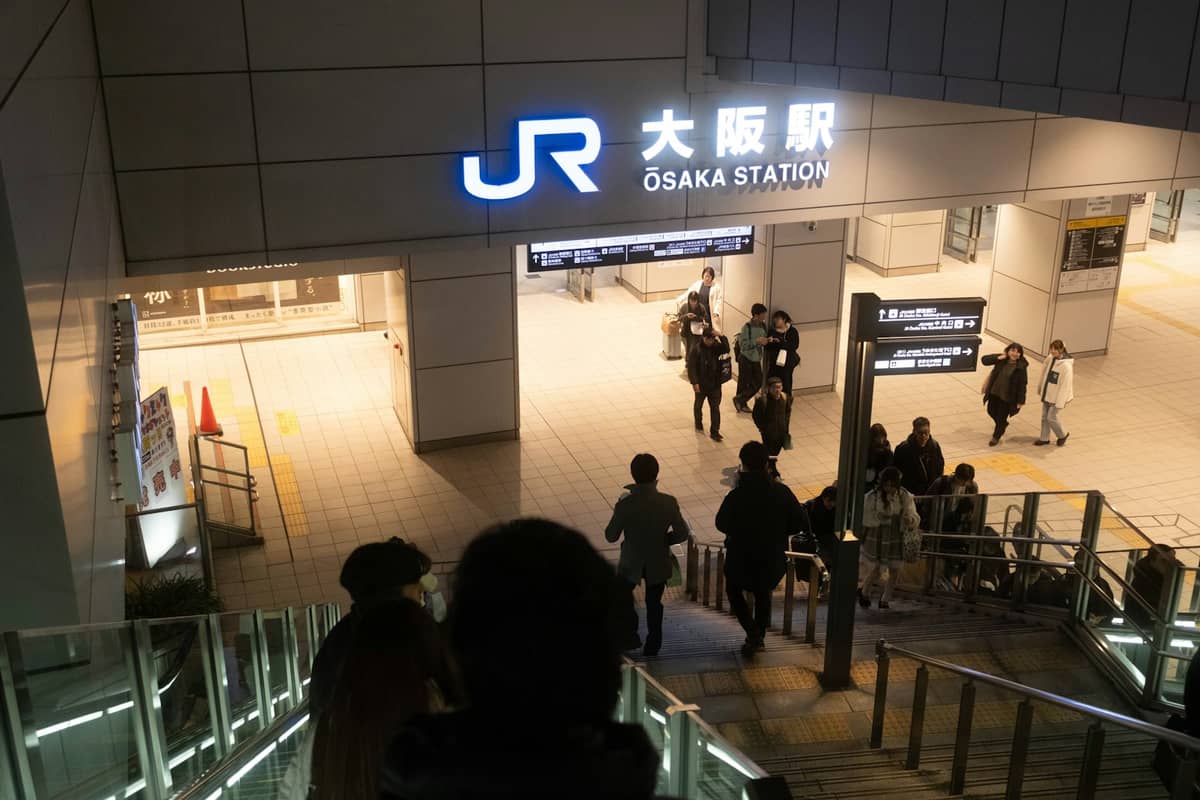
The Osaka Amazing Pass is the single most powerful budget tool in the city, but it only pays off if you use it strategically. The digital version costs 3,500 yen for one day and 5,000 yen for two days. The Itami Airport version runs slightly higher at 3,800 yen and 5,400 yen respectively. Always buy from the official Osaka Metro or Amazing Pass website rather than third-party resellers, and check the current price before purchasing — older posts frequently quote the outdated 2,800/3,600 yen pricing.
The pass covers unlimited rides on Osaka Metro lines and city buses, plus select segments of private rail within Osaka city. It does not cover JR trains, the Shinkansen, or long-distance routes to Kyoto or Nara. Many travelers assume it unlocks all of Kansai's rail network — it doesn't. If you're doing a day trip to Kyoto or Nara, a separate IC card or JR ticket is required.
To break even on the 1-day pass, you need to use the transport plus visit enough attractions. Individual prices give you a rough benchmark: Osaka Castle Museum costs around 1,200 yen, the Umeda Sky Building observation deck around 2,000 yen, and the Tombori River Cruise around 1,000 yen. Three of those in a single day already covers most of the pass cost, before accounting for subway fares. Each included attraction allows one-time free entry per valid day — you cannot revisit the same venue multiple times on the same pass.
⚠️ What to skip
The Amazing Pass does not include child-priced versions in the same way as venue-by-venue ticketing does. Child admissions and fares are discounted individually at most venues and stations, so families should calculate whether separate tickets work out cheaper than buying adult passes and paying child rates separately at each attraction.
If you plan to walk long distances, stay in one area, or only visit one or two paid attractions, the pass is not worth it. Instead, load an IC card (ICOCA, Suica, or PASMO all work on Kansai trains and subways) and pay as you go. A single Osaka Metro trip costs roughly 180–360 yen depending on distance, so the math becomes very different if you're not crossing the city repeatedly.
✨ Pro tip
The Osaka e-Pass is a cheaper digital-only alternative that focuses on attraction entry without transport, starting from around 2,400 yen for one day. Pair it with an Osaka Metro day pass (820 yen on weekdays, 620 yen on weekends and holidays) and you're covering both bases for roughly 3,300–4,320 yen — slightly less than the Amazing Pass, and useful if your accommodation is in a walkable central location like Namba or Shinsaibashi.
Getting to Osaka Without Overpaying
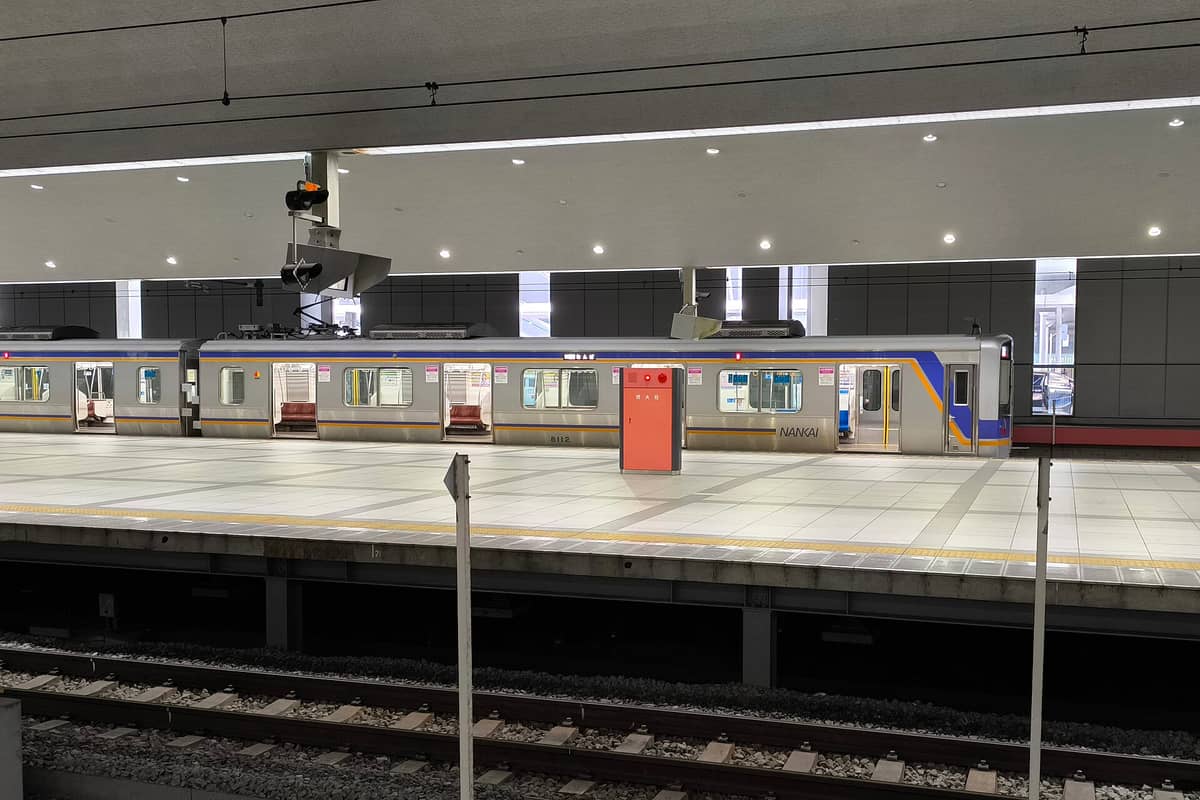
Most international travelers arrive at Kansai International Airport (KIX), located on an artificial island in Osaka Bay, about 35–50 km from the city center. The cheapest reliable option into the city is the Nankai Railway Airport Express to Namba, which takes around 44–50 minutes and costs approximately 930–980 yen. If you want a faster ride and don't mind paying slightly more, the Rapi:t limited express covers the same route in 35–40 minutes for about 1,130–1,520 yen depending on seat type.
Airport limousine buses serve Osaka Station, Namba, and other key areas for around 1,800 yen, but they take 50–70 minutes depending on traffic, which makes them slower and not obviously cheaper than the train. The JR Haruka Express connects KIX to Tennoji and Shin-Osaka for around 1,740–2,280 yen depending on seat type — useful if your hotel is near those stations, but otherwise not the budget pick. Taxis from the airport cost approximately 15,000–25,000 yen. At that price, splitting with three others approaches train cost — but solo, it's money left on the table.
💡 Local tip
All airport transport fares change periodically. Verify current prices directly with Nankai Railway, JR West, or the airport bus operators before you travel. The figures above are reference points, not guarantees.
Free and Cheap Attractions That Are Actually Worth Your Time
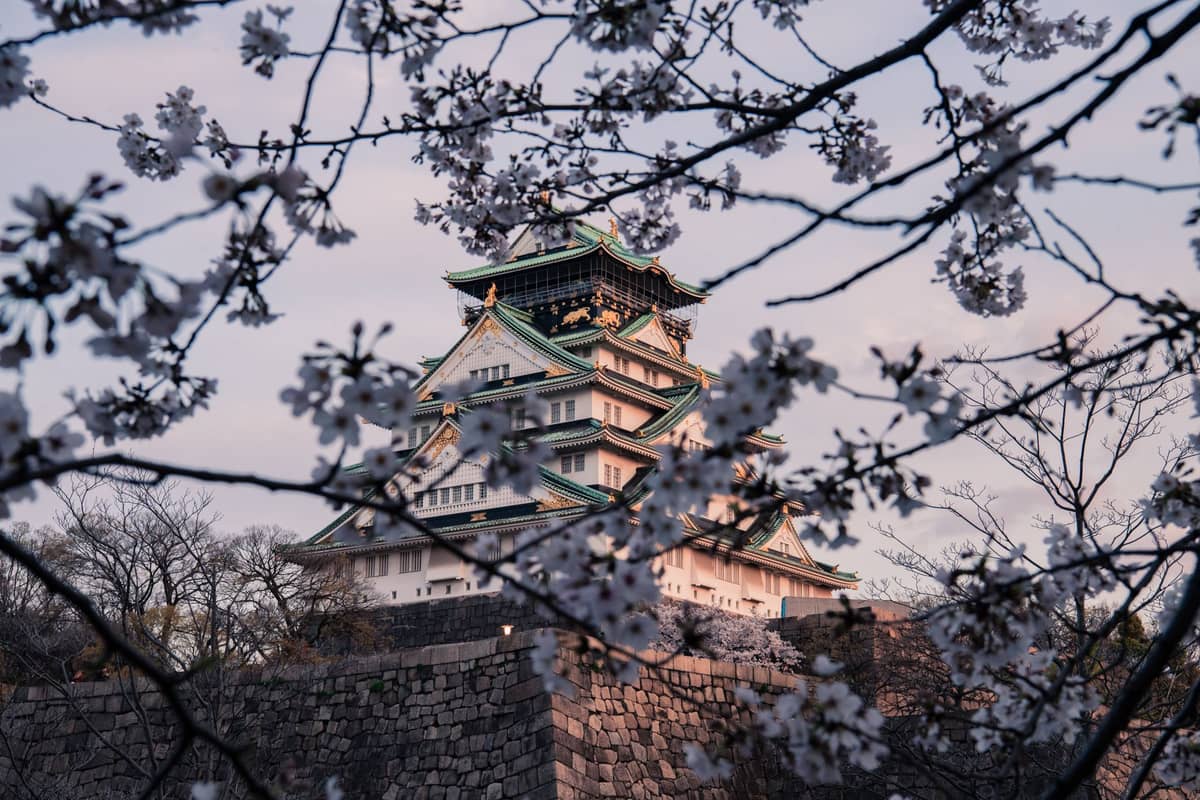
Osaka has more genuinely free sightseeing than its reputation suggests. Osaka Castle Park is free to wander and photograph — the crowds come for the outer grounds and the seasonal plum and cherry blossoms, not just the paid museum inside the main tower. Similarly, Nakanoshima Park sits between two rivers in the city center and costs nothing. The Osaka City Central Public Hall can be admired from the outside without spending anything.
- Sumiyoshi Taisha One of Japan's oldest Shinto shrines and free to visit. The arched Sori-bashi bridge and forested grounds make it worth the southern metro ride.
- Shitennoji Temple grounds Entry to the outer garden is free; inner precincts charge a small fee (around 300 yen). One of Japan's oldest Buddhist temples and rarely overcrowded.
- Hozenji Yokocho A moss-covered stone alley near Namba with the Hozenji Temple. No entry fee, atmospheric at any time of day, and surrounded by affordable street food options.
- Tennoji Park and surroundings The park itself is free. Tsutenkaku Tower charges admission but the surrounding Shinsekai neighborhood is a free spectacle of old-Osaka atmosphere and cheap kushikatsu restaurants.
- Tenjinbashisuji Shopping Street Japan's longest covered shopping arcade runs for about 2.6 km. No entry fee, plenty of budget shops, and a great slice of everyday Osaka life.
For those interested in history and culture, several museums offer low-cost or free entry on specific days. The free things to do in Osaka extend well beyond parks and shrines — check museum websites for discount days before you visit.
Eating Well Without Spending Much
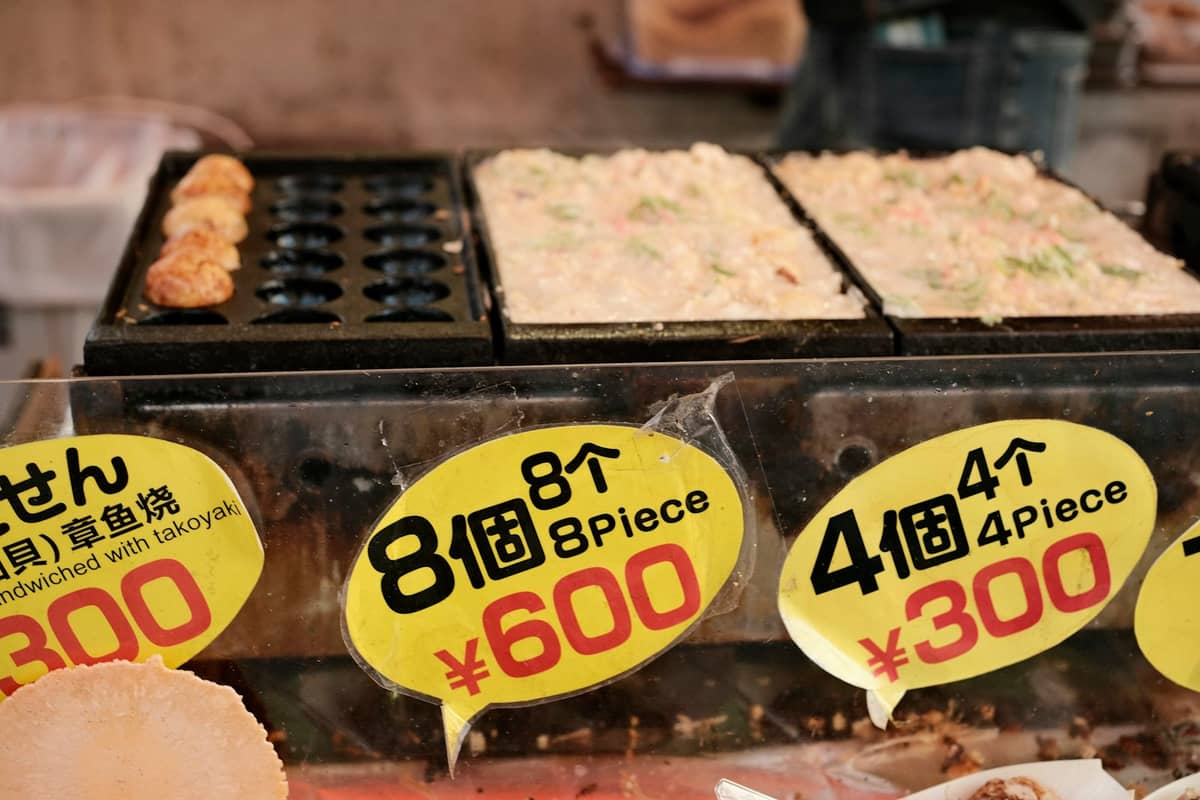
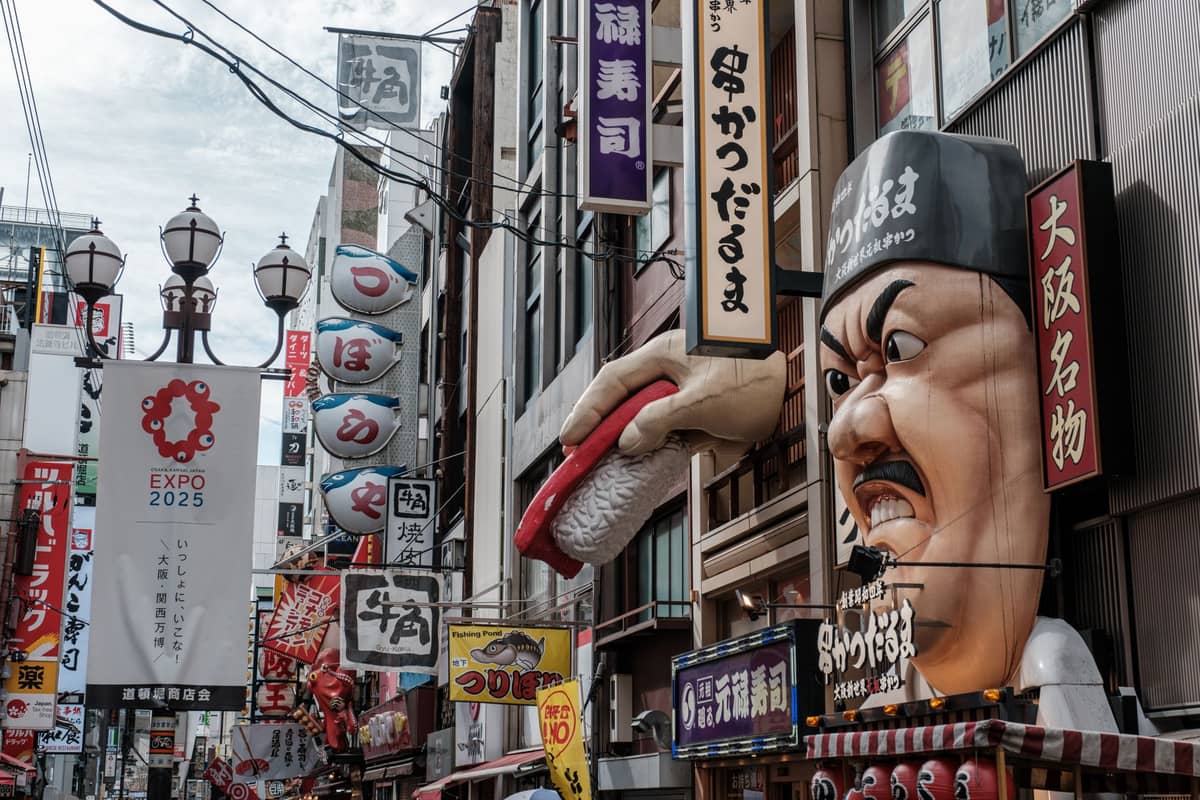
Osaka's identity as Japan's kitchen ("kuidaore" — eat until you drop) works in a budget traveler's favor. Osaka street foodOsaka's identity as Japan's kitchen ("kuidaore" — eat until you drop) works in a budget traveler's favor. Street food is genuinely cheap and genuinely good. Takoyaki (octopus balls) cost around 400–600 yen for a serving of six to eight. Okonomiyaki in a sit-down restaurant runs 800–1,200 yen. Neither requires a reservation or a dress code.
The Kuromon Ichiba Market near Namba sells fresh seafood, grilled skewers, and produce at market prices. It's busiest and most photogenic in the morning. Avoid the tourist-facing stalls pushing oversized king crab legs at inflated prices — the inner stalls serving locals are the better value.
- Convenience stores (7-Eleven, Lawson, FamilyMart) sell hot bento, onigiri, and fresh sandwiches for 300–700 yen — a practical and surprisingly good option for breakfast or a quick lunch.
- Ramen shops in the Shinsekai and Tennoji areas regularly serve bowls under 800 yen. Look for places with a ticket vending machine at the door — usually a sign of genuine local pricing.
- Supermarkets mark down prepared foods significantly after 7–8 PM, sometimes by 30–50%. This is common across Japan and Osaka is no exception.
- Don Quijote (Donki) is significantly cheaper for souvenirs, snacks, and small gifts than airport shops or Dotonbori tourist stalls. There are multiple Osaka locations, including one right in Dotonbori.
- Tap water in Osaka meets national drinking water standards and is safe to drink, eliminating the need to budget for bottled water throughout the day.
Timing Your Visit to Avoid Peak Prices
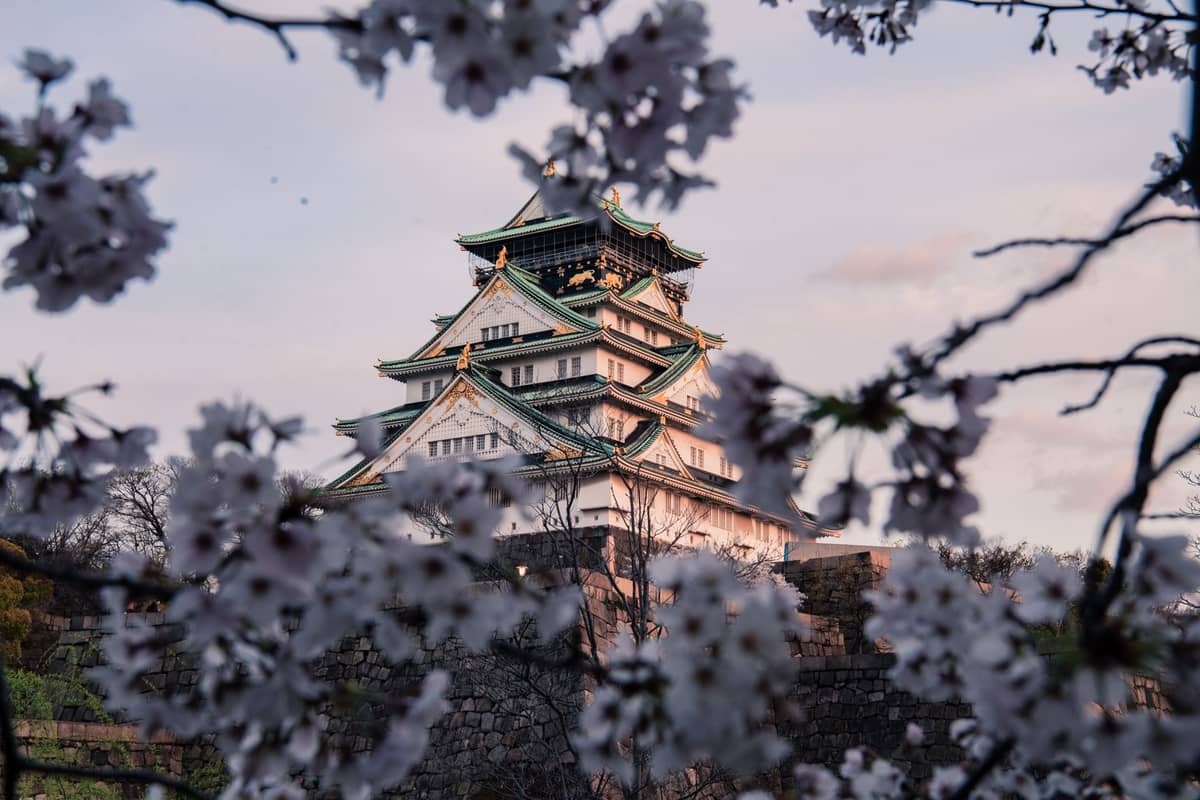
Timing is one of the most effective budget levers in Osaka. Flight and hotel prices during cherry blossom season (late March to early April) are at a seasonal peak, with accommodation costs often 30–50% higher than in the shoulder months. Golden Week (late April to early May), Obon (mid-August), and the New Year period push prices even further and fill popular spots like Dotonbori to capacity.
January and February offer the sharpest hotel and flight discounts, though temperatures drop to lows around 2–5°C and the city is quieter. Osaka in winterJune has a distinct appeal — fewer crowds at Osaka Castle, better restaurant availability without queuing, and lower prices across the board. June falls during Japan's rainy season (tsuyu), with roughly 185 mm of rain and frequent overcast days, but it also brings the second-cheapest accommodation window. If you're comfortable with occasional rain and can pack light rain gear, June offers real savings. June falls during Japan's rainy season (tsuyu), with roughly 185 mm of rain and frequent overcast days, but it also brings the second-cheapest accommodation window. If you're comfortable with occasional rain and can pack light rain gear, June offers real savings.
Autumn (October to November) sits between these extremes: prices are moderate, weather is comfortable (cooling from warm to mild), and the autumn foliageAutumn (October to November) sits between these extremes: prices are moderate, weather is comfortable (cooling from warm to mild), and the autumn foliage draws visitors but not at the same intensity as cherry blossom season. It's a reasonable compromise if you need reasonably good weather without peak-season pricing. It's a reasonable compromise if you need reasonably good weather without peak-season pricing.
Day Trips and Transport Beyond the City
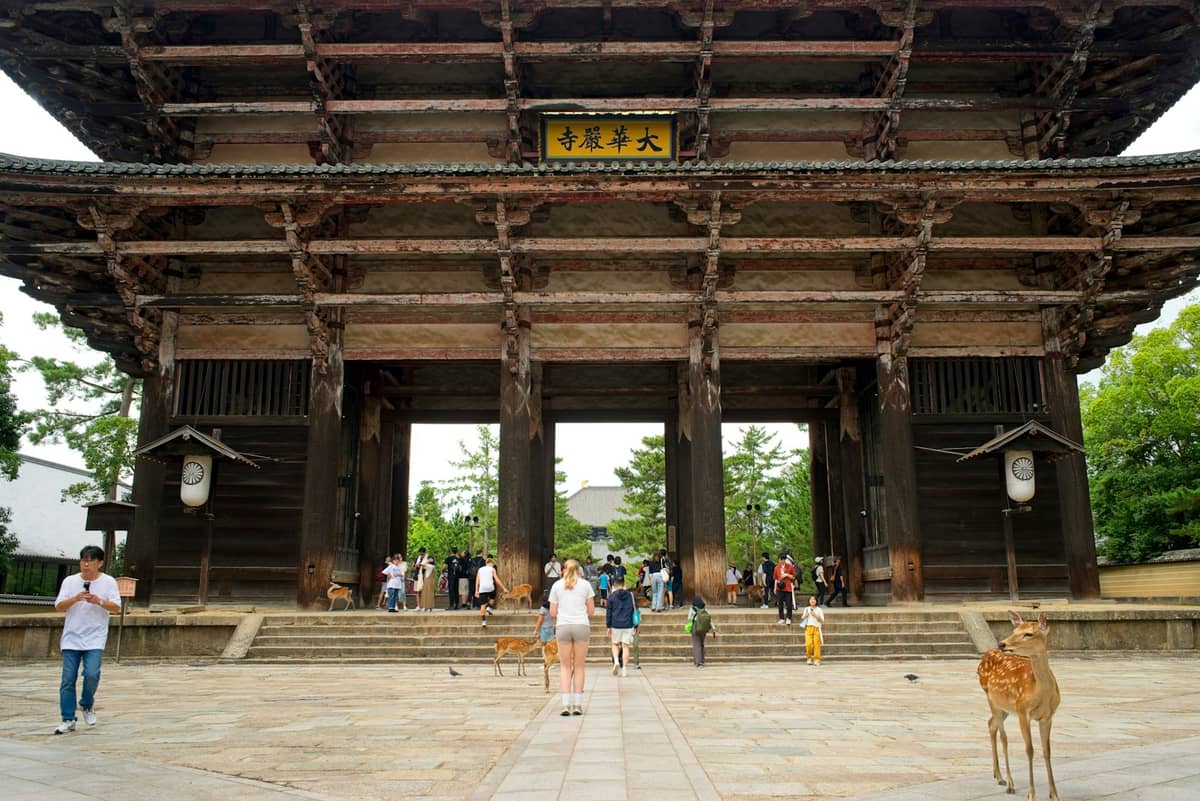
Day trips from Osaka can be done affordably if you plan the transport correctly. Nara is one of the cheapest destinations: the Kintetsu Nara Line from Namba to Kintetsu-Nara Station costs around 640 yen each way and takes about 35–40 minutes. See the Osaka to Nara guide for route comparisons. Nara Park and Todai-ji's outer grounds are free, and the deer are famously unconcerned with your budget.
Kyoto is more expensive to reach (around 560–1,420 yen depending on route and operator) and has heavier tourist traffic at main sites, but many temples and gardens charge only 500–600 yen entry. The Osaka to Kyoto route has multiple train options at different price points — the Hankyu or Keihan private railways are generally cheaper than the JR Shinkansen for this short distance.
ℹ️ Good to know
The Osaka Amazing Pass does not cover JR lines, Shinkansen, or inter-city routes to Kyoto, Nara, or Kobe. For day trips, use an IC card or buy point-to-point tickets at station machines. Do not assume any Osaka city pass extends to regional destinations.
Practical Budget Basics: Currency, Tipping, and Getting Around
Japan uses the Japanese yen (JPY), and Osaka is still a largely cash-oriented city despite growing card acceptance. Keep 2,000–5,000 yen in cash for smaller restaurants, street stalls, and traditional markets that don't accept cards. 7-Eleven ATMs reliably accept international cards and are found across the city. Tipping is not expected anywhere in Japan — at restaurants, hotels, or taxis. Leaving a tip can create confusion and is sometimes declined, so simply don't do it.
Japan's standard voltage is 100V at 60Hz in the Kansai region, with Type A plugs (two flat parallel pins). Travelers from North America can usually plug in directly; those from Europe, Australia, or the UK will need an adapter. Most modern electronics (phones, laptops) handle the voltage difference automatically, but check your device's power supply before plugging in without a converter.
For getting around the city, the Osaka Metro covers the main tourist areas efficiently. Getting around OsakaFor getting around the city, the Osaka Metro covers the main tourist areas efficiently. The Midosuji Line is straightforward once you understand the line system: the Midosuji Line (red) runs north-south between Umeda and Namba and is the backbone of most tourist itineraries. A loaded IC card is the most flexible option if you're not committing to a day pass. A loaded IC card is the most flexible option if you're not committing to a day pass.
FAQ
Is the Osaka Amazing Pass worth buying?
It depends on how many paid attractions you plan to visit in a single day. At 3,500 yen for a 1-day pass, you break even after combining subway fares plus 2–3 attraction entries (Osaka Castle Museum, Umeda Sky Building, and a river cruise, for example). If you're spending a slow day in one neighborhood or mostly visiting free sights, an IC card and individual tickets will likely cost less.
What is the cheapest way to get from Kansai Airport to central Osaka?
The Nankai Railway Airport Express to Namba is the best value, costing around 930–980 yen and taking 44–50 minutes. The faster Rapi:t limited express costs 1,130–1,520 yen for around 35–40 minutes. Taxis cost 15,000–25,000 yen and are not a budget option for solo travelers. Verify current fares with Nankai Railway before travel.
When is the cheapest time to visit Osaka?
January and February typically see the lowest hotel and flight prices — often 30–50% cheaper than cherry blossom season in late March and early April. June is also affordable due to the rainy season, but expect frequent rain. Avoid Golden Week (late April to early May), Obon (mid-August), and New Year if cost is a priority.
Can you visit Osaka cheaply without a tourist pass?
Yes. Load an IC card (ICOCA, Suica, or PASMO) for pay-as-you-go transit, focus on free attractions like Osaka Castle Park, Nakanoshima Park, and the major shrines, and eat from convenience stores and street food stalls around Dotonbori and Kuromon Market. A day of genuine Osaka sightseeing is possible for well under 3,000 yen if you avoid paid admission sites.
Does the Osaka Amazing Pass cover trains to Kyoto or Nara?
No. The pass covers Osaka Metro lines, city buses, and specific private rail segments within Osaka city. It does not include JR trains, the Shinkansen, or inter-city routes. For day trips to Kyoto or Nara, purchase separate tickets at the station or use an IC card.