Osaka Street Food Guide: What to Eat and Where to Find It
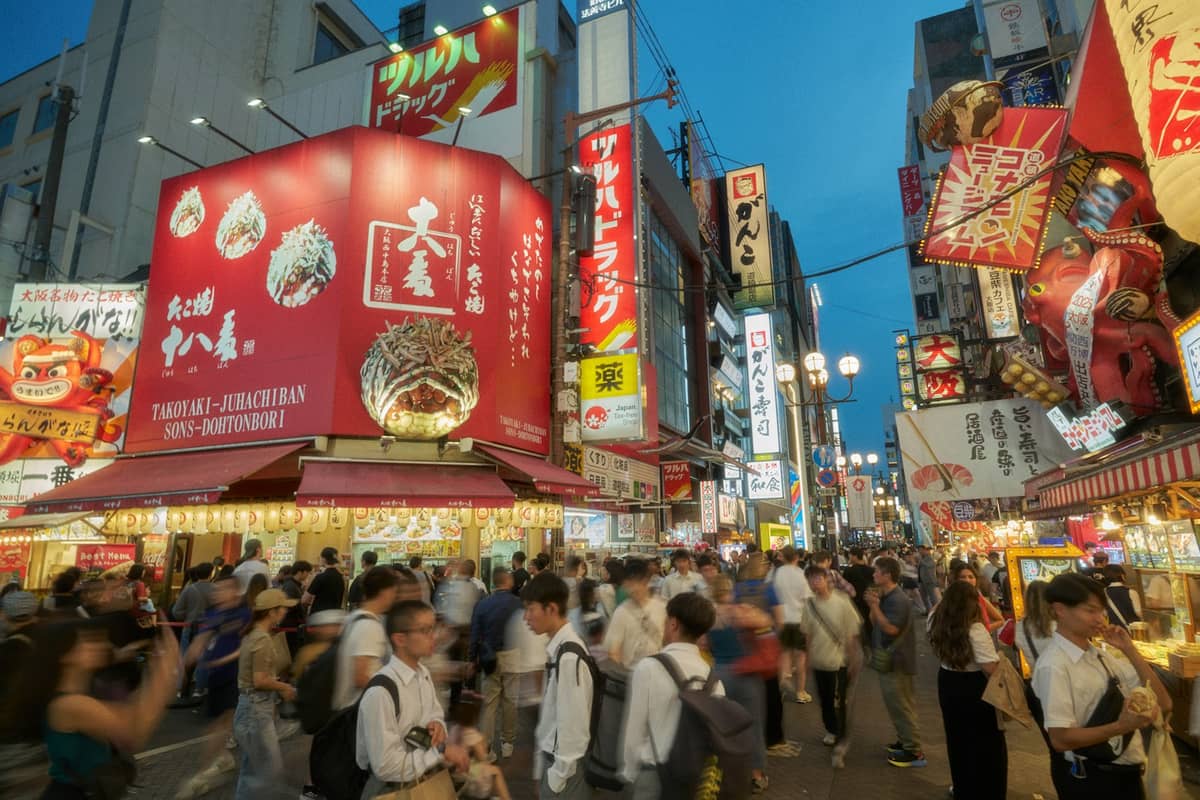
Osaka has one of the most serious street food cultures in Japan, built around the local philosophy of kuidaore: eat until you drop. This guide covers the essential dishes, the best areas to find them, practical logistics, and a clear take on what lives up to the hype.
Plan and book this trip
Tools from our partner Travelpayouts help you compare flights and hotels. If you book through them, we may earn a commission at no extra cost to you.
Flights
Hotels map
TL;DR
- Dotonbori and Kuromon Ichiba Market are the two best street food areas; both are walkable from Namba Station.
- Budget around ¥2,000–¥4,000 per person for a proper multi-stall crawl through Dotonbori.
- Kuromon Market is best on weekdays (many stalls close Sundays); hours are roughly 9:00–18:00, with some fish vendors from 5:00 and food stalls until 21:00. See our full guide to Kuromon Ichiba Market for details.
- Dotonbori is a district, not a single market — individual stalls and restaurants set their own hours, and some run late or around the clock.
- Summer evenings are the best time to eat your way through Dotonbori; midday heat in July and August makes long outdoor walks uncomfortable.
Why Osaka Food Culture Is Different
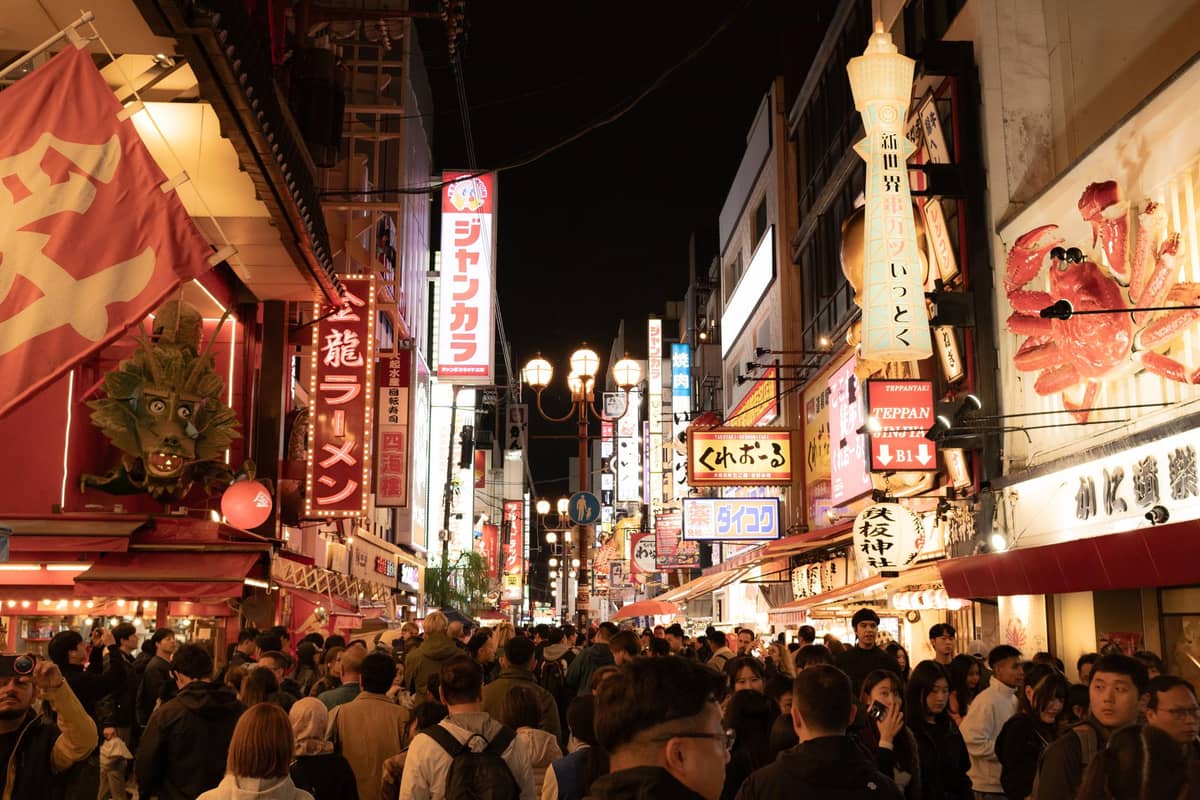
Osaka has a phrase for its relationship with food: kuidaore, which loosely translates to 'eat yourself bankrupt.' It is not just a tourist slogan. The city has functioned as Japan's primary commercial and merchant hub for centuries, and that history produced a culture where quality food at reasonable prices was a point of civic pride, not luxury. The result is a city where street-level eating is genuinely excellent, not a compromise.
The food in Osaka is heavier and bolder than what you find in Kyoto or Tokyo: richer dashi broths, more wheat-based dishes, stronger umami. Osaka also speaks its own dialect (Kansai-ben), and locals are notoriously opinionated about where to eat. That combination of specificity and pride means standards stay high. For a full picture of what to order beyond street food, see our guide to what to eat in Osaka.
The Essential Osaka Street Foods
Before covering where to eat, it helps to know what you are looking for. Osaka's street food canon is short and specific. These are the dishes that define the experience.
- Takoyaki Octopus balls made in a molded iron pan, served with Worcestershire-style sauce, mayo, bonito flakes, and aonori (dried seaweed). A serving of 6–8 pieces typically costs ¥500–¥800. Osaka is the origin city and the standard is highest here.
- Okonomiyaki A savory pancake made with flour, egg, cabbage, and a variety of proteins, grilled on a teppan and topped with sauce, mayo, and bonito. Osaka-style (Kansai-style) differs from Hiroshima-style in that the ingredients are mixed together rather than layered. Expect to pay ¥700–¥1,500.
- Kushikatsu Skewered and deep-fried meat, seafood, and vegetables served with a communal dipping sauce. The cardinal rule in Osaka: no double-dipping. Originated in Shinsekai and still best eaten there. Individual skewers from ¥100–¥300.
- Ikayaki Grilled whole squid on a stick, seasoned simply with soy sauce. Fast, cheap (around ¥400–¥600), and commonly found at Kuromon Market and festival stalls.
- Karaage and crab claws At Kuromon Market specifically, look for vendors selling fresh seafood to eat immediately: marinated crab claws, sea urchin on rice, and fried chicken (karaage) from stalls that let you eat standing on the street.
💡 Local tip
Takoyaki should be eaten carefully: the inside stays molten for several minutes after purchase. Blowing on them and waiting 60–90 seconds before eating is standard. Burning your mouth at a takoyaki stall is a very common tourist mistake.
Dotonbori: The Neon-Lit Street Food District
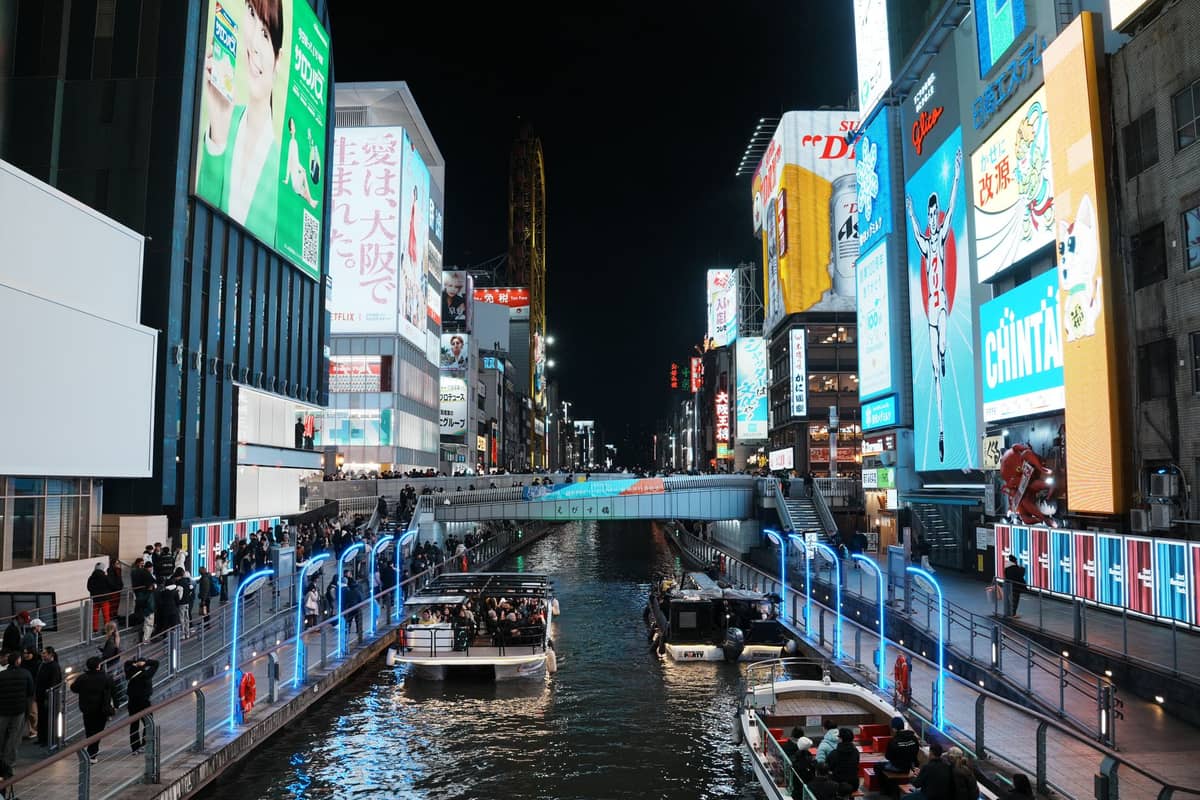
Dotonbori is the most photographed street food area in Osaka, and for good reason: the canal-side stretch between Namba and Shinsaibashi packs an enormous density of food stalls, izakayas, and quick-service restaurants into a compact area. The easiest access is via Osaka Metro Midosuji Line to Namba Station, from which Dotonbori is a short walk. See the full page for orientation. See the full Dotonbori Canal page for orientation.
A critical clarification: Dotonbori is a district, not a single market with unified opening hours. The individual stalls and restaurants each set their own times. Some famous spots, including certain ramen shops and takoyaki stands, operate late into the night or around the clock. Others close by early evening. Going in with a plan, rather than assuming everything is open, saves frustration.
The evening hours are objectively the best time to visit. The illuminated signage, the Glico Running Man billboard reflected in the canal, and the cooler temperatures make it far more enjoyable than a midday visit, especially in summer when humidity and heat are significant. Osaka Tourism suggests budgeting around ¥2,000–¥4,000 per person for a multi-stall crawl; that is realistic if you sample four to six items across different vendors.
⚠️ What to skip
Dotonbori's main strip on weekends is extremely congested, particularly between 18:00 and 22:00. If you have mobility concerns or dislike crowds, consider visiting on a weekday evening or arriving before 17:00. The side streets running parallel to the main canal strip often have shorter queues and equally good food.
For a longer eating loop, Dotonbori connects naturally with Namba to the south and Shinsaibashi to the north. The covered arcade at Shinsaibashi-suji has additional food vendors and is a good route when it rains.
Kuromon Ichiba Market: Osaka's Kitchen
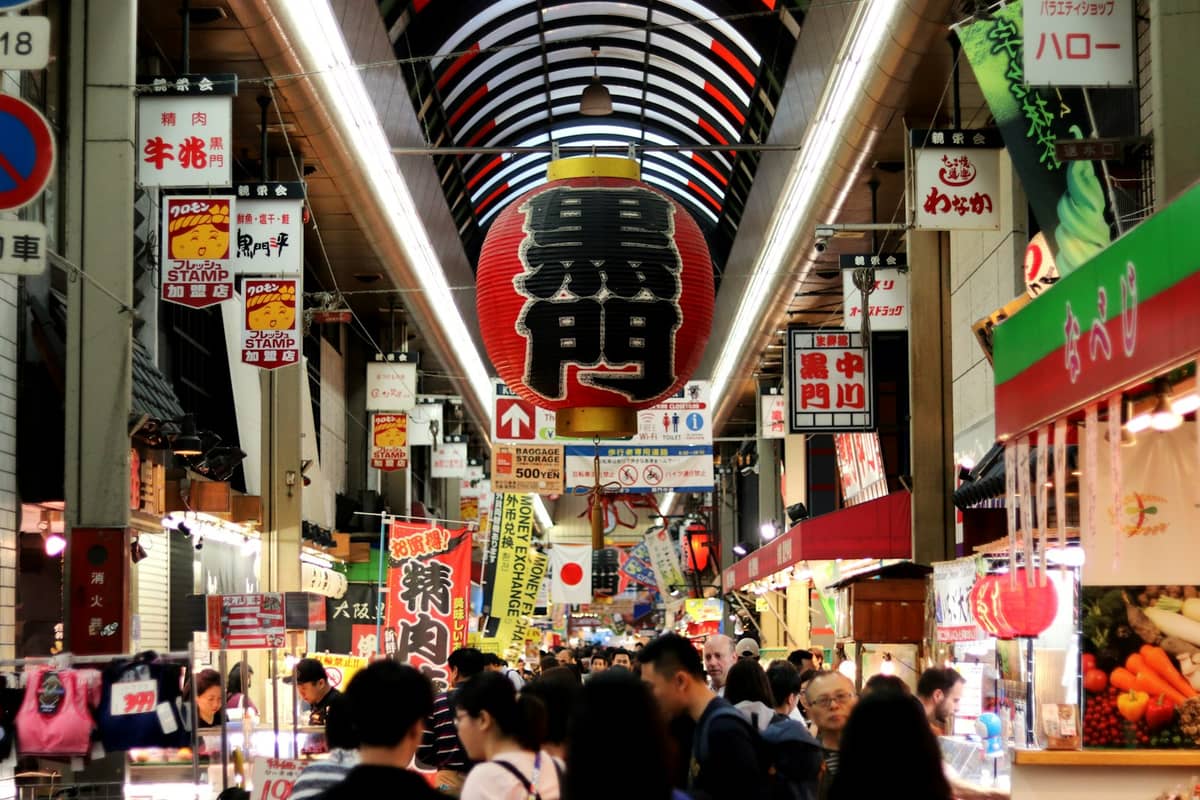
Kuromon Ichiba Market is a 580-meter covered arcade in Nipponbashi containing around 170 stalls selling fresh fish, meat, produce, pickles, and prepared food. For decades it operated primarily as a wholesale market for restaurant chefs, which is why the quality remains high. It sits about 10 minutes on foot from Dotonbori, and 3–5 minutes walk from Nippombashi Station. See the full Kuromon Ichiba Market listing for precise directions.
Most stalls operate 9:00–18:00, though some fish dealers open as early as 5:00 for professional buyers, and selected food stalls stay open until around 21:00. In practical terms, mid-morning on a weekday is the best window: the market is active, stalls are fully stocked, and crowds are manageable. Avoid Sundays if you want a representative experience, as many stalls close and the atmosphere is noticeably quieter.
What makes Kuromon different from Dotonbori is the eat-it-now culture at individual vendor stalls rather than the sit-down or walk-and-eat model of the canal district. You pick up fresh sea urchin over a small bowl of rice from one vendor, a marinated crab claw from the next, grilled scallops from another. There is no formal food court: you eat where you buy. Bring small bills and a bag for any packaged goods you want to take back.
✨ Pro tip
The vendors near the Nippombashi Station end of Kuromon tend to be more oriented toward tourists and may carry a small price premium. Walking deeper into the market toward the far end often leads to stalls with better prices and more locals buying for home cooking.
Other Areas Worth Knowing
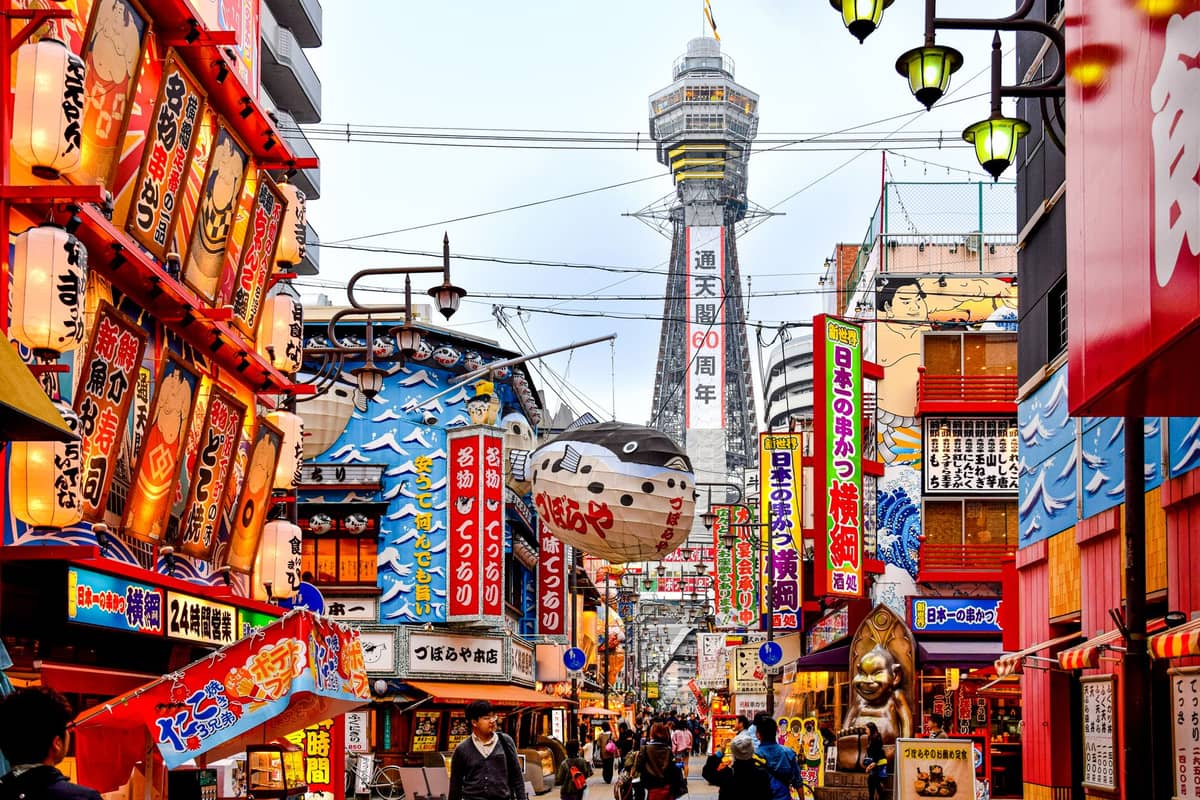
Dotonbori and Kuromon get the most attention, but Osaka's street food culture extends further. Shinsekai is the original home of kushikatsu: the retro district south of Tsutenkaku Tower is packed with kushikatsu restaurants where the format is eat-as-you-go, ordering individual skewers by pointing or from simple picture menus. It is less polished than Dotonbori, which is part of the appeal.
Tenjinbashisuji Shopping Street, the longest covered shopping arcade in Japan at roughly 2.6 kilometers, runs through northern Osaka and has a strong local-eating character: smaller lunch spots, street-food carts, and traditional confectionery shops interspersed with everyday retail. It is far less crowded than Dotonbori and operates closer to a neighborhood rhythm. The nearby Osaka Tenmangu Shrine and the market stalls during the Tenjin Matsuri festival period (late July) add a seasonal layer to the area. See our guide to the Tenjin Matsuri for context on festival food.
- Dotonbori: best for density, atmosphere, and evening energy; budget ¥2,000–¥4,000
- Kuromon Ichiba: best for fresh seafood, market immersion, and weekday mornings; avoid Sundays
- Shinsekai: best for kushikatsu in its original context; very affordable, very local in character
- Tenjinbashisuji: best for a low-pressure, neighborhood-feel food stroll away from tourist concentration
Practical Logistics: Timing, Budget, and Getting Around
The street food areas in Osaka are best reached by subway. The Osaka Metro Midosuji Line is the backbone: it runs directly to Namba Station, the natural starting point for both Dotonbori and Kuromon Market. For Shinsekai, use Dobutsuen-mae Station on the same line. Nippombashi Station (Sakaisuji Line or Sennichimae Line) is the closest stop for Kuromon if you are coming from a different direction.
If you are spending a full day eating across multiple neighborhoods, consider the Osaka Metro day pass. It allows unlimited rides on the subway network for a fixed price, which quickly pays off with four or more journeys. For full transit planning, see the guide to getting around Osaka.
On budget: individual street food items in Osaka are genuinely affordable. A takoyaki serving is ¥500–¥800, a kushikatsu skewer is ¥100–¥300, and seafood items at Kuromon range from ¥400 to ¥1,500 depending on what you choose. A tourist spending ¥3,000–¥5,000 across a full afternoon and evening of eating across Dotonbori and Kuromon will eat extremely well. The risk is not spending too much but eating too much, too quickly.
On weather: Osaka's summer (July–August) sees average highs well above 30°C with high humidity. For long walking food crawls, early morning visits to Kuromon and evening visits to Dotonbori are the practical solution. Spring (March–May) and autumn (October–November) offer much more comfortable conditions for outdoor eating. For a full breakdown of when to visit, see our guide on the best time to visit Osaka.
ℹ️ Good to know
Tipping is not customary in Japan, including at street food stalls and restaurants in Osaka. Attempting to tip can sometimes cause confusion or be politely declined. The price you see is the price you pay; no service charge is expected on top.
For travelers who want structured guidance rather than independent exploration, dedicated Osaka food tours are available through various operators, typically running 3–4 hours and covering 6–10 tastings across Dotonbori and surrounding areas. These are useful for first-time visitors who want context and curation. For self-guided structure, the Osaka walking tours guide covers route options that include food stops.
FAQ
What is the best street food to try in Osaka?
Takoyaki (octopus balls) is the signature Osaka street food and should be your first stop. Okonomiyaki (savory pancake), kushikatsu (fried skewers), and fresh seafood at Kuromon Market round out the essential list. All are available for under ¥1,000 per serving at most stalls.
When is Kuromon Market open?
Most stalls at Kuromon Ichiba Market operate from 9:00 to 18:00. Some fish vendors open as early as 5:00, and selected food stalls stay open until around 21:00. Many stalls close on Sundays, so weekday mornings are the best time to visit for a full experience.
Is Dotonbori worth visiting for food?
Yes, with realistic expectations. Dotonbori is a dense, high-energy district with genuinely good street food, but it is also extremely crowded on weekend evenings. The food is real and the atmosphere is unique; just understand that it is a mixed tourist-and-local environment, not a hidden local secret. Evening visits are better than midday for atmosphere and temperature.
How much does a street food crawl in Osaka cost?
Budget around ¥2,000–¥4,000 per person for a relaxed multi-stall crawl through Dotonbori. At Kuromon Market, individual items range from ¥400 to ¥1,500. A full afternoon and evening across both areas, sampling six to eight different foods, typically costs ¥3,000–¥5,000 per person.
How do I get to Dotonbori and Kuromon Market?
Take the Osaka Metro Midosuji Line to Namba Station for Dotonbori; the canal is a short walk from the station exits. Kuromon Market is about 10 minutes on foot from Dotonbori, or 3–5 minutes from Nippombashi Station (Sakaisuji or Sennichimae Line). Both areas are easily combined into a single outing.