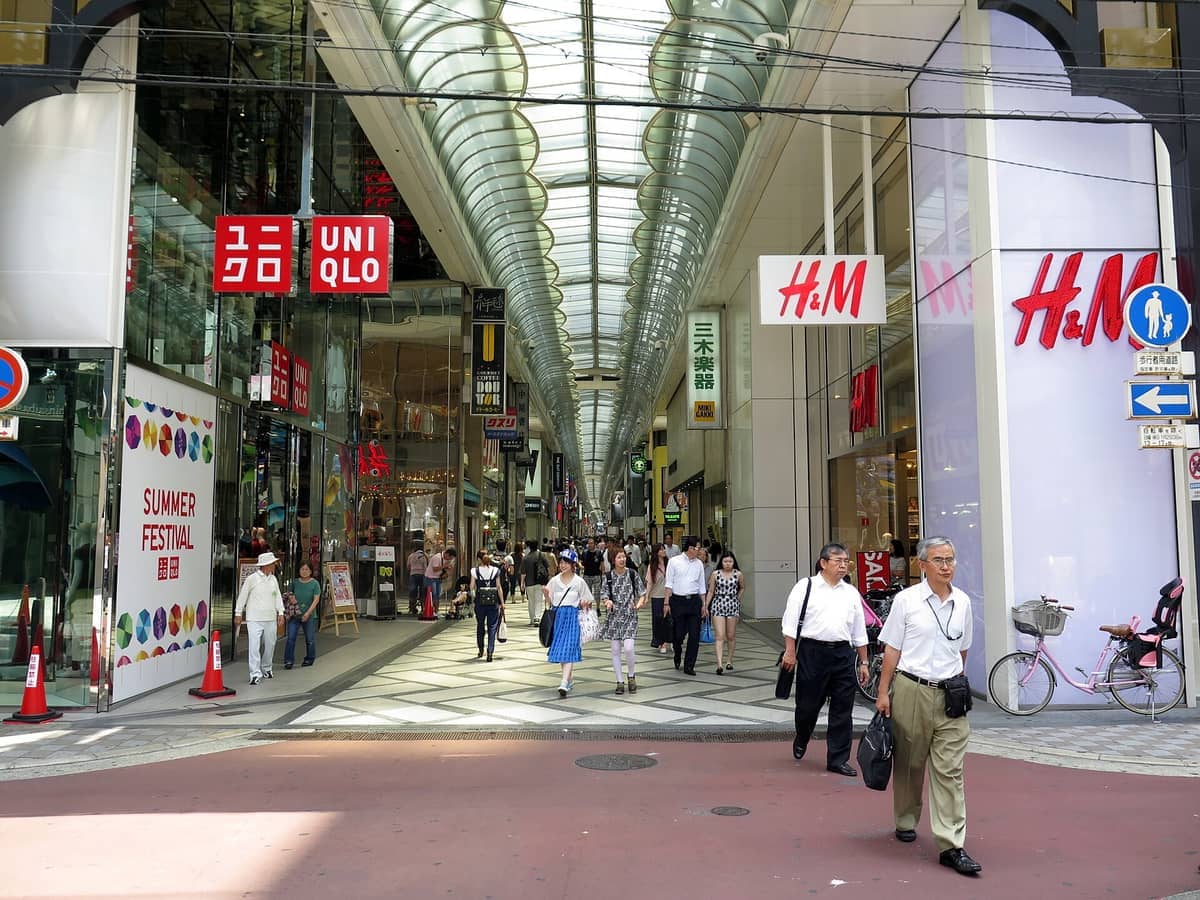
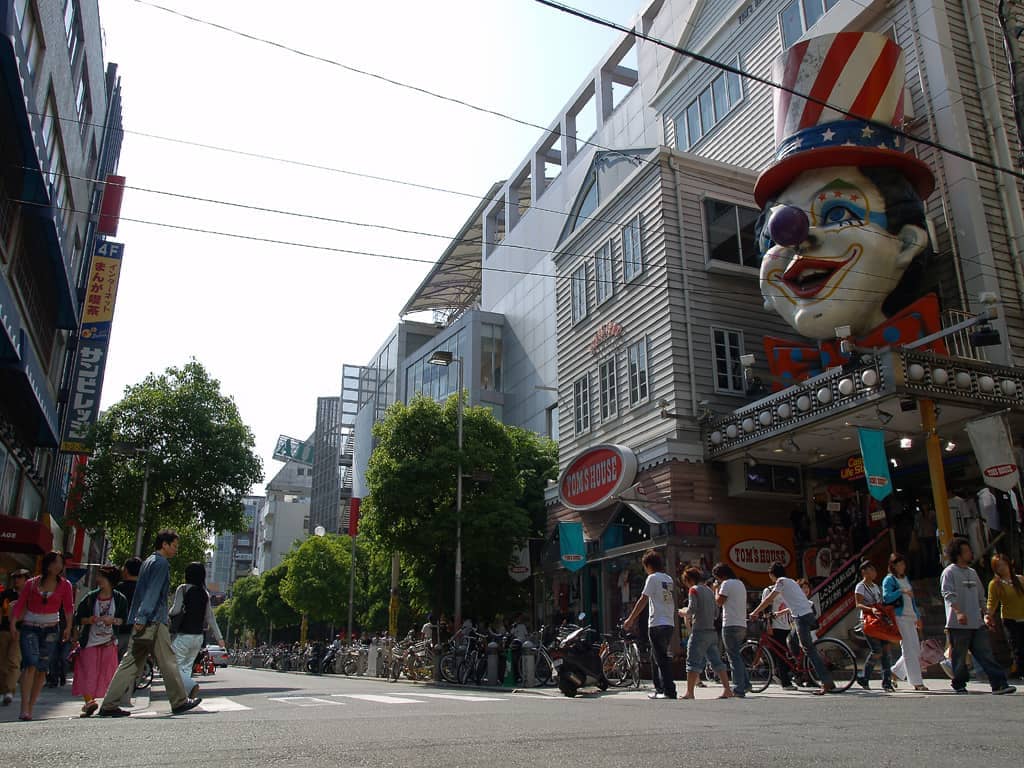
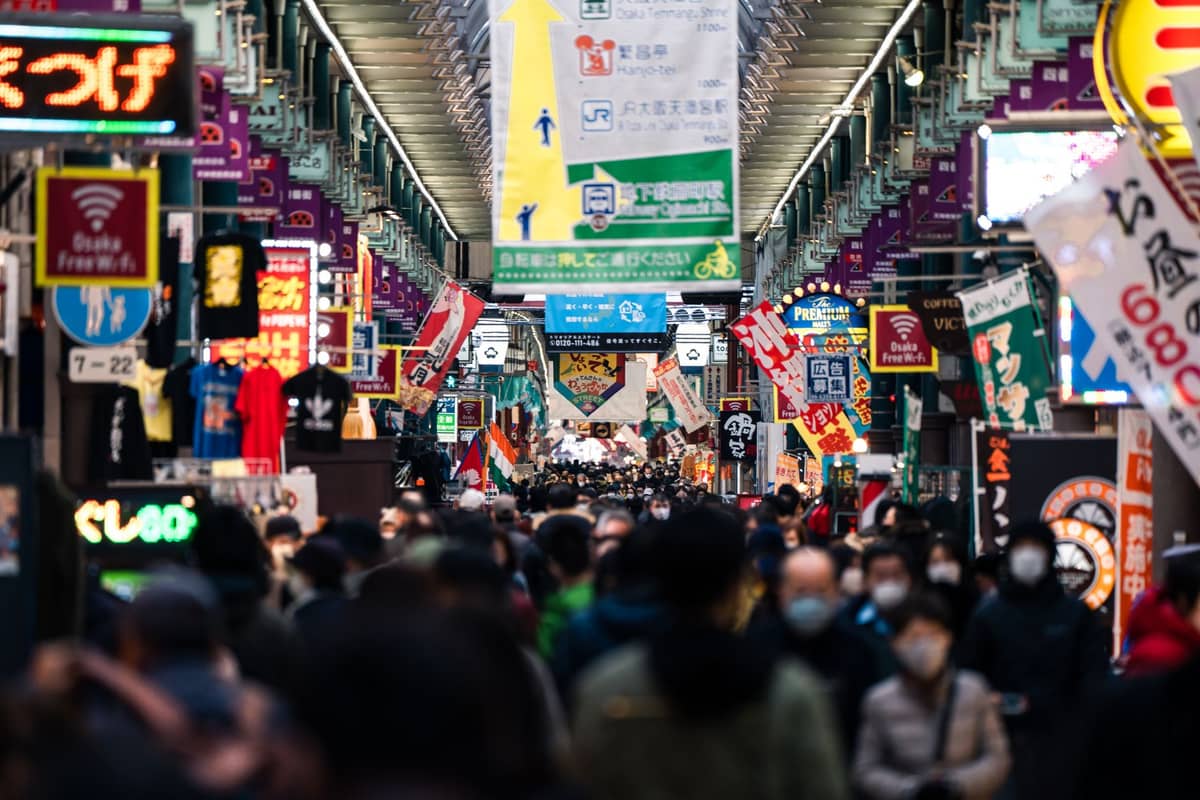
Shinsaibashi sits at the commercial heart of Osaka, built around a 600-metre covered shopping arcade that has been drawing shoppers for centuries. The district spans everything from high-street chains and department stores along Shinsaibashi-suji to flagship luxury brands on Midosuji Avenue and the streetwear scene of Amerikamura, making it one of the most diverse retail and entertainment corridors in western Japan.
Shinsaibashi is where Osaka shops, eats, and goes out. Anchored by one of Japan's most famous covered arcades and bordered by the canal energy of Dotonbori to the south and the luxury boulevard of Midosuji to the west, this central district operates at full intensity from mid-morning until well past midnight, drawing locals and visitors in roughly equal measure.
Orientation
Shinsaibashi occupies the southern half of Chuo-ku, Osaka's central ward, positioned between two of the city's great north-south arteries. To the west runs Midosuji Avenue, the grand six-lane boulevard lined with ginkgo trees and flagship stores. To the east, the streets tighten into the older residential and entertainment fabric that connects toward Hozenji Yokocho and the Dotonbori canal district.
The district's spine is Shinsaibashi-suji Shopping Street, a covered arcade roughly 580 metres long running north from Soemoncho-dori to Nagahori-dori. Directly south, the arcade connects seamlessly with Dotonbori, creating what feels like an almost unbroken corridor of commerce stretching for about two kilometres if you walk the full length. To the north, Nagahori-dori acts as a clear boundary, beyond which the character shifts toward the quieter streets around Shinsaibashi's office and residential fringe.
West of Shinsaibashi-suji, just a few blocks toward the Yotsubashi area, lies Amerikamura, the youth fashion and subculture district centred on Triangle Park. Namba, with its own dense tangle of entertainment and transit connections, sits about a ten-minute walk to the south. Together these three areas, Shinsaibashi, Amerikamura, and Namba, form the core of what Osakans call Minami, the southern city centre, as distinct from Kita (the north) around Umeda and Osaka Station.
Character and Atmosphere
The covered arcade keeps Shinsaibashi functional in all weather, which partly explains why it never really empties. By 10am on a weekday, the shutters are rolling up on chain stores and the first shoppers are moving through, unhurried in the filtered morning light that filters through the arcade's arched glass and steel roof. The atmosphere at this hour is almost domestic: shop staff are sweeping entrances, a few older residents cut through on their way somewhere else, and the day has not yet committed to being loud.
By early afternoon, the arcade reaches full pace. Foot traffic thickens, music spills from clothing stores, and the smell of takoyaki and crepes from the kiosks near the southern end mixes with the air conditioning escaping from department store doors. This is when you feel the true scale of the place. Dai-Maru department store anchors the northern stretch, its ground floor cosmetics hall drawing a constant stream of shoppers. Further south, the brands get younger and the street art references accumulate as you approach the Amerikamura boundary.
After dark, Shinsaibashi shifts register. The shops close between 8pm and 9pm, but the street does not quieten. The crowd thins briefly and then refills with a different population: couples heading toward the bars and restaurants along Soemoncho-dori, groups moving between Dotonbori and Namba, and the nightlife circuit that connects back through Amerikamura. The neon contribution from surrounding streets means the arcade never goes dark in any meaningful sense.
ℹ️ Good to know
Shinsaibashi-suji is at its most comfortable on weekday mornings. Weekend afternoons, particularly on Saturdays between noon and 5pm, bring dense crowds that make browsing difficult and walking slow. If you want to actually look at the shops rather than navigate the flow of people, an early weekday visit is worth planning for.
One thing that distinguishes Shinsaibashi from a purely tourist corridor is that locals genuinely use it. The Daimaru store draws Osaka shoppers doing serious purchasing. The pharmacy chains are stocked for local customers, not just inbound tourists loading up on cosmetics. The coffee shops inside the arcade fill with people working on laptops between appointments. Tourist activity is real and visible, particularly toward the Dotonbori end, but it does not define the texture of the whole district.
What to See and Do
The arcade itself is the primary draw. Shinsaibashi-suji Shopping Street has been operating in some form since the Edo period, when it served the merchant class trading along the canal routes of pre-modern Osaka. The current covered structure dates to the postwar reconstruction era, but the street's commercial identity is centuries older. Walking its full length end to end, without stopping, takes about ten minutes. With stops, it can absorb an entire afternoon.
Midosuji Avenue, running parallel to the arcade on the west side, represents a completely different retail register. The boulevard hosts the flagship stores of international luxury brands alongside Japanese fashion houses. The ginkgo trees lining the avenue turn spectacular gold in November, making it one of the city's best autumn colour spots without requiring any particular detour.
Immediately to the west, Amerikamura rewards anyone willing to leave the main arcade and explore the side streets. The area around Triangle Park has concentrated Osaka's youth culture since the 1970s, when second-hand American clothing shops gave it its name. Today it mixes vintage stores, independent streetwear labels, record shops, tattoo studios, and small live music venues. It connects culturally to Osaka's broader subculture scene and rewards slow, spontaneous walking rather than a checklist approach.
Shinsaibashi-suji Shopping Street: the full length of the covered arcade from Nagahori-dori to Soemoncho-dori
Midosuji Avenue: luxury flagships and ginkgo trees, especially striking in autumn
Amerikamura (America Village): vintage fashion, independent labels, Triangle Park, and the city's youth subculture
Soemoncho-dori: the street connecting Shinsaibashi to Dotonbori, lined with restaurants and small bars
The Daimaru Shinsaibashi department store, particularly the food basement (depachika) for Osaka-made sweets and prepared foods
If your interests extend beyond shopping, the Hozenji Yokocho alley is a ten-minute walk south through Dotonbori: a narrow stone-paved lane with lantern-lit restaurants and the moss-covered Fudo Myo-o statue at Hozenji Temple, one of the few places in the Minami area that genuinely reads as old Osaka.
Eating and Drinking
Shinsaibashi's food scene is broader than the tourist-facing takoyaki and crepe stands in the arcade suggest. The streets immediately east of the main arcade, particularly the lanes running between Shinsaibashi and Dotonbori, are lined with restaurants covering most of Osaka's food identity. For a practical overview of what the city eats and why, the Osaka food guide provides useful context before you arrive.
The depachika food floors inside the Daimaru store are worth time even if you are not buying. The basement levels concentrate Osaka-produced sweets, pickles, prepared foods, and bento boxes at department store quality. This is a good place to understand the range and seriousness of Osaka food culture in a single hour. Prices are higher than street level but the quality is consistent.
Soemoncho-dori, running east-west along the southern edge of the district, functions as the transition zone between Shinsaibashi's shopping identity and Dotonbori's entertainment identity. The street packs in izakaya, ramen counters, yakiniku grills, craft beer bars, and a rotating roster of newer openings aimed at both visitors and Osaka's own night-out crowd. Prices across the street range from around 800 yen for a bowl of ramen to 5,000 yen and up for a full izakaya meal with drinks.
Amerikamura has its own food micro-scene: smaller cafes, burger joints, Korean-influenced fast food, and a handful of coffee shops that lean into the subculture aesthetics of the area. The pace here is slower than the main arcade, and the clientele is younger and more local. Coffee quality in the independent Amerikamura cafes tends to be high, reflecting the specialty coffee culture that has taken hold across Osaka's younger neighbourhoods.
💡 Local tip
The food basement (depachika) at Daimaru Shinsaibashi closes around 8:30pm and is worth visiting in the late afternoon when the prepared food counters discount their stock. You can pick up high-quality bento, sushi, and pastries at significantly reduced prices in the last hour before close.
Depachika at Daimaru Shinsaibashi: premium prepared foods, sweets, and local specialties across multiple basement floors
Soemoncho-dori: izakaya, ramen, yakiniku, and bars roughly in the 800–5,000 yen range per person
Amerikamura side streets: independent cafes, specialty coffee, and casual international food
Street kiosks in the arcade: takoyaki, crepes, taiyaki, and other Osaka fast food under 600 yen
Kuromon Ichiba Market: a 15–20-minute walk east for fresh seafood and produce, best visited in the morning
Getting There and Around
Shinsaibashi Station sits directly below the arcade and is one of the most accessible points in central Osaka. The Midosuji Line (red line) stops here, connecting directly north to Umeda and Shin-Osaka, and south to Namba in a single stop. The Nagahori Tsurumi-ryokuchi Line (green line) crosses perpendicular, giving east-west connections without requiring a transfer at Namba.
For Amerikamura specifically, Yotsubashi Station on the Yotsubashi Line is about a three-minute walk and avoids the extra distance from Shinsaibashi Station. Namba Station, served by Osaka Metro, Nankai Railway, and the Kintetsu and Hanshin lines in various capacities, is about a seven-to-ten minute walk south and opens up connections across the wider Kansai region, including direct trains to Kansai International Airport via the Nankai line.
Walking is the most practical way to cover the Shinsaibashi-Dotonbori-Namba triangle. The full north-south distance from Nagahori-dori to the Dotonbori canal is about 600–700 metres on foot. From there to Namba Station adds another 500–700 metres. None of these connections require anything other than flat pavement. For broader Osaka transit strategy, the Osaka transit guide covers the Osaka Metro network, IC card options, and the various tourist passes in detail.
ℹ️ Good to know
The Osaka Amazing Pass covers unlimited Osaka Metro rides and free entry to many city attractions. If your itinerary is centred on central Osaka and includes several paid attractions in a single day, it is worth checking whether the pass saves money against paying individually. Verify current pricing and coverage before purchasing as inclusions change.
From Kansai International Airport, the most direct route to Shinsaibashi is the Nankai Airport line to Namba Station (approximately 40–50 minutes depending on service type), followed by a short walk north or a single metro stop. Full airport-to-city transfer details are covered in the Osaka airports guide.
Where to Stay
Shinsaibashi is one of the most central places to stay in Osaka and suits travellers who want walkable access to both the Minami entertainment district and the wider metro network. The area between the arcade and Midosuji Avenue has the densest concentration of hotels, ranging from business hotel chains to boutique properties. For a full comparison of Osaka's accommodation options by neighbourhood, the Osaka accommodation guide covers all the main areas.
The trade-off for staying in Shinsaibashi is noise. The streets around the arcade and particularly along Soemoncho-dori stay active until after midnight on weekends. Rooms on lower floors facing the main streets will be loud. If you are a light sleeper, look for hotels set back from the arcade itself, or on upper floors with double-glazed windows, and verify room orientation when booking.
Budget travellers will find capsule hotels and guesthouses concentrated slightly further south toward Namba, where price points drop. The Shinsaibashi hotel stock skews toward mid-range and above, reflecting the premium on its central location. Business hotels in the roughly 9,000–18,000 yen per night range are available and represent reasonable value for the location, though weekend rates during cherry blossom season and autumn will push higher.
⚠️ What to skip
Shinsaibashi is not a quiet neighbourhood at any point during the day or early evening. If rest and a slow pace are priorities, consider staying in Nakanoshima or the northern part of the Osaka Castle area, both of which offer easy metro access to Shinsaibashi without the noise of the Minami entertainment district on your doorstep.
Practical Notes
Shinsaibashi is one of the most tourist-navigable neighbourhoods in Osaka. Signage throughout the arcade and the main streets is bilingual in Japanese and English. The shops within the arcade and on Midosuji accept IC cards and many accept international credit cards, though smaller restaurants and kiosks in the side streets may be cash-only. Keeping some yen available is advisable.
Police boxes (koban) operate around the clock in the Shinsaibashi and Namba district, and the area is consistently well-monitored given its commercial importance. As in any crowded shopping area, keeping an eye on bags and pockets in the densest parts of the arcade during peak hours is sensible. No specific elevated risk applies to Shinsaibashi beyond standard urban awareness.
Tipping is not customary in Japan, including in Shinsaibashi's restaurants and shops. Service charges are occasionally included in the bill at higher-end establishments. For broader practical travel planning, the Osaka budget travel guide covers daily cost expectations and free or low-cost options across the city.
TL;DR
Shinsaibashi is Osaka's most complete central shopping district: a 600-metre covered arcade, luxury flagships on Midosuji, and the youth subculture of Amerikamura within ten minutes of each other.
Best for: shoppers of any budget, first-time Osaka visitors who want a central base, travellers who want walkable access to Dotonbori, Namba, and the wider Minami district.
Not ideal for: travellers prioritising quiet or a local, non-touristic atmosphere. The arcade is genuinely busy most of the day and the surrounding streets are noisy at night.
Transit is excellent: direct Midosuji Line access to Umeda in the north and one stop to Namba in the south, plus Nankai connections to Kansai Airport.
Allow at least a half-day to cover the arcade and Amerikamura properly. A full day works if you extend south into Dotonbori and Namba.
Three days is enough time to cover Osaka's essential neighbourhoods, eat your way through its famous food scene, and still avoid the rookie mistakes that waste half a day. This itinerary is built around the city's subway network, logical geographic clusters, and the real trade-offs between tourist staples and worthwhile alternatives.
Osaka is a dense urban city, but it hides some genuinely excellent green spaces. From the riverside sakura corridors of Kema Sakuranomiya to the sweeping grounds of Expo '70 Commemorative Park, here are the best gardens and parks the city has to offer, organized by type and neighborhood.
Osaka holds its own against much larger museum cities as a museum city. Whether you're drawn to ancient Japanese history, world-class contemporary art, or interactive science, these are the museums worth building your itinerary around.
Osaka is better known for neon signs and street food than spiritual sites, but its temples and shrines are among the most rewarding in western Japan. This guide covers the best sacred places to visit, from ancient foundations to architecturally daring modern complexes, with practical tips on when to go and what to expect.
Osaka rewards visitors year-round, but the experience changes dramatically depending on when you go. This guide breaks down each season's weather, crowd levels, price patterns, and standout events so you can choose the timing that suits your priorities.
Osaka rewards those who look up, look out, and look down from its rooftops, towers, and waterways. This guide covers the best viewpoints in Osaka, from 300-meter observatories to lantern-lit alleys that frame the city in a completely different way.
Osaka sits at the heart of the Kansai rail network, putting some of Japan's greatest destinations within an hour's reach. This guide covers the best day trips from Osaka with precise travel times, fare comparisons, rail pass breakdowns, and a clear take on what each destination is actually worth.
Osaka rewards travelers who explore on foot. From the neon-lit canal at Dotonbori to ancient shrines, riverside parks, and covered shopping streets that double as social spaces, the city is packed with free experiences. This guide covers the best of them, organized by type.
Osaka has one of the most efficient urban transport networks in Japan, with nine color-coded metro lines, overlapping JR and private railways, and a tap-and-go IC card system that connects virtually every corner of the city. This guide covers everything from airport transfers to day passes, so you spend less time figuring out tickets and more time exploring.
Osaka is Japan's third-largest city and one of Asia's most compelling urban destinations. But is it worth your limited travel time? This guide cuts through the noise with a clear look at what Osaka delivers — and where it falls short.
Osaka is served by two airports with very different purposes. Kansai International (KIX) handles almost all international flights, while Itami (ITM) is a domestic-only hub. This guide breaks down every transport option, current fare ranges, journey times, and which airport actually makes sense for your trip.
The Osaka Amazing Pass bundles unlimited transit with free attraction entry across the city. This guide breaks down current prices, what the pass actually covers, how to buy the new e-ticket version, and whether the math works out for your itinerary.
Osaka's anime scene is anchored by Den Den Town in Nipponbashi, a compact district packed with over 150 specialist shops covering manga, figures, retro games, doujinshi, and cosplay. This guide covers every key spot, the best stores, practical logistics, and where to find anime culture outside the main district.
Osaka's cherry blossom season typically peaks in early April, but the full picture is more nuanced than most guides admit. From riverside parks with 5,000 trees to a rare late-blooming tunnel at the Mint Bureau, this guide covers exactly when to go, where to stand, and how to avoid the most crowded mistakes.
Osaka rewards couples who look beyond the neon and crowds. This guide covers the most romantic experiences in the city, from panoramic observatory dates and evening bay cruises to quiet temple lanes and seasonal illumination events, with a clear take on what's worth it and what to skip.
Osaka rewards those who look beyond Dotonbori and Osaka Castle. This guide uncovers the city's overlooked shrines, nostalgic neighborhoods, market streets, and natural escapes that locals actually love.
Autumn is one of Osaka's strongest seasons, with koyo (fall foliage) peaking from mid-November into early December across parks, castle grounds, and riverside paths. This guide covers the best viewing spots, seasonal weather, crowd patterns, and practical logistics so you can plan with confidence.
Thinking about visiting Osaka between December and February? This guide covers the real winter weather, what's open, the best seasonal events, crowd patterns, and a clear take on whether a winter trip makes sense for you.
Osaka after dark is a different city entirely. From the neon-lit canal banks of Dotonbori to the whisky bars of Kitashinchi and the club floors of Shinsaibashi, this guide covers every tier of Osaka nightlife with practical logistics, practical recommendations, and the local knowledge to do it right.
Osaka rewards budget travelers more than almost any other major Japanese city. Between free parks, cheap street food, and the right transit pass, you can cover the highlights without spending a fortune. This guide breaks down exactly where to spend, where to save, and what the tourist traps actually cost.
Osaka has a surprisingly strong onsen scene for a major urban center, ranging from the enormous themed Spa World to sleek modern complexes and neighborhood sento. This guide covers the top facilities, realistic pricing, tattoo policies, seasonal timing, and everything else you need before you strip down and soak.
Osaka and Kyoto sit just 30 minutes apart by train, but they offer very different experiences as a home base. This guide breaks down transport links, accommodation costs, crowd dynamics, and the kind of traveler each city suits best, so you can make the right call before you book.
Osaka is one of Japan's great shopping cities, with distinct districts for every budget and interest. This guide breaks down the best areas, what to buy in each, how tax-free shopping works, and the traps to avoid — so you spend time buying, not wandering.
Osaka has one of the most serious street food cultures in Japan, built around the local philosophy of kuidaore: eat until you drop. This guide covers the essential dishes, the best areas to find them, practical logistics, and a clear take on what lives up to the hype.
The Sanyo Shinkansen makes Osaka to Hiroshima one of Japan's most rewarding day trips, covering roughly 342 km in around 80 minutes. This guide breaks down every transport option, real fare ranges, booking strategy, and what to prioritize once you arrive in Hiroshima.
Kyoto is just 24 minutes from central Osaka by train, but choosing the wrong route can cost you time and money. This guide covers every transport option, from the cheapest private railways to the shinkansen, plus practical advice on where to go in Kyoto once you arrive.
Nara is one of the most rewarding day trips from Osaka, with ancient temples, free-roaming deer, and journey times under an hour. This guide breaks down every transport option, compares costs, and gives you the practical detail to make the day run smoothly.
Osaka rewards walkers more than almost any city in Japan. This guide breaks down the best self-guided walking routes by neighborhood, covers the transit passes that make hopping between areas affordable, and gives you the practical detail you need to plan a full day on foot without second-guessing yourself.
From the whale sharks of Kaiyukan to the Mushroom Kingdom at Universal Studios Japan, Osaka delivers serious family fun across every age group. This guide covers the best kid-friendly attractions, current admission prices, crowd patterns, and practical logistics to make your family trip run smoothly.
Tenjin Matsuri is one of Japan's three great festivals, held every July at Osaka Tenmangu Shrine. This guide covers the 2026 dates, the land and boat processions, fireworks timings, viewing options, and everything you need to plan your visit without the usual tourist pitfalls.
Osaka rewards visitors with a rare combination of serious history, world-class food, and nightlife that runs until dawn. This guide covers the top things to do in Osaka Japan, from feudal castles and temple districts to canal-side street food and sweeping city views, with up-to-date prices, the best times to visit each attraction, and a clear take on what is worth your time.
Universal Studios Japan is one of the most-visited theme parks in Asia, and also one of the most misunderstood. This guide covers everything first-timers get wrong: dynamic ticket pricing, Super Nintendo World timed entry, Express Pass strategy, and the fastest routes from central Osaka.
Osaka has earned its reputation as Japan's kitchen over centuries, and the city's food culture runs far deeper than the few dishes that dominate travel blogs. This guide covers the essential Osaka foods every visitor should try, with real prices, the best areas to eat them, and practical advice on what to skip.
Choosing where to stay in Osaka shapes your entire trip. This guide breaks down every major neighborhood by vibe, price, and practicality — so you can book the right area, not just the cheapest room.