Osaka or Kyoto: Which Should You Base Yourself In?
Osaka and Kyoto sit just 30 minutes apart by train, but they offer very different experiences as a home base. This guide breaks down transport links, accommodation costs, crowd dynamics, and the kind of traveler each city suits best, so you can make the right call before you book.
Plan and book this trip
Tools from our partner Travelpayouts help you compare flights and hotels. If you book through them, we may earn a commission at no extra cost to you.
Flights
Hotels map
TL;DR
- Osaka and Kyoto are connected by frequent trains costing as little as ¥410, making day-trips from either city completely practical.
- Osaka wins on accommodation value, nightlife, food culture, and transport access, including its own impressive range of attractions.
- Kyoto suits travelers whose entire focus is temples, imperial history, and traditional culture, and who don't mind paying a premium for proximity.
- During peak season (cherry blossom and autumn foliage), Kyoto accommodation prices spike sharply. Basing in Osaka and day-tripping is often the smarter and cheaper move.
- If you're planning a broader Kansai trip, check our guide to getting around Osaka for full transport context.
How Close Are Osaka and Kyoto, Really?
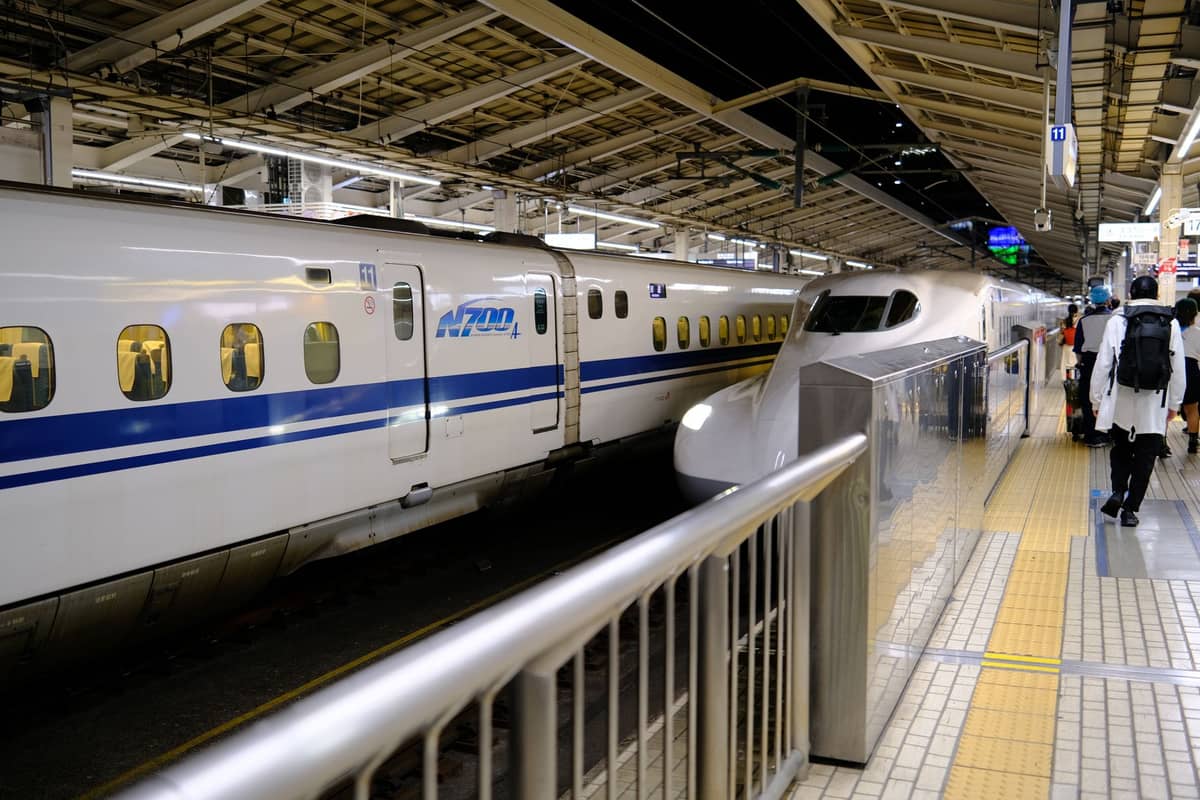
The Osaka-Kyoto corridor is one of the most well-served rail routes in Japan. Multiple train lines run between the two cities throughout the day, with departures typically every 10 to 20 minutes during daytime hours. The fastest option is the Shinkansen (Tokaido line) from Shin-Osaka to Kyoto Station, which covers the distance in around 13 to 15 minutes for an unreserved fare of roughly ¥1,450. But that speed comes at a cost, and for most visitors, the Shinkansen is overkill for this particular hop.
The most practical everyday option is the JR Kyoto Line Special Rapid between Osaka Station and Kyoto Station, which takes about 29 to 30 minutes and costs around ¥560–¥580. For budget travelers, the Hankyu Railway between Osaka-Umeda and Kyoto-Kawaramachi runs a limited express in roughly 45 to 50 minutes for about ¥410 one way. The Keihan Railway offers another alternative at around ¥490 for a 45- to 50-minute ride. All fares should be verified against current operator information before travel, as prices are subject to change.
ℹ️ Good to know
JR West services in the Kyoto-Osaka-Kobe area operate from approximately 04:00 to 02:00, giving you long hours to work with. You won't get stranded in Kyoto after an evening visit to Fushimi Inari or a kaiseki dinner.
The practical upshot: the two cities are close enough that choosing a base is not about access. It's about what kind of trip you want to have when you're not sightseeing.
The Case for Basing in Osaka
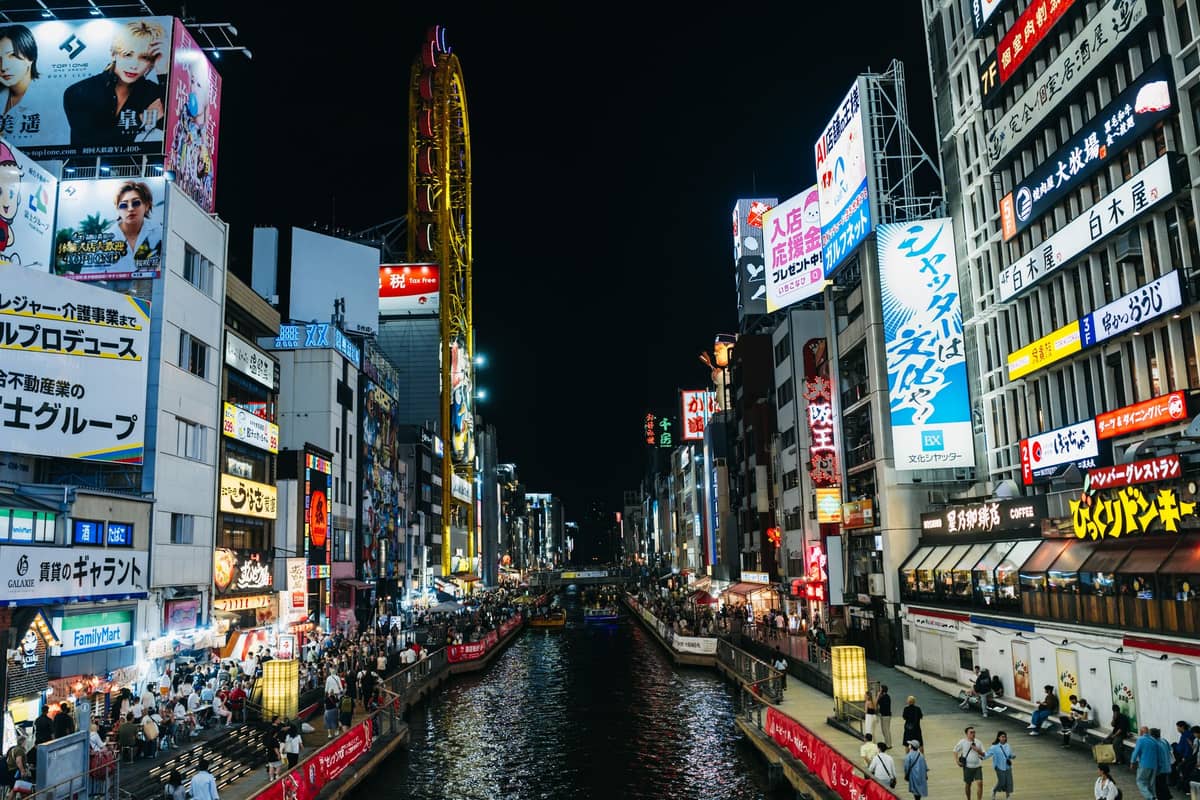
Osaka is the stronger base for most travelers, full stop. The city has a wider range of accommodation at every price point, a more active food and nightlife scene, better transport connectivity for wider Kansai day-trips, and its own substantial list of things worth your time. Areas like Namba and Umeda are packed with hotels ranging from budget capsule options to mid-range business hotels at prices that often undercut equivalent Kyoto properties, particularly during peak seasons.
Osaka is also the better base if Kyoto is just one stop on a broader itinerary. From Osaka, you can reach Nara in around 35 to 45 minutes, Kobe in about 20 minutes, and Hiroshima by Shinkansen in under 90 minutes. Our guide to day trips from Osaka covers the full range of options.
- Accommodation value Osaka generally offers more hotel options at competitive prices, especially in Namba, Shinsaibashi, and Umeda.
- Food and nightlife Osaka's reputation as Japan's kitchen city is well-earned. Dotonbori, Shinsekai, and Namba Yasaka are active late into the night.
- Transport hub Kansai International Airport (KIX) connects to central Osaka by rail in 35 to 50 minutes. Shin-Osaka is a Shinkansen hub with national reach.
- Day-trip range Kyoto, Nara, Kobe, and Hiroshima are all accessible as comfortable day trips, without changing your base.
- Crowds Osaka attracts fewer temple-pilgrim crowds than Kyoto, making popular spots more manageable outside major holidays.
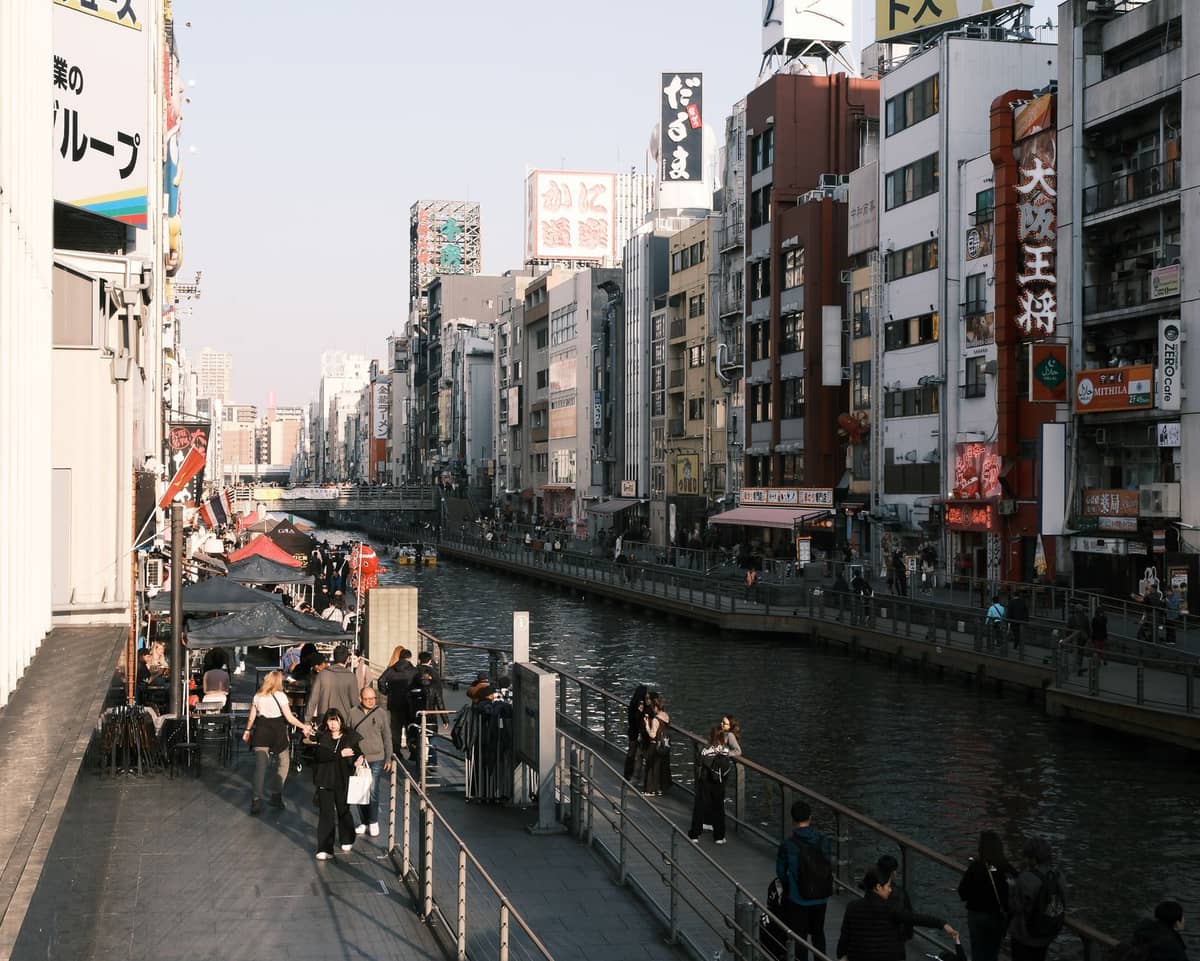
Osaka's own attractions are often underestimated by first-time visitors who treat it purely as a logistical hub. Osaka Castle and its surrounding park, the Dotonbori Canal, and neighborhoods like Shinsekai are genuinely worthwhile, not just consolation prizes for travelers who couldn't afford Kyoto rates.
The Case for Basing in Kyoto
Kyoto makes sense as a base if your trip is specifically about temples, imperial history, traditional arts, and Zen gardens, and you want to be able to visit these places early in the morning before the day-tripper crowds arrive from Osaka. Many of Kyoto's most famous sites, like Fushimi Inari Taisha or the bamboo groves near Arashiyama, are dramatically better at 6am or 7am. If you're staying in Osaka, those hours require an early train.
Kyoto also has a genuine stay-after-dark appeal that guidebooks sometimes overlook. Evening illuminations at temples during autumn and spring, Gion district lantern walks, and Pontocho alley restaurant crawls are all experiences that benefit from being a short taxi ride away rather than a 30-minute train journey. If traditional Japanese atmosphere is the core goal of your trip, not just a scheduled day out, Kyoto earns its premium.
⚠️ What to skip
During cherry blossom season (late March to early April) and autumn foliage peak (mid to late November), Kyoto accommodation prices can increase significantly and sell out months in advance. If you're visiting during these windows and haven't booked Kyoto accommodation early, Osaka becomes the practical default, not just a budget alternative.
Seasonal Factors That Should Influence Your Decision
Timing matters enormously in this decision. During cherry blossom season and autumn foliage peak, Kyoto's historic districts are genuinely overwhelming. The narrow lanes around Kiyomizudera, Philosopher's Path, and Arashiyama can feel more like a crowded shopping mall than a contemplative cultural experience when thousands of day-trippers and tour groups arrive simultaneously from mid-morning onward.
In contrast, Osaka in autumn offers excellent foliage at spots like Osaka Castle Park and Expo Commemorative Park with far less congestion. Spring in Osaka brings cherry blossoms along the Okawa River at Kema Sakuranomiya Park, a beautiful and less hectic alternative to Kyoto's most-photographed spots. In summer, both cities are hot and humid (Osaka typically sees temperatures above 30°C in July and August), but Osaka's street food scene and air-conditioned shopping arcades make the heat more tolerable as a base.
Winter is arguably the best time to base in Kyoto if you want atmosphere without the crowds. Temples dusted with snow, quiet early mornings in Gion, and off-peak accommodation prices make it a different city entirely. For Osaka in winter, the same logic applies to its own charms. See our Osaka in winter guide for what to expect.
Osaka vs Kyoto: Budget and Accommodation
Accommodation in Osaka tends to offer better value across most categories. Budget travelers will find more capsule hotels, guesthouses, and entry-level business hotels in central Osaka than in central Kyoto. At the mid-range level (roughly ¥10,000 to ¥20,000 per night), Osaka regularly beats Kyoto on price for similar quality, particularly outside peak seasons. This gap widens sharply during Kyoto's high-demand periods.
Kyoto does have excellent accommodation options, including traditional machiya townhouse rentals and ryokan with kaiseki dinners, that have no real Osaka equivalent. If this kind of experience is central to your trip plan, the higher cost of basing in Kyoto may be entirely justified. A single night in a quality Kyoto ryokan can run from ¥30,000 to well over ¥60,000 per person depending on the property and season. That's not a nightly travel budget for most visitors, so the practical answer for most people remains: stay in Osaka, day-trip to Kyoto.
✨ Pro tip
If you want a ryokan experience without the Kyoto price tag, look at options in Osaka's surrounding areas or onsen towns accessible by train. Our guide to Osaka onsen and spa options covers some alternatives worth considering.
What Kind of Traveler Should Choose Each City
- Base in Osaka if... You want variety, value, and flexibility. You're visiting multiple Kansai cities. You enjoy food, nightlife, and modern urban culture. You're traveling on a mid-range or budget plan. You haven't booked Kyoto accommodation well in advance during peak season.
- Base in Kyoto if... Temples, shrines, and traditional Japan are your primary focus. You want to access sites at dawn before day-tripper crowds arrive. You're booking a ryokan or high-end traditional accommodation experience. You're visiting during off-peak periods and have secured good rates.
- Consider splitting your stay if... You have seven or more nights in the Kansai region and want to experience both cities properly. Even two nights in Kyoto and four in Osaka gives you meaningful time in each.
For first-time Japan visitors doing a classic Tokyo-Osaka circuit, Osaka almost always makes more sense as the Kansai base. It's where the international airport is (Kansai International, served by budget and full-service carriers), it's where the Shinkansen from Tokyo terminates before heading west, and it has the most hotel inventory. A well-planned 3-day Osaka itinerary with a full day in Kyoto included works well for most first-timers.
💡 Local tip
If you hold a Japan Rail Pass, the JR Kyoto Line Special Rapid between Osaka and Kyoto is fully covered, making unlimited Osaka-to-Kyoto travel part of your existing pass. This tips the balance further toward Osaka as a base for pass holders.
FAQ
Is it better to stay in Osaka or Kyoto for visiting both cities?
For most travelers, Osaka is the stronger base. Trains between the cities are frequent, fast (around 30 minutes on the JR Special Rapid), and cheap (about ¥580 one way). Osaka offers more accommodation variety, better value, and easier access to the rest of the Kansai region. Kyoto makes more sense as a base only if your primary focus is temples and traditional culture, and you want to access sites before the crowds arrive.
What is the best train from Osaka to Kyoto?
The JR Kyoto Line Special Rapid is the most practical choice for most travelers: roughly 30 minutes between Osaka Station and Kyoto Station, costing about ¥580, with trains departing every 10 to 15 minutes during the day. Budget travelers can save a little with the Hankyu Railway (about ¥410, 45 to 50 minutes) from Osaka-Umeda to Kyoto-Kawaramachi. The Shinkansen from Shin-Osaka (about 13 to 15 minutes, ¥1,440 unreserved) is fast but rarely worth the extra cost for a one-stop journey.
Is Kyoto more expensive than Osaka?
Generally, yes. Accommodation in Kyoto tends to cost more than equivalent options in Osaka, with the gap widening significantly during cherry blossom season (late March to early April) and autumn foliage peak (mid to late November). Day-to-day food and transport costs are broadly comparable between the two cities.
Can I visit Kyoto as a day trip from Osaka?
Yes, and many travelers do exactly this. With trains running from around 04:00 to 02:00 and journey times under 30 to 45 minutes depending on the line, Kyoto is one of the most comfortable day trips from Osaka in Japan. Plan an early departure to reach major sites before tour groups arrive, and you'll have no trouble seeing the highlights in a single day.
Should I stay in Osaka or Kyoto during cherry blossom season?
If you haven't secured Kyoto accommodation months in advance, Osaka is the practical answer during cherry blossom season. Kyoto's accommodation sells out quickly and prices spike. Osaka has its own excellent cherry blossom spots, including Kema Sakuranomiya Park along the Okawa River, and the trains to Kyoto run frequently enough that you can still visit Kyoto's famous blossom spots with an early start.